
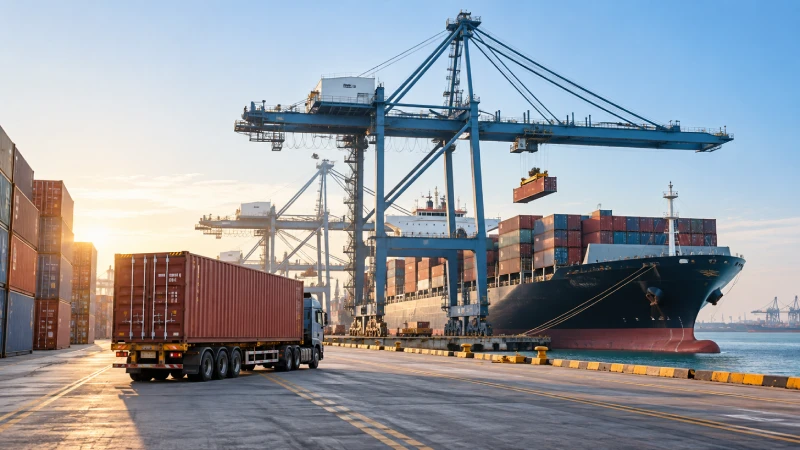
If you are importing from China to Kenya, the first shipping-time estimate you receive is often not the same as the time it will take for the cargo to reach your warehouse.
A carrier may quote a vessel transit of around 22–30 days to Mombasa, but your total lead time can also include supplier pickup, export preparation, consolidation, documentation, customs clearance and inland delivery. For cargo going to Nairobi, vessel arrival in Mombasa is only one stage of the journey.
As a current planning reference, public China–Kenya ocean schedules show approximately 22–30 days for selected major China ports to Mombasa, while selected air-freight routes to Nairobi are substantially faster. Actual shipment time depends on the origin city, cargo type, booking schedule, documentation, compliance requirements and final destination. See the current DP World China-to-Kenya freight route references.
For importers, the more useful question is therefore not simply:
“How many days does shipping from China to Kenya take?”
It is:
“How many days will pass from the date my supplier is ready until I can actually receive the cargo in Kenya?”
Data Note: Transit-time references in this guide were reviewed in September 2026. Carrier schedules can change without notice, and published transit time should not be treated as a guaranteed delivery date. Always confirm the actual sailing, flight and service scope before booking.
Quick Answer: China to Kenya Shipping Time
The table below provides a practical starting point.
| Shipping Method | Current Planning Reference | What the Time Usually Represents |
|---|---|---|
| FCL sea freight | Around 22–30 days on selected China–Mombasa routes | Mainly port-to-port ocean transit |
| LCL sea freight | Longer than the corresponding vessel transit | Consolidation, ocean transit and deconsolidation must all be considered |
| Air freight | Around 2–7 days on selected China–Nairobi services | Depends on routing and service scope |
| Priority express courier | Around 3–4 business days on typical international priority services | Courier network benchmark, subject to exact origin/destination |
DP World currently publishes approximately 22–30 days for common Shanghai, Ningbo and Nansha-to-Mombasa ocean routes. Its China–Kenya route information also lists selected Shanghai/Beijing-to-Nairobi air services at roughly 2–7 days. FedEx Kenya publishes a typical worldwide International Priority benchmark of 3–4 business days, while advising customers to confirm the exact lane-specific transit time. See DP World and FedEx Kenya.
These figures should be used as planning references, not universal promises.
A 22-day vessel schedule does not mean a container will reach a Nairobi warehouse 22 days after the supplier says the goods are ready.
Transit Time vs Total Delivery Time: What Are You Actually Counting?
This is the most important distinction when planning a shipment from China to Kenya.
Transit time
Transit time normally describes only a specific transport stage.
For example:
Shanghai port → Mombasa port
or:
China airport → Nairobi airport
It may not include the days needed before departure or after arrival.
Total delivery time
For a commercial shipment, the real timeline can look more like this:
Cargo ready at supplier
→ Pickup from factory
→ China warehouse or port delivery
→ Export and Kenya pre-shipment documentation
→ LCL consolidation or FCL port cutoff
→ Vessel or flight departure
→ International transit
→ Mombasa or Nairobi arrival
→ Kenya customs clearance
→ Port / terminal release
→ Mombasa-to-Nairobi or other inland transport
→ Final delivery
Each stage can affect the final ETA.
If you are managing inventory, a retail launch, construction project or production line, plan from the cargo-ready date to the required delivery date, rather than comparing freight options only by vessel or flight transit.
When should you start counting?
Ideally, start with the date on which:
- production is actually complete;
- packaging is finished;
- quantities are confirmed;
- shipment dimensions and weights are available;
- required export and import documents can be prepared.
A supplier saying “goods will be ready next week” is not the same as having cargo packed and available for pickup.
When should you stop counting?
That depends on your commercial requirement.
For a Mombasa-based importer, the end point may be delivery to a local warehouse.
For a Nairobi importer, it should normally be the date cargo is available or delivered in Nairobi—not the vessel ETA at Mombasa.
For project cargo outside Nairobi, additional trucking and site-delivery planning may be required.
Sea Freight to Mombasa: How Long Does FCL Take?
For full-container-load shipments, the ocean leg is usually the easiest part of the timeline to compare because carriers publish sailing schedules.
Current public market references indicate that selected major China ports to Mombasa can be planned around a 22–30-day ocean-transit window, depending on the origin port, carrier and routing. See the current DP World China-to-Kenya route data.
For example, Maersk’s current Mashariki Express westbound rotation shows Shanghai at the beginning of the rotation and Mombasa approximately 22 days later on its published schedule. The service also calls at other Asian ports before reaching East Africa. See Maersk’s Mashariki Express westbound schedule.
A useful planning table is:
| Origin | Destination | Current Public Planning Reference | Important Note |
|---|---|---|---|
| Shanghai | Mombasa | Within the broader 22–30 day range | Check actual carrier sailing |
| Ningbo | Mombasa | Within the broader 22–30 day range | Cutoff and weekly schedule matter |
| Nansha / South China | Mombasa | Within the broader 22–30 day range | Routing varies by carrier |
These are schedule references, not guaranteed Winsail transit times.
Before shipping, check the actual service available for the booking week.
Direct service does not always mean nonstop
Importers should also distinguish between an intermediate port call and a true transshipment.
A vessel may call at Singapore, Tanjung Pelepas or another port on its way to Mombasa while the container remains on the same vessel.
That is different from a transshipment service where your container is unloaded and transferred to another vessel.
Why does this matter?
A transshipment introduces another connection into the schedule. If the first vessel is late or the connection is missed, the cargo may have to wait for the next connecting sailing.
When timing is critical, ask your forwarder:
- What is the actual vessel ETD?
- What is the current Mombasa ETA?
- Is the container staying on the same vessel?
- Is there a transshipment?
- If there is a transshipment, where?
- How frequent is the connecting service?
Do not choose a route based only on a headline number of days.
Check My Shipping Time: If you already know your China pickup city, cargo-ready date and Kenya destination, those three details are enough to begin comparing realistic sailing options.
Why LCL Shipping Usually Takes Longer Than FCL
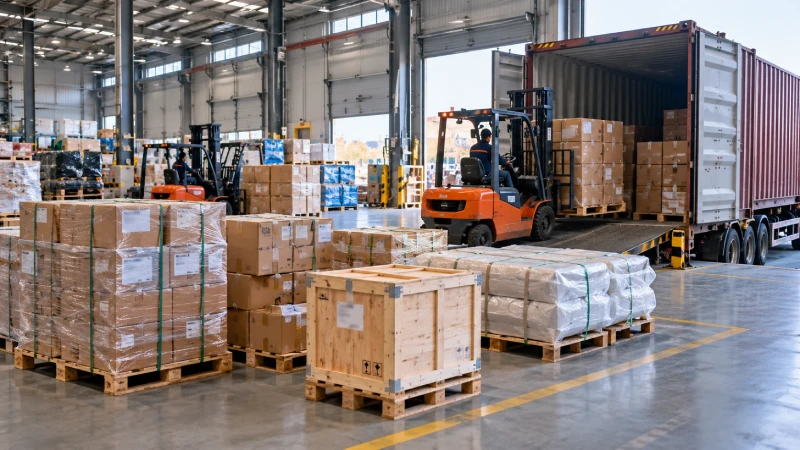
LCL cargo can travel on the same ocean services used for container freight, but the shipment normally has additional handling before departure and after arrival.
That is why the vessel’s port-to-port transit does not tell you the full LCL lead time.
A typical China-to-Kenya LCL process is:
Supplier pickup
→ China consolidation warehouse
→ Cargo receiving and checking
→ Wait for consolidation cutoff
→ Container stuffing
→ Export handling
→ Ocean transit to Mombasa
→ Destination deconsolidation
→ Customs clearance
→ Cargo release
→ Inland delivery
Origin consolidation in China
With FCL, a container can be planned around one shipper’s cargo.
With LCL, several shipments are combined into the same container.
Your goods therefore need to arrive at the consolidation warehouse before the cutoff for the planned container.
If your cargo reaches the warehouse after that cutoff, it may roll to the next consolidation.
The same issue becomes more important when consolidating products from several Chinese suppliers.
One supplier may finish on Monday, another on Thursday and the final supplier the following week. The effective cargo-ready date is usually determined by the shipment that is still missing—not by the first supplier that finishes.
Pro Tip: For LCL shipments, ask for both the warehouse cutoff date and the planned vessel ETD. “25 days transit” is not enough information to calculate the true delivery date.
Deconsolidation in Kenya
After the consolidated container reaches Kenya, individual shipments must be separated before each consignee’s cargo can continue through the applicable release process.
This creates another stage that FCL cargo does not have in the same way.
For that reason, we do not recommend adding one universal number such as “LCL always takes five extra days.”
The additional time depends on:
- consolidation schedule;
- warehouse cutoff;
- container loading;
- vessel availability;
- destination deconsolidation;
- customs documents;
- cargo inspection or verification where applicable.
If delivery timing matters more than simply minimizing ocean cost, compare the complete LCL schedule, not only the sailing time.
Compare FCL and LCL Timing: For larger LCL shipments or cargo close to a full-container threshold, compare the complete timelines before choosing based on freight cost alone.
How Long Does Air Freight from China to Nairobi Take?
Air freight is generally used when the cost of waiting is higher than the additional freight cost.
Typical examples include:
- urgent spare parts;
- electronics;
- production components;
- samples;
- high-value commercial cargo;
- inventory needed to prevent a stockout.
Current public China–Kenya route references show selected air-freight services from Shanghai Pudong and Beijing to Nairobi at approximately 2–7 days, depending on the route and service. DP World describes this range within its current China–Kenya freight offering. See DP World’s China-to-Kenya freight route information.
That does not mean every shipment collected from a factory in China will reach a customer’s door in two days.
The full air-freight timeline may include:
Factory pickup
→ China export handling
→ Airport cargo terminal
→ Flight booking / connection
→ Arrival at Nairobi
→ Cargo handling
→ Kenya customs clearance
→ Release
→ Local delivery
Airport-to-airport vs door-to-door
Always ask what the quoted transit time includes.
A freight quote stating:
“3 days”
may refer primarily to airport transportation.
A separate service may include pickup, customs coordination and final delivery.
Those are not directly comparable.
Direct flight vs connecting air freight
Some cargo moves through a more direct airline routing, while other shipments connect through an intermediate hub.
Connecting routes can still be practical, but the number and reliability of connections affect total lead time.
The fastest option is therefore not determined only by the airport closest to the Chinese supplier.
For cargo from Shenzhen or Dongguan, for example, a forwarder may evaluate routing via Shenzhen, Guangzhou, Hong Kong or another gateway depending on:
- cargo type;
- airline acceptance;
- available space;
- flight schedule;
- chargeable weight;
- dangerous-goods restrictions;
- urgency.
For time-sensitive shipments, confirm the actual proposed routing rather than assuming every South China shipment follows the same airport.
Express Shipping from China to Kenya
Express courier is often suitable for samples, documents, replacement parts and smaller urgent parcels.
FedEx Kenya currently states that its International Priority service typically takes around 3–4 business days worldwide, with exact transit times depending on the shipment’s origin and destination. See FedEx International Priority.
A typical courier movement includes:
Pickup → export processing → international courier network → Kenya customs → final delivery
Courier shipping can reduce the amount of coordination required compared with conventional freight, but customs requirements do not disappear simply because a parcel is moving by express.
Cargo description, value, HS classification and any product-specific controls still matter.
For larger commercial shipments, compare express with normal air freight rather than assuming courier is automatically the fastest or most suitable option.
Kenya Documentation Can Change the Real Shipping Timeline
In 2026, this became even more important.
Several Kenya import-documentation requirements now need to be considered when planning when a container can leave China and when cargo can be released after arrival.
A shipment can have an excellent vessel schedule and still lose time if documentation is addressed too late.
Advance Cargo Declaration before container loading
Kenya Revenue Authority launched its Advance Cargo Declaration (ACD) platform for containerized cargo destined for Kenyan ports on August 3, 2026.
According to KRA’s official notice, exporters shipping containerized cargo to Kenya must obtain an ACD reference code at the loading stage. The application requires documents including:
- draft Bill of Lading;
- commercial invoice;
- freight invoice;
- export declaration.
The ACD reference code is then endorsed on the Bill of Lading before the shipment proceeds to a Kenyan port. See the KRA Advance Cargo Declaration notice.
This changes the way importers should think about lead time.
ACD is not paperwork to consider only after the vessel reaches Mombasa.
It belongs in the pre-loading documentation plan in China.
Pro Tip: For applicable containerized shipments, start preparing the ACD documents before the carrier documentation cutoff. Waiting until the container is already at the terminal can create avoidable pressure around loading deadlines.
The current KRA launch notice specifically addresses containerized cargo destined for Kenyan ports. Do not automatically apply the same rule to every air, road or other cargo movement without checking the current official requirement.
Certificate of Origin
Kenya also strengthened its Certificate of Origin requirements in 2025.
KRA states that imported consignments are required to be accompanied by a Certificate of Origin under the applicable framework, with full enforcement beginning October 1, 2025, subject to stated exceptions and provisional measures. See the KRA Certificate of Origin notice.
This document should therefore be checked during shipment preparation rather than after cargo arrives.
Where an exception or alternative document may apply, confirm the position with the importer and licensed Kenyan customs clearing agent.
New export-document requirement from September 2026
From September 1, 2026, KRA states that importers must obtain and retain an export declaration, export entry, customs export certificate or equivalent document from the country of export.
The documents should support details such as the exporter, importer, goods description, quantity, value, tariff classification and country of export, and records should be retained as required by KRA. See KRA’s Finance Act 2026 guidance.
KRA subsequently reiterated in September 2026 that the export-declaration requirement for clearance of imported goods is anchored in Kenyan law. See the KRA clarification on cargo clearance.
For shipments from China, this means the importer and China-side supplier or logistics provider should coordinate export documentation early.
Do not assume the supplier can reconstruct every required export document after the cargo has already sailed.
PVoC and Certificate of Conformity
For products subject to Kenya’s Pre-Export Verification of Conformity program, compliance also needs to be addressed before shipment.
KEBS states that exporters should ensure applicable products meet Kenyan standards or approved specifications and obtain the necessary Certificate of Conformity from an appointed PVoC agent. China is currently included in KEBS’s PVoC country-zone structure. See the KEBS PVoC guidance.
Whether PVoC applies depends on the goods and current rules.
This is why an importer should not book an urgent sailing first and investigate product conformity afterwards.
Testing, inspection, documentation or corrective action can affect the cargo-ready timeline.
Kenya customs clearance is a separate stage
KRA requires importers to engage a licensed customs clearing agent for the import clearance process.
Its published process includes import documentation, customs declaration, payment of applicable taxes, possible verification and eventual clearance and release. Required documents may include the commercial invoice, packing list, Bill of Lading or Air Waybill, Certificate of Origin, CoC for regulated products and permits for restricted goods where applicable. See the KRA import clearance guidance.
There is therefore no responsible universal statement such as:
“Kenya customs always takes three days.”
Actual clearance depends on the shipment.
Possible variables include:
- correct HS classification;
- declared value;
- payment of duties and taxes;
- consistency between documents;
- PVoC / CoC status;
- permits for controlled goods;
- customs verification;
- importer and clearing-agent readiness.
A clean shipping schedule cannot compensate for incomplete customs preparation.
Check My Kenya Import Requirements: Before confirming the departure date, check the product, HS classification, documentation and Kenya compliance requirements together.
From Mombasa to Nairobi: Vessel Arrival Is Not Final Delivery
A common planning mistake is using the Mombasa vessel ETA as the expected Nairobi delivery date.
For Nairobi cargo, these are two different milestones.
After a vessel arrives, cargo may still need to move through:
Vessel discharge
→ customs / release process
→ port or inland routing
→ rail or road movement
→ Nairobi ICD / warehouse handling where applicable
→ final delivery
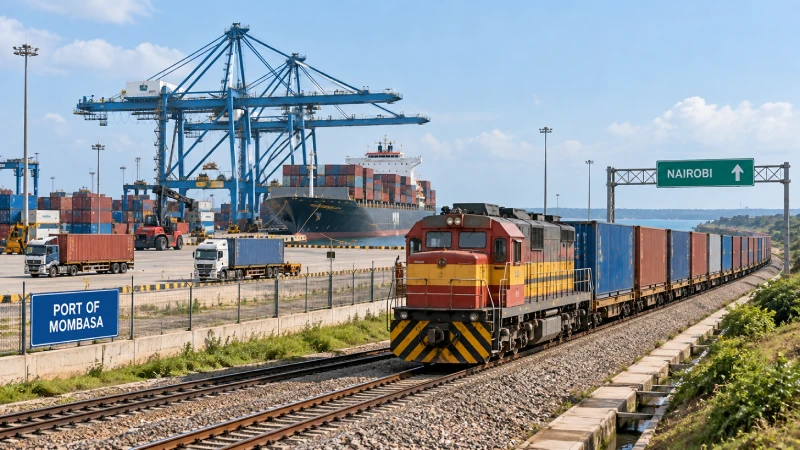
Kenya Ports Authority confirms that Nairobi Inland Container Depot is connected with the Port of Mombasa by rail-tainer service. KPA also states that imports can move from Mombasa to inland depots using a Through Bill of Lading. See the KPA Inland Container Depots information.
Kenya Railways similarly confirms regular containerized freight operations between Mombasa and Nairobi on the Standard Gauge Railway network. See the Kenya Railways freight service information.
Clear at Mombasa or move toward Nairobi ICD?
The correct arrangement depends on the shipment, Bill of Lading, consignee instructions, carrier arrangement and customs plan.
Do not assume every Nairobi-bound container follows exactly the same release path.
This should be decided before arrival because it affects:
- where cargo becomes available;
- which parties coordinate release;
- rail or truck planning;
- final-mile delivery;
- total lead time.
How long does Mombasa-to-Nairobi delivery take?
There should not be one universal number on this page.
The physical inland transport leg is only part of the time after vessel arrival.
For an importer, the more useful calculation is:
Mombasa vessel arrival
discharge / availability
customs and release
inland transfer waiting
rail or road movement
destination handling
last-mile delivery
The current KPA and Kenya Railways public information confirms the inland container network, but it does not establish one guaranteed end-to-end time from vessel arrival to consignee delivery.
Your shipment-specific inland timeline therefore needs to be confirmed before publishing or quoting a firm delivery date.
Pro Tip: If Nairobi is your real destination, ask for a Nairobi delivery estimate, not only a Mombasa ETA.
Check My Mombasa-to-Nairobi Route: Confirm the planned clearance location, inland transport mode and final delivery address before the vessel departs China.
What Commonly Delays Shipments from China to Kenya?
Most delays do not happen because the distance between China and Kenya suddenly changes.
They happen at the handover points.
| Stage | Common Delay | What It Can Affect |
|---|---|---|
| Supplier | Production or packing not actually complete | Pickup and booking |
| China pickup | Wrong quantities, weights or pickup details | Warehouse receiving |
| Compliance | PVoC, testing, permits or product requirements unresolved | Shipment readiness |
| Documentation | Invoice, B/L, export declaration or ACD data incomplete | Loading or clearance |
| LCL consolidation | Cargo misses consolidation cutoff | Planned vessel |
| Ocean booking | Space changes or cargo rolled | ETD |
| Transshipment | Connection missed | Mombasa ETA |
| Mombasa | Terminal or operational congestion | Cargo availability |
| Customs | Classification, valuation, document or verification issue | Release |
| Taxes | Payment not completed | Customs release |
| Inland transport | Rail/truck coordination | Nairobi delivery |
| Special cargo | DG/OOG/carrier approval incomplete | Booking |
Kenya Revenue Authority and Kenya Ports Authority announced additional measures in January 2026 intended to reduce congestion and cargo dwell time at Mombasa, including greater digital integration and changes to port-exit processes. Even with those reforms, importers should continue to treat port arrival and cargo release as separate milestones. See the KRA and KPA reform announcement.
Supplier delays
Before chasing the shipping line for a faster vessel, first confirm whether the supplier can really meet the planned pickup date.
Common issues include:
- production not finished;
- export packaging incomplete;
- final quantity changed;
- cargo measurements unavailable;
- supplier documents inconsistent with the booking.
For multi-supplier shipments, one late factory can delay the entire consolidation.
Missing the cutoff
Sea freight works around vessel and warehouse cutoffs.
If the cargo or documents miss the relevant cutoff, the shipment may move to a later sailing even if the physical goods are already close to the port.
That is why “cargo reaches Shenzhen on Friday” is not enough information.
You need to know whether Friday is before or after the required cutoff.
Customs and classification issues
Incorrect HS classification can affect:
- documentation;
- tax assessment;
- licences or permits;
- inspection requirements;
- customs questions.
Do not select an HS code simply because a Chinese supplier used the same code on another country’s shipment.
The Kenyan importer and customs agent should verify the classification appropriate for the Kenyan import.
Dangerous goods and batteries
Dangerous goods, lithium batteries and certain controlled products may require additional documentation, packaging, declarations and carrier acceptance.
The extra lead time varies substantially by product, carrier and transport mode.
Do not add a fixed number of days without reviewing the actual cargo.
Oversized and project cargo
Out-of-gauge machinery, heavy equipment and project cargo can also require additional planning for:
- equipment availability;
- carrier acceptance;
- lifting;
- lashing;
- port handling;
- permits;
- inland truck routing.
For these shipments, the fastest advertised vessel is rarely the only scheduling issue.
How Importers Can Reduce China-to-Kenya Shipping Delays
You cannot control every carrier or port delay.
But many lost days can be prevented before the cargo leaves China.
1. Confirm the real cargo-ready date
Ask the supplier to confirm:
- packing completion;
- final package count;
- dimensions;
- gross weight;
- pickup address.
Do not book an aggressive cutoff based only on a production estimate.
2. Confirm product requirements before pickup
Check whether the product requires:
- PVoC / CoC;
- product-specific permit;
- special labelling;
- dangerous-goods documents;
- battery documentation;
- other regulator approval.
This is particularly important for new products that the importer has never brought into Kenya before.
3. Confirm the HS classification
Use a realistic product description and verify the HS code before finalizing customs documents.
Classification should not be left until the container reaches Mombasa.
4. Prepare 2026 Kenya documentation early
For applicable containerized shipments, plan ACD documentation before loading.
Also coordinate the Certificate of Origin and the export documentation that Kenyan importers are now required to obtain and retain.
5. Check all documents for consistency
Compare:
- supplier name;
- importer details;
- product description;
- quantities;
- value;
- HS code;
- packing information;
- Bill of Lading instructions;
- Certificate of Origin;
- export documentation.
Small inconsistencies can become large delays if discovered at the wrong stage.
6. For LCL, ask for the cutoff—not just the sailing
The consolidation cutoff may matter more than a one- or two-day difference between vessel schedules.
7. Ask whether the route involves transshipment
A route with a longer advertised transit but a reliable sailing may sometimes be more useful than a theoretically faster routing with a weak connection.
Evaluate the actual weekly service.
8. Involve the Kenyan clearing agent before arrival
The destination agent should not first see the shipping documents after the vessel reaches Mombasa.
Pre-arrival review gives the parties more time to identify missing or inconsistent information.
9. Decide the inland plan in advance
For Nairobi cargo, establish whether the shipment will move through the relevant inland container arrangement or another road/rail plan.
Do not wait until the container is discharged to start thinking about inland delivery.
10. Build operational buffer into critical shipments
If cargo must arrive before:
- a factory shutdown;
- retail launch;
- construction milestone;
- exhibition;
- contractual deadline,
do not plan around the theoretical fastest possible ETA.
Plan around a realistic operational window and keep contingency time for stages you do not control.
What We Need to Estimate Your China-to-Kenya Delivery Time
A useful shipping-time estimate starts with useful cargo information.
Before asking, “How long will it take?”, prepare:
- pickup city in China;
- supplier pickup address;
- confirmed cargo-ready date;
- product name;
- HS code, if already verified;
- number of packages;
- package dimensions;
- gross weight;
- total CBM;
- FCL or LCL requirement, if known;
- dangerous-goods status;
- battery, liquid, chemical or magnetic characteristics where relevant;
- destination in Kenya;
- required delivery date;
- supplier Incoterm;
- PVoC / CoC status where applicable;
- whether a Kenyan clearing agent has already been appointed.
With these details, the shipment can be assessed as an actual logistics plan instead of a generic China-to-Kenya estimate.
Send Cargo Details: Share the pickup city, cargo-ready date, cargo size/weight and final Kenya destination to compare the practical shipping timeline.
FAQ
How many days does sea freight from China to Kenya take?
As a current planning reference, selected ocean services from major Chinese ports to Mombasa are published at around 22–30 days port-to-port. The final shipment time can be longer after adding China pickup, documentation, port cutoff, customs clearance and inland delivery.
Why does LCL take longer than FCL from China to Kenya?
LCL cargo needs to be received into a consolidation warehouse, combined with other shipments and stuffed into a container before departure. At destination, the consolidated container must also be deconsolidated before individual shipments can proceed.
How long does air freight from China to Nairobi take?
Current public route references indicate approximately 2–7 days for selected China–Nairobi air services, depending on routing and service scope. The actual time depends on pickup, export handling, airline routing, customs clearance and final delivery.
How long does express shipping from China to Kenya take?
Priority international courier services can be very fast. FedEx Kenya currently publishes a typical International Priority benchmark of 3–4 business days worldwide, while advising customers to check exact origin-to-destination transit times.
Does customs clearance count as shipping time?
It depends on what the quoted time means. A carrier's port-to-port transit normally should not be treated as the complete delivery time. If you are planning inventory, use an end-to-end timeline that includes Kenyan customs clearance and final delivery.
Can Kenya’s ACD requirement affect my shipping schedule?
Yes. KRA's ACD system for containerized cargo destined for Kenyan ports went live on August 3, 2026. The exporter needs to obtain the applicable ACD reference at the loading stage using required supporting documentation, so incomplete preparation can affect the pre-departure timeline.
How long does cargo take from Mombasa to Nairobi?
There is no single reliable number that applies to every container. Cargo must first move through the relevant discharge, customs, release and inland-routing stages before final delivery.
Plan the Delivery Date, Not Just the Vessel Transit
When comparing shipping time from China to Kenya, the shortest number on a freight schedule is not necessarily the most useful number.
A realistic plan should account for:
supplier readiness + China pickup + compliance + documentation + cutoff + international transit + Kenya clearance + inland delivery.
For FCL cargo, current ocean schedules provide useful Mombasa transit benchmarks.
For LCL, consolidation and deconsolidation need to be added.
For air and express freight, the international movement is much faster, but pickup, customs and delivery stages still matter.
And for Nairobi-bound sea freight, Mombasa vessel arrival should never be mistaken for the final delivery date.
The most accurate shipping-time estimate is therefore built around your actual cargo, origin, readiness date and Kenya destination—not a single universal China-to-Kenya transit figure.
For a broader overview of routes, shipping methods, customs and delivery options, see our Shipping from China to Kenya guide.
