
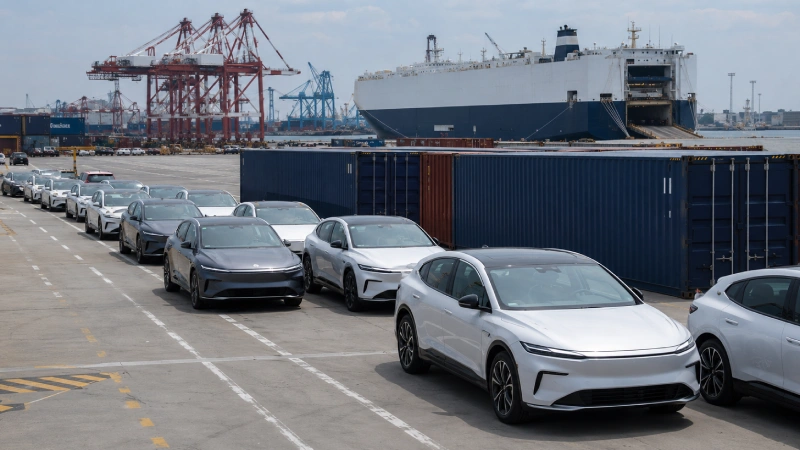
Quick Answer
To understand how to ship electric cars from China, first identify the vehicle’s propulsion system, installed battery, condition, and proposed route. A Battery Electric Vehicle (BEV) with an installed lithium-ion traction battery is generally assessed under UN3556. Plug-In Hybrid Electric Vehicles (PHEVs), Hybrid Electric Vehicles (HEVs), and fuel-cell vehicles may fall under applicable UN3166 entries because they contain an internal-combustion engine or fuel system. Before pickup or port delivery, submit complete vehicle and battery information for carrier pre-approval, confirm terminal acceptance, and verify destination-country import eligibility. Never assume that one carrier’s state-of-charge request, placarding instruction, or acceptance decision applies universally.
Key Takeaways
- IMDG Code Amendment 42-24 became mandatory on January 1, 2026.
- BEVs, PHEVs, HEVs, fuel-cell vehicles, and wet-battery vehicles require different classification checks.
- IMDG classification, carrier acceptance, terminal rules, and destination import rules are separate.
- Do not book a vehicle with suspected battery damage, fire, flood, collision, or unresolved recall concerns.
- A quotation or schedule is not written carrier acceptance.
Identify the Vehicle Type Before Classification
The first decision is the actual propulsion system, not the sales description “EV” or “new-energy vehicle.” The U.S. Department of Energy’s electric-vehicle definitions distinguish battery-electric, plug-in hybrid, and hybrid vehicles. Maritime classification still comes from the International Maritime Dangerous Goods Code.
| Vehicle type | Propulsion system | Preliminary sea-shipping assessment |
|---|---|---|
| Battery Electric Vehicle (BEV) | Traction battery and electric motor only | Lithium-ion models are generally assessed under UN3556 |
| Plug-In Hybrid Electric Vehicle (PHEV) | Plug-in battery, motor, and combustion engine | Assess the applicable UN3166 fuel-powered vehicle entry |
| Hybrid Electric Vehicle (HEV) | Battery, motor, and combustion engine | Assess the applicable UN3166 fuel-powered vehicle entry |
| Fuel-cell vehicle | Fuel cell using flammable gas or liquid | Assess the matching UN3166 fuel-cell entry |
| Sodium-ion BEV | Installed sodium-ion traction battery | Assess UN3558 |
| Wet-battery vehicle | Installed wet battery | UN3171 may remain applicable |
A model brochure saying “hybrid” is not enough. Review the installed battery, fuel system, engine, condition, and transport configuration.
Confirm the Current IMDG Classification
The mandatory edition is the International Maritime Dangerous Goods Code 2024 Edition, Amendment 42-24. The IMO IMDG Code publication page states that it became mandatory on January 1, 2026. The UK Maritime and Coastguard Agency notice confirms the new vehicle entries.
For a lithium-ion battery-powered vehicle with the battery installed, IMO Resolution MSC.556(108) lists:
- UN3556 — VEHICLE, LITHIUM ION BATTERY POWERED
- Class 9
- Special Provisions 384, 388, 405, 961, and 962
- Packing Instruction P912
- EmS F-A, S-I
- Stowage Category A
Special Provision 388 explains that UN3166 entries apply to vehicles powered by flammable-liquid or flammable-gas internal-combustion engines or fuel cells. It also limits UN3171 to specified wet-battery, metallic-sodium, or sodium-alloy battery vehicles and equipment. UN3171 is therefore not the default entry for a lithium-ion BEV.
SP961 may reduce provisions for qualifying vehicles in designated RoRo vehicle spaces, special-category spaces, weather decks, or other approved spaces. Vehicles not meeting SP961 are assigned to Class 9 under SP962. The carrier must assess the vessel, space, mode, and route.
Mandatory IMDG Rules vs Carrier and Port Requirements
An IMDG requirement is not the same as a carrier house rule or terminal operating instruction.
| Issue | Mandatory IMDG position | Carrier or terminal requirement |
|---|---|---|
| UN entry | Must match the actual power system and installed battery | Carrier may conduct its own technical review |
| Battery condition | Must comply with applicable SP388 provisions | Extra photos, diagnostics, or recall records may be requested |
| Damaged battery | Remove it and use SP376 unless otherwise approved by the competent authority | Carrier may reject the vehicle completely |
| Securing | P912 requires protection against accidental operation and damaging movement | A carrier or terminal may require a specific lashing plan |
| State of charge | No universal percentage appears in the reviewed UN3556 provisions | Written SOC data or a route-specific limit may be requested |
| Placarding | Depends on confirmed classification and shipment configuration | Carrier instructions may be more operationally conservative |
| Port documents | Depend on classification and exemption status | Ports may require pre-advice, permits, or local letters |
The reviewed UN3556 provisions do not establish one numerical State of Charge limit for every intact EV shipped by sea. A carrier, terminal, manufacturer, or route procedure may still impose a written condition.
Maersk’s 2026 battery-vehicle advisory provides carrier-specific booking and placarding guidance, not a universal legal rule. A 2026 Port Kelang notice likewise describes local gate-in and document requirements.
Vehicle and Battery Information Checklist
Carrier review requires more than a model name and destination.
Vehicle information
- Manufacturer, model, model year, and VIN or chassis number
- BEV, PHEV, HEV, or fuel-cell configuration
- New or used condition
- Drivable, towable, or non-running status
- Length, width, height, gross weight, and ground clearance
- Origin, destination, quantity, and cargo-ready date
- Fuel type and fuel level when an engine or fuel cell is present
Battery and condition information
- Battery chemistry, manufacturer, model, voltage, and capacity
- Battery specification sheet
- Available UN 38.3 test summary or manufacturer confirmation
- Battery replacement, repair, or modification history
- Dashboard warnings, fault codes, and recall status
- Accident, underbody impact, fire, overheating, flood, or saltwater history
- Leakage, swelling, deformation, exposed wiring, or unusual odor
- State of charge only when known or specifically requested
The UN 38.3 framework appears in the UNECE Manual of Tests and Criteria, Revision 8. A carrier may request a test summary, manufacturer confirmation, or specification sheet.
Attach photographs of all sides, the VIN plate, dashboard, charging port, underbody, battery enclosure, and damage.
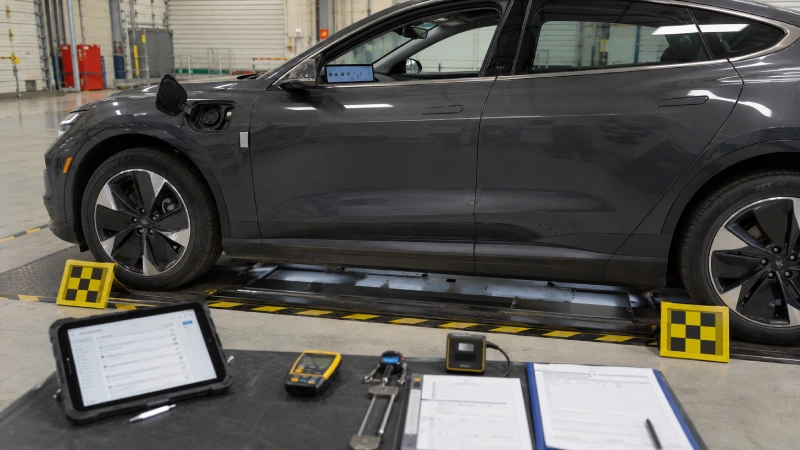
How to Ship Electric Cars from China: Booking Process
A compliant booking follows a review sequence, not direct delivery after quotation.
- Submit vehicle and battery data. Check whether the file is complete.
- Make a preliminary classification. Identify the proposed UN entry and relevant special provisions.
- Check vehicle condition. Stop if damage, leakage, warning lights, flood, fire, or unclear repairs are identified.
- Compare shipping modes. Review route, operability, dimensions, vessel service, and terminal restrictions.
- Request written carrier pre-approval. A rate indication is not approval.
- Confirm every terminal. Check origin, transshipment, and destination requirements.
- Inspect, load, and secure the vehicle. Prevent accidental operation and movement, then record the completed loading.
- Complete export and import checks. Confirm commercial documents and destination eligibility.
Use ocean freight from China for container planning or review RoRo ocean freight from China when a suitable operator and approved vehicle space are available.
New, Used, Recalled, and Damaged EVs
New EVs may have better manufacturer records, but new status does not guarantee acceptance. Used EVs require closer review of accidents, battery replacement, warnings, ownership documents, recalls, and water exposure. Used status does not change the UN entry by itself.
Do Not Book Until Reviewed: Stop if the vehicle has battery leakage, deformation, a thermal event, smoke, unusual odor, active warning lights, fire or flood exposure, collision near the battery enclosure, an unresolved safety recall, or an unknown battery replacement.
IMDG SP388 states that a damaged or defective lithium battery installed in a vehicle must be removed and transported under SP376 unless the competent authority approves otherwise. An accident-damaged or battery-abnormal EV must not be promised normal container or RoRo acceptance.
Container Shipping vs EV RoRo Shipping
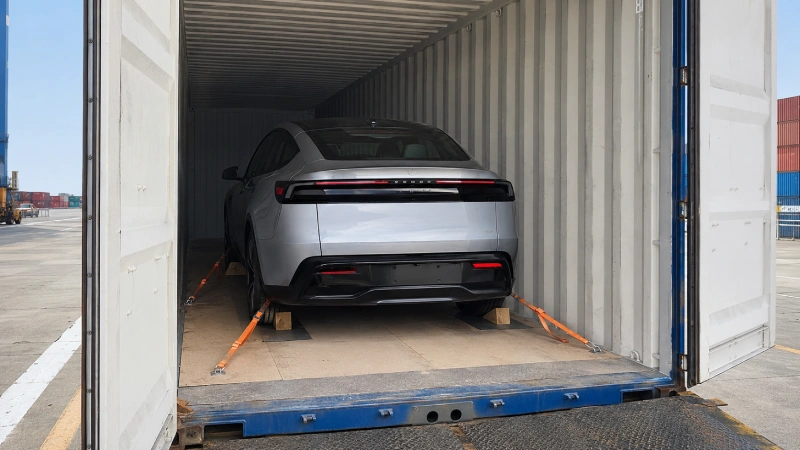
Container shipping provides more loading control, while RoRo may reduce lifting for drivable or towable vehicles. Neither is accepted automatically.
For containers, confirm clearance, ramps, underbody protection, approved lashing points, dangerous-goods acceptance, placarding, and terminal rules. Restraint must prevent battery-damaging movement.
For RoRo, confirm operator acceptance, driving or towing capability, keys, alarm handling, and the intended vessel space. Do not leave loose cargo inside unless accepted.
Documents, Customs, and Destination Verification
The booking file starts with vehicle and battery data, photographs, dimensions, commercial invoice, packing list, VIN list, and route details. Depending on classification and carrier instructions, additional declarations, packing certificates, test information, inspection reports, emergency guidance, or port forms may be required.
China export documents may include the customs declaration, sales contract, certificate of origin where applicable, and ownership or registration records for used units. Winsail may coordinate documents and export procedures but does not issue manufacturer battery reports, competent-authority approvals, or dangerous-goods certificates.
The importer must verify model eligibility, used-vehicle restrictions, type approval, duties, taxes, registration, charging compatibility, and local port procedures. Review route planning separately for shipping from China to the UAE and shipping from China to Saudi Arabia.
Common Carrier Rejection Reasons
Bookings are commonly paused or rejected because:
- UN3171 was used for a lithium-ion BEV.
- The declared vehicle type conflicts with the specification.
- Battery chemistry, capacity, manufacturer, or test information is missing.
- VINs differ across documents and photographs.
- Accident, repair, recall, or flood history is unclear.
- A non-running unit is offered to a RoRo service requiring drivable vehicles.
- Battery warnings, leakage, deformation, or underbody damage are visible.
- An origin, transshipment, or destination terminal does not accept the shipment.
- Dangerous-goods documents, placards, or local forms are incomplete.
- The vehicle arrived before written approval.
- The route, vessel, or mode changed after review.
Correct the information, disclose the issue, obtain evidence, and resubmit. Never hide damage or alter a declaration.
Practical Booking Example
A published Nansha-to-Jebel Ali new-energy vehicle case records a RoRo shipment dated March 5, 2026. It shows that an accepted route and mode can be coordinated, but does not establish acceptance or transit time for another vehicle or sailing.
What Winsail Logistics Can Coordinate
Winsail can collect vehicle and battery information, check document completeness, approach carriers and terminals, compare container and RoRo availability, coordinate pickup and inspection, support loading and lashing, arrange booking after acceptance, and coordinate export procedures.
Winsail does not issue UN 38.3 test summaries, battery specifications, competent-authority approvals, or dangerous-goods certificates. It cannot guarantee carrier acceptance, damaged-battery shipment, destination vehicle eligibility, or customs clearance.
For destination planning, review shipping from China to Nigeria or shipping from China to the USA, then confirm vehicle-specific carrier and import requirements.
FAQ
Can electric cars be shipped from China by sea?
Yes. Intact EVs may move with an accepting container or RoRo service after classification, battery-condition review, carrier pre-approval, terminal confirmation, and destination import verification.
Is every electric car classified as UN3556?
No. UN3556 applies to vehicles powered by installed lithium-ion batteries. PHEVs and HEVs with combustion engines normally require assessment under applicable UN3166 entries.
Is there a universal state-of-charge limit for EV shipping by sea?
No single percentage appears in the current UN3556 entry and reviewed SP388, SP961, SP962, and P912 provisions. Follow the written instructions issued for the selected carrier, terminal, manufacturer, and route.
Can a used or non-running EV be shipped by RoRo?
Possibly, depending on the operator, terminal, towing arrangements, vehicle condition, supporting evidence, and route. Written acceptance is required before port delivery.
Can an accident-damaged EV be shipped in a container?
Do not assume so. Suspected battery damage requires expert assessment, and a damaged or defective installed lithium battery must follow SP388 and SP376 unless otherwise approved.
Send EV Details for Carrier Review
Submit the vehicle type, brand, model, year, VIN, new or used condition, running status, battery chemistry and capacity, battery condition, accident or recall history, quantity, dimensions, weight, origin, destination, mode preference, and available technical documents.
Use Send EV Details for Carrier Review, Request an Electric Vehicle Shipping Quote, or Check Carrier Acceptance Before Booking before arranging port delivery.
Submission is not dangerous-goods approval, a confirmed booking, or a customs-clearance guarantee.
Sources Reviewed
- International Maritime Organization — IMDG Code, 2024 Edition
- IMO Resolution MSC.556(108)
- UK Maritime and Coastguard Agency — Amendment 42-24 Implementation Notice
- UNECE Manual of Tests and Criteria, Revision 8
- U.S. Department of Energy Alternative Fuels Data Center — Electric Vehicles
- Maersk — IMDG Code Amendment 42-24 Battery Vehicle Changes
- Hapag-Lloyd — Port Kelang Vehicle-Container Requirements
