

Importing goods from China into Kenya involves more than arranging freight, preparing a commercial invoice, and booking customs clearance. For many commercial products, conformity requirements administered by the Kenya Bureau of Standards (KEBS) need to be addressed before the goods leave China.
The main system used for this is Kenya’s Pre-Export Verification of Conformity (PVoC) programme. Depending on the product, importer status and applicable exemption, a shipment may need to undergo documentary review, product testing and physical inspection in China before a Certificate of Conformity (CoC) can be issued.
For Kenyan importers, the important question is therefore not simply, “Do I need a CoC?” It is:
Does PVoC apply to this particular product and shipment, which Kenya standard or regulation applies, and what must be completed before the supplier ships the cargo from China?
This guide explains that process specifically for goods moving from China to Kenya.
Data Note: Regulatory information in this guide was checked against the KEBS PVoC Manual Version 15 dated 19 February 2026, the Standards (Verification of Conformity to Standards and Other Applicable Regulations) Order, 2020, and current KEBS PVoC guidance. Product-specific requirements and contractor arrangements can change, so they should be reconfirmed before shipment.
Quick Answer: Do Imports from China to Kenya Need PVoC and a CoC?
China is currently included in KEBS PVoC Zone 1. For goods subject to the PVoC programme, conformity assessment should normally take place before shipment from China, using a KEBS-appointed PVoC contractor. If the consignment meets the applicable Kenya standards, approved specifications and other relevant requirements, the contractor can issue a Certificate of Conformity.
However, not every import follows exactly the same CoC process.
Kenyan law provides specific exemptions, and some products are regulated under other legislation. The correct treatment therefore depends on the product, its intended use, the importer, the applicable standard and any sector-specific regulatory requirements.
Before booking a shipment from China, work through these checks:
- Identify the exact product, model and intended use.
- Confirm the HS classification.
- Determine the applicable Kenya Standard or approved specification.
- Check whether a PVoC exemption applies.
- Identify any additional Kenyan regulator or permit requirements.
- If PVoC applies, arrange certification before the cargo is dispatched.
For the wider freight process, shipping methods, Mombasa routing and inland delivery, see our Shipping from China to Kenya guide.
Do Imports from China to Kenya Require PVoC and a CoC?
For a normal commercial shipment originating in China, PVoC should be treated as an important pre-shipment compliance checkpoint rather than something to investigate only after the goods reach Mombasa or Nairobi.
Under Kenya’s 2020 conformity order, importers are responsible for ensuring imported products comply with Kenya standards, approved specifications and other applicable regulations. KEBS may appoint inspection bodies in exporting countries to conduct conformity assessment before shipment.
China is one of the countries currently covered by the origin PVoC programme. KEBS lists China, Hong Kong, Taiwan and Mongolia under Zone 1.
That does not mean that you should simply tell every Chinese supplier:
“All products need a CoC.”
A better process is to check the actual product first.
The Short Rule for China-Origin Shipments
| Shipment situation | Practical next step |
|---|---|
| Normal commercial goods within PVoC scope | Arrange conformity assessment in China before shipment |
| Product qualifies for a legal PVoC exemption | Verify exemption conditions and supporting documents |
| Product is governed under specific Kenyan legislation | Confirm the responsible regulator and applicable approvals |
| Required CoC was not obtained before departure | Check KEBS destination-inspection procedure immediately |
| Product receives a Nonconformity Report | Do not treat it as ready for normal shipment to Kenya |
The distinction matters particularly for machinery, medical equipment, chemicals, agricultural products, automotive goods and other regulated cargo.
For example, machinery imported by a normal trading company should not automatically be treated the same way as qualifying machinery imported by a registered Kenyan manufacturer for its own industrial use.
Check My Kenya Import Requirements: Before your supplier loads the goods, send the product name, model, HS code if known, supplier location, quantity and any existing test certificates so the compliance requirements can be checked alongside the shipping plan.
PVoC vs CoC vs Kenya Standard vs Product-Specific Permit
These terms are often used interchangeably in supplier conversations, but they mean different things.
| Term | What it means | Why it matters |
|---|---|---|
| PVoC | Pre-Export Verification of Conformity | The conformity-assessment programme carried out before export for applicable shipments |
| CoC | Certificate of Conformity | Evidence issued after a consignment successfully meets the applicable conformity requirements |
| Kenya Standard / approved specification | Technical requirements applicable to the product | Defines what the product is being assessed against |
| Product-specific permit | Approval required by another regulator for certain products | May be needed in addition to conformity assessment |
KEBS defines PVoC as Pre-Export Verification of Conformity to Standards, while the CoC is the Certificate of Conformity issued for compliant consignments. The certification basis can include Kenya standards, approved specifications and other applicable regulations.
A CoC also should not be confused with a Certificate of Origin.
A Certificate of Origin establishes where goods originate for trade and customs purposes. A CoC deals with conformity to applicable requirements. Depending on the shipment, both documents may appear in the import file for completely different reasons.
Likewise, obtaining a CoC does not automatically replace permits required by other Kenyan authorities.
For example, KEBS Version 15 specifically refers to a Pharmacy and Poisons Board permit in one of the testing pathways for medical equipment. Other product groups can fall under authorities such as KEPHIS or the Pest Control Products Board.
The practical lesson is simple:
Do not ask only whether the product “has KEBS.” Identify the actual Kenya standard, PVoC requirement and any other regulator that applies to the product.
Which Imports Are Exempt from PVoC or Handled Differently?
Kenya’s Legal Notice No. 78 of 2020 provides defined exemptions from pre-shipment verification, but those exemptions come with conditions and supporting-document requirements.
This is why broad claims such as “machinery is exempt from PVoC” can create expensive mistakes.
Common PVoC Exemption Categories
Examples listed in the 2020 Order include certain:
- industrial raw materials, CKD kits, machinery and industrial spares imported by registered manufacturers for their own use;
- OEM equipment or parts under defined circumstances;
- diplomatic imports;
- qualifying courier parcels and direct-assessment items;
- goods covered by a valid KEBS Diamond Mark permit;
- goods manufactured within the East African Community and supported by the required evidence;
- used personal effects for qualifying returning residents or expatriates;
- re-imports;
- temporary imports;
- certain new road vehicles and mobile equipment;
- printed matter and recorded digital media;
- products regulated under specific legislation.
Why “Machinery Is Exempt” Is Misleading
The exemption in Legal Notice 78 is more specific.
It covers specified industrial inputs, machinery and industrial spares imported by registered manufacturers for their own use, subject to the required supporting evidence. It is not a universal exemption for every excavator, production machine, packing machine or piece of industrial equipment imported by any Kenyan company.
A Kenyan distributor importing machines for resale, for example, should not assume that the registered-manufacturer exemption applies.
Products Controlled by Other Kenyan Regulators
The Schedule to Legal Notice 78 also identifies products governed under specific laws, including categories such as:
- plants, seeds and planting material;
- human and veterinary pharmaceutical products;
- pesticides;
- live animals and certain animal products;
- aircraft and aircraft parts;
- radioactive materials and isotopes.
In these cases, the relevant regulator’s requirements become important.
PVoC exemption does not mean “no compliance.”
It may simply mean that conformity is handled under another regulatory framework or that the importer must prove eligibility for an exemption.
Before purchasing regulated goods from China, check the product classification and regulator before paying the supplier’s final balance or confirming the shipping date.
Who Handles PVoC Inspections in China?
KEBS currently places China, Hong Kong, Taiwan and Mongolia in PVoC Zone 1.
Its PVoC programme documentation lists several inspection and certification contractors serving Zone 1, including organizations such as CCIC, CHIC, QISJ, ASTC, Intertek, Cotecna and TÜV Rheinland. Contractor appointments and allocations can change, so the current active contractor should always be confirmed with KEBS before filing a new Request for Certification.
The PVoC contractor is not merely a freight inspection company.
Its conformity-assessment role may include:
- documentary review;
- inspection;
- sampling;
- testing;
- full-container sealing where applicable;
- issuing the CoC;
- issuing a Nonconformity Report when requirements are not met.
Confirm the Contractor Before Filing the RFC
Do not rely on an inspection contact saved from an old shipment several years ago.
Contract appointments, contact points and zone allocations can change. Before submitting a new Request for Certification (RFC), verify the currently authorized contractor against the latest KEBS information.
This is especially important if your supplier says:
“We have always used this inspection company for Kenya.”
Previous experience is useful, but it is not a substitute for checking the current KEBS programme.
How to Get a Kenya CoC Before Shipping from China
A well-managed PVoC shipment should be integrated into the sourcing and freight schedule rather than added after the cargo has already been packed.
For most importers, the process can be managed in the following sequence.
1. Identify the Exact Product
Start with more than a generic commercial description such as:
- electronics;
- machinery;
- furniture;
- spare parts.
Collect:
- actual product name;
- model or SKU;
- manufacturer;
- technical specifications;
- material;
- intended application;
- quantity;
- HS code if already verified.
A vague product description makes it harder to identify the correct standard and testing requirements.
2. Confirm the Applicable Kenya Requirements
KEBS Version 15 assigns the importer responsibility for obtaining applicable Kenya standards and other regulatory import requirements and sharing them with the supplier.
This step should happen before mass production is completed whenever possible.
If a Chinese factory manufactures a product to a specification that does not satisfy the applicable Kenyan requirement, discovering the problem during final inspection may leave little time for correction.
3. Submit the Request for Certification
The PVoC process starts through a Request for Certification submitted to an authorized PVoC contractor.
KEBS Version 15 lists requesting PVoC services through the RFC among importer responsibilities, while the operational inspection is coordinated with the exporter.
The file should contain sufficiently detailed product and shipment information for the contractor to determine the applicable route and conformity requirements.
4. Submit Product and Conformity Documents
Depending on the cargo, the contractor may need supporting information such as:
- invoice information;
- packing/product list;
- manufacturer information;
- model numbers;
- applicable test reports;
- product specifications;
- permits or regulatory approvals;
- Free Sale Certificate;
- previous Route A certification evidence when applying for Route B registration.
Do not assume that one generic CE certificate or supplier test report will automatically satisfy Kenya PVoC requirements.
The test evidence has to meet the applicable certification requirements.
5. Complete Documentary Review, Testing and Inspection
The PVoC contractor reviews the submitted documents and determines the intervention required.
Depending on the certification route and product, that can include:
- test-report evaluation;
- laboratory testing;
- witness testing;
- physical inspection;
- sampling;
- verification of marking or labeling;
- checking quantities and model numbers against documents.
KEBS Version 15 defines different testing pathways for consumer products, machinery and spares, certain medical equipment, automotive parts and some chemicals/raw materials.
6. Coordinate Inspection With Packing and Loading
Do not allow the supplier to arrange inspection independently of the freight schedule.
For an FCL shipment, the forwarder, supplier and inspector may all need to work around:
- cargo completion date;
- factory inspection availability;
- container pickup;
- stuffing date;
- cut-off;
- customs declaration;
- port delivery.
This is especially important for Route A containerized shipments from China.
KEBS Version 15 specifically states that containerized Route A cargo from China and the UAE must be sealed by the PVoC contractor and that the container number and seal number must appear on the CoC.
Pro Tip: If your China shipment is being certified under Route A and loaded into an FCL container, do not treat inspection as a paperwork step that can be completed after the sealed container has already left the loading location. Build the inspection and sealing requirement into the loading schedule.
7. Check the Draft CoC Carefully
This is one of the most important document-control points in the entire process.
KEBS Version 15 states that the importer or exporter must confirm the information in the draft CoC/CoR before final issuance. The manual allows 48 hours from receipt of the draft, and states that final certificates should be treated as final after issuance.
Before approval, check at minimum:
- importer name;
- exporter name;
- invoice information;
- product description;
- model/SKU;
- quantity;
- container number;
- seal number where applicable;
- other shipment-specific references.
Pro Tip: Treat the draft CoC review the same way you would treat a draft bill of lading. A small mismatch that looks harmless before shipment may become much harder to resolve after final documents are issued.
8. Send the Final CoC to the Kenya Import Side
Once issued, make sure the Kenyan importer and clearing agent receive the certificate in time to prepare the clearance file.
KEBS Version 15 provides for CoC/CoR information and other import documents to be used within Kenya’s electronic import-clearance environment.
If the shipment is moving through Mombasa and then inland toward Nairobi, Nairobi ICD or another Kenyan destination, conformity documentation should be resolved before the cargo reaches the clearance stage—not while container storage or inland arrangements are already running.
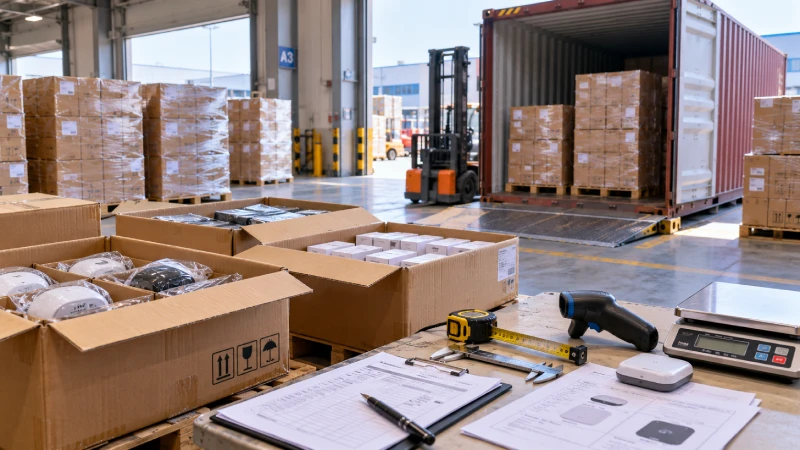
Documents Needed for Kenya PVoC Certification
There is no useful universal checklist that guarantees every product will be certified with exactly the same documents.
Requirements vary by cargo and certification route.
However, the following groups of documents are commonly relevant.
Core Shipment and Product Information
Prepare accurate information for:
- importer;
- exporter;
- manufacturer;
- commercial invoice;
- product description;
- model or SKU;
- quantity;
- country of origin;
- FOB value;
- packing details;
- HS classification;
- technical specifications.
The product description used during certification should remain consistent with the shipment documentation.
Conformity Evidence
Depending on the product, evidence can include:
- recognized laboratory test reports;
- manufacturer test reports where permitted;
- technical datasheets;
- product certification information;
- applicable quality-management-system certification;
- regulatory permits;
- previous conformity records.
Version 15 defines recognized testing pathways and also provides specific alternatives for defined product categories.
For example:
- consumer products generally use recognized laboratory test reports;
- certain machinery and spares can use internal manufacturer test reports where the stated conditions are met;
- the manual specifies additional conditions for medical equipment and automotive parts.
Do not apply these examples to every SKU without checking the relevant clause and standard.
Free Sale Certificate
The Free Sale Certificate deserves particular attention in the current PVoC process.
Version 15 defines it as a certificate issued by an authorized agency demonstrating that a product is freely sold and compliant with applicable regulatory requirements in its country of origin.
The manual assigns the exporter responsibility for obtaining and submitting the Free Sale Certificate to the PVoC contractor before CoC issuance. It also requires the importer to obtain it from the exporter and present it to KEBS at the port of entry.
For goods originating in China, confirm the acceptable issuing authority and format for the specific product with the selected PVoC contractor rather than assuming that one type of Chinese certificate is acceptable for every category.
Practical Document Checklist
| Document / information | Usually supplied by | What to check |
|---|---|---|
| Product description and model | Supplier/importer | Must match actual cargo |
| Commercial invoice | Exporter | Value, quantity and parties |
| Packing/product details | Exporter | Consistent SKU and quantities |
| HS code | Importer/clearing side | Product classification should be checked |
| Technical specification | Manufacturer | Must describe the actual product |
| Test report | Manufacturer/laboratory | Laboratory and standard must be acceptable |
| Product-specific permit | Importer / relevant regulator | Only where applicable |
| Free Sale Certificate | Exporter | Confirm acceptable issuer/form |
| RFC | Importer/exporter coordination | Submit to authorized contractor |
| Final CoC | PVoC contractor | Check details before shipment/clearance |
For the broader set of import documents—such as the Bill of Lading or Air Waybill, IDF, customs entry, Certificate of Origin and other clearance documents—use a dedicated Kenya import-document workflow rather than treating PVoC certification as the entire customs process.

Inspection, Testing and Kenya PVoC Routes A, B and C
KEBS Version 15 provides three certification routes for general goods.
The correct route is not simply chosen because the importer prefers the cheapest or fastest option. The PVoC contractor applies the route based on the programme requirements and its risk assessment.
Route A: Consignment Inspection and Testing
Route A is the shipment-level conformity route.
Under Version 15, products certified through Route A are subject to testing as applicable and physical inspection to demonstrate conformity with the relevant standard and regulatory requirements.
This route is particularly relevant to first-time or non-registered product shipments.
Certain higher-risk product categories listed by KEBS are limited to Route A regardless of risk assessment.
For China shippers, one operational rule is especially important:
All containerized Route A cargo from China must be sealed by the PVoC contractor, with the container and seal numbers indicated in the CoC.
That requirement can affect factory loading and FCL booking schedules.
Route B: Product Registration
Route B is intended for frequent shipments of homogeneous, lower-risk products with a demonstrated record of conformity.
KEBS Version 15 states that product registration is recommended for exporters with frequent shipments of homogeneous products and that qualifying registration is valid for one year. Previous Route A conformity evidence is part of the registration framework.
Route B does not mean:
“The product is registered, so future shipments never need inspection again.”
The contractor still conducts risk assessment for each certification request, and surveillance inspections and testing can remain part of the registration period.
Route C: Product Licensing
Route C is aimed at qualified manufacturers with an established quality-management system.
It involves assessment of the manufacturer’s production process and product licensing. Version 15 provides for licences that can be valid for up to three years, subject to programme and contract conditions. Surveillance and risk assessment remain part of the system.
Route Comparison
| Item | Route A | Route B | Route C |
|---|---|---|---|
| Main application | Shipment-level certification | Frequent homogeneous products | Qualified manufacturers |
| Registration required | No product registration route | Yes | Product licensing |
| Initial testing/inspection | Strong shipment-level intervention | Based on registration/risk controls | Manufacturer/QMS and product controls |
| Future surveillance | Shipment route | Yes | Yes |
| Typical user | Trader or manufacturer | Frequent exporter | Manufacturer with qualifying QMS |
| China Route A FCL sealing rule | Yes | Do not automatically apply Route A rule | Do not automatically apply Route A rule |
If your factory in China ships the same product to Kenya regularly, Route B or Route C may be worth discussing with an authorized PVoC contractor—but eligibility should be confirmed rather than assumed.
Kenya PVoC Cost and Processing Time
PVoC certification cost is separate from:
- sea freight;
- air freight;
- Kenyan import duty;
- VAT;
- port charges;
- destination delivery;
- customs-clearance charges.
Current PVoC Certification Fees
According to KEBS PVoC Manual Version 15 dated 19 February 2026:
| Route | Certification fee |
|---|---|
| Route A | 0.60% of FOB value |
| Route B | 0.55% of FOB value |
| Route C | 0.50% of FOB value |
For these three routes, Version 15 gives a USD 300 minimum and USD 3,500 maximum certification fee.
The manual states that these charges cover documentary verification, physical inspection and sampling, including container sealing where applicable.
They do not include some additional services, including:
- laboratory testing;
- manufacturer licensing;
- registration fees;
- bulk-shipment sampling;
- reinspection.
Those may be charged separately on a case-by-case basis.
Rate Data Note: These figures are KEBS PVoC certification fees from Version 15. They are not China-to-Kenya freight rates and should be reconfirmed before each shipment.
How Long Does the PVoC Process Take?
Version 15 provides operational service targets rather than a guaranteed end-to-end lead time.
It states that physical inspection should be undertaken within:
- four working days after receipt of a duly completed RFC for sea-bound shipments; and
- one working day for air-freight shipments,
unless the exporter requests another date in writing.
For compliant consignments, the manual gives CoC issuance targets of:
- two working days for sea cargo; and
- one working day for air cargo
after final documentation has been received and payment terms have been met.
These should not be interpreted as a promise that every China shipment can obtain a CoC in one or two days.
Actual preparation can take longer where:
- testing is still required;
- the supplier submitted incomplete technical documents;
- the product does not initially conform;
- a permit is missing;
- the inspector cannot access the goods;
- the cargo changes after the RFC;
- documents need correction.
For a new supplier or unfamiliar product, start the compliance check well before the planned vessel cut-off or flight.
What Happens If Cargo Arrives in Kenya Without the Required CoC?
Shipping first and trying to solve conformity requirements after arrival can create significantly more exposure than completing PVoC in China.
There are two different situations to understand.
Missing Required CoC Does Not Automatically Mean the Product Is Noncompliant
Under Legal Notice No. 78 of 2020, a product subject to the Order that arrives at a Kenyan port of entry without the required Certificate of Conformity, Certificate of Inspection or Certificate of Roadworthiness is subject to destination inspection.
The Order sets a destination-inspection fee equal to 5% of the approved customs value and also requires a security bond equal to 5% of the approved customs value in the circumstances specified by the law. The goods can be held at the port or an approved warehouse for inspection and testing.
That creates potential:
- additional inspection expense;
- testing expense;
- storage exposure;
- clearance delay;
- coordination problems with the clearing agent;
- disruption to planned inland delivery.
For sea cargo arriving through Mombasa, that can also disrupt container release and onward arrangements toward Nairobi or another inland destination.
Nonconforming Goods Are a Different Problem
Missing paperwork and actual product nonconformity should not be confused.
Legal Notice 78 states that a product that does not conform to Kenya standards, approved specifications or applicable regulations is not permitted to be imported and is to be re-exported or destroyed at the importer’s expense.
Therefore:
No required CoC → destination inspection may be required.
Product actually fails conformity requirements → rejection can lead to re-export or destruction.
It would be inaccurate to say that every shipment arriving without a CoC will automatically be destroyed.
The better operational strategy is to determine the requirement before the supplier ships the goods.
Review My Cargo Before Shipping: If your China supplier is ready to load but the PVoC status is still unclear, review the product, shipment documents and current compliance position before the cargo leaves China.
Importer, Exporter and Freight Forwarder Responsibilities
One of the most common problems in China-to-Kenya shipments is that each party assumes someone else is taking care of PVoC.
The Kenyan buyer may assume the Chinese supplier handles it.
The supplier may assume the freight forwarder handles it.
The freight forwarder may receive cargo only after production and discover that no certification process was started.
KEBS Version 15 makes it clear that both importers and exporters have compliance responsibilities.
| Party | Main PVoC role |
|---|---|
| Kenyan importer | Identify applicable Kenya requirements, request/coordinate PVoC, communicate requirements to supplier and ensure required conformity documentation is available |
| Chinese exporter / manufacturer | Manufacture compliant goods, provide technical evidence, support testing and inspection, and ensure required conformity certification is obtained before shipment |
| PVoC contractor | Assess conformity through documentary review, inspection, testing/sampling and certification as applicable |
| Kenyan clearing agent | Coordinate use/submission of compliance and customs documents during destination clearance |
| Freight forwarder | Coordinate freight around compliance milestones and avoid moving cargo before required pre-shipment steps have been completed |
KEBS specifically assigns importers responsibility for obtaining applicable Kenya standards and regulatory requirements, sharing them with suppliers, ensuring compliant goods are shipped, and obtaining the Free Sale Certificate from the exporter.
The exporter is responsible for ensuring the goods meet the relevant requirements, arranging testing and facilitating physical inspection where necessary, and ensuring products subject to PVoC are issued the relevant certificate before shipping.
A freight forwarder can help coordinate the shipping timeline around these requirements, but the forwarder is not KEBS and does not replace the authorized PVoC contractor or product regulator.
That distinction is particularly important under DAP, DDP and door-to-door arrangements.
A commercial Incoterm does not automatically remove Kenyan regulatory obligations or make product compliance someone else’s legal responsibility.
China-to-Kenya PVoC Pre-Shipment Checklist
Use this checklist before supplier pickup, consolidation or final FCL loading.
Product & Classification
- Exact product description is confirmed.
- Model/SKU numbers are confirmed.
- Product specifications match what will actually be shipped.
- HS classification has been checked.
- Intended use of the product is clear.
Kenya Compliance
- Applicable Kenya Standard or approved specification has been identified.
- PVoC applicability has been checked.
- Any claimed exemption has been verified against the importer/product conditions.
- Other Kenyan regulator requirements have been checked.
- Required product-specific permits are available where applicable.
PVoC Application
- Current KEBS-authorized contractor for China has been confirmed.
- RFC has been submitted where required.
- Commercial and product documents have been provided.
- Required test reports are acceptable.
- Free Sale Certificate requirements have been addressed.
- Supplier understands the inspection procedure.
Before Loading
- Inspection has been completed or scheduled at the correct stage.
- Goods available for inspection match submitted documents.
- Product models and quantities have not changed.
- Packaging and marking are consistent with the certification file.
- For applicable Route A China FCL cargo, contractor sealing has been coordinated.
- Container and seal numbers are accurately recorded.
Before Departure from China
- Draft CoC has been checked.
- Importer/exporter names are correct.
- Product descriptions and models are correct.
- Invoice details are correct.
- Quantities are correct.
- Container/seal details are correct where applicable.
- Final CoC has been issued.
- Kenyan importer and clearing agent have received the required documents.
- No cargo details have been changed after certification without checking their effect on the CoC.
If you are consolidating cargo from several Chinese suppliers, perform the compliance check before all goods are combined into the final shipment.
One supplier with an unresolved permit, test report or PVoC problem can disrupt the schedule for the entire consolidated shipment.
Special Considerations for LCL, FCL, Air Freight and Express Shipments
PVoC is a product-compliance programme, not a shipping method. Choosing LCL, FCL, air freight or express does not by itself determine whether conformity requirements apply.
However, the shipping method can change how you coordinate the process.
FCL Shipments
For applicable Route A containerized cargo from China, the contractor-sealing requirement makes PVoC closely connected to container stuffing.
Inspection therefore needs to be coordinated before the loaded container moves away from the relevant inspection/loading stage.
LCL Shipments
With LCL, the goods may move from the supplier to a consolidation warehouse before being loaded into a shared container.
Do not send the goods into consolidation and assume compliance can always be corrected later.
Check:
- whether physical inspection needs access to the cargo;
- whether individual cartons/SKUs need to remain identifiable;
- whether sampling may be required;
- whether supplier documents match each item being consolidated.
Air Freight
KEBS Version 15 has shorter operational inspection and certification targets for air shipments, but that does not eliminate testing or documentation requirements.
If laboratory testing is required, the compliance timeline may still be longer than the airport-to-airport transit time.
Express / Courier Cargo
Do not assume a small shipment is automatically exempt because it moves by DHL, FedEx, UPS or another courier.
Legal Notice 78 includes a specific exemption category involving courier parcels meeting criteria specified by the relevant authorities, with supporting documentation required. That is not the same as a blanket exemption for every express shipment.
What About Dangerous Goods or Project Cargo?
PVoC and transport-safety requirements are separate layers.
If you are shipping:
- lithium batteries;
- chemicals;
- flammable cargo;
- other dangerous goods,
the cargo may require PVoC or another product conformity process and separate dangerous-goods transport documentation, packaging, labeling and carrier acceptance.
Similarly, oversized machinery or project cargo may have:
- conformity requirements;
- customs requirements;
- abnormal-load or inland transport planning;
- lifting and loading requirements;
- special equipment needs.
Do not assume that successful PVoC certification means the cargo is automatically acceptable for ocean or air carriage.
For unusual products, check both the Kenyan import-compliance path and the transport acceptance requirements before supplier pickup.
FAQ
Does every product imported from China to Kenya need a CoC?
Not every import follows the same pre-shipment CoC process. Kenya's conformity rules contain specific exemptions, and some products are governed under other legislation. China is within the KEBS PVoC programme, so normal commercial goods should be checked for PVoC applicability before shipment rather than assuming an exemption.
Who issues the Certificate of Conformity for goods shipped from China to Kenya?
For applicable PVoC shipments, conformity assessment is conducted by KEBS-appointed PVoC contractors operating in the relevant geographical zone. China is currently included in Zone 1, but the active contractor should be confirmed against current KEBS information before submitting an RFC.
Can my Chinese supplier arrange the Kenya PVoC inspection?
The exporter plays an active role because it must provide documents, make products available, support testing and facilitate physical inspection where required. The Kenyan importer also retains responsibilities, including identifying applicable requirements and ensuring compliant goods are shipped.
Does every PVoC shipment require laboratory testing?
No. Testing requirements depend on the product, certification route and available conformity evidence. The PVoC contractor determines the applicable assessment based on the product and current KEBS requirements.
How long does Kenya PVoC inspection take in China?
KEBS Version 15 gives operational targets of four working days for physical inspection of sea-bound shipments and one working day for air shipments after receipt of a duly completed RFC, unless another date is arranged. CoC issuance targets for compliant consignments are two working days for sea cargo and one working day for air cargo after final documentation and payment conditions are satisfied. These are process targets, not guaranteed total lead times.
What happens if my shipment leaves China without the required CoC?
Goods subject to the conformity rules that arrive without required conformity documentation can be sent through destination inspection. This may involve additional fees, a security bond, inspection, testing and possible clearance delays. If the goods themselves fail conformity requirements, rejection, re-export or destruction can apply.
Is a CoC the same as a Certificate of Origin or import permit?
No. A CoC demonstrates conformity under the applicable assessment process. A Certificate of Origin addresses where the goods originate, while a product-specific permit is an approval issued under another regulatory framework where required.
Plan PVoC Before Your Cargo Leaves China
The safest time to resolve Kenya PVoC requirements is before the supplier loads the shipment, not after the goods arrive in Mombasa.
For a China-to-Kenya shipment, the working sequence should be:
Identify the product → confirm HS classification and Kenya requirements → check exemptions and other regulators → select the appropriate PVoC contractor → submit the RFC and conformity documents → complete testing/inspection → coordinate loading and sealing where applicable → review the draft CoC → receive the final certificate → ship the cargo.
For FCL, LCL, air freight or consolidated shipments, the freight schedule should then be built around those compliance milestones.
A CoC should also be viewed as one part of the import process—not a substitute for customs documentation, import permits, taxes or transport requirements.
If your supplier is already preparing the cargo, send the product name, model, HS code if known, quantity, supplier location, packing details and available compliance documents so the shipment can be reviewed before departure.
Send Cargo Details — Review the shipment before booking or loading.
