
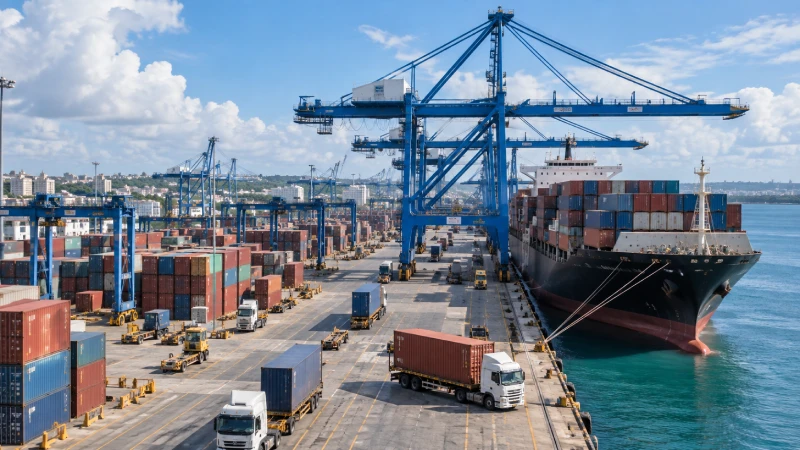
When a container from China reaches Mombasa, the ocean voyage may be over, but the import process is not.
The container still has to move through customs declaration, document checks, any required regulatory or physical verification, customs release, shipping-line and port procedures, truck collection or inland routing, and—when carrier-owned equipment is used—empty-container return.
For an importer, the main risk is not simply whether Customs will release the cargo. It is whether all parties are ready before different port and carrier cost clocks begin to run.
This guide explains what normally happens after a China-origin sea shipment arrives at the Port of Mombasa, who is involved at each stage, which documents should already be ready, and where delays commonly turn into storage, demurrage or detention costs.
For the wider route-planning picture—including shipping methods, general transit-time considerations and China-side preparation—see Shipping from China to Kenya.
Data Note: The regulatory and port information below reflects official KRA, KEBS and Kenya Ports Authority information available in September 2026. Port tariffs, carrier free time and product-specific import requirements can change. Shipment-specific requirements should always be checked before cargo leaves China.
Quick Answer: What Happens After a Container Arrives at Mombasa?
For a standard containerized import, the destination process can be understood as:
Vessel arrival → container discharge → customs entry and document processing → verification or inspection if required → customs/regulatory release → shipping-line and KPA collection procedures → gate-out → inland delivery → empty-container return
Several of these steps can be prepared before the ship reaches Kenya.
That matters because Kenya Ports Authority’s current tariff gives domestic import containers five consecutive days of free port storage, and the calculation starts from the day after discharge. Saturdays, Sundays and public holidays are included in those consecutive days. See the KPA Tariff 2025.
The five-day KPA period should not be confused with the free time offered by the shipping line. Carrier demurrage and detention are governed separately by the carrier’s tariff or contract.
The practical objective is simple:
Do as much documentation, customs and delivery preparation as possible before the container is discharged.
What Happens After Your Shipment Arrives at Mombasa Port?
A common mistake is to treat “the ship has arrived” as if it means “the cargo is ready for collection.”
It does not.
There are several separate milestones.
Arrival and Discharge Are Not the Same as Cargo Release
A vessel is first scheduled, berthed and discharged. The shipping line or its appointed agent is responsible for vessel and cargo information required by the port.
KPA’s current tariff requires vessel documentation to be submitted electronically before arrival. For long-haul vessels, the tariff specifies at least 48 hours before ETA, and the required documentation for a discharging vessel includes the cargo manifest. See the KPA Tariff 2025.
After the container is physically discharged, it remains under port and customs control until the relevant release procedures are completed.
For the importer, the normal sequence is broadly:
- The vessel arrives and the container is discharged.
- The shipment is matched against the manifest and customs records.
- The Kenyan clearing agent processes or completes the customs entry.
- Supporting documents are reviewed.
- Applicable duties and taxes are dealt with.
- KEBS or another regulator may need to approve the goods where applicable.
- Customs may select the shipment for verification or inspection.
- KRA releases the compliant consignment.
- Shipping-line and KPA collection requirements are completed.
- The container is positioned, loaded to the truck and issued for gate-out.
- The cargo moves to Nairobi, another Kenyan destination or the location stated in the transport arrangement.
- If it is a carrier-owned FCL container, the empty equipment must later be returned according to the carrier’s instructions.
The exact workflow can differ for FCL, LCL, CFS cargo, regulated products and special cargo, but the important point remains the same:
Discharge is the beginning of the destination process, not the end of it.
Some Clearance Work Should Start Before Arrival
Kenya has been expanding pre-arrival cargo processing. In January 2026, KRA and KPA announced measures intended to increase the use of pre-arrival processing and reduce cargo dwell time at Mombasa. See the KRA and KPA port reform announcement.
For an importer, this means there is little reason to wait for the vessel to berth before sending documents to the clearing agent.
Ideally, the Kenyan clearance side should already know:
- the Bill of Lading details;
- commercial invoice details;
- packing information;
- HS classification being used;
- Certificate of Origin status;
- ACD status;
- product compliance requirements;
- final inland destination; and
- how the container is expected to leave Mombasa.
If these questions only start being discussed after discharge, valuable free-storage time can disappear quickly.
Manifest, ACD and Customs Entry Are Not the Same Thing
The introduction of Kenya’s Advance Cargo Declaration has made shipment documentation easier to misunderstand.
Importers may hear three separate terms:
- cargo manifest;
- Advance Cargo Declaration;
- customs import entry.
They are related, but they do not serve the same purpose.
| Record | Main Purpose | Timing | Mainly Handled By |
|---|---|---|---|
| Cargo Manifest | Records cargo carried on the vessel | Before vessel arrival | Shipping line / carrier / agent |
| Advance Cargo Declaration (ACD) | Provides advance cargo information before loading for Kenya | At origin before shipment | Shipper / exporter / responsible filing party |
| Customs Import Entry | Declares goods for import clearance in Kenya | Pre-arrival / clearance stage | Kenyan licensed clearing agent on behalf of importer |
Cargo Manifest
The cargo manifest is part of the vessel and cargo control process.
KPA lists the cargo manifest among the electronic documents required for a discharging vessel. Changes involving container status or final destination can also require an approved manifest amendment. See the KPA Tariff 2025.
This is why details such as:
- consignee;
- Bill of Lading number;
- container number;
- cargo description; and
- final destination
should be checked before final shipping documents are issued.
A destination or consignee error that looks small when the cargo is still in China can become much harder to correct when the container is already in Mombasa.
Advance Cargo Declaration
KRA launched its ACD platform for containerized cargo destined for Kenyan ports on August 3, 2026.
Under the current system, exporters shipping containerized cargo to Kenya obtain an ACD reference at the port of loading. KRA states that the application uses a draft Bill of Lading, commercial invoice, freight invoice and export declaration, and the ACD reference is then endorsed on the Bill of Lading before the shipment proceeds to Kenya. See the KRA Advance Cargo Declaration notice.
This is therefore not something an importer should first discover after the vessel has arrived.
For China-origin shipments booked after implementation of the new system, the ACD should be included in the origin-side document preparation.
Kenyan Customs Import Entry
The customs entry is the declaration used to clear the goods for import into Kenya.
KRA states that imported commercial goods require the involvement of a licensed customs clearing agent, who declares the goods in the customs system using information and documents supplied by the importer. See the KRA import guidance.
This declaration deals with issues such as:
- importer information;
- HS classification;
- customs value;
- origin;
- quantity;
- supporting documents;
- applicable duties and taxes; and
- permits or regulatory approvals where required.
So an ACD does not mean the shipment has been customs-cleared.
Similarly, the carrier’s manifest does not replace the import entry.
Operational Takeaway
Before cargo leaves China, make sure your supplier, China-side forwarder and Kenyan clearing side are not using the words “manifest,” “ACD” and “customs entry” interchangeably.
Each belongs to a different part of the process.
Check My Kenya Import Requirements: If you are unsure whether the shipment documents being prepared in China match current Kenyan requirements, review them before the container is loaded rather than after it reaches Mombasa.
Documents Needed Before Cargo Can Be Released
Document preparation should not begin with the vessel arrival notice.
For most commercial sea shipments, the importer and clearing agent should already have a working document file before discharge.
Core Shipment and Customs Documents
Depending on the shipment, the file may include:
- Bill of Lading;
- commercial invoice;
- packing list;
- freight invoice;
- Certificate of Origin;
- ACD reference for applicable containerized shipments;
- Kenyan importer and tax information;
- customs import documentation prepared through the clearing agent;
- permits or licences where required;
- product conformity documentation where applicable; and
- the relevant export declaration or equivalent record from the country of export.
KRA’s current import guidance lists documents including a commercial invoice, Bill of Lading, Certificate of Origin, freight invoice, packing list and applicable permits or conformity documentation, and states that importers normally engage a licensed customs clearing agent for the declaration and clearance process. See the KRA import guidance.
Certificate of Origin
Kenya strengthened its Certificate of Origin requirement in 2025.
KRA states that imported consignments are generally required to be accompanied by a Certificate of Origin, subject to specified exceptions and provisional arrangements. Full enforcement under the 2025 implementation took effect from October 1, 2025. See the KRA Certificate of Origin notice.
For shipments from China, the Certificate of Origin should therefore be discussed with the exporter before dispatch.
Do not wait until Mombasa to ask whether the supplier can provide one.
China Export Documentation Matters More in 2026
There is another requirement importers should now include in their shipment file.
From September 1, 2026, KRA requires importers to obtain and retain an export declaration, export entry, customs export certificate or equivalent document from the country of export. KRA also advises importers to request the document from suppliers and retain the relevant records for at least five years. See KRA’s Finance Act 2026 guidance.
For a China-origin shipment, the importer should therefore coordinate with the supplier or China export customs broker to obtain the applicable export record.
The exact document used for a specific transaction should be confirmed with the Kenyan clearing agent where necessary.
Product-Specific Documents
Not every cargo has the same compliance requirements.
Depending on the product, additional documents may include:
- KEBS conformity documentation;
- sector-specific import permits;
- plant or animal health documentation;
- communications or electrical approvals;
- dangerous-goods documents;
- safety data sheets;
- special licences; or
- other regulator-specific certificates.
KEBS operates the PVoC system to assess covered products against applicable Kenyan standards and regulations. Current KEBS guidance requires goods within the PVoC scope to follow the applicable pre-export conformity process or, where the rules provide for it, destination inspection procedures. See the KEBS PVoC guidance.
Do not assume that every product follows exactly the same CoC procedure.
Product classification matters.
Pro Tip: Send the final invoice, packing list and Bill of Lading draft to the Kenyan clearing agent before the vessel sails or well before arrival. A mismatch in product description, quantity, consignee details or classification is usually easier to resolve while the cargo is still in the normal document-processing stage.
Customs Declaration, Verification and Inspection
Once the shipment information is ready, the licensed clearing agent handles the customs entry and clearance process with KRA.
Declaration, HS Code and Customs Value
The customs declaration uses the shipment information to establish how the cargo is being imported.
This includes:
- tariff classification;
- declared customs value;
- country of origin;
- importer identity;
- quantities;
- permits and certificates; and
- applicable duties and taxes.
KRA’s published import process describes entry declaration, tax payment, verification and final clearance/release as separate stages. See the KRA import guidance.
This article does not attempt to provide a universal Kenya duty percentage because the amount depends on the HS code, customs value, origin and the levies or taxes applicable to that particular product.
If there is uncertainty about classification, it should be resolved before arrival rather than guessed during clearance.
Why a Shipment May Be Verified
Customs clearance is not always a paperwork-only process.
Depending on the declaration, risk controls, product and regulatory requirements, the cargo may be subject to document checks, scanning, physical verification or another agency’s inspection.
A physical examination does not automatically mean something is wrong.
However, delays are more likely when there are inconsistencies between:
- invoice description;
- packing list;
- manifest;
- Bill of Lading;
- HS code;
- declared quantity;
- origin documentation; or
- physical cargo.
For regulated goods, the relevant authority may also need to provide its approval before the shipment can progress.
Customs Release Is Not Always Immediate Gate-Out
This distinction is important.
KRA releasing the customs declaration does not necessarily mean the truck can immediately drive to the port and leave with the container.
Additional processes can still involve:
- regulator release where applicable;
- carrier or shipping-agent requirements;
- payment of applicable port or facility charges;
- KPA pickup procedures;
- container positioning; and
- gate-pass issuance.
Kenya’s official Trade Information Portal shows import procedures in which customs approval is followed by KPA steps including a pickup order, KPA charges, position slip, loading to the truck, gate pass and final port exit. See the Kenya Trade Information Portal procedure.
Think of customs release and physical release as related but separate milestones.
From Customs Release to Container Collection at Mombasa
After the customs side is complete, the importer still needs to get the physical cargo out of the port or relevant facility.
It helps to understand who controls what.
| Party | Main Role in the Release Chain |
|---|---|
| KRA | Customs declaration, assessment, verification and customs release |
| KEBS / other regulator | Product-specific approval where applicable |
| Shipping line / agent | Carrier documentation and container/delivery release requirements |
| KPA / terminal | Port handling, pickup, positioning and gate-out procedures |
| Clearing agent | Coordinates customs and related clearance steps for the importer |
| Transporter | Collects and moves the container or cargo inland |
Terminology may differ by shipment, terminal and carrier, but one party’s release should not automatically be treated as everyone’s release.
Container Pickup and Gate-Out
For cargo moving directly through KPA’s operational process, the post-clearance sequence can include:
KRA release → pickup order → KPA charges → position slip → truck loading → gate pass → physical port exit
KPA’s tariff defines a pickup order/pre-advice as an electronic accounting document used to facilitate invoicing and cargo delivery or receipt. It also states that containerized cargo leaving the port is issued a gate pass, with the tariff specifying a validity period for containerized-cargo gate passes. See the KPA Tariff 2025.
The Kenya Trade Information Portal similarly lists container loading, gate-pass issuance and exit as separate operational steps after the earlier clearance procedures. See the Kenya Trade Information Portal procedure.
FCL and LCL Do Not Always Follow the Same Physical Process
An FCL importer may arrange collection of the full container for inland delivery.
LCL cargo, by contrast, normally involves deconsolidation before the individual shipment can be released. The cargo may therefore pass through a Container Freight Station or another facility, with procedures and charges that are different from collecting an intact FCL container.
For that reason, do not apply an FCL port-storage table automatically to an LCL shipment.
Ask:
- where the LCL cargo will be deconsolidated;
- which CFS is involved;
- when cargo becomes available;
- what facility free period applies; and
- which local charges apply to that consignment.
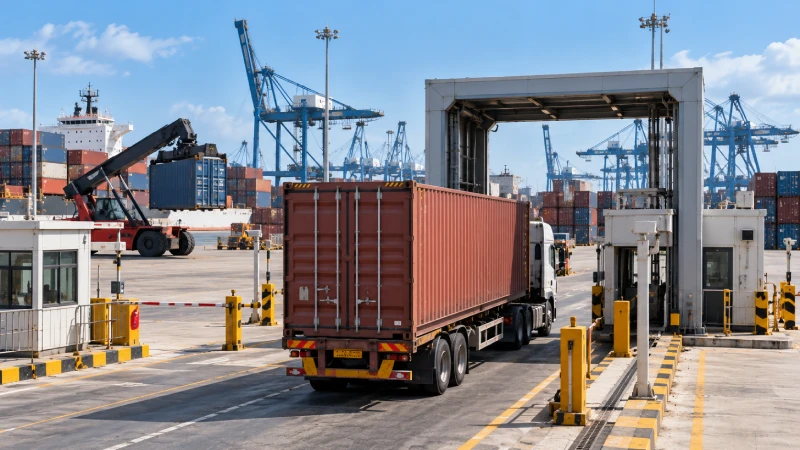
Mombasa Free Storage, Demurrage and Detention
This is one of the most important parts of the Mombasa import process because the word free time is often used as though it refers to one single deadline.
It does not.
An importer may need to monitor several different clocks.
KPA Port Storage Free Period
Under the Kenya Ports Authority tariff currently in force, domestic import containers receive the following port storage treatment:
| Period | 20′ Container | 40′ Container |
|---|---|---|
| First 5 consecutive days | Free | Free |
| Days 6–21 | USD 30/day | USD 60/day |
| Thereafter | USD 50/day | USD 100/day |
KPA defines the import free-storage period as beginning on the day after discharge from the vessel. Free days run consecutively and include Saturdays, Sundays and public holidays. See the KPA Tariff 2025.
Source note: These are KPA storage tariff items, not an all-inclusive Mombasa destination charge. The current KPA tariff took effect on September 15, 2025.
Other charges can still apply separately.
Example of How the KPA Clock Works
Suppose a standard domestic import container is discharged on Monday.
For KPA storage purposes, the free period starts from Tuesday.
The five consecutive free days would therefore run:
- Tuesday;
- Wednesday;
- Thursday;
- Friday;
- Saturday.
Saturday does not disappear because it is a weekend.
If the container remains in port after the applicable free period, KPA storage can begin to accrue under the tariff.
This is why importers should track the actual discharge date, not simply the vessel’s scheduled ETA.
Shipping-Line Demurrage Is a Separate Clock
A shipping line may also provide container free time.
That free-time arrangement is governed by the carrier’s tariff, contract, booking conditions and equipment type—not by KPA’s five-day port-storage rule.
Current published carrier tariffs for Kenya demonstrate that shipping lines can use their own combined demurrage-and-detention periods and rates. The carrier’s allowance therefore does not have to match KPA’s storage-free period. See the Maersk Kenya import information.
Never assume:
“KPA gives me five days, so I have five days for everything.”
You need to check both:
- KPA storage deadline
- shipping-line equipment free-time deadline
Depending on the carrier arrangement, the second clock may use different terminology or a combined demurrage-and-detention structure.
Detention and Empty-Container Return
Once a carrier-owned container leaves the port, the equipment is still not the importer’s property.
After delivery and unloading, it usually has to be returned to the depot or location nominated by the shipping line.
If the container is retained beyond the carrier’s permitted period, detention or the relevant combined D&D charge can continue to accrue under the carrier’s rules.
Before the truck leaves Mombasa, confirm:
- empty-container return depot;
- return deadline;
- depot acceptance instructions;
- container condition requirements;
- trucker’s responsibility; and
- whether the final delivery schedule leaves enough time for unloading and return.
Think in Three Cost Clocks
A useful operating model is:
Clock 1 — KPA Storage
The container remains in the port beyond KPA’s storage-free period.
Clock 2 — Carrier Demurrage / Combined D&D
Carrier-owned equipment exceeds the shipping line’s agreed free time.
Clock 3 — Empty Return / Detention
The container has left the port but is not returned according to the carrier’s equipment terms.
These clocks can overlap.
Pro Tip: Put the KPA storage deadline and shipping-line free-time deadline on the same shipment tracker. Do not rely on someone saying “you still have a few free days” without specifying which free-time clock they mean.
Check My Mombasa Release Plan: For a container already sailing to Kenya, the most useful review is not just the freight rate. Check whether the clearance documents, KPA deadline, carrier free time, transporter and inland delivery arrangement are all aligned before discharge.
Moving Cargo from Mombasa to Nairobi or the Final Destination
Physical release from Mombasa is not necessarily the final logistics step.
The cargo still has to reach the consignee.
For Kenya imports, this may involve direct road delivery from Mombasa, movement to an inland container depot, or another inland arrangement depending on the Bill of Lading, carrier service and final destination.
Direct Delivery from Mombasa
For cargo leaving Mombasa by road, the importer or logistics coordinator should confirm:
- final delivery address;
- truck type;
- container size and weight;
- road and site accessibility;
- unloading equipment;
- unloading appointment;
- time required to unload; and
- empty-container return plan.
For a standard warehouse delivery, the most overlooked detail is often not the port collection itself, but whether the consignee can unload the container quickly enough to return it before the carrier deadline.
For machinery, heavy cargo or a site without a loading dock, this becomes even more important.
Nairobi ICD Routing
Not every Nairobi-bound shipment has to follow exactly the same physical routing.
Kenya Ports Authority operates inland container depots including Nairobi, Naivasha and Eldoret. KPA states that Nairobi ICD is connected to Mombasa by SGR and Meter Gauge Rail and handles cargo under Through Bill of Lading and merchant-haulage arrangements. See the KPA Inland Container Depots page.
This means the inland plan should be understood before shipping.
Ask:
- What final destination is shown on the Bill of Lading?
- Is the shipment booked through to an ICD?
- Is the carrier arranging inland transport?
- Is it merchant haulage?
- Will the consignee clear or collect the container at Mombasa or inland?
- Where will the empty container ultimately be returned?
Do not wait until Mombasa arrival to decide whether a container should have been documented for an inland destination.
KPA’s tariff specifically notes that changes to container status or final destination can require KRA approval and a manifest amendment. See the KPA Tariff 2025.
Empty Return Should Be Planned Before Final Delivery
For FCL shipments, the final inland journey should be planned backwards from the empty-container return deadline.
For example:
Mombasa gate-out → Nairobi transport → warehouse appointment → unloading → empty depot return
If one stage is not ready, the container can remain tied up even though customs clearance was completed successfully.
Pro Tip: Ask for the nominated empty depot and carrier return deadline before dispatching the truck from Mombasa. This is especially important for Nairobi and other inland destinations where road time and unloading time consume part of the available equipment free time.
Check My Mombasa-to-Nairobi Route: If the final destination is Nairobi or another inland city, confirm the Bill of Lading routing, haulage arrangement and empty-return plan before deciding how the container will leave Mombasa.
Dangerous Goods and Oversized Cargo Need Earlier Coordination
The standard-container process should not be applied blindly to dangerous goods, out-of-gauge equipment or project cargo.
These shipments require earlier operational planning.
Dangerous Goods
Dangerous cargo may involve:
- correct IMDG classification;
- dangerous-goods declaration;
- SDS documentation;
- carrier acceptance;
- port handling restrictions;
- segregation or storage requirements;
- specialized trucking; and
- product-specific Kenyan permits.
KPA’s current tariff is particularly important here.
For dangerous-goods containers, the tariff lists storage from the second day of landing after the first 24 hours, at USD 53 per day for a 20-foot container and USD 80 for a 40-foot container. See the KPA Tariff 2025.
This is very different from the five-day free-storage treatment for a standard domestic import container.
The cargo therefore needs to be clearance-ready before arrival.
Out-of-Gauge and Project Cargo
Out-of-gauge equipment can also face more restrictive storage treatment.
KPA’s current tariff lists OOG container storage from the second day of landing at USD 90 per day for a 20-foot unit and USD 130 for a 40-foot unit. See the KPA Tariff 2025.
In addition to clearance, project cargo planning may require:
- crane or lifting arrangements;
- suitable low-bed or specialized trucks;
- road-access review;
- abnormal-load permissions where applicable;
- discharge coordination;
- site readiness; and
- route planning.
Do not ship oversized equipment from China first and start discussing the Mombasa delivery method later.
Special cargo should be planned from origin to final site before departure.
How to Reduce Mombasa Port Clearance Delays
Avoiding delay is not mainly about trying to make Customs work faster after arrival.
It is about removing predictable problems before discharge.
A practical shipment-readiness process looks like this.
Before the Vessel Arrives
Confirm the following with the supplier, forwarder and Kenyan clearing side:
- consignee name is correct;
- Bill of Lading details match the commercial documents;
- cargo description is consistent;
- container numbers are correct;
- commercial invoice is final;
- packing list is final;
- HS classification has been reviewed;
- Certificate of Origin is available where required;
- ACD has been completed for applicable containerized cargo;
- China export declaration or equivalent export record is available;
- KEBS/PVoC status has been confirmed where applicable;
- sector permits have been obtained where required;
- customs entry is being prepared;
- funds for duties, taxes and destination charges are ready;
- final destination is confirmed.
Before Discharge
The Kenyan import team should know:
- customs entry status;
- whether there is an outstanding document query;
- whether an inspection or regulator release is expected;
- KPA free-storage deadline;
- shipping-line free-time deadline;
- shipping-line release requirements;
- which truck or inland transport arrangement will be used;
- whether the cargo is moving directly from Mombasa or under an inland arrangement.
After Customs Release
Confirm:
- all required regulatory releases are complete;
- carrier documentation is complete;
- pickup order or relevant port instructions are ready;
- applicable KPA or facility charges are paid;
- container positioning can proceed;
- truck is available;
- gate pass can be issued;
- final receiver is ready to unload;
- empty depot and return deadline are known.
Do Not Wait for One Party to Tell Everyone Else What to Do
Mombasa imports often involve several companies and authorities.
The China supplier may believe its responsibility ended when the cargo sailed.
The shipping line may only manage its transport and equipment obligations.
The Kenyan clearing agent may focus on customs procedures.
The transporter may only move the container after receiving pickup instructions.
The importer therefore needs someone to keep the entire shipment timeline visible.
That is particularly important when a document problem on one side can cause storage or container charges on another.
A Practical Mombasa Arrival Readiness Checklist
Before the vessel reaches Kenya, the importer should be able to answer yes to most of the following.
Shipping Documents
- Is the final Bill of Lading correct?
- Do consignee and shipment details match the customs file?
- Is the commercial invoice final?
- Is the packing list final?
- Is the Certificate of Origin available?
- Is the applicable China export declaration/export record available?
- Is the ACD reference in place for applicable containerized cargo?
Customs and Compliance
- Has a licensed Kenyan clearing agent been appointed?
- Has the HS code been reviewed?
- Does the agent have all documents needed for the customs entry?
- Are applicable duties and taxes being planned?
- Has KEBS/PVoC applicability been checked?
- Are other sector permits required?
- Are there any outstanding customs or regulator questions?
Port and Carrier
- What is the actual vessel ETA?
- When is the container expected to discharge?
- When will the KPA storage-free period end?
- What free time does the shipping line provide?
- Are demurrage and detention combined or separate under the carrier’s terms?
- What carrier release requirements remain?
Inland Delivery
- Is the container collecting from Mombasa or moving to an ICD?
- Is the transporter booked?
- Is the delivery location accessible for the container and truck?
- Is unloading equipment ready?
- Where will the empty container be returned?
- What is the last safe return date?
If several of these questions still have no answer when the vessel berths, the shipment is already exposed to avoidable delay.
Final Takeaway
Clearing a China-origin shipment through Mombasa Port is not one single customs action.
It is a chain of connected operations:
origin documentation → manifest and ACD → Kenyan customs entry → regulatory checks → customs release → carrier and KPA procedures → container collection → inland movement → empty return
The most important distinction for an importer is this:
Arrival is not release. Customs release is not automatically port exit. And KPA storage is not the same thing as shipping-line demurrage or detention.
For a standard domestic import container, the current KPA tariff provides only five consecutive free storage days, counted from the day after discharge. That makes pre-arrival preparation much more valuable than trying to solve document problems once the cargo is already sitting in Mombasa. See the KPA Tariff 2025.
If your shipment is still in China, review the import file before loading.
If the container is already sailing, use the remaining transit time to confirm customs documents, carrier release conditions, port deadlines, inland delivery and empty return.
Send Cargo Details
For a shipment from China to Kenya, prepare the following information before discussing the destination plan:
- cargo description;
- origin city in China;
- FCL or LCL;
- container size, or package count/weight/CBM;
- Bill of Lading status;
- vessel ETA if already shipped;
- HS code if known;
- final destination in Kenya;
- KEBS or permit status where applicable;
- whether a Kenyan clearing agent has already been appointed; and
- any dangerous-goods, oversized or special-handling requirements.
Winsail Logistics focuses on shipments originating from China. The destination-side customs and delivery scope should be confirmed for the individual shipment and coordinated with the relevant importer, licensed clearing agent, carrier and local service providers.
FAQ
What happens after my container is discharged at Mombasa Port?
After discharge, the cargo still needs to complete the applicable customs and regulatory process. A typical shipment moves through customs declaration and document review, possible verification or inspection, customs release, shipping-line and KPA collection procedures, gate-out and inland delivery. The exact sequence depends on the cargo, terminal, customs status and destination.
How many free storage days does an import container get at Mombasa Port?
Under the current KPA tariff, a standard domestic import container receives five consecutive days free of KPA storage charges. For imports, the free-storage period begins on the day after discharge, and Saturdays, Sundays and public holidays are included. This refers to KPA storage and does not automatically represent the shipping line's container free time.
Are port storage, demurrage and detention the same charge?
No. Port storage relates to cargo or containers occupying port space beyond the applicable free-storage period. Demurrage or combined D&D relates to the shipping line's container equipment under carrier terms. Detention commonly refers to carrier equipment remaining outside the terminal beyond the permitted return period, although some carriers use combined charging structures.
Does the Kenya ACD replace the cargo manifest or customs import entry?
No. The ACD is an advance declaration obtained before loading applicable containerized cargo for Kenya. The vessel cargo manifest is part of the carrier and port cargo-control process, while the customs import entry is used for Kenyan import clearance. KRA's ACD system has applied to containerized cargo destined for Kenyan ports since August 3, 2026.
How long does customs clearance at Mombasa take?
There is no reliable fixed clearance time that applies to every shipment. Timing depends on document readiness, customs entry accuracy, tax payment, HS classification, KEBS or other regulator requirements, customs risk selection, verification or inspection, document amendments, carrier release and port collection arrangements.
Can my container move from Mombasa to Nairobi ICD?
Yes, depending on how the shipment is routed. KPA operates Nairobi ICD and states that it is connected with Mombasa by SGR and MGR services. Cargo can move under Through Bill of Lading or merchant-haulage arrangements. The Bill of Lading and inland transport arrangement should be checked before arrival because not every Nairobi-bound container follows the same route.
When should I arrange the empty-container return?
Ideally, before the container leaves Mombasa. Confirm the carrier's nominated depot, free-time deadline and return requirements before inland delivery, especially for Nairobi or other inland destinations where transport and unloading consume part of the available container time.
Regulatory Note: Kenya import procedures depend on the HS code, cargo type, importer status and current regulation. KRA, KEBS, KPA, other relevant authorities and the applicable shipping line should be checked for shipment-specific requirements before cargo departs China.
