
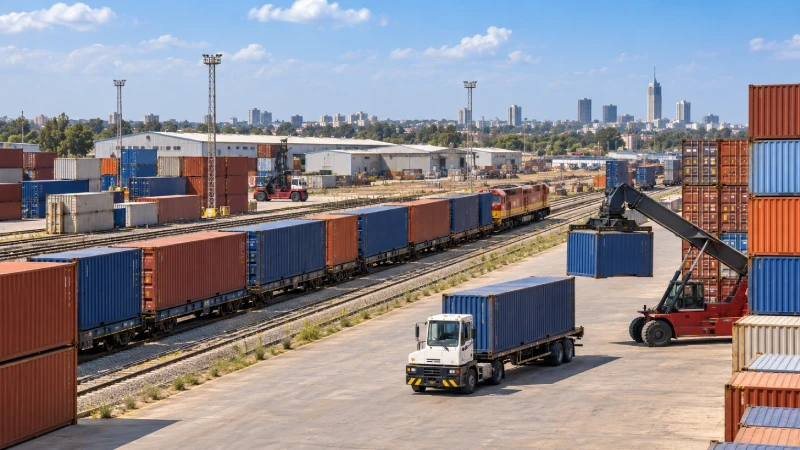
If your container is shipping from China to a warehouse, factory, or distribution point in Nairobi, the ocean journey may end at Mombasa—but your container journey may not.
Some import containers are moved inland from the Port of Mombasa to the Nairobi Inland Container Depot, commonly called Nairobi ICD, ICDN, or Embakasi ICD, where the importer and appointed clearing agent coordinate customs clearance, terminal release, container collection, and final delivery.
However, there is one important point to understand before booking:
Not every container destined for Nairobi automatically moves through Nairobi ICD.
Kenya Ports Authority (KPA) states that Nairobi ICD is connected to Mombasa by Standard Gauge Railway (SGR) and Meter Gauge Railway services and handles cargo moving under arrangements such as Through Bills of Lading and merchant haulage. The intended routing should therefore be confirmed with the shipping line, freight forwarder, and Kenyan clearing agent before the container leaves China. Kenya Ports Authority: Inland Container Depots
Data Note: Procedures, tariffs, customs systems, and product compliance requirements can change. The regulatory references in this guide were reviewed in September 2026. Always confirm the latest requirements with KRA, KPA, KEBS, your shipping line, and your licensed Kenyan clearing agent before shipment.
Quick Answer: Nairobi ICD Import Process
| Question | Quick Answer |
|---|---|
| What is Nairobi ICD? | An inland container depot at Embakasi, Nairobi, connected to Mombasa by rail and used to bring port services closer to inland cargo owners. |
| Does every Nairobi container go there? | No. The final destination and inland routing should be confirmed before shipment. |
| Who clears the cargo? | The Kenyan importer normally appoints a KRA-licensed customs clearing agent to process the import declaration and coordinate clearance. |
| How does the container reach Nairobi? | Containers routed to ICD Nairobi can move inland from Mombasa using the rail-connected inland cargo system. |
| What happens after customs release? | Remaining carrier and terminal formalities are completed before truck collection and final delivery to the consignee’s warehouse or site. |
| What causes avoidable delays? | Document discrepancies, compliance problems, customs queries, unpaid charges, terminal holds, or poor truck and warehouse planning. |
If you need the broader picture—including shipping methods, estimated freight costs, transit times, customs, and door delivery—refer first to our Shipping from China to Kenya guide. This article focuses specifically on the Nairobi ICD stage.
What Is Nairobi ICD and How Does It Connect to Mombasa?
Nairobi Inland Container Depot is an inland port facility operated by Kenya Ports Authority at Embakasi in Nairobi.
Instead of requiring every inland importer to complete all physical cargo collection at the coast, the ICD extends port-related container handling infrastructure closer to Nairobi and Kenya’s hinterland.
KPA says Nairobi ICD is linked directly to the Port of Mombasa by both SGR and MGR rail services. The modernized depot occupies approximately 43.5 hectares and has capacity to handle more than 450,000 TEUs annually. Kenya Railways also identifies Embakasi ICD as a rail-linked inland facility serving container traffic from Mombasa. Kenya Ports Authority: Inland Container Depots
A simplified movement can look like this:
China Supplier → China Export Port → Port of Mombasa → Inland Rail Movement → Nairobi ICD → Customs/Terminal Release → Truck Collection → Nairobi Warehouse
That does not mean Nairobi ICD replaces Mombasa.
The vessel still discharges the import container at Mombasa. Nairobi ICD becomes the inland handling and clearance point when the cargo has been arranged to move there.
Nairobi ICD vs Port of Mombasa
The easiest way to understand the difference is by looking at each facility’s role.
| Port of Mombasa | Nairobi ICD |
|---|---|
| Ocean vessel arrival and discharge point | Inland container depot in Nairobi |
| Connects Kenya with international ocean services | Connects inland importers with port-related container services |
| Handles large volumes of coastal import and export cargo | Handles containers routed inland to the depot |
| Located on Kenya’s coast | Located at Embakasi, Nairobi |
| Origin of the inland rail leg for relevant cargo | Inland collection and clearance point for applicable shipments |
For a Nairobi importer, using an inland-depot arrangement can make sense when the shipping and clearance plan has been designed around Nairobi. But the correct routing should be established during booking—not assumed after the vessel arrives.
For the international leg, see our ocean freight from China service overview.
When Can a China-to-Kenya Container Move to Nairobi ICD?
A Nairobi delivery address alone does not determine whether a container will move to the ICD.
Before loading in China, several pieces should align:
- shipping-line booking instructions;
- Bill of Lading destination;
- manifest and final-destination information;
- Through Bill of Lading or merchant-haulage arrangement where relevant;
- Kenya importer and clearing-agent instructions;
- planned customs-clearance location;
- final delivery address;
- inland transport responsibility.
KPA specifically describes Nairobi ICD cargo moving under Through Bill of Lading and merchant haulage arrangements. Its current tariff also treats changes involving port, ICD, or CFS final destinations as manifest amendments requiring the appropriate customs approval before KPA implements them. Kenya Ports Authority Tariff
This is why an importer should not wait until the container reaches Mombasa to ask:
“Can we send it to Nairobi ICD instead?”
Changing a shipment’s declared routing later can require additional documentation, approvals, fees, and coordination.
Through Bill of Lading vs Merchant Haulage
A Through Bill of Lading arrangement can cover more than one transport mode and extend the contracted movement beyond the ocean port.
KPA’s tariff defines a TBL container as one whose bill covers at least two modes of transport. Kenya Ports Authority Tariff
With merchant haulage, inland transportation is generally arranged separately by the cargo interest rather than being fully controlled under the ocean carrier’s inland movement.
The exact commercial responsibility depends on the booking and carrier terms.
For the importer, the practical questions are more important than the terminology:
- Where does the carrier’s responsibility end?
- Who arranges Mombasa-to-Nairobi movement?
- Where will the customs process be completed?
- Who pays the inland charges?
- Who is responsible for final trucking?
- Who manages the empty-container return?
Confirm these points before your China supplier approves the final shipping documents.
Check My Mombasa-to-Nairobi Route
Send the China pickup location, cargo details, container size, consignee information, and final Kenya delivery address so the routing can be reviewed before booking.
How Does a Container Move from Mombasa to Nairobi ICD?
The exact workflow depends on the shipping line, manifest status, customs process, and cargo type, but a normal container movement can be understood in several operational stages.
1. Container Arrives at Mombasa
The vessel arrives at the Port of Mombasa and the container is discharged.
At this stage, the container’s manifest, Bill of Lading details, customs information, and final-destination status must align with the planned inland movement.
2. Inland Routing Is Confirmed
Containers declared for an inland-depot movement are processed according to the applicable shipping, customs, terminal, and rail arrangements.
If the final destination has been incorrectly declared, fixing it after arrival can create additional work.
3. Container Enters the Inland Rail Process
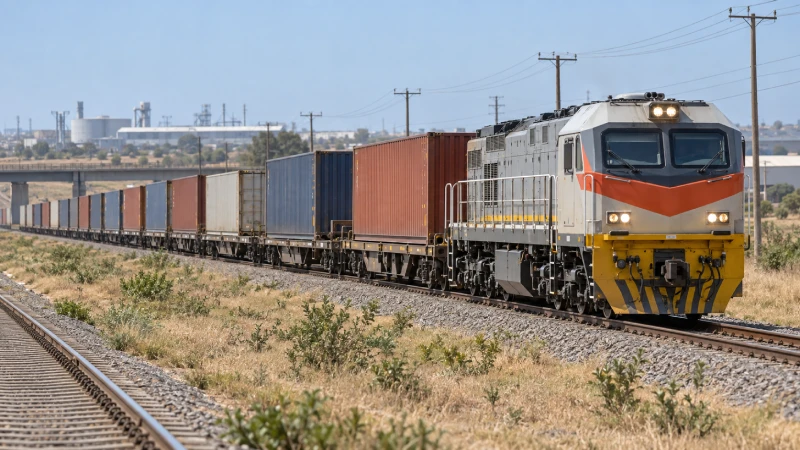
Nairobi ICD is connected with Mombasa through the railtainer system. KPA and Kenya Railways both describe imports being moved directly inland from Mombasa to Embakasi ICD under qualifying arrangements. Kenya Ports Authority: Inland Container Depots
4. Container Arrives at Nairobi ICD
The container is received into the ICD system and positioned within the depot.
Arrival at the ICD does not automatically mean the importer can collect it immediately.
The customs, regulatory, shipping-line, and terminal status still needs to be ready for release.
5. Customs and Other Regulatory Processes Are Completed
The licensed clearing agent coordinates the customs declaration and works with the importer on any documentation, payment, verification, or regulator requirements.
Some cargo may require additional intervention from KEBS or another government agency.
6. Container Becomes Ready for Collection
After the necessary releases and payments have been completed, the clearing agent, transporter, and consignee coordinate collection.
7. Truck Collects the Container
A nominated truck collects the released container from Nairobi ICD and transports it to the final warehouse, factory, project site, or distribution centre.
8. Cargo Is Unloaded and the Container Is Returned
For carrier-owned equipment, the empty container must normally be returned according to the shipping line’s instructions and allowed free time.
That final step should be planned before gate-out—especially when the consignee needs a crane, forklift, unloading crew, or an extended unloading window.
Documents to Prepare Before the Container Reaches Nairobi ICD
The easiest Nairobi ICD problem to solve is the one that never reaches Nairobi.
Document preparation should begin while the goods are still at the supplier in China.
China and Shipping Documents
For a normal commercial container shipment, the working document set may include:
- commercial invoice;
- packing list;
- draft and final Bill of Lading;
- freight invoice;
- China export declaration;
- Certificate of Origin;
- relevant product certificates;
- supplier and exporter information;
- permits or supporting technical documents where required.
The descriptions, quantities, values, consignee details, package counts, weights, and product information should be consistent across documents.
Certificate of Origin
This is particularly important for current Kenya shipments.
KRA announced that, under the requirements introduced in 2025, imported consignments generally require a Certificate of Origin issued by a competent authority in the country of export, subject to specified exceptions and provisional alternatives in certain cases. Full enforcement began on 1 October 2025. KRA: Mandatory Certificate of Origin on Imports into Kenya
For a normal commercial shipment from China, the importer should therefore check the COO requirement before loading rather than treating origin documentation as an afterthought.
Keep the China Export Declaration
Another important 2026 update affects supporting export documents.
KRA’s Finance Act 2026 guidance states that from 1 September 2026, importers must obtain and retain an export declaration, export entry, customs export certificate, or equivalent document from the exporting country. The supporting document should contain information including the exporter, importer, goods, quantity, value, tariff classification, and country of export, and should be retained for the required record-keeping period. KRA: Finance Act 2026
For China-origin shipments, this makes coordination with the exporter and customs-declaration party even more important.
Do not wait until Kenya customs asks for supporting information to discover that nobody retained the China export documentation.
Kenya Import and Customs Documents
KRA states that importers need a licensed customs clearing agent to process import documents and clearance on their behalf.
Depending on the shipment, the clearance file can include documents such as:
- Import Declaration Form;
- customs entry or declaration;
- commercial invoice;
- pro forma invoice where applicable;
- Bill of Lading;
- Certificate of Origin;
- freight invoice;
- packing list;
- Kenyan importer PIN details;
- purchase orders or contracts;
- permits or licences for restricted goods;
- Certificate of Conformity for regulated goods;
- exemption documentation where applicable;
- other supporting valuation or product documents requested by customs.
KRA import guidance provides the official framework for import documentation and customs processing.
Not every document applies to every shipment.
A machine, food product, chemical, electrical appliance, spare part, medical item, and general household product can face very different regulatory requirements even if all are packed in 20-foot containers.
That is why compliance should be checked by product and HS classification, not simply by container type.
2026 Update: Advance Cargo Declaration Before Loading in China
For containerized shipments to Kenya, the Advance Cargo Declaration (ACD) is now a critical pre-loading step.
KRA launched the ACD platform for containerized cargo destined for Kenyan ports on 3 August 2026.
According to KRA, the shipper or exporter obtains the ACD reference at the loading stage by submitting:
- draft Bill of Lading;
- commercial invoice;
- freight invoice;
- export declaration.
Once approved, the ACD reference is to be endorsed on the Bill of Lading before the shipment proceeds to Kenya. KRA: Advance Cargo Declaration Platform
For an importer planning Nairobi ICD clearance, this matters because the compliance process begins before the container leaves China, not when it reaches Embakasi.
A missing or incorrect ACD should therefore be treated as a pre-shipment problem.
Pro Tip: Ask your China supplier and freight forwarder to complete the final document review before loading. Correcting a product description, consignee detail, export document, or compliance issue in China is usually far easier than resolving it after the container enters the Kenyan port system.
PVoC, CoC and Product-Specific Compliance
For products subject to Kenya’s conformity requirements, KEBS operates the Pre-Export Verification of Conformity (PVoC) programme.
The purpose is to verify applicable goods against Kenyan standards or approved specifications in the country of export before shipment.
KEBS’s current PVoC information includes China within the programme’s inspection-zone arrangements and lists appointed contractors for conformity assessment. The process can involve document review, inspection, testing, or other conformity procedures depending on the product and route to certification. KEBS: Pre-Export Verification of Conformity
Importers should not simplify this into:
“Every China shipment always needs exactly the same CoC process.”
There are exemptions, product-specific rules, and other regulatory situations.
Before production is finished, confirm:
- HS code;
- whether the goods fall within applicable PVoC requirements;
- applicable Kenyan standard;
- testing requirements;
- inspection route;
- whether a CoC is needed;
- whether another regulator also controls the product.
Check My Kenya Import Requirements
For regulated cargo, it is usually better to check compliance before the supplier books the container rather than after the shipment is packed.
How Customs Clearance Works at Nairobi ICD
Customs clearance is not simply “pay duty and collect the box.”
Several organizations and commercial parties may be involved.
| Party | Typical Responsibility |
|---|---|
| Kenyan importer / consignee | Provides correct commercial documents, importer information, approvals, instructions, and required funds |
| Licensed customs clearing agent | Prepares and processes the customs declaration and coordinates the clearance process |
| KRA Customs | Processes customs declarations, valuation and classification issues, enforcement checks, and customs release |
| KPA / ICD terminal | Handles the container and relevant terminal procedures |
| KEBS / other regulators | Handle applicable standards, permits, inspections, or product controls |
| Shipping line / agent | Manages applicable carrier documentation, delivery order, and container-related requirements |
| Transporter | Collects the released container and delivers it to the final destination |
KRA specifically requires commercial importers to use a licensed customs clearing agent for the import-clearance process. KRA import guidance
Typical Customs Clearance Sequence
The exact sequence can vary, but the process generally includes the following stages.
1. Import Declaration Is Prepared
The clearing agent uses the importer and shipment documents to prepare the customs entry.
Correct HS classification is important because it can affect:
- duty treatment;
- taxes and levies;
- product restrictions;
- permit requirements;
- customs queries.
2. Customs Value and Charges Are Assessed
Applicable duties, taxes, and statutory charges depend on the cargo’s tariff classification, customs value, exemptions, and current Kenyan legislation.
Because these rates can change and vary substantially by product, do not rely on a generic “Kenya duty percentage” supplied by a China seller.
3. Required Payments Are Completed
Where applicable, the importer arranges payment using the official customs process.
Failure to prepare payment can create avoidable clearance time even when the documentation itself is correct.
4. Customs Processes the Declaration
KRA reviews the declaration and supporting data.
A compliant shipment may proceed through the appropriate clearance channel, while other shipments may face additional document review or enforcement actions.
5. Verification or Inspection May Be Required
Do not assume that every container will be physically inspected.
A consignment may be subject to scanning, document review, verification, physical examination, or another regulatory check depending on the cargo and customs or regulatory controls.
6. Other Agency Requirements Are Completed
Products regulated by KEBS or another Kenyan agency may need additional clearance before cargo can move.
7. Customs Release Is Obtained
Once applicable customs requirements have been satisfied, customs can release the consignment. KRA’s published import procedure describes declaration, payment, verification and enforcement where applicable, followed by clearance and release. KRA import guidance
But customs release is not always the final physical gate-out step.
From Customs Release to Container Collection and Final Delivery
One of the most useful distinctions for new importers is:
Customs release does not necessarily mean a truck can immediately drive into Nairobi ICD and remove the container.
The importer and agent should also confirm the remaining carrier and terminal status.
A practical release-to-door workflow may look like:
Customs Release → Shipping-Line/Delivery Status → Terminal Charges/Holds Cleared → Pickup Formalities → Truck Assignment → Gate Out → Warehouse Delivery → Empty Return
KPA’s current tariff identifies electronic Pick-Up Orders / Pre-Advice as documents used to facilitate invoicing and cargo delivery or receipt, and it requires cargo leaving the facility to be issued the applicable gate pass. Kenya Ports Authority Tariff
Before Sending a Truck, Confirm:
- customs release completed;
- carrier delivery-order status ready where applicable;
- terminal charges settled;
- no unresolved customs or terminal hold;
- correct container number;
- transporter details accepted;
- pickup or pre-advice process completed;
- warehouse can receive the container.
Sending a truck before the container is actually collectable can waste transport time and create additional cost.
Plan the Warehouse Before Gate-Out
The final mile should be prepared while customs clearance is still underway.
Confirm:
- exact warehouse address;
- receiving hours;
- road and access restrictions;
- loading-bay availability;
- forklift capacity;
- crane requirement;
- unloading crew;
- container positioning;
- unloading time;
- empty-container return point and deadline.
For machinery, oversized goods, heavy cargo, or project shipments, the delivery plan can become more important than the last few kilometres of trucking.
A 40-foot container arriving at a site that cannot accommodate the truck or unload the equipment is not a completed logistics plan.
For shipments requiring coordinated pickup, customs support, and final delivery, see our door-to-door shipping from China service.
Check Door-to-Door Feasibility
If you need China pickup, export coordination, Kenya-side clearance coordination, and final delivery planning, confirm the complete route before shipment instead of arranging each stage after arrival.
Nairobi ICD Costs Importers Should Plan For
There is no reliable single “Nairobi ICD clearance cost” that applies to every container.
The total depends on several separate cost categories.
| Cost Category | What It Relates To | What Can Increase It |
|---|---|---|
| Ocean freight | China port → Mombasa | Origin, season, container type, shipping line |
| Mombasa → Nairobi inland movement | Rail or carrier inland transport | Booking arrangement and equipment |
| Customs duties and taxes | Kenyan import taxation | HS code, customs value, product treatment |
| Clearing-agent fees | Import clearance service | Cargo complexity and additional work |
| KPA / ICD storage | Time container remains in the depot | Clearance or collection delay |
| Regulatory costs | Product inspections and permits where applicable | Cargo type and compliance route |
| Shipping-line charges | Carrier-specific services and equipment | Carrier terms and delays |
| Final trucking | Nairobi ICD → warehouse or site | Distance, container size, equipment |
| Unloading | Warehouse or site handling | Forklift, crane, labour, or special equipment |
Current KPA Storage Reference for Domestic Import Containers Through ICDs
The Kenya Ports Authority tariff effective 15 September 2025 lists the following storage schedule for domestic import containers through ICDs:
| Period | 20′ Container | 40′ Container |
|---|---|---|
| First 5 consecutive days | Free | Free |
| Days 6–21 | USD 30/day | USD 60/day |
| Thereafter | USD 50/day | USD 100/day |
Source: Kenya Ports Authority Tariff
These are KPA storage charges, not an all-inclusive demurrage or detention quotation.
Shipping-line detention or demurrage, clearing-agent charges, trucking, inspection expenses, and other costs may be separate.
Always check the current tariff for the actual shipment date.
Do Not Treat “5 Free Days” as Five Working Days
KPA’s tariff defines free days as consecutive and states that they include Saturdays, Sundays, and public holidays. Kenya Ports Authority Tariff
So the wrong planning approach is:
“We can start customs work when the container reaches Nairobi because we have five free days.”
A better approach is:
“Our documents, agent, payment plan, and final delivery arrangement should already be ready before the container reaches the ICD.”
Pro Tip: Storage is often a preventable logistics cost. A slightly cheaper freight booking can become expensive if missing paperwork, a customs query, or an unprepared warehouse leaves the container sitting at the depot.
Common Nairobi ICD Delays and How to Reduce Them
Most delays cannot be solved by asking the terminal to “release the container faster.”
The cause must first be identified.
| Common Delay | What to Do Before Shipment |
|---|---|
| Invoice and packing-list mismatch | Check descriptions, quantities, values, weights, and package counts |
| Wrong consignee or B/L information | Review draft B/L before issuance |
| ACD issue | Complete ACD at the China loading stage and check the reference |
| Missing Certificate of Origin | Arrange compliant origin documentation before export |
| HS-code query | Review classification with the Kenyan clearing agent |
| PVoC / CoC issue | Check product requirements before shipping |
| Customs valuation query | Keep invoice, purchase contract, and payment or supporting records available |
| Regulatory permit missing | Identify the regulator before cargo leaves China |
| Duties or charges not ready | Arrange importer approvals and funds early |
| Terminal or carrier hold | Agent should separately check customs, carrier, and terminal status |
| Truck not arranged | Pre-book transporter once release timing becomes clear |
| Warehouse cannot receive cargo | Confirm unloading equipment and receiving schedule |
Watch the Storage Clock
Once the container is inside the inland system, every unresolved issue can consume time.
Do not wait for the final day of a free-storage period to start chasing:
- corrected invoices;
- HS confirmation;
- payment authorization;
- CoC information;
- carrier release;
- truck booking.
The most effective ICD clearance planning often happens before the vessel arrives in Kenya.
Nairobi ICD Pre-Shipment Checklist for China Importers
Before your China supplier loads the container, work through this checklist.
Routing
- Final Kenya destination confirmed
- Nairobi ICD routing confirmed if intended
- Shipping line or forwarder understands the requested inland route
- Draft B/L destination checked
- Responsibility for Mombasa-to-Nairobi movement confirmed
Importer and Customs
- Kenyan consignee or importer details confirmed
- KRA-licensed clearing agent appointed
- HS classification reviewed
- Customs documentation preparation started
- Expected duties and taxes reviewed by the Kenya-side agent
Documents
- Commercial invoice checked
- Packing list checked
- Draft B/L checked
- Freight invoice available
- China export declaration available
- Certificate of Origin arranged
- Purchase contract and supporting value documents retained
Compliance
- ACD completed before loading where required
- PVoC or CoC requirement checked
- Product-specific permits checked
- Restricted or dangerous-goods requirements confirmed
- Any special handling instructions provided
Nairobi Delivery
- Final warehouse address confirmed
- Truck access checked
- Warehouse receiving hours confirmed
- Forklift or crane capacity confirmed
- Unloading team prepared
- Empty-container return arrangement understood
Final Takeaway
For a Nairobi importer, the shipping plan should not stop at:
China → Mombasa.
If the container is intended to move through Nairobi ICD, the real plan is closer to:
China Supplier → Export Compliance → Ocean Freight → Mombasa → Nairobi ICD → Customs & Regulatory Release → Container Collection → Warehouse Delivery → Empty Return
The most important decision is to confirm this routing before the shipment leaves China.
Nairobi ICD can provide an inland container-handling and clearance option for appropriately routed cargo, but it should never be assumed that every Nairobi shipment automatically moves there.
Get the Bill of Lading instructions, ACD, Certificate of Origin, Kenya import documents, product compliance, clearing-agent arrangement, and final warehouse plan aligned first.
That gives the importer a much better chance of avoiding unnecessary changes of destination, customs queries, storage exposure, and last-mile delays.
Send Cargo Details
To review a China-to-Nairobi shipment, prepare:
- China supplier or pickup city;
- product name;
- HS code, if known;
- number and type of containers;
- cargo weight;
- Incoterm;
- supplier address;
- Kenyan consignee;
- intended Nairobi delivery address;
- PVoC or CoC status, if applicable;
- desired shipping date.
With those details, the shipment can be assessed as a complete China → Mombasa → Nairobi → final delivery route rather than as separate freight stages.
FAQ
Does every container shipped to Nairobi go through Nairobi ICD?
No. Nairobi being the final delivery city does not automatically mean the container will move through Nairobi ICD. The shipping line, freight forwarder, Bill of Lading or manifest arrangement, clearing plan, and inland transport setup determine how the container is routed. Confirm the intended ICD movement before loading in China.
Can my container be cleared at Nairobi ICD instead of Mombasa?
Containers properly routed to Nairobi ICD can use the inland-depot process, but the routing and clearance arrangement should be confirmed before shipment. Do not assume a container already manifested for another destination can simply be redirected without additional procedures.
Who handles customs clearance at Nairobi ICD?
A Kenyan importer normally appoints a KRA-licensed customs clearing agent. The agent processes the customs declaration and coordinates the clearance procedure on behalf of the importer, while KRA remains the customs authority.
What documents are needed for a China shipment using Nairobi ICD?
For a typical commercial container shipment, documents can include the commercial invoice, packing list, Bill of Lading, freight invoice, China export declaration, Certificate of Origin, Kenyan import documentation, and product-specific permits or conformity documents where applicable. Since August 2026, KRA's ACD process is also a critical pre-loading requirement for containerized cargo destined for Kenyan ports.
How many free storage days are available at Nairobi ICD?
Under KPA's tariff effective 15 September 2025, domestic import containers through ICDs currently receive the first five consecutive days free of KPA storage charges. Verify the tariff again before shipment because port charges can change.
What happens after customs releases my container at Nairobi ICD?
The importer or agent still needs to confirm that applicable carrier and terminal formalities are complete. Once the container is physically ready for collection, the transporter completes the pickup and gate process and delivers it to the warehouse or final site. Unloading and empty-container return should also be planned in advance.
Can a dangerous-goods or oversized container use the same process?
Do not assume the standard container process or charges apply. Dangerous goods, out-of-gauge containers, heavy equipment, and project cargo can have additional handling, documentation, storage, equipment, routing, and delivery requirements. The exact feasibility should be confirmed before the cargo is booked from China.
