
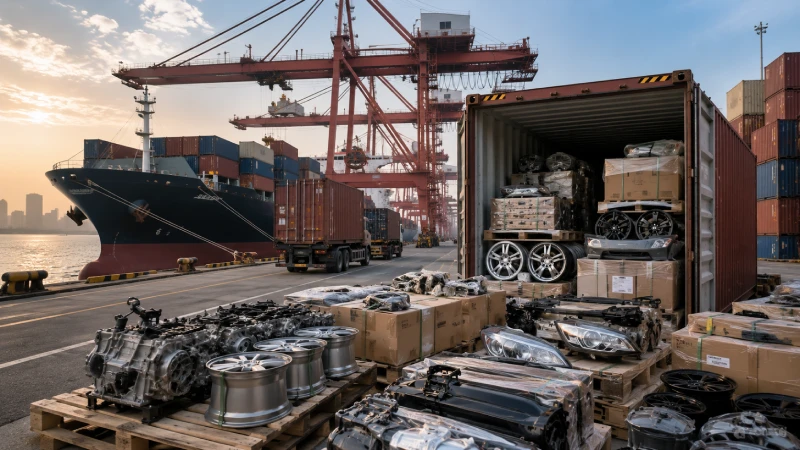
Saudi Arabia is one of the Middle East’s largest automotive markets, creating strong demand for imported spare parts, aftermarket components, repair equipment, and vehicle accessories from China. However, shipping auto parts is very different from shipping general consumer goods. Cargo dimensions vary significantly, customs classifications are more sensitive, and packaging mistakes can easily lead to cargo damage or inspection delays.
For Saudi importers, distributors, and automotive wholesalers, freight planning is not only about finding the cheapest shipping rate. It also involves choosing the right shipping mode, preparing compliant documentation, protecting fragile or high-value parts, and managing customs risks at Saudi ports such as Jeddah and Dammam.
This guide explains the operational realities of shipping auto parts from China to Saudi Arabia and how experienced importers reduce freight costs and customs delays.
Why Auto Parts Shipments to Saudi Arabia Require Different Freight Planning
Auto parts cargo is highly diverse. A shipment may include lightweight sensors, oversized bumpers, alloy wheels, heavy engines, batteries, filters, and fragile headlights in the same container. Each category creates different freight handling and customs challenges.
For example, automotive electronics may require anti-static packaging and more accurate HS code declarations. Large body parts consume significant container space even when the cargo weight is relatively low. Mechanical components such as engines and transmissions may require reinforced pallets and forklift handling during loading and unloading.
Saudi Arabia also has a large aftermarket repair industry, meaning many importers purchase mixed SKUs from multiple Chinese suppliers. This creates consolidation complexity, especially when suppliers are located across Guangzhou, Ningbo, Yiwu, or Shenzhen.
Unlike standard retail cargo, auto parts shipments are often time-sensitive. Repair shops and distributors may urgently need inventory replenishment to avoid sales interruptions. Because of this, many Saudi buyers combine sea freight for bulk inventory with air freight for urgent replenishment shipments.
Choosing the Right Shipping Method Based on Auto Parts Type
The best shipping method depends more on cargo type than shipment size alone.
Air freight is commonly used for urgent automotive components such as ECU modules, sensors, bearings, filters, and repair parts needed for maintenance operations. Saudi distributors often use air freight when vehicle downtime directly affects customers or commercial fleets.
Sea freight is more practical for oversized or volumetric cargo. Auto body kits, bumpers, fenders, tires, and alloy wheels usually move via container shipping because air freight costs become extremely high once volumetric weight is calculated.
For mixed supplier shipments, consolidation becomes an important strategy. A freight forwarder can collect cargo from multiple Chinese factories and combine them into one shipment before export. This reduces shipping costs while simplifying customs clearance in Saudi Arabia.
In many cases, importers must choose between LCL and FCL shipping.
LCL shipping works better for smaller spare parts orders or trial shipments. However, auto parts are often vulnerable to damage during shared-container handling. Fragile items such as headlights or chrome accessories face higher risk in LCL environments.
FCL shipping becomes more cost-effective once cargo volume increases. It also offers better cargo protection because the container remains sealed from origin to destination.
Businesses comparing shipping methods should also review:
- Air Freight from China to Saudi Arabia
- Sea Freight from China to Saudi Arabia
- Shipping Time from China to Saudi Arabia
These related logistics decisions directly impact inventory planning and warehouse operations.
The Biggest Cost Drivers When Shipping Auto Parts from China to Saudi Arabia
Many first-time importers assume freight pricing depends mainly on cargo weight. In reality, dimensions often have a bigger impact.
Large but lightweight cargo such as bumpers, grilles, or plastic body panels occupies excessive container space. Freight costs increase quickly because shipping lines charge based on volumetric utilization rather than actual cargo weight alone.
Packaging also significantly affects shipping costs. Oversized wooden crates improve protection but reduce container loading efficiency. Poor pallet configuration may increase warehouse handling charges and customs inspection delays.
Another hidden cost involves destination handling in Saudi Arabia. Cargo requiring manual unloading, special forklifts, or repalletization may incur additional charges at port warehouses.
Experienced importers reduce costs by optimizing container loading plans before shipment. Instead of shipping bulky cargo loosely packed, they stack compatible items strategically to maximize usable container space.
Some Saudi automotive wholesalers also combine slow-moving inventory with fast-moving spare parts in the same container. This improves overall freight efficiency and reduces per-unit shipping costs.
For freight budgeting and pricing comparisons, importers typically review:
- Shipping Cost from China to Saudi Arabia
- DDP Shipping to Saudi Arabia
These pages help estimate overall landed cost more accurately.
Packaging and Damage Prevention for Automotive Cargo
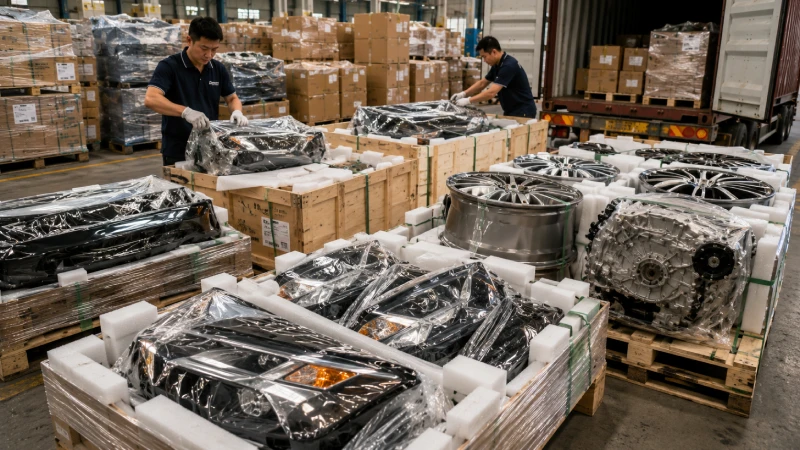
Damage prevention is one of the most overlooked areas in auto parts logistics.
Chrome accessories, windshields, headlights, and painted body components are highly vulnerable during international transport. Minor surface damage may make products unsellable even if the cargo technically arrives intact.
For sea freight shipments to Saudi Arabia, moisture protection is especially important. Long transit times combined with humidity exposure can lead to corrosion on metal components and mold issues on packaging materials.
Heavy automotive parts require reinforced pallets capable of forklift handling. Weak pallets may collapse during port operations, particularly at busy consolidation warehouses.
Saudi Arabia also applies customs inspections more aggressively when packaging appears damaged or cargo labeling is inconsistent. Poor outer packaging may trigger additional inspection procedures, delaying cargo release.
Professional exporters often use:
- corner protection
- moisture barriers
- vacuum wrapping
- reinforced pallet bases
- SKU labeling systems
These measures reduce damage risk while improving unloading efficiency at Saudi warehouses.
Saudi Customs Risks That Frequently Affect Auto Parts Imports
Auto parts shipments frequently face customs complications because classification accuracy is critical.
A common problem involves incorrect HS codes for automotive electronics, suspension components, or mixed spare parts shipments. Even small declaration inconsistencies can trigger customs review or valuation disputes.
Saudi Arabia also applies additional compliance requirements to certain automotive products. Some categories may require SABER registration or SASO-related conformity verification before clearance.
Used auto parts face even greater inspection sensitivity. Saudi customs authorities often apply stricter scrutiny to used engines, transmissions, or salvage-related cargo due to quality and regulatory concerns.
Invoice consistency is another major issue. Customs officers may compare declared cargo value against market expectations. Under-declared automotive parts frequently trigger revaluation procedures, causing clearance delays and additional taxes.
To reduce risk, experienced importers prepare:
- accurate commercial invoices
- detailed packing lists
- correct HS code classifications
- consistent product descriptions
- compliant SABER documentation when required
Many businesses also work with freight providers experienced in Customs Clearance in Saudi Arabia to avoid avoidable inspection problems.
Jeddah vs Dammam: Which Saudi Port Works Better for Auto Parts Imports?
The choice between Jeddah and Dammam depends heavily on the importer’s distribution network.
Jeddah is often preferred for western Saudi Arabia distribution, including Makkah and Medina regions. It is also a major entry point for retail automotive inventory.
Dammam plays a stronger role for industrial supply chains and Eastern Province automotive operations. Importers serving Riyadh may use either port depending on inland trucking costs and shipping schedules.
However, port congestion patterns differ throughout the year.
During Ramadan and pre-Hajj periods, logistics pressure increases substantially in western Saudi Arabia. Importers sometimes redirect shipments to Dammam to reduce delays.
Warehouse delivery conditions also matter. Some Riyadh warehouses have limited unloading equipment, making pallet configuration and cargo accessibility extremely important.
Freight planning should therefore consider not only ocean transit time, but also inland delivery efficiency after customs clearance.
Managing Multi-Supplier Auto Parts Consolidation in China
Auto parts sourcing often involves multiple factories. A Saudi importer may buy alloy wheels from Zhejiang, filters from Guangzhou, and LED accessories from Shenzhen in the same shipment cycle.
Without consolidation planning, shipping costs increase dramatically.
Freight forwarders usually solve this by collecting cargo into a central warehouse before export. Consolidation allows importers to:
- reduce partial shipment costs
- simplify customs documentation
- improve container utilization
- minimize Saudi clearance complications
However, supplier coordination is one of the biggest operational challenges.
Factories may use inconsistent carton labels, inaccurate dimensions, or delayed production schedules. Missing SKU information can create unloading confusion after arrival in Saudi Arabia.
Professional consolidation warehouses therefore perform cargo checking, relabeling, palletization, and loading supervision before export.
This process becomes especially important for importers handling hundreds of automotive SKUs.
DDP Shipping for Auto Parts to Saudi Arabia: When It Works and When It Doesn’t
DDP shipping is increasingly popular among smaller Saudi importers because it simplifies customs procedures and landed cost calculations.
However, DDP is not ideal for every type of automotive cargo.
Lower-value spare parts and standard aftermarket products are generally easier to ship under DDP terms. High-value components or heavily regulated automotive products may create customs valuation risks under certain DDP arrangements.
Importers should also understand that DDP providers manage customs clearance differently. Extremely low quoted prices may indicate compliance shortcuts, inaccurate declarations, or tax underreporting.
This can create serious problems if Saudi customs performs inspections or valuation reviews.
Before using DDP shipping, importers should verify:
- customs responsibility allocation
- VAT handling
- SABER compliance responsibility
- insurance coverage
- customs declaration accuracy
Businesses considering this model should compare it carefully with standard FOB or CIF structures.
How Experienced Saudi Importers Reduce Delays and Freight Costs
Experienced automotive importers focus heavily on planning rather than simply negotiating lower freight rates.
One common strategy is booking shipments before Chinese export peak seasons. Delayed bookings during peak periods often lead to higher rates and vessel space shortages.
Another important tactic involves maintaining accurate documentation. Clear packing lists and detailed cargo descriptions significantly reduce customs inspection risk.
Insurance also matters more for automotive cargo than many importers realize. Fragile or high-value components can generate large financial losses even from minor transit damage.
Many successful Saudi distributors also combine sea freight and air freight strategically. Bulk inventory moves by sea, while urgent replenishment parts travel by air when needed.
This hybrid approach improves inventory stability while controlling logistics costs.
Ultimately, shipping auto parts from China to Saudi Arabia is not just about transportation. It is about balancing freight cost, cargo protection, customs compliance, and delivery reliability across an increasingly competitive automotive market.
