
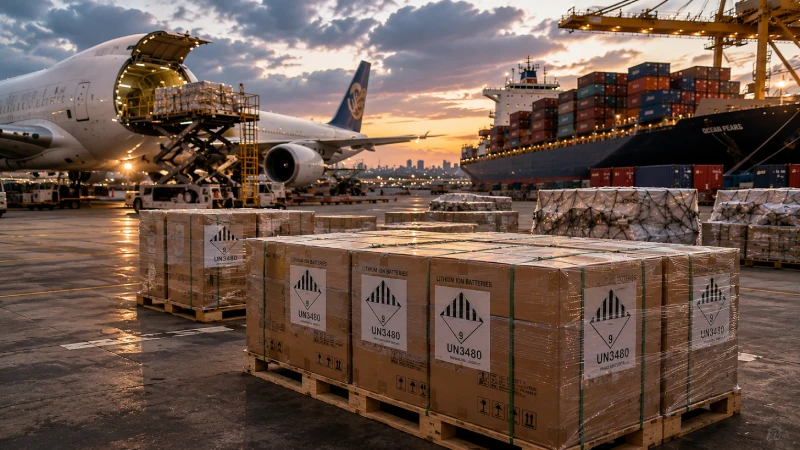
Shipping batteries from China to UAE is very different from shipping normal cargo. Whether you are importing lithium-ion batteries, power banks, solar storage batteries, or electronic products with built-in batteries, the shipment process involves strict dangerous goods regulations, airline restrictions, customs inspections, and packaging compliance requirements.
Many UAE importers discover this only after their cargo gets delayed, rejected, or inspected at the port or airport.
Unlike ordinary products, batteries are considered high-risk cargo because of fire and explosion concerns during transportation. This is especially true for lithium batteries, which are heavily regulated under international dangerous goods rules for both air freight and sea freight.
For this reason, many freight forwarders simply refuse battery cargo altogether. Others accept the shipment without properly checking the compliance documents, which can create major customs and transportation problems later.
This guide explains how battery shipping from China to UAE actually works, including the best shipping methods, dangerous goods compliance requirements, packaging rules, transit times, cost factors, customs risks, and practical strategies experienced importers use to reduce shipping delays.
Why Battery Shipping Is More Complicated Than Normal Cargo
Why lithium batteries are classified as dangerous goods
Lithium batteries store high amounts of energy in compact spaces. If damaged, overheated, short-circuited, or improperly packed, they can catch fire during transportation. Because fires involving lithium batteries are difficult to control, international transport authorities classify many battery products as dangerous goods (DG cargo).
This is why airlines, shipping lines, customs authorities, and freight forwarders all apply stricter controls to battery shipments compared to general cargo.
Standalone lithium batteries usually face the highest restrictions. Batteries packed inside equipment, such as laptops or medical devices, are often easier to ship because the risk level is considered lower.
Why many airlines and forwarders reject battery cargo
One of the biggest surprises for first-time importers is discovering that many logistics companies refuse battery shipments entirely.
There are several reasons for this:
- Airlines limit dangerous goods space on aircraft
- Missing compliance documents create legal risks
- Incorrect packaging can trigger shipment rejection
- Customs inspections for batteries are more frequent
- Improper declarations may lead to fines or cargo seizure
Some low-cost freight agents also accept battery cargo without checking the required documents properly. This may initially seem cheaper, but it often creates delays later when the cargo reaches export customs or UAE customs clearance.
Common risks UAE importers face
Battery importers in UAE commonly encounter:
- Cargo rejected before flight departure
- Customs inspection delays
- Missing UN38.3 test reports
- Incorrect dangerous goods labels
- Airline booking cancellations
- High storage charges at UAE ports or airports
In many cases, the problem is not the battery product itself. The real issue is incomplete compliance preparation before shipment.
What Types of Batteries Can Be Shipped to UAE
Lithium-ion batteries
Lithium-ion batteries are the most commonly shipped battery products from China to UAE. These include:
- Power banks
- Mobile phone batteries
- Laptop batteries
- E-bike batteries
- Solar energy storage batteries
Because lithium-ion batteries have higher fire risks, they face strict transport regulations, especially for air freight shipments.
Lithium metal batteries
Lithium metal batteries are often used in industrial equipment, medical products, and backup systems. These batteries are generally subject to even tighter transport controls than lithium-ion batteries because of their chemical characteristics.
Batteries packed inside equipment vs standalone batteries
There is a major regulatory difference between:
- Standalone batteries
- Batteries packed with equipment
- Batteries installed inside equipment
For example, shipping laptops with built-in batteries is usually easier than shipping loose lithium batteries alone.
Many UAE importers reduce shipping risk by importing products with batteries already installed inside the equipment rather than importing standalone battery units separately.
Air Freight vs Sea Freight for Battery Shipping
Choosing the right shipping method is one of the most important decisions for battery cargo.
When air freight is the better option
Air freight is typically used when:
- Delivery is urgent
- Shipment volume is small
- Products are high-value
- Inventory replenishment speed matters
For example, e-commerce sellers importing power banks or consumer electronics to UAE often choose air freight to reduce stock shortages.
However, battery air freight has strict limitations. Airlines may reject certain battery types completely, especially high-capacity standalone lithium batteries.
Air shipments also require additional dangerous goods approval procedures before booking confirmation.
Typical air freight transit time from China to UAE is around 5–10 days door-to-door, depending on customs clearance and airline schedules.
When sea freight is safer and more economical
Sea freight is generally preferred for:
- Large battery shipments
- Solar battery systems
- Industrial battery cargo
- Lower shipping cost requirements
Compared to air freight, sea freight offers:
- Lower dangerous goods surcharge costs
- Fewer battery quantity restrictions
- Better suitability for heavy cargo
For UAE importers purchasing solar storage batteries or electric vehicle batteries in bulk, sea freight is usually the most practical option.
Typical sea freight transit time from China to UAE is around 20–35 days depending on the departure port, shipping line, and customs processing speed.
Transit time, cost, and risk comparison
Air freight is faster but significantly more expensive for dangerous goods cargo.
Sea freight is slower but more stable for large battery shipments.
In practice:
- Small urgent shipments → Air freight
- Bulk commercial shipments → Sea freight
- Battery-containing electronics → Either method depending on urgency
Internal Linking Opportunity:
Battery Shipping Regulations and Compliance Requirements
Battery shipping compliance is the most critical part of the entire process.
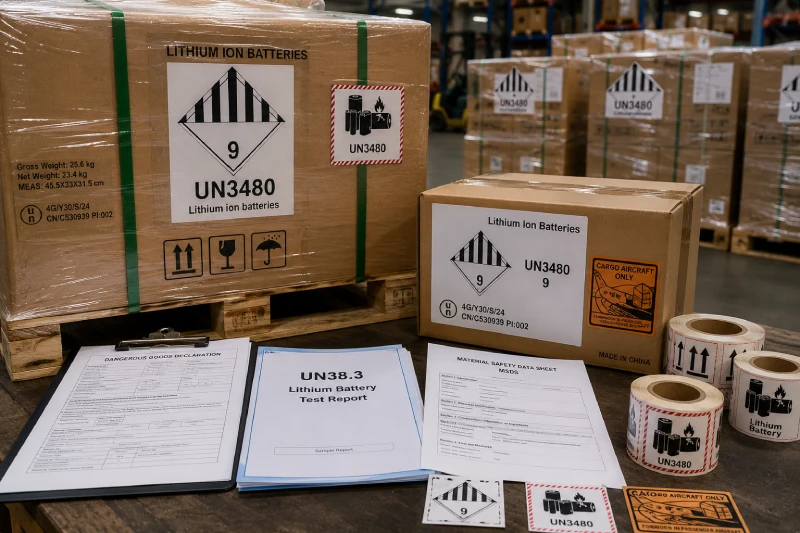
UN38.3, MSDS, and dangerous goods documents
Most battery shipments require:
- UN38.3 test report
- MSDS (Material Safety Data Sheet)
- Dangerous Goods Declaration (DGD)
- Commercial invoice
- Packing list
The UN38.3 report proves the battery passed international transport safety testing. Without this document, many airlines and forwarders will immediately reject the shipment.
The MSDS explains the battery’s chemical characteristics and transport classification.
Incomplete or fake documents are one of the most common reasons cargo gets stopped during export customs inspection in China.
Packaging and lithium battery labeling requirements
Battery packaging rules are much stricter than standard cargo packaging.
Proper battery shipments usually require:
- UN-certified cartons
- Short-circuit protection
- Terminal insulation
- Inner cushioning materials
- Dangerous goods warning labels
- Lithium battery handling marks
Weak packaging is one of the fastest ways to trigger customs inspection or airline rejection.
For air freight shipments especially, packaging standards are checked very carefully before cargo acceptance.
Airline and shipping line restrictions
Different airlines apply different battery transport policies.
Some airlines:
- Limit battery watt-hour ratings
- Reject standalone lithium batteries
- Restrict certain battery brands
- Require lower State of Charge (SOC)
Shipping lines also have dangerous goods acceptance rules for sea freight containers.
Experienced freight forwarders usually verify airline or shipping line acceptance before cargo pickup begins.
Customs Clearance and UAE Import Risks
Why battery cargo is inspected more frequently
Battery shipments receive higher customs attention because they involve dangerous goods regulations and safety concerns.
Customs officers often check:
- Product descriptions
- Battery capacity
- Packaging compliance
- Dangerous goods labels
- Declared cargo value
- Supporting test reports
If shipment information appears inconsistent, customs inspections become much more likely.
Common customs mistakes that cause delays
Some of the most common battery shipping mistakes include:
- Declaring batteries as general cargo
- Using incomplete product descriptions
- Missing dangerous goods documentation
- Incorrect HS codes
- Weak packaging or incorrect labels
These mistakes can lead to:
- Cargo detention
- Storage fees
- Delivery delays
- Shipment return orders
How experienced importers reduce clearance risks
Professional battery importers usually:
- Verify all compliance documents before shipment
- Use experienced DG freight forwarders
- Confirm UAE import requirements in advance
- Avoid under-declaring cargo value
- Use compliant packaging from the start
Many also choose DDP shipping services because the freight forwarder handles customs coordination and compliance management.
Internal Linking Opportunity:
Battery Shipping Cost Factors from China to UAE
Battery shipments cost more than ordinary cargo because of dangerous goods handling requirements.
Why battery shipments cost more than normal cargo
Battery cargo pricing often includes:
- Dangerous goods surcharges
- Special handling fees
- DG documentation fees
- Airline approval costs
- Extra packaging requirements
For air freight, dangerous goods charges can significantly increase total transportation cost.
Dangerous goods surcharges and handling fees
Additional costs may include:
- DG warehouse handling
- Airline dangerous goods fees
- Port dangerous goods charges
- Customs inspection fees
- Specialized packaging materials
These charges vary depending on:
- Battery type
- Shipping method
- Cargo volume
- Airline policy
- Shipping season
Factors that affect final shipping cost
The biggest battery shipping cost factors include:
- Battery classification
- Gross weight
- Packaging size
- Shipping urgency
- Destination city in UAE
- Customs inspection frequency
Peak seasons can also increase prices sharply because dangerous goods cargo space becomes limited.
Real Shipping Scenarios for UAE Importers
Shipping power banks for e-commerce sales
Small UAE e-commerce sellers often import power banks through air freight because faster delivery is critical for inventory turnover.
However, airlines may limit shipment quantities, so proper DG packaging and documentation become extremely important.
Importing solar or energy storage batteries
Solar energy projects in UAE frequently require large lithium battery systems.
In these cases, sea freight FCL shipping is usually more cost-effective and operationally stable than air freight.
Importers must also prepare for stricter customs review because of the cargo value and battery size.
Shipping electronics with built-in lithium batteries
Products such as laptops, smart devices, and electronic tools are often easier to transport because the batteries are installed inside the equipment.
This generally reduces shipping restrictions compared to standalone battery cargo.
Common Battery Shipping Mistakes to Avoid
Declaring batteries as general cargo
Some importers try to reduce costs by hiding batteries inside general cargo declarations. This creates serious legal and customs risks.
If discovered, the shipment may be rejected, fined, or confiscated.
Using incomplete documentation
Missing UN38.3 reports or incorrect MSDS documents are among the most common causes of shipment delays.
Before booking cargo space, importers should confirm that all documents are complete and valid.
Choosing inexperienced freight forwarders
Battery shipping is highly specialized.
An inexperienced freight forwarder may:
- Use non-compliant packaging
- Book restricted airlines
- Submit incorrect dangerous goods declarations
- Cause customs delays
In battery logistics, the cheapest quote is often the riskiest option.
Conclusion
Shipping batteries from China to UAE requires much more than simply booking cargo space. Dangerous goods regulations, airline restrictions, customs inspections, packaging compliance, and documentation accuracy all play critical roles in whether the shipment moves smoothly or faces costly delays.
For most importers, the biggest risks come from incomplete compliance preparation rather than the battery products themselves.
Experienced battery shippers focus on:
- Proper dangerous goods documentation
- Compliant packaging and labeling
- Suitable air or sea freight routing
- UAE customs preparation
- Reliable DG freight forwarding support
In battery logistics, reducing risk is usually far more valuable than choosing the lowest shipping price. A professional shipping strategy can help UAE importers avoid cargo rejection, customs delays, and unnecessary operational costs while ensuring safer and more reliable delivery from China.
