

What Determines China → UK Shipping Costs
Shipping costs from China to the UK are shaped by a combination of practical, fast-changing market forces.
The final rate depends first on your shipping method—sea freight remains the most economical for bulk cargo, while air freight and express couriers charge higher premiums for speed and reliability.
Volume and weight also play a major role: LCL shipments are billed per CBM with minimum charges, whereas air freight relies on chargeable weight, which can significantly increase the price for bulky but lightweight goods.
Costs also fluctuate based on origin and destination ports, the chosen Incoterms (EXW vs FOB vs CIF vs DDP), and whether the route is direct or involves transshipment.
Seasonal factors—including peak retail months, fuel adjustments, and carrier capacity tightness—can push rates up on a weekly basis.
Additionally, customs duties, VAT, and product-specific compliance requirements affect the total landed cost, especially for DDP shipments.
As a result, China→UK freight pricing is dynamic, and accurate estimates require considering both market conditions and the physical characteristics of your shipment.
Average Shipping Cost Table (Sea, Air, DDP, Express)
Shipping from China to the UK can follow several transport modes, each with its own pricing logic and typical cost range. While freight rates change frequently due to fuel adjustments, carrier capacity, and currency fluctuations, the table below provides a realistic snapshot of what importers usually pay in 2025. These figures are useful for early budget planning, comparing modes, and understanding which option fits your shipment size and delivery timeline.
Sea freight remains the most cost-efficient solution for medium to large volumes, especially when filling a full container. LCL is ideal for smaller loads, though it includes additional handling and warehouse fees at both ends. Air freight offers faster transit but is priced based on chargeable weight, which may increase costs for large but lightweight cargo. For importers who prefer predictable, all-in pricing, DDP options bundle customs clearance, duty/VAT, and last-mile delivery into a single rate. Express couriers like DHL, UPS, and FedEx provide the fastest service and are typically chosen for samples or urgent orders.
Below is a consolidated cost overview showing typical ranges for 2025:
| Method | Typical Cost | Unit | Best For | Notes |
|---|---|---|---|---|
| LCL Sea | $35–$70 | per CBM | 1–12 CBM shipments | Destination charges apply |
| FCL 20GP | $1,200–$2,200 | per container | Medium-volume cargo | Stable outside peak season |
| FCL 40HQ | $1,800–$3,000 | per container | Larger volumes | Best cost-to-volume ratio |
| Air Freight | $5.5–$9 | per kg | Urgent goods | Based on chargeable weight |
| DDP Air | $8–$13 | per kg | Small parcels / e-commerce | Includes duty & delivery |
| DDP Sea | $200–$380 | per CBM | General cargo | Longer transit, tax included |
| Express | $7–$11 | per kg | Samples, urgent parcels | 3–5 days transit |
These ranges help clarify what most importers can expect, though final pricing may vary based on product category, port pair, and booking date.
Sea Freight Costs (LCL & FCL Pricing Logic)
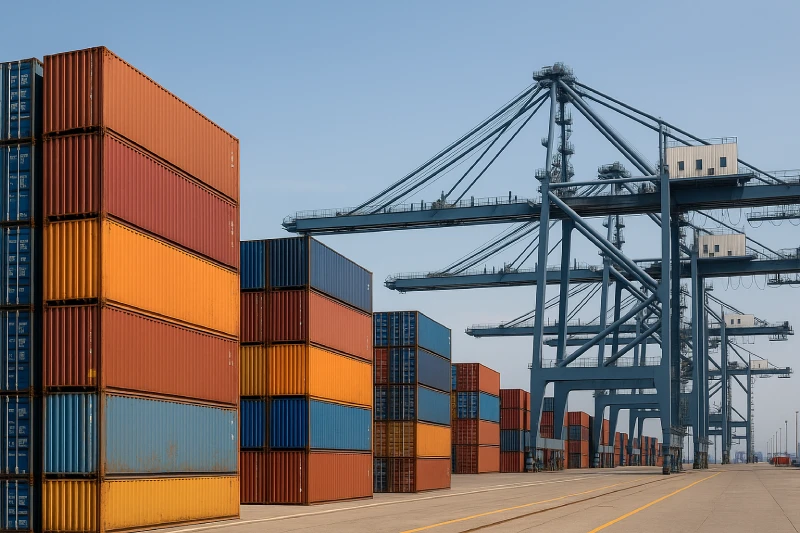
Sea freight is the most widely used method for China → UK shipments, primarily because it offers the lowest cost per unit for medium to large volumes. Pricing works differently depending on whether you ship LCL (Less than Container Load) or FCL (Full Container Load), and understanding these structures helps importers forecast their landed costs more accurately.
LCL Pricing Logic
LCL is charged per CBM, usually with a minimum billing volume between 1–2 CBM even if your actual cargo is smaller. The base rate covers the ocean freight portion, but LCL also involves multiple handling steps—consolidation, deconsolidation, terminal charges, and documentation fees—which are applied both in China and the UK. These destination fees can sometimes exceed the freight itself, especially for small shipments. Route and congestion conditions (e.g., Yantian, Ningbo, or Shanghai terminals) can also impact cost and available sailing options.
FCL Pricing Logic
FCL pricing is more straightforward. You pay a flat rate for the entire 20GP or 40HQ container, regardless of how full it is. The cost usually includes:
- Base ocean freight
- BAF (Bunker Adjustment Factor)
- ECRS / GRI (seasonal rate adjustments)
- Terminal handling charges
FCL is generally cheaper per CBM once your shipment reaches around 15–18 CBM, making it the preferred option for larger consignments. Rates fluctuate based on carrier capacity, UK port conditions (Felixstowe, Southampton, London Gateway), and global demand cycles.
Typical China → UK Sea Freight Ranges
| Route | LCL Cost | FCL 20GP | FCL 40HQ |
|---|---|---|---|
| Shanghai → Felixstowe | $35–$55/CBM | $1,200–$1,800 | $1,800–$2,600 |
| Shenzhen → Southampton | $40–$60/CBM | $1,300–$1,900 | $1,900–$2,700 |
| Ningbo → London Gateway | $35–$70/CBM | $1,300–$2,200 | $2,000–$3,000 |
Sea freight remains the most stable and cost-effective solution, but final pricing always depends on the departure port, carrier, and booking season.
Air Freight Costs (CIF & DDP)
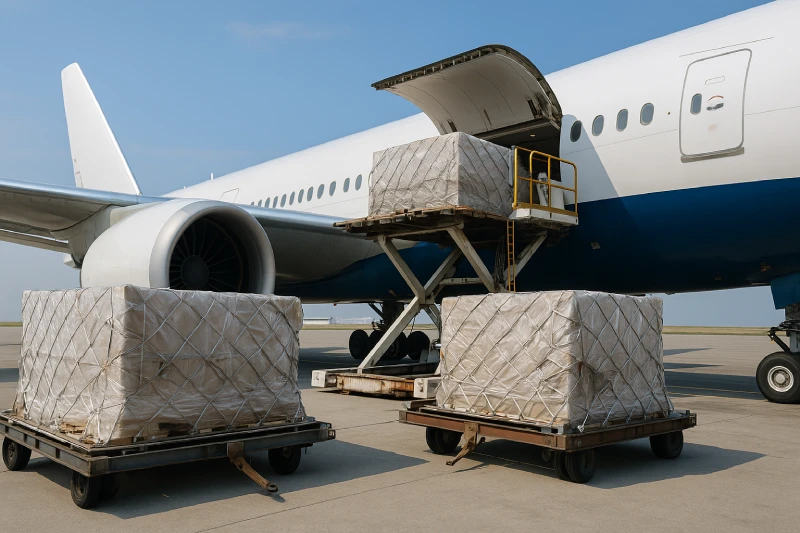
Air freight is the preferred option for time-sensitive shipments from China to the UK, especially for high-value goods, electronics, fashion items, and replenishment orders that cannot wait for long sea transit times.
Air pricing is determined mainly by chargeable weight, which compares actual weight vs. dimensional weight (length × width × height ÷ 6,000). Bulky but lightweight cargo often ends up being charged at a higher weight, which explains why air freight can fluctuate significantly between shipments of similar size.
CIF Air Freight (Airport-to-Airport)
CIF air freight only covers transportation from a Chinese airport—typically Shenzhen, Guangzhou, Shanghai, or Hong Kong—to major UK airports such as Heathrow, Gatwick, or Manchester. Costs depend on:
- Airline selection
- Fuel surcharges
- Direct vs. transit flights
- Daily rate changes in peak season
- Shipment tier (1–45 kg, 45–100 kg, 100–300 kg, etc.)
Typical 2025 CIF ranges fall between $5.5–$9 per kg, with better rates available for heavier tiers.
DDP Air Freight (Door-to-Door)
DDP air is a fully inclusive service that covers freight, customs clearance, duty/VAT, and final delivery to the consignee’s UK address. It is widely used by e-commerce sellers and small parcel shippers who prefer fixed, predictable pricing.
DDP rates are higher because they include import taxes and last-mile delivery. In 2025, typical costs range $8–$13 per kg, depending on the product’s HS code, whether VAT applies at standard or reduced rate, and whether the delivery address falls into a remote area.
Overall, air freight offers a balance between speed and reliability, with CIF suited for traditional B2B shipments and DDP ideal for small parcels requiring a seamless end-to-end solution.
DDP (Door-to-Door) Shipping Costs
DDP (Delivered Duty Paid) shipping provides a fully inclusive door-to-door option from China to the UK, covering transportation, customs clearance, import duty, VAT, and final delivery. Because these services bundle both logistics and tax components, DDP rates vary more than standard sea or air freight. The final cost depends on cargo type, declared value, HS code, and whether the product is subject to special duty rates or additional compliance checks.
DDP Air
DDP air is commonly used for parcels under 100 kg, e-commerce orders, and high-value small items that need fast replenishment. Rates typically range from $8–$13 per kg. The higher end usually applies to goods with higher VAT liabilities, remote-area delivery surcharges, or restricted categories requiring extra documentation.
DDP Sea
DDP sea is more suitable for general cargo in the 1–12 CBM range and offers a significantly lower cost per unit. Typical 2025 rates fall between $200–$380 per CBM, depending on the port of departure, the delivery postcode in the UK, and the product’s tax classification. Although transit time is longer, DDP sea remains popular for importers who prioritize predictable all-in pricing and minimal customs involvement.
Overall, DDP is ideal for businesses looking for a hands-off experience where Winsail manages every step—from pickup and export clearance in China to tax settlement and doorstep delivery in the UK.
Express Courier Costs (DHL/UPS/FedEx)
Express couriers such as DHL, UPS, and FedEx offer the fastest shipping option from China to the UK, typically delivering within 3–5 days door-to-door. Their pricing structure is highly standardized and is based on chargeable weight, similar to air freight. However, express carriers also apply additional factors such as fuel surcharges, remote-area fees, and seasonal adjustments. This makes express services reliable but usually more expensive than standard air freight.
Express shipping is most cost-effective for samples, low-weight parcels, urgent restocks, or high-value products where speed significantly outweighs cost. In 2025, typical China → UK express rates fall between $7–$11 per kg, depending on the weight tier, service level, and delivery postcode. Heavier shipments (10–20 kg+) often enjoy better rates due to volume-based pricing.
For businesses that prioritize transit speed, real-time tracking, and smooth customs handling, express couriers provide exceptional convenience—though they are rarely the cheapest choice for bulk or mid-size cargo.
Full Breakdown of Cost Influencing Factors
Shipping costs from China to the UK are shaped by a combination of physical shipment characteristics, market conditions, and regulatory requirements.
Understanding these variables helps importers interpret price differences between quotes and make more cost-efficient decisions.

1. Shipment Volume & Weight
Volume (CBM) and chargeable weight are the foundation of all freight pricing. LCL shipments incur minimum charges, while air freight uses dimensional weight calculations that can increase costs for lightweight but bulky cargo. Efficient packaging can significantly reduce these fees.
2. Packaging & Cargo Characteristics
Irregular shapes, fragile goods, oversize pieces, or hazardous materials often require special handling, custom crating, or DG documentation, all of which add to the total shipping cost.
3. Port Pair & Route Selection
Rates differ depending on the chosen departure port (Shanghai, Ningbo, Shenzhen, Qingdao) and the UK destination (Felixstowe, Southampton, London Gateway). Direct routes are usually more stable, while transshipment options can be cheaper but slower.
4. Market Cycles & Peak Season
Freight rates fluctuate due to supply-demand imbalances, fuel index adjustments, and seasonal surcharges—especially during pre-Christmas months, China export peaks, or carrier capacity shortages.
5. Customs Clearance & Compliance
Import duties, VAT, HS code classification, and any product-specific requirements (CE marking, UKCA labeling, MSDS for chemicals, fumigation for wooden items) impact the final landed cost. DDP services include these charges, while CIF/FOB shipments require importers to handle them separately.
6. Incoterms (EXW, FOB, CIF, DDP)
Incoterms affect who pays for what. EXW includes domestic charges in China; FOB limits responsibility to port handling; CIF covers ocean freight only; DDP bundles freight, tax, and delivery into a single price. Choosing the wrong Incoterm can easily skew the total shipping cost by hundreds of dollars.
Overall, freight pricing is a moving target shaped by both physical cargo traits and broader market forces—making accurate, shipment-specific quotations essential.
How to Reduce Shipping Costs
Reducing the cost of shipping from China to the UK usually comes down to making smart decisions about shipment size, timing, packaging, and the transport method you choose. Even small adjustments—such as consolidating orders, selecting a more efficient port pair, or improving packaging dimensions—can lead to noticeable savings over time.
For some businesses, switching to DDP sea or planning shipments away from peak seasons also helps stabilize costs and avoid unexpected surcharges.
Because the best strategy varies by industry, cargo type, and delivery speed requirements, importers often benefit from looking at the topic more holistically. Winsail has a dedicated guide covering practical ways to lower freight spend, compare modes, optimize timelines, and avoid common cost traps.
For a full list of actionable methods, see our in-depth resource here: Reduce Shipping Costs from China.
FAQs
1. Why do two freight forwarders quote different prices for the same shipment?
Freight forwarders access different carrier contracts, sailing schedules, space allocations, and consolidation networks.
One forwarder may have stronger buying power on a specific route or operate shared containers with lower handling costs. Differences also arise from how each quote includes (or excludes) destination fees, customs charges, or fuel adjustments.
Therefore, comparing only the headline rate can be misleading—importers should always check the full breakdown.
2. How much does customs duty and VAT typically add to my total cost?
For most general cargo, UK import VAT is 20%, calculated on the CIF value plus duty. Duty itself varies—some categories are 0%, while others range from 2–12% depending on the HS code.
These taxes can sometimes exceed the freight cost, so importers should calculate landed cost early. DDP services include these taxes upfront, offering predictable all-in pricing.
3. Is it cheaper to ship from certain Chinese cities to the UK?
Yes. Rates differ by port due to congestion, carrier frequency, inland trucking distances, and local handling charges.
Shenzhen and Ningbo often offer competitive rates for South & East China factories, while Shanghai may have better sailing frequency.
Choosing the closest major port with stable sailings can lower both freight and trucking costs.
4. How do delays or UK port congestion affect the total shipping cost?
Delays themselves don’t always increase freight charges, but they can create secondary costs: demurrage, detention, storage, or missed delivery appointments.
During congestion at Felixstowe or Southampton, carriers may roll containers or reroute to alternative UK ports—leading to higher handling or repositioning fees. Factoring buffer time into planning helps avoid these avoidable charges.
5. Can my shipping cost decrease if I commit to regular shipments?
Yes. Importers who ship consistently—weekly or monthly—often receive better rates because forwarders can forecast volume, secure space, and consolidate loads more efficiently.
Long-term partnerships may also allow access to fixed-rate contracts during volatile market periods, reducing exposure to weekly fluctuations.
Getting an Accurate Cost Estimate for Your Shipment
Because China → UK freight rates change weekly based on fuel adjustments, carrier capacity, and seasonal demand, the most reliable way to understand your true shipping cost is to request a quote tailored to your shipment details.
Factors such as your exact cargo dimensions, loading requirements, HS code, and UK delivery postcode all influence the final landed price.
If you’re planning an upcoming shipment—or comparing options between sea, air, DDP, and express—Winsail can provide a clear, itemized estimate based on your volume, timing, and preferred transit speed. Most importers find that a customized quotation helps them avoid unexpected destination charges, choose the most cost-efficient mode, and plan inventory with greater accuracy.
Send your shipment information whenever you’re ready, and a detailed pricing breakdown can typically be provided within 24 hours.
Disclaimer & Update Note
Shipping rates shown in this guide are approximate and subject to change due to fuel adjustments, carrier capacity, and seasonal market conditions. Actual costs may vary based on your shipment details and booking date.
This page is updated regularly throughout 2025 to reflect current market trends.
