
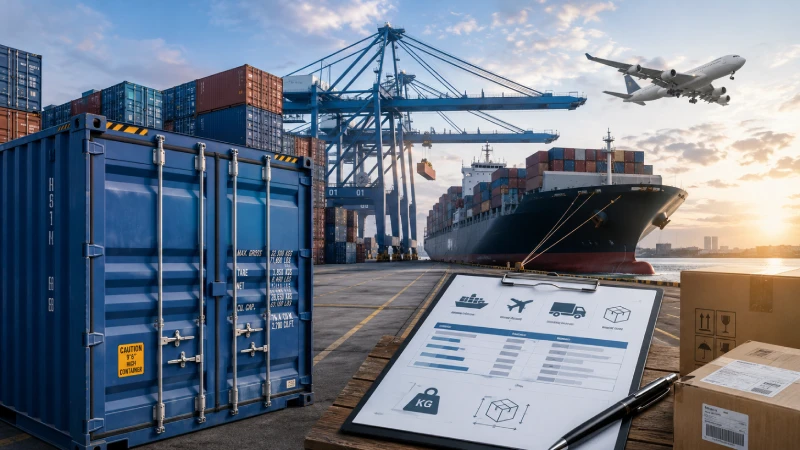
The shipping cost from China to the UK depends on much more than the headline ocean or air freight rate. A container rate from Shanghai to Felixstowe, for example, may cover only the international sea leg, while a higher door-to-door quotation may also include supplier pickup in China, origin handling, UK destination charges, customs clearance and final delivery to your warehouse.
That difference matters when comparing freight quotations. The cheapest-looking rate is not always the lowest total logistics cost.
For a broader comparison of shipping methods, transit times, ports, customs requirements and route planning, see our Shipping from China to the UK guide. This page focuses specifically on how China-to-UK freight is priced, what charges sit behind a quotation and how UK importers can budget more accurately.
How Much Does Shipping from China to the UK Cost?
As a planning reference for September 2026, published China-to-UK market data indicates approximately $4.5–$8 per chargeable kg for standard air freight, around $8–$12/kg for express, roughly $55–$150 per CBM for LCL sea freight, approximately $2,600–$3,200 for a 20ft container, and around $4,100–$5,000 for a 40ft container on selected major-port routings.
Late-Q3 market references for 40HC containers are generally in a similar range to 40GP, although equipment availability, load port, carrier and routing can move the rate materially.
These are market planning references, not Winsail Logistics quotations. Actual rates depend on the shipment date, origin, cargo, weight, volume, carrier capacity, UK gateway and the services included in the quotation.
| Shipping Method | September 2026 Planning Reference | Main Charging Basis | What to Check |
|---|---|---|---|
| Express courier | About $8–$12/kg | Chargeable weight | Fuel, remote-area and special-handling surcharges |
| Standard air freight | About $4.5–$8/kg | Chargeable kg | Weight tier, airport handling, clearance and delivery |
| LCL sea freight | About $55–$150/CBM or W/M | Revenue ton | CFS and UK destination charges |
| 20ft FCL | About $2,600–$3,200 | Per container | Whether origin and destination charges are included |
| 40ft FCL | About $4,100–$5,000 | Per container | Same scope check |
| 40HC FCL | Roughly $4,000–$5,200 | Per container | Equipment and carrier-specific pricing |
| Door-to-door | Shipment-specific | Full cost stack | Pickup, clearance, tax treatment, postcode and delivery conditions |
A single universal door-to-door or DDP rate is not reliable because the total can change substantially with the commodity, customs value, importer arrangement and UK delivery address.
Pro Tip: Before comparing two quotes, make sure they cover the same origin, destination, cargo quantity and service scope. A $70/CBM LCL freight rate cannot be compared directly with a door-to-door quotation.
International Freight Cost Is Not the Same as Total Landed Logistics Cost
One of the most common budgeting mistakes is treating the international freight rate as the total cost of getting cargo into a UK warehouse.
For most commercial shipments, the logistics cost is better understood as:
China pickup
+ origin handling
+ international freight
+ UK destination charges
+ customs clearance
+ Customs Duty / Import VAT where applicable
+ UK inland delivery
= total landed logistics cost
The product purchase price can then be added separately if you are calculating the complete landed cost of inventory.
The Seven Main Cost Layers
| Cost Layer | Typical Examples |
|---|---|
| China pickup | Factory collection, domestic trucking |
| Origin handling | Warehouse, CFS, export handling, documentation |
| International freight | Sea freight, air freight or express |
| UK destination charges | Terminal, CFS, security, carrier and local fees |
| Customs clearance | Import declaration and related clearance services |
| Taxes | Customs Duty and Import VAT where applicable |
| Inland delivery | UK port or airport to warehouse, Amazon or 3PL |
This is why an online rate of “$2,800 per 20ft container” should not automatically be interpreted as a factory-to-warehouse cost.
The quotation may begin at Shanghai, Ningbo or Yantian port and end when the container arrives at Felixstowe, Southampton or London Gateway. China trucking, UK terminal costs, clearance and delivery may still need to be added.
Where Duty and VAT Fit Into the Cost
Customs Duty is determined by factors including the commodity classification and applicable UK tariff measures. GOV.UK’s UK Trade Tariff allows importers to check commodity codes, Customs Duty, VAT and applicable tariff measures.
The UK’s standard VAT rate is 20% for most goods and services, although reduced or zero rates apply to some goods. Import VAT and Customs Duty therefore should not be presented as a fixed percentage of the freight charge.
For detailed tax calculations, commodity-code selection and Import VAT treatment, use a dedicated duty and VAT resource rather than relying on a freight-rate table.
Sea Freight Cost from China to the UK: LCL vs FCL
The cost structure for sea freight from China changes significantly depending on whether your cargo moves as LCL or fills a dedicated container.
To compare how groupage pricing changes with shipment volume, see our LCL shipping cost per CBM guide.
For an importer, the important question is not simply whether the cargo “fits” in a container. It is whether the total LCL cost including consolidation and UK destination handling remains lower than the cost of booking FCL.
How LCL Shipping Cost Is Calculated
LCL is commonly priced using a weight-or-measurement, or W/M, basis.
For typical general cargo, volume is often the main pricing basis:
1 CBM = 1 cubic metre
But dense shipments can be rated by weight instead, depending on the forwarder’s tariff and consolidation rules.
An LCL quotation may involve several components:
- pickup from the Chinese supplier
- origin CFS handling
- export customs documentation
- consolidation
- ocean freight
- UK CFS handling
- deconsolidation
- customs clearance
- final delivery
This means a headline rate of $70/CBM does not necessarily mean a 5 CBM shipment costs only $350 from the factory to the consignee.
Current LCL Shipping Cost from China to the UK
Current published 2026 market references vary considerably according to what the quoted rate includes. A practical planning range is:
Typical LCL market estimates may range from approximately $55–$150 per CBM or W/M before shipment-specific UK delivery and tax costs.
The lower end is more likely to represent a narrow freight-leg rate. A quotation covering more handling may naturally appear higher.
20ft Container Shipping Cost from China to the UK
For September 2026, selected published China-to-UK market references support a planning range of approximately:
20GP: $2,600–$3,200
This is a useful benchmark for the international freight portion on selected major-port services, but it should not be treated as a guaranteed factory-to-door total.
The actual container rate depends on:
- China load port
- UK discharge port
- carrier and service
- direct or transshipment routing
- equipment availability
- current capacity
- seasonal surcharges
- quotation validity
40ft and 40HC Container Shipping Cost
A practical September 2026 planning reference is approximately:
- 40GP: $4,100–$5,000
- 40HC: $4,000–$5,200
40HC does not always cost a fixed percentage more than 40GP. On some sailings the rates can be close, which can make 40HC attractive for light or bulky cargo where the additional internal height is useful.
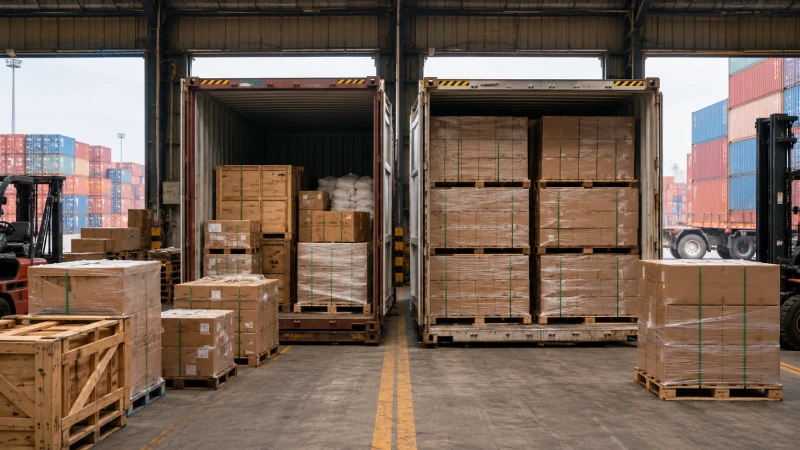
When Does FCL Become Cheaper Than LCL?
There is no universal CBM number at which LCL automatically becomes more expensive than FCL.
For China-to-UK shipments, however, importers should generally start requesting both LCL and 20ft FCL quotations once cargo approaches roughly 10–15 CBM.
The actual break-even point depends on the current container rate, cargo density, origin charges and UK destination handling.
| Shipment Volume | What to Compare |
|---|---|
| 1–5 CBM | LCL normally deserves the first check |
| 5–10 CBM | Usually LCL, but review destination charges |
| 10–15 CBM | Request both LCL and 20ft FCL |
| 15+ CBM | FCL becomes increasingly important to compare |
| Heavy, fragile or handling-sensitive cargo | FCL may make sense earlier |
A 12 CBM LCL quotation can look attractive when only the ocean rate is shown. Once UK deconsolidation and destination fees are added, an FCL quotation may become much closer than expected.
Pro Tip: Do not wait until the cargo physically fills a 20ft container before requesting an FCL rate. Around the 10–15 CBM range, compare the complete LCL and FCL cost side by side.
Air Freight Cost from China to the UK
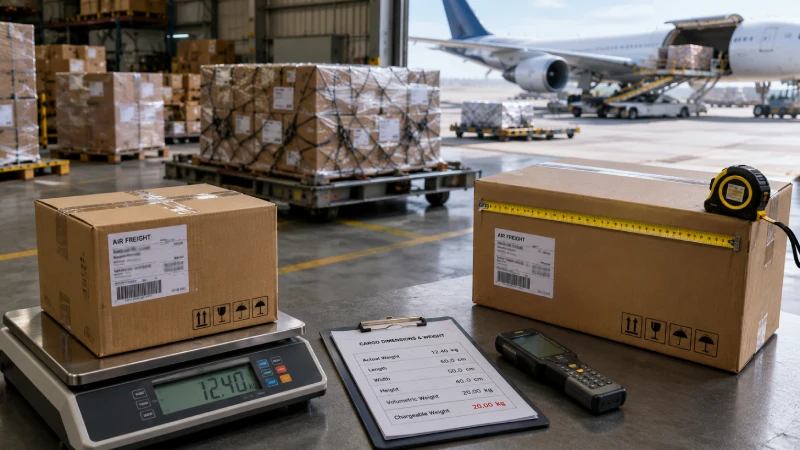
Air freight from China is priced primarily by chargeable weight, not simply the number of kilograms shown on the supplier’s packing list.
Air shipments use chargeable weight rather than CBM alone; our air freight cost per kilogram guide explains the calculation and typical weight breaks.
As a September 2026 planning reference, standard general-cargo air freight from China to the UK may fall around $4.5–$8 per chargeable kg, depending on the shipment weight tier, China departure airport, UK airport, route, capacity and service level.
Actual Weight vs Volumetric Weight
Airlines need to account for both aircraft weight and space.
For general air cargo, chargeable weight is therefore commonly the higher of:
Actual gross weight
or
Volumetric weight
A widely used general air-cargo formula is:
Length × Width × Height in cm ÷ 6,000
The chargeable weight is then based on whichever figure is higher.
Air Freight Calculation Example
Suppose you have:
- 10 cartons
- each carton: 60 × 50 × 40 cm
- actual weight: 12 kg per carton
Actual weight:
10 × 12 kg = 120 kg
Volumetric weight per carton:
60 × 50 × 40 ÷ 6,000 = 20 kg
Total volumetric weight:
20 × 10 = 200 kg
The shipment would therefore be priced on approximately:
200 kg chargeable weight
not 120 kg.
If an illustrative freight rate were $5/kg:
200 × $5 = $1,000
That $5/kg figure is only an example for explaining the calculation, not a current Winsail quotation.
Why Air Freight Rates Change at Different Weight Levels
Air freight quotations frequently use weight breaks such as:
- minimum charge
- +45 kg
- +100 kg
- +300 kg
- +500 kg
- +1,000 kg
Larger shipments can therefore receive a lower rate per kilogram even though the total freight amount is higher.
This is why an importer comparing a 120 kg shipment with a 1,000 kg published market rate may get a misleading result.
Pro Tip: Send final carton dimensions when requesting an air freight price. Knowing only that your cargo weighs “300 kg” is not enough to establish the chargeable weight.
Express Shipping Cost from China to the UK
For small, urgent commercial shipments, express courier services may be simpler than conventional air freight.
A broad 2026 planning reference for China-to-UK express cargo is approximately:
$8–$12 per chargeable kg
The actual price can change because of:
- shipment dimensions
- fuel surcharge
- oversized-piece handling
- remote-area delivery
- account discount
- service level
- peak-demand surcharges
Express couriers also use dimensional weight.
A common courier calculation is:
Length × Width × Height in cm ÷ 5,000
However, the exact divisor and charging rules depend on the courier, service and account terms, so the applicable tariff should always be checked before booking.
For very small shipments, express may remain competitive even when its headline per-kilogram rate is higher than standard air freight because conventional air cargo can involve additional pickup, terminal, clearance and delivery charges.
Port-to-Port vs Door-to-Door: Why the Price Can Look So Different
Two forwarders can quote very different numbers and both quotations can be technically correct if they cover different parts of the journey.
What a Port-to-Port Rate May Cover
A port-to-port quotation generally focuses on the international movement between specified ports.
Depending on the quotation, it may include selected carrier surcharges, but importers should never assume all of the following are included:
- China factory pickup
- export handling
- origin trucking
- UK terminal charges
- customs entry
- Import Duty or VAT
- final UK haulage
Every quotation should show what is included and excluded.
What Door-to-Door Pricing Adds
A more complete door-to-door shipping structure can look like this:
Chinese supplier
→ China pickup
→ origin warehouse or port
→ export handling
→ international freight
→ UK terminal or CFS
→ customs clearance
→ UK inland transport
→ consignee warehouse
This naturally produces a higher headline price than a port-to-port rate because it is solving a larger part of the supply chain.
Port-to-Port vs Door-to-Door Cost Scope
| Cost Item | Port-to-Port | Door-to-Door |
|---|---|---|
| China factory pickup | Usually separate | May be included |
| Origin handling | Depends on quote | May be included |
| International freight | Yes | Yes |
| UK destination charges | Check carefully | May be included |
| Customs clearance | Usually separate | Can be coordinated |
| Customs Duty / Import VAT | Usually separate | Depends on agreed structure |
| UK final delivery | No | Yes |
| Delivery appointment / special unloading | No | Check scope |
DAP vs DDP Pricing
Door-to-door does not automatically mean DDP.
Under a DAP-type arrangement, delivery can be coordinated to the agreed location while import duties and taxes remain outside the seller’s or forwarder’s quoted freight scope.
DDP shipping from China requires more careful review.
A workable DDP structure depends on factors such as:
- who can legally act as importer
- customs representation
- commodity classification
- customs value
- Import VAT treatment
- Customs Duty
- product restrictions
- final delivery arrangement
Winsail Logistics may coordinate door-to-door or DDP-related solutions where applicable, but the workable structure should be confirmed shipment by shipment rather than assumed from a generic per-CBM or per-kg price.
UK Destination Charges: What Happens After the Freight Arrives?
A common source of confusion in China-to-UK freight quotations is the phrase:
“destination charges.”
It is not one universal UK fee.
Depending on the shipment, UK-side costs can include:
- terminal handling
- port security charges
- energy-related terminal charges
- carrier local charges
- destination documentation
- LCL CFS handling
- deconsolidation
- customs declaration
- inspections if required
- storage
- demurrage or detention if incurred
- inland haulage
Real 2026 UK Port Charge Examples
Official DP World tariff advisories illustrate why destination charges should be treated as individual cost lines rather than one guessed allowance.
| UK Terminal | 2026 Charge | Official Reference |
|---|---|---|
| London Gateway ISPS | £30.30 per import laden container | DP World |
| London Gateway EAM | £20.26 per import laden container | DP World |
| Southampton ISPS | £27.96 per import laden container | DP World |
| Southampton EAM | £7.36 per import laden container | DP World |
These are illustrative port tariff items only. They do not represent the full destination cost of a container.
The official DP World London Gateway and DP World Southampton materials should be checked for current terminal tariffs. The Port of Felixstowe also publishes current rates, charges and surcharge information.
Carrier, customs, CFS and haulage charges can sit outside the port tariff itself.
The practical lesson for importers is simple:
Ask for destination charges to be itemised or clearly defined before comparing freight quotations.
A forwarder quoting a slightly higher ocean rate but clearly including destination costs may ultimately be cheaper than a low freight rate followed by multiple local charges.
Why Your UK Postcode Changes the Door-to-Door Shipping Cost
The international freight portion may be identical for two UK importers, while the final delivered cost is very different.
That is because the destination is not simply “United Kingdom.”
A shipment delivered near London is not priced the same as a shipment delivered to Manchester, Newcastle, Glasgow or a remote location.
Port-to-Warehouse Distance Matters
For example, a container arriving at Felixstowe may require:
- relatively short inland transport to parts of South East England
- longer haulage to the Midlands
- substantially more road or intermodal movement to Northern England or Scotland
The best UK discharge port can therefore depend partly on the final postcode.
A cheaper ocean rate into one port may lose its advantage after inland delivery is added.
Delivery Conditions Also Affect the Quote
The postcode is only the starting point.
A forwarder may also need to know:
- commercial or residential address
- container or pallet delivery
- forklift availability
- whether the consignee unloads the container
- tail-lift requirement
- timed delivery
- waiting time
- restricted site access
- 3PL booking requirement
- Amazon appointment requirements
For inventory moving into Amazon fulfilment or other marketplace networks, see Amazon FBA freight forwarding from China for the additional delivery-planning considerations.
Same Shipment, Different UK Address
Imagine two identical 5 CBM shipments leaving the same supplier in Shenzhen.
Both use the same consolidation, the same vessel and the same UK port.
Shipment A delivers to a Birmingham warehouse.
Shipment B delivers to a warehouse in Glasgow.
The China pickup and international freight may be identical, but the final delivery cost is not.
That is why a useful China-to-UK door-to-door quotation should always be based on the final postcode, not simply “UK delivery.”
Pro Tip: Provide the final UK postcode before comparing door-to-door quotations. Otherwise one of the most important parts of the final cost can only be estimated.
What Changes a China-to-UK Freight Quote?
The most important cost drivers are practical shipment details rather than the product’s purchase price alone.
| Cost Factor | Why It Changes the Quote |
|---|---|
| China pickup city | Changes domestic trucking and consolidation cost |
| Number of cartons | Changes handling and freight quantity |
| Carton dimensions | Determines CBM and volumetric weight |
| Gross weight | Affects air freight and dense LCL cargo |
| Commodity | May trigger special handling or controls |
| Dangerous-goods status | Can change carrier acceptance and surcharge structure |
| Origin port or airport | Different routes and carrier options |
| UK port or airport | Changes destination and inland transport |
| UK postcode | Directly affects final delivery |
| Incoterm | Determines where freight responsibility begins |
| Direct vs transshipment | Can change rate and transit time |
| Season | Capacity and surcharges fluctuate |
| Delivery conditions | Tail-lift, booking, waiting and unloading can add cost |
| Quote validity | Freight market rates can expire quickly |
For accurate pricing, “500 kg of goods from China to the UK” is not enough information.
If delivery speed is also part of the decision, compare these costs with how long shipping from China to the UK takes before choosing the transport mode.
Worked China-to-UK Shipping Cost Examples
The following examples demonstrate how freight pricing works. They are illustrative calculations only and are not Winsail quotations.
Example 1: 50 kg of Samples to London
Suppose the shipment is compact enough that actual and volumetric weight are both around 50 kg.
Using the broad express planning range of $8–$12/kg, the transport reference would be roughly:
$400–$600
before any shipment-specific tax or unusual surcharge.
Using a headline standard air rate of $4.5–$8/kg might appear cheaper at first.
However, conventional air cargo can also involve:
- China pickup
- airport handling
- minimum freight charges
- UK handling
- customs clearance
- final delivery
For a small 50 kg shipment, express can therefore remain competitive even when the quoted per-kilogram rate is higher.
Decision: Compare the final delivered totals, not only $/kg.
Example 2: 300 kg of Bulky Goods
Assume 10 cartons:
- 80 × 60 × 60 cm each
- 30 kg actual weight each
Actual weight:
300 kg
Air volumetric weight:
80 × 60 × 60 ÷ 6,000 = 48 kg per carton
10 cartons:
480 kg volumetric weight
The air shipment may therefore be rated at:
480 kg chargeable weight
rather than 300 kg.
At an illustrative $5/kg rate:
- pricing based incorrectly on 300 kg: $1,500
- pricing based on 480 kg chargeable weight: $2,400
That $900 difference does not mean the freight rate changed. The shipment’s chargeable weight changed.
Example 3: 5 CBM of Commercial Goods to Birmingham
Using the broad LCL freight reference of $55–$150/CBM:
Base freight alone could appear to be roughly:
$275–$750
But that is not the total China-to-Birmingham cost.
The quotation may still need:
- supplier pickup
- China CFS
- export handling
- UK deconsolidation
- destination charges
- customs clearance
- Birmingham delivery
- Duty/VAT where applicable
This is why multiplying an online LCL rate by CBM is useful only for an initial freight benchmark.
Example 4: A 12–15 CBM Shipment
This is the classic LCL/FCL decision zone.
Instead of asking only for an LCL rate per CBM, compare two complete quotation structures.
Option A — LCL
China pickup
+ origin CFS
+ LCL freight
+ UK CFS/destination
+ customs
+ delivery
Option B — 20ft FCL
China pickup or container positioning
+ origin charges
+ FCL freight
+ UK destination
+ customs
+ container haulage
Only then can you identify the true crossover.
Example 5: Same Container, Different UK Postcodes
Suppose one 40HC container is shipped from Ningbo to a UK gateway.
The ocean freight does not change because one buyer’s warehouse is in Birmingham and another buyer’s warehouse is in Scotland.
The inland haulage portion does.
Therefore:
China → UK container freight rate
and
China factory → UK warehouse delivered cost
are two different numbers.
How to Reduce Shipping Cost Without Creating New Risks
Lower logistics cost should come from eliminating unnecessary freight and handling, not from creating customs, cargo-damage or delivery problems.
Reduce Chargeable Volume
For air and courier shipments, packaging has a direct cost impact.
Review:
- oversized cartons
- unused void space
- unnecessary pallet dimensions
- whether products can be packed knock-down
- whether carton sizing can be improved
But avoid reducing packaging protection so aggressively that the savings are replaced by damage claims or warehouse rejection.
Consolidate Multiple Chinese Suppliers
If you purchase from several suppliers, shipping each order independently can duplicate:
- pickup charges
- export handling
- documentation
- minimum freight charges
Where practical, shipments from different suppliers can be coordinated into a China warehouse and consolidated before export.
This can be particularly useful for wholesalers, sourcing companies and e-commerce businesses purchasing from several factories. See Winsail’s China warehouse and consolidation services for the broader operational scope.
Compare LCL and FCL Before the Container Is Full
Start comparing FCL once the shipment enters roughly the 10–15 CBM range.
Do not assume LCL remains cheaper simply because the goods do not fill the entire container.
Compare the Complete Origin-to-Destination Cost
A factory in Guangdong may naturally route through Shenzhen, Yantian or another South China gateway.
Moving the cargo a long distance across China simply because another port has a slightly lower ocean rate can increase the total cost.
Compare:
China trucking + origin handling + freight
rather than ocean freight alone.
Provide Final Dimensions Before Booking
Pre-production estimates often differ from final packed cargo.
For example:
Estimated:
8 CBM
Final packing:
10.4 CBM
That difference can materially change:
- LCL freight
- warehouse handling
- air chargeable weight
- vehicle requirement
Use final carton or pallet dimensions whenever possible.
Avoid Turning a Routine Shipment Into an Urgent Shipment
Late production completion can force an importer to move:
- sea → air
- air → express
- standard routing → premium uplift
The cost difference can be much greater than any saving achieved by negotiating a small reduction in the original sea freight rate.
Compare Quote Scope, Not Only the Total Number
Before choosing a freight quotation, confirm:
- what is included
- what is excluded
- where the service starts
- where the service ends
- whether UK destination charges are included
- whether customs clearance is included
- how Duty and VAT are treated
- what delivery conditions are assumed
A quotation is only useful when the service scope is clear.
Use PVA Correctly Where Applicable
For UK VAT-registered businesses, Postponed VAT Accounting (PVA) may allow eligible import VAT to be accounted for on the VAT Return rather than paid upfront at import.
HMRC’s Postponed VAT Accounting guidance explains when and how eligible businesses can account for import VAT through their VAT Return.
PVA does not remove the VAT liability. Its value is primarily in VAT accounting and cash-flow treatment.
What Information Is Needed for an Accurate China-to-UK Freight Quote?
A useful freight quotation starts with complete cargo information.
When you are ready to compare live sailings and container options, Winsail’s ocean freight forwarding service can review the shipment details and quotation scope.
Before requesting a price, prepare:
- supplier pickup city or address
- Incoterm, such as EXW or FOB
- commodity description
- commodity code if available
- number of cartons, crates or pallets
- dimensions of each package
- total gross weight
- total CBM
- cargo value
- battery, liquid, magnetic or dangerous-goods status
- preferred shipping method
- target delivery date
- final UK postcode
- warehouse, business, Amazon or 3PL delivery
- unloading requirements
- importer and VAT arrangement where relevant
What Should a Useful Freight Quote Show?
A commercial quotation should make the pricing scope understandable.
Ideally, check for:
- origin
- destination
- shipping mode
- cargo quantity
- charging basis
- international freight
- origin charges
- destination charges
- customs-clearance scope
- inland delivery
- Duty/VAT treatment
- exclusions
- quote validity
Is Your Freight Quote Actually Comparable?
Before choosing the lowest number, ask:
- Are both quotes based on the same cargo dimensions?
- Are both using the same UK postcode?
- Is China pickup included in both?
- Is destination handling included?
- Is customs clearance included?
- Is UK delivery included?
- Are Duty and VAT included or excluded?
- Are the quotations based on the same Incoterm?
- Do both quotes have similar validity dates?
If the answer to any of these is “no,” the two totals may not be directly comparable.
UK Customs Duty and Import VAT: What This Shipping Cost Guide Includes
Customs Duty and Import VAT affect landed cost, but they should not be mixed into a generic China-to-UK freight rate.
For imports into England, Scotland and Wales, GOV.UK states that businesses generally need an EORI number beginning with GB. Northern Ireland movements can require an XI EORI and operate under different arrangements.
The correct commodity code is also important because the UK Trade Tariff identifies:
- Customs Duty
- Import VAT
- tariff suspensions or reductions
- other applicable measures
For most goods, the standard VAT rate is currently 20%, but actual treatment depends on the product.
VAT-registered businesses may also be able to use PVA where HMRC’s conditions are met.
Winsail Logistics can coordinate freight and customs-related arrangements within the agreed service scope where applicable, but commodity classification, tax treatment and importer responsibilities should be confirmed for the specific shipment.
How much does shipping from China to the UK cost in 2026?
As a September 2026 planning reference, standard air freight may range around $4.5–$8 per chargeable kg, express around $8–$12/kg, LCL around $55–$150/CBM, a 20ft container around $2,600–$3,200 and a 40ft container around $4,100–$5,000. These are market benchmarks rather than Winsail quotations and do not necessarily include China pickup, UK destination charges, customs clearance, Duty/VAT or final delivery.
How much does a 20ft container from China to the UK cost?
A practical September 2026 planning reference is approximately $2,600–$3,200 per 20GP container for the international freight portion on selected major-port services. The final cost depends on the Chinese load port, carrier, UK discharge port, origin handling, destination charges and inland delivery.
How much does a 40ft or 40HC container from China to the UK cost?
A practical planning range is about $4,100–$5,000 for a 40GP and roughly $4,000–$5,200 for a 40HC. The actual rate depends on carrier, equipment availability, origin, destination and booking date.
Is LCL or FCL cheaper from China to the UK?
LCL is normally more practical for lower-volume shipments, while FCL becomes increasingly competitive as volume grows. Once a shipment reaches approximately 10–15 CBM, it is sensible to request both LCL and 20ft FCL quotes because destination handling, cargo weight and current container rates can move the crossover point.
How is air freight cost from China to the UK calculated?
Air freight is generally calculated using chargeable weight, which is the higher of actual gross weight or volumetric weight. A commonly used general air-cargo formula is length × width × height in centimetres ÷ 6,000.
Does a China-to-UK freight quote include Customs Duty and VAT?
Not necessarily. A port-to-port or standard freight quotation usually does not automatically include Duty and Import VAT. Whether taxes are included depends on the Incoterm, importer arrangement and agreed service scope.
Why does the UK postcode change my shipping cost?
The international freight normally ends at a UK port or airport, while the cargo still has to move to the consignee. Distance from the gateway, vehicle type, delivery restrictions, waiting time, tail-lift requirements and warehouse booking rules can all change the final delivery cost.
Continue with related UK shipping guides
Use these focused guides for the next part of your China-to-UK shipping plan.
