

For many Saudi importers, shipping cost per CBM is far more important than shipping cost per kilogram. This is especially true for businesses importing furniture, lighting products, textiles, plastic goods, building materials, retail products, and mixed commercial cargo from China.
Unlike air freight pricing, which is heavily influenced by chargeable weight, LCL sea freight between China and Saudi Arabia revolves around container space utilization. In simple terms, importers are paying for the amount of space their cargo occupies inside a shared container.
This creates a very different pricing logic.
Two shipments with completely different weights may end up paying similar freight costs if they occupy the same volume. Because of this, many Saudi importers are surprised when lightweight cargo still produces relatively high logistics expenses.
Understanding how CBM pricing actually works is essential for controlling import costs, avoiding hidden charges, and choosing the right shipping strategy between China and Saudi Arabia.
Why CBM Pricing Dominates China–Saudi Arabia LCL Shipping
LCL shipping is fundamentally a space-sharing business model. Instead of booking an entire container, multiple importers share one container moving from China to Saudi Arabia. Freight forwarders therefore focus primarily on volume allocation rather than only cargo weight.
This becomes particularly important on Saudi trade lanes because a large percentage of imported goods are bulky but not especially heavy. Furniture, home décor products, exhibition materials, and retail displays are common examples. These products occupy significant container space even though their actual weight may remain relatively low.
For Saudi SMEs and growing distributors, LCL shipping is often the preferred solution because full container volumes may not yet be justified. Many businesses also purchase from multiple Chinese factories located across different regions, making cargo consolidation a normal part of the import process.
As a result, the cost structure becomes much more operationally complex than standard freight quotes suggest.
The real issue is not simply “how much per CBM,” but rather how efficiently that CBM is being used.
What Actually Makes Up Shipping Cost per CBM to Saudi Arabia
One of the biggest misconceptions among importers is assuming that freight quotes mainly represent ocean transportation costs. In reality, ocean freight is only one portion of the total logistics expense.
Before cargo even leaves China, multiple operational costs have already started accumulating. Cargo often needs to be transported from factories to consolidation warehouses, unloaded, inspected, labeled, repacked, and prepared for export customs clearance. When suppliers are spread across different cities such as Shenzhen, Ningbo, Yiwu, or Guangzhou, domestic coordination costs can rise quickly.
After consolidation, the shipment enters the ocean freight stage. But even here, rates are influenced by far more than distance. Seasonal demand, container shortages, fuel fluctuations, and vessel capacity all affect pricing between China and Saudi Arabia.
The destination side is where many Saudi importers encounter the largest surprises.
Once the container arrives at Jeddah or Dammam, the cargo may still incur terminal handling charges, unpacking fees, customs inspection expenses, documentation costs, and temporary storage charges before final delivery can begin. Smaller shipments are particularly vulnerable because fixed destination charges are spread across fewer cargo units, increasing the effective landed cost per product.
This is why two forwarders can offer dramatically different quotations for what initially appears to be the same shipment.
Real LCL Pricing Realities Between China and Saudi Arabia
Many importers search for a simple “cost per CBM” number, but the reality is that LCL pricing is highly dynamic.
A shipment moving during low season may secure relatively competitive rates, while the same shipment during pre-Ramadan or peak commercial seasons could cost significantly more. Congestion at Saudi ports can also affect total landed cost even if the original ocean freight rate remains unchanged.
Jeddah, for example, often experiences heavier cargo volumes because it serves western Saudi Arabia and acts as a major commercial gateway. During busy periods, customs inspections and terminal processing delays can increase storage risks and delivery lead times.
Dammam may sometimes offer smoother processing for eastern Saudi Arabia shipments, particularly for industrial cargo or goods intended for nearby GCC distribution. However, inland trucking costs to Riyadh or western Saudi Arabia may offset some of those freight advantages.
This is why experienced importers rarely evaluate shipping costs based only on the ocean freight portion. The final delivery region inside Saudi Arabia matters just as much as the China departure port.
Cargo Density Is the Biggest Cost Variable Most Importers Ignore
Cargo density has an enormous impact on freight efficiency, yet many importers pay very little attention to it when evaluating shipping quotes.
Low-density cargo creates one of the worst cost structures in LCL shipping because it occupies excessive container space relative to its commercial value. Furniture is one of the clearest examples. A shipment may not weigh very much, but it consumes substantial cubic volume inside the container.
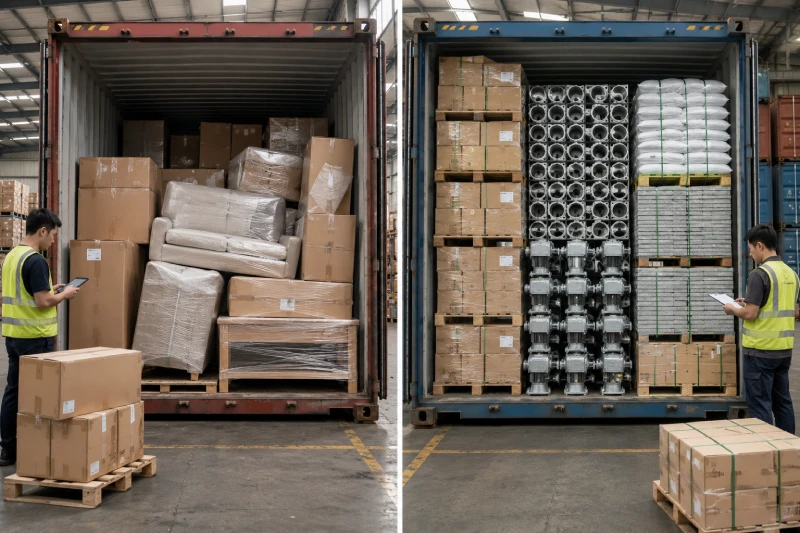
In contrast, dense cargo such as tiles, machinery parts, hardware, or metal products generally performs much better under sea freight pricing models. These products maximize usable container capacity and often reduce the effective logistics cost per unit.
This distinction becomes especially important when deciding between sea freight and air freight.
Certain compact but valuable products may actually become economically viable under air freight chargeable-weight calculations, while oversized low-density cargo almost always favors sea freight despite longer transit times.
For importers regularly shipping from China to Saudi Arabia, improving packaging efficiency can sometimes reduce freight spending more effectively than negotiating lower freight rates.
Even relatively small reductions in carton dimensions may improve palletization, container utilization, and final cost efficiency.
Why Hidden Charges Cause So Many Problems in Saudi Arabia Shipping
One of the most common problems in China–Saudi Arabia freight forwarding is incomplete quotation transparency.
Some forwarders advertise highly competitive per-CBM rates but exclude destination-related expenses from the original quotation. Importers later discover additional handling fees, customs processing charges, storage costs, or local delivery expenses after the cargo arrives in Saudi Arabia.
This creates serious budgeting problems, particularly for small businesses importing on tight margins.
Saudi Arabia also has additional compliance requirements that can increase operational complexity. Certain products may require SABER registration, SASO conformity assessment, or additional customs verification procedures before clearance can be completed.
When documentation problems occur, delays can quickly become expensive. Storage fees accumulate daily, customs inspections may extend processing timelines, and delivery scheduling becomes more difficult during congested periods.
Ramadan shipping periods can intensify these challenges even further. Reduced operating hours, increased cargo volumes, and slower clearance cycles often create temporary cost increases across the supply chain.
For inexperienced importers, DDP shipping sometimes becomes attractive precisely because it reduces exposure to these operational uncertainties.
How Experienced Saudi Importers Reduce Shipping Cost per CBM
The lowest freight quote does not always produce the lowest final logistics cost.
Experienced importers focus more on total supply chain efficiency than on headline freight pricing alone.
One of the most effective strategies is supplier consolidation. Instead of shipping separately from multiple Chinese factories, cargo is first consolidated into a single warehouse before export. This reduces repeated documentation costs, minimizes fragmented trucking charges, and improves container utilization efficiency.
Packaging optimization is another major factor. Many factories package products with excessive empty space, unintentionally increasing shipping volume. Importers that actively optimize carton dimensions often achieve substantial long-term savings.
Shipping frequency also plays a surprisingly important role.
Some businesses import small LCL shipments every week, assuming this improves flexibility. However, repeated destination handling fees can make frequent small shipments significantly more expensive than larger monthly consolidations.
Regular shipping volume also creates stronger negotiating power with freight forwarders. Businesses importing consistently into Saudi Arabia can often negotiate fixed seasonal rates, reduced minimum billing volumes, or more favorable storage terms.
When LCL Shipping Stops Making Financial Sense
Many importers continue using LCL shipping longer than they should.
As shipment volume increases, repeated destination handling charges, unpacking fees, and operational risks gradually reduce the economic advantages of shared-container shipping.
At certain cargo volumes, full container shipping becomes more efficient even if the importer cannot completely maximize container capacity.
This transition often happens earlier than expected for dense cargo.
In addition to lower long-term costs, FCL shipping typically provides:
- fewer cargo handling stages
- lower damage risk
- faster customs processing
- more predictable delivery timelines
For businesses scaling imports into Saudi Arabia, regularly reevaluating LCL versus FCL economics is extremely important.
The cheapest logistics strategy during the early growth stage may become inefficient once shipment frequency and volume increase.
Is DDP Shipping Better for Saudi Arabia Imports?
DDP shipping has become increasingly popular among Saudi importers because it simplifies operational management.
Under DDP structures, the freight forwarder typically handles transportation, customs clearance, duties, VAT processing, and final delivery coordination. Although the upfront quotation may initially appear higher, many importers prefer the predictability it provides.
This is especially valuable for businesses unfamiliar with Saudi customs procedures or compliance requirements.
However, not all DDP quotations include the same service scope. Some may exclude unloading fees, remote-area surcharges, customs inspection risks, or warehouse-related charges.
Importers should therefore evaluate DDP offers carefully rather than assuming all-inclusive coverage automatically exists.
The real value of DDP shipping is often operational stability rather than simply lower freight cost.
Choosing the Right Shipping Strategy for China–Saudi Arabia Trade
There is no universal “best” shipping method for every importer.
The ideal logistics structure depends on cargo density, shipment frequency, urgency, warehouse capacity, and business scale.
Small urgent shipments may justify air freight despite higher pricing. Bulky low-value products generally favor optimized LCL sea freight. Growing distributors importing consistently into Saudi Arabia may eventually achieve better economics through FCL shipping.
More importantly, successful importers focus on reducing operational inefficiencies rather than only chasing the cheapest freight quote.
A slightly higher freight rate from a reliable forwarder can sometimes reduce customs delays, storage penalties, cargo damage, and delivery disruptions enough to create lower overall landed costs.
In the China–Saudi Arabia trade lane, freight pricing is ultimately shaped as much by execution quality as by transportation cost itself.
