
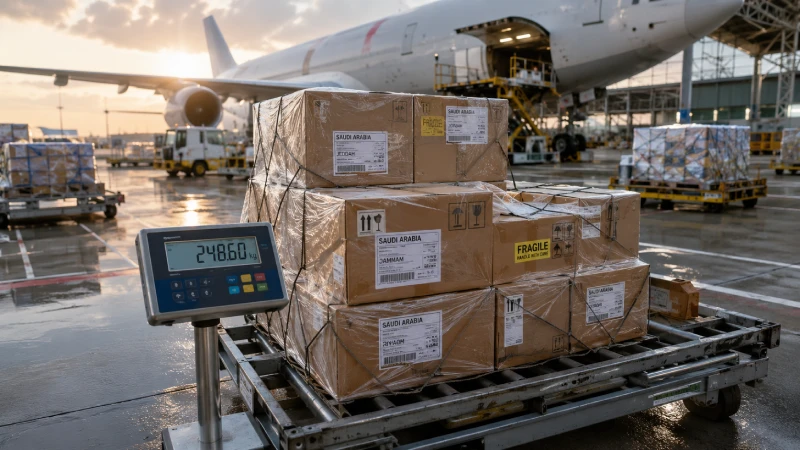
Shipping cost per KG from China to Saudi Arabia is not a fixed number. For most importers, the final cost depends on much more than the actual weight shown on the carton label. Freight companies usually calculate cost based on chargeable weight, shipment size, cargo density, delivery city, customs requirements, and whether the shipment is handled by courier, air freight, DDP air shipping, or sea freight.
This is why two shipments with the same actual weight can receive very different quotations. A 200 KG shipment of metal parts may be cheaper per KG than a 200 KG shipment of lightweight plastic products, because the plastic goods take up more space inside the aircraft or container. For Saudi Arabia importers, the destination also matters. Cargo delivered to Riyadh, Jeddah, Dammam, Mecca, Medina, or remote industrial zones may involve different airport handling fees, customs clearance conditions, and inland trucking costs.
For B2B importers, the goal is not simply to find the lowest per-KG rate. The real goal is to understand how the cost is calculated, avoid hidden charges, and choose a shipping method that fits the cargo value, urgency, and delivery requirements.
Why Shipping Cost per KG Changes Between Shipments
Many importers ask, “How much is shipping per KG from China to Saudi Arabia?” This is a reasonable question, but freight pricing does not work like a simple retail price tag. The per-KG rate is affected by weight range, cargo volume, billing method, route capacity, and service type.
Small shipments usually pay a higher per-KG cost because couriers and freight forwarders have minimum billing rules. A 20 KG shipment may be charged at a premium rate, while a 300 KG shipment may receive a better air freight rate because it is easier to consolidate with other cargo. Once the shipment reaches 500 KG or more, the pricing logic changes again. At that stage, importers may need to compare air freight, DDP air shipping, LCL sea freight, or even partial container solutions.
Cargo density is another important factor. Dense products such as machinery parts, metal fittings, tools, and industrial components often perform better under per-KG pricing. Lightweight but bulky products such as foam goods, plastic displays, furniture accessories, packaging materials, and some consumer products can become expensive because they are billed by volume instead of actual weight.
This is why importers should always compare actual weight and volumetric weight before confirming a shipment.
How Freight Forwarders Calculate Shipping Cost per KG
Freight forwarders usually calculate China-to-Saudi Arabia shipping cost based on chargeable weight. Chargeable weight means the weight used for billing. It may be the actual gross weight or the volumetric weight, depending on which number is higher.
For air freight and express courier shipments, airlines and courier companies must protect cargo space. A shipment may be light, but if it occupies a large amount of aircraft space, it reduces the carrier’s ability to load other cargo. That is why dimensional weight is used.
For example, if a shipment weighs 120 KG but its volumetric weight is 180 KG, the freight company will usually charge based on 180 KG. The importer may feel the rate is high, but the issue is not the freight rate itself. The issue is that the cargo occupies more space than its actual weight suggests.
This is especially important for Saudi-bound air cargo because per-KG pricing can look attractive at first, but the final bill may increase once the carton dimensions are measured.
Volumetric Weight: The Biggest Cost Trap
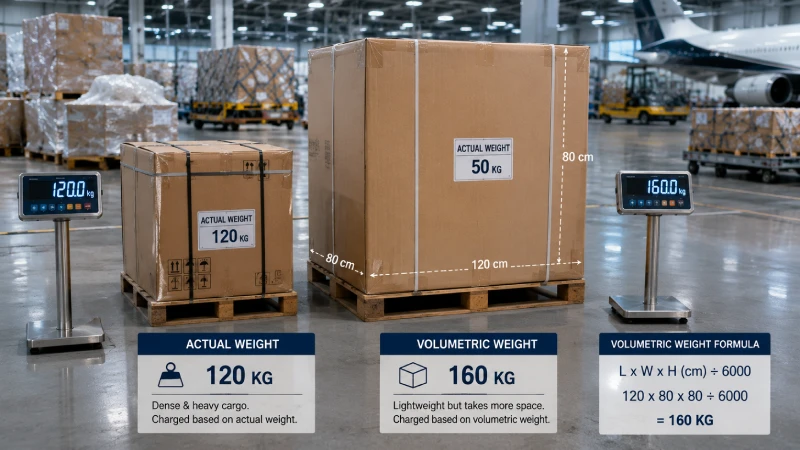
Volumetric weight is often the main reason importers overpay for shipping. It is calculated from carton dimensions, not product weight. For many China-to-Saudi Arabia air shipments, the common divisor is 6000, although some courier or special-line services may use different billing rules.
If one carton measures 60 cm × 50 cm × 40 cm, the volumetric weight is:
If the actual weight of that carton is only 12 KG, the freight company may still charge it as 20 KG. If there are 30 cartons, the difference becomes significant. The importer may think the shipment weighs 360 KG, but the billable weight may become 600 KG.
This is why packaging optimization is not a small detail. Reducing empty space inside cartons, choosing better carton sizes, compressing soft goods, and avoiding oversized packaging can directly reduce freight cost per KG.
Express Courier vs Air Freight vs DDP Air Shipping
For shipments under 30–50 KG, express courier may be convenient. It is simple, fast, and suitable for samples, urgent replacement parts, documents, small e-commerce orders, and high-value goods. However, courier rates can become expensive once the shipment grows larger.
For commercial shipments around 100–300 KG, consolidated air freight is often more economical. The goods are moved through air cargo channels instead of standard courier networks. This can reduce the per-KG cost, especially when the importer has a business address and can handle customs clearance or work with a freight forwarder.
DDP air shipping is different. It usually includes international freight, customs clearance support, import duty handling, VAT coordination, and final delivery within Saudi Arabia. The quoted per-KG rate may look higher than basic air freight, but it can reduce the risk of unexpected destination charges.
This is where many first-time importers make mistakes. They compare a basic air freight rate with a DDP rate and assume the basic rate is cheaper. In reality, the basic rate may not include customs clearance, duty, VAT, airport handling, storage, or delivery to the warehouse.
Shipping Cost by Weight Range
For shipments under 50 KG, the per-KG cost is usually high. Freight companies must cover pickup, documentation, customs handling, and minimum billing costs. This weight range is best for samples, urgent small orders, and high-value products.
For 100–300 KG shipments, the cost per KG often becomes more reasonable. This is a common range for small B2B importers buying electronics, accessories, spare parts, garments, tools, and mixed commercial goods from China. At this stage, importers should compare courier, air freight, and DDP air shipping carefully.
For 500 KG and above, air freight may still be used for urgent cargo, but importers should start comparing LCL sea freight or sea-air solutions. If the goods are not time-sensitive, sea freight may reduce the landed cost significantly. However, sea freight is not always cheaper for small, low-volume cargo after minimum charges, destination fees, and inland delivery are included.
For recurring shipments, importers can often negotiate better rates by providing monthly shipping volume. A freight forwarder can plan consolidation, reserve space, and recommend more stable shipping methods.
Saudi Arabia Destination Factors
The destination city in Saudi Arabia can change the final cost. Jeddah is a key gateway for western Saudi Arabia and is commonly used for cargo going to Jeddah, Mecca, Medina, and nearby commercial areas. Dammam is important for the Eastern Province and industrial cargo. Riyadh is a major inland destination with strong demand for air cargo and distribution.
If goods arrive at Jeddah but need delivery to Riyadh, inland trucking can increase the total cost. If the importer is located in Dammam but the goods are routed through another gateway, delivery may not be efficient. This is why the cheapest international freight rate is not always the cheapest landed cost.
Saudi warehouse delivery can also affect pricing. Some warehouses have restricted receiving hours, unloading requirements, appointment systems, or limited access for trucks. These details may create waiting charges or failed delivery costs if not arranged properly.
Customs, VAT, Duties, and Compliance Costs
Shipping cost per KG does not include every import cost unless the quote is clearly DDP or all-inclusive. Saudi Arabia importers need to consider customs duty, VAT, clearance fees, product compliance, and possible inspection-related charges.
Some product categories may require SABER registration, SASO-related compliance, certificates, or product approvals before customs clearance. If these documents are missing, goods may be delayed, inspected, or stored at the airport or port. Storage fees can quickly increase the final cost.
This is why importers should not only ask for the freight rate. They should also ask what is included in the quotation. A professional quote should clearly show whether customs clearance, duties, VAT, delivery, and destination handling are included or excluded.
Internal linking opportunity: link to your Saudi Arabia Customs Clearance Guide when explaining customs cost surprises and compliance documents.
When Air Freight Is Not the Best Option
Although this article focuses on shipping cost per KG, air freight is not always the best solution. If the shipment is bulky, low-value, and not urgent, sea freight may be more suitable. For example, furniture parts, building materials, display racks, packaging materials, and low-margin consumer goods may become too expensive under air freight pricing.
In this case, the importer should compare LCL sea freight, FCL shipping, or supplier consolidation. LCL can work well for shipments that are not large enough for a full container. However, LCL also has destination charges, warehouse handling fees, and minimum billing volume. Therefore, it is important to calculate the total landed cost, not only the ocean freight rate.
Internal linking opportunity: link to your Sea Freight from China to Saudi Arabia page when discussing larger or less urgent shipments.
Real Importer Scenarios
A small e-commerce seller importing 35 KG of phone accessories from Shenzhen to Riyadh may choose express courier or DDP air shipping. The per-KG rate may be higher, but the shipment is urgent, compact, and relatively high-value. Speed and simplicity matter more than the lowest rate.
An electronics importer shipping 220 KG of mixed components from Guangzhou to Jeddah may benefit from consolidated air freight. If the cartons are dense and well-packed, the chargeable weight may stay close to the actual weight. This can reduce the landed cost per unit.
A building materials importer shipping 800 KG of bulky decorative panels may find air freight too expensive because volumetric weight is much higher than actual weight. LCL sea freight or consolidated sea shipping may be more suitable, even if the transit time is longer.
A Saudi distributor buying from several suppliers in Yiwu, Shenzhen, and Ningbo can reduce cost by consolidating goods at a China warehouse before shipping. Instead of paying multiple minimum charges, the importer can combine cargo into one shipment and improve the total cost per KG.
Seasonal Price Changes on the China–Saudi Route
Shipping rates from China to Saudi Arabia can change during peak seasons. Before Ramadan, Eid, and major retail seasons, demand for air cargo and sea freight space may increase. If importers book too late, they may face higher rates, limited flight space, or longer transit times.
Q4 can also create pressure because many importers ship consumer goods, electronics, promotional products, and retail inventory before year-end demand. During these periods, the lowest per-KG quote may not guarantee stable delivery. Space availability, customs timing, and destination handling capacity become equally important.
Importers with recurring shipments should plan earlier, especially if the cargo has a sales deadline. Waiting until the final week often leads to expensive air freight or forced courier shipping.
Internal linking opportunity: link to your Shipping Time from China to Saudi Arabia page when explaining seasonal timing and delivery planning.
How to Reduce Shipping Cost per KG
The most effective way to reduce shipping cost is to improve chargeable weight. This starts with packaging. Ask suppliers to use right-sized cartons, reduce empty space, avoid unnecessary wooden boxes for non-fragile goods, and provide accurate packing lists before quotation.
Consolidation is another powerful method. If goods are purchased from multiple suppliers, sending them separately may increase cost. A China warehouse can receive, inspect, repack, and consolidate goods before export. This often reduces minimum charges and improves billing efficiency.
Importers should also choose the correct service level. Airport-to-airport air freight may look cheaper, but it requires the importer to handle customs and delivery. Door-to-door or DDP shipping may cost more upfront, but it can reduce coordination problems and unexpected local charges.
For regular importers, freight negotiation should be based on monthly volume, cargo type, destination city, and shipping frequency. A clear forecast helps the forwarder provide more stable pricing.
When DDP Shipping Makes More Sense
DDP shipping can be useful for importers who want predictable landed cost. Under DDP, the freight forwarder usually manages more of the process, including freight, customs clearance, tax coordination, and final delivery.
This is especially helpful for new Saudi importers, smaller companies without internal logistics teams, or importers dealing with mixed cargo from multiple Chinese suppliers. The per-KG rate may appear higher, but the buyer gets a clearer total cost before shipment.
DDP is not always the cheapest option for every cargo type. Large shipments, regulated goods, or importers with their own customs broker may prefer standard air or sea freight. However, for many small and medium shipments, DDP reduces uncertainty.
Internal linking opportunity: link to your DDP Shipping from China to Saudi Arabia page when comparing all-inclusive pricing with standard freight quotes.
How to Compare Freight Quotes Correctly
Importers should avoid comparing freight quotes only by the headline per-KG rate. A low rate may exclude destination handling, customs clearance, duty, VAT, storage, delivery, or compliance support. This can make the final cost much higher than expected.
A reliable quote should answer several questions clearly: What is the chargeable weight? What billing method is used? Is pickup included in China? Is customs clearance included in Saudi Arabia? Are duty and VAT included or excluded? Is delivery to the final warehouse included? What happens if customs inspection occurs?
The best comparison is based on landed cost, not freight rate alone. For B2B importers, a slightly higher but complete quotation is often safer than a cheap quotation with unclear exclusions.
Final Thoughts
Shipping cost per KG from China to Saudi Arabia depends on chargeable weight, cargo density, shipping method, destination city, customs requirements, and delivery terms. Importers who only focus on the lowest per-KG rate often miss the bigger cost picture.
For small and urgent shipments, courier or DDP air shipping may be practical. For 100–300 KG commercial cargo, consolidated air freight can offer a better balance between speed and cost. For heavier or bulkier shipments, LCL sea freight or other sea-based solutions may reduce the landed cost.
The smartest approach is to calculate actual weight, volumetric weight, total landed cost, and delivery risk before choosing a shipping method. This helps Saudi importers avoid overpayment, reduce customs surprises, and build a more stable China-to-Saudi Arabia supply chain.
