
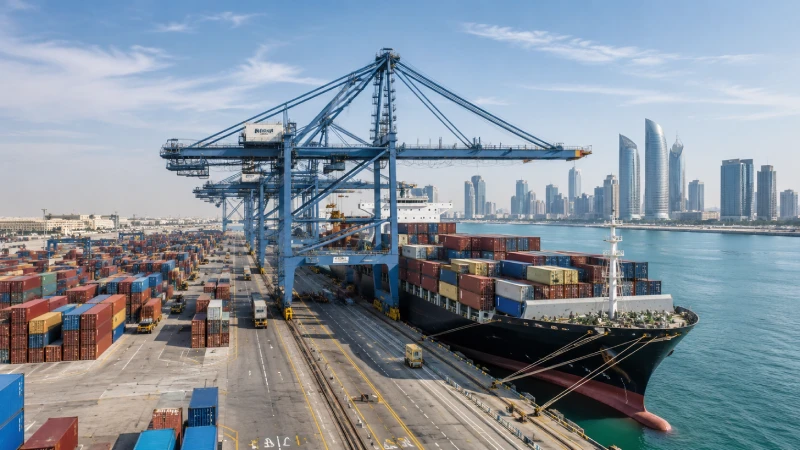
Abu Dhabi has become one of the UAE’s most important destinations for industrial and commercial imports from China. While Dubai is often viewed as the UAE’s primary logistics hub, many businesses importing machinery, construction materials, industrial equipment, and project cargo are increasingly choosing direct Abu Dhabi routing instead.
For commercial importers, the shipping strategy used for Abu Dhabi can significantly affect transit time, customs efficiency, inland transportation costs, and final delivery reliability. In many cases, routing cargo through Dubai first may actually create unnecessary trucking costs and delivery delays, especially when the final destination is inside Abu Dhabi’s industrial zones.
This guide explains how shipping from China to Abu Dhabi works, what makes Abu Dhabi different from Dubai logistics, and how importers can choose the most practical freight solution based on their cargo type and business needs.
Why Abu Dhabi Is Different from Dubai for Imports
Although both Abu Dhabi and Dubai are major logistics centers in the UAE, they serve different commercial functions. Dubai is traditionally stronger in trading, re-export business, and consumer product distribution, while Abu Dhabi is more focused on industrial development, infrastructure projects, oil and gas operations, and government-related procurement.
Because of this difference, shipping decisions should not be based only on freight price. The final delivery location inside the UAE is equally important.
For example, a company importing industrial machinery for a factory in KEZAD or another Abu Dhabi industrial area may benefit from direct delivery through Khalifa Port. If the same shipment enters through Dubai, the cargo may still require cross-emirate trucking, additional handling, delivery scheduling, and sometimes customs transfer procedures. Those extra steps increase both delivery risk and total logistics cost.
Direct Abu Dhabi shipping is often the better option when the cargo is oversized, heavy, time-sensitive, or linked to construction and engineering projects. Businesses handling project cargo usually prioritize delivery coordination and cargo safety over simply choosing the lowest freight rate.
Khalifa Port plays a central role in Abu Dhabi logistics because it is closely connected with industrial zones and commercial infrastructure projects. Abu Dhabi International Airport also supports urgent commercial shipments and project-related air cargo.
Best Shipping Methods from China to Abu Dhabi
Sea freight remains the most common shipping solution for commercial cargo moving from China to Abu Dhabi. It is suitable for machinery, furniture, construction materials, industrial equipment, and large-volume cargo where transportation cost control is important.
For larger shipments, Full Container Load (FCL) shipping is usually the preferred option. FCL cargo moves inside a dedicated container, which reduces cargo handling frequency and lowers the risk of damage or delays. It also helps businesses avoid some of the warehouse-related destination charges that often affect LCL shipments.
Smaller importers that cannot fill an entire container often use Less than Container Load (LCL) shipping. While LCL can reduce initial freight cost, it usually involves longer warehouse handling time, cargo consolidation processes, and additional destination fees. For time-sensitive commercial shipments, these extra steps can become problematic.
Air freight is commonly used for high-value or urgent cargo. Electronics, spare parts, medical equipment, and emergency industrial components are frequently shipped by air into Abu Dhabi. Although air freight costs are much higher than ocean freight, many companies use it to avoid production shutdowns or project delays.
The choice between sea freight and air freight should not be based only on transportation price. Importers should also evaluate delivery urgency, customs clearance timing, storage risks, and the financial impact of delayed cargo.
Many first-time UAE importers also choose DDP shipping because it simplifies the overall process. Under DDP terms, the logistics provider usually manages transportation, customs clearance, import duty handling, and final delivery coordination. This reduces operational pressure for businesses unfamiliar with UAE import procedures.
However, importers should still clarify exactly what is included in the DDP quotation. Some suppliers include customs clearance but exclude unloading charges, while others may not cover final delivery into remote industrial areas.
Internal linking opportunities:
Shipping Time from China to Abu Dhabi
Transit time from China to Abu Dhabi depends heavily on the shipping method, departure port, vessel routing, customs procedures, and final delivery arrangements.
Sea freight from South China ports such as Shenzhen or Guangzhou typically takes around 18 to 26 days under normal conditions. Shipments from East China ports like Ningbo or Shanghai may require slightly longer transit times.
However, many importers underestimate the impact of inland transportation after the cargo arrives in the UAE. A shipment routed through Dubai may still need additional trucking into Abu Dhabi, especially if the final destination is an industrial zone or project site. This extra step can sometimes add several days to the actual delivery schedule.
Direct vessel services into Abu Dhabi can help reduce these delays because the cargo avoids cross-emirate transfer arrangements.
Air freight is much faster and generally arrives within several days, although customs clearance and local delivery coordination can still affect the final timeline. Urgent project shipments often prioritize predictability over freight cost, especially when production downtime or construction delays are involved.
Customs inspections are another major factor affecting delivery schedules. Incorrect HS codes, inconsistent cargo descriptions, incomplete invoices, or missing permits can all delay cargo release. UAE holiday periods and peak construction seasons may also slow customs processing and trucking availability.
This is why experienced importers focus on total door-to-door transit planning rather than only reviewing the estimated vessel arrival date.
Internal linking opportunity:
Shipping Costs to Abu Dhabi
Shipping costs to Abu Dhabi are influenced by far more than the base ocean freight rate. Many businesses initially focus only on the quoted shipping price and later discover additional destination charges that significantly increase the final logistics budget.
The total landed cost may include freight charges, customs duty, VAT, terminal handling fees, documentation charges, inland transportation, customs clearance services, and unloading equipment costs.
Compared with Dubai, Abu Dhabi deliveries are sometimes more expensive because industrial projects often require specialized logistics arrangements. Cargo moving into industrial zones may need advance scheduling, crane support, heavy-duty trailers, or restricted delivery permits.
For example, oversized industrial equipment may require route surveys and coordinated unloading operations before delivery approval is granted. These requirements are common for project cargo shipments linked to infrastructure or energy-related sectors.
Another important issue is hidden destination charges. Importers frequently overlook demurrage fees, storage costs, inspection charges, container detention penalties, and LCL warehouse handling expenses. These costs usually appear when customs clearance is delayed or delivery coordination is incomplete.
This is why choosing the lowest freight quote is not always the smartest decision. A slightly higher freight rate with stronger customs support and faster delivery coordination may actually reduce total logistics cost in the long run.
Customs Clearance for Abu Dhabi Imports
Customs clearance is one of the most important stages of the shipping process. Even when freight transportation is smooth, documentation errors can still create costly delays at the destination.
Commercial imports into Abu Dhabi generally require a commercial invoice, packing list, bill of lading or airway bill, and certificate of origin. Certain products may also require additional permits or compliance approvals.
One of the most common problems is inaccurate cargo description. Some suppliers use overly general product names on invoices, which can trigger customs inspections or valuation reviews. Incorrect HS codes and inconsistent declared values are also common causes of delays.
Cargo categories such as batteries, electronics, chemicals, medical devices, and industrial equipment usually receive closer customs attention. For these shipments, proper documentation preparation before cargo departure from China is extremely important.
DDP shipping is popular partly because it reduces customs management pressure for importers. Under DDP arrangements, the logistics provider usually handles customs coordination and tax processing. Under FOB or CIF terms, however, the importer is generally responsible for local customs clearance and delivery management.
Businesses with regular UAE importing experience often prefer FOB or CIF because it gives them greater control over freight and customs operations. First-time importers, on the other hand, often choose DDP to reduce operational complexity.
Abu Dhabi Port and Local Delivery Considerations
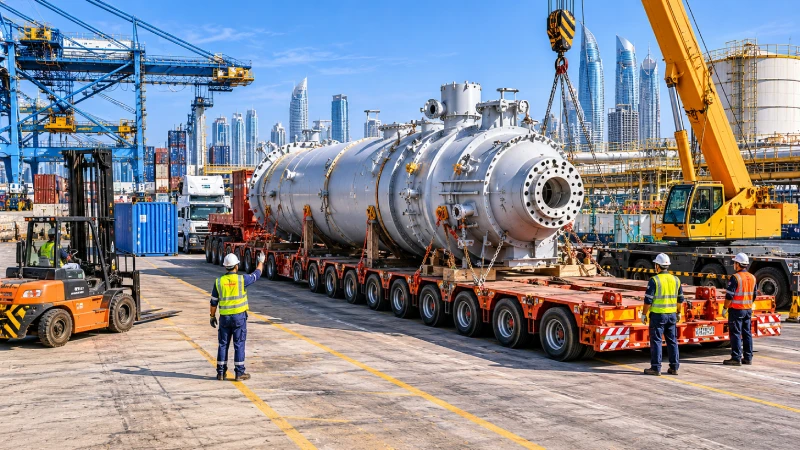
Khalifa Port has become one of the UAE’s strongest industrial cargo gateways due to its modern infrastructure and strong connection with Abu Dhabi’s industrial economy.
For project cargo and heavy commercial imports, direct Abu Dhabi delivery can reduce cargo handling risks and improve final delivery coordination. However, Dubai still remains highly competitive for smaller shipments because of its larger shipping network and more frequent consolidation services.
The best routing choice depends largely on cargo type, shipment size, and final delivery location.
Local transportation inside Abu Dhabi is another factor that many importers underestimate. Industrial zones and construction sites often require scheduled delivery appointments, special truck access permissions, and unloading coordination before trucks can enter.
For oversized cargo, delivery planning becomes even more important. Heavy machinery shipments may require cranes, escort vehicles, or route approvals before delivery can proceed safely.
Poor final delivery preparation is one of the biggest causes of project cargo delays in the UAE.
Project Cargo Shipping to Abu Dhabi
Abu Dhabi has strong demand for project cargo because of its continuous investment in infrastructure, industrial expansion, and energy development.
Common project cargo includes steel structures, generators, oil and gas equipment, HVAC systems, and oversized industrial machinery. These shipments require specialized logistics planning that goes far beyond standard freight booking.
Successful project cargo transportation often involves route analysis, customs pre-approval, heavy-lift coordination, and detailed unloading preparation. In many cases, the logistics planning process begins weeks before the cargo leaves China.
One common mistake is focusing only on international transportation while ignoring the complexity of local UAE delivery conditions. Even if ocean freight arrives on time, poor coordination at the delivery stage can still delay an entire project schedule.
Real Importer Scenarios and Common Mistakes
Different importers require different shipping strategies.
A machinery importer delivering directly into Abu Dhabi industrial zones may prioritize direct port routing to reduce inland trucking and minimize cargo handling risks. A smaller importer with limited cargo volume may still prefer Dubai because LCL consolidation services are more flexible and competitively priced there.
Construction contractors often use air freight for emergency replacement parts because project downtime costs are far higher than transportation expenses.
Many shipping problems occur because businesses underestimate the importance of customs preparation and inland delivery planning. Common mistakes include choosing the wrong UAE entry port, using incomplete shipping documents, ignoring unloading requirements, and failing to prepare for seasonal congestion.
These issues frequently lead to unnecessary storage fees and customs delays.
Conclusion: Planning Smarter Shipments to Abu Dhabi
Shipping from China to Abu Dhabi requires more than simply comparing freight rates. Importers must evaluate customs requirements, inland transportation conditions, delivery coordination, and cargo handling complexity before choosing a shipping strategy.
For industrial cargo and project shipments, direct Abu Dhabi routing often provides better operational efficiency than routing through Dubai first. Meanwhile, smaller commercial shipments may still benefit from Dubai’s stronger consolidation network.
The most effective logistics strategy depends on cargo size, urgency, delivery location, and the importer’s customs management capability. Businesses that prepare documentation early, coordinate delivery requirements in advance, and choose the right freight method are far more likely to avoid delays and maintain stable UAE supply chain operations.
