
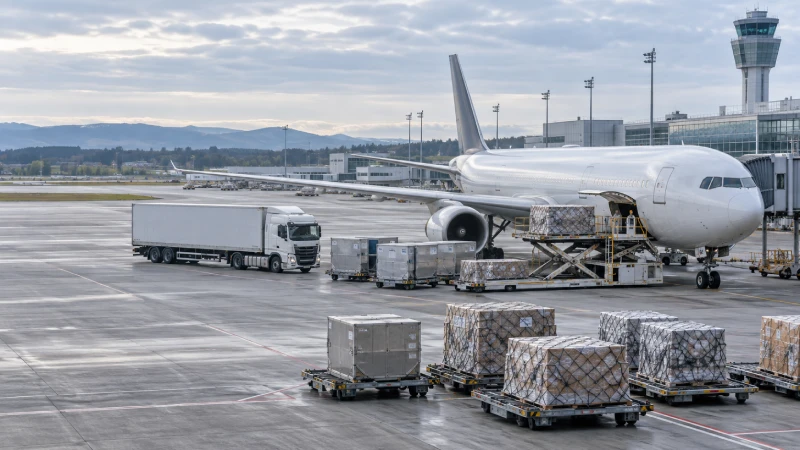
Shipping from China to Munich is not simply a matter of choosing between air, sea and rail freight. Because Munich is an inland destination in southern Germany, importers also need to decide where the cargo should enter Germany or Europe and how it should reach the final warehouse in Bavaria.
For urgent or high-value goods, direct air freight through Munich Airport (MUC) can reduce inland transport and simplify final delivery. For heavy, bulky or containerized cargo, sea freight through Hamburg or Bremerhaven is normally more economical, followed by rail or trucking to Munich. Rail freight offers a middle option when ocean freight is too slow but air freight is too expensive.
Frankfurt Airport should also be compared for air shipments. Although it requires an additional inland truck to Munich, greater flight capacity or a better airfreight rate can sometimes make FRA the more practical gateway.
If you are still comparing the wider German market, see our shipping from China to Germany guide first.
The key is to compare the total delivered cost and actual delivery time to your Munich or Bavaria postcode, rather than choosing a route based only on the international freight rate.
Quick Answer: What Is the Best Way to Ship from China to Munich?
The best route depends mainly on cargo value, shipment size, urgency and final delivery location.
- Direct air freight to Munich Airport (MUC): usually the first option to compare for urgent, valuable or time-sensitive cargo destined for Munich and Bavaria.
- Air freight through Frankfurt (FRA): worth comparing when Frankfurt provides better capacity, flight frequency or pricing, even after adding trucking to Munich.
- Sea freight through Hamburg or Bremerhaven: normally the most economical option for FCL containers, large LCL shipments, machinery, furniture and other heavy cargo.
- China–Europe rail freight: useful for cargo that needs to move faster than sea freight but cannot justify normal airfreight costs.
For many importers, there is no single “best German gateway.” The best route is the one that delivers the shipment to the consignee at the required time with an acceptable total landed logistics cost.
| Requirement | Route to Compare First |
|---|---|
| Urgent or high-value shipment | Direct air to MUC |
| MUC air rate or capacity is unattractive | FRA + truck to Munich |
| Heavy, bulky or containerized cargo | Hamburg/Bremerhaven + inland transport |
| Faster than sea but cheaper than air | Rail + final delivery |
| Temperature-sensitive pharmaceutical cargo | MUC air, subject to handling requirements |
| Large machinery or oversized cargo | Sea + specialist inland transport |
Pro Tip: Do not compare airport-to-airport or port-to-port freight rates alone. For southern Germany, an apparently cheaper gateway can become more expensive after terminal handling, customs, storage and inland transport to Bavaria are added.
China to Munich Freight Route Comparison
The following ranges are useful for planning, but they are not guaranteed schedules. Actual transit depends on the Chinese origin, carrier schedule, cargo readiness, customs clearance, available space and final delivery postcode.
| Route | Typical Planning Transit | Relative Cost | Final Munich Leg | Best For | Main Trade-Off |
|---|---|---|---|---|---|
| China → MUC direct air | About 4–8 days door-to-door | $$$$ | Short regional truck | Urgent electronics, components, valuable cargo, pharma | Highest freight cost |
| China → FRA air → Munich | About 5–9 days door-to-door | $$$–$$$$ | Long-distance truck | Urgent freight where FRA has better capacity | Extra inland transport |
| China → Hamburg → Munich | About 32–45 days door-to-door | $–$$ | Rail or truck | FCL, LCL, machinery, furniture | Longer overall transit |
| China → Bremerhaven → Munich | About 32–45 days door-to-door | $–$$ | Rail or truck | FCL, automotive and carrier-specific routings | Long inland leg |
| China → Europe/Germany by rail → Munich | About 20–30 days door-to-door | $$–$$$ | Rail connection or final truck | Auto parts, machinery, electronics, stock replenishment | Terminal and corridor availability |
These ranges include more than the main international transport. Importers should allow time for supplier pickup, export handling, customs, terminal processing and final delivery.
For a deeper Germany-wide comparison, see how long shipping from China to Germany takes.
Air Freight from China to Munich Airport
For cargo destined for Bavaria, Munich Airport is the most geographically direct major German air gateway to compare.
Munich Airport handled about 341,000 tonnes of cargo in 2025, up 9.5% from the previous year. Munich Airport also describes itself as the largest cargo hub in southern Germany, serving one of the country’s most important industrial regions.
That matters for importers because Munich is not only a passenger airport. It supports supply chains serving automotive, machinery, electronics, healthcare and high-value manufacturing businesses across Bavaria and southern Germany.
Why MUC Can Make Sense for Southern Germany
The main advantage is simple: the shipment enters Germany relatively close to the final customer.
For cargo moving to:
- Munich
- Augsburg
- Ingolstadt
- Regensburg
- Landshut
- other locations across Bavaria
using MUC can reduce the amount of inland trucking required after customs clearance.
This is especially valuable when a shipment is urgent. Saving money on an airfreight rate is not useful if the alternative airport adds a long road transfer and causes the cargo to miss a production or delivery deadline.
MUC should therefore be compared first when:
- a factory needs urgent spare parts;
- the cargo is high value relative to its weight;
- inventory shortage is affecting production;
- the product has a short sales window;
- the shipment is temperature-sensitive;
- the consignee is in Munich or southern Bavaria.
Direct China–Munich Air Connections
China-origin cargo can reach Munich through direct or connecting air services.
Shanghai and Beijing are particularly relevant. Scheduled passenger services between Munich and major Chinese cities can provide bellyhold freight capacity, depending on aircraft type, loading conditions and airline cargo acceptance.
For cargo originating elsewhere in China, the freight forwarder may use:
- Shanghai Pudong (PVG)
- Beijing (PEK)
- Guangzhou (CAN)
- Shenzhen (SZX)
- Hong Kong (HKG)
- Chengdu (CTU/TFU)
- Xiamen (XMN)
- Qingdao (TAO)
depending on the factory location and available routing.
A supplier in Dongguan, for example, does not necessarily need to fly cargo from the nearest airport. Trucking the shipment to Hong Kong, Guangzhou or Shenzhen may produce a better combination of schedule, cargo acceptance and price.
Likewise, freight from Zhejiang may move through Shanghai rather than a smaller regional airport when international capacity is stronger.
Direct Flight Does Not Mean Guaranteed Cargo Capacity
Importers should not assume that a passenger route shown on an airline timetable automatically means their cargo can move directly.
Available freight space can depend on:
- aircraft type;
- passenger baggage load;
- existing airline allotments;
- shipment dimensions;
- cargo density;
- dangerous goods restrictions;
- temperature requirements;
- seasonal demand.
Large or unusually shaped freight may be particularly difficult to load into passenger aircraft belly compartments.
Your forwarder should therefore confirm the actual cargo routing before promising a direct service.
How Long Does Air Freight from China to Munich Take?
A direct flight itself is only one part of the transit.
A normal airfreight shipment typically includes:
- Supplier pickup in China
- Export warehouse receiving
- Security screening and cargo preparation
- China export customs
- Airline booking and terminal handover
- International flight
- MUC cargo handling
- German import customs
- Cargo release
- Final delivery to the consignee
For planning purposes, standard commercial airfreight can often be completed in approximately 4–8 days door-to-door when space is available and customs clearance is straightforward.
The actual airport-to-airport movement may be much shorter, but quoting only flight time gives importers an unrealistic expectation.
Urgent shipments can sometimes move faster using priority air or express services, while consolidated economy air services may take longer.
How Air Freight to Munich Is Charged
Air freight is normally priced according to chargeable weight.
The forwarder compares:
- actual gross weight; and
- volumetric weight.
The higher figure becomes the chargeable weight.
This is why a shipment of lightweight but bulky cartons can cost much more than expected.
The total airfreight cost may include:
- pickup from the Chinese factory;
- origin warehouse handling;
- export customs;
- airport and security charges;
- international airfreight;
- fuel or security surcharges where applicable;
- MUC handling;
- customs brokerage;
- duty and import VAT;
- storage if clearance is delayed;
- final truck delivery in Bavaria.
Pro Tip: Ask for both an MUC all-in delivery rate and an FRA all-in delivery rate to exactly the same Munich postcode. A lower airport-to-airport rate into Frankfurt does not automatically mean the total shipment will be cheaper.
Munich Airport Cargo Facilities and Special Cargo
Munich can handle more than standard general cargo.
Munich Airport’s Cargogate facilities support dedicated handling for valuable cargo, heavy goods, temperature-controlled perishables, automobiles and other special shipments. The airport also supports hazardous and other goods requiring special handling under applicable regulations.
Pharmaceutical logistics are particularly relevant for air importers. Munich Airport provides dedicated temperature-controlled handling infrastructure for pharmaceutical cargo, including temperature ranges used for frozen, refrigerated and controlled-room-temperature shipments.
This makes direct MUC routing worth considering for cargo such as:
- pharmaceuticals;
- healthcare products;
- valuable electronics;
- precision components;
- industrial spare parts;
- temperature-sensitive products;
- selected dangerous goods;
- time-critical automotive parts.
However, special cargo should always be checked before booking.
Dangerous goods, lithium batteries, oversized cargo and temperature-controlled freight may require additional documentation, airline approval or special packaging.
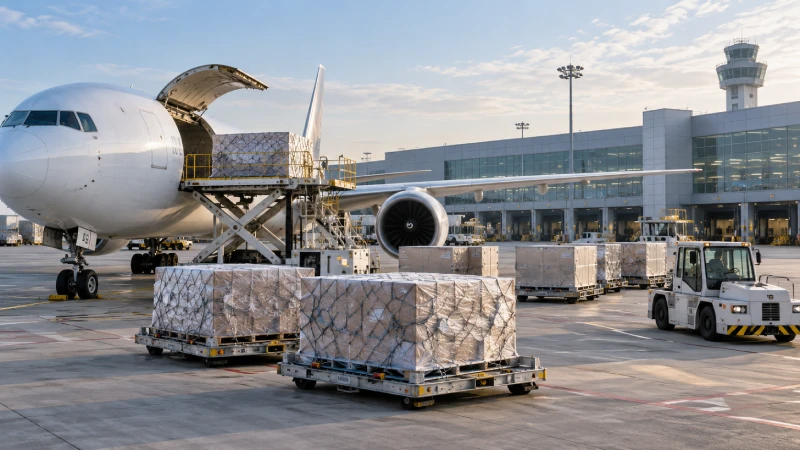
Direct Air to Munich vs Frankfurt Airport + Truck to Munich
Frankfurt is Germany’s largest air cargo gateway and should not be ignored simply because the final consignee is in Bavaria.
For some shipments, Frankfurt can offer:
- more airline options;
- greater freighter capacity;
- better space availability;
- earlier departures;
- more competitive rates for a particular shipment.
The disadvantage is that cargo must then move several hundred kilometres by road to Munich or another destination in Bavaria.
| Factor | Direct MUC | FRA + Truck to Munich |
|---|---|---|
| Proximity to Munich | Excellent | Requires long inland truck |
| China air capacity | Good on selected routes | Broader overall cargo network |
| Final delivery | Simpler for Bavaria | Additional line-haul required |
| Handling complexity | Potentially lower | May involve more coordination |
| Best use case | Time-sensitive southern Germany cargo | Better FRA capacity, schedule or price |
| Decision basis | Total MUC delivered cost | FRA air saving minus additional inland cost |
When Frankfurt May Be the Better Choice
Consider FRA when:
- no suitable MUC uplift is available;
- the next MUC departure requires a long wait;
- FRA has meaningful airfreight rate savings;
- the shipment needs main-deck freighter capacity;
- cargo dimensions are unsuitable for available MUC passenger aircraft;
- an urgent FRA departure can still reach Munich earlier overall.
For example, if cargo can depart Shanghai tonight for Frankfurt but the next acceptable MUC service is two days later, routing through FRA and trucking south may still achieve the earliest delivery.
The reverse is also true. A low FRA rate may not be worthwhile if the shipment arrives late, incurs terminal delay and then requires an expensive dedicated truck.
Pro Tip: For production-line cargo, compare the earliest realistic delivery time at the consignee, not the earliest airport arrival time.
Sea Freight from China to Munich and Bavaria
Munich has no seaport.
When a forwarder quotes “sea freight to Munich,” the physical route normally consists of:
China factory → Chinese seaport → European or German seaport → inland rail or truck → Munich
For Germany-based routing, Hamburg and Bremerhaven are two of the main gateways to compare.
Sea freight is usually the preferred choice for:
- full containers;
- heavy machinery;
- furniture;
- building materials;
- large wholesale orders;
- bulky general cargo;
- non-urgent industrial goods.
Both FCL and LCL can be used.
China → Hamburg → Munich
A common routing is:
Supplier → Shanghai/Ningbo/Yantian/Qingdao → Hamburg → rail or truck → Bavaria
Hamburg is particularly important for southern German logistics because of its extensive rail hinterland network.
The Port of Hamburg operates one of Europe’s strongest port rail systems, with frequent freight train connections into inland Germany. Bavaria is one of the important hinterland regions served by these connections.
This makes Hamburg a logical sea gateway for Munich cargo even though it is located in northern Germany.
FCL from Hamburg to Munich
For FCL cargo, the container can generally move inland by:
- direct truck;
- rail to an inland terminal followed by local truck;
- a combination selected by the carrier or forwarder.
Direct trucking can be useful when speed after vessel discharge matters or when the container needs to be delivered directly to the consignee.
Rail becomes attractive when:
- volumes are high;
- intermodal schedules match the shipment;
- the consignee is located near an inland terminal;
- reducing long-distance truck mileage is desirable.
Importers should also confirm:
- container free time;
- demurrage and detention conditions;
- terminal release procedure;
- customs clearance point;
- empty-container return location.
LCL from Hamburg to Bavaria
LCL cargo normally involves more handling.
The shipment is unloaded from the consolidated container at a destination CFS or warehouse before being released for delivery.
The total LCL cost can include:
- China pickup;
- origin CFS;
- export customs;
- ocean freight;
- destination CFS charges;
- documentation;
- customs brokerage;
- final Munich trucking.
This is why an extremely low ocean LCL rate does not necessarily produce the lowest final cost.
China → Bremerhaven → Munich
Bremerhaven is another major German container gateway and can be competitive for specific carriers and routings.
Its port railway links major container and automobile terminals with Germany’s wider rail network, making it suitable for onward movement to inland industrial regions.
Bremerhaven may be worth choosing when:
- the carrier offers a faster sailing;
- available vessel space is better;
- the ocean rate is lower;
- automotive cargo is involved;
- the combined port and inland rate is more attractive.
Do not assume Hamburg is always cheaper simply because it has strong Bavaria rail connections.
The correct comparison is:
Ocean freight + destination charges + customs + inland Munich transport + schedule reliability
Pro Tip: Compare Hamburg and Bremerhaven on the same Incoterm, container type, Munich delivery postcode and expected free time. Comparing only the base ocean freight can give a misleading result.
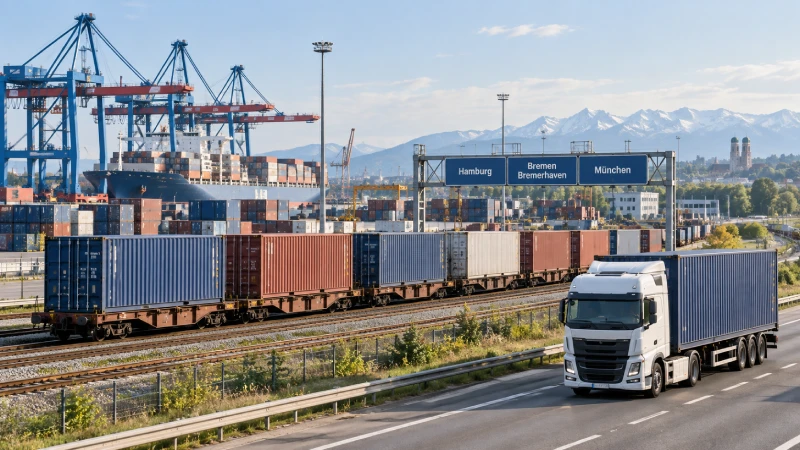
Rail Freight from China to Munich
Rail freight sits between air and sea in both cost and speed.
It is worth considering when:
- sea freight is too slow;
- air freight is too expensive;
- inventory needs to be replenished within a few weeks;
- the cargo is suitable for available China–Europe rail services.
Common Chinese rail origins can include:
- Xi’an
- Chengdu
- Chongqing
- Zhengzhou
- Yiwu
depending on current operator services.
Does the Train Go Directly to Munich?
Not necessarily.
“Rail freight from China to Munich” may mean that the long-distance China–Europe train arrives at another European or German terminal before the cargo continues to Bavaria.
Possible routing structures include:
- China → German rail terminal → Munich truck
- China → Nuremberg → Munich
- China → Duisburg → Munich
- China → other European terminal → onward rail or truck to Bavaria
Therefore, always ask the forwarder to identify the actual destination rail terminal.
A quote described only as “China to Germany rail” is not enough to judge the final delivery time or cost to Munich.
Rail Freight Transit Time
As a practical planning range, China–Germany rail services often require around 18–25 days station-to-station, while door-to-door delivery to Bavaria may be approximately 20–30 days once pickup, terminal handling, customs and final transport are included.
Transit can vary because of:
- China feeder trucking;
- rail departure frequency;
- border procedures;
- terminal congestion;
- transshipment;
- customs clearance;
- final trucking.
Rail Freight Cost
Rail is generally more expensive than ordinary sea freight but cheaper than normal air freight for suitable cargo.
A rail quote may include:
China pickup + origin terminal + rail linehaul + destination terminal + customs + final Bavaria delivery
Available structures include both consolidated rail freight and full-container rail services.
Cargo density matters. A dense industrial shipment may compare differently from lightweight bulky cargo.
Best Cargo for China–Munich Rail Freight
Rail can work well for:
- automotive components;
- industrial equipment;
- machine parts;
- tools;
- electronics;
- lighting products;
- commercial stock;
- time-sensitive replenishment.
Battery products, chemicals and dangerous goods require more careful assessment because commodity acceptance can differ by operator and route.
Pro Tip: Before choosing rail, ask exactly which terminal is used, how often the service departs and how the final delivery to Munich will be handled.
Sea vs Rail vs Air: Which Route Fits Your Cargo?
Cargo characteristics often determine the routing more accurately than shipment weight alone.
| Cargo Type | Route to Compare First | Why |
|---|---|---|
| Electronics / semiconductors | MUC or FRA air | High value and time sensitivity |
| Automotive spare parts | Air or rail | Production deadlines may justify faster transport |
| Machinery in full containers | Sea | Heavy cargo favors container economics |
| Furniture | Sea | High volume makes air expensive |
| 5–15 CBM general cargo | LCL sea vs rail LCL | Useful cost/time comparison |
| Pharmaceutical cargo | MUC air | Time and temperature requirements |
| Samples / prototypes | Air or express | Small, urgent, high-value shipment |
| Oversized machinery | Sea | Better equipment options |
| Seasonal inventory | Rail or sea | Depends on required stock date |
| Batteries / dangerous goods | Case-by-case | Carrier acceptance and compliance vary |
A 500 kg shipment of compact precision components may justify air freight.
A 500 kg shipment of lightweight furniture can have a high volumetric weight and may be far more suitable for LCL sea freight.
There is no useful recommendation without dimensions, weight and cargo type.
How Much Does Shipping from China to Munich Cost?
There is no reliable permanent rate for China–Munich freight.
Rates can change because of:
- fuel costs;
- airline capacity;
- vessel capacity;
- peak season;
- holidays;
- geopolitical disruption;
- port or airport congestion;
- cargo type;
- shipment dimensions.
For current Germany-wide pricing factors, see shipping cost from China to Germany.
For Munich specifically, the more useful approach is to understand how each route is calculated.
Air Freight Cost to Munich
Air freight is mainly calculated by chargeable weight.
The total delivered price depends on:
- chargeable kg;
- departure airport;
- MUC or FRA arrival;
- direct or connecting service;
- cargo dimensions;
- special handling;
- final postcode.
Standard commercial airfreight is often quoted in several US dollars per chargeable kilogram, but the market can move quickly. A current spot quote is more useful than an old online price table.
LCL Sea Freight Cost
LCL is normally based mainly on shipment volume or weight/measurement rules.
The importer should request an all-in breakdown covering:
- China pickup;
- origin CFS;
- ocean freight;
- destination charges;
- customs clearance;
- final Bavaria trucking.
A low “USD per CBM” ocean rate can be misleading if destination handling is high.
FCL Sea Freight Cost
FCL pricing is usually based on container type, such as:
- 20GP
- 40GP
- 40HQ
But the ocean rate is only one part of the Munich cost.
Additional expenses may include:
- China trucking;
- origin charges;
- documentation;
- ocean freight;
- terminal handling;
- customs brokerage;
- inland rail;
- container trucking;
- waiting time;
- chassis costs;
- demurrage or detention.
A Hamburg port quote is therefore not the same as a shipping cost to Munich.
Rail Freight Cost
Rail may be priced by:
- weight or volume for consolidated freight; or
- container for FCL rail.
The final rate depends heavily on the Chinese origin and European arrival terminal.
When comparing rail with sea, also consider inventory cost.
If a shipment arriving two weeks earlier prevents a stockout, the higher freight rate may be commercially justified.
Customs Clearance for Cargo Arriving in Munich
Whether cargo enters through MUC, FRA, Hamburg, Bremerhaven or a rail terminal, the importer still needs to satisfy EU and German customs requirements.
Documents Commonly Required
Depending on the cargo, importers should prepare:
- commercial invoice;
- packing list;
- correct HS/TARIC classification;
- Air Waybill for air freight;
- Bill of Lading for sea freight;
- rail transport documentation for rail;
- EORI details where required;
- customs value information;
- certificates or licences where applicable;
- product compliance documents where applicable.
The EORI number is used within the EU to identify economic operators for customs purposes and is required in relevant customs declarations and procedures.
Documents should be reviewed before the shipment leaves China.
Waiting until the cargo reaches Germany to investigate classification, importer details or product compliance can result in storage costs and delivery delays.
Import Duty and VAT
Germany’s standard import VAT rate is 19%, while a reduced 7% rate applies to certain categories of goods. Customs duty itself depends on the product’s classification, origin and applicable EU tariff measures.
There is no universal duty rate for goods imported from China.
Different products may be:
- duty-free;
- subject to a normal customs tariff;
- subject to additional trade measures;
- subject to product-specific restrictions.
The correct TARIC classification should therefore be confirmed before estimating total landed cost.
Gateway Clearance or Customs Transit?
Cargo does not always need to complete import clearance immediately at the first physical gateway.
Depending on the importer’s setup and customs arrangements, two broad models may be possible:
- Clear the goods at the arrival gateway, then transport released cargo to Munich.
- Move the goods under an appropriate customs transit procedure to another authorized location before final import clearance.
The second model can be useful for businesses that already work with a customs broker or bonded facility in Bavaria.
The correct procedure should be confirmed with the customs representative before shipment.
Pro Tip: Saving one day in international transit is meaningless if incorrect documents hold the cargo for several days after arrival. Check the HS code, importer details and required compliance documents before departure from China.
Final Trucking to Munich and Southern Germany
The inland leg can materially change which international route is best.
A freight quote should therefore end at the actual consignee postcode, not merely at MUC, FRA, Hamburg or Bremerhaven.
From Munich Airport
For cargo arriving at MUC, the sequence is generally:
aircraft arrival → terminal handling → customs release → cargo collection → final truck delivery
For Munich-area consignees, this can keep the final inland leg relatively short.
Depending on customs release time, destination and trucking availability, local or regional delivery may be arranged the same day or the following working day.
Urgent delivery should be planned before flight arrival rather than waiting until customs is complete to search for a vehicle.
From Frankfurt Airport
FRA cargo requires a longer inland transfer to southern Bavaria.
Options may include:
- dedicated truck;
- consolidated road freight;
- scheduled line-haul plus local delivery.
Dedicated trucking is faster but more expensive.
Consolidated trucking can reduce cost but usually requires more handling and schedule flexibility.
The key calculation is:
FRA airfreight saving – additional inland transport and handling
If the saving remains substantial and transit is acceptable, Frankfurt can still be the better gateway.
From Hamburg or Bremerhaven
Sea freight normally uses one of two inland models.
Direct Port-to-Munich Trucking
The container or cargo moves directly from the port area to the consignee.
This can make sense when:
- delivery is urgent after vessel discharge;
- an FCL container should move directly to the warehouse;
- rail timing is unattractive;
- the delivery point is not convenient for intermodal transfer.
Rail + Local Truck
The container moves south by rail before a shorter truck handles final delivery.
This can be attractive when:
- regular intermodal capacity is available;
- shipment volume supports rail movement;
- delivery is near an inland hub;
- the importer prioritizes transport efficiency over the fastest inland option.
For Hamburg in particular, strong rail connectivity to Bavaria makes this model commercially relevant.
Information Needed for an Accurate Munich Delivery Rate
To calculate the final trucking cost, provide:
- German delivery postcode;
- number of pallets or cartons;
- gross weight;
- dimensions;
- stackable or non-stackable status;
- FCL or loose cargo;
- dangerous goods status;
- temperature requirements;
- warehouse opening hours;
- delivery appointment rules;
- forklift availability;
- loading dock availability;
- tail-lift requirement;
- commercial or residential delivery.
For FCL cargo, also confirm whether the consignee can unload the container within the allowed waiting time.
A delivery address that lacks unloading equipment can require different trucking equipment and increase the final cost.
Which Chinese Port or Airport Should You Use?
The correct China gateway depends mainly on factory location, available international services and cargo type.
| Supplier Region | Gateway to Compare | Typical Logic |
|---|---|---|
| Shanghai / Jiangsu / Zhejiang | PVG, Shanghai Port, Ningbo | Strong air and sea capacity |
| Shenzhen / Dongguan | SZX, HKG, Yantian | Strong for electronics and South China exports |
| Guangzhou / Foshan | CAN, Nansha, Yantian | Multiple air/sea combinations |
| Beijing / Tianjin | PEK, Tianjin | Direct Munich air option plus North China sea |
| Qingdao / Shandong | TAO, Qingdao Port | Industrial and machinery cargo |
| Chengdu / Chongqing / Xi’an | Air or rail | Rail becomes particularly relevant |
The closest airport or seaport is not automatically the cheapest.
For example, moving cargo farther by domestic truck can sometimes provide:
- a more direct international flight;
- lower international freight;
- earlier vessel departure;
- better dangerous-goods acceptance;
- better cargo capacity.
The route should therefore be optimized from the factory to Munich, not from the nearest Chinese terminal to Germany.
How to Choose the Best China–Munich Route
A practical routing decision can be made in seven steps.
1. Define the Real Delivery Deadline
Do not ask only:
“When can the cargo reach Germany?”
Ask:
“When must the cargo be available at our Munich warehouse?”
The second question produces a much better routing decision.
2. Confirm Weight and Dimensions
Provide:
- total gross weight;
- total CBM;
- carton or pallet dimensions;
- number of packages.
Without dimensions, an air or trucking quote may be inaccurate.
3. Identify Cargo Restrictions
Confirm whether the shipment contains:
- lithium batteries;
- chemicals;
- dangerous goods;
- liquids;
- magnets;
- temperature-sensitive goods;
- oversized pieces;
- controlled products.
Restrictions can eliminate otherwise attractive routes.
4. Compare the Relevant Gateways
For urgent cargo:
MUC vs FRA
For sea freight:
Hamburg vs Bremerhaven
For intermediate transit:
rail terminal + final Munich delivery
5. Compare Total Delivered Cost
Include:
- international freight;
- terminal charges;
- customs brokerage;
- inland transport;
- storage risk;
- handling.
Do not choose based only on the headline freight rate.
6. Evaluate Customs and Final-Mile Risk
A slightly faster route may perform worse if:
- customs documentation is incomplete;
- destination handling is slow;
- the warehouse requires appointments;
- container free time is tight.
7. Choose the Best Cost–Time Balance
For most importers, the objective should not be the absolute cheapest route or the absolute fastest route.
The goal is the route that meets the required delivery date at a commercially reasonable total cost.
Not Sure Which Route to Munich Is Best?
Shipping costs to Bavaria depend on more than the China–Germany freight rate.
Send us:
- pickup city in China;
- commodity;
- total weight;
- dimensions or CBM;
- number of packages;
- required delivery date;
- Munich or Bavaria delivery postcode.
We can compare direct MUC air, FRA air + trucking, sea + inland delivery and rail based on total delivered cost and practical transit time.
FAQ
What is the best way to ship from China to Munich?
For urgent or high-value cargo, direct air freight to Munich Airport is usually the first route to compare. For heavy or containerized cargo, sea freight through Hamburg or Bremerhaven is generally more economical. Rail freight is useful when sea is too slow but air is too expensive. The final decision should be based on delivered cost and required delivery date.
Can cargo be shipped directly from China to Munich Airport?
Yes. Munich has scheduled connections with major Chinese cities, and selected passenger services can provide bellyhold freight capacity. Actual cargo space, aircraft type and commodity acceptance must still be confirmed for each shipment.
Is Munich Airport or Frankfurt Airport better for air freight from China?
Munich is often more convenient for cargo destined for Bavaria because the final truck distance is shorter. Frankfurt has a larger overall cargo network and may sometimes offer better space, freighter capacity or pricing. Compare both routes using the same final Munich postcode.
Which seaport should I use for cargo going to Munich?
Hamburg is a strong option because of its extensive rail connections with Germany's hinterland, including Bavaria. Bremerhaven should also be compared based on carrier schedule, ocean freight, destination costs and inland transport. Neither port is universally cheaper for every shipment.
How long does sea freight from China to Munich take?
A practical planning range is around 32–45 days door-to-door, depending on the Chinese origin, port pair, vessel schedule, transshipment, customs clearance and inland delivery.
How long does air freight from China to Munich take?
Standard commercial airfreight typically requires approximately 4–8 days door-to-door under normal conditions. Urgent services can sometimes move faster, while economy consolidation, limited space or customs delays can extend transit.
Is rail freight from China to Munich available?
Yes, but the international train does not always terminate directly in Munich. Cargo may arrive at another German or European rail terminal before moving to Bavaria by rail or truck. Confirm the actual destination terminal and final delivery arrangement before comparing a rail quote with air or sea freight.
Do I need an EORI number to import goods into Germany?
Businesses carrying out relevant EU customs activities generally use an EORI number for customs identification and declarations. The exact importer and representative structure should be confirmed with the customs broker before shipment.
Shipping from China to Munich: Final Route Recommendation
For most Munich-bound shipments, start with four routing choices:
- Choose direct MUC air when delivery speed, cargo value or supply-chain urgency matters most.
- Compare FRA + trucking when Frankfurt offers significantly better flight capacity, schedule or airfreight pricing.
- Choose Hamburg or Bremerhaven + inland transport for heavy, bulky and containerized cargo where freight cost is more important than speed.
- Choose rail when the shipment needs to arrive faster than ocean freight but does not justify airfreight cost.
The most important principle is simple:
Do not choose the route with the lowest international freight rate. Choose the route with the best total delivered cost at the time your cargo actually needs to reach Munich.
For an accurate comparison, provide your Chinese pickup city, cargo details and Bavaria delivery postcode so the complete air, sea, rail and inland route can be evaluated together.
Compare Munich Freight Routes
