
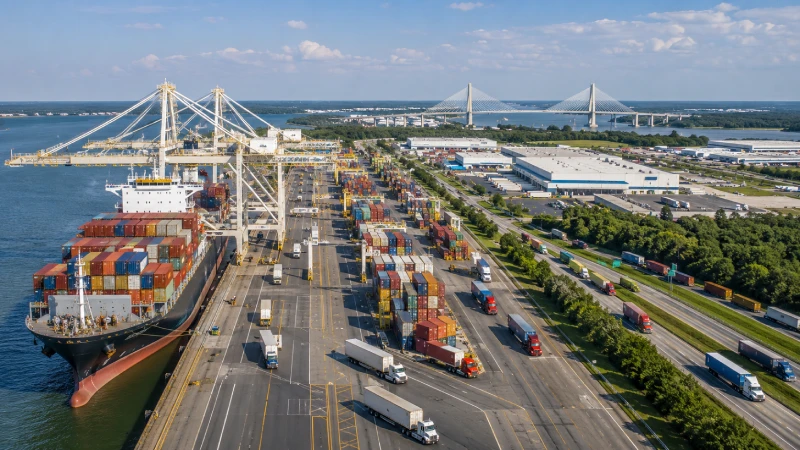
For importers building a regional supply chain in the United States, the best arrival port is not always the port with the lowest ocean freight rate. It should also align with warehouse locations, customer demand and inland delivery requirements. As part of a broader Shipping from China to USA strategy, Savannah can be evaluated as an entry gateway for cargo moving into Georgia, Florida, the Carolinas, Tennessee and other Southeast markets.
The decision should connect the complete flow: shipment origin in China, ocean transportation, port arrival, warehouse receiving, inventory storage and final distribution. A route that looks economical from port to port may become expensive if containers must travel long distances, wait for warehouse appointments or undergo unnecessary handling.
This guide explains how to assess Savannah as part of a Southeast US distribution network and what information is required to build a realistic port-to-warehouse shipping plan.
Is Savannah the Right Gateway for Your Southeast Distribution Network?
Savannah may be a strong gateway candidate when your warehouse, regional 3PL or main customer base is located in the Southeast. However, its suitability should be evaluated against the complete distribution network rather than geography alone.
The most important questions are:
- Where will imported inventory be stored?
- Which states or metropolitan areas generate the most orders?
- Will cargo move directly from the port to a warehouse?
- Can the warehouse receive and unload an ocean container?
- Will one shipment be divided among several destinations?
- How frequently will inventory be replenished?
A company with a distribution center in Georgia and recurring customers across the Southeast may use a different inbound model from an importer serving mostly Northeast or Texas customers.
| Distribution profile | Potential Savannah suitability | Main factor to confirm |
|---|---|---|
| Warehouse in Georgia | High evaluation priority | Receiving capacity and delivery arrangement |
| Customers in northern Florida | Potential regional fit | Final delivery locations and shipment frequency |
| Carolinas-focused network | Requires comparison | Warehouse location and alternative ports |
| Tennessee distribution | Network-dependent | Trucking and inventory strategy |
| Multi-state Southeast sales | Potential hub model | Customer density and outbound transportation |
| Nationwide customer base | May require multiple gateways | Regional inventory allocation |
Savannah should therefore be treated as one component of a distribution plan, not as an automatic choice for every shipment entering the Southeast.
Map Your Customers and Warehouse Before Selecting the Port
Port selection should begin with a map of final customers, warehouses and fulfillment facilities.
Instead of listing the states where products are sold, importers should identify where order volume is concentrated. A few high-volume customers may influence the network more than dozens of smaller accounts spread across a wider region.
Useful customer information includes:
- Customer ZIP codes
- Order volume by region
- Delivery frequency
- Pallet, carton or parcel requirements
- Retail, wholesale or ecommerce channels
- Seasonal demand patterns
- Required delivery appointments
Once customer geography is clear, evaluate whether the current warehouse is positioned efficiently between the port and the final market.
Evaluate the Warehouse or 3PL Location
A warehouse close to customers may reduce outbound delivery distance but create a longer container movement from the port. A warehouse near the gateway may simplify inbound transportation while increasing regional distribution distances.
The warehouse review should include:
- Warehouse ZIP code
- Distance from major customer clusters
- Access for container trucks
- Dock type and number of receiving doors
- Forklift and unloading equipment
- Available receiving labor
- Storage capacity
- Appointment restrictions
- Floor-loaded cargo acceptance
- Operating hours
- Empty-container handling limitations
An importer serving Georgia, Florida, South Carolina and Tennessee might use one centrally located regional warehouse. A company with heavy demand in both Florida and the Carolinas may need a primary warehouse supported by a second inventory node or fulfillment provider.
The correct model depends on order density, inventory turnover and the cost of transferring goods between facilities.
Build the Complete China-to-Savannah Inbound Flow
The inbound route does not end when the vessel reaches Savannah. A complete shipping plan should show how cargo moves from the Chinese supplier to available inventory in the US warehouse.
A typical flow may include:
Chinese supplier → China origin port → ocean transportation → Savannah → customs and cargo release → drayage or cargo recovery → warehouse, transload facility or 3PL
Importers comparing Sea Freight from China to USA should confirm exactly where each quotation ends. A port-to-port quotation and a port-to-warehouse quotation may include very different services.
Possible quotation scopes include:
- Port-to-port ocean freight
- Port-to-door transportation
- Port-to-transload facility
- Port-to-3PL delivery
- Direct FCL warehouse delivery
- Warehouse delivery with palletization
- Multi-destination regional distribution
What Determines Shipping Costs from China to Savannah?
China-to-Savannah shipping costs are influenced by several layers.
China Origin Costs
These may depend on:
- Supplier city
- Pickup distance
- China origin port
- Export documentation
- Consolidation requirements
- Container loading method
- Cargo volume and weight
Ocean Transportation Costs
The ocean portion may vary according to:
- FCL or LCL
- Container type
- Shipping volume
- Booking period
- Routing or transshipment requirements
- Cargo characteristics
- Market conditions at the time of booking
Savannah Destination Costs
Destination expenses may include:
- Destination handling
- Customs coordination
- Terminal or consolidation-facility charges
- Drayage
- Chassis requirements
- Cargo storage exposure
- Live-unload or drop-container arrangements
Warehouse and Distribution Costs
After port arrival, additional expenses may include:
- Transloading
- Palletization
- Sorting
- Cross-docking
- Warehousing
- Multi-stop delivery
- Regional linehaul
- Final-mile transportation
For a wider explanation of rate components, importers can refer to Shipping Cost from China to USA. However, a Savannah route should ultimately be evaluated by total cost to serve the customer, not ocean freight alone.
Match the Container Flow to the Warehouse Receiving Model
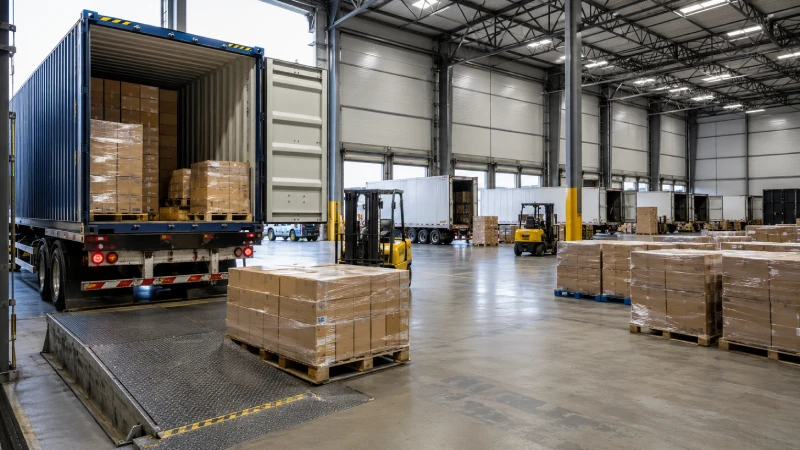
Warehouse receiving requirements can determine whether direct container delivery is practical.
Direct FCL Delivery to the Warehouse
With direct FCL delivery, the container is collected after release and transported to the importer’s warehouse or distribution center. The warehouse unloads the cargo, and the empty container is returned under the arranged delivery plan.
Before booking direct delivery, confirm:
- Whether the warehouse accepts ocean containers
- Whether an appointment is required
- Available receiving hours
- Dock height and access conditions
- Forklift and labor availability
- Whether cargo is floor-loaded or palletized
- Maximum permitted unloading time
- Whether live unload or drop delivery is required
- Whether an empty container can remain temporarily on site
A live unload normally requires the driver and equipment to remain while the warehouse removes the cargo. A drop arrangement allows the container to be left for unloading and collected later, subject to availability and facility rules.
The correct arrangement should be confirmed during quotation planning rather than assumed after arrival.
Port-Area Transloading
Transloading may be considered when the final warehouse cannot receive an ocean container or when cargo must be reorganized before inland transportation.
Typical reasons include:
- Floor-loaded cartons need palletization
- Cargo must be transferred into a domestic trailer
- One container must be divided among several warehouses
- Products require sorting by SKU or purchase order
- The warehouse has strict unloading-time limits
- The final facility does not allow container delivery
Transloading adds another handling stage, so it is not automatically the lowest-cost solution. However, it may reduce receiving difficulties or improve the efficiency of regional distribution.
Cross-Docking
Cross-docking is suitable when products are already allocated to customers or downstream warehouses before arrival.
Cargo is unloaded, sorted and transferred to outbound vehicles with limited storage time. This can support:
- Retail distribution
- Pre-allocated customer orders
- Multiple regional destinations
- Fast-moving inventory
- Time-sensitive replenishment
Cross-docking works best when shipment data, labels and destination instructions are prepared before the container reaches the facility.
Floor-Loaded Versus Palletized Cargo
| Cargo format | Main benefit | Main operational consideration |
|---|---|---|
| Floor-loaded | Better use of container space | More unloading labor and time |
| Palletized | Faster warehouse handling | Lower container-space efficiency |
| Transloaded near port | Easier inland receiving | Additional handling and coordination |
| Palletized at supplier | Consistent receiving format | Pallet specifications must be confirmed |
Importers should not select the loading format based only on container utilization. Warehouse labor cost, unloading limits and product handling requirements should also be considered.
Need a Savannah warehouse delivery plan?
Send Winsail Logistics your warehouse ZIP code, receiving hours, cargo format and unloading requirements. Our team can evaluate direct FCL delivery, transloading or a regional 3PL handoff.
Choose the Right Regional Distribution Model
After the cargo enters through Savannah, it can move through several distribution models.
Full-Container Delivery to a Georgia Warehouse
This model may suit importers that:
- Receive recurring FCL shipments
- Maintain regional inventory
- Have container-unloading capability
- Distribute pallets, cartons or parcels
- Serve customers across several Southeast states
The warehouse becomes the central inventory point, while outbound shipments are planned according to customer demand.
Savannah-Area 3PL or Transload Model
A regional 3PL may support:
- Container unloading
- Palletization
- Storage
- Pick and pack
- Ecommerce fulfillment
- Retail preparation
- Inventory allocation
- Outbound transportation
This model may be useful when an overseas importer does not operate its own US warehouse or when the existing facility cannot receive containers efficiently.
Multi-Destination Distribution
One inbound container may contain inventory for several destinations, including facilities in Georgia, Florida, the Carolinas or Tennessee.
Possible distribution methods include:
- Direct multi-stop delivery
- Port-area transloading followed by separate shipments
- Storage at a regional 3PL
- Delivery to one central distribution center
- Separate shipments from China
- A multi-gateway inventory strategy
| Distribution model | Typical flow | Main planning question |
|---|---|---|
| Direct FCL | Port to importer warehouse | Can the facility unload the container? |
| Transload | Port to transload facility to domestic trailer | Does cargo require palletization or transfer? |
| Cross-dock | Port to cross-dock to several destinations | Are orders allocated before arrival? |
| Regional 3PL | Port to 3PL to customers | Is outsourced storage or fulfillment needed? |
| Central distribution center | Port to main DC to regional customers | Does centralized inventory improve control? |
The best option depends on shipment frequency, customer density, warehouse capacity and the amount of handling required.
Match FCL or LCL to Inventory Replenishment
The choice between FCL and LCL should support the importer’s inventory strategy.
FCL may be suitable when the buyer has:
- Larger recurring volumes
- Predictable demand
- Sufficient warehouse storage
- Container-unloading capacity
- Regular inventory-replenishment cycles
- A need to reduce cargo handling
LCL may be considered for:
- Smaller shipment volumes
- New product launches
- Irregular orders
- Lower inventory commitments
- More frequent replenishment
- Importers unable to fill a container
LCL cargo generally follows a different destination process because goods must be recovered from a consolidation facility before final delivery.
The wider FCL and LCL Shipping from China to USA comparison can help buyers understand mode fundamentals, but the Savannah decision should focus on how each mode affects warehouse receiving and inventory availability.
In some cases, the best model is not exclusively FCL or LCL. An importer may use regular FCL shipments for base inventory and smaller air or LCL shipments for urgent or high-velocity products.
Plan Inventory Buffers and Peak-Season Receiving
Inventory planning should include the full lead time from supplier production to warehouse availability.
The timeline may include:
- Supplier production
- Origin pickup
- Export processing
- Ocean routing
- Import clearance
- Cargo availability
- Warehouse appointment
- Unloading and receiving
- Inventory system updates
For broader lead-time guidance, see Shipping Time from China to USA. Do not plan replenishment using ocean transit alone.
Warehouse capacity must also be aligned with the arrival schedule. Several containers arriving within a short period can create problems even when the facility has enough total storage space.
Importers should confirm:
- Weekly receiving limits
- Dock appointment availability
- Labor schedules
- Holiday closures
- Maximum storage capacity
- Overlapping inbound shipments
- Product-launch deadlines
During peak shipping periods, businesses may consider additional inventory buffers, earlier booking decisions, flexible receiving arrangements and alternative transload or warehouse options.
The buffer should be based on demand risk and the complete supply chain, not on a fixed number of days applied to every shipment.
When Should You Compare Savannah With Another Gateway?
Savannah should be compared with alternative ports when customer geography or warehouse location changes the total distribution cost.
Charleston or Norfolk
These gateways may require evaluation when the main warehouse or customer base is located in the Carolinas or farther north. The comparison should include port-to-warehouse delivery, warehouse receiving and outbound transportation.
New York or New Jersey
A Northeast gateway may be more relevant when most customers and inventory facilities are located in the Northeast. Routing through Savannah solely to obtain a lower ocean rate may create unnecessary inland transportation.
Houston
Houston may be considered when Texas and Gulf Coast customers represent the majority of demand or when the importer already operates a warehouse in that region.
West Coast Gateways
A West Coast port may be evaluated when customers are concentrated in western states or when the company distributes nationally from a western facility.
For businesses with significant demand in several US regions, the best solution may eventually involve more than one gateway. However, a multi-port strategy also increases inventory and operational complexity.
The comparison should therefore use:
- Warehouse ZIP codes
- Customer order density
- Shipment frequency
- Inland transportation requirements
- Inventory-holding costs
- Receiving constraints
- Total cost to serve each region
Information Needed for a Savannah Shipping Quote
A realistic port-to-warehouse quotation requires more than cargo weight and container size.
Shipment Information
- China supplier city
- Preferred origin port, if known
- Cargo description
- Cargo volume and gross weight
- Container size, if FCL
- Shipment frequency
- FCL or LCL preference
- Incoterm
- Cargo-ready date
- Special handling requirements
US Warehouse and Distribution Information
- Warehouse or 3PL ZIP code
- Final customer regions
- Floor-loaded or palletized cargo
- Receiving hours
- Appointment requirements
- Dock and forklift availability
- Maximum unloading time
- Live-unload or drop requirement
- Palletization or transloading needs
- Multi-destination delivery requirements
Importers should also prepare the appropriate commercial and customs paperwork. The Documents Required to Import from China to USA guide explains the main documentation categories that may be involved.
Request a Savannah Port-to-Warehouse and Distribution Plan
Savannah can be an effective gateway when the port, warehouse and final customer network are planned as one connected system.
Send Winsail Logistics your China origin, cargo volume, shipment frequency, warehouse ZIP code, final customer regions and receiving requirements. Our team can evaluate:
- FCL or LCL shipping
- Ocean routing to Savannah
- Direct container delivery
- Transloading or cross-docking
- Regional 3PL delivery
- Multi-destination distribution
- Recurring inventory replenishment
The result is a route plan based on the complete movement from supplier to available inventory, not just the ocean freight rate.
FAQ
How much does shipping from China to Savannah cost?
The cost depends on the China origin, cargo volume, FCL or LCL mode, destination handling, warehouse ZIP code and final delivery requirements. Transloading, palletization or multi-destination delivery can also affect the total quotation.
How long does shipping from China to Savannah take?
Total lead time includes supplier preparation, origin handling, ocean transportation, customs clearance, cargo availability and final warehouse delivery. Current routing and sailing information should be confirmed when requesting a quotation.
Is Savannah suitable for shipping cargo to Florida?
Savannah may be suitable for some Florida distribution plans, especially when combined with a Georgia or northern Florida warehouse. The decision should be based on exact destination ZIP codes, shipment frequency and total inland delivery cost.
Can an FCL container be delivered directly to my warehouse?
Yes, subject to warehouse access, appointment requirements, dock capacity, unloading labor and the selected live-unload or drop arrangement. These details should be confirmed before booking.
When is transloading needed after arrival in Savannah?
Transloading may be required when the warehouse cannot receive an ocean container, cargo needs palletization, products must be divided among several destinations or goods need to be transferred into domestic trailers.
Is floor-loaded or palletized cargo better?
Floor loading usually uses container space more efficiently, while palletized cargo is generally faster to unload and handle. The better option depends on product type, warehouse labor and unloading-time limitations.
Can LCL cargo be delivered to a Savannah-area warehouse?
Yes. However, LCL cargo normally requires destination consolidation handling before final delivery. The quotation should include cargo recovery, destination charges and transportation to the warehouse.
When should I choose another US port instead of Savannah?
Another gateway should be evaluated when the primary warehouse or customer base is closer to the Northeast, Gulf Coast or West Coast. The final choice should be based on the total port-to-customer distribution cost.
