

When planning kitchen cabinet shipments from China to Qatar, timing is critical. For projects in Doha or other Qatari cities, coordinating deliveries with construction milestones is essential to avoid costly installation delays. For comprehensive guidance on international shipping, project buyers should refer to our Shipping from China to Qatar, which outlines best practices for freight planning, scheduling, and cargo management. Properly aligning deliveries with construction schedules ensures cabinets arrive on time, ready for installation, without creating storage or workflow bottlenecks.
Understanding Phased Deliveries for Kitchen Cabinets
One of the most effective strategies for construction projects is phased shipments. Instead of sending the entire cabinet order in a single container, deliveries can be divided into stages corresponding to construction milestones. For instance, a multi-floor residential development may require ground floor cabinets first, followed by upper floors in later phases.
Phased shipments help reduce the risk of site congestion, minimize potential damage, and make it easier to track and manage inventory. This approach also allows importers to coordinate more precisely with installation teams, ensuring that cabinets are ready for use exactly when needed.
By planning phased deliveries, importers can achieve better cash flow management, since smaller shipments allow payment schedules to align with project progress. Additionally, phased shipments can reduce storage costs at the construction site or nearby warehouses.
Warehouse Staging and Pre-Installation Storage
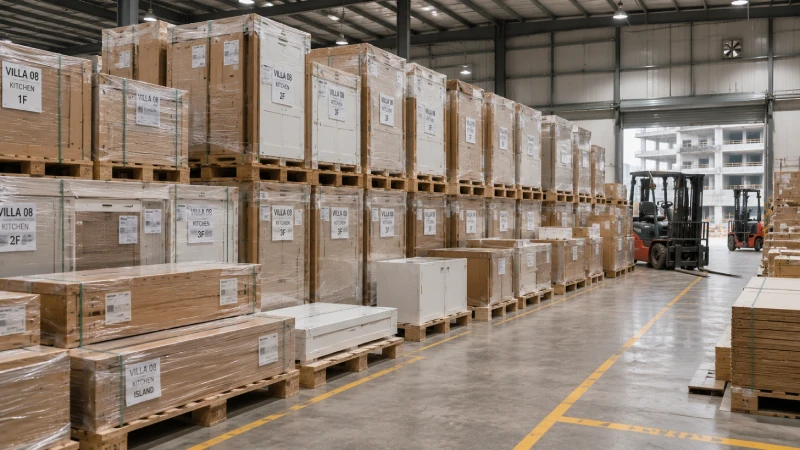
Proper warehouse staging is a cornerstone of successful cabinet delivery management. Importers should select storage facilities near the project site in Qatar, ensuring easy access for scheduled installations. Warehouses should have adequate space, controlled humidity, and proper palletization systems to protect the cabinets from moisture, warping, or scratches.
During staging, it’s critical to conduct inventory checks and unpack cabinets carefully to confirm that all components are present and undamaged. Coordinating closely with warehouse managers allows project supervisors to monitor which batches are ready for installation and schedule transportation efficiently.
Effective warehouse staging also supports contingency planning. If a delayed shipment occurs, having some inventory staged in advance can prevent installation downtime and maintain project momentum.
Aligning Installation Schedules with Project Milestones
Even with well-planned deliveries, cabinets must be installed in sync with construction milestones. Creating a master schedule that tracks both delivery dates and installation windows is essential. Importers must factor in customs clearance, local transportation, and on-site handling time to avoid gaps that could disrupt contractor workflows.
Using project management tools, importers can link installation schedules with delivery tracking to monitor progress in real time. Clear communication with carpenters, electricians, and general contractors ensures that all teams are aware of which cabinets will be installed and when. This alignment prevents idle labor and avoids unnecessary project costs.
Buffer periods should be included in case of delays, allowing the construction project to proceed without stopping due to missing cabinets. Well-managed schedules directly translate to smoother workflows and higher overall project efficiency.
Project Coordination Strategies for Importers
Coordinating cabinet shipments requires seamless project coordination among multiple stakeholders. Importers, freight forwarders, suppliers, and on-site teams must communicate regularly to synchronize deliveries with installation timelines.
Weekly or bi-weekly updates can help identify potential bottlenecks before they become critical issues. Importers should maintain contingency plans for delayed shipments or damaged goods, including backup warehouse locations or alternative installation sequences.
For multi-site projects, project coordination ensures that all locations receive their respective cabinets according to each site’s construction schedule, preventing cross-site conflicts or resource shortages. A centralized project coordination system improves visibility, reduces risk, and allows for proactive problem-solving.
Cost Implications and Risk Mitigation
Delays in cabinet delivery can incur significant costs. Idle labor, rescheduling of contractors, and rushed installations can quickly inflate project budgets. By implementing phased deliveries and efficient warehouse staging, importers can reduce these risks.
Optimizing container usage is another important consideration. Sending multiple smaller shipments may seem more expensive upfront, but it often results in overall savings by reducing on-site storage requirements and avoiding schedule disruptions. Insurance coverage for high-value shipments protects against transit damage, offering further financial security.
Importers should evaluate the trade-offs between shipment frequency and container consolidation to determine the most cost-effective approach without compromising project timelines.
Tips for Smooth Cabinet Shipment Execution
- Engage experienced freight forwarders who specialize in kitchen cabinet logistics.
- Decide between consolidated or split container shipments based on project size and installation schedule.
- Conduct pre-shipment quality checks, including labeling for easy identification on-site.
- Align documentation, such as purchase orders, packing lists, and customs clearance forms, to avoid unnecessary delays.
- Maintain a communication loop between suppliers, warehouse staff, and project managers to address issues promptly.
These steps ensure that cabinet deliveries proceed efficiently and align precisely with construction activities, safeguarding both project quality and budget.
Case Study: Multi-Floor Villa in Doha
For example, a four-floor villa in Doha received its kitchen cabinets in three phased shipments, coordinated with the interior fit-out schedule. Each batch was staged in a local warehouse and delivered to the site just before installation. As a result, carpenters had all materials on hand when needed, eliminating idle time and avoiding the risk of damage from prolonged on-site storage. The project was completed on schedule, demonstrating the value of strategic project coordination.
Conclusion
Successful shipping of kitchen cabinets from China to Qatar requires more than arranging transportation. By implementing phased deliveries, effective warehouse staging, and meticulous installation schedule alignment, importers can prevent costly delays and ensure their construction projects proceed smoothly. Proactive project coordination among suppliers, freight forwarders, and on-site teams is key to achieving on-time delivery and installation.
For a reliable shipping solution tailored to your project, get in touch with experts who can manage cabinet logistics efficiently, from China to Qatar.
