
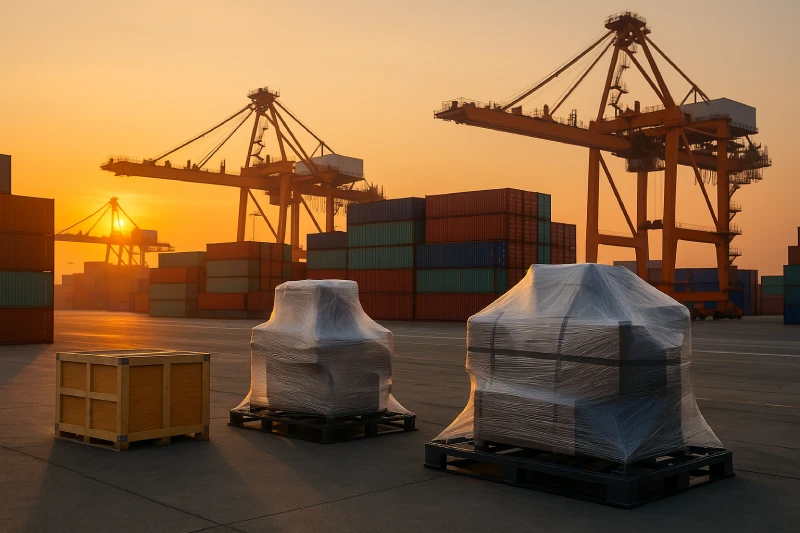
Why Importers Need Reliable Logistics When Shipping Machinery from China
China is the largest global source of industrial machinery, which means buyers rely heavily on safe and efficient logistics to move heavy equipment from Chinese factories to their final destinations. Whether the shipment involves CNC machines, hydraulic presses, compressors, or processing equipment, transporting machinery is far more complex than moving ordinary goods.
Most machines are large, heavy, high-value, or contain sensitive components, making logistics a critical part of the procurement process. Proper route selection, lifting and loading methods, seaworthy packing, moisture protection, and accurate customs documentation all play an essential role in preventing damage, delays, and unexpected costs. Even small details—such as whether the machine contains oil, batteries, motors, or electronic control systems—can significantly affect clearance, insurance, and handling procedures.
Because of these challenges, global importers rely on experienced freight forwarders to manage machinery transportation from start to finish. Winsail Logistics provides factory pickup, professional packing and crating, OOG and containerized solutions, and compliance support to ensure your machinery arrives safely, efficiently, and at the most competitive total cost.
Main Shipping Methods for Machinery
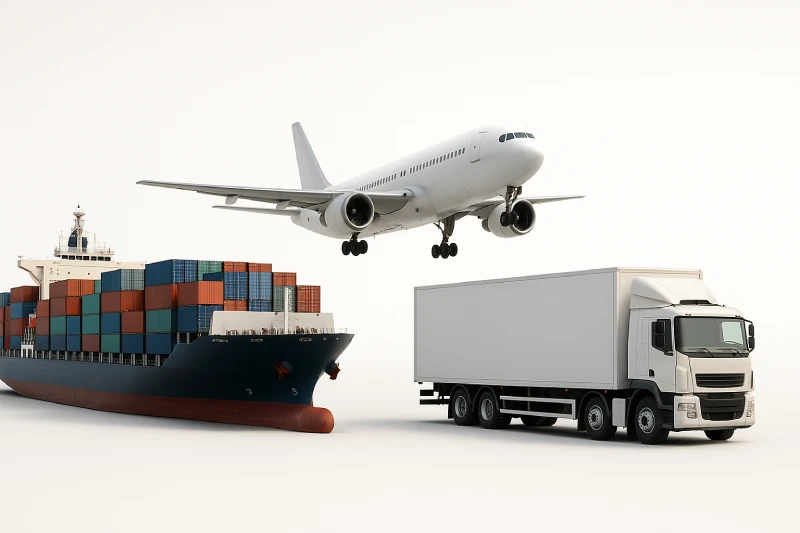
Shipping machinery from China typically involves four main transport options. The right choice depends on the machine’s size, weight, value, and urgency.
1. FCL Sea Freight (Most Common for Machinery)
FCL is the preferred method for medium to large machines such as CNC centers, hydraulic presses, injection-molding machines, and industrial generators. Using a full 20GP, 40GP, or 40HQ container provides maximum protection since your cargo is not mixed with other shippers.
For oversized machinery, Flat Rack (FR) and Open Top (OT) containers allow safer loading with cranes or forklifts. These solutions accommodate extra height or width and reduce the risk of damage during handling.
2. LCL Sea Freight (For Small or Single Units)
LCL is suitable for small machines, accessories, and spare parts. It is more economical for low-volume shipments, but machinery shippers must note that LCL involves multiple handling points. Additional packing—such as reinforced wooden crates and shock-proof bases—is highly recommended to prevent vibration or impact damage.
3. Air Freight (For High-Value or Urgent Machinery)
Air freight is ideal when speed is the priority. Industrial automation components, medical devices, precision tools, and replacement parts often move by air. Although the cost is higher, air freight minimizes transit time and reduces the risk associated with long sea journeys. Proper packing and oil-free declaration may be required for certain machines.
4. Express Shipping (For Spare Parts Only)
Courier services like DHL, FedEx, and UPS are best suited for small parts and urgent components. They are not recommended for complete machinery due to dimensional limits and high volumetric charges.
Choosing the right shipping method ensures a balance between cost, transit time, and cargo safety—especially critical for heavy and sensitive machinery.
Transit Time for Machinery Shipments
Transit time varies depending on the destination country, shipping method, and chosen port. Machinery is often shipped by FCL due to its weight and size, which provides more predictable schedules and fewer handling risks. Below is a general overview of common routes from China:
Sea Freight (FCL / LCL)
- UAE (Jebel Ali): 18–25 days
- Saudi Arabia (Dammam / Jeddah): 20–28 days
- Kenya (Mombasa): 25–32 days
- Nigeria (Apapa / Tincan): 35–45 days
- USA (LA / Long Beach): 15–20 days
- USA East Coast: 28–35 days
- UK (Felixstowe / Southampton): 25–32 days
Air Freight
- Most major airports: 3–7 days
- Express spare parts: 2–5 days
Factors that may affect machinery transit time include port congestion, customs inspections, weather conditions, and whether oversized cargo requires special handling equipment. Using the right port pair and booking schedules early helps ensure smoother delivery.
Shipping Cost Factors for Machinery
The cost of shipping machinery from China varies widely because these products differ greatly in size, weight, structure, and handling requirements. Understanding the main cost drivers helps importers plan budgets more accurately and avoid unexpected charges.
1. Size, Weight & CBM
Machinery is typically heavy and bulky, so freight rates are strongly influenced by the cargo’s volume (CBM) and gross weight. Oversized machines that exceed container limits require Flat Rack (FR) or Open Top (OT) containers, which cost significantly more than standard FCL units.
2. Packaging Requirements
Seaworthy packing is essential for machinery and may involve wooden crates, steel-reinforced bases, vacuum rust-proof treatment, and moisture control materials. Stronger packing increases safety but also increases the total CBM, which affects freight and local handling fees.
3. Port Selection & Route Efficiency
Different ports in China—such as Shanghai, Ningbo, Shenzhen, and Qingdao—offer different export rates. Some provide better schedules for the Middle East or Africa, while others may be more cost-effective for the USA or Europe. Choosing the right port pair can reduce both transit time and overall cost.
4. Special Handling & Loading Charges
If cranes, forklifts, or professional rigging teams are required, additional charges apply. This is especially common for large CNC machines, hydraulic presses, and construction equipment that cannot be moved manually.
5. Customs, Duties & Destination Fees
Import duties, VAT, inspection fees, and local port charges vary by country. Some destinations (such as Nigeria and Saudi Arabia) require specific certifications that may add cost to the preparation stage.
6. Machine Condition (Oil, Batteries, Electrical Parts)
Machines containing oil, fuel, or batteries may require additional declarations or hazard checks, which can add to both shipping and customs costs.
A clear understanding of these factors helps optimize cost while ensuring safe transport of valuable machinery.
Packaging & Handling Requirements for Machinery
Proper packaging is one of the most important steps in shipping machinery from China. Due to the weight, rigidity, and high value of industrial equipment, even minor impacts or moisture exposure can cause significant damage. A well-designed packing and loading plan ensures the machine arrives safely and passes customs checks smoothly.
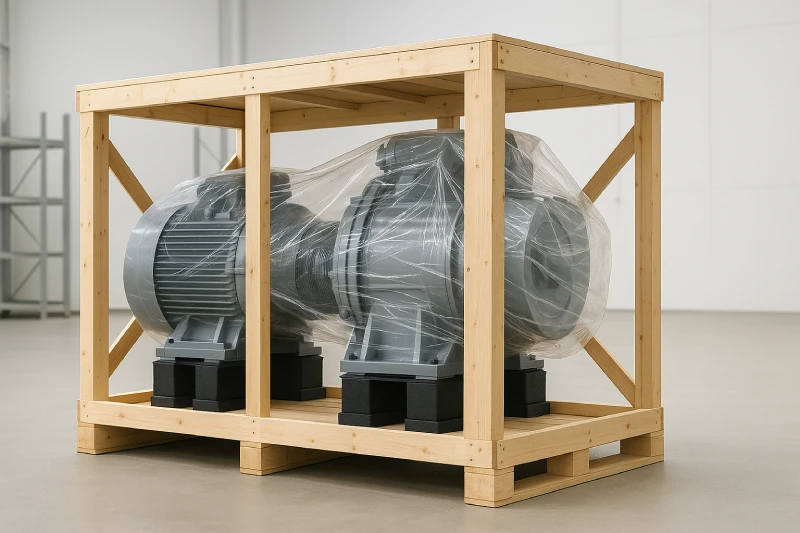
1. Seaworthy Wooden Crates and Steel-Reinforced Bases
Most machinery requires export-grade wooden crates with internal bracing to prevent shifting during transport. Heavy items such as hydraulic presses, CNC machines, and generators often need steel-reinforced bases to support weight and maintain stability when lifted by forklifts or cranes.
2. Vacuum Packaging and Rust Protection
Machinery surfaces are prone to oxidation during long ocean journeys. Vacuum sealing, anti-rust oil, and moisture-absorbing materials help protect metal components from corrosion, especially when shipping to humid climates in Southeast Asia, Africa, or the Middle East.
3. Shock-Proof and Vibration Control
Sensitive components—control panels, motors, bearings, and precision tools—require foam padding, shock absorbers, or internal fixing brackets. Preventing vibration is crucial for equipment calibration and performance.
4. Clear Lifting Points and Handling Instructions
Oversized or heavy machinery must have clearly marked lifting points, center-of-gravity labels, and loading diagrams. This ensures port handlers, truck drivers, and rigging teams can move the equipment safely and correctly.
5. Oil Drainage and Safety Preparation
For machinery containing oil or coolant, drainage or special declaration may be required before export. Some countries restrict imports of machines with residual liquids.
Proper packaging significantly reduces the risk of damage, delays, or customs issues—making it a critical part of any machinery shipping plan.
HS Codes & Customs Notes
Machinery products typically fall under HS Code Chapters 84 and 85, which cover mechanical equipment, electrical machinery, and industrial components. Correct classification is essential because it directly affects import duties, VAT, and the customs clearance process in each destination country.
1. Common HS Code Categories
- HS 8456–8466: CNC machines, milling machines, lathes, machining centers
- HS 8477: Plastic injection or molding machines
- HS 8429–8431: Construction machinery (excavators, loaders, etc.)
- HS 8501–8504: Motors, generators, compressors
Providing detailed product specifications—such as power rating, function, and materials—helps ensure accurate HS coding and reduces the risk of inspection.
2. Country-Specific Customs Considerations
- Middle East (UAE, Saudi): May require SABER, SASO, COC; machines with motors or oil require proper declaration.
- Africa (Kenya, Nigeria): PVOC and SONCAP are often mandatory, especially for used machinery.
- USA / UK / EU: Strict on compliance labels, electrical safety, and environmental standards.
3. Used Machinery
Some regions impose heavy restrictions or require pre-shipment inspection due to safety concerns or environmental regulations.
Correct HS classification and compliance preparation help avoid delays, fines, or customs holds—key to smooth machinery importation.
Popular Machinery We Ship
Winsail Logistics handles a wide range of machinery shipments from China, supporting both large industrial buyers and small equipment importers. The most commonly shipped items include:
1. Metalworking & CNC Equipment
CNC machining centers, lathe machines, milling machines, drilling machines, and precision cutting tools. These products often require reinforced crates and vibration control due to their sensitive components.
2. Hydraulic & Forming Machinery
Hydraulic presses, bending machines, stamping machines, and industrial press systems. Their heavy weight and high tonnage demand specialized loading and secure base support.
3. Construction & Engineering Machinery
Excavators, loaders, compactors, concrete mixers, and related attachments. These items may require Flat Rack containers or special rigging.
4. Generators, Pumps & Industrial Power Systems
Diesel generators, compressors, industrial pumps, and electrical equipment.
5. Food Processing & Packaging Machines
Filling machines, sealing machines, production line equipment, and automation units.
These categories represent the most frequently exported machinery types, each with unique handling and compliance requirements.
Route & Port Recommendations
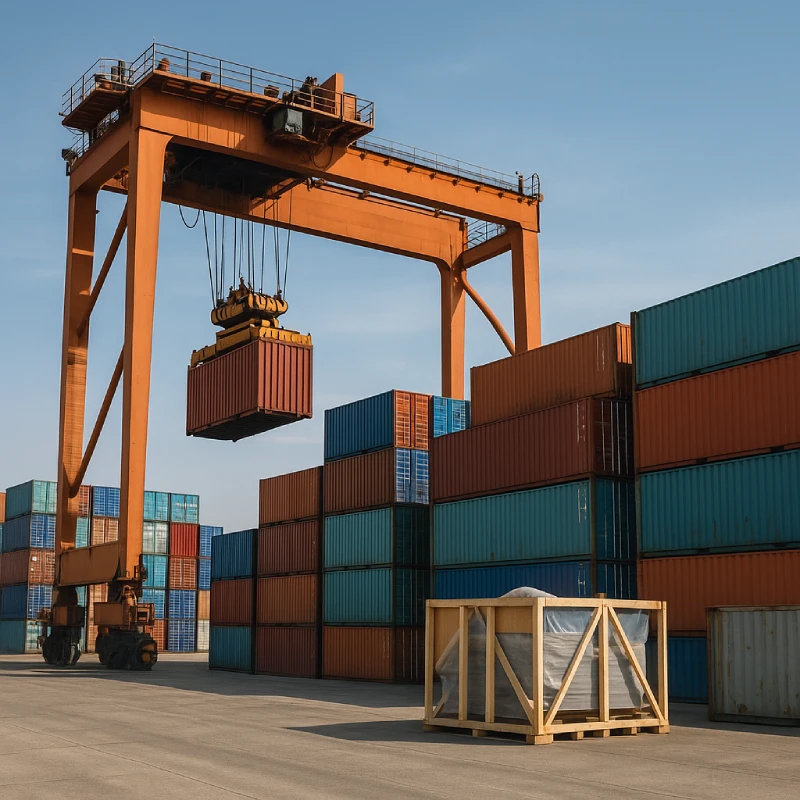
Selecting the right route and port pairing is crucial when shipping machinery, as heavy cargo often requires stable schedules, professional handling, and ports equipped with strong lifting capacity.
1. Recommended China Ports (POL)
- Shanghai & Ningbo: Best for East China manufacturers; strong schedule frequency for the Middle East, Europe, and USA.
- Shenzhen & Guangzhou: Ideal for South China machinery suppliers, especially for African and Southeast Asian routes.
- Qingdao & Tianjin: Convenient for North China factories producing construction machinery and industrial equipment.
2. Destination Port Suggestions (POD)
- UAE — Jebel Ali: Most efficient for heavy machinery, excellent crane capacity.
- Saudi Arabia — Dammam / Jeddah: Popular for engineering and industrial machines.
- Kenya — Mombasa: Main gateway for East African imports.
- Nigeria — Apapa / Tincan: Standard entry point for construction and power equipment.
- USA — LA / Long Beach / Houston: Best for FCL machinery shipments.
- UK — Felixstowe / Southampton: Efficient for palletized or crated equipment.
Choosing high-capacity ports ensures smoother loading, faster documentation, and safer handling for heavy and oversized machinery.
Country-Specific Notes for Machinery Imports
Different regions have unique regulations for importing machinery, especially regarding safety, electrical standards, and product certification. Understanding these differences helps prevent delays and unexpected costs.
1. Middle East (UAE, Saudi Arabia)
Machinery shipped to the Middle East often requires SABER, SASO, or COC certification, especially for equipment containing motors, electrical parts, or hydraulic systems. Saudi customs may request detailed power ratings and technical data sheets. Machines with oil or coolant must be properly declared.
2. Africa (Kenya, Nigeria, Ghana)
Most African countries require PVOC or SONCAP for new machinery, while used machinery faces stricter inspection or may even be restricted. Importers should confirm whether pre-shipment inspection is mandatory to avoid clearing issues at destination ports.
3. USA, UK & Europe
Western markets prioritize safety and compliance labeling. Machinery may need CE markings, electrical safety documentation, and accurate HS coding. Customs officers often check for invoices, packing lists, serial numbers, and product specifications.
Preparing documents ahead of time and confirming local compliance rules ensures smoother entry across all major destinations.
Loading Methods for Heavy & Oversized Machinery
Loading is a critical step when transporting machinery, especially when dealing with heavy, tall, or irregularly shaped equipment. Using the right loading method helps prevent structural stress, tipping, and damage during transport.
1. Standard Container Loading
For machines that fit within a 20GP, 40GP, or 40HQ container, forklifts or pallet jacks are used to position the equipment. The cargo is then secured with steel straps, wooden braces, and floor blocking to prevent movement.
2. Flat Rack (FR) for Oversized Loads
FR containers are essential for large CNC machines, construction equipment, or presses that exceed container dimensions. Cranes are used to place the machine onto the rack, followed by heavy-duty lashing, welding points, or chain binding depending on the weight.
3. Open Top (OT) for Extra Height Equipment
OT containers allow top-loading with cranes, making them suitable for tall equipment or machines with vertical assemblies that cannot be dismantled.
4. Factory-to-Port Handling
For very heavy machinery, low-bed trucks, dollies, or professional rigging teams may be required for safe transport from the manufacturer’s facility to the loading port.
Using proper loading methods reduces damage risk and ensures compliance with international shipping standards.
Risk Control & Machinery Cargo Insurance
Machinery is high-value and often sensitive to vibration, moisture, and impact, making risk control essential during international transport. Proper packing, reinforced bases, and professional loading significantly reduce damage, but insurance remains a critical layer of protection.
Cargo Insurance (Recommended: All-Risk)
“All-Risk” coverage is strongly advised for CNC machines, hydraulic systems, industrial generators, and construction equipment. It protects against loss, theft, damage, and handling accidents that may occur during trucking, port operations, or sea transport.
Operational Checks
Providing photos, serial numbers, packing videos, and loading records helps document cargo condition and speeds up claims if issues arise.
Comprehensive risk management ensures your machinery arrives safely and protects your investment throughout the journey.
How Winsail Helps You Ship Machinery Safely
Machinery shipping demands experience, technical handling, and reliable coordination across factories, ports, carriers, and customs. Winsail Logistics provides end-to-end solutions tailored specifically for heavy, oversized, and high-value equipment.
1. Factory Pickup & On-Site Assessment
Our team coordinates pickup with forklifts, cranes, or low-bed trucks, depending on the machine’s weight and structure. When necessary, we review on-site conditions to ensure safe loading and secure transport to the port.
2. Professional Seaworthy Packing
We work with certified packing teams that build reinforced wooden crates, apply vacuum rust-proof treatments, and add internal bracing for vibration control. Each machine is prepared to withstand long ocean journeys and multiple handling points.
3. Route Planning & Cost Optimization
By comparing schedules from major China ports and selecting the right container type (FCL, FR, or OT), we help customers reduce lead times and avoid unnecessary charges.
4. Compliance & Documentation Support
Whether you need SABER, PVOC, SONCAP, CE, or Form E, we guide you through the required documentation to prevent customs delays at destination.
5. Real-Time Tracking & After-Loading Records
We provide packing photos, loading videos, and lashing reports to keep you fully informed throughout the process.
Winsail’s expertise ensures your machinery is handled with precision and delivered safely, no matter the size or destination.
Case Studies: Recent Machinery Shipments We Handled
To demonstrate our experience in moving industrial machinery of different sizes and handling requirements, here are three recent shipments managed by Winsail Logistics:
1. 2-Head Filling & Capping Machine – Shanghai to Charleston, SC (Air Freight)
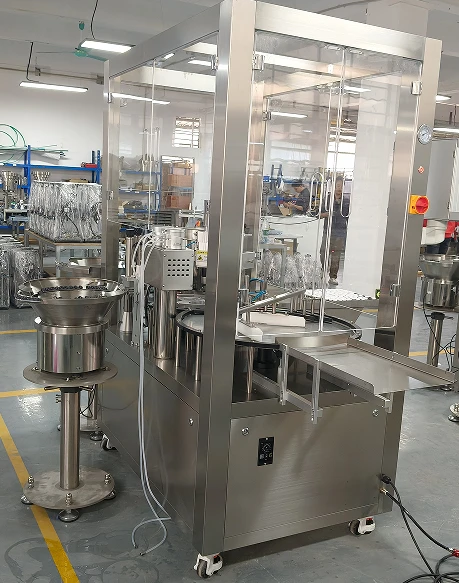
We arranged fast air freight for a 1,364 kg filling and capping machine, ensuring secure packing and tight transit scheduling. The shipment arrived in 2 days, supporting the client’s urgent production needs with full export documentation and careful handling.
2. Paper-Cutting Machine – Yiwu to Riyadh (SEA + DDP)

A compact 0.4 CBM paper-cutting machine was shipped via door-to-door DDP service, including customs clearance and last-mile delivery in Riyadh. The cargo arrived safely in 30 days, demonstrating our capability in managing small industrial equipment with complete destination support.
3. Labeling Machine – Nansha to Aqaba (Ocean Freight)

We coordinated the delivery of an 18.1 CBM labeling machine using ocean freight. The shipment reached Aqaba in 29 days, with proper packing, lashing, and inspection to ensure stability throughout the journey.
These cases reflect our ability to handle diverse machinery categories—from small precision units to large production equipment—across air, sea, and door-to-door services.
FAQs
1. Do all types of machinery need wooden crate packing?
Not always—small and durable machines may ship on pallets, but most industrial equipment benefits from seaworthy wooden crates or steel-reinforced bases. Proper packing reduces vibration and prevents damage during loading, trucking, and sea transport.
2. How do I know if my machine requires a Flat Rack or Open Top container?
If the machine exceeds standard container dimensions in width or height, or cannot be dismantled into smaller parts, FR or OT containers are recommended. Sending machine dimensions and photos to our team allows us to confirm the best option.
3. Can machines containing oil or coolant be shipped without preparation?
Most destinations require oil to be partially or fully drained before export. Machines with residual liquids may need special declarations or hazard checks, which can delay customs clearance if not handled properly.
4. How do I reduce the shipping cost for heavy machinery?
Consolidating accessories, choosing the most efficient port pair, avoiding unnecessary oversized containers, and optimizing packing size can significantly lower total cost. Booking early also helps secure better rates.
5. Do you provide loading photos and packing videos?
Yes. Winsail provides detailed loading photos, packing videos, and lashing reports so you can verify equipment condition and handling before the container is sealed.
