
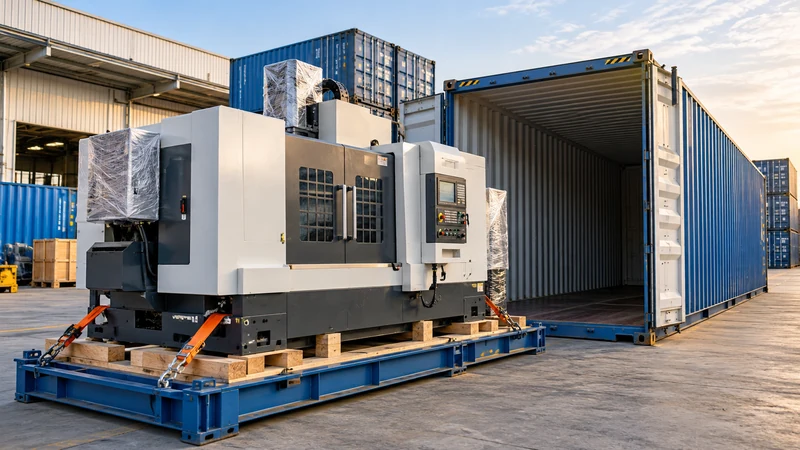
Shipping industrial machinery from China to Tanzania involves more than booking a container. Importers must confirm whether the equipment can be loaded safely, prepare the correct technical and customs documents, and arrange delivery to a factory or other receiving site.
For machinery shipments arriving through Dar es Salaam, the most important decisions often happen before the machine leaves the Chinese supplier. Accurate dimensions, packing plans, lifting instructions, and unloading arrangements can help prevent avoidable handling problems at both ends.
Quick Answer
Shipping machinery from China to Tanzania requires checking the machine’s final packed dimensions, gross weight, loading method, and container compatibility. Standard 20ft or 40ft containers may suit many industrial machines, while open-top or flat-rack equipment may be needed for difficult loading configurations. Importers must also verify product-specific import requirements, arrange customs clearance at Dar es Salaam, and confirm who will unload and receive the machinery at the destination.
Machinery Shipping Data Note — Reviewed October 2026: This guide covers industrial machinery imports to Mainland Tanzania, primarily through Dar es Salaam. Container specifications and regulatory procedures are based on published references reviewed in October 2026. Actual equipment acceptance, import documentation, freight charges, and inland delivery arrangements require shipment-specific confirmation. Zanzibar imports may involve different regulatory procedures.
1. Identify Your Machinery Before Planning Shipment
A supplier may describe a shipment simply as a packaging machine, CNC machine, production line, or industrial compressor. That description helps identify the general product, but it is not sufficient for container selection, export handling, or customs classification.
Before arranging machinery shipping from China to Tanzania, prepare a technical profile of the equipment.
Machine Type, Model, and Intended Function
Start with the machine’s manufacturer, model number, and primary industrial function.
For example, an automatic packaging machine, industrial cutting machine, and air compressor may have different shapes, operating components, packing requirements, and customs classifications.
The shipping documents should identify what is actually being transported, including whether the shipment contains:
- A complete machine ready for installation.
- A machine dismantled into transportable sections.
- Several machines forming a production line.
- Machinery accessories, spare parts, or control cabinets.
- New, used, or refurbished industrial equipment.
A complete production line should not automatically be treated as a single transport unit. Each separately packed component may have different dimensions, weights, lifting points, and handling requirements.
Ask the supplier for a product catalogue, technical specification sheet, equipment drawing, and clear photographs. These records can help the freight coordinator understand the cargo and support the importer’s customs review.
Confirm the Machinery HS Code
An accurate Harmonized System (HS) classification is important for Tanzania customs declarations and for identifying potentially applicable duties, permits, and conformity requirements.
The classification should reflect the machinery’s actual characteristics and function rather than relying only on the supplier’s commercial description.
For machinery shipments, the importing party and its licensed clearing agent should review:
- The equipment’s principal function.
- Manufacturer and model information.
- Whether it is a complete machine, an assembly, or a spare part.
- Any separate components that may require distinct classification.
- The applicable East African Community tariff classification.
Do not assume that all industrial machinery qualifies for a particular duty rate or import exemption.
The correct tariff treatment depends on the declared goods and the customs rules applicable at importation.
Measure the Machine in Its Final Shipping Condition
Three sets of physical information are particularly important:
- Unpacked dimensions: The machine’s original length, width, and height.
- Packed dimensions: The measurements after adding crates, skids, protective frames, or other transport packaging.
- Gross transport weight: The weight of the machine together with its packaging and any accessories secured in the same transport unit.
The packed configuration determines whether the machine can physically enter a container and how it can be lifted and secured.
For heavy or unevenly balanced machinery, the supplier should also provide the centre-of-gravity location, lifting points, and any handling restrictions.
A machine that appears suitable for a standard container in a product catalogue may require another loading arrangement once its transport packaging is completed.
2. Can Your Machinery Fit in a Standard Shipping Container?
Choosing the correct container is one of the most important decisions when shipping industrial equipment to Tanzania.
A standard container can be a practical solution for machinery that fits within its physical and structural limitations. However, container selection must account for more than overall cubic metres.
The final decision depends on the packed dimensions, permitted cargo weight, container-door opening, floor-load distribution, securing arrangement, and loading equipment.
When to Use a 20ft or 40ft Dry Container
A 20ft general-purpose container (20GP) may suit compact, relatively dense equipment, provided its weight and loading arrangement are acceptable.
Examples might include appropriately packaged industrial pumps, machine tools, compressors, or smaller manufacturing machines.
A 40ft general-purpose container (40GP) provides additional length and cargo volume. It may be appropriate for longer equipment, several separately packed machines, or production-line components.
A 40ft high-cube container (40HC) provides greater internal height than a standard-height dry container, making it worth considering for taller packaged machinery.
However, a 40HC does not automatically solve every height restriction. The door opening is smaller than the maximum internal height, and loading equipment may require additional clearance.
A longer container also does not necessarily provide a proportionately greater cargo payload.
Before selecting any dry container, confirm:
- Whether the largest packed unit can pass through the door.
- Whether sufficient space remains for loading and securing.
- Whether the gross weight is within permitted limits.
- Whether concentrated floor loads are acceptable.
- Whether the machine can be positioned and removed safely.
- Whether the planned truck and inland route can accommodate the loaded container.
Published shipping-line dimensions are useful references, but actual container specifications may vary by equipment type and unit.
Pro Tip — Check the Door, Not Just the Container
A machine may fit within a container’s internal dimensions but still be impossible to load through the doors. Check the final packed dimensions, loading orientation, and available handling clearance before confirming a standard container.
When to Consider Open-Top or Flat-Rack Containers
Some machinery is too tall, wide, awkwardly shaped, or difficult to lift through the doors of a standard container.
In these cases, special equipment may provide a more practical solution.
Open-top containers are worth considering when equipment needs to be lowered into the container from above or when its loading configuration cannot be accommodated through standard doors.
Flat-rack containers may suit machinery requiring side or overhead loading, particularly where normal container walls or roof structures would obstruct the cargo.
However, special equipment does not eliminate the need for engineering and carrier approval.
The shipping arrangement must still account for loading dimensions, lifting capacity, cargo securing, equipment availability, and destination handling.
Standard vs. Special Container Selection Matrix
| Container Type | Suitable Machinery Situation | Main Feasibility Check |
|---|---|---|
| 20GP | Compact, relatively dense industrial machinery | Door clearance, payload, floor loading, and weight distribution |
| 40GP | Longer machines or multiple packaged equipment units | Internal length, loading configuration, and securing space |
| 40HC | Taller machinery compatible with enclosed-container loading | Door height, internal clearance, and inland transport requirements |
| Open Top | Machines requiring overhead loading | Top opening, lifting arrangement, securing, and carrier acceptance |
| Flat Rack | Machinery requiring open-side or overhead handling | Overall cargo envelope, centre of gravity, lashing, and terminal acceptance |
| Project Cargo Assessment | Machinery unsuitable for normal container arrangements | Engineering review, special handling, vessel options, and inland route feasibility |
Container selection must be confirmed against the actual cargo and available equipment. The matrix is a preliminary planning tool, not a carrier acceptance guarantee.
For machinery that can travel in a standard dry container, the FCL shipping from China to Tanzania guide explains the broader container-booking, documentation, and delivery process.
When Does Machinery Become Project Cargo?
Not every heavy machine is automatically project cargo, and not every shipment using a flat rack is out-of-gauge.
A machine can require special equipment while remaining within that equipment’s permitted dimensions. Out-of-gauge cargo involves dimensions exceeding the applicable equipment envelope and requires additional review.
A project-cargo assessment becomes appropriate when the machinery cannot be accommodated safely using available container equipment or when it requires unusually complex transportation arrangements.
Possible triggers include:
- Excessive dimensions or weight for available equipment.
- Specialized heavy-lift or engineered securing requirements.
- Abnormal road transport or route restrictions.
- Special port handling or discharge arrangements.
- Complex positioning or delivery at an industrial project site.
These shipments require a different level of planning from ordinary containerized machinery.
For oversized or exceptionally heavy equipment, review Winsail Logistics’ project logistics solutions rather than relying on a standard container quotation.
3. Machinery Packing, Rust Protection, and Safe Loading in China
Proper packaging protects industrial machinery during loading, sea transportation, port handling, and inland delivery.
It also affects the final dimensions and weight used for selecting a shipping container.
The supplier should confirm the packing method before the freight arrangement is finalized.
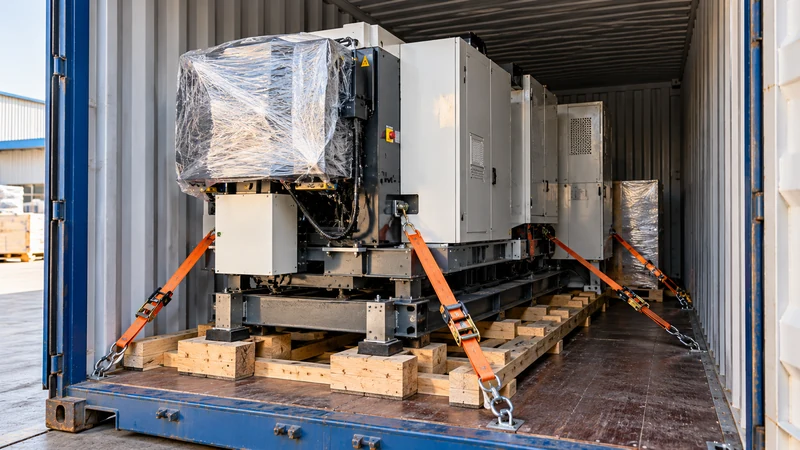
Bare Machinery, Wooden Crates, or Steel Skids?
Different machinery requires different transport packaging.
Bare or partially protected machinery may be considered for robust equipment when an appropriate securing and protection plan can be implemented. Exposed parts still require protection from movement, impact, and environmental exposure.
Wooden crates can help protect sensitive machinery, control panels, precision equipment, and vulnerable components. However, crates add weight and dimensions and must be suitable for lifting and stacking conditions where applicable.
Steel or timber skids can provide a transport base for machinery that needs to be lifted, positioned, or secured during container loading.
The chosen base must be capable of supporting the equipment under the planned handling and transportation conditions.
For wooden packaging made from applicable raw wood materials, relevant ISPM 15 treatment and marking requirements should be checked. Packaging made from certain processed-wood materials may be treated differently under the standard.
The supplier should not assume that every wooden crate or pallet is automatically compliant.
Protect Machinery Against Moisture and Corrosion
Industrial equipment can be exposed to moisture and condensation during international transportation.
Machines containing precision metal surfaces, electronic components, or sensitive controls may require additional protection.
Depending on the equipment, protective measures can include:
- Suitable anti-corrosion treatment for exposed metal surfaces.
- Moisture-resistant wrapping or barrier packaging.
- Desiccants and humidity-control materials where appropriate.
- Protective covers for electrical cabinets and control panels.
- Securing of movable assemblies and removable accessories.
- Protective packing for separately shipped sensors and precision components.
The packing arrangement should follow the manufacturer’s recommendations.
Machines containing batteries, residual fuel, oils, gases, or other potentially regulated components may also require a separate transportation safety review.
These characteristics do not automatically make every machine dangerous goods, but they should be declared accurately so the applicable requirements can be determined.
Confirm Lifting Points and Centre of Gravity
Heavy machinery should not be lifted solely according to its apparent shape or dimensions.
A machine may contain concentrated weight in its motor, frame, hydraulic assembly, or other components.
Incorrect lifting can damage equipment or create a serious handling risk.
Before loading, obtain the manufacturer’s lifting instructions where available, including:
- Designated lifting points.
- Gross lifting weight.
- Centre-of-gravity information.
- Lifting restrictions or required spreader arrangements.
- Approved handling orientation.
- Requirements for blocking, bracing, or securing.
The loading contractor should use equipment and a securing arrangement suitable for the actual machine.
The IMO/ILO/UNECE CTU Code provides internationally recognized guidance on packing and securing cargo transport units. It is a useful reference for load distribution and cargo restraint, although it is not itself a universal mandatory packing regulation.
The supplier should retain photographs showing the machinery’s condition, packaging, loading arrangement, securing method, and final container identification.
These records may become important if damage or handling discrepancies are discovered at the destination.
Quote Machinery Freight
Have your machinery model, final packed dimensions, gross weight, lifting details, and China pickup location ready? Share these details with Winsail Logistics to discuss a suitable machinery shipping arrangement before booking.
4. Tanzania Import Requirements for Industrial Machinery
Import requirements for industrial machinery depend on the actual product, classification, condition, and applicable regulatory controls.
It is incorrect to assume that every machine imported into Tanzania requires a special import licence or a Certificate of Conformity.
Equally, a buyer should not assume that industrial machinery is automatically exempt from all technical or import controls.
Documents Commonly Required for Machinery Imports
For Mainland Tanzania imports, the importer generally needs to appoint a licensed Clearing and Forwarding Agent (CFA).
Import documentation is processed through the Tanzania Customs Integrated System (TANCIS), which supports customs declarations and related procedures.
The core documents commonly include:
- Final commercial invoice.
- Packing list identifying the machinery and packages.
- Bill of lading or relevant transport document.
- Importer’s authorization to the licensed clearing agent.
- Applicable permits, certificates, or exemption documents where required.
For machinery, additional technical supporting information may be needed to establish the product description, classification, value, or regulatory status.
Useful records include manufacturer specifications, model numbers, equipment catalogues, machine drawings, and evidence of the transaction.
The importer and clearing agent should ensure that the commercial invoice, packing list, technical documents, and customs declaration describe the same machinery configuration.
Tanzania’s official import procedures explain the role of licensed clearing agents, TANCIS, and supporting import documentation.
Does Machinery Require TBS PVoC or a Certificate of Conformity?
The Tanzania Bureau of Standards (TBS) operates a Pre-shipment Verification of Conformity (PVoC) programme for specified regulated products.
Goods falling within the applicable PVoC scope generally require conformity assessment and the appropriate Certificate of Conformity (CoC), unless an authorized alternative or exemption procedure applies.
However, not every industrial machine falls within the regulated product list.
The correct approach is to review the actual machinery before shipment:
- Identify its function, model, and proposed HS classification.
- Check whether the product is included in the applicable TBS PVoC scope.
- Determine whether conformity certification, inspection, or another regulatory procedure applies.
- Verify whether any exemption category is relevant and what approval is required.
- Confirm the documentation outcome before dispatch from China.
TBS publishes its PVoC programme requirements and regulated-product resources, including HS-code references and exemption guidance.
An exemption should not be treated as automatic. Depending on the applicable procedure, exempted goods may still be subject to destination inspection.
For example, particular machinery imported by qualifying manufacturers may fall within an exemption category under specific conditions. That does not establish a general exemption for all industrial equipment.
The importer must verify the actual eligibility and supporting documents.
New vs. Used Machinery: What Should Importers Check?
Both new and used machinery require accurate product descriptions and customs declarations.
For used machinery, buyers should pay particular attention to equipment identity, condition, transaction value, and supporting records.
Potential documentation includes:
- Manufacturer and model details.
- Serial number or equipment identification.
- Actual condition and year of manufacture, where relevant.
- Purchase contract and valuation evidence.
- Photographs and technical specifications.
- Applicable product-specific inspection or approval records.
The requirements depend on the machinery category and current applicable regulations.
Do not apply rules intended for used motor vehicles or self-propelled equipment automatically to stationary industrial machinery.
Before shipment, the licensed clearing agent should also confirm the applicable tariff treatment, import taxes, and any other product-specific requirements.
A freight quotation should not be interpreted as confirmation that a machine is legally approved for import.
Important: This guide focuses on Mainland Tanzania. Machinery imported into Zanzibar may require separate checks under the relevant Zanzibar authorities and procedures.
5. Factory Pickup and Export Handover in China
The Chinese supplier’s responsibilities must be clearly defined before the machinery is collected.
A common source of disagreement is whether the equipment price includes export packing, crane loading, container stuffing, export clearance, or transportation to the departure port.
These services should not be assumed merely because the supplier has agreed to sell the machinery.
Confirm the Incoterm and Named Place
The agreed Incoterms rule affects the responsibilities of the seller and buyer.
Under EXW (Ex Works), the seller generally makes the machinery available at the named premises. The buyer normally arranges collection and loading, while export-clearance responsibilities can create practical issues that must be addressed.
Under FCA (Free Carrier), the seller handles export clearance and delivers the goods to the carrier or designated party at the agreed named place. If delivery occurs at the seller’s premises, loading onto the collecting vehicle is generally the seller’s responsibility.
Under FOB (Free on Board), the seller’s delivery obligation is tied to placing the goods on board the vessel at the named port. FOB should not be selected automatically for every container shipment simply because transportation involves a seaport.
The purchase contract should identify the applicable term and precise named place.
Separate loading, packing, and transportation contracts may also be necessary, particularly for heavy machinery.
Factory Loading and Release Checklist
Before dispatch, confirm that the machinery is ready for its actual transportation arrangement.
The supplier and responsible loading parties should verify:
- The final packing list matches the equipment being collected.
- Dimensions and gross weights reflect the completed packaging.
- Required lifting equipment is available.
- The factory provides a safe and accessible loading area.
- The correct loading and securing instructions are available.
- Export documentation is consistent with the cargo.
- Machinery condition and loading photographs have been recorded.
- Any applicable export and transport safety declarations are prepared.
If the machine must be dismantled, the manufacturer should confirm the approved procedure, identification of removed components, and requirements for later reassembly.
Factory release, container loading, export customs clearance, and carrier acceptance are separate milestones.
Completing one does not necessarily mean the next has been approved.
6. Dar es Salaam Arrival, Inland Delivery, and Factory Unloading
For machinery shipments destined for Mainland Tanzania, Dar es Salaam is an important point for port handling, customs clearance, and inland transportation.
However, arrival at the port does not mean the equipment can immediately be delivered to the buyer’s factory.
The importer needs a coordinated plan covering cargo release, collection, inland transport, unloading, and final handover.
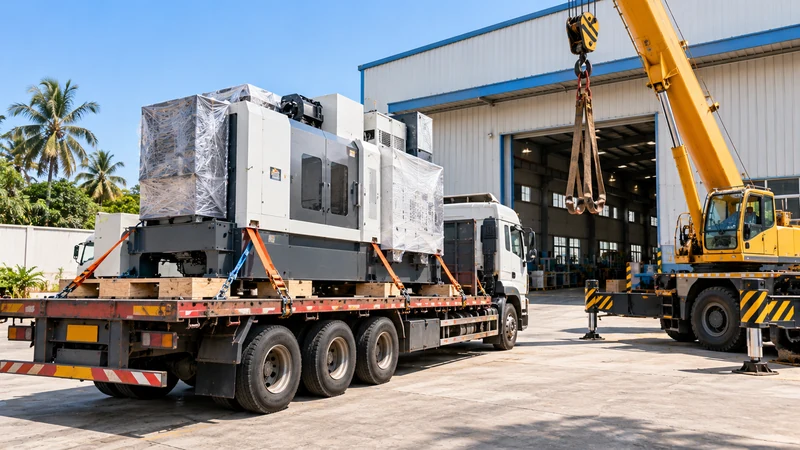
Port Discharge and Cargo Release at Dar es Salaam
After the vessel arrives, the cargo must complete the applicable discharge, customs, carrier, and port procedures before collection.
A typical import workflow includes:
- Cargo discharge: The machinery or loaded container is discharged and handled at the applicable facility.
- Customs processing: The licensed CFA coordinates the import declaration, assessment, payment, and any required inspection or regulatory checks.
- Carrier release: The relevant shipping agent issues the required delivery or release authorization after applicable conditions are met.
- Port charges and documentation: The responsible parties complete the applicable port documentation and payment procedures.
- Truck authorization: The collecting vehicle and driver are registered or authorized according to the facility’s requirements.
- Cargo collection: The cargo leaves the facility after the necessary release and gate checks.
The Tanzania Ports Authority publishes an official import process describing customs clearance, shipping-agent documentation, port billing, truck registration, and cargo release.
These controls should be treated separately.
Customs release does not necessarily mean the carrier has issued delivery authorization or that terminal collection requirements have been completed.
For machinery requiring open-top, flat-rack, or other special handling, confirm the applicable facility, lifting arrangements, carrier instructions, and collection method in advance.
Container Delivery or Machinery Transport After Unstuffing?
There are two possible approaches to inland machinery delivery, depending on cargo and facility conditions.
Option 1: Deliver the Loaded Container
The loaded container is transported from the port to the agreed receiving site.
This may suit machinery that can remain secured inside the container during inland transport and where the destination has suitable unloading equipment.
The importer must confirm vehicle access, unloading responsibility, and empty-container return arrangements.
For carrier-owned equipment, the applicable detention or equipment-return conditions may continue to matter after the cargo reaches the factory.
Option 2: Unstuff and Transport the Machinery Separately
The machinery is removed from the container at an authorized facility and transferred to a suitable vehicle or trailer for inland delivery.
This arrangement may be worth considering when the receiving site cannot accommodate container unloading or when a different transportation configuration is necessary.
However, it introduces another handling operation, which requires appropriate lifting equipment, cargo protection, and responsibility allocation.
The chosen facility and procedure must be confirmed before assuming this option is available.
Preparing the Factory for Machinery Delivery
Before dispatching machinery from Dar es Salaam, the receiving site should be ready for the specific vehicle and equipment.
The importer should confirm:
- The exact delivery location and receiving contact.
- Entrance width, height clearance, and vehicle turning space.
- Ground conditions and the availability of a safe unloading area.
- Crane, forklift, or other lifting equipment with suitable capacity.
- Approved lifting points and handling instructions.
- Personnel responsible for supervising unloading.
- Any restrictions on unloading times or site operations.
- The agreed location for placing the machinery after unloading.
For example, a factory may have enough space to install a production machine but insufficient entrance clearance for the delivery vehicle or packed equipment.
The issue should be identified before inland transportation is booked.
For machinery requiring abnormal road transport, a specialist assessment may be needed to establish route feasibility, permitted vehicle configuration, and applicable approvals.
The relevant Tanzanian special-load requirements should be checked for the actual vehicle and route rather than assuming ordinary trucking rules apply.
What Is Included in Final Machinery Handover?
A delivery quotation should distinguish between arriving at the destination and completing the equipment installation.
The following activities are not necessarily included in the same service:
- Transportation to the named delivery site.
- Unloading the machine from the vehicle.
- Removing transport packaging.
- Lifting or positioning machinery inside the facility.
- Mechanical or electrical installation.
- Commissioning and production testing.
These responsibilities should be assigned in the sales contract and the relevant transportation or installation agreements.
Door-to-door delivery does not automatically mean DDP.
Under DAP, the seller generally arranges transportation to the named destination, while the buyer handles import clearance and applicable duties and taxes.
Under DDP, the seller takes on contractual import-clearance and tax obligations, subject to a legally workable importing arrangement.
Under both DAP and DDP, unloading is generally the buyer’s responsibility unless the parties separately agree otherwise.
The freight service, Incoterms rule, and actual unloading arrangements must therefore be considered together.
Machinery Shipment Handover Responsibility Matrix
| Shipment Stage | Responsibility to Confirm | Evidence to Keep |
|---|---|---|
| China Factory Release | Supplier and appointed pickup party | Final packing list and machinery condition photographs |
| Machinery Loading | Supplier or contracted loading provider | Loading report, lifting records where relevant, and securing photographs |
| Ocean Transportation | Booking and transport-document parties | Booking confirmation and bill of lading |
| Tanzania Customs Clearance | Importer and licensed CFA | Customs declaration and release confirmation |
| Port Cargo Collection | CFA, shipping agent, facility, and appointed trucker | Delivery authorization and collection records |
| Inland Transportation | Contracted transport provider | Collection record and delivery instructions |
| Factory Unloading | Agreed receiving and unloading parties | Unloading confirmation and condition report |
| Final Acceptance | Buyer or authorized receiving representative | Signed delivery and discrepancy records |
This matrix identifies responsibilities that should be confirmed, not an automatic allocation of duties to Winsail Logistics or any particular contractor.
At final delivery, the receiving party should inspect the machinery and packaging for visible damage, confirm the number of packages, and document discrepancies.
A signed delivery record can confirm receipt and observed condition. It should not automatically be treated as proof that machinery has been installed, commissioned, or accepted for production performance.
Pro Tip — Confirm the Unloading Plan Before Dispatch
Ask the receiving factory to confirm vehicle access, available lifting equipment, the unloading supervisor, and responsibility for any additional crane or handling charges before the machine leaves China. A prepared receiving site can reduce the risk of avoidable truck waiting and unsuccessful delivery attempts.
7. What Information Is Needed for a Machinery Freight Quote?
A useful machinery freight quotation should be based on the actual machine and the required transportation scope.
The name of a machine and its purchase price are not enough to establish a reliable shipping arrangement.
For example, two machines with similar gross weights may require different equipment because of their dimensions, centres of gravity, packaging, or loading methods.
Providing accurate details early allows the proposed container type, loading arrangements, customs-document requirements, and destination handling scope to be reviewed together.
Machinery Freight Quotation Data Sheet
| Information Required | What to Provide |
|---|---|
| Machine Identification | Equipment name, manufacturer, model, and industrial function |
| Equipment Condition | New, used, refurbished, or dismantled |
| Proposed HS Code | Available classification and technical description |
| Quantity | Number of machines and separately packed units |
| Packed Dimensions | Length × width × height for each transport unit |
| Gross Weight | Gross weight of each packed unit |
| Packaging Method | Wooden crate, steel skid, bare machine, or other configuration |
| Centre of Gravity | Position or manufacturer guidance where relevant |
| Lifting Requirements | Lifting points, crane/forklift requirements, and restrictions |
| Special Components | Batteries, oils, fuels, gases, or other potentially regulated contents |
| China Pickup Location | Factory address and available loading facilities |
| Cargo Readiness | Expected date the machinery will be packed and available |
| Tanzania Destination | Final delivery address and receiving contact |
| Site Unloading | Available equipment, access restrictions, and responsible party |
| Commercial Terms | Agreed Incoterm and named place |
The supplier should support these details with technical specifications, photographs, and a final packing list whenever possible.
If the machinery is dismantled into multiple packages, identify each package separately instead of providing only the overall assembled dimensions.
What Should the Freight Quotation Cover?
For machinery shipping from China to Tanzania, ask for a clearly defined quotation rather than a single unexplained freight amount.
Depending on the shipment, the relevant scope may include:
- Factory collection and loading arrangements in China.
- Export handling and documentation.
- Ocean freight and the selected container equipment.
- Special loading, securing, or equipment charges when applicable.
- Destination carrier and port charges.
- Customs brokerage and applicable import tax responsibilities.
- Inland transportation to the agreed Tanzanian location.
- Crane unloading or specialist handling, if requested.
- Cargo insurance options and relevant exclusions.
- Empty-container return or special-equipment handling obligations.
The quotation should identify which services are included, which are excluded, and which depend on further approval.
For special containers, the operator may need additional technical drawings, lifting information, and cargo photographs before confirming equipment acceptance.
Shipping schedules, equipment availability, destination handling arrangements, and charges must be checked against the actual booking.
Final Machinery Shipping Readiness Checklist
Before approving the shipment, confirm that:
- The machine’s final packed dimensions and weight are available.
- The proposed container or transport equipment has been reviewed.
- Lifting and cargo-securing requirements are understood.
- The importer has checked the applicable HS classification and product-specific requirements.
- The supplier’s factory loading responsibilities are clear.
- The destination customs and cargo-release process has been planned.
- Inland delivery and site unloading arrangements have been agreed.
- The freight quotation clearly identifies its scope and exclusions.
For an overview of routes, shipping methods, and broader import planning, see our shipping from China to Tanzania guide.
Quote Machinery Freight
Planning to import industrial machinery from China to Tanzania?
Share your machine specifications, final packed dimensions, gross weight, China pickup location, and Tanzania delivery address with Winsail Logistics. Include any special loading or unloading requirements so the proposed freight arrangement and service scope can be reviewed for your shipment.
FAQ
Can a machine fit inside a 40ft container but still be unsuitable for loading?
Yes. A machine may fit within the container's internal dimensions but be too large to pass through the door or difficult to position safely. Weight distribution, concentrated floor loads, lifting clearance, and securing requirements can also make a proposed loading plan unsuitable. The final packed dimensions and loading method must be checked before booking.
Can my supplier dismantle a machine to avoid using a flat-rack container?
Potentially, but only if the manufacturer confirms that the equipment can be safely dismantled, packed, transported, and reassembled. Removing components may reduce transport dimensions, but it can introduce extra packing, identification, handling, and installation requirements. The supplier should confirm whether dismantling affects warranties or equipment performance. A standard-container option is not automatically cheaper after all additional work is considered.
Does every industrial machine imported into Tanzania require a CoC or special import licence?
No. The applicable requirements depend on the machine's classification, function, and relevant regulatory controls. TBS PVoC requirements apply to specified regulated products, while additional import permits may apply to particular goods. Some consignments may qualify for an authorized exemption procedure. The importer and licensed clearing agent should check the actual HS classification and current requirements rather than assuming that all machinery is either regulated or exempt.
What additional information may be needed for shipping used machinery to Tanzania?
Used machinery may require more detailed evidence of its identity, condition, transaction value, and technical characteristics. Useful documents can include the manufacturer's model information, serial number, photographs, technical specifications, sales contract, and supporting valuation records. Any inspection, certification, or permit requirement must be verified for the specific machinery category. Rules that apply to used vehicles should not automatically be applied to stationary industrial equipment.
Does door-to-door machinery shipping include crane unloading and installation?
Not automatically. Door-to-door transportation may cover delivery to the agreed destination, but unloading, unpacking, positioning, mechanical installation, electrical connection, and commissioning can be separate services. The buyer should confirm which party provides lifting equipment, who supervises unloading, and whether any installation work is included in the agreed contract. For heavy machinery, these details should be settled before shipment rather than after the vehicle reaches the factory.
Shipping and compliance notice: Container suitability, product-specific import requirements, customs procedures, freight charges, and inland handling arrangements depend on the actual machinery, current regulations, carrier acceptance, and agreed contracts. All shipment-specific requirements should be confirmed with the relevant parties before dispatch.
