
Overview
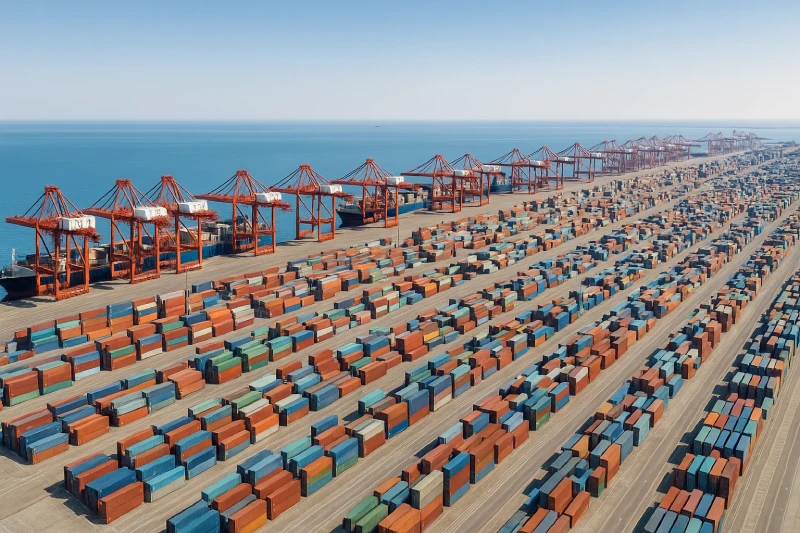
Tianjin Port is the largest comprehensive seaport in Northern China and the primary gateway for exporting goods from Beijing, Tianjin, and the wider Bohai Rim manufacturing zones. It offers fast, reliable connections to Europe, the Middle East, Southeast Asia, Russia, and Central Asia, supported by strong FCL/LCL capacity, advanced container terminals, and one of China’s most important Ro-Ro hubs for vehicles and heavy machinery.
Thanks to the Dongjiang Free Trade Port Zone, exporters benefit from flexible bonded warehousing, competitive LCL services, and streamlined customs procedures—making the port especially attractive for EVs, batteries, machinery, steel products, and chemical goods.
Typical transit times include:
• Europe: 30–38 days
• Middle East: 18–25 days
• Southeast Asia: 7–12 days
• Russia (Far East): 5–10 days
If you need a reliable logistics partner to ship from Tianjin Port, Winsail provides FCL, LCL, Ro-Ro, and multimodal solutions tailored to global destinations.
Tianjin Port vs Tianjin Xingang: What’s the Difference?
Tianjin Port is the official name of the entire port complex and the largest comprehensive seaport in Northern China. Within this system, the main operating area for international container shipping is known as Tianjin Xingang. In global shipping platforms, cargo documents, booking systems, and vessel schedules, the port of loading is typically listed as “Xingang” or by its LOCODE CNTXG.
In practical logistics terms, when exporters and freight forwarders refer to shipping “from Tianjin,” they almost always mean Tianjin Xingang, because this is where the major container terminals, Ro-Ro facilities, bonded warehouses, and the Dongjiang Free Trade Port Zone are located.
Throughout this guide, we use “Tianjin Port” as the overarching name, while pointing out operational details specific to Tianjin Xingang, the port’s primary gateway for international exports.
Port Terminals and Facilities
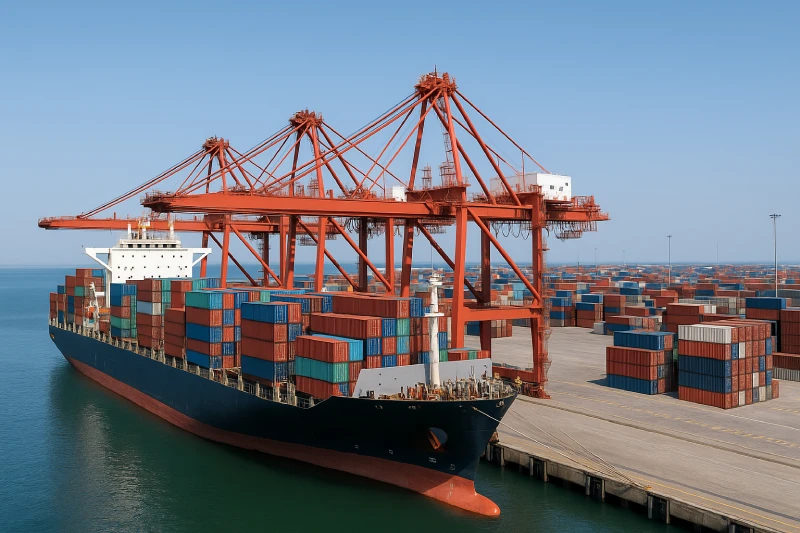
Tianjin Port consists of several major port areas, each serving different types of cargo and logistics needs. Among them, Tianjin Xingang is the core zone for international container shipping, Ro-Ro operations, and bonded logistics services. The port’s modern infrastructure and deep-water berths allow it to handle large container vessels and heavy equipment efficiently throughout the year.
1. Beijiang Port Area
This is the main container-handling area of Tianjin Port, equipped with multiple deep-water berths capable of accommodating large international vessels. The terminals here use advanced gantry cranes, automated systems, and efficient yard layouts to support high container throughput. Most FCL and LCL shipments from Tianjin factories are loaded in Beijiang.
2. Nanjiang Port Area
Nanjiang focuses on bulk cargo, breakbulk, steel products, building materials, timber, and chemical goods. Its specialized berths, pipelines, and storage facilities make it ideal for industries such as metallurgy, construction, and chemicals. Exporters of bulk commodities often rely on Nanjiang due to its operational flexibility and handling capacity.
3. Dongjiang Free Trade Port Zone
A major advantage of Tianjin Port is the Dongjiang Free Trade Port Zone, one of China’s most active bonded logistics areas.
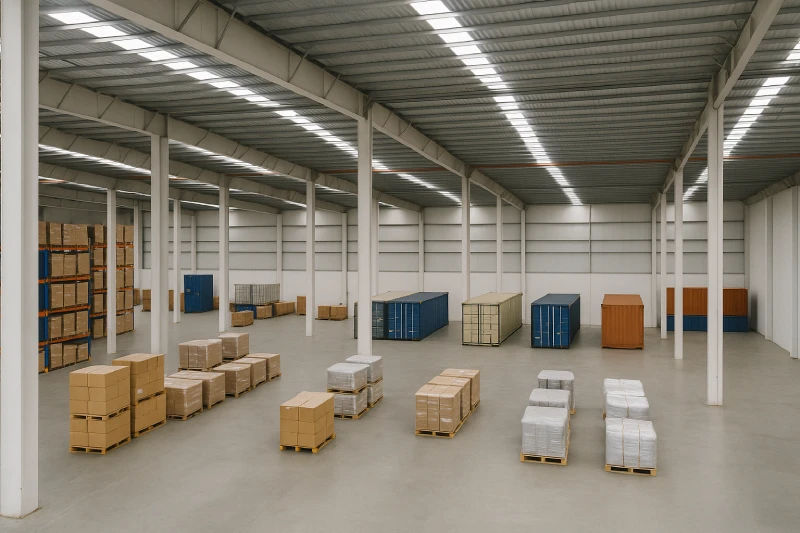
It provides bonded warehousing, short-term storage, inventory consolidation, labeling, repacking, and cross-border e-commerce services. LCL shipments, small-batch exports, and value-added logistics operations are highly efficient here, making it ideal for SMEs and e-commerce sellers.
4. Ro-Ro Terminals
Tianjin Port is one of China’s leading hubs for Ro-Ro cargo, especially for vehicles, trucks, buses, and engineering machinery. The large Ro-Ro berths in Xingang support fast loading/unloading and are widely used by automotive manufacturers across Beijing, Tianjin, and Hebei.
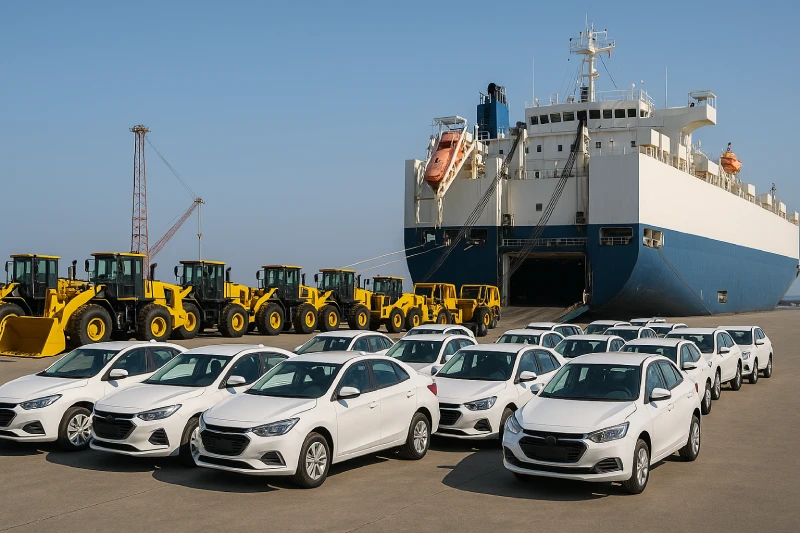
Together, these port areas give Tianjin Port the versatility needed to support containerized goods, heavy machinery, vehicles, chemicals, and bulk commodities—all within a highly connected logistics ecosystem.
Main Export Commodities
Tianjin Port supports a wide range of export goods from the Beijing–Tianjin–Hebei region, making it one of Northern China’s most versatile logistics hubs. Its container terminals, bonded logistics facilities, and Ro-Ro berths allow the port to handle both high-value manufactured products and large industrial equipment with efficiency and reliability.

1. Electric Vehicles (EVs) & EV Components
One of Tianjin Port’s fastest-growing export categories is new energy vehicles, supported by major EV production bases in Tianjin and Hebei. The port also handles large volumes of lithium batteries, battery packs, charging equipment, and related components—many of which take advantage of Dongjiang’s bonded warehousing before export.
2. Machinery & Heavy Equipment
Manufacturers across Beijing, Tianjin, and Hebei ship construction machinery, industrial equipment, compressors, pumps, CNC machines, forklifts, and agricultural machines through Tianjin Port. The availability of Ro-Ro berths makes it particularly suitable for oversized or self-propelled equipment.
3. Steel, Metals & Building Materials
As a traditional industrial base, the region around Tianjin produces large amounts of steel coils, metal structures, pipes, and building materials. These commodities are frequently shipped via Tianjin’s bulk and breakbulk terminals.
4. Electronics & Light Industrial Products
Factories in Tianjin, Beijing’s manufacturing zones, and Hebei’s light industrial clusters commonly export electronics, home appliances, lighting products, packaging materials, textiles, toys, and small consumer goods.
5. Chemicals (Non-hazardous)
Tianjin Port also exports various non-hazardous chemicals, plastics, and industrial raw materials, thanks to specialized storage facilities in Nanjiang Port Area.
Together, these commodities reflect the diversity of the regional supply chain and explain why Tianjin Port—especially the Xingang terminals—remains one of Northern China’s most important gateways for global trade.
Key Trade Routes & Destinations
Tianjin Port connects Northern China’s manufacturing base with major global markets through an extensive network of ocean routes and multimodal corridors. Its strategic location in the Bohai Rim, combined with strong cooperation between container terminals and inland depots, allows exporters to reach Europe, the Middle East, Southeast Asia, Russia, and Central Asia with competitive transit times.
1. Europe Routes
Europe is one of Tianjin Port’s busiest trade lanes, especially for electric vehicles, machinery, and steel products. Regular services connect Xingang with major European hubs such as Rotterdam, Hamburg, Antwerp, and Piraeus. Compared with shipping from ports in Southern China, Tianjin’s distances to North Europe routes are often shorter, offering stable transit times of around 30–38 days.
2. Middle East Routes
Tianjin Port maintains frequent services to the UAE, Saudi Arabia, Qatar, Oman, and Kuwait. Exporters of construction machinery, automotive parts, home appliances, and building materials heavily rely on this route. Strong demand in Dubai, Jebel Ali, and Dammam has made Tianjin–Middle East one of the most active lanes for Northern China manufacturers.
3. Southeast Asia Routes
With short transit times (typically 7–12 days), Southeast Asia is a preferred market for consumer goods, electronics, packaging materials, and light industrial products shipped from Tianjin. Services to Vietnam, Thailand, Malaysia, Singapore, and Indonesia run frequently throughout the year.
4. Russia & Far East Routes
Tianjin Port plays a key role in connecting China to Russia’s Far East ports such as Vladivostok and Vostochny. This lane is widely used for steel, machinery, and general cargo. The region’s strong industrial ties and geographic proximity make Tianjin a natural gateway for Northern China–Russia trade.
5. Central Asia Multimodal Routes
Beyond sea freight, Tianjin Port is a major starting point for China’s Belt and Road multimodal transport network. Exporters shipping to Kazakhstan, Uzbekistan, Kyrgyzstan, or Turkmenistan can combine sea freight, rail, and trucking through dedicated inland depots and bonded transport corridors. This makes Tianjin one of China’s most important hubs for Central Asian supply chains.
Together, these routes reinforce Tianjin Port’s status as a global logistics hub capable of serving both traditional ocean freight markets and emerging inland economies.
Transit Time Table(China → Global Regions)
Transit times from Tianjin Port vary depending on destination, carrier schedules, transshipment hubs, and seasonal factors, but overall the port maintains competitive lead times thanks to its well-developed shipping network and frequent services to major global markets.
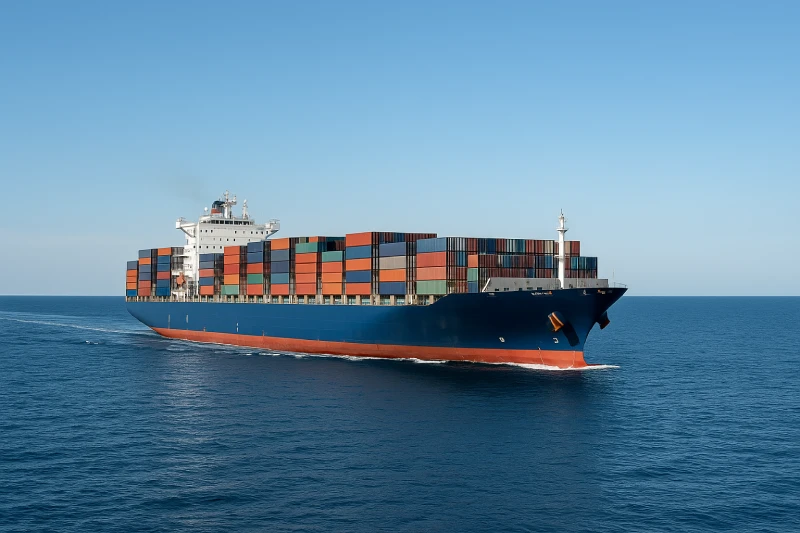
The table below summarizes typical FCL and LCL transit times from Tianjin Xingang to key destinations across Europe, the Middle East, Southeast Asia, and Russia.
Typical Transit Times from Tianjin Port
| Destination Region | Major Ports | FCL Transit Time | LCL Transit Time |
|---|---|---|---|
| Europe (North EU) | Rotterdam, Hamburg, Antwerp | 30–38 days | FCL + 3–5 days |
| Europe (South EU) | Piraeus, Valencia | 32–40 days | FCL + 3–6 days |
| Middle East | Jebel Ali, Dammam, Doha | 18–25 days | FCL + 3–5 days |
| Southeast Asia | Ho Chi Minh, Bangkok, Port Klang, Singapore | 7–12 days | FCL + 3–4 days |
| Russia (Far East) | Vladivostok, Vostochny | 5–10 days | FCL + 2–3 days |
| South Asia | Karachi, Nhava Sheva | 20–28 days | FCL + 3–5 days |
| Africa (East Africa) | Mombasa, Dar es Salaam | 25–32 days | FCL + 3–6 days |
What affects these transit times?
- Carrier schedule & weekly frequency
Some lanes, such as Europe and the Middle East, have more frequent sailings. - Transshipment hubs
Certain lanes reload in Busan, Singapore, or Port Klang. - Seasonal factors
Peak seasons like Q4 may lengthen transit times. - Weather and port congestion
Particularly relevant for long-haul Europe routes.
How to get an accurate schedule?
Since transit times depend on shipping line and vessel arrangement, exporters often request a real-time sailing schedule before booking. Winsail can provide up-to-date route options, earliest available vessel ETD, and optimized cost–time combinations based on your cargo and destination.
Advantages vs Other Ports
Tianjin Port offers several strategic advantages compared with other major ports in China, especially for exporters located in the Beijing–Tianjin–Hebei region. Its combination of container capacity, bonded logistics resources, multimodal connectivity, and strong Ro-Ro facilities makes it a highly competitive gateway for diverse export needs.
1. Compared with Shanghai / Ningbo
For factories in Northern China, shipping through Tianjin Port generally provides:
- Shorter inland transport distance for cargo originating from Beijing, Tianjin, and Hebei
- Lower trucking costs due to proximity to regional industrial zones
- More flexible LCL and bonded operations through the Dongjiang Free Trade Port Zone
- Competitive total lead times on Europe and Middle East routes
While Shanghai and Ningbo serve massive export volumes, Tianjin is often the more economical and efficient choice for businesses based in Northern China.
2. Compared with Qingdao / Dalian
Tianjin Port maintains:
- A denser global route network, especially toward Europe and the Middle East
- One of China’s strongest Ro-Ro terminals, ideal for vehicles and engineering machinery
- More advanced bonded warehousing for e-commerce, small-batch exports, and consolidation
- Better access to inland depots connected to Beijing and Hebei factories
These advantages make Tianjin more suitable for industries that require both ocean freight and value-added logistics services.
3. Unique Strengths of Tianjin Port
- Core multimodal hub for Central Asia and Belt and Road routes
- Leading export gateway for EVs, batteries, machinery, and steel products
- Excellent handling capacity for oversized, heavy, or self-propelled cargo
- Year-round ice-free deep-water port, ensuring stable sailing schedules
Overall, Tianjin Port delivers an optimal balance of cost, speed, and operational flexibility—making it the preferred export gateway for Northern China’s manufacturing supply chain.
Nearby Manufacturing Hubs
Tianjin Port serves as the primary export gateway for the Beijing–Tianjin–Hebei economic region, one of China’s most important industrial corridors. Its strong inland connectivity allows goods from multiple high-value manufacturing zones to reach the port efficiently through highway, rail, and inland container depots. Understanding these surrounding hubs helps exporters and buyers identify why Tianjin Port is especially competitive for machinery, EVs, metals, and light industrial goods.
1. Tianjin (Binhai New Area) — EVs, Batteries & High-End Manufacturing
Tianjin’s Binhai New Area hosts major production bases for:
- New energy vehicles (EVs)
- Lithium batteries and energy-storage components
- Machinery and industrial equipment
- Aerospace and high-tech electronics
The close distance between these factories and Tianjin Xingang greatly lowers trucking costs and improves export lead times. Many manufacturers also use the Dongjiang Free Trade Port Zone for bonded warehousing and consolidation before shipping.
2. Beijing (Yizhuang Economic & Technological Development Zone) — Electronics & Smart Manufacturing
Beijing’s Yizhuang Development Zone is a major center for:
- Consumer electronics
- Medical equipment
- ICT hardware
- Intelligent manufacturing
These goods often require strict handling, fast documentation, and reliable scheduling—all of which Tianjin Port provides through stable sailing frequencies and advanced container terminals.
3. Hebei Province — Steel, Furniture, Textiles & Light Industry
Hebei offers a vast industrial base, with key clusters including:
- Tangshan / Handan / Shijiazhuang: steel, metal products, building materials
- Langfang / Cangzhou / Baoding: furniture, home goods, packaging materials
- Shijiazhuang / Xingtai: pharmaceuticals and textiles
These cities are only a few hours from Tianjin Port, making it the most cost-effective option for bulk cargo, steel products, and high-volume light industrial goods.
Why these hubs matter
The diversity of this supply chain—ranging from high-value tech products to heavy industrial equipment—enables Tianjin Port to support a wide spectrum of exports. Its geographical advantage, combined with multimodal infrastructure, ensures fast cargo movement from factories to global destinations.
Best Shipping Mode: FCL / LCL / Ro-Ro / Bulk
Tianjin Port supports a wide range of shipping modes to accommodate different cargo types and export needs. Its container terminals, bonded logistics facilities, and specialized berths allow exporters to choose the most suitable and cost-efficient transport method based on cargo volume, size, and destination.
1. FCL (Full Container Load)
FCL is the most common shipping mode from Tianjin Xingang, ideal for manufacturers shipping machinery, vehicles, EV components, metals, and large batches of consumer goods. Tianjin’s deep-water berths and frequent sailings to Europe and the Middle East provide competitive cut-off times and predictable schedules. For factories in Beijing, Tianjin, and Hebei, FCL can significantly reduce inland trucking costs compared with routing through Shanghai or Ningbo.
2. LCL (Less than Container Load)
Tianjin Port offers strong LCL capabilities, especially through the Dongjiang Free Trade Port Zone, which provides bonded consolidation, flexible cargo handling, and efficient customs clearance. This makes LCL a popular choice for SMEs, cross-border e-commerce sellers, and exporters of electronics, home appliances, and light industrial items. The port’s bonded warehouses allow exporters to store, sort, and combine multiple SKUs before shipping.
3. Ro-Ro (Roll-on/Roll-off)
Ro-Ro is one of Tianjin Port’s signature strengths. The Xingang Ro-Ro terminals handle large volumes of cars, trucks, buses, agricultural machinery, and construction equipment. Self-propelled cargo can be driven directly onto the vessel, reducing lifting risks and improving loading efficiency. This shipping mode is widely used for exports to the Middle East, Africa, and Southeast Asia.
4. Bulk & Breakbulk Cargo
For heavy industries in Hebei and Tianjin, bulk and breakbulk shipping remain essential. The port’s specialized berths and yards can handle steel coils, pipes, metal structures, minerals, timber, and building materials, making it a reliable hub for oversized or non-containerized goods.
Whether shipping containers, vehicles, machinery, or industrial commodities, Tianjin Port provides a versatile set of shipping modes that align well with the diverse manufacturing base of Northern China.
Freight Example
A typical export shipment from Tianjin Port begins with cargo pick-up or factory delivery from Tianjin, Beijing, or Hebei. After arriving at the Tianjin Xingang container yard, the goods undergo documentation checks, customs declaration, and loading arrangements. For machinery and industrial equipment, shippers may choose FCL or Ro-Ro depending on cargo dimensions and operational needs.
One recent example involves exporting construction machinery to the UAE. The cargo was consolidated at a bonded warehouse in the Dongjiang Free Trade Port Zone, handled through pre-shipment inspection, and loaded via Ro-Ro for safer movement. The shipment reached Jebel Ali Port within 20 days, providing the client with a fast and cost-efficient logistics solution.
For more examples of real Tianjin Port shipments—including machinery, automotive parts, and mixed cargo—you can explore our dedicated case studies to understand how Winsail manages end-to-end logistics from Northern China.
Link to Case Study
- Ocean Freight Service Clear Float Glass From Tianjin to Dammam
- Ocean Freight Service Network Cabinet From Tianjin To Jeddah
- ocean freight service rotary cement powder packing machine from tianjin to tema
FAQ
1. Is Tianjin Port the same as Tianjin Xingang?
Not exactly. “Tianjin Port” refers to the entire port complex, while “Tianjin Xingang” is the primary container and Ro-Ro port area used for most international shipments. On shipping documents and schedules, the port is usually listed as Xingang (CNTXG).
2. Is Tianjin Port suitable for exporting machinery and heavy equipment?
Yes. Tianjin is one of China’s leading ports for machinery exports. Its Ro-Ro terminals and heavy-lift berths make it highly suitable for construction machines, vehicles, industrial equipment, and other oversized cargo.
3. How long does it take to ship from Tianjin Port to Europe or the Middle East?
Typical transit times are 30–38 days to Northern Europe and 18–25 days to major Middle Eastern ports such as Jebel Ali and Dammam. Actual times depend on carrier schedules and seasonal conditions.
4. Does Tianjin Port support DDP shipping services?
Yes. DDP is available for many destinations when combined with inland trucking, export customs services, international freight, and final-mile delivery. Winsail can provide tailored DDP quotes based on your cargo and destination.
5. What goods are most commonly exported through Tianjin Port?
Main export categories include EVs, batteries, machinery, steel products, chemicals (non-hazardous), electronics, textiles, furniture, and various light industrial goods.
6. Is LCL shipping reliable from Tianjin Port?
Absolutely. With Dongjiang Free Trade Port Zone’s bonded warehouses, LCL shipments are efficient and flexible—ideal for SMEs and e-commerce sellers who need consolidation and value-added logistics services.
Get Professional Shipping Support from Tianjin Port
If you are planning to ship goods from Tianjin Port or Tianjin Xingang, our team at Winsail Logistics can provide tailored solutions for FCL, LCL, Ro-Ro, bulk cargo, and multimodal transport. We handle factory pick-up, customs clearance, container loading, documentation, and international freight with reliable schedules and transparent pricing.
Contact us today for a fast quotation and expert guidance on the best shipping option for your cargo and destination.
