
Why US Customs Delays Happen More Often Than You Think
Shipping goods from China to the United States has never been easier in terms of transportation speed — yet customs clearance remains one of the biggest pain points for importers. Every year, thousands of shipments are held, examined, or delayed by U.S. Customs and Border Protection (CBP), often catching first-time importers and e-commerce sellers off guard.
A customs delay does not always mean something is “wrong,” but it always means lost time and additional cost. Even a short hold can disrupt your inventory flow, delay Amazon FBA restocking, increase detention and demurrage fees, or push back product launch deadlines. For businesses depending on fast turnover, these delays can quickly snowball into major financial impact.
Most delays are caused by documentation issues, misclassification, regulatory mismatches, late ISF filing, or random CBP inspections — all of which can be avoided or minimized with proper preparation. This guide breaks down why US customs delays happen, how long each type typically lasts, and the exact steps you can take to prevent them, ensuring your shipment enters the U.S. smoothly and without unnecessary risks.
The Most Common Reasons Your Shipment Gets Delayed by US Customs
When a shipment arrives in the United States, CBP evaluates it using a combination of automated risk systems, documentation review, and potential physical examinations. Most delays are not accidental — they are triggered by identifiable risk factors.
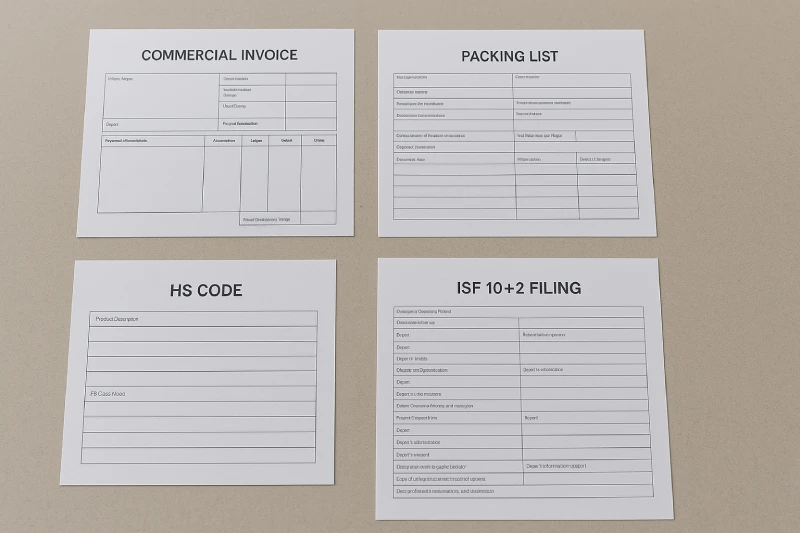
Understanding these reasons helps importers prevent delays long before the cargo departs from China.
1. ISF Filing Errors or Late Filing
The Importer Security Filing (ISF 10+2) must be submitted at least 24 hours before the vessel departs from China. Late or inaccurate submission almost guarantees a delay.
Common problems include mismatched data, missing seller or buyer information, and incorrect container stuffing details.
Even without penalties, CBP may hold the container for 1–7 days while verifying cargo information.
2. Incorrect HS Code or Misclassification
HS code mistakes immediately raise red flags within CBP’s Automated Targeting System.
If the declared code does not match the product’s appearance, material, or function, CBP may suspect misclassification or undervaluation.
This often leads to X-ray exams, tailgate checks, or even intensive inspections.
High-risk categories include electronics, machinery parts, textiles, furniture, and products subject to AD/CVD duties.
3. Missing or Inaccurate Commercial Invoice or Packing List
Incomplete or inconsistent documentation is one of the most common causes of delays.
CBP looks for clear descriptions, accurate quantities, correct unit value, and consistent HS classification.
Problems such as vague descriptions (“gift,” “sample,” or “plastic item”), mismatched quantities, or unrealistic declared value can cause officers to halt the release for manual review. This typically adds 2–5 days to the clearance time.
4. Random CBP Inspections (VACIS X-ray, Tailgate, Intensive Exam)
Even compliant shipments may be selected for random inspection:
- VACIS X-ray (1–3 days): Non-invasive scan; delays occur if anomalies are found.
- Tailgate Exam (3–7 days): Officers open the container without unloading cargo.
- Intensive Exam (7–21 days): Full unpacking at a CFS warehouse; highest cost and longest delay.
Although labeled “random,” CBP’s selection is influenced by risk patterns, product category, value accuracy, and importer history.
5. FDA / FCC / EPA / USDA Additional Reviews
Products requiring additional federal agency approval are much more likely to be delayed. Examples include:
- FDA: food, supplements, cosmetics, medical devices
- FCC: electronics with wireless components
- EPA: chemicals, pesticides
- USDA: wooden products, plants, seeds
Even a small discrepancy — such as missing ingredient labels, unclear product specs, or lack of certification — can place your cargo under review for 5–14 days.
6. Trademark, Copyright, or Brand Infringement Hold
CBP actively protects intellectual property rights.
If your shipment contains branded items, packaging resembling known trademarks, or products commonly counterfeited, CBP may place the shipment under a rights-holder review.
This type of hold often requires proof of authorization, invoices, photos, or brand-owner letters, potentially delaying release for 1–4 weeks.
Amazon and Shopify sellers are particularly vulnerable when importing private-label products that unintentionally resemble well-known designs.
7. Anti-Dumping / Countervailing Duty (AD/CVD) Concerns
Products subject to AD/CVD — such as steel, aluminum, furniture, and solar panels — receive strict scrutiny.
If CBP suspects the goods fall under an AD/CVD order, they may hold the shipment while verifying classification and country of origin.
This can create substantial delays and financial exposure because AD/CVD duties can exceed 100%–200% of the product value.
8. Port Congestion or CBP Backlogs
During peak seasons (July–October), holiday rush, or labor shortages, both ports and CBP examination stations experience bottlenecks.
Even if documentation is perfect, your shipment may wait in line for several days before an officer reviews it. West Coast ports historically experience the longest backlogs.
9. Suspicious Shipment Profile (High-Risk Indicators)
CBP uses behavioral and statistical profiling to identify risky shipments. A shipment may be flagged if:
- The importer is new or has no prior history
- Declared value appears unusually low
- Product description is vague
- Supplier has a history of non-compliance
- The goods are from a high-risk category
These factors increase the likelihood of X-ray or intensive inspection, leading to unpredictable delays.
How Long Do US Customs Delays Usually Last?
Not all customs delays are the same. Some issues, such as a minor documentation mismatch, can be resolved within a day, while others — like an intensive exam or a multi-agency review — may extend the clearance timeline by weeks. Understanding the typical duration of each type of hold helps importers set realistic expectations and plan inventory more accurately.
In general, CBP delays fall into three categories:
- Administrative Delays (caused by paperwork inconsistencies)
- Inspection-Based Delays (triggered by CBP or third-party agencies)
- Risk-Based or Regulatory Delays (AD/CVD concerns, trademark issues, FDA reviews)
The duration depends on port workload, exam station backlog, importer history, product category, and whether additional documentation is required. While some holds can be released quickly once the importer provides correct information, others — like intensive exams or trademark verification — may be unavoidable.
Below is a realistic timeline for the most common types of US customs delays.
Typical Customs Holds and Expected Delay Time
| Customs Hold Type | Typical Delay | Notes |
|---|---|---|
| ISF Late Filing | 1–7 days | Higher risk of inspection; penalties possible |
| VACIS X-ray Exam | 1–3 days | Faster if no anomalies appear |
| Tailgate Exam | 3–7 days | Container opened but not unloaded |
| Intensive Exam | 7–21 days | Full CFS unloading; highest cost & longest delay |
| FDA Review | 5–14 days | Depends on product documentation & labeling |
| Trademark / Brand Hold | 7–30 days | Requires proof of authorization or brand verification |
How to Prevent US Customs Delays (Actionable Strategies)
While some customs delays—such as random inspections—are outside of your control, most delays are completely avoidable with proper preparation. The key is to eliminate the red flags that trigger CBP scrutiny and ensure all documents, classifications, and regulatory requirements are handled correctly before the shipment departs China.
Below are the most effective strategies to reduce the chance of a customs hold.
1. Prepare Accurate & Complete Documentation
Documentation is the foundation of smooth customs clearance. Before your cargo ships, ensure the following documents are consistent and error-free:
- Commercial Invoice (accurate value, clear product description, correct HS code)
- Packing List (matching quantities, weights, and dimensions)
- Bill of Lading / Air Waybill
- Any certificates required for specific products (MSDS, FDA forms, FCC test reports, fumigation certificates, etc.)
A good practice is to include product photos in your documentation packet. This helps officers quickly verify product identity and reduces the likelihood of physical inspections.
2. Classify Your HS Code Properly Before Shipping
Incorrect HS codes are one of the most common triggers for customs delays.
Before exporting from China:
- Confirm the correct U.S. HTS code, not just the Chinese HS code.
- Check if the product is subject to AD/CVD, special tariffs, or additional agency requirements.
- Ask a licensed customs broker to review classification if your product is complex.
Pre-classifying your goods eliminates guesswork and significantly reduces delay risks.
3. Submit ISF Early (Not Last Minute)
For ocean shipments, ISF 10+2 must be submitted at least 24 hours before vessel departure.
To avoid last-minute mistakes:
- Submit ISF 48–72 hours early whenever possible.
- Let your freight forwarder file ISF on your behalf for accuracy.
- Ensure supplier-provided details (packing list, container details) are correct.
Even a single typo—such as a wrong address or incorrect stuffing location—can push your shipment into a higher-risk category.
4. Work Only with Compliant, Experienced Suppliers
Many delays originate at the supplier level. Risks increase when suppliers:
- Under-declare the product value
- Use vague item descriptions
- Pack irregularly or without required compliance markings
- Provide inaccurate packaging information
Before you work with a supplier long-term, verify they understand U.S. import standards and can consistently provide correct documentation and compliant labeling.
5. Double-Check Regulatory Requirements (FDA / FCC / EPA / USDA)
Every product category has different rules. For example:
- Electronics require FCC testing
- Cosmetics and supplements fall under FDA rules
- Chemical products may need EPA compliance
- Wooden goods must meet USDA fumigation standards
Missing certificates or unclear labeling almost always leads to additional review and delays. Ask your freight forwarder which regulations apply before production, not after shipping.
6. Avoid Undervaluation or Vague Product Descriptions
CBP scrutinizes shipments with suspiciously low declared values. Undervaluation may result in:
- Immediate holds
- Additional requests for proof of transaction
- Higher inspection probability
- Potential fines or penalties
Always declare realistic, market-appropriate values.
Avoid vague descriptions such as “parts,” “gifts,” or “samples.” Instead, use precise descriptions (e.g., “plastic kitchen utensil set, 24 pcs”).
7. Use a Reliable Freight Forwarder to Monitor Compliance
Working with an experienced freight forwarder ensures:
- Document accuracy checks
- HS code validation
- Proper ISF filing
- Regulatory requirement review
- Pre-alert communication with brokers
- Faster resolution when CBP requests additional information
A knowledgeable logistics partner can significantly lower inspection risks and keep your shipment moving smoothly through U.S. ports.
FAQs
1. What happens when CBP holds my shipment?
CBP may place the shipment under documentation review, X-ray, or physical inspection. Your broker or forwarder will receive updates.
2. Does CBP notify importers directly?
Usually no. Communication goes through your customs broker or freight forwarder.
3. How much does a customs exam cost?
VACIS, tailgate, and intensive exams may cost anywhere from $100 to over $1,000, depending on the port and warehouse fees.
4. Can I speed up a customs examination?
You cannot shorten the exam itself, but you can speed resolution by quickly providing any documents CBP requests.
5. Why does FDA hold shipments even if documents seem complete?
FDA often verifies labeling accuracy, ingredient lists, product claims, and compliance documentation beyond the commercial invoice.
6. Does undervaluation always trigger delays?
Not always, but it dramatically increases the chance of inspection because CBP monitors pricing anomalies closely.
7. What documents help reduce the chance of delay?
A complete invoice, accurate HS code, packing list, product photos, and any required certificates.
Reduce Risks with Proper Preparation & Expert Support
U.S. customs delays can disrupt your supply chain, increase unexpected costs, and create serious challenges for inventory planning—especially for fast-moving e-commerce businesses. While some inspections are unavoidable, most delays stem from avoidable issues such as incomplete documentation, incorrect HS codes, late ISF filing, or missing regulatory certifications.
By preparing accurate paperwork, understanding the regulations that apply to your product, and working with reliable suppliers, you can significantly reduce the likelihood of holds or extended reviews. The key is to identify potential risks before your shipment departs from China.

If you want smoother, faster, and more predictable customs clearance, Winsail Logistics can support you with document review, HS code guidance, ISF filing, and end-to-end freight solutions for shipping from China to the USA. With the right preparation and the right partner, customs delays don’t have to slow your business down.
