
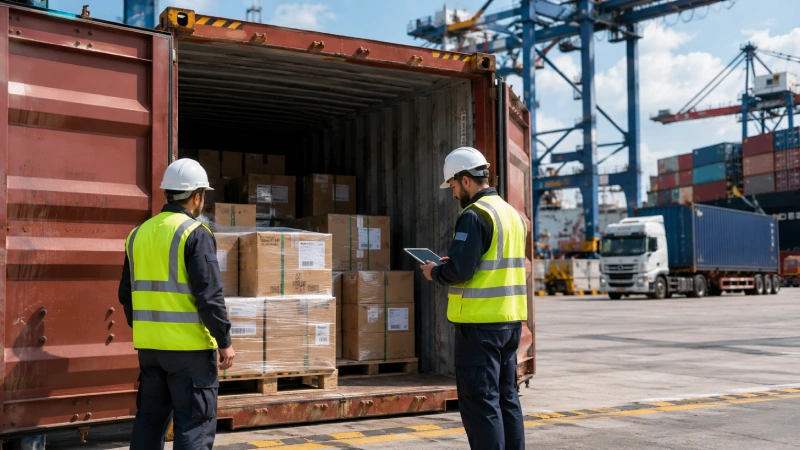
When planning shipping from China to USA, importers should consider more than freight cost and normal transit time. Cargo may reach the US port or airport on schedule but remain unavailable because US Customs and Border Protection (CBP), another government agency, the customs broker, the carrier, or the terminal requires additional action.
A tracking message such as “customs delay” does not always mean officers are physically inspecting the shipment. The cargo may be waiting for documents, an entry correction, agency review, examination transfer, duty payment, carrier release, or terminal availability. The correct response begins with identifying the exact status, the party controlling the next step, and the evidence that party needs.
Is the Shipment Actually Held by US Customs?
Importers often call every destination delay a customs hold. In practice, several different situations can create the same visible symptom.
| Visible symptom | Possible cause | Who should confirm it | Immediate action |
|---|---|---|---|
| Entry has not been released | CBP review, data question, or examination | Licensed customs broker | Obtain the exact hold status |
| Another agency is reviewing the goods | FDA, USDA, CPSC, EPA, or another product requirement | Broker or responsible agency | Identify the product-specific request |
| CBP released the cargo, but pickup is unavailable | Carrier, terminal, payment, or equipment issue | Forwarder, carrier, or terminal | Confirm every non-customs release condition |
| Broker says information is missing | Importer setup or document problem | Customs broker | Provide the specific evidence requested |
| Container is moving to an examination facility | Physical or non-intrusive examination | Broker, carrier, or facility | Track transfer, charges, and free time |
A government hold generally requires a release decision from CBP or a partner agency. A carrier or terminal hold can remain after government release because charges are unpaid, the bill of lading has not been released, the terminal has not made the container available, or a pickup appointment is unavailable.
Do not accept “customs is checking it” as a complete update. Ask for the responsible agency, entry and bill references, cargo location, exact request, response deadline, and last free day.
CBP may examine imported merchandise as part of its enforcement and security responsibilities. Selection does not prove that the importer violated a rule, and correctly declared cargo may still be examined. Importers can review the current CBP cargo examination guidance.
Who Is Responsible for Resolving the Delay?
Importer of Record
The Importer of Record is responsible for supporting the declared classification, value, origin, and admissibility of the goods. Appointing a broker does not remove the importer’s obligation to provide complete and accurate information.
The importer must also obtain supplier cooperation when CBP or another agency needs manufacturing, valuation, labeling, origin, or product-composition evidence.
Licensed Customs Broker
The broker normally reviews government messages, prepares or corrects entry data where permitted, submits supporting information, and explains what the importer must provide.
When the broker requests information, confirm what triggered the request, which document or data field is missing, who must prepare it, how it will be submitted, and whether a deadline applies.
Freight Forwarder, Carrier, Terminal, and Supplier
The forwarder coordinates transportation and operational communication. The carrier manages transportation and certain release conditions. The terminal or examination facility controls physical availability.
The Chinese supplier may need to provide detailed descriptions, specifications, manufacturer information, labeling photographs, origin evidence, packing details, and traceability records. Delays often become longer when supplier documents conflict with the original shipment data.
Common Causes of Customs Delays
Incomplete or Inconsistent Commercial Documents
Commercial invoice problems are among the most preventable causes of additional review. Descriptions such as “parts,” “accessories,” “samples,” or “plastic products” may not identify the merchandise clearly enough.
A useful description should state the product in plain language and, where relevant, include its material, function, model, and intended use. The invoice, packing list, purchase order, payment record, and transport document should agree on product name, quantity, value, currency, package count, weight, shipper, and consignee.
The guide to documents required to import from China to the USA explains preparation in more detail. For delay prevention, the essential control is to use the same verified shipment data across every document and filing.
Incorrect HTS Classification
A supplier’s six-digit HS code is not automatically a complete US classification. The US Harmonized Tariff Schedule uses additional digits and may distinguish goods by material, construction, function, or intended use.
If the classification conflicts with the invoice or specifications, the broker may need technical details before filing or responding to CBP. Importers should consult the current USITC Harmonized Tariff Schedule rather than relying on an old code or permanent rate table.
Customs Valuation Questions
Additional review may occur when the declared value appears inconsistent with the product, quantity, payment record, or commercial arrangement. The importer may need purchase orders, contracts, payment proof, supplier invoices, discount explanations, or information about tooling and materials supplied to the factory.
A low price is not automatically noncompliant, but the importer should be able to document how the declared value was determined.
Late or Inaccurate ISF Information
For applicable ocean shipments, Importer Security Filing information must be prepared before loading at the foreign port. CBP currently states that the principal importer data elements are generally due no later than 24 hours before cargo is laden aboard a vessel bound for the United States.
Importers should verify current requirements in the official CBP Importer Security Filing guidance. An ISF can be filed on time and still create risk when supplier, manufacturer, consignee, or bill-of-lading data is inaccurate.
Country-of-Origin and Marking Problems
Goods may be delayed when the product is unmarked, the origin mark is hidden, the declared origin conflicts with manufacturing records, or a supplier claims another origin based only on routing or minor processing.
Importers should not change the declared origin simply because cargo moves through a third country. Complex origin questions may require qualified customs advice.
Product-Agency Holds and Inspection Risks
FDA-Regulated Products
FDA jurisdiction can apply to food, beverages, cosmetics, medical devices, drugs, and radiation-emitting products. Importers should determine before departure whether the manufacturer, product, labeling, registration, or entry data is subject to an FDA requirement.
Products or firms covered by an Import Alert may be subject to Detention Without Physical Examination. The current FDA Import Alerts database should be checked for the specific product and manufacturer.
Wood Packaging and Agricultural Risks
Solid-wood pallets, crates, skids, and dunnage can create agricultural compliance risks. USDA APHIS requires regulated wood packaging entering or transiting the United States to meet applicable ISPM 15 treatment and marking requirements.
Importers should review the current USDA APHIS wood packaging requirements and obtain clear photographs of pallets and treatment marks before loading. Noncompliant packaging may lead to safeguarding, treatment, destruction, or re-export instructions.
Intellectual Property and Traceability
Branded goods, copyrighted designs, and trademarked packaging may require proof that the supplier is authorized to manufacture or export them. Useful evidence can include licensing agreements, private-label contracts, purchase records, and packaging photographs.
Supply-chain traceability may also be required for products or materials affected by forced-labor enforcement. An invoice from a trading company may not be sufficient when authorities request information about the actual factory or upstream source.
What Happens During a Cargo Examination?
Depending on official instructions and local procedures, cargo may be reviewed through documents, imaging, seal checks, limited access, sampling, or a more extensive physical examination.
A container may need to be transferred to an authorized facility, opened, unloaded, or presented for inspection. There is no reliable universal examination timeline. Duration may depend on:
- examination type;
- cargo availability;
- facility workload;
- transfer arrangements;
- partner-agency involvement;
- laboratory testing;
- importer response time;
- quality of supporting evidence.
Importers should avoid guaranteeing delivery until government release, carrier release, and physical availability have all been confirmed.
What to Do When a Shipment Is Held
1. Obtain the Exact Status
Ask for the hold description, responsible agency, entry and bill references, cargo location, requested action, response deadline, last free day, and examination-transfer status.
2. Assign One Response Owner
Designate one person to coordinate the broker, forwarder, supplier, finance team, and specialist advisers. Multiple employees sending different explanations can create contradictions.
3. Build a Targeted Evidence Packet
Depending on the issue, the response may include:
- corrected invoice or packing list;
- purchase order and contract;
- proof of payment;
- product specifications and photographs;
- bill of materials;
- manufacturer or supplier declaration;
- origin and marking evidence;
- agency registration or permit information;
- wood-treatment evidence;
- supply-chain records.
Submit the evidence requested for the stated issue rather than an unstructured folder of unrelated files.
4. Respond Through the Correct Channel
Coordinate corrections through the licensed customs broker, designated agency system, legal representative, or official contact named in the notice. Do not issue a new invoice or alter a product description independently without checking how the correction affects the entry.
5. Manage Logistics Costs in Parallel
Track terminal free time, storage, examination transfer, unloading and reloading, equipment status, carrier charges, delivery appointments, and warehouse availability.
CBP does not normally bill the importer for an ordinary examination itself, but private facilities, carriers, terminals, and trucking providers may charge for movement, handling, unloading, or storage.
6. Escalate Serious Cases
Qualified customs or trade counsel may be appropriate for detention or seizure notices, intellectual-property allegations, forced-labor enforcement, anti-dumping or countervailing-duty scope questions, serious valuation disputes, repeated FDA detentions, or possible refusal and re-export.

How to Prevent Repeat Customs Delays
Create a Product Compliance File
For every repeated SKU, maintain a detailed description, material and intended use, classification rationale, specifications, supplier and manufacturer details, origin evidence, agency documents, labeling photographs, and previous entry records.
Lock Shipment Data Before Booking
Ask the supplier to approve a final data sheet containing the product name, model, material, quantity, value, currency, origin, package count, and weight. The same verified data should appear on the invoice, packing list, booking, ISF, and entry instructions.
Confirm Importer Readiness
Before departure, verify the Importer of Record, importer number, customs bond where applicable, broker authorization, agency registrations, duty-payment arrangement, and responsible contacts.
Using DDP shipping from China to USA does not eliminate government inspections. It changes the commercial allocation of costs and responsibilities, but the shipment must still comply with US import requirements.
Inspect Labels and Packaging in China
Require dated photographs showing country-of-origin marks, product labels, carton markings, pallet condition, and readable ISPM 15 marks where applicable. A pre-loading photo review can identify errors that are much more expensive to correct after arrival.
Use a Pre-Shipment Risk Gate
Classify the shipment before loading:
- Green: classification, value, importer setup, documents, labels, packaging, and agency requirements are confirmed.
- Amber: supporting evidence or an agency requirement remains unresolved.
- Red: do not load until the issue has been reviewed.
Request a Pre-Shipment Customs Risk Review
Winsail Logistics can coordinate China-side document collection, supplier communication, freight planning, customs-broker handoff, examination-related cargo movement, and final delivery planning.
For a useful review, provide the product name, intended use, materials, specifications, photographs, supplier and manufacturer details, proposed HTS classification, shipment value, Incoterm, transport mode, US destination, importer information, packaging type, and any current hold notice.
Winsail is a freight forwarder, not CBP, a government agency, or a law firm. No forwarder can guarantee that cargo will avoid examination or obtain release.
FAQ
Can CBP inspect a shipment when all documents are correct?
Yes. Accurate documents reduce preventable questions, but they do not guarantee that cargo will not be selected for review or examination.
Who pays when a container is selected for examination?
CBP does not normally charge the importer for the examination itself, but private facilities, carriers, terminals, and trucking providers may charge for transfer, handling, unloading, or storage.
Can customs release a shipment that is still unavailable?
Yes. Cargo may have government release but still require carrier release, terminal availability, payment confirmation, bill-of-lading release, or a pickup appointment.
Does DDP prevent customs holds?
No. DDP allocates commercial responsibilities, but it does not restrict CBP or another government agency from reviewing or examining the shipment.
Can an importer request a faster inspection?
The importer and broker can respond promptly and make sure the cargo is available, but they should not assume that the examination can be expedited.
Should corrected documents be sent directly to CBP?
Corrections should normally be coordinated through the licensed customs broker or the channel stated in the official request.
Will changing the US destination port reduce inspection risk?
Port selection should be based on routing, cost, capacity, and delivery requirements, not unsupported claims that one port avoids customs enforcement.
When should a customs attorney or trade specialist be contacted?
Specialist advice may be appropriate for seizure, forced-labor allegations, intellectual-property enforcement, trade-remedy scope, serious valuation disputes, or product refusal.
This article provides general freight and import-planning information and does not constitute legal or customs advice. Requirements depend on the product, transaction, and current regulations. Importers should confirm classification, admissibility, and filing obligations with a licensed customs broker, qualified trade professional, or relevant US government agency.
