
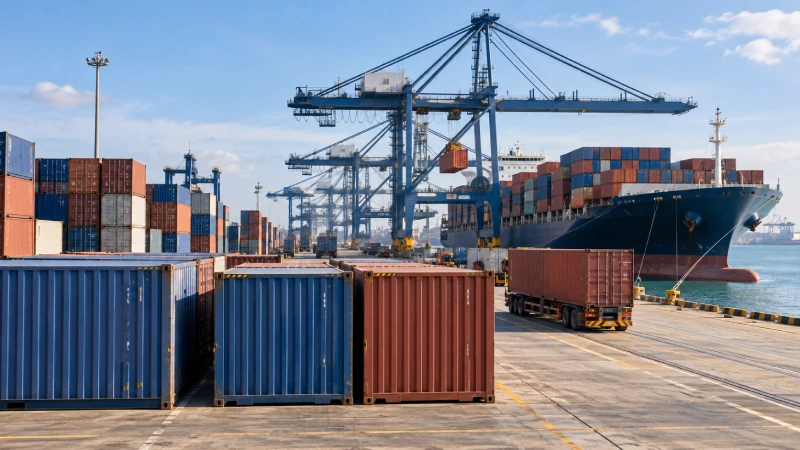
If you are importing a full container from China to Kenya, the ocean freight rate is only the first number you need to check.
A 20GP container may be more suitable for dense machinery or construction products, while a 40GP or 40HQ usually works better for higher-volume cargo. But the final shipping cost also depends on the Chinese loading port, carrier surcharges, origin handling, Mombasa charges, customs clearance, container free time and whether the cargo stops at Mombasa or continues to Nairobi.
As a general planning reference for September 2026, recent public market references place 20GP freight from China to Mombasa roughly in the USD 3,400–4,200 range and 40GP around USD 4,400–5,400. Recent 40HQ public references are commonly around USD 5,100–6,500, depending on origin port, carrier and quotation scope.
These figures are not fixed booking rates. For a wider comparison of sea, LCL, air and other options, see shipping from China to Kenya and the detailed shipping cost from China to Kenya.
The important question is therefore not simply:
“How much is a container from China to Kenya?”
It is:
“What does that price include, which container should I use, and what will I still need to pay before the goods reach my warehouse?”
Data Note — September 2026
Freight rates can move within days or weeks. The figures in this guide are public market references for planning and should not be treated as fixed quotations. Actual rates depend on the port of loading, shipping line, container type, cargo-ready date, routing, surcharges, equipment availability and quotation validity.
China pickup, origin charges, Mombasa destination charges, customs clearance, taxes, storage and inland delivery may be additional.
Quick Answer: Current Container Shipping Cost from China to Kenya
For standard dry general cargo moving to the Port of Mombasa, the following ranges provide a reasonable September 2026 planning reference:
| Container | Recent Public Market Reference to Mombasa | Best Suited To |
|---|---|---|
| 20GP | About USD 3,400–4,200 | Dense or heavy cargo |
| 40GP | About USD 4,400–5,400 | Larger standard-volume shipments |
| 40HQ | About USD 5,100–6,500 | Bulky, relatively lightweight cargo |
These figures should not be compared without checking the rate scope.
One quotation may include ocean freight and carrier surcharges. Another may show only base ocean freight. China terminal handling, export documentation, pickup, Mombasa charges or inland delivery may still be separate.
Carrier surcharges can also be significant. For example, Maersk published a China-to-Kenya Peak Season Surcharge effective June 15, 2026 for the applicable scope, while CMA CGM later published a China-to-Mombasa PSS effective July 1, 2026. These are surcharge notices rather than complete freight rates, but they show why an FCL rate should always be tied to a date and clearly defined scope.
Before comparing two FCL quotations, make sure they include the same cost items.
Check My Container Shipping Cost
For a current 20GP, 40GP or 40HQ rate, provide the Chinese pickup location, product, gross weight, container size, cargo-ready date and final destination in Kenya.
20GP vs 40GP vs 40HQ: Which Container Should You Choose?
Choosing the cheapest container rate does not necessarily produce the lowest shipping cost.
The correct equipment depends mainly on cargo volume, cargo weight, packaging dimensions and how efficiently the goods can be loaded.
Carrier equipment specifications illustrate the difference clearly.
| Factor | 20GP | 40GP | 40HQ |
|---|---|---|---|
| Example nominal internal capacity | 33.2 CBM | 67.7 CBM | 76.3 CBM |
| Example maximum payload | 28,130 kg | 28,750 kg | 28,600 kg |
| Internal height | Standard | Standard | Higher |
| Usually suitable for | Dense cargo | Larger general cargo | Bulky/light cargo |
These figures are based on examples from Hapag-Lloyd container specifications. Container specifications can vary by manufacturer, so the actual equipment assigned to a shipment should always be checked where dimensions or payload are critical.
The most important point is that a 40ft container gives you roughly twice the internal space of a 20ft container, but not twice the payload.
That distinction matters for China-to-Kenya shipments.
When a 20GP Makes More Sense
A 20GP is often a better starting point for dense cargo such as:
- machinery
- metal components
- hardware
- tiles and stone products
- industrial equipment
- some construction materials
For this type of shipment, weight may become the limiting factor before you run out of container space.
Suppose your goods occupy only part of a 40HQ but are already very heavy. Paying for additional cubic capacity may provide little benefit.
Container payload is not the only limit either. Trucking rules, axle loading, container tare weight, packaging and local transport arrangements can reduce the practical weight that should be loaded.
When a 40GP or 40HQ Makes More Sense
A 40GP or 40HQ becomes more attractive when the shipment is limited by volume rather than weight.
Typical examples include:
- furniture
- packaging materials
- household goods
- plastic products
- retail inventory
- lightweight building products
- some consumer goods
A 40HQ provides additional internal height and more nominal internal capacity than a standard 40GP. However, nominal container volume is not the same as practical loadable CBM.
Pallets, carton shape, loading direction, fragile cargo, void space and non-stackable products can all reduce the usable volume.
Pro Tip: If your shipment is heavy, check payload first. If it is bulky, build a loading plan from actual carton or pallet dimensions before choosing between 40GP and 40HQ.
Compare 20GP and 40GP
If you send the package dimensions, total quantity and gross weight, the shipment can be checked against both container options instead of choosing equipment only by estimated CBM.
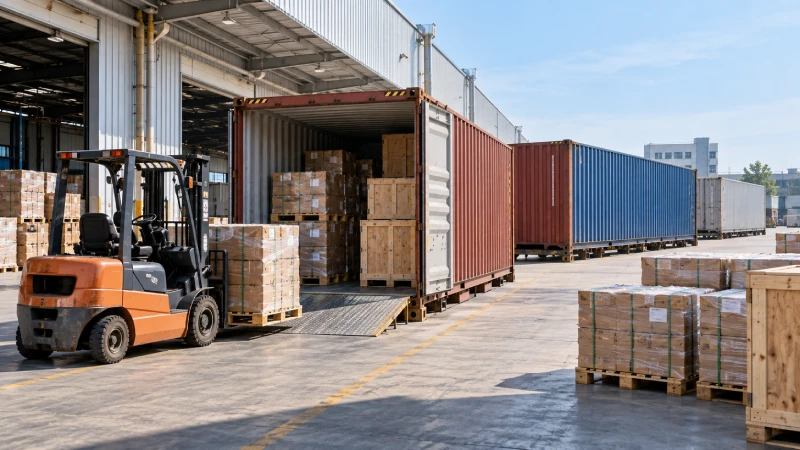
How the Chinese Loading Port Changes Your Container Cost
“China to Kenya” is not one single shipping route.
The Chinese factory location can materially affect both the ocean rate and the cost before the container reaches the port.
Common origin gateways worth comparing include:
South China
- Yantian
- Shekou
- Nansha
East China
- Ningbo
- Shanghai
North China
- Qingdao
- Tianjin
A supplier in Shenzhen or Dongguan will normally have very different China-side trucking requirements from a supplier in Suzhou, Ningbo or Qingdao.
This is why the lowest ocean freight quotation does not always create the lowest total China-to-Mombasa cost.
For example, moving cargo hundreds of kilometres to use a marginally cheaper loading port may add:
- container trucking
- tolls
- extra loading coordination
- additional warehouse handling
- higher origin time risk
For multiple suppliers, the decision becomes even more important.
If suppliers are located in Shenzhen, Foshan and Dongguan, consolidating the products within South China before stuffing one container may make more operational sense than treating every factory separately.
If the suppliers are spread across Guangdong, Zhejiang and Jiangsu, the consolidation plan needs to be compared against factory loading and domestic trucking costs.
The right question is therefore not simply which Chinese port has the cheapest ocean rate. It is which origin plan gives the lowest practical cost from the suppliers to Mombasa.
For larger commercial shipments, Winsail’s ocean freight service from China can be used as the service-level reference for FCL planning.
What Is Included in a China-to-Mombasa FCL Rate?
There is no universal definition of an “all-in container price.”
Always ask the forwarder to show what is included.
Depending on the quotation, the China side may contain some or all of the following:
| Cost Item | May Be Included? | What to Check |
|---|---|---|
| Base ocean freight | Usually | Container size and carrier |
| Peak Season Surcharge | Depends | Included or separate |
| Fuel-related surcharge | Depends | Current carrier basis |
| China terminal handling | Depends | POL charge |
| Export documentation | Depends | Documentation fee |
| Customs declaration | Depends | Export service scope |
| Container seal | Depends | Carrier/forwarder |
| Factory pickup | Often separate | EXW vs FOB |
| Container stuffing | Depends | Factory or warehouse |
| Multiple supplier collection | Usually separate | Number and location of suppliers |
Carrier notices during 2026 illustrate why this matters. Peak-season and other surcharges can change independently of the base ocean freight, and carrier notices may also state that origin THC, destination THC, security charges and local charges remain additional.
That is why two quotations showing USD 4,000 and USD 4,300 cannot be judged from the headline number alone.
The USD 4,300 offer could ultimately be cheaper if more origin surcharges are already included.
Pro Tip: Ask every forwarder for the rate scope in writing: ocean freight + included surcharges + China local charges + Kenya charges + validity date.
What Is Usually Not Included in the Ocean Freight Rate?
A port-to-port China-to-Mombasa rate normally does not automatically represent the total amount required to deliver the goods in Kenya.
Additional costs can include:
- Mombasa port charges
- shipping-line local charges
- delivery order charges
- customs brokerage
- import duty and taxes
- inspection or conformity-related expenses
- container storage
- carrier demurrage and detention
- Mombasa trucking
- rail movement to Nairobi
- Nairobi final-mile trucking
- unloading at the consignee
- empty-container return
- insurance
- special cargo surcharges
The distinction is particularly important when comparing an ocean-only quotation with a door-to-door quotation.
Official Mombasa Port Charge Examples
The Kenya Ports Authority tariff effective September 15, 2025 publishes the following rates for domestic full import containers:
| KPA Charge | 20ft | 40ft |
|---|---|---|
| Shore handling – domestic import full | USD 120 | USD 180 |
| Wharfage – domestic/transit full container | USD 88 | USD 132 |
These are official KPA tariff components, not the importer’s complete Mombasa destination bill.
Shipping-line charges, clearing-agent fees, customs-related costs, storage, transport and other applicable expenses can still be separate.
Special cargo also requires additional attention. KPA publishes separate tariff treatment for certain out-of-gauge, dangerous and reefer containers.
If you are shipping dangerous goods, oversized machinery or project cargo, do not use standard 20GP/40GP general-cargo estimates for budgeting.
Mombasa Destination Charges, Storage and Free-Time Risk
For many importers, the expensive part of a delayed shipment starts after the container arrives.
The KPA tariff gives domestic import containers five consecutive days of free port storage.
After that, the current published storage charges are:
| Port Storage Period | 20ft | 40ft |
|---|---|---|
| First 5 consecutive days | Free | Free |
| Days 6–21 | USD 30/day | USD 60/day |
| Thereafter | USD 50/day | USD 100/day |
KPA states that, for imports, the free-storage period starts from the next day after discharge. The free days run consecutively and include Saturdays, Sundays and public holidays.
That means an importer should not assume that “five free days” means five working days.
Port Storage Is Not the Same as Demurrage and Detention
This is one of the most important distinctions in container shipping.
KPA storage relates to how long the cargo/container occupies port or depot space.
Shipping-line demurrage/detention relates to the carrier’s container equipment and follows the shipping line’s tariff or negotiated booking terms.
You can therefore face both types of exposure.
For example, a carrier may publish its own dry-container free-time period for Mombasa imports, followed by progressive demurrage or detention charges. Another shipping line or negotiated contract can have different terms.
Never assume that KPA’s storage free period and the carrier’s equipment free time are the same thing.
Why Documents Should Be Prepared Before Arrival
Waiting until the vessel arrives to start dealing with import documents is risky.
Kenya also introduced an important pre-loading requirement in 2026.
The Kenya Revenue Authority’s Advance Cargo Declaration platform went live for containerised cargo on August 3, 2026. Exporters shipping containerised goods to Kenyan ports must obtain the ACD reference code at the point of loading. KRA lists documents such as the draft Bill of Lading, commercial invoice, freight invoice and export declaration among the supporting documents required for the application.
This makes document preparation a China-side operational issue, not something that can always be postponed until Mombasa.
Review My Cargo Before Shipping
For container shipments, check the cargo documents, Kenyan compliance requirements and destination arrangement before loading rather than after the vessel sails.
Shipping the Container from Mombasa to Nairobi
If the buyer’s warehouse is in Nairobi, the China-to-Mombasa freight rate is only part of the logistics budget.
The container still needs to move inland.
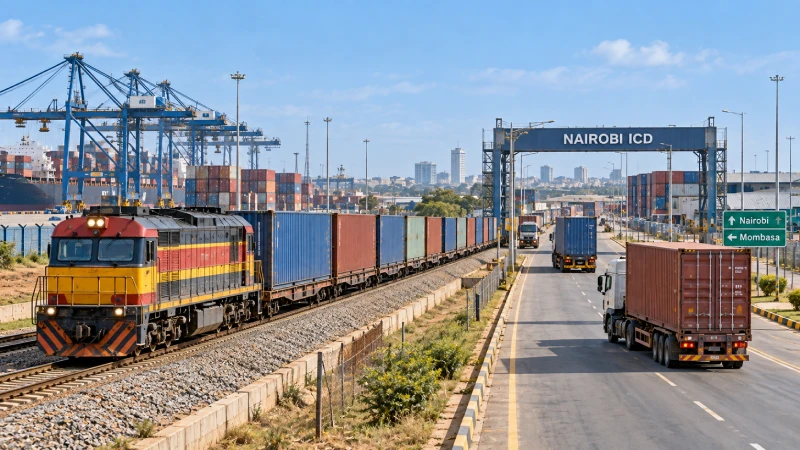
The Kenya Ports Authority inland container depot network includes Nairobi ICD, which is connected to Mombasa by rail. Kenya Railways also operates freight services for containerised cargo between Mombasa and Nairobi.
There are therefore several possible logistics structures.
Option 1: Mombasa to Nairobi by Rail / ICD
The container moves inland toward Nairobi ICD.
Depending on the transport document and customs arrangement, the importer then arranges release and final delivery from the inland terminal.
This can be attractive for regular container flows into Nairobi, but the quote must clearly identify:
- rail haulage
- terminal/ICD charges
- customs-clearance point
- final-mile delivery
- container return
- free time
Option 2: Direct Road Delivery
The container is released in Mombasa and trucked toward the consignee’s location.
The cost depends on:
- 20ft or 40ft equipment
- container weight
- final Nairobi address
- truck availability
- fuel conditions
- waiting time
- unloading arrangement
- empty return point
Option 3: Through Transport Arrangement
Where available and agreed, the inland leg can be incorporated into the carrier or freight-forwarding arrangement rather than booked separately after arrival.
Carrier inland tariffs change independently of ocean freight, so a Nairobi delivery figure should always be checked against the current carrier or inland transport tariff rather than copied from an old freight article.
| Question | Rail / Nairobi ICD | Direct Road |
|---|---|---|
| Main movement | Mombasa → Nairobi ICD | Mombasa → consignee |
| Final-mile truck | Usually required | Included only if quoted |
| Clearance location | Depends on arrangement | Depends on arrangement |
| Empty return | Must be confirmed | Must be confirmed |
| Price | Live quote required | Live quote required |
Check My Mombasa-to-Nairobi Route
Provide the container size, gross cargo weight and exact delivery area so the Mombasa-only option can be compared with inland delivery to Nairobi.
Why Container Shipping Rates from China to Kenya Change
A rate found online today may not match the rate available when your cargo is ready.
The main reasons include:
Chinese Origin Port
Shanghai, Ningbo, Shenzhen, Guangzhou, Qingdao and Tianjin can have different carrier availability and pricing.
Shipping Line and Routing
Different carriers may use different service structures, transshipment points and schedules.
Peak Season and Carrier Surcharges
PSS and other carrier surcharges can materially alter the final ocean cost. Carrier pricing notices during 2026 showed how quickly China-to-East-Africa surcharges can change.
Equipment Availability
40HQ equipment may be easy to obtain in one Chinese port and tighter in another.
Cargo Weight
A very heavy 20GP can require special trucking or loading planning even though the cargo fits physically inside the container.
Dangerous Goods
Batteries, chemicals and other regulated cargo require classification and carrier acceptance before a normal general-cargo rate can be used.
Oversized Cargo
Cargo that does not fit within a standard container may require open-top, flat-rack or other special equipment.
China Pickup Arrangement
EXW cargo can create additional pickup and export-side costs compared with a shipment where the supplier delivers under an agreed FOB arrangement.
Multiple Suppliers
Collecting from several factories may require consolidation, warehouse receiving and additional domestic transport.
Final Destination in Kenya
Mombasa port delivery, Nairobi ICD and delivery to a Nairobi warehouse are three different commercial scopes.
This is why an accurate container shipping quote needs more than the words “one 40HQ from China to Kenya.”
Port-to-Port vs Door-to-Door Shipping Cost
A low port-to-port rate can look attractive until the importer adds all the remaining logistics costs.
Before booking, decide how far you want the freight quotation to go.
| Cost Stage | Port-to-Port | DAP / Door Delivery | DDP |
|---|---|---|---|
| China pickup | May be separate | Can be included | Scope-specific |
| China export handling | Confirm | Confirm | Confirm |
| Ocean freight | Included | Included | Included |
| Mombasa charges | Usually separate | May be incorporated | Depends on agreement |
| Kenya customs clearance | Importer/local agent | Buyer responsibility under DAP | Seller-side scope if legally feasible |
| Import duty/taxes | Importer | Importer under DAP | Scope-specific under DDP |
| Nairobi/final delivery | No | Yes if agreed | Yes if agreed |
| Importer responsibility | Importer | Importer | Must be explicitly confirmed |
Port-to-Port
This is normally the easiest rate to compare because the core transport scope ends at Mombasa.
But the importer still needs to plan Kenyan clearance and delivery.
DAP / Door-to-Door
A door-delivery quotation may include China pickup, ocean transport and delivery to the agreed Kenyan destination.
Under DAP, however, the buyer normally remains responsible for import clearance and import duties and taxes.
DDP
DDP goes further, but it should never be assumed to be available for every shipment.
Kenyan importer requirements, product controls, tax arrangements and the legal importer structure need to be checked before DDP feasibility can be confirmed.
For the service model itself, see DDP shipping from China, but Kenya-specific feasibility must still be confirmed shipment by shipment.
A door-to-door quotation is not automatically a DDP quotation.
Ask specifically:
- Who is the importer?
- Who clears the goods?
- Who pays import duty and taxes?
- Is PVoC/CoC required?
- Who arranges the ACD?
- Who pays storage if documents are delayed?
- Where does transport responsibility end?
What Documents and Cargo Details Are Needed for an Accurate Quote?
A meaningful FCL quotation requires more than a container size.
Send the following information whenever possible.
China Origin
- supplier/factory address
- number of suppliers
- supplier Incoterm
- preferred port if already determined
- cargo-ready date
Cargo
- exact product name
- intended use where relevant
- HS code if known
- package quantity
- carton/pallet dimensions
- total CBM
- total gross weight
- whether goods are palletised
- cargo value
Container
- estimated 20GP / 40GP / 40HQ requirement
- whether loading will take place at the factory or warehouse
If you do not know the container size, send the dimensions and weight instead.
Special Cargo Information
Declare in advance if the cargo contains:
- lithium batteries
- chemicals
- liquids
- powders
- magnets
- dangerous goods
- oversized machinery
- unusually heavy pieces
- temperature-controlled products
Do not book these as ordinary general cargo without checking acceptance.
Kenya Destination
Specify whether you need:
- Mombasa port only
- Nairobi ICD
- Nairobi warehouse
- another Kenyan city
- door-to-door service
Compliance Status
Where relevant, confirm:
- commercial invoice
- packing list
- HS classification
- Certificate of Origin
- PVoC / Certificate of Conformity
- export declaration
- ACD status
- Kenyan clearing-agent arrangement
KRA’s current rules require imported consignments to comply with Certificate of Origin requirements subject to published exceptions and transitional measures.
For products subject to Kenya’s PVoC programme, the Kenya Bureau of Standards PVoC guidance requires importers and exporters to follow the applicable conformity-assessment process and obtain the required Certificate of Conformity where applicable.
These requirements are another reason to involve the Chinese supplier before the container is loaded.
Send Cargo Details
For a usable FCL quotation, send:
Pickup city in China + product + packages + CBM + gross weight + 20GP/40GP/40HQ if known + cargo-ready date + Kenya destination.
How to Compare Two China-to-Kenya Container Quotes
Do not simply choose the lower number.
Compare the quotations line by line:
Same container type?
40GP and 40HQ are not always priced the same.Same Chinese port?
Shenzhen and Shanghai quotations are not directly comparable if the factory is in Guangzhou.Same carrier and routing?
Transit structure and space conditions may differ.PSS included?
This can materially change the apparent price.China terminal and documentation included?
Factory pickup included?
Mombasa charges included?
Customs clearance included?
Nairobi inland movement included?
How long is the quote valid?
What free time applies?
Who is responsible for the empty-container return?
A USD 300 difference in headline ocean freight may become irrelevant if one quotation excludes several hundred dollars of origin or inland costs.
The useful comparison is therefore:
Total logistics scope against total logistics scope.
Not:
Ocean rate against ocean rate.
Plan Your Container Shipment from China to Kenya
The container shipping cost from China to Kenya should never be evaluated from the ocean rate alone.
Start with three decisions:
1. Choose the right equipment.
Use a 20GP for dense cargo when weight matters more than space. Compare 40GP and 40HQ when the shipment is volume-driven.
2. Define the quotation scope.
Know whether the price covers China pickup, origin handling, ocean freight, carrier surcharges, Mombasa charges, customs coordination and inland transport.
3. Decide where the shipment actually ends.
A Mombasa port shipment, Nairobi ICD shipment and delivery to a Nairobi warehouse require different logistics plans and different budgets.
For the most accurate comparison, send your supplier location, product description, packages, dimensions, gross weight, cargo-ready date and final Kenyan destination before choosing between 20GP, 40GP and 40HQ.
That allows the shipment to be planned around the real cargo, not around a generic container price found online.
FAQ
How much does a 20ft container cost from China to Kenya?
As a September 2026 planning reference, recent public market ranges are roughly USD 3,400–4,200 for a 20GP to Mombasa. Actual pricing depends on the Chinese port, carrier, cargo-ready date, surcharges and quotation scope. China pickup, Kenya destination charges, customs and inland delivery may be additional.
How much does a 40ft container cost from China to Kenya?
A current public planning reference is roughly USD 4,400–5,400 for a 40GP to Mombasa. The final rate depends on origin port, carrier, equipment availability, sailing date and which surcharges are included.
How much does a 40HQ container cost from China to Kenya?
Recent public 2026 references commonly place selected 40HQ shipments around USD 5,100–6,500 for planning purposes. A live booking quotation is still required because equipment availability, carrier pricing and surcharge scope can change.
Is a 40ft container cheaper per CBM than a 20ft container?
Often yes when enough cargo is available to use the additional space. A 40GP provides substantially more volume than a 20GP while the ocean rate is usually not twice as high. Heavy cargo may reach practical weight limits before filling the available volume, so CBM alone should not determine the container size.
Are Mombasa destination charges included in the ocean freight rate?
Not necessarily. KPA port charges, shipping-line local charges, customs clearance, storage and inland transport can be separate. The quotation should clearly state whether it is ocean-only, port-to-port, all-in ocean or door-to-door.
How many free storage days are available at the Port of Mombasa?
The current KPA tariff gives domestic import containers five consecutive free storage days. Carrier demurrage and detention free time is separate and depends on the shipping line and booking terms.
How much does it cost to move a container from Mombasa to Nairobi?
There is no single universal price. The cost depends on container size, rail or road movement, carrier or merchant-haulage arrangement, final delivery address, fuel surcharges, clearance point and final-mile trucking.
What documents should be prepared before shipping a container from China to Kenya?
Requirements depend on the product, but common documents include the commercial invoice, packing list, Bill of Lading, Certificate of Origin and export declaration. Products subject to PVoC require the applicable Certificate of Conformity, while containerised shipments are also subject to Kenya’s ACD process before loading.
