
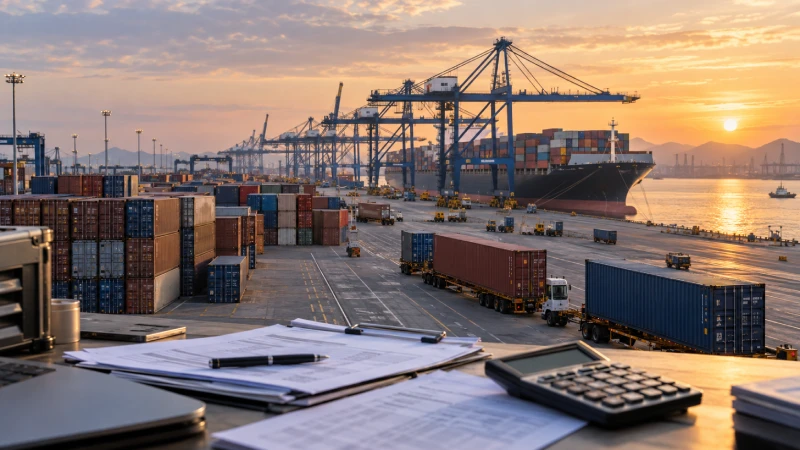
Shipping from China to Kenya can cost anywhere from a few hundred dollars for a small consolidated shipment to several thousand dollars for a full container. The difficult part is that two freight quotations showing very different totals may both be correct because they may include different parts of the shipment.
For most sea shipments, cargo moves from a supplier or consolidation warehouse in China to Mombasa, then clears customs and continues to Nairobi or another inland destination. Air cargo normally enters through Nairobi. The final amount an importer pays therefore depends on much more than the ocean or air freight rate.
This guide focuses specifically on how China-to-Kenya shipping costs are built, what current market references look like, which charges may appear at Mombasa, and how to compare two quotations on the same basis.
Rate Data Note: The market ranges below were checked on September 22, 2026 and are intended for planning only. They are not fixed Winsail Logistics quotations. Actual rates depend on cargo-ready date, origin, carrier, equipment, routing, cargo type, space availability and quotation scope. Customs duty, taxes, destination clearance and final delivery are not included unless specifically stated.
Quick Answer: How Much Does Shipping from China to Kenya Cost?
For general cargo, recent public market references indicate that a 20ft container to Mombasa may be roughly USD 2,650–4,700, while a 40ft container may fall around USD 3,250–6,300 depending on origin, carrier, month and quotation scope. Recent 40HQ references have been around USD 5,100–6,500. September LCL references are commonly around USD 140–180 per CBM, while larger general air-freight shipments have recently been quoted at approximately USD 4.30–5.90 per chargeable kilogram.
These numbers should be treated as a freight-planning reference, not as the cost of getting your goods all the way to your warehouse in Kenya.
| Shipping Method | Current Planning Reference | Main Kenya Gateway | Pricing Basis | Usually Needs Separate Checking |
|---|---|---|---|---|
| LCL sea freight | About USD 140–180/CBM | Mombasa | W/M or CBM | CFS, destination handling, clearance, delivery |
| 20GP FCL | About USD 2,650–4,700 | Mombasa | Per container | Origin charges, destination charges, customs, delivery |
| 40GP FCL | About USD 3,250–6,300 | Mombasa | Per container | Origin charges, destination charges, customs, delivery |
| 40HQ FCL | About USD 5,100–6,500 in recent August references | Mombasa | Per container | Origin charges, destination charges, customs, delivery |
| Air freight | About USD 4.30–5.90/kg for larger general cargo in recent references | Nairobi | Chargeable weight | Origin handling, terminal, clearance, final delivery |
| Express | Live quote recommended | Nairobi / courier network | Chargeable weight | Duties, taxes and service-specific charges |
Public express references currently vary too widely to provide a reliable universal planning rate. For parcels or urgent samples, the shipment should be priced using the actual dimensions, weight, commodity and courier service.
For the broader route, methods, customs process and destination options, see Shipping from China to Kenya.
Check My Shipping Cost: Send the supplier location, product, package dimensions, gross weight, cargo-ready date and final destination in Kenya so the quotation can be built on the correct scope.
How Much Does Shipping from China to Kenya Cost?
The first number an importer normally asks for is the freight rate. It is also the number most likely to cause confusion.
For example, one forwarder may quote an ocean freight rate from Shanghai to Mombasa. Another may quote from the supplier’s factory in Yiwu to Mombasa. A third may include China export handling, destination charges and delivery to Nairobi.
The three prices cannot be compared simply by looking at the total.
Current public freight references illustrate how wide the market can be. One September 2026 source shows China-to-Mombasa rates of approximately USD 3,420–4,180 for 20GP and USD 4,410–5,390 for 40GP, while another recent source publishes lower port-specific rates from Shanghai, Ningbo, Guangzhou and Shenzhen. An August container-specific market reference shows approximately USD 3,600–4,700 for 20GP, USD 4,900–6,300 for 40GP, and USD 5,100–6,500 for 40HQ.
That does not mean one source must be wrong. Freight pricing can vary by:
- booking date;
- shipping line;
- China port;
- equipment type;
- routing;
- space availability;
- contract or spot rate;
- included surcharges;
- local origin charges;
- quotation validity.
A realistic budget should therefore use a range, followed by a shipment-specific quotation when the cargo is close to ready.
For more focused pricing, see our 20ft and 40ft container shipping costs from China to Kenya guide rather than applying one generic container figure to every shipment.
What Does “Shipping Cost” Actually Mean?
When an importer says, “My shipping cost is USD 4,000,” that number is incomplete unless the quotation scope is known.
A China-to-Kenya shipment can contain several separate cost layers.
1. International Freight Rate
This is the carrier cost for moving the shipment between the main transport gateways, for example:
Shanghai → Mombasa
or:
Guangzhou Airport → Nairobi Airport
It is only one part of the logistics chain.
2. China Origin Cost
Before cargo reaches the vessel or aircraft, costs may arise for:
- supplier pickup;
- trucking to warehouse or terminal;
- warehouse receiving;
- consolidation;
- container loading;
- export customs declaration;
- documentation;
- terminal or CFS handling;
- carrier origin charges.
These items can be especially important when buying from multiple suppliers.
3. Kenya Destination Charges
Once the shipment reaches Kenya, charges can arise from several parties, including:
- the port or terminal;
- the shipping line or local carrier agent;
- the CFS for LCL cargo;
- the customs clearing agent;
- inspection or regulatory services where applicable.
A low ocean freight rate does not eliminate these costs.
4. Import Duty and Taxes
Customs duty and other government charges are separate from the international freight rate unless the agreed commercial arrangement specifically states otherwise.
The amount depends on the product, HS classification, customs value and applicable Kenyan rules.
5. Inland Delivery
If the buyer’s warehouse is in Nairobi, Nakuru, Eldoret, Kisumu or another inland location, the shipment still needs to move beyond the port.
The basic cost chain therefore looks like this:
China Supplier → China Pickup → Export/Origin Handling → International Freight → Mombasa or Nairobi Handling → Customs Clearance → Duty/Tax → Inland Delivery
That is why a USD 3,500 ocean freight rate is not automatically a USD 3,500 delivery cost.
Sea, LCL, Air and Express Costs Compared
Different shipping methods use different pricing systems. Understanding the charging basis is more useful than trying to identify one method as universally cheapest.
FCL: Full Container Load
FCL is generally priced per container.
The most common equipment is:
- 20GP;
- 40GP;
- 40HQ.
A 40HQ is not simply “twice the price” of a 20ft container. Carrier pricing, equipment availability and market conditions determine the difference.
The freight rate may also exclude China trucking, customs documentation, destination charges and inland Kenya delivery.
For dangerous goods, reefer cargo, overweight cargo and out-of-gauge cargo, standard general-cargo prices should not be used.
LCL: Less than Container Load
LCL is used when cargo does not require a full container.
Pricing is normally based on weight or measurement, commonly referred to as W/M. For many normal-volume shipments, buyers see rates expressed per CBM.
Recent September public references for China-to-Mombasa LCL are around USD 140–180 per CBM, but that does not mean multiplying your CBM by USD 150 will give the full landed cost.
LCL may also involve:
- consolidation in China;
- origin CFS charges;
- deconsolidation at destination;
- destination CFS handling;
- documentation;
- customs clearance;
- final delivery.
For a shipment-specific calculation, see LCL shipping from China to Kenya.
Air Freight
Air freight is normally charged using chargeable weight.
The airline or forwarder compares actual gross weight against volumetric weight and applies the applicable chargeable figure.
Recent public China-to-Nairobi references show general cargo rates around USD 4.30–5.90/kg for larger shipments, depending on origin and weight bracket.
This article deliberately does not provide individual 5 kg, 20 kg, 50 kg or 100 kg prices because smaller air shipments behave differently and should be evaluated using the actual chargeable weight and service level.
For the mode-specific process, see air freight from China to Kenya.
Express Courier
Express is often appropriate for samples, spare parts, documents or small urgent consignments.
Courier prices can vary dramatically based on:
- actual weight;
- volumetric weight;
- account discount;
- service level;
- fuel surcharge;
- remote-area delivery;
- commodity restrictions.
Current public China-to-Kenya express references are inconsistent enough that a fixed “USD X/kg” figure could be misleading. A live courier quotation is preferable.
| Cargo Situation | Pricing Method to Investigate |
|---|---|
| Small commercial sea shipment | LCL |
| Larger shipment using dedicated equipment | FCL |
| Urgent commercial shipment | Air freight |
| Samples or small urgent parcels | Express |
How a China-to-Kenya Freight Quote Is Built
A useful freight quotation should make it possible to understand where each cost occurs.
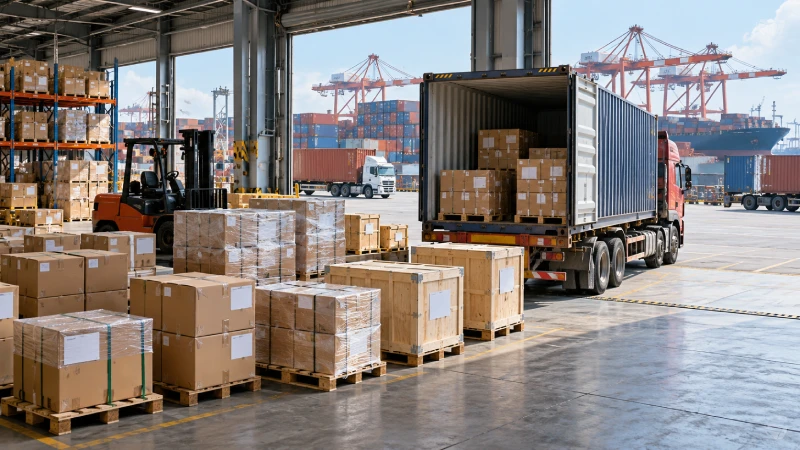
1. Supplier Pickup and China Origin Charges
The logistics process may begin at the supplier rather than at the port.
Possible China-side charges include:
- factory pickup;
- trucking;
- warehouse receiving;
- multi-supplier consolidation;
- repacking or palletizing;
- export declaration;
- container loading;
- terminal handling;
- shipping-line documentation;
- bill of lading-related charges.
Suppose one supplier is in Foshan and another is in Shenzhen. Moving both shipments into one consolidation warehouse may reduce international freight duplication, but it creates an additional China domestic-logistics step.
The correct decision should therefore be based on the total origin cost, not just the ocean rate from the nearest port.
2. International Freight
The international section can include:
- basic ocean or air freight;
- fuel-related surcharges;
- peak-season surcharge where applicable;
- carrier security or environmental charges;
- equipment-related charges;
- routing-specific surcharges.
These charges change over time.
For this reason, always check the quotation validity date, particularly if the goods will not be ready for several weeks.
3. Kenya Destination Charges
A quotation ending at Mombasa does not mean there will be no costs after vessel arrival.
Destination-side items may include:
- port charges;
- terminal handling;
- shipping-line release or documentation;
- CFS handling for LCL;
- customs clearing-agent services;
- inspection-related charges where applicable;
- storage or delay charges.
Some of these costs come from KPA. Others are charged by shipping lines, CFS operators or service providers.
They should not be combined and called simply “Mombasa port fees.”
4. Inland Delivery
If the delivery point is beyond the port, the quotation may need to include:
- container movement from Mombasa;
- rail or truck transport;
- Nairobi ICD arrangements;
- last-mile delivery;
- unloading;
- waiting time;
- empty-container return.
The shipment’s final delivery area therefore matters.
Does the China Origin City Change the Shipping Cost?
Yes, but not in a fixed way.
A shipment from Shenzhen is not automatically cheaper than one from Shanghai, and a shipment from Ningbo is not automatically more expensive than one from Guangzhou.
The correct comparison combines the factory location, China domestic transport and international freight rate.
| Supplier Area | Common Export Gateway | Cost Consideration |
|---|---|---|
| Shenzhen / Dongguan | Yantian, Shekou and nearby South China gateways | Shorter pickup for Pearl River Delta suppliers can reduce origin trucking |
| Guangzhou / Foshan | Nansha or Shenzhen options | Compare domestic pickup plus ocean rate rather than port price alone |
| Ningbo | Ningbo | Efficient for Zhejiang-area suppliers |
| Shanghai / Suzhou | Shanghai | Factory distance and carrier schedule influence total cost |
| Yiwu | Commonly routed via Ningbo or Shanghai logistics networks | Inland movement from supplier or consolidation warehouse must be included |
Recent public market tables also show that the relative prices between Chinese ports change from month to month.
That is why an importer should avoid instructions such as:
“Always ship from Shenzhen because it is cheapest.”
A better approach is:
- locate the supplier;
- identify practical export gateways;
- calculate pickup and origin cost;
- compare carrier options;
- compare the full quotation to Mombasa or the final Kenyan destination.
For buyers purchasing from several factories, consolidation can change this calculation again.
For example, three partial shipments from Guangzhou, Dongguan and Shenzhen may be collected into one warehouse and shipped together rather than processed independently.
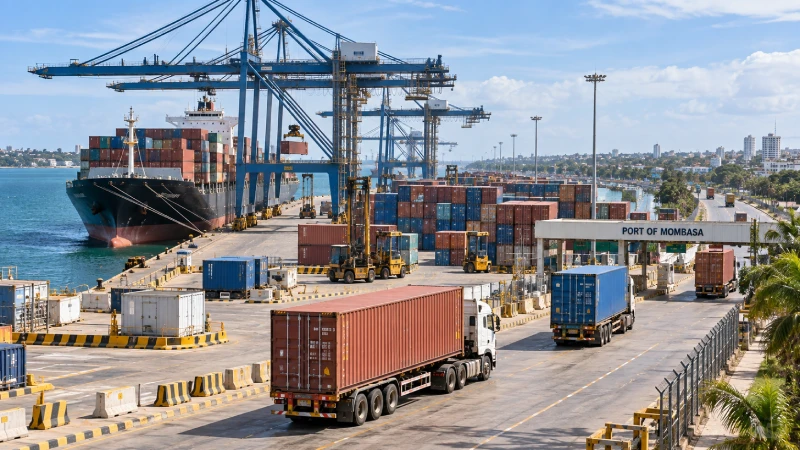
What Costs Can Appear at Mombasa?
Mombasa destination costs are one of the most important reasons not to compare freight quotations by ocean rate alone.
The first step is to distinguish official Kenya Ports Authority charges from shipping-line, CFS, customs-agent and inland-transport charges.
Official KPA Container Charges
The current Kenya Ports Authority tariff became effective on September 15, 2025.
For domestic full import containers, the tariff lists shore-handling charges of USD 120 for a 20ft container and USD 180 for a 40ft container.
KPA also lists wharfage of USD 88 for a full 20ft container and USD 132 for a full 40ft container.
| Official KPA Example | 20ft | 40ft |
|---|---|---|
| Domestic import shore handling | USD 120 | USD 180 |
| Full-container wharfage | USD 88 | USD 132 |
Important: These are examples of specific official KPA tariff items. They are not the total cost of clearing a container at Mombasa.
Other costs may still apply.
Shipping-Line and Local-Agent Charges
Depending on carrier and shipment terms, destination charges may include items such as:
- documentation;
- cargo release;
- delivery order-related charges;
- equipment-related charges;
- demurrage or detention if free time is exceeded.
Always ask whether these are included in the forwarder’s destination quotation.
LCL and CFS Costs
LCL cargo has a different destination structure because the container contains cargo for multiple consignees.
Costs may arise for:
- CFS handling;
- deconsolidation;
- documentation;
- cargo release;
- storage;
- final pickup.
This is one reason an extremely low LCL freight rate per CBM should not be evaluated without seeing the destination-cost schedule.
Storage and Delay Costs
Under the current KPA tariff, domestic import containers receive the first five consecutive days free of KPA storage charges. From day 6 through day 21, the tariff lists USD 30 per day for 20ft and USD 60 for 40ft, increasing thereafter to USD 50 and USD 100 respectively.
These are KPA storage charges. They should not be confused with shipping-line demurrage or detention, which may operate under separate free-time rules.
This distinction matters.
A shipment that is not documentation-ready before arrival can accumulate destination costs even if the original ocean freight booking was inexpensive.
Are Kenya Import Duty and Taxes Included in Shipping Cost?
Usually, not unless they are specifically included in the agreed quotation scope.
A normal freight quotation and a customs tax assessment are two different things.
Kenya import charges depend on factors including:
- HS classification;
- customs value;
- commodity;
- applicable tariff treatment;
- whether excise or other product-specific charges apply;
- available exemptions or concessions.
The Kenya Revenue Authority states that import clearance generally requires a licensed customs clearing agent and supporting documents such as the commercial invoice, bill of lading or airway bill, packing list, freight invoice for sea cargo, permits for restricted goods and relevant conformity documents.
Before accepting a “door-to-door” price, ask:
- Does the price include customs clearance service?
- Does it include government duty and tax?
- Who is responsible for the Kenyan import declaration?
- Who is the importer?
- Are regulatory certificates already arranged?
- What happens if customs reassesses the declared HS code or value?
A door-delivery quotation that excludes duty is not the same as a duty-paid quotation.
For a deeper explanation, see Kenya customs clearance and import requirements.
2026 Compliance Update: Advance Cargo Declaration
There is also a new documentation step that container importers should not overlook.
KRA launched its Advance Cargo Declaration (ACD) platform on August 3, 2026 for containerized cargo destined for Kenyan ports.
The exporter or shipper must obtain an ACD reference code at the port of loading. According to the KRA ACD notice, the application requires:
- draft Bill of Lading;
- commercial invoice;
- freight invoice;
- export declaration.
The ACD reference code must then appear on the Bill of Lading before the shipment proceeds to a Kenyan port.
For China-origin container shipments, this means the documentation process needs to be considered before cargo sails, not after it reaches Mombasa.
Additional Export Documentation Requirement from September 2026
KRA also states that from September 1, 2026, Kenyan importers must obtain and retain an export declaration, export entry, customs export certificate or equivalent document from the country of export.
The records should support the import transaction and may need to show details such as the exporter, importer, goods description, quantity, value, tariff classification and country of export.
For shipments from China, importers should therefore coordinate with the supplier or China-side logistics provider early enough to preserve the required export documentation.
Certificate of Origin
KRA’s Certificate of Origin requirement took effect in 2025. The authority states that imports generally require a Certificate of Origin issued by a competent authority in the country of export, subject to specified exceptions and provisional measures.
Importers should check the latest KRA Certificate of Origin notice before shipment.
This requirement is separate from the freight rate.
KEBS PVoC and CoC
For goods subject to Kenya’s PVoC program, the Kenya Bureau of Standards requires conformity assessment in the exporting country and a Certificate of Conformity (CoC) from an appointed PVoC agent.
KEBS places responsibility on importers to ensure their suppliers understand the relevant Kenyan standards and that regulated consignments have the required CoC.
Not every product follows identical conformity requirements. Product-specific requirements should be checked before shipment.
How Inland Delivery to Nairobi and Other Kenyan Cities Affects Cost
Many buyers search for a “shipping cost from China to Nairobi,” even when the cargo is arriving by sea.
For sea freight, the quotation often needs two distinct transport stages:
China → Mombasa
and then:
Mombasa → Nairobi or final inland destination
These should be priced separately or clearly combined.
Mombasa to Nairobi
The inland cost can depend on:
- 20ft or 40ft equipment;
- container weight;
- truck or rail arrangement;
- destination terminal;
- Nairobi ICD versus direct warehouse;
- final-mile trucking;
- unloading requirements;
- waiting time;
- empty-container return;
- dangerous-goods status;
- oversized cargo;
- delivery-site access.
In June 2026, for example, Maersk revised its Mombasa–Nairobi rail import-haulage charges and introduced a separate fuel surcharge, illustrating how inland transport costs can change independently of the ocean freight rate.
That carrier tariff should not be treated as the entire Kenya market rate. It does, however, show why inland delivery should be treated as its own live quotation component.
Nairobi ICD Is Not the Same as Door Delivery
A quotation ending at Nairobi ICD does not necessarily include transport to:
- a warehouse in Industrial Area;
- a facility in Athi River;
- a shop in Nairobi;
- a construction site;
- a customer’s distribution centre.
Always identify the exact endpoint.
For an importer, these are three different scopes:
Mombasa Port
Mombasa → Nairobi ICD
Mombasa → final warehouse in or around Nairobi
They should not be compared as though they are identical.
Delivery to Nakuru, Eldoret, Kisumu and Other Cities
For inland destinations such as:
- Nakuru;
- Eldoret;
- Kisumu;
- Thika;
- Athi River;
the final rate will depend on distance, equipment, container return requirements, cargo weight and delivery conditions.
For project cargo, machinery or containers that require cranes, forklifts or special unloading, site access can have a significant effect on the final logistics cost.
Check My Mombasa-to-Nairobi Route: When requesting inland pricing, provide the exact delivery location and state whether unloading equipment is available at destination.
What Makes Your Actual Freight Cost Higher or Lower?
Two shipments with the same origin country and destination country can still have very different prices.
Cargo Volume and Weight
LCL and air freight respond directly to shipment volume and chargeable weight.
FCL behaves differently because the main international rate is tied to the container, but weight can still affect trucking, equipment selection and operational restrictions.
Use final packing information whenever possible.
Supplier Location
A factory 30 km from an export gateway has a different China pickup cost from one hundreds of kilometres inland.
The cheapest ocean rate may therefore not produce the lowest origin-to-Mombasa cost.
Cargo-Ready Date
A quotation obtained today may not apply when production finishes six weeks later.
If the supplier only says:
“Cargo will be ready next month,”
treat the initial freight price as a budget rather than a confirmed booking rate.
Carrier and Routing
Different carrier services can vary in:
- rate;
- routing;
- transshipment structure;
- equipment availability;
- free time;
- schedule.
The lowest base rate is not automatically the best commercial option.
Special Cargo
Standard general-cargo benchmarks should not be used for:
- lithium batteries;
- chemicals;
- dangerous goods;
- reefer cargo;
- oversized machinery;
- flat-rack shipments;
- project cargo.
KPA’s tariff provides separate or additional charging treatment for dangerous and out-of-gauge containers.
Special cargo should be checked before booking.
Documentation Readiness
Incomplete documentation can create costs that have nothing to do with the base freight rate.
With Kenya’s ACD requirements now applying before containerized cargo proceeds to Kenyan ports, documents should be prepared during the China export stage rather than left until after sailing.
Final Destination in Kenya
A shipment ending at Mombasa is different from one delivered to Nairobi, Eldoret or Kisumu.
Always put the real destination into the quotation request.
How to Compare Two China-to-Kenya Freight Quotes Correctly
Do not ask only:
“Which one has the lower total?”
Instead, put both quotations side by side and make sure they cover the same shipment.
| Cost / Condition | Quote A | Quote B |
|---|---|---|
| Supplier pickup included? | ||
| China export declaration included? | ||
| Origin terminal/CFS charges included? | ||
| Ocean or air freight included? | ||
| Carrier surcharges included? | ||
| Mombasa destination charges included? | ||
| LCL deconsolidation/CFS included? | ||
| Customs-clearance service included? | ||
| Duty and tax included? | ||
| Nairobi or inland delivery included? | ||
| Unloading included? | ||
| Quote validity date | ||
| Destination free-time conditions | ||
| Special-cargo surcharge |
Pro Tip: The Cheapest Ocean Freight May Not Produce the Lowest Landed Logistics Cost
A cheaper ocean rate can be offset by higher China origin charges, carrier destination fees, Mombasa handling, LCL CFS charges, storage or expensive inland delivery.
Compare quotations using the same:
- supplier location;
- cargo details;
- container or shipment size;
- Kenyan destination;
- Incoterm;
- included services;
- tax treatment.
If Quote A ends at Mombasa and Quote B includes delivery to a Nairobi warehouse, the two totals should never be compared directly.
Compare My Kenya Freight Quotes: If you already have two quotations, compare the included and excluded items before choosing solely on price.
What Information Do You Need for an Accurate China-to-Kenya Shipping Quote?
The fastest way to receive an unreliable freight quote is to send only:
“How much is shipping from China to Kenya?”
A usable quotation needs actual cargo information.
Prepare the following.
Cargo Details
- product name;
- clear cargo description;
- HS code, if known;
- number of cartons, pallets, crates or pieces;
- dimensions of each package type;
- total gross weight;
- total CBM;
- cargo value.
China Origin
Provide:
- supplier name;
- supplier city;
- full pickup address if available;
- number of suppliers;
- cargo-ready date.
If buying from multiple factories, provide the cargo information and address for each supplier separately.
This allows the forwarder to evaluate whether supplier pickup and consolidation make commercial sense.
Cargo Type
Clearly state whether the shipment contains:
- batteries;
- magnets;
- liquid;
- chemicals;
- dangerous goods;
- food;
- machinery;
- oversized cargo;
- temperature-controlled products.
Do not classify restricted or dangerous cargo as ordinary general cargo simply to obtain a lower preliminary price.
Shipping Requirement
State whether you are looking for:
- LCL;
- FCL;
- air freight;
- express;
- port-to-port;
- port-to-door;
- door-to-door.
Kenya Destination
Do not simply write “Kenya.”
Provide:
- Mombasa port only;
- Nairobi ICD;
- Nairobi warehouse;
- Athi River;
- Nakuru;
- Eldoret;
- Kisumu;
- another exact destination.
For door delivery, a postcode, industrial area or complete address may be needed for final pricing.
Import and Clearance Information
Where known, also confirm:
- supplier Incoterm;
- whether a Kenyan clearing agent has already been appointed;
- whether the importer has checked product requirements;
- whether PVoC/CoC applies;
- whether the Certificate of Origin is being prepared;
- whether required export documentation is available.
China-to-Kenya Freight Quote Checklist
Before sending the request, check that you can answer:
What is the product?
Where is the supplier?
How many packages?
What are the packed dimensions?
What is the total weight?
What is the total CBM?
When is the cargo ready?
Is it general or special cargo?
Where in Kenya should it be delivered?
Which service scope do you need?
If those details are available, the quotation will be much more useful than a generic market estimate.
Send Cargo Details: Use the final packed dimensions and weight whenever possible rather than early production estimates.
FAQ
How much does it cost to ship goods from China to Kenya?
As a general September 2026 planning reference, recent public rates show 20ft container freight to Mombasa across a broad range of roughly USD 2,650–4,700, with 40ft references roughly USD 3,250–6,300. Recent LCL references are around USD 140–180/CBM, while larger general air-freight shipments have been around USD 4.30–5.90/kg. Actual rates depend on origin, cargo, booking date, carrier and quotation scope. These figures should not be treated as door-delivered costs.
Is LCL or FCL cheaper from China to Kenya?
It depends on shipment volume, density and destination charges. LCL allows smaller shipments to share container space, while FCL prices a dedicated container. As volume increases, FCL may become more economical, but the correct comparison should include origin and destination charges rather than ocean freight alone.
Does shipping cost include Kenya customs duty?
Normally not unless the quotation specifically states that government duty and taxes are included. A freight quotation may include transportation and customs-clearance service while still excluding the customs assessment itself.
How much does it cost to ship from China to Nairobi?
For air freight, Nairobi can be the direct arrival gateway. For sea freight, cargo generally arrives through Mombasa and then requires inland transport toward Nairobi. A China-to-Nairobi sea quotation therefore needs to account for both international freight to Mombasa and the inland movement or ICD/final-delivery arrangement.
Why are two China-to-Kenya shipping quotes so different?
The quotations may not include the same services. Differences can include China pickup, export charges, carrier surcharges, destination charges, CFS handling, customs clearance, taxes, inland delivery, free time and cargo type. Compare quotation scope before comparing the total price.
What cargo details are needed for an accurate Kenya shipping quote?
At minimum, provide the product, supplier city or pickup address, package count, packed dimensions, gross weight, total CBM, cargo-ready date and final Kenyan destination. Also state whether the cargo includes batteries, liquids, chemicals, dangerous goods or oversized items.
Plan Your China-to-Kenya Shipping Cost Around the Entire Route
The international freight rate is important, but it is only one part of the cost of moving goods from China to Kenya.
A realistic shipping budget should follow the shipment from:
supplier pickup in China → export handling → international freight → Mombasa or Nairobi arrival → customs and compliance → inland delivery
For sea cargo, Mombasa destination costs and the final movement to Nairobi or another inland city can materially change the final amount. Documentation is also increasingly important: containerized shipments now need Kenya’s ACD process before departure, while importers have additional export-document retention requirements from September 2026.
The most useful quotation is therefore not necessarily the one showing the lowest ocean freight number.
It is the one that clearly answers:
Where does the price start?
Where does it end?
Which charges are included?
Which charges remain for the importer?
Once those four questions are answered, comparing the actual shipping cost from China to Kenya becomes much more meaningful.
