

DDP shipping from China to Nigeria is often marketed as an “all-inclusive” shipping solution. But that description can be misleading if it suggests that Nigerian import procedures somehow disappear.
DDP is an allocation of responsibility—not permission to bypass Nigerian import rules.
Under the ICC Incoterms framework, Delivered Duty Paid places the highest level of delivery responsibility on the seller. Under true DDP, the seller is responsible for bringing the goods to the named destination, completing export and import formalities, and paying applicable import duties and taxes. ICC also cautions against using DDP where the seller cannot legally or practically obtain import clearance. See the ICC Incoterms rules.
That distinction is especially important for shipments to Nigeria.
A freight forwarder may coordinate China pickup, international freight, Nigerian customs brokerage, duty settlement and final delivery, but the shipment still needs a valid customs and regulatory structure. For many commercial imports, this can involve a Nigerian importer or consignee, a valid TIN, Form M, PAAR and, where applicable, SONCAP or other product-specific approvals.
So before asking only:
“How much is DDP from China to Nigeria?”
the more important questions are:
Can this commodity legally and operationally move under the proposed DDP structure, who will act in the Nigerian import process, and exactly which costs and risks are included in the quotation?
This guide explains how to answer those questions before your cargo leaves China.
Compliance review: October 3, 2026. Nigerian customs procedures, tariff treatment and product regulations can change. Shipment-specific requirements should always be reconfirmed before booking.
For a broader overview of routes, methods, transit planning and destination options, see Shipping from China to Nigeria.
What DDP Actually Means
DDP, or Delivered Duty Paid, is an Incoterm governing the allocation of costs, risks and responsibilities between seller and buyer.
Under DDP, the seller is responsible for delivering the goods to the agreed place in Nigeria, cleared for import and ready for unloading. Import clearance and applicable duties fall on the seller under the Incoterm unless the parties have agreed otherwise in a way that changes the commercial arrangement.
However, three different concepts should not be confused.
The Incoterm
DDP defines the commercial responsibilities between the seller and buyer.
It answers questions such as who arranges international transportation, who carries the import-clearance responsibility and who bears applicable import duties and taxes.
The Freight Forwarder’s Logistics Service
The forwarder arranges operational tasks such as pickup, export clearance, freight, destination handling, customs-broker coordination and final delivery.
The forwarder does not automatically become the legal importer simply because the quotation says DDP.
A forwarder may coordinate the import process through a local customs agent, consignee or other compliant structure, but the actual structure must be established before shipment.
The Nigerian Importer and Declarant Arrangement
Customs declarations, importer registration, TINs, permits and other regulatory records still need to correspond to a valid structure accepted under Nigerian requirements.
Commercial responsibility and customs identity are related, but they are not the same thing.
DDP Responsibility Matrix
| Activity | Seller under DDP | Buyer | Forwarder | Nigerian Importer / Agent |
|---|---|---|---|---|
| China supplier pickup | Responsible | Normally no | Can arrange | No |
| China export declaration | Responsible | Normally no | Can coordinate | No |
| International freight | Responsible | Normally no | Arranges | No |
| Nigerian import documentation | Responsible commercially | May need to provide information | Coordinates | May formally participate |
| Customs declaration | Responsible commercially | Depends on structure | Coordinates | Licensed/local party handles as required |
| Import duties and taxes | Seller responsibility under DDP | Normally no | May arrange settlement | May participate in payment/clearance process |
| Regulatory certificates | Seller must ensure required structure exists | Cooperation may be required | Coordinates | Importer details may be required |
| Final delivery | Responsible to named place | Receives cargo | Arranges | May coordinate |
| Unloading | Depends on agreed scope | Often buyer | Only if quoted | Depends |
The key point is simple: DDP allocates responsibility, but it does not erase Nigerian import procedures.
Is DDP Operationally Feasible for Your Nigeria Shipment?
DDP should not be quoted simply because the customer asks for an “all-in price.”
The shipment should first pass a feasibility review covering the product, importer structure, customs classification, regulatory requirements, value, destination and carrier acceptance.
1. What Is the Commodity?
Start with the exact product, material, brand, function and intended use.
“Machine parts” is usually not enough information. Neither is “electronics.”
Some categories are prohibited, restricted or regulated. Nigeria Customs maintains import-control rules, while agencies such as NAFDAC may impose additional procedures for regulated products including foods, pharmaceuticals, cosmetics, medical devices and certain chemicals.
A DDP price should therefore never be finalized from a vague product description alone.
2. Is the HS Classification Reliable?
The HS code affects customs duty, VAT treatment, regulatory requirements and sometimes import eligibility.
If the HS code is uncertain, the shipment is not ready for a final DDP quote.
A small classification change can materially affect the landed cost, and a product that looks commercially simple may fall under a regulated tariff heading.
3. Who Is the Nigerian Consignee or Importer?
Determine which entity will participate in the import and regulatory process and whether the required importer registration and tax identification are available.
This is one of the most important questions in any China–Nigeria DDP shipment.
4. Has the Form M Structure Been Confirmed?
For commercial imports handled through Nigeria’s standard import procedures, Form M remains an important part of the import framework.
DDP may shift responsibility for arranging or funding the process, but the Incoterm itself does not remove the underlying requirement where Form M applies.
5. Does SONCAP or Another Permit Apply?
This should be checked before the cargo leaves China.
If SONCAP applies, the required product and conformity documentation should be built into the shipment plan. Other cargo may fall under NAFDAC or another regulatory body.
6. Can Duty and Tax Be Calculated Reliably?
Classification, customs value, applicable tariff treatment and regulatory charges must be sufficiently clear before duties and taxes can be included with confidence.
If the landed-tax basis is still uncertain, an “all-in” DDP total may be misleading.
7. Is the Declared Shipment Value Supported?
The commercial invoice and transaction value should be supportable.
Nigeria Customs may review declared value and classification. If Customs lawfully reassesses the shipment, the final amount payable can differ from the assumptions used in the original freight quotation.
8. Where Exactly Is Final Delivery?
“Lagos” is not the same quotation as a defined warehouse address in Lagos.
Delivery to Abuja, Kano, Port Harcourt or another inland destination may involve different trucking costs, service availability and delivery conditions.
A final DDP quote should use a clearly named delivery point.
9. Will the Carrier and Local Network Accept the Cargo?
Dangerous goods, batteries, chemicals, oversized machinery and certain controlled products may require separate approval.
The DDP structure cannot override airline, ocean-carrier, terminal or road-transport restrictions.
DDP Feasibility Checklist
| Question | Why It Matters | Required Before Final Quote? |
|---|---|---|
| Exact product confirmed? | Determines regulation and transport acceptance | Yes |
| HS code reviewed? | Determines tariff and controls | Yes |
| Importer/consignee structure confirmed? | Needed for compliant clearance | Yes |
| Form M position confirmed? | Core import-documentation issue | Usually yes |
| SONCAP applicability checked? | Required for relevant SON-regulated products | Yes |
| Other permits checked? | NAFDAC or other regulators may apply | Yes |
| Customs value support available? | Affects assessment | Yes |
| Final address confirmed? | Determines last-mile cost | Yes |
| Freight mode confirmed? | Changes quotation basis | Yes |
Simple DDP Decision Tree
Commodity and HS code confirmed?
- No → classify and review first.
- Yes → continue.
Nigerian importer and compliance structure confirmed?
- No → do not finalize DDP yet.
- Yes → continue.
Product permits and certification requirements resolved?
- No → complete compliance review.
- Yes → continue.
Duty, tax and destination costs can be priced with acceptable certainty?
- No → quote conditionally or consider DAP.
- Yes → proceed to a DDP commercial quotation.
Nigeria Importer and Customs Structure
One of the biggest mistakes in China–Nigeria DDP shipping is assuming that a foreign seller or freight forwarder can simply “be the importer” for every shipment.
That should never be assumed.
Nigeria’s customs and regulatory systems rely on importer and trader information, tax identification and formal declarations. The exact party appearing as importer, consignee or declarant must fit the shipment’s legal and operational structure.
Operationally, a DDP arrangement may involve several parties:
China seller → China freight forwarder → carrier → Nigerian importer/consignee → licensed customs agent → customs/regulatory authorities → local delivery provider
A logistics provider can coordinate this chain, but the exact party appearing on customs and regulatory documents must be established before the shipment departs.
This is why the question:
“Who will clear the shipment?”
is not enough.
Instead ask:
- Who is the Nigerian importer or consignee?
- Which TIN will be used?
- Who will support the Form M process?
- Who will provide the information required for PAAR?
- Whose details will appear on SONCAP or other applicable approvals?
- Which customs agent will lodge the declaration?
- Who bears an additional assessment if Customs changes the declared classification or value?
Pro Tip: Resolve the Nigerian importer/declarant structure before the shipment leaves China. Trying to create that structure after arrival can turn a predictable shipment into storage, demurrage and clearance delays.
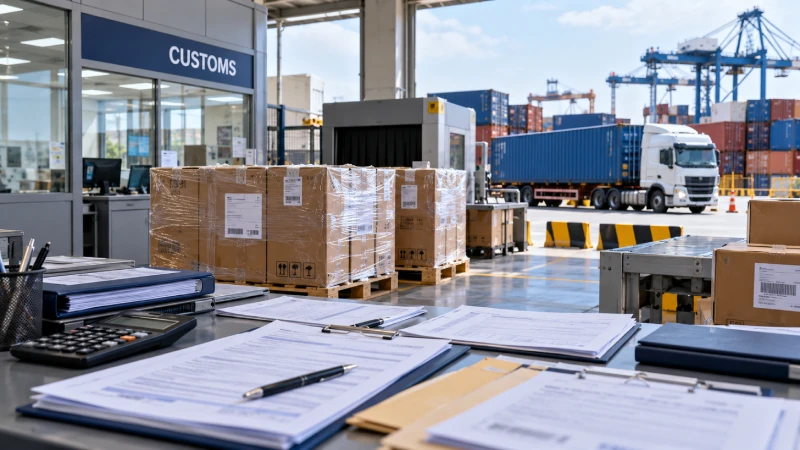
Form M, PAAR and SONCAP Under DDP
DDP changes commercial responsibility.
It does not automatically remove regulated import documentation.
This distinction is particularly important for Nigeria.
Nigeria Customs identifies Form M and PAAR as parts of the import process for relevant commercial shipments. The choice of Incoterm does not, by itself, cancel those procedures.
For goods regulated under SONCAP, the Standards Organisation of Nigeria explains that:
- the Product Certificate (PC) supports the Form M process for applicable regulated goods;
- the SONCAP Certificate (SC) supports PAAR and customs-clearance processes for applicable SON-regulated goods.
See the SONCAP FAQ from the Standards Organisation of Nigeria.
Therefore, a legitimate DDP structure may mean that the seller or its logistics network organizes and pays for required compliance work.
It should not be described as:
“Form M is not needed because this is DDP.”
Nor should DDP be presented as:
“SONCAP does not apply because customs is included.”
If the product is regulated, the relevant requirements still need to be satisfied.
The same principle applies to other regulated products. Food, cosmetics, medical devices, pharmaceuticals and certain chemicals may involve NAFDAC registration, permits or clearance procedures independent of whether the commercial term is DDP, DAP or another Incoterm.
For shipments where customs and regulatory requirements are still unclear, the compliance structure should be reviewed before deciding whether DDP is the right commercial term.
What a DDP Quote May Include
A properly structured DDP quotation can combine most major logistics and import costs into one commercial offer.
Depending on the shipment, it may include:
| Cost / Service | Can Be Included in DDP Quote? | What to Verify |
|---|---|---|
| China supplier pickup | Yes | Pickup city and loading conditions |
| Export customs clearance | Yes | Commodity and documentation |
| China origin handling | Yes | Warehouse/terminal charges |
| International freight | Yes | Air, LCL or FCL basis |
| Destination handling | Yes | Which terminal charges are covered |
| Customs brokerage | Yes | Agent and declaration scope |
| Import duty | Yes | HS code and valuation basis |
| Import VAT | Yes | Applicable tariff treatment |
| Regulatory processing | Sometimes | SONCAP/permit scope |
| Final delivery | Yes | Exact address and truck type |
| Unloading | Sometimes | Labour, forklift or crane requirements |
A strong DDP quotation should explain how duties and taxes have been calculated, not merely show one unexplained total.
The quotation should also identify the destination, cargo assumptions, service validity period and major exclusions.
Pro Tip: Never accept “all inclusive” as an inclusion list.
Ask what the price actually includes.
What Is Not Automatically Included
DDP should not be interpreted as unlimited financial responsibility for every event that might occur during importation.
Contract wording matters.
Depending on the quotation and the cause of the cost, exclusions may include:
- exceptional physical inspections;
- regulatory laboratory testing;
- special import permits not disclosed before booking;
- storage caused by missing or late importer documentation;
- demurrage caused by customer-controlled delays;
- customs penalties caused by incorrect product information supplied by the shipper;
- changes to the delivery address;
- remote-area delivery surcharges;
- crane, forklift or special unloading equipment;
- detention or redelivery;
- disposal or return of prohibited cargo;
- unexpected regulatory action;
- costs resulting from inaccurate declared values;
- extraordinary customs reassessment.
Customs valuation deserves particular attention.
If Customs changes the classification, valuation basis or another assessable element, the final duty and tax amount can differ from the quotation assumptions.
A DDP quote therefore needs a clear mechanism for situations where Customs lawfully assesses the goods differently from the assumptions used in the original quotation.
This mechanism should be agreed before shipping, not negotiated after the cargo is already at the destination terminal.
DDP Sea Freight vs DDP Air Freight to Nigeria
DDP is not itself a transport mode.
The international movement can still be by sea or air.
| Factor | DDP Sea Freight | DDP Air Freight |
|---|---|---|
| Pricing basis | LCL CBM/weight or FCL container | Chargeable weight |
| Speed | Slower | Faster |
| Best suited for | Larger or heavier commercial shipments | Urgent, higher-value or lighter cargo |
| Customs requirement | Still applies | Still applies |
| Regulatory requirement | Depends on product | Depends on product |
| Final delivery | Can be included | Can be included |
| Main planning risk | Port/terminal exposure and longer dwell time | Higher freight cost and airline restrictions |
For container sizes, LCL/FCL decisions, port routing and ocean transport planning, see Sea Freight from China to Nigeria.
For airline routing, chargeable weight and airport freight planning, see Air Freight from China to Nigeria.
Sea DDP may be suitable for larger commercial cargo where a slower transit is acceptable and the import structure is already validated.
Air DDP can be useful for urgent or relatively high-value cargo, but airline acceptance, dangerous-goods rules and chargeable-weight costs still apply.
Neither method bypasses the compliance review.
DDP vs DAP vs Door-to-Door Shipping
DDP, DAP and door-to-door are frequently used as if they mean the same thing.
They do not.
| Model | International Freight | Import Clearance | Duty / Tax Responsibility | Final Delivery |
|---|---|---|---|---|
| DAP | Seller-arranged | Buyer | Buyer | Yes |
| DDP | Seller-arranged | Seller | Seller | Yes |
| Door-to-door service | Depends on quote | Depends on quote | Depends on quote | Yes |
Under DAP, the seller arranges transportation to the named destination, but import clearance remains with the buyer.
Under DDP, the seller also assumes responsibility for import clearance and applicable import duties and taxes.
ICC makes this distinction explicit and recommends considering DAP where the seller cannot legally or practically complete import clearance.
“Door-to-door,” meanwhile, is a logistics description rather than an Incoterm.
A forwarder can provide:
Port-to-door under DAP
or:
Door-to-door under DDP
or another combination defined by the quotation.
DDP
DDP is most appropriate when the importer/compliance structure is validated and the seller wants greater control over landed cost and final delivery.
DAP
DAP can be more appropriate when the buyer has its own Nigerian importer setup, permits, customs broker or duty-payment process.
Port/Airport-to-Door
This structure can work where international freight or import responsibilities are divided between different parties while inland delivery is still required.
For a broader operational comparison, see Door-to-Door Shipping from China to Nigeria and Best Shipping Methods from China to Nigeria.
When DDP Should Not Be Quoted Yet
Sometimes the correct answer to a DDP request is:
“We need more information before confirming DDP.”
That is better than issuing a cheap quotation that later becomes impossible to execute.
DDP should normally remain provisional where:
- the HS code is uncertain;
- the customs value is unclear;
- the Nigerian importer structure is unresolved;
- Form M requirements have not been addressed;
- SONCAP applicability is unknown;
- product registration or permits may apply;
- the commodity is restricted or controlled;
- duties cannot yet be calculated reliably;
- dangerous-goods acceptance is unresolved;
- the destination address is incomplete;
- unloading requirements are unknown;
- the delivery city falls outside a verified service area.
For uncertain regulatory products, the correct sequence is:
Compliance review → importer structure → Incoterm decision → final quotation
—not the other way around.
A low ocean or air freight rate cannot fix a shipment that was not legally ready to import.
How to Audit an “All-In DDP” Quote
Two quotations can both say “DDP Lagos” while covering very different responsibilities.
Before choosing a supplier or freight forwarder, audit the quotation line by line.
DDP Quote Audit Checklist
1. What is the exact named delivery point?
“DDP Nigeria” is not precise enough.
The quote should identify the city or preferably the actual delivery location.
2. Who is the importer or consignee?
Ask how the Nigerian import structure will work.
3. Is import duty included?
Do not assume.
4. Is applicable import VAT included?
Confirm this separately from customs duty.
5. Are destination handling and terminal charges included?
Ask specifically about terminal, documentation and handling charges.
6. How are Form M, PAAR and applicable certificates handled?
The answer should describe a process, not claim that these requirements disappear.
7. Are inspections or regulatory examinations included?
If not, determine who pays.
8. Is final inland delivery included?
Check the exact city, address, vehicle type and whether unloading is part of the rate.
9. What storage and demurrage costs are excluded?
Understand which party bears delays caused by missing documents, inspections or consignee actions.
10. What happens if Customs reassesses classification or value?
The quote should explain whether the seller or service provider absorbs the difference, whether a defined adjustment mechanism applies, or whether certain exceptional reassessments are excluded.
11. What is the quotation validity?
Freight, exchange rates and destination charges can change.
12. What cargo information was the quotation based on?
Product, HS code, value, weight, dimensions and destination should match the actual shipment.
A genuine all-in quotation is not defined by how short it is.
It is defined by how clearly it allocates responsibility.

DDP Decision Matrix
| Shipment Situation | Recommended Next Step |
|---|---|
| Importer and compliance structure validated; duty predictable | Proceed to DDP quotation |
| Buyer has established Nigerian clearance process | Compare DAP with DDP |
| SONCAP applicability uncertain | Compliance review first |
| HS code uncertain | Classification review first |
| Customs value unsupported | Resolve valuation before final pricing |
| Controlled product | Regulator review before shipment |
| Unclear consignee/importer arrangement | Do not finalize DDP |
| Remote inland destination | Confirm last-mile scope before quote |
The key decision is not whether DDP sounds more convenient.
The decision is whether the shipment has a compliant structure that allows the seller’s DDP responsibilities to be carried out in practice.
How a Compliant DDP Shipment Should Be Planned
The planning sequence can be summarized as:
Compliance Check
↓
Confirm HS Code & Importer Structure
↓
Confirm Form M / SONCAP / Other Requirements
↓
Define DDP Quote Scope
↓
China Pickup & Export Clearance
↓
International Sea or Air Freight
↓
Nigeria Import Clearance
↓
Duty / Tax Settlement
↓
Final Delivery
Notice that compliance comes before the freight booking.
That sequence is deliberate.
A shipment should not leave China until the parties understand who will handle the import process, which documents are required, how duties and taxes will be treated and what happens if the actual customs outcome differs from the quotation assumptions.
Check DDP Feasibility Before You Ship
If you are considering DDP shipping from China to Nigeria, the first step should be a feasibility review rather than an instant all-in price.
Prepare the following information:
- product description;
- proposed HS code if available;
- product photos or specification sheet;
- commercial value;
- number and type of packages;
- gross weight;
- dimensions or CBM;
- China pickup city;
- Nigerian delivery address;
- consignee/importer information;
- available certificates or permits;
- preferred sea or air service.
Winsail Logistics handles shipments originating from China and can review the cargo information, transport mode and proposed import structure before confirming the appropriate service scope.
For straightforward shipments with a validated importer and compliance structure, DDP may provide a more predictable landed-delivery arrangement.
Where import clearance needs to remain under the buyer’s control, DAP may be the more appropriate structure.
The objective should not be to force every shipment into DDP.
It should be to choose an arrangement that can actually be executed legally, operationally and commercially.
Regulatory Note
This guide explains freight planning and Incoterm allocation and is not legal, tax or customs advice.
Nigeria import regulations, tariff classifications, duties, regulatory requirements and customs procedures can change. Final requirements should be verified against the shipment’s current HS classification, product regulator, Nigerian importer structure and Customs requirements before departure.
Official sources that should be checked for current requirements include:
FAQ
Is DDP shipping available from China to Nigeria?
DDP can be feasible for certain China-to-Nigeria shipments, but it should not be treated as universally available for every product. Availability depends on the commodity, HS code, importer structure, regulatory requirements, carrier acceptance, destination and whether duties and other costs can be priced reliably.
Does DDP remove the need for Form M?
No. DDP changes the allocation of commercial responsibility but does not by itself remove Nigerian import procedures. Where Form M applies, the required process still needs to be completed through the appropriate import structure.
Is SONCAP still required under DDP?
Yes, where the product falls within SONCAP requirements. DDP does not cancel product-conformity requirements. Applicable Product Certificate and SONCAP Certificate procedures still need to be addressed.
Who is the importer under a DDP shipment to Nigeria?
The importer, consignee and declarant structure must comply with Nigerian customs and regulatory requirements. A foreign seller or freight forwarder should not be assumed to be the legal importer for every shipment simply because the commercial term is DDP.
Are Nigerian duties and VAT always included in a DDP quote?
Under true DDP, applicable import duties and taxes are the seller’s responsibility, but the logistics quotation should still state explicitly which duties, VAT, regulatory fees, destination charges and exceptional costs are included.
What is the difference between DDP and DAP?
Under DDP, the seller is responsible for import clearance and applicable import duties and taxes. Under DAP, the seller delivers to the agreed destination but the buyer handles import clearance and pays the import duties and taxes.
Is door-to-door shipping automatically DDP?
No. Door-to-door describes the physical delivery scope, while DDP is an Incoterm that allocates import-clearance and tax responsibility. A door-to-door service can operate under DDP, DAP or another agreed arrangement.
Which products may not be suitable for DDP?
Products that are prohibited, restricted, highly regulated, dangerous, difficult to classify or dependent on unresolved permits may not be suitable for an immediate DDP quotation. These shipments should undergo compliance review before the Incoterm and final price are confirmed.
