
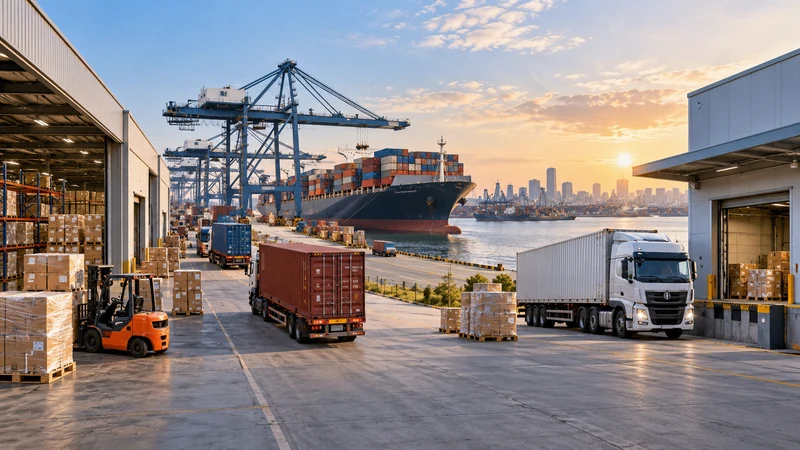
Door-to-door shipping from China to Nigeria describes the physical start and finish of a logistics service: cargo is collected from an agreed location in China and transported through the international freight and destination process until it reaches an agreed address in Nigeria.
But there is one distinction every importer should understand before asking for a door-to-door rate:
Door-to-door does not automatically mean DDP.
A shipment can physically move from a Chinese supplier’s factory to your warehouse in Nigeria while the Nigerian importer still remains responsible for import clearance, duties, taxes, regulatory documents or certain destination charges.
Depending on the commercial and logistics arrangement, a door service may be structured as:
- freight plus buyer-controlled import clearance and final delivery;
- DAP, where the seller arranges carriage to the named destination but the buyer handles import clearance and import duties; or
- DDP, where the seller takes responsibility for import clearance and applicable import duties and taxes, where that structure is legally and operationally feasible.
Under Incoterms® 2020, DAP and DDP place very different import-clearance obligations on the parties. Under DAP, import clearance and import duties generally remain with the buyer; under DDP, the seller carries the import-clearance obligation and the associated duties and taxes.
For China-to-Nigeria shipments, the right model should therefore be decided before booking, not after the cargo reaches a Nigerian port or airport.
What Door-to-Door Shipping Means
A properly planned China-to-Nigeria door shipment connects several separate logistics stages into one coordinated chain:
Chinese supplier / factory / warehouse
↓
China pickup or supplier delivery
↓
China freight warehouse or export gateway
↓
Export preparation and customs process
↓
International sea or air transport
↓
Nigerian port or airport
↓
Agreed import-clearance structure
↓
Inland transport
↓
Named Nigerian delivery address
The phrase “door-to-door” therefore tells you where the transport service starts and where it ends.
It does not, by itself, answer questions such as:
- Who is the importer?
- Who files or coordinates Nigerian import clearance?
- Who supplies regulatory certificates?
- Who pays Customs-assessed duties and taxes?
- Who pays storage if clearance is delayed?
- Is unloading included?
- Who arranges a forklift or crane?
- Is delivery to Lagos, Ogun, Abuja, Kano or another city included in the quoted price?
Those responsibilities must be written into the service scope.
Door-to-Door Does Not Automatically Mean DDP
Clarify responsibility with the DAP vs DDP vs port-to-port comparison and the detailed Nigeria DDP guide.
One of the most common mistakes when comparing China-to-Nigeria freight offers is assuming that every “door-to-door” rate is an all-inclusive DDP price.
It is not.
Three service structures can all end with a truck arriving at the importer’s address.
| Door-Service Model | China Pickup | International Freight | Import Clearance | Import Duty/Tax | Nigeria Delivery |
|---|---|---|---|---|---|
| Buyer-clearance door service | Yes | Yes | Buyer / buyer’s broker | Buyer | Yes |
| DAP | Yes | Yes | Buyer | Buyer | Yes |
| DDP | Yes | Yes | Seller-side responsibility | Seller-side responsibility | Yes |
Important: the actual sales contract, Incoterm, named place and agreed logistics scope control the responsibilities. A freight quotation should not be used as a substitute for a clearly defined commercial agreement.
Port or Airport to Door With Buyer Clearance
Under this structure, the forwarder can coordinate the international freight and the final trucking, while the Nigerian importer or its appointed customs broker handles clearance.
After Customs releases the cargo, the forwarder or destination transport partner completes delivery to the specified address.
This can work well for importers that already have an established Nigerian customs process.
DAP Door Delivery
Under DAP — Delivered at Place, the seller arranges transport to the named destination. The cargo is delivered on the arriving vehicle, ready for unloading, but import clearance and import duties remain the buyer’s responsibility under the Incoterms® rule.
That means a DAP shipment can still be genuinely door-to-door even though the consignee manages Nigerian import clearance.
DDP Door Delivery
Under DDP — Delivered Duty Paid, the seller assumes the import-clearance responsibility and applicable import duties and taxes under the Incoterms® rule.
However, DDP should never be treated as universally available for every China-to-Nigeria shipment.
Its feasibility can depend on:
- the commodity;
- Nigerian importer requirements;
- regulatory approvals;
- tax and customs structure;
- shipment value;
- selected gateway;
- local partner capability; and
- the parties’ contractual arrangement.
For that reason, DDP availability should be validated for the specific shipment before cargo is collected or booked.
Step 1 — Define the Pickup Scope in China
Door-to-door planning begins with a simple question:
Where exactly does the forwarder’s responsibility begin?
There are several possibilities.
EXW Supplier Pickup
The forwarder collects cargo directly from the supplier’s factory or warehouse.
The RFQ should include:
- full China pickup address;
- supplier contact;
- cargo-ready date;
- number of packages;
- gross weight;
- dimensions or CBM;
- pickup restrictions;
- loading capability; and
- whether the supplier can prepare export documentation.
Supplier Delivers to the Forwarder’s Warehouse
This can reduce first-mile trucking requirements, particularly when the supplier regularly ships to freight warehouses in Guangzhou, Shenzhen, Yiwu, Ningbo, Shanghai or another consolidation area.
However, the quotation should clearly state whether warehouse receiving and handling charges apply.
Supplier Delivers to the Port or Airport
In some commercial arrangements, the supplier handles transport to the agreed export gateway.
The forwarder’s China pickup cost may therefore be reduced, but the handover point must be clearly documented.
Multiple Suppliers Are Consolidated
If you buy from two, five or ten Chinese factories, cargo can potentially be brought into a common warehouse before export.
That allows the shipment to be coordinated as one logistics project rather than managing every supplier independently.
However, consolidation does not automatically mean that all cargo can use the same commercial invoice, export declaration or regulatory documentation. The document structure must still match the actual goods and transaction.
Quote rule: never accept a door-to-door offer that does not clearly state where the China-side service begins.
Step 2 — China Warehouse and Cargo Preparation
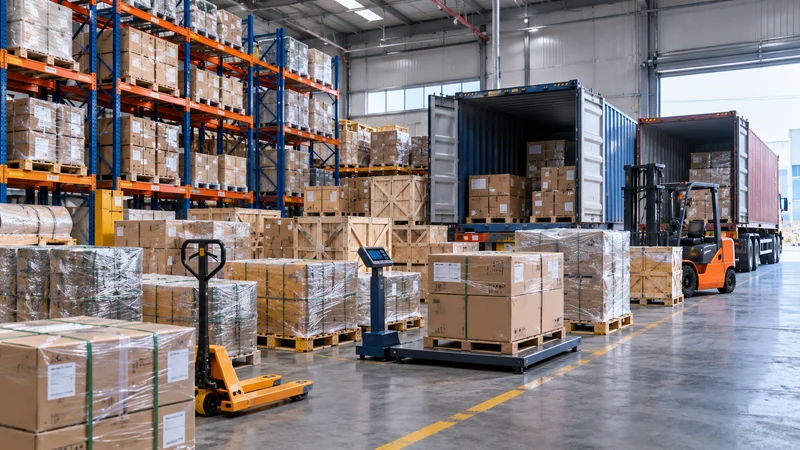
Once cargo reaches the appointed China warehouse, the next stage is preparing it for international transport.
Depending on the agreed service, warehouse activities may include:
- receiving;
- package counting;
- arrival photos;
- dimension and weight verification;
- supplier identification;
- cargo consolidation;
- repacking;
- palletizing;
- wooden crating;
- labeling;
- segregation of special cargo; and
- export-document review.
These services should not be assumed to be free.
For example, basic receiving may be included while repacking, palletizing, fumigation-compliant wood packaging, special lifting or long-term storage may be charged separately.
This stage is particularly important for multi-supplier shipments because the actual dimensions measured at the warehouse can differ from the supplier’s original estimate.
If the shipment grows from 5 CBM to 6.5 CBM after final packing, the freight basis may also change.
Step 3 — Choose the Main Transport
Use the shipping-method comparison to decide between express, air, LCL and FCL.
Door-to-door describes the logistics scope. It does not determine whether the international leg moves by sea, air or courier.
Sea LCL
Best for: commercial cargo that does not require a full container.
LCL allows multiple shipments to share container space. The China warehouse and consolidation process therefore become particularly important.
For a detailed mode comparison, see Sea Freight from China to Nigeria.
Sea FCL
Best for: larger-volume cargo, dedicated container requirements, or shipments where reduced cargo handling is preferred.
The door service can include factory pickup, container loading arrangements, ocean freight, Nigerian destination coordination and inland delivery, depending on the quotation.
Air Freight
Best for: urgent commercial cargo, valuable components, inventory replenishment and shipments where time matters more than the lowest freight cost.
Air freight can be combined with China pickup and Nigerian final-mile delivery without turning the shipment into DDP.
See Air Freight from China to Nigeria for mode-specific planning.
Express Courier
Best for: samples, documents, prototypes and relatively small shipments.
Courier services are naturally designed around pickup-to-address delivery, but duties, taxes and clearance requirements may still apply to commercial shipments.
Project Cargo and Dangerous Goods
Machinery, out-of-gauge equipment, batteries, chemicals and dangerous goods require shipment-specific acceptance.
The route, carrier, packaging, declarations and final-delivery vehicle should be checked before cargo is booked.
Step 4 — Confirm the Nigerian Gateway
Match the gateway to final delivery: Lagos, Abuja, Kano, or Onne / Port Harcourt.
The Nigerian gateway should be selected as part of the entire logistics plan rather than treating every shipment as simply “China to Nigeria.”
Nigeria has several important maritime gateways, including Lagos Port Complex at Apapa, Tin Can Island Port, Lekki Port and Onne Port. Lagos is also a major air-cargo entry point.
Possible routing decisions therefore include:
- Apapa;
- Tin Can Island;
- Lekki;
- Onne;
- Lagos air cargo routing; or
- another confirmed airport or port appropriate to the shipment.
The best gateway depends on more than ocean or air freight price.
It can be affected by:
- carrier or airline schedules;
- shipment type;
- container availability;
- final Nigerian destination;
- Customs arrangement;
- terminal handling requirements;
- cargo restrictions;
- inland trucking cost; and
- delivery urgency.
For example, cargo ultimately destined for Rivers State may justify comparing an eastern gateway with a Lagos arrival plus long-distance trucking rather than automatically routing everything through Lagos.
Step 5 — Decide Who Handles Nigerian Import Clearance
If the buyer remains importer of record, review the Nigeria customs-clearance workflow.
This is the point where apparently similar door-to-door quotations can become completely different services.
A shipment might use:
- the customer’s own appointed Nigerian customs broker;
- a Nigerian partner coordinated by the freight forwarder;
- a DAP structure in which the buyer remains responsible for import clearance; or
- a specifically validated DDP structure.
Nigeria still requires formal importer and customs processes regardless of the marketing label placed on a logistics service.
Depending on the shipment, import procedures may involve importer registration, Form M, PAAR, customs declaration, assessment, regulatory documentation and cargo release.
For SON-regulated products, SONCAP documentation may be part of the import process. Other product categories can be subject to additional authorities or permits.
The practical lesson is simple:
A door-to-door quotation should state who coordinates Nigerian import clearance and who bears assessed duties and taxes.
Avoid descriptions such as “customs-free shipping.” The cargo does not cease to be subject to Nigerian import controls merely because one logistics provider coordinates more of the process.
Step 6 — Plan the Final Delivery Before the Cargo Leaves China
“Deliver to Lagos” is not a complete delivery instruction.
A usable final-delivery plan should include:
- complete street or industrial-estate address;
- city and state;
- consignee company name;
- site contact and telephone number;
- operating hours;
- delivery appointment requirements;
- truck-access restrictions;
- road conditions;
- gate height or vehicle restrictions;
- loading dock availability;
- forklift availability;
- crane requirements for heavy cargo;
- unloading responsibility; and
- whether the vehicle must wait during unloading.
For heavy machinery, containers or large pallets, these details can materially change the delivery plan and price.
Is Unloading Included?
Never assume so.
A quotation may cover transport until the truck reaches the address while unloading remains the consignee’s responsibility.
Under DAP and DDP, delivery is generally understood as the goods being placed at the disposal of the buyer on the arriving means of transport, ready for unloading. Unloading responsibility should therefore be confirmed separately.
Pro Tip: Put both the exact delivery address and the unloading requirements on the RFQ before the shipment is booked.
Door-to-Door to Lagos vs Inland Nigeria
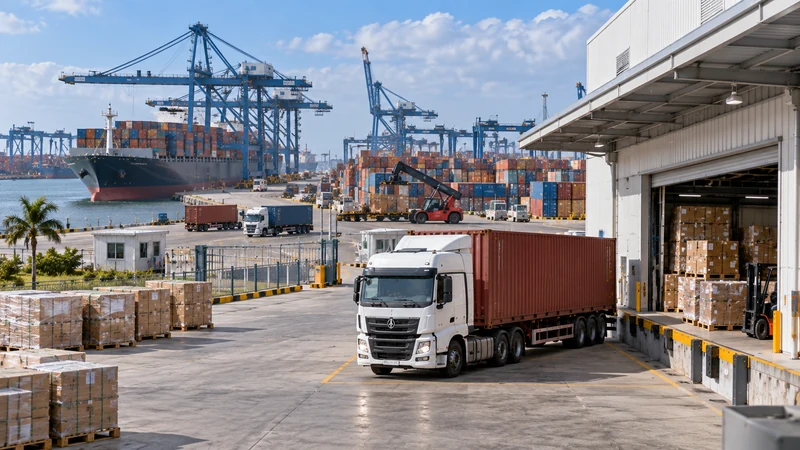
The final delivery structure changes significantly according to destination.
The following locations are routing examples rather than guaranteed service coverage. Actual door-delivery availability should be confirmed against the shipment, cargo type and current destination partner network.
Lagos
Lagos deliveries generally have the shortest final-mile structure when cargo enters through a Lagos port or airport.
But “Lagos” is still too broad for a firm delivery price.
The provider needs the actual delivery district, site type and truck-access information.
Ogun State
For industrial customers in Ogun, the transport plan should consider the factory location and road approach as part of the gateway decision.
A factory near Lagos does not necessarily have the same delivery cost or vehicle requirements as a more distant industrial site.
Abuja
Door delivery to Abuja adds a substantial inland leg when international cargo enters through Lagos.
For urgent cargo, air routing and subsequent road delivery may also need to be compared according to airline schedules, clearance arrangements and cargo characteristics.
Kano
Kano requires more careful inland planning because of the longer distance from southern gateways.
The forwarder should consider total cost, cargo security, truck type, delivery timing and whether an alternative air or multimodal strategy is more suitable.
Port Harcourt / Rivers State
For Rivers State deliveries, Onne versus a Lagos gateway plus inland trucking may be worth comparing.
The best option depends on available carrier routing, cargo type, local destination charges and the consignee’s exact location.
What Is Included in a Door-to-Door Quote?
A professional door-to-door quotation should make the cost boundary visible.
| Always List in the Quote | Potentially Included | Requires Confirmation | Should Be Explicit if Excluded |
|---|---|---|---|
| China service starting point | Supplier pickup | Customs brokerage | Duties and taxes |
| Main freight mode | China warehouse handling | Regulatory processing | Unloading |
| Nigerian gateway | Export declaration | Destination charges | Crane/forklift |
| Final delivery point | Basic consolidation | Import clearance coordination | Storage |
| Clearance model | Inland trucking | Insurance | Demurrage/detention |
| Rate validity | Delivery appointment | Special equipment | Regulatory certificates |
Specific components can include:
- China pickup;
- origin warehouse handling;
- export documentation;
- export customs process;
- ocean or air freight;
- terminal or airport destination handling;
- customs-broker services;
- duties and taxes;
- Nigerian inland transport;
- unloading;
- temporary storage;
- demurrage;
- detention; and
- special handling.
The phrase “all-in” is not enough.
Ask the provider to list what “all-in” actually includes.
How Door-to-Door Pricing Is Built
There is no reliable universal door-to-door price from China to Nigeria.
The basic cost structure can be viewed as:
China first mile
origin warehouse and handling
export formalities
international freight
Nigeria destination handling
customs-clearance scope
duties/taxes, if contractually included
inland delivery
special handling
Every component can change according to the shipment.
For example, the final trucking portion can be affected by:
- delivery city;
- weight;
- container type;
- vehicle type;
- fuel conditions;
- road access;
- waiting time;
- unloading equipment; and
- whether an empty container must be returned.
That is why two quotations labeled “door-to-door China to Nigeria” may not be commercially comparable.
Door-to-Door Transit Time Must Be Measured End to End
A shipping line’s sailing time or an airline’s airport-to-airport transit is not the same as door-to-door transit time.
A realistic end-to-end timeline begins when the cargo is available for the logistics process:
Supplier cargo ready
→ pickup
→ China warehouse receiving
→ consolidation or booking
→ export handling
→ international transport
→ Nigerian arrival
→ import clearance
→ cargo release
→ final delivery.
Each stage can add time.
For multi-supplier consolidation, the slowest supplier can determine when the complete shipment becomes ready.
For sea freight, vessel cut-off and consolidation schedules matter.
At destination, Customs queries, missing documentation, inspections, regulatory approvals, terminal handling and inland trucking can all affect the final delivery date.
Therefore, when comparing forwarders, ask:
“From which event do you start counting the transit time, and at which event does the quoted transit time end?”
A provider quoting only vessel sailing days should not present that figure as complete door-to-door transit.
Cargo That Requires Additional Review
Some products need more compliance, carrier or handling review before a door service can be confirmed.
Examples include:
- dangerous goods;
- lithium batteries;
- industrial chemicals;
- vehicles;
- machinery;
- oversized or out-of-gauge cargo;
- cosmetics;
- medical devices;
- regulated food;
- high-value cargo; and
- temperature-sensitive products.
This does not automatically mean the cargo cannot be shipped.
It means the shipment must be reviewed before acceptance.
Regulated products can require documentation or approvals from authorities such as SON or NAFDAC depending on the product category.
For regulated cargo, checking compliance before collection in China is far safer than discovering a missing permit after arrival.
What Happens When Something Goes Wrong?
A strong door-to-door service is not defined only by what happens when everything goes according to plan.
The real test is how exceptions are managed.
The Supplier Is Late
The forwarder should identify which supplier or purchase order has not arrived and explain how the delay affects consolidation or booking.
If other cargo is ready, the importer may need to decide whether to wait or split the shipment.
The Cargo Measures Larger Than Expected
Warehouse measurements should be documented.
If chargeable volume or weight increases, the provider should explain the revised freight basis before shipment where possible.
Customs Raises a Query
The clearing party should communicate:
- what Customs requested;
- which party must respond;
- what supporting documentation is needed; and
- whether additional cost exposure may result.
A forwarder can coordinate the response, but it cannot guarantee that Customs will accept a declaration or valuation.
A Required Certificate Is Missing
Shipment progress may stop until the relevant importer, supplier or authorized party obtains or corrects the required documentation.
Who pays resulting storage or amendment costs should follow the agreed scope and the reason for the problem.
Terminal Storage Starts Accruing
The logistics provider should identify:
- when free time ends;
- why release has not occurred;
- the estimated exposure; and
- what action is needed to prevent further charges.
The Delivery Address Changes
A different destination can require a new trucking rate, route, vehicle type or delivery schedule.
The change should therefore be confirmed before dispatching the final-mile vehicle.
The Recipient Cannot Unload
If unloading was not included and the receiving site lacks a forklift, crane or labor, the truck may incur waiting charges or require redelivery.
This is why unloading should be checked during RFQ preparation.
A Carton Arrives Damaged
The consignee should document visible damage before or during receipt where practical.
Photos, package count, delivery records and transport documents may be required when establishing what happened and whether a cargo-insurance claim is applicable.
For every exception, three questions matter:
- Who coordinates the corrective action?
- Who bears the cost when it falls outside the agreed scope?
- What evidence will be provided?
Door-to-Door Quote Checklist
Before approving a China-to-Nigeria door service, check the quotation line by line.
Origin Pickup Checklist
- Exact supplier pickup address
- Cargo-ready date
- Number of suppliers
- Number of packages
- Gross weight
- Dimensions / CBM
- Loading conditions
- Warehouse receiving scope
- Consolidation requirements
- Repacking or palletizing requirements
Customs-Responsibility Checklist
- Who is the Nigerian importer?
- Who coordinates Customs clearance?
- Which broker will be used?
- Who provides Form M, PAAR or other required import documentation?
- Are SON, NAFDAC or other regulatory requirements relevant?
- Who pays assessed import duties and taxes?
- Is the service DAP, DDP or another defined structure?
- Has DDP feasibility actually been validated for this commodity?
Final-Address Checklist
- Complete address
- City and state
- Receiving contact
- Working hours
- Truck restrictions
- Loading dock
- Forklift
- Crane
- Unloading responsibility
- Appointment requirement
- Site-access limitations
Door-to-Door Quote Audit
A complete offer should show:
- China origin;
- Nigerian destination;
- cargo description;
- quantity;
- weight and dimensions;
- transport mode;
- Nigerian gateway;
- customs arrangement;
- duty/tax responsibility;
- Incoterm or service basis;
- transit-time definition;
- inclusions;
- exclusions;
- rate validity;
- free-time conditions where relevant; and
- final delivery and unloading scope.
Pro Tip: Ask the provider to write one sentence stating who performs Nigerian import clearance and who pays Customs-assessed duties and taxes.
If the answer is unclear, the door-to-door scope is not yet clear.
Delivery Planning Matrix
| Destination | Gateway to Compare | Typical Final-Leg Planning | Main Issue to Confirm |
|---|---|---|---|
| Lagos | Apapa / Tin Can / Lekki / Lagos airport, as appropriate | Local trucking | Exact address, congestion, truck access |
| Ogun | Lagos-area gateways | Factory delivery | Industrial-site access and unloading |
| Abuja | Suitable sea/air gateway | Long-distance road or appropriate air/road plan | Inland cost and delivery schedule |
| Kano | Suitable confirmed gateway | Long-haul inland movement | Distance, truck planning, security and timing |
| Port Harcourt / Rivers | Onne vs Lagos routing | Regional or long-haul road | Total route cost and carrier availability |
These are planning comparisons, not guaranteed routing or service-coverage commitments. The actual shipment should be checked against current carrier schedules, partner capability and cargo requirements.
Example A — Multi-Supplier Sea Shipment to Lagos
Consider a Nigerian distributor buying from two suppliers in China.
Supplier A: Industrial components
Supplier B: Packaging materials
Instead of shipping each supplier separately, the planned flow could be:
Supplier A + Supplier B
→ collection or delivery to a China consolidation warehouse
→ package identification and measurement
→ consolidation
→ LCL or FCL booking based on final volume
→ export process
→ sea freight to an appropriate Lagos gateway
→ agreed Nigerian clearance model
→ cargo release
→ truck delivery to the importer’s named Lagos warehouse.
The important planning decisions are not simply “sea freight or air freight.”
The importer must also decide:
- whether to wait for both suppliers;
- how the export documentation will be structured;
- whether LCL or FCL is more appropriate;
- who handles import clearance;
- whether duties are inside or outside the logistics price; and
- who unloads at the Lagos warehouse.
Example B — Urgent Machinery Spare to Abuja
A manufacturer in Abuja urgently needs a replacement machinery component from a factory in China.
The shipment might be planned as:
China factory pickup
→ China air-freight warehouse
→ export preparation
→ air freight through a suitable confirmed Nigerian gateway
→ Nigerian Customs process
→ cargo release
→ road delivery to the factory in Abuja.
The planning priorities are different from those of a low-value sea shipment.
The importer should confirm:
- cargo dimensions and chargeable weight;
- airline acceptance;
- whether the component is regulated;
- importer and clearance documentation;
- the arrival gateway;
- final road-delivery arrangement;
- receiving hours; and
- whether special unloading equipment is required.
No responsible forwarder should promise an exact end-to-end delivery date or final cost before these variables are known.
Common Door-to-Door Shipping Mistakes
Assuming Door-to-Door Means DDP
It does not.
Physical pickup and delivery do not determine customs responsibility.
Giving the Forwarder Only “Nigeria” as the Destination
Nigeria is not a delivery address.
The forwarder needs the exact city and preferably the final address to calculate the inland leg accurately.
Ignoring Unloading
A truck arriving at the warehouse does not necessarily mean the driver will unload the cargo.
Failing to Define Duties and Taxes
The quotation should explicitly state whether import duties and taxes are included or payable separately.
Ignoring the Importer Structure
Do not book first and work out who can legally complete the Nigerian import process later.
Shipping Regulated Cargo Before Checking Compliance
Certificates, permits and registrations should be reviewed before departure when applicable.
Forgetting Final-Road Access
A container truck, heavy-duty truck or crane vehicle may not be able to enter every warehouse location.
Comparing Door-to-Door With Port-to-Port Headline Prices
The cheaper freight rate may become more expensive after destination charges, clearance coordination and inland transport are added.
Compare equivalent service scopes.
Calling Vessel Transit “Door-to-Door Transit”
An ocean transit figure does not equal the complete supplier-to-warehouse journey.
Origin handling, booking, clearance and final delivery must also be counted.
How to Compare Door-to-Door Providers
A useful comparison should look beyond the headline price.
Ask each forwarder to confirm the same points:
- Where does your China responsibility start?
- Is supplier pickup included?
- Is China warehouse receiving included?
- Which freight mode and Nigerian gateway are planned?
- Who handles import clearance?
- Who is responsible for duties and taxes?
- Is this DAP, DDP or another service structure?
- What Nigerian destination charges are included?
- Is final trucking included to my exact address?
- Is unloading included?
- What happens if Customs requests more documentation?
- What happens if the supplier’s dimensions are wrong?
- What free time applies where relevant?
- What charges can arise outside the quotation?
- What proof of delivery is provided?
- How long is the rate valid?
When every provider answers the same questions, you can compare the total service, not just the cheapest number in the freight column.
Check Your Door-to-Door Scope Before Booking
A door-to-door shipment should be designed from both ends.
From China, confirm:
supplier → pickup → warehouse → export → main freight
From Nigeria, confirm:
gateway → clearance responsibility → release → inland trucking → unloading → final address
The two halves must connect before the cargo moves.
If you are sourcing from several Chinese factories, origin pickup and consolidation can also be coordinated before the main shipment, subject to the cargo and agreed service scope.
Information to Send for Door-to-Door Planning
To build a shipment-specific plan, prepare:
- supplier city and full pickup address;
- number of suppliers;
- commodity;
- HS code if known;
- number of cartons, pallets or crates;
- package dimensions;
- gross weight;
- total CBM;
- cargo value;
- battery, liquid, chemical or DG information;
- preferred sea or air mode;
- Nigerian consignee/importer information;
- exact Nigerian delivery address;
- regulatory documentation already available;
- preferred clearance arrangement;
- required delivery date;
- unloading capability; and
- any special vehicle or handling requirements.
The more precise the pickup and destination information is, the fewer assumptions need to be built into the quotation.
Final Takeaway
Door-to-door shipping from China to Nigeria is best understood as an end-to-end logistics chain, not as a shortcut around import procedures.
A well-planned shipment connects:
Chinese supplier
→ China pickup
→ warehouse and cargo preparation
→ export process
→ sea or air freight
→ Nigerian gateway
→ agreed Customs structure
→ cargo release
→ inland delivery
→ final address.
The most important decision is not simply whether the quotation says “door-to-door.”
It is whether the quotation clearly answers:
Where does the service begin?
Where does it end?
Who performs Nigerian import clearance?
Who pays duties and taxes?
What is included at destination?
Who unloads the cargo?
What happens when something goes wrong?
Once those responsibilities are written down, door-to-door shipping becomes much easier to compare, budget and manage.
For a wider comparison of sea, air and express options, see Nigeria door-delivery planning hub and the relevant mode-specific guides before choosing the final service structure.
FAQ
What does door-to-door shipping from China to Nigeria include?
Door-to-door shipping means the logistics service starts at an agreed location in China and ends at an agreed address in Nigeria. Depending on the quotation, it may include supplier pickup, China warehouse handling, export coordination, sea or air freight, Nigerian destination handling, customs coordination and final trucking. Import clearance, duties, taxes, unloading, regulatory work and storage should be confirmed separately.
Is door-to-door shipping automatically DDP?
No. Door-to-door describes the physical transport scope, while DDP defines commercial responsibilities between seller and buyer. A DAP shipment can also be delivered to the buyer's door while the buyer remains responsible for Nigerian import clearance and import duties.
Can I use my own customs broker with door-to-door shipping?
Potentially, yes. A door service can be structured so your appointed Nigerian customs broker completes import clearance while the forwarder coordinates international transport and final delivery after release. This should be agreed before shipment.
Can door-to-door freight be sent by both sea and air?
Yes. Door-to-door is a service scope rather than a transport mode. It can be built around LCL, FCL, air freight, express courier or, subject to cargo acceptance, specialized transport.
Can goods be delivered outside Lagos?
Inland Nigerian delivery can be planned for destinations outside Lagos, but availability and pricing should be checked for the specific city, address, cargo and current transport network. Locations such as Ogun, Abuja, Kano and Port Harcourt require different final-mile planning.
Are customs duties included in a door-to-door rate?
Not necessarily. Duties may remain payable by the importer under buyer-clearance or DAP arrangements. They may be seller-side obligations under a properly structured and feasible DDP arrangement. The quotation should state the duty and tax responsibility clearly.
Is unloading included at my warehouse?
Not automatically. Many delivery arrangements end when the cargo reaches the named place on the arriving vehicle ready for unloading. Forklift, crane, labor or specialized unloading may need to be arranged and priced separately.
What information is needed for a door-to-door quote?
Provide the China pickup city or address, product description, package quantity, dimensions, gross weight, cargo value, Nigerian destination address, preferred freight mode, customs-clearance arrangement and any special cargo or unloading requirements.
