
Winsail Logistics Teamyejialiang521@gmail.comEdit Profile
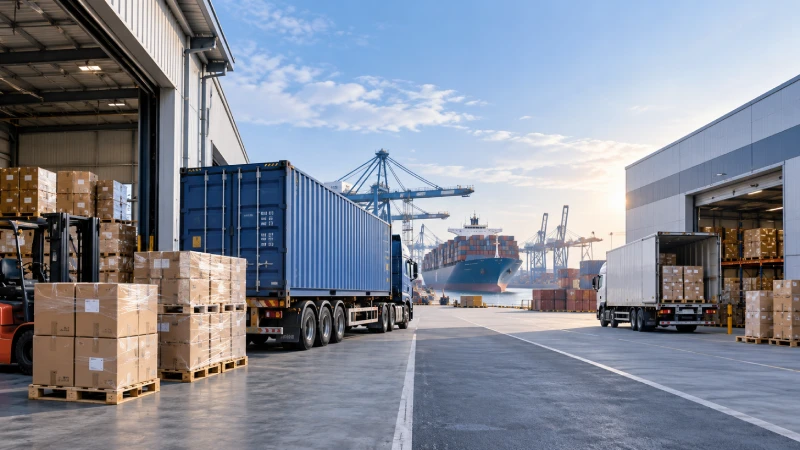
Door-to-door shipping from China to the UK is designed for importers who want one coordinated logistics process from a Chinese supplier or factory to a specified delivery address in the UK.
Depending on the agreed service scope, this can cover supplier pickup, consolidation in China, export customs clearance, sea or air freight, UK destination handling, customs coordination and final delivery to a warehouse, distribution centre, 3PL, commercial premises or other approved address.
However, there is one important distinction to understand before comparing quotations:
Door-to-door shipping is a logistics service scope. It does not automatically mean DDP.
A shipment can be delivered door-to-door under DAP, DDP or another commercial arrangement. The physical journey may look similar, but the responsibility for UK import clearance, Customs Duty, import VAT and importer setup can be very different.
For a broader comparison of sea freight, air freight, DDP, ports, transit times and general route planning, see our Shipping from China to the UK guide.
Quick Answer: How Does Door-to-Door Shipping from China to the UK Work?
A typical China-to-UK door-to-door shipment follows this chain:
Chinese supplier → pickup → origin warehouse or consolidation → China export clearance → sea or air freight → UK destination handling → customs clearance coordination → final UK delivery
The forwarder coordinates the transport between the agreed pickup and delivery points, but the customs and tax structure must be agreed separately.
Under DAP (Delivered at Place), the goods can still be transported all the way to the agreed UK address, while the buyer normally takes responsibility for import formalities and applicable import charges.
Under DDP (Delivered Duty Paid), the seller assumes significantly more responsibility, including import clearance and applicable duties and taxes. The International Chamber of Commerce describes DDP as the Incoterms® rule imposing the maximum level of obligation on the seller. See the ICC Incoterms® 2020 rules for DAP and DDP.
Therefore, before accepting any quotation described as “door-to-door,” confirm:
- who will be the UK importer;
- whose EORI will be used;
- who submits or instructs the import declaration;
- whether Customs Duty is included;
- how import VAT will be treated;
- whether the UK business intends to use Postponed VAT Accounting;
- exactly where final delivery ends.
A door-to-door quotation is only comparable with another quotation when the customs, tax and final-delivery scope is the same.
What Does Door-to-Door Shipping from China to the UK Actually Include?
For commercial cargo, door-to-door shipping normally refers to a coordinated transport chain rather than one individual transport service.
A forwarder may coordinate several suppliers, carriers, warehouses, customs representatives and UK delivery partners to move the cargo from origin to destination.
The exact scope should always be confirmed in the freight quotation.
Supplier Pickup in China
The first step is collection from the supplier.
For an accurate pickup arrangement, the forwarder normally needs:
- full supplier pickup address;
- contact person;
- cargo-ready date;
- number of cartons, pallets or packages;
- total gross weight;
- package dimensions;
- loading conditions at the factory or warehouse.
The pickup location matters because cargo collected from Shenzhen, Guangzhou, Dongguan, Ningbo, Shanghai, Qingdao or an inland manufacturing city will have different domestic trucking and origin-handling requirements.
If the supplier can load an FCL container directly at the factory, the operation is different from cargo that first needs to move to a consolidation warehouse.
Consolidation from Multiple Chinese Suppliers
Door-to-door shipping can also be useful when a UK buyer purchases goods from several factories.
Instead of each supplier arranging a separate international shipment, cargo may be collected and brought to an origin warehouse for consolidation.
Depending on the agreed service scope, consolidation may involve:
- receiving cargo from several suppliers;
- checking shipment references;
- counting packages;
- palletising where required;
- preparing consolidated cargo for LCL or air freight;
- coordinating the final export shipment.
Importers should not assume that freight consolidation automatically includes quality inspection, product testing or supplier QC. Those services should be agreed separately if required.
China Export Customs Clearance
Before commercial cargo leaves China, the export side needs the appropriate documentation and declaration arrangement.
Typical shipping documents can include:
- commercial invoice;
- packing list;
- shipping instructions;
- product description;
- HS code information;
- export-related documentation where applicable.
If several suppliers are involved, document consistency becomes particularly important. Product descriptions, quantities, package numbers and values should not conflict between the supplier documents and the final shipping documents.
International Freight
The international movement may be arranged by:
- FCL sea freight;
- LCL sea freight;
- air freight;
- express courier for suitable small shipments;
- another agreed multimodal arrangement.
The important question for a door-to-door shipment is not simply whether the cargo moves by sea or air. It is how the international leg connects with origin pickup, customs procedures and final UK delivery.
For example, an FCL shipment may move directly from a factory-loaded container to a UK port and then continue by container haulage.
An LCL shipment normally requires consolidation in China and deconsolidation after arrival before the individual shipment can continue to the consignee.
An air shipment may arrive quickly at a UK airport, but it still has to complete ground handling, customs release and final-mile transport before it reaches the buyer.
Door-to-Door vs Port-to-Port Shipping
Port-to-port freight only covers part of the logistics chain.
For an experienced importer with its own UK customs broker, haulage provider and warehouse operation, port-to-port shipping may offer more control.
For an importer that does not want to coordinate each stage separately, door-to-door shipping can reduce the number of operational handoffs.
| Service Item | Door-to-Door | Port-to-Port |
|---|---|---|
| Pickup from Chinese supplier | Usually included if agreed | Usually arranged separately |
| Origin handling | Can be coordinated | Depends on quotation |
| China export clearance | Can be coordinated | Depends on origin arrangement |
| International freight | Included | Included |
| UK destination handling | Should be defined in quote | Usually handled separately |
| UK customs coordination | Can be arranged where applicable | Importer normally arranges |
| Customs Duty / import VAT | Depends on DAP, DDP and importer setup | Importer normally manages |
| UK inland haulage | Included to agreed address if quoted | Separate |
| Delivery appointment | Can be arranged if specified | Separate |
| Tail-lift / special delivery | Must be requested | Separate |
| Unloading | Must be agreed | Importer normally arranges |
| Main advantage | Fewer logistics parties to coordinate | Greater importer control |
| Main risk | Poorly defined “all-in” quotations | More operational handoffs |
The important phrase is “if agreed.”
Door-to-door should not be interpreted as an unlimited list of destination services.
A quotation that ends at the kerb outside a warehouse is operationally different from one that includes a booked warehouse slot, tail-lift vehicle and pallet delivery.
How a China-to-UK Door-to-Door Shipment Works Step by Step
Although every shipment is different, a typical commercial movement can be broken into seven operational stages.
1. Supplier Collection
The cargo is collected from the agreed supplier or factory address.
For FCL cargo, this may involve positioning an empty container for loading.
For LCL or air freight, cargo may first be trucked to a consolidation facility.
2. Origin Handling and Consolidation
If required, goods are received at a China warehouse and prepared for the international movement.
This stage becomes particularly useful for importers purchasing from multiple suppliers.
3. China Export Clearance
Export documentation and the China-side customs process are coordinated according to the shipment and exporter arrangement.
4. Sea or Air Freight
The cargo moves to the UK using the selected freight method.
The best mode depends on factors including:
- shipment volume;
- weight;
- dimensions;
- urgency;
- cargo value;
- cargo type;
- destination;
- available carrier schedules.
5. UK Destination Handling
After arrival, cargo may need terminal handling, airline handling, container release or LCL deconsolidation before it is ready for customs release and inland transport.
6. Customs Coordination
A customs agent, freight forwarder or another representative may submit or coordinate a customs declaration, depending on the commercial arrangement.
HMRC makes clear that businesses can appoint someone to deal with customs, but what that representative can do and who is liable depends on the services provided, the instructions given and the commercial agreement. HMRC also states that appointing another party does not remove the importer’s responsibility to exercise appropriate due diligence over its customs declarations. See HMRC guidance on appointing someone to deal with customs on your behalf.
In practical terms:
A forwarder coordinating UK customs clearance does not automatically become the UK importer.
7. Final UK Delivery
Once the cargo is released and available for collection, inland delivery is arranged to the agreed destination.
That could be:
- an importer-owned warehouse;
- third-party logistics warehouse;
- distribution centre;
- Amazon fulfilment centre where the required inbound arrangements can be met;
- retail premises;
- manufacturing site;
- project location;
- another suitable commercial address.
The final UK postcode and receiving conditions should be provided before the shipment is booked.
Door-to-Door Shipping Under DAP, DDP or Another Commercial Structure
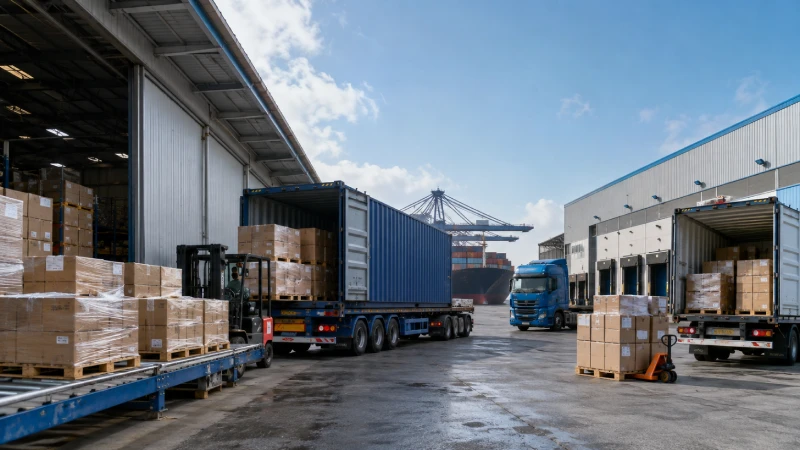
One of the most common mistakes when importing from China is treating “door-to-door” and “DDP” as interchangeable terms.
They are not.
DAP Door-to-Door Shipping
DAP means Delivered at Place.
Under the ICC Incoterms® 2020 rule, the seller delivers the goods at the agreed destination on the arriving means of transport, ready for unloading. Import clearance remains the buyer’s responsibility. ICC also recommends identifying the exact named destination or delivery point clearly.
A shipment can therefore be physically door-to-door while operating under DAP.
For example:
Factory in Shenzhen → pickup → export → sea freight → Felixstowe → UK customs → Birmingham warehouse
The freight can be coordinated to the Birmingham warehouse while the UK buyer remains responsible for its import formalities, Customs Duty and import VAT.
DAP can work well for established UK importers that already have:
- a GB EORI;
- their own VAT setup;
- their own customs instructions;
- a preferred customs broker;
- Postponed VAT Accounting arrangements.
DDP Door-to-Door Shipping
DDP means Delivered Duty Paid.
Under DDP, the seller takes substantially greater responsibility for getting the goods to the named destination, including import clearance and applicable import duties and taxes.
However, describing a service as DDP does not make the practical import structure disappear.
Before a China-to-UK DDP shipment is accepted, important questions still need to be answered:
- Who can legally act within the import structure?
- Which entity is identified on the customs declaration?
- What EORI arrangement is used?
- How will import VAT be treated?
- Does the commodity have additional import controls?
- Is the product suitable for the intended UK market?
- Is the destination in Great Britain or Northern Ireland?
- Can the agreed final delivery actually be performed?
For this reason, DDP should be offered subject to shipment, importer, tax and destination review, rather than presented as a universal solution for every shipment.
Door-to-Door Does Not Require DAP or DDP
A buyer can also control the freight itself.
For example, the purchase contract may use FOB, FCA or another agreed Incoterm while the UK importer appoints its own freight forwarder to coordinate:
- China pickup;
- international freight;
- destination clearance;
- final warehouse delivery.
The key principle is:
The Incoterm defines commercial delivery responsibilities between buyer and seller. The freight-forwarding scope defines which logistics activities the appointed forwarder coordinates.
They influence each other, but they are not the same thing.
DAP vs DDP at a Glance
| Question | DAP | DDP |
|---|---|---|
| Can cargo still move door-to-door? | Yes | Yes |
| Transport to named destination | Seller-side responsibility | Seller-side responsibility |
| Import clearance | Buyer responsibility | Seller responsibility |
| Customs Duty | Buyer responsibility | Seller responsibility |
| Import VAT | Buyer/importer structure | Seller responsibility under DDP structure |
| Suitable for | Importers wanting control over import entry | Transactions where DDP structure is workable |
| Main point to confirm | Importer, EORI and tax payment | Import representation and tax structure |
What UK Importers Should Have Ready Before Door-to-Door Shipping
Door delivery does not remove the normal requirements of importing commercial goods.
GB EORI Number
Businesses importing into England, Wales or Scotland generally need an EORI number beginning with GB. GOV.UK separately notes that movements involving Northern Ireland may require an EORI beginning with XI. See the GOV.UK import process guidance.
The importer identity and EORI arrangement should ideally be confirmed before the cargo is shipped.
Leaving this until the container or air shipment arrives can create unnecessary clearance delays.
Correct Commodity Code
The UK Trade Tariff should be used to identify the correct commodity code for the imported product.
The code helps determine:
- Customs Duty;
- import VAT treatment;
- licences;
- restrictions;
- trade-remedy measures;
- other documentary controls.
Importers should verify the appropriate UK classification rather than relying automatically on the code supplied by an overseas supplier.
This matters for China-origin goods because the supplier’s export HS code may not by itself provide everything required for a UK import declaration.
Customs Duty and Import VAT
There is no single Customs Duty rate for all goods imported from China.
Duty depends on factors including the commodity code and applicable tariff measures.
The standard UK VAT rate is currently 20% for most goods and services, while reduced and zero-rated categories also exist. The correct treatment should therefore be checked for the actual product rather than assuming every import simply has “20% tax.” See the GOV.UK VAT rates guidance.
Postponed VAT Accounting
For an eligible UK VAT-registered business, Postponed VAT Accounting (PVA) can be particularly important when choosing how to structure a door-to-door shipment.
PVA allows qualifying businesses to account for import VAT through the VAT Return instead of necessarily paying the import VAT upfront and recovering it later. See HMRC guidance on Postponed VAT Accounting.
HMRC’s postponed import VAT statements are linked to import declarations made under the relevant EORI number.
That means a VAT-registered UK importer should not select DDP purely because it sounds simpler.
If the business wants imports correctly recorded against its own EORI and PVA records, the import structure needs to be discussed before customs declaration.
Pro Tip: If you intend to use PVA, tell the forwarder or customs representative before the import declaration is submitted.
Product Compliance and Import Licences
Customs clearance and product compliance are separate issues.
A forwarder may coordinate the physical shipment and customs process, but this does not certify that the product complies with all regulations required for sale or use in Great Britain.
Current UK government guidance states that product requirements depend on the specific product sector. For many regulated manufactured goods, UKCA and CE regimes may be relevant, while other sectors have their own regulatory frameworks. See GOV.UK guidance on placing UKCA or CE marked products on the market in Great Britain.
Depending on the cargo, importers may also need to consider:
- licences;
- permits;
- conformity documentation;
- labelling;
- product safety requirements;
- food or plant controls;
- medical-device rules;
- dangerous-goods requirements.
Door-to-door transport does not remove these obligations.
Great Britain and Northern Ireland Are Not the Same Import Destination
For freight planning purposes, a UK delivery address should first be identified as either:
Great Britain: England, Scotland or Wales
or
Northern Ireland
A GB EORI is generally relevant for importing into England, Wales and Scotland, whereas movements and declarations involving Northern Ireland can require an XI EORI.
Direct imports from China into Northern Ireland also require additional tariff analysis.
HMRC guidance states that goods brought into Northern Ireland from countries outside both the UK and EU may be treated as either “at risk” or “not at risk” of onward movement to the EU. Depending on that status, UK or EU duty treatment may apply. See HMRC guidance on the correct duty for goods brought into Northern Ireland from outside the EU and UK.
For this reason:
A Belfast or other Northern Ireland delivery should not automatically be quoted as if it were an ordinary mainland Great Britain door delivery.
The customs structure should be reviewed separately.
What Should Be Included in a China-to-UK Door-to-Door Quote?
A good door-to-door quotation should make it possible to see where the forwarder’s responsibility starts and stops.
It should not simply say:
“Freight + customs + delivery included.”
Important cost components can include the following.
Origin Costs
Depending on the quotation:
- supplier pickup;
- local China trucking;
- origin warehouse handling;
- consolidation;
- export customs clearance;
- documentation;
- terminal handling.
International Freight
The quotation should identify:
- freight method;
- FCL, LCL or air freight;
- origin and destination routing;
- chargeable basis;
- applicable freight surcharges.
UK Destination Costs
Depending on mode:
- terminal handling;
- airline or port handling;
- LCL deconsolidation;
- customs-entry service;
- documentation;
- destination warehouse handling;
- inland haulage.
Customs Duty and Import VAT
A quotation should state clearly:
- whether Customs Duty is included or excluded;
- whether import VAT is included or excluded;
- who is responsible for the payment;
- which importer structure is being used;
- whether PVA is intended.
The phrase “customs included” is not enough.
It may mean only that a customs declaration service fee is included. It does not necessarily mean Customs Duty and import VAT are included.
Final Delivery
The delivery quotation should identify the actual delivery point and any important receiving conditions.
Use this checklist when comparing quotations:
| Quote Item | Included? | Key Detail to Confirm |
|---|---|---|
| China supplier pickup | Exact address | |
| Consolidation | Number of suppliers | |
| Export clearance | Export arrangement | |
| Sea / air freight | Mode and routing | |
| UK terminal handling | Included or separate | |
| Customs declaration | Importer and EORI | |
| Customs Duty | Commodity code | |
| Import VAT | VAT/PVA treatment | |
| UK haulage | Full postcode | |
| Tail-lift | Required or not | |
| Timed delivery | Booking requirements | |
| Unloading | Carrier or consignee | |
| Waiting time | Free time and charges | |
| POD | Required format |
Pro Tip: Compare freight quotations on the same Incoterm, customs, tax and delivery basis—not simply by comparing the largest number at the bottom of each quote.
Why Your UK Postcode Matters for Final Delivery
For international freight planning, “London,” “Birmingham” or “Manchester” is not a precise delivery destination.
The complete postcode is much more useful.
It helps identify:
- delivery distance;
- regional depot;
- vehicle requirements;
- access restrictions;
- possible remote-area charges;
- delivery-time options.
The actual site conditions also matter.
Commercial vs Residential Addresses
A warehouse on an industrial estate can normally accept different vehicles from a residential street or small retail unit.
Before booking delivery, confirm:
- road access;
- parking restrictions;
- gate dimensions;
- vehicle size limitations;
- opening hours;
- unloading facilities.
Large freight vehicles should not be assumed to be suitable for every residential or city-centre location.
Tail-Lift Delivery
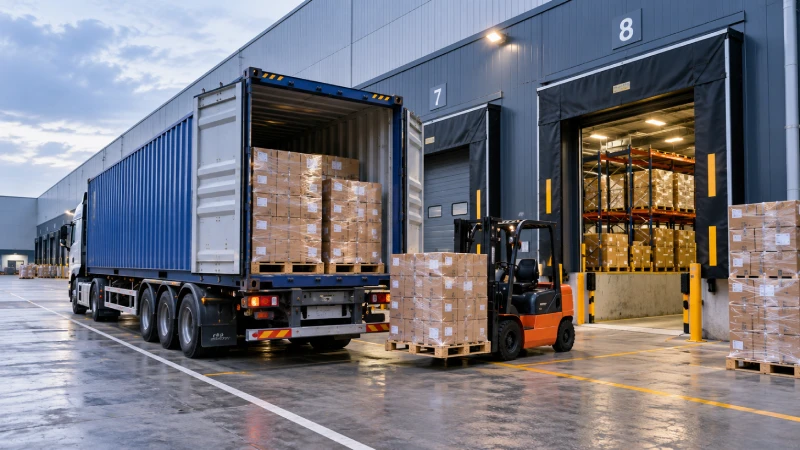
If the consignee does not have a loading dock or forklift, a tail-lift vehicle may be required for suitable palletised cargo.
Tell the forwarder in advance if the receiving point has:
- no forklift;
- no loading dock;
- limited staff;
- restricted vehicle access.
Tail-lift requirements identified after dispatch can result in rebooking or extra delivery charges.
Pallet Delivery
For pallet cargo, provide:
- pallet dimensions;
- weight per pallet;
- number of pallets;
- whether pallets can be stacked;
- whether the consignee has unloading equipment.
A delivery vehicle arriving with a 900 kg pallet is not useful if the receiver has no safe way to unload it.
Warehouse and 3PL Appointments
Distribution centres and third-party logistics warehouses may require:
- advance booking;
- specific delivery windows;
- shipment references;
- pallet labels;
- receiving documentation.
These conditions should be provided before final-mile transport is arranged.
Container Delivery and Unloading
FCL cargo needs additional planning.
A container may arrive at the warehouse on a skeletal trailer for unloading rather than simply being removed from the truck and left on the ground.
Before arranging FCL delivery, confirm:
- can a 20ft or 40ft container truck access the site?
- is there enough manoeuvring space?
- is a forklift available?
- how long will unloading take?
- is a live unload planned?
- is another container-handling arrangement required?
Waiting time, detention and other charges may apply when unloading exceeds the agreed allowance.
Pro Tip: Plan the container unloading operation before the vessel arrives in the UK—not when the truck is already at the warehouse gate.
Sea Freight vs Air Freight for Door-to-Door Delivery
Choosing between sea and air should be based on the entire door-to-door operation, not just the international freight leg.
Door-to-Door FCL Sea Freight
A typical FCL operation may look like:
Supplier → container loading → China port → ocean freight → UK container terminal → customs release → container haulage → consignee unloading
FCL is normally considered for larger or heavier commercial shipments where sea freight offers a better unit cost.
The importer also needs a workable container delivery and unloading plan.
Door-to-Door LCL Sea Freight
For a smaller shipment:
Supplier → China warehouse → LCL consolidation → ocean freight → UK deconsolidation → customs → pallet/truck delivery
LCL removes the need to pay for a full container, but additional consolidation and deconsolidation stages can make total door-to-door timing less predictable than the vessel schedule alone suggests.
Door-to-Door Air Freight
A typical air shipment moves:
Supplier → China airport handling → flight → UK airport handling → customs release → final truck or courier delivery
Air freight is useful for:
- urgent replenishment;
- higher-value cargo;
- product launches;
- time-sensitive commercial shipments;
- smaller volumes where sea freight is too slow.
Air quotations should be based on chargeable weight, not just scale weight.
| Shipment Situation | Option to Consider |
|---|---|
| Urgent inventory | Air freight |
| Heavy bulk cargo | Sea freight |
| Full-container volume | FCL |
| Smaller palletised shipment | LCL |
| High-value time-sensitive goods | Air |
| Difficult delivery site | Review final mile before choosing mode |
| Dangerous goods | Shipment assessment required first |
| Importer wants PVA control | Confirm customs structure before selecting DDP |
If the cargo contains lithium batteries, chemicals or other dangerous goods, transport rules can differ by air, road and sea. GOV.UK references the applicable international frameworks including IATA/ICAO for air, ADR for road and IMDG for sea. See GOV.UK dangerous goods transport guidance.
Such cargo should be reviewed before a transport method is confirmed.
How Long Does Door-to-Door Shipping from China to the UK Take?
Door-to-door transit time should never be confused with port-to-port or airport-to-airport transit time.
The total timeline can include:
At Origin
- waiting for cargo readiness;
- supplier pickup;
- consolidation;
- warehouse cut-off;
- export declaration;
- carrier departure schedule.
During International Transit
- direct or transshipment service;
- vessel schedule;
- airline capacity;
- route changes;
- congestion.
After UK Arrival
- terminal availability;
- customs release;
- LCL deconsolidation;
- haulage availability;
- delivery appointment.
As a planning reference, air door-to-door shipments can often be completed considerably faster than sea freight, while sea freight may require several weeks from China pickup through UK delivery. Actual timing depends on the origin city, cargo readiness, carrier schedule, direct or transshipment routing, customs release and delivery appointment availability.
A container advertised with a 30-day ocean transit does not mean the cargo will arrive at the buyer’s warehouse exactly 30 days after it leaves the supplier.
For more detailed route and mode comparisons, see How Long Does It Take to Ship from China to the UK?.
How Much Does Door-to-Door Shipping from China to the UK Cost?
There is no meaningful universal door-to-door shipping rate.
Two shipments with the same weight can have very different landed logistics costs.
A freight forwarder normally needs to assess factors including:
- China pickup city;
- supplier count;
- cartons or pallets;
- dimensions;
- gross weight;
- CBM;
- air-freight chargeable weight;
- FCL or LCL;
- commodity;
- cargo value;
- Customs Duty;
- VAT treatment;
- destination port or airport;
- UK postcode;
- unloading requirements;
- seasonal freight market.
For example, a lower headline freight quotation may exclude:
- UK terminal handling;
- customs-entry charges;
- destination warehouse charges;
- Customs Duty;
- import VAT;
- inland delivery.
Another quotation may include several of those components.
The second price may appear higher but actually cover more of the end-to-end shipment.
That is why the first question should not be:
“Which quote is cheaper?”
It should be:
“What exactly does each quote include?”
For current freight benchmarks by FCL, LCL and air freight, see our Shipping Cost from China to the UK guide.
Because international freight rates change frequently, an actual shipment quotation should always be based on current cargo information and booking conditions.
When Is DDP Door-to-Door Workable — and When May DAP Be Better?
DDP can be convenient, but convenience alone should not determine the Incoterm.
DDP May Be Worth Reviewing When
A DDP structure may be considered where:
- the seller-side import arrangement is workable;
- responsible import parties are clearly identified;
- the commodity is accepted under the proposed service;
- duty and VAT treatment is understood;
- customs representation can be arranged correctly;
- final delivery is feasible.
Each shipment still needs review.
DAP May Be Better for an Established UK Importer
DAP may be more appropriate when the buyer:
- already has a GB EORI;
- is VAT registered;
- wants imports recorded against its own EORI;
- intends to use PVA;
- has its own customs broker;
- wants more control over declarations;
- maintains its own import-VAT and customs records.
PVA is particularly relevant because HMRC states that eligible UK VAT-registered businesses can declare and recover import VAT through the same VAT Return rather than necessarily funding the VAT upfront.
That can make control over the importer and declaration structure commercially important.
DDP Does Not Mean “Tax-Free”
DDP should never be marketed as:
- tax-free shipping;
- customs-free shipping;
- no-tax shipping;
- duty-free logistics;
- a special customs channel.
Applicable UK duties and taxes do not disappear because DDP is used.
DDP determines who carries the contractual responsibility for import formalities and applicable import charges under the agreed transaction structure.
Shipping from a Chinese Supplier to a UK 3PL or Amazon Warehouse
Door delivery can also be arranged for inventory moving into distribution networks, subject to receiver requirements.
UK 3PL Warehouse Delivery
Before shipment, provide:
- full warehouse address and postcode;
- warehouse contact;
- delivery hours;
- booking instructions;
- delivery reference;
- pallet requirements;
- unloading conditions.
Do not assume a 3PL will accept an unannounced delivery.
Amazon Fulfilment Centre Delivery
An Amazon fulfilment-centre shipment requires more than simply delivering freight to the correct postcode.
Depending on the current Amazon inbound process and shipment type, the importer or seller may need to coordinate:
- correct destination fulfilment centre;
- shipment references;
- carton or pallet preparation;
- labels;
- delivery appointment;
- applicable inbound requirements.
The exact requirements should be checked for the shipment before booking.
A general “door-to-door” freight quotation should not automatically be interpreted as confirmation that every Amazon inbound requirement is included.
For broader fulfilment logistics support, see Winsail’s Amazon FBA Shipping service page.
What Information Do You Need for a Door-to-Door Shipping Quote?
The fastest way to obtain a useful quotation is to provide complete shipment information at the beginning.
1. China Pickup Address
Provide the full factory or supplier location, not only the city.
2. UK Delivery Postcode
A complete postcode allows final-mile delivery to be assessed more accurately.
3. Cargo Description
State what the goods actually are.
“Accessories,” “parts” or “products” may be too vague for freight and customs assessment.
4. Number of Cartons or Pallets
Include the packaging configuration.
5. Dimensions
Provide:
Length × Width × Height
for each carton, pallet or package type.
6. Gross Weight
Provide the total shipment weight and, where relevant, weight per pallet or package.
7. Cargo Value
The commercial value is important for customs and insurance planning.
8. Cargo-Ready Date
Freight rates and carrier schedules are time-sensitive, so the planned shipping date matters.
9. Special Cargo Information
Tell the forwarder if the cargo contains:
- lithium batteries;
- liquids;
- chemicals;
- magnets;
- oversized items;
- machinery containing batteries or fluids;
- other controlled or dangerous goods.
10. UK Importer Setup
For UK door-to-door shipping, also clarify:
- Is there an established UK importer?
- Is a GB EORI available?
- Is the importer UK VAT registered?
- Does the business intend to use PVA?
- Does the importer already use a customs broker?
- Is the delivery in Great Britain or Northern Ireland?
- Is DAP or DDP preferred, if already decided?
If you are unsure which structure is appropriate, provide the business setup first rather than selecting DDP simply because it appears easier.
Door-to-Door Shipping Checklist
Before booking, confirm the following.
China Side
- Exact pickup address
- Cargo-ready date
- Number of suppliers
- Carton/pallet dimensions
- Gross weight
- Cargo description
- Export-document arrangement
UK Customs
- Importer identified
- Correct EORI identified
- Commodity code reviewed
- Customs Duty checked
- Import VAT treatment understood
- PVA requirement confirmed where applicable
- Product licences/compliance checked where necessary
UK Delivery
- Full postcode
- Commercial/residential/site type confirmed
- Delivery hours
- Appointment requirement
- Forklift availability
- Loading dock availability
- Tail-lift requirement
- FCL container access
- Unloading responsibility
If these questions are answered before departure from China, the door-to-door shipment is much easier to plan correctly.
FAQ
Is door-to-door shipping from China to the UK the same as DDP?
No. Door-to-door describes the physical logistics coverage from the agreed China pickup point to the UK delivery address. DDP is an Incoterms® rule defining seller and buyer responsibilities, including the seller’s responsibility for import clearance and applicable import duties and taxes. A door-to-door shipment can also operate under DAP or another agreed commercial arrangement.
Can I use DAP for door-to-door shipping from China to the UK?
Yes. Under DAP, the seller can arrange transport to the agreed UK destination while the buyer remains responsible for import customs formalities and applicable import charges. This can suit established UK importers that want to control their own EORI, customs entry, VAT records or PVA arrangement.
Do I need a UK EORI number for door-to-door shipping from China?
Businesses importing goods into England, Scotland or Wales generally need an EORI beginning with GB. Northern Ireland movements may require an XI EORI depending on the circumstances. The correct importer and EORI structure should be established before shipment.
Does a door-to-door shipping quote include UK Customs Duty and VAT?
Not automatically. Door-to-door describes the transport scope. Whether Customs Duty and import VAT are included depends on the agreed DAP, DDP or other import arrangement. The customs declaration service, Customs Duty and import VAT should be identified separately in the quotation.
Can goods be collected from my Chinese supplier and delivered to my UK warehouse?
This type of end-to-end movement can be coordinated subject to the shipment details, pickup location, cargo type, importer arrangement and UK delivery requirements. For accurate planning, provide the China pickup address and complete UK postcode.
What information is needed for a China-to-UK door-to-door quotation?
At minimum, provide the China pickup address, UK postcode, product description, package quantity, cargo dimensions, gross weight, cargo value, cargo-ready date and UK importer setup. More complete information normally produces a more useful quotation.
Can cargo from China be delivered directly to a UK Amazon or 3PL warehouse?
Potentially, where the receiving requirements can be met. Amazon and 3PL facilities may have specific requirements for delivery bookings, shipment references, pallet or carton preparation and receiving appointments, so these should be confirmed before final delivery is booked.
Plan Your China-to-UK Door-to-Door Shipment
A good door-to-door shipping plan does more than move cargo from one address to another.
It connects:
supplier pickup → origin handling → international freight → UK customs → importer setup → final delivery
without leaving important responsibilities undefined between each stage.
The most important first step is therefore not choosing between “DDP” and “DAP” from a price list.
It is establishing:
- where the goods are collected;
- where they must be delivered;
- what the cargo is;
- who the UK importer is;
- how customs and VAT should be handled;
- what the receiving site requires.
Winsail Logistics can coordinate China-to-UK door delivery according to the agreed service scope, subject to cargo, importer, customs and destination requirements.
To review the shipment, provide:
- China pickup address
- UK delivery postcode
- Cargo description
- Carton or pallet dimensions
- Gross weight
- Commercial value
- Cargo-ready date
- UK importer / EORI / VAT setup
From there, the appropriate sea or air freight route and DAP, DDP or other door-delivery structure can be assessed before the shipment is booked.
