

DAP and DDP can look very similar on a freight quotation from China to the UK. Under both terms, the seller can arrange transportation to a named UK destination, such as a warehouse in Birmingham, Manchester or London.
The important difference appears at import.
Under DAP (Delivered at Place), the buyer is responsible for UK import clearance, Customs Duty and Import VAT. Under DDP (Delivered Duty Paid), those import obligations are allocated to the seller under Incoterms® 2020.
For UK imports, however, that does not mean every DDP quotation is automatically workable.
A China-based seller is normally not established in the UK. HMRC states that a non-UK-established party importing goods into Great Britain can only appoint someone to act as an indirect customs representative. Under indirect representation, both the principal and representative can become jointly and severally liable for customs debt, including applicable Customs Duty and Import VAT.
That is why a seller may contractually agree to DDP but still face difficulty arranging a customs representative willing to support the proposed import structure.
For broader information on freight methods, transit planning, ports and shipping costs, see our Shipping from China to the UK guide. This article focuses specifically on whether DAP, DDP or another door-delivery arrangement makes sense for your UK import.
Regulatory review: September 2026. This guide provides general shipping and customs information and is not legal or tax advice.
DAP vs DDP China to UK: The Difference in One Minute
According to HMRC’s current Incoterms guidance, DAP and DDP are both destination-based Incoterms that can be used with any mode or combination of transport modes. Under DAP, the seller delivers the goods on the arriving means of transport, ready for unloading at the named destination. Under DDP, delivery takes place in essentially the same way, but the goods must also be cleared for import.
The simplest distinction is:
DAP: the seller arranges carriage to the agreed UK destination, while the buyer manages the UK import side.
DDP: the seller additionally takes contractual responsibility for import clearance, import duty and applicable import taxes.
Both terms should identify the destination precisely. Writing only “DAP UK” or “DDP UK” leaves too much uncertainty. A better commercial term would specify the actual location, for example:
DAP Birmingham warehouse, [postcode], Incoterms® 2020
or
DDP Manchester distribution centre, [postcode], Incoterms® 2020
Under both DAP and DDP, the goods are normally delivered ready for unloading. Unless the parties separately agree otherwise, unloading is generally the buyer’s responsibility.
Another point often misunderstood is insurance. DAP and DDP do not create the same mandatory insurance obligation as an Incoterm such as CIP. The seller nevertheless carries the transportation risk to the named delivery point.
Door-to-Door Does Not Automatically Mean DDP
“Door-to-door” describes the transport scope. It is not itself an Incoterm.
A freight forwarder may coordinate pickup from a supplier in Shenzhen and delivery to a warehouse in Leeds while the shipment is structured as DAP, DDP or another agreed arrangement.
Therefore, a quotation stating only “door-to-door included” does not tell you:
- who will be named on the UK import declaration;
- who clears the goods;
- whose EORI is used;
- how Customs Duty is handled;
- how Import VAT is accounted for.
Those details should be confirmed separately.
DAP vs DDP Responsibility by Shipping Stage
The most useful way to compare DAP and DDP is to follow the shipment from the Chinese supplier to the final UK delivery address.
| Shipping Stage / Issue | DAP | DDP | UK Operational Note |
|---|---|---|---|
| China pickup / origin carriage | Seller | Seller | Exact origin scope should be agreed |
| China export formalities | Seller | Seller | Product-specific export requirements may still apply |
| International freight | Seller | Seller | Can apply to sea, air or multimodal transport |
| Transit formalities where required | Seller | Seller | Depends on routing |
| Transport risk to named destination | Seller | Seller | Normally remains with seller until goods arrive ready for unloading |
| UK import clearance | Buyer | Seller | DDP requires a workable UK customs structure |
| Commodity classification for import | Import-side responsibility must be managed by buyer/declarant structure | Seller-side import structure must manage it | Declaration liability depends on actual parties involved |
| Customs Duty | Buyer | Seller contractually | Rate depends on commodity code, customs value, origin and applicable reliefs |
| Import VAT | Buyer/import structure | Seller contractually | VAT accounting and recovery depend on actual declaration and VAT structure |
| Customs representative | Commonly appointed by buyer | Seller-side structure must arrange | Non-UK establishment can require indirect representation |
| GB EORI | Commonly buyer’s EORI | Depends on actual import structure | Never assume DDP means buyer can never need an EORI |
| Postponed VAT Accounting | Often fits a VAT-registered UK buyer acting as importer | Requires careful structuring | Incoterm alone does not determine PVA treatment |
| Final UK transport | Seller | Seller | Exact delivery postcode and site conditions matter |
| Unloading at destination | Buyer | Buyer | Unless separately agreed |
| UK product compliance | Separate obligation | Separate obligation | DDP does not certify goods for the UK market |
Important: The table describes the core Incoterms allocation. It does not replace the need to determine the actual UK importer, declarant, customs representative, EORI and VAT-accounting structure.
China Pickup, Export and International Freight
For both DAP and DDP, the seller normally arranges the transportation required to bring the goods to the named UK destination and handles the applicable export formalities in China.
This can include supplier pickup, export handling and the international freight leg, depending on the agreed contract.
Whether the cargo moves by sea freight, air freight or a multimodal route does not change the basic DAP/DDP distinction.
UK Customs Clearance
This is where the terms diverge.
Under DAP, the buyer is responsible for import clearance.
Under DDP, the seller is contractually required to deliver the goods cleared for import and bear the associated import obligations. HMRC describes DDP as requiring the seller to complete both export and import customs formalities and pay applicable import duty in its Incoterms guidance.
But there is an important second question:
Who can legally and operationally make that UK declaration?
The answer comes from UK customs rules, not from the three letters “DDP.”
Customs Duty
Under DAP, the buyer bears Customs Duty.
Under DDP, the seller bears the duty cost under the Incoterm.
There is no single “China to UK Customs Duty rate.” The applicable treatment depends on factors including the product’s commodity code, customs value, origin and any tariff measure or relief that applies.
The UK Trade Tariff should therefore be checked for the specific goods. It is used to identify commodity codes and determine applicable duty, VAT and tariff measures.
For a broader cost-planning view, see Shipping Cost from China to UK.
Import VAT
Import VAT requires particular care because two different questions are often mixed together:
Who bears the tax cost under the commercial agreement?
and
Who accounts for that VAT through the UK import/VAT system?
Under DAP, the buyer normally bears the import-tax responsibility.
Under DDP, the seller bears the contractual import-tax obligation.
That does not automatically determine who can recover the Import VAT or whether Postponed VAT Accounting can be used.
The UK’s standard VAT rate is currently 20% for most goods, but reduced and zero rates apply to certain products. Importers should therefore check the actual VAT treatment rather than assuming every imported product is subject to 20%. See the current UK VAT rates guidance.
Incoterms Allocate Responsibility — HMRC Controls the Customs Process
This distinction is central to understanding DDP shipping from China to the UK.
The UK customs clearance guide explains the declaration, representation and cargo-release process that Incoterms do not replace.
HMRC describes Incoterms as globally recognised commercial standards developed by the International Chamber of Commerce. HMRC also explicitly notes that Incoterms are not HMRC rules and are not themselves customs-valuation rules. See HMRC’s customs valuation guidance on Incoterms.
In practical terms, a purchase contract might say:
DDP Birmingham, Incoterms® 2020
That tells the buyer and seller how they intend to allocate transportation, risk and import-related costs.
It does not, by itself, establish:
- who will appear as the importer on the declaration;
- who will act as declarant;
- whether there is a customs representative;
- whether that representative is acting directly or indirectly;
- whose EORI is being used;
- how Import VAT will be accounted for.
Those questions must fit UK customs and VAT requirements.
Be Careful With the Term “Importer of Record”
“Importer of Record” is widely used in logistics discussions, but it can hide important distinctions.
For a UK import, it is often more useful to identify the specific parties involved:
Importer → Declarant → Customs representative → Representation type → EORI → VAT treatment
If a quotation simply states:
“We will be your Importer of Record.”
the importer should ask what that actually means on the Customs Declaration Service entry.
The contractual Incoterm and the customs declaration should not be treated as interchangeable concepts.
Why DDP Can Be Commercially Difficult for a China Seller
DDP places the highest level of import responsibility on the seller among the Incoterms® 2020 rules. That sounds attractive to a UK buyer who wants a simple landed price.
The difficulty is that a Chinese exporter is normally outside the UK customs establishment framework.
The Non-UK-Established Importer Issue
HMRC states that if a business is not established in the UK and imports goods into Great Britain, it can only ask someone to act indirectly on its behalf. See HMRC’s customs representation guidance.
Great Britain here means:
England, Scotland and Wales.
This does not mean that a Chinese business is universally prohibited from being involved as an importer.
It does mean that the customs structure becomes more complicated than simply instructing a UK customs agent to act in the same way it would for a UK-established importer.
Having a UK VAT registration or even an EORI does not by itself prove UK customs establishment. HMRC separately states that UK establishment generally requires a real UK business presence, and a VAT or EORI number alone is not sufficient evidence. See HMRC guidance on customs establishment.
What Indirect Representation Means
There are two broad customs representation models.
Under direct representation, the representative acts in the principal’s name.
Under indirect representation, the representative acts in its own name but on behalf of the principal.
HMRC states that where an agent acts as an indirect representative, the agent and principal are both jointly and severally liable for customs debt. HMRC may therefore seek payment from either party. See HMRC’s customs debt liability guidance.
That liability can include relevant Customs Duty and Import VAT.
This is one of the most important reasons why DDP can become commercially difficult for a non-UK seller.
Why a Customs Representative May Not Accept Every DDP Shipment
A UK customs representative accepting indirect representation is taking on more than an administrative filing role.
It is potentially accepting customs-debt liability.
HMRC’s customs-agent due-diligence guidance tells representatives to consider matters such as where the trader is established, financial solvency, appropriate licences and supply-chain compliance.
As a result, acceptance may depend on factors such as:
- the seller’s establishment;
- commodity;
- customs value;
- documentation;
- financial profile;
- regulatory requirements;
- the representative’s own risk policy.
The exact commercial onboarding requirements vary between representatives.
This is why the following sequence is risky:
Supplier agrees DDP → invoice says DDP → cargo leaves China → customs structure is discussed only when the shipment reaches the UK.
The better sequence is:
Proposed DDP structure → importer/declarant/representation/VAT arrangement verified → representative accepts structure → shipment moves.
Pro Tip: Treat DDP as operationally confirmed only after the destination customs structure has been reviewed—not simply because “DDP” appears on the supplier’s quotation.
Incoterms Cannot Force a Representative to Accept Liability
This is the practical point many DAP vs DDP comparisons miss.
A sales contract can make the seller contractually responsible for UK import formalities.
But the Incoterm cannot require a customs representative to accept an indirect-representation relationship and the associated customs-debt exposure.
That is why DDP can be technically valid as a commercial term but commercially difficult to execute in a particular shipment structure.
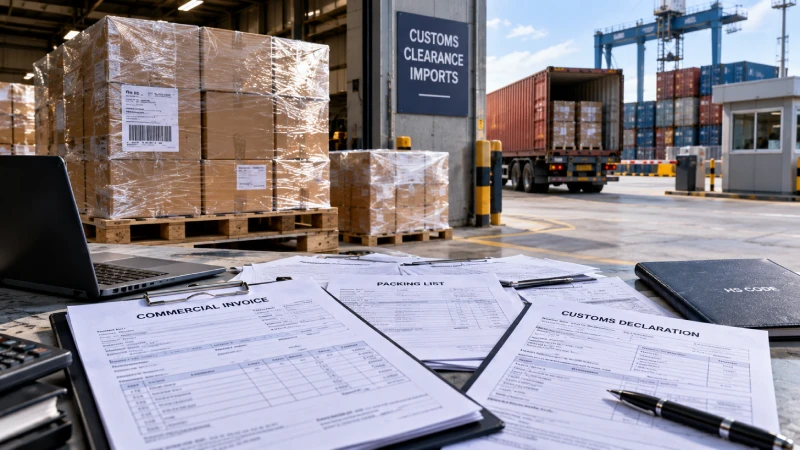
Who Pays VAT Under DDP UK Imports?
At the Incoterms level, the answer is straightforward:
For customs-value, Duty and Import VAT calculation detail, continue with the UK Import Duty and VAT guide.
under DDP, the seller bears responsibility for import duties and applicable import taxes required to deliver the goods cleared for import.
At the VAT-accounting level, the answer can be more complicated.
A UK business should distinguish between:
who economically bears Import VAT under the sales contract, and whose import/VAT records are used to account for the tax.
DAP and Postponed VAT Accounting
For an established UK importer that is VAT registered, DAP often fits naturally with the buyer’s normal import process.
The buyer can use its own customs structure and, where eligible, use Postponed VAT Accounting (PVA).
PVA allows a VAT-registered business to account for Import VAT through its VAT Return rather than necessarily paying the Import VAT upfront at the border. See HMRC’s PVA guidance.
The business should still ensure the customs declaration is completed correctly and reconcile imports against its postponed Import VAT statements.
PVA is not a freight discount and does not eliminate VAT. It changes the accounting and cash-flow mechanism.
What If the Supplier Arranges the Import and Delivery?
This is an important UK-specific scenario.
HMRC explicitly recognises situations where a buyer purchases goods from a supplier that arranges another person or business to import and deliver those goods on the buyer’s behalf.
HMRC states that the buyer and supplier must agree how Import VAT will be accounted for. Where the buyer’s PVA is to be used, written instructions are required and the buyer needs to provide its EORI number. The import can then appear on the buyer’s postponed Import VAT statement. See HMRC’s Import VAT guidance.
This demonstrates why supplier-arranged door delivery should not automatically be equated with a conventional DDP structure.
A shipment can be commercially arranged all the way to the buyer’s warehouse while the buyer still participates in the UK import and VAT structure.
Be Careful With “DDP + Your PVA”
Suppose a quotation says:
DDP China to UK — all customs handled
but the provider then asks the UK buyer for:
- its GB EORI;
- UK VAT number;
- permission to use its PVA account.
That does not automatically prove the arrangement is wrong.
It does mean the buyer should ask exactly how the shipment is structured.
Questions should include:
Who is the importer? Who is the declarant? On whose behalf is the declaration being made? What representation type applies? Whose Import VAT statement will show the transaction?
If the buyer’s import identity is being used, the arrangement may differ in important respects from what the buyer assumes when it hears “the seller handles everything under DDP.”
The Incoterm label should therefore match the actual customs and VAT arrangement.
Does a Chinese Seller Need UK VAT Registration for DDP?
Do not assume there is one universal answer.
VAT-registration obligations for an overseas seller depend on the nature of the UK supply and the commercial/VAT structure being used.
It would therefore be too broad to say:
“Every Chinese company shipping DDP to the UK must have a UK VAT number.”
The proposed transaction should be reviewed against current HMRC VAT rules, with specialist tax advice where necessary.
Does the Buyer Need an EORI Under DAP or DDP?
A GB EORI is central to many commercial import activities into England, Scotland and Wales.
GOV.UK states that businesses importing into Great Britain may need an EORI number starting with GB. Movements involving Northern Ireland can require different EORI treatment, including an XI EORI in relevant circumstances. See the GOV.UK EORI guidance.
DAP: The Buyer’s EORI Is Usually Central
In a conventional DAP structure where a UK-established buyer is responsible for import clearance, the buyer normally uses its own import setup.
That commonly means:
- buyer as the import-side principal;
- buyer’s GB EORI;
- buyer-appointed customs representative;
- the buyer’s chosen method of accounting for Import VAT.
For regular UK importers, this may be operationally straightforward because the infrastructure already exists.
DDP: Do Not Assume the Buyer Never Needs an EORI
A frequent oversimplification is:
“With DDP, the buyer does not need an EORI.”
That cannot safely be applied to every shipment.
If the proposed arrangement uses the buyer’s import position or PVA, the buyer’s EORI can still be relevant.
Conversely, a non-UK-established seller may have different EORI and representation requirements. HMRC’s current EORI guidance includes specific provisions for non-established economic operators.
The correct question is therefore not:
“Does DDP need an EORI?”
It is:
“Whose customs identity is being used for this particular import?”
For the application process and eligibility details, refer to the dedicated UK EORI guidance within this UK shipping cluster when available.
When DAP May Be Simpler
DAP is not universally better than DDP, but it can be operationally simpler when the UK buyer already has a normal import structure.
The UK Buyer Already Has a GB EORI and Customs Broker
A wholesaler, manufacturer or distributor importing from China regularly may already have:
- a GB EORI;
- an established customs representative;
- known commodity codes;
- an import-VAT process;
- internal customs records.
In that situation, transferring the import responsibility to a non-UK seller may add complexity rather than remove it.
DAP allows the Chinese supplier to remain responsible for transportation to the named destination while the buyer keeps control of the import process it already understands.
The Buyer Wants Direct Control of Import VAT and PVA
A VAT-registered UK importer may prefer its imports to flow consistently through its own PVA and accounting records.
That can make DAP attractive for businesses that need straightforward reconciliation between:
- purchase orders;
- customs declarations;
- postponed Import VAT statements;
- VAT returns.
This does not mean DAP reduces the tax due. It means the buyer keeps control of the accounting trail.
Classification, Reliefs or Special Customs Procedures Need Buyer Control
DAP can also make sense where imports involve more complex customs decisions.
Examples include products requiring careful commodity classification, licences, relief claims, special procedures or established compliance records.
The buyer may prefer to instruct its own customs adviser rather than relying on a seller-side DDP arrangement.
The Seller Has No Accepted UK Indirect Representative
This may be the most important practical reason.
If the UK buyer has an established import setup but the China-based seller does not have a representative willing to support the proposed non-established import structure, DAP may be far easier to execute.
The Buyer Needs a Clear Customs Audit Trail
Regular commercial importers may need to retain and reconcile:
- customs declaration data;
- tariff classifications;
- customs values;
- Duty calculations;
- PVA statements or C79 evidence where relevant.
DAP can keep that process directly linked to the buyer’s own customs operation.
It does not mean DDP cannot provide adequate records. It means record ownership and access should be confirmed before choosing the structure.
When DDP May Be Workable
DDP can still be useful when the import arrangement has been properly established.
Where the importer, representation and VAT arrangements are valid, Winsail’s DDP shipping service from China can be reviewed for the shipment.
The key is that DDP should be treated as an import structure, not merely as an all-inclusive freight price.
The UK Customs Representation Structure Has Been Confirmed
Before the cargo leaves China, the parties should know:
- who is the importer;
- who is making the declaration;
- whether representation is direct or indirect;
- whose EORI is involved;
- who carries customs-debt responsibility.
For a non-UK-established seller, the indirect-representation rule is particularly important.
Import VAT Treatment Has Been Agreed
The parties should also establish whether Import VAT will be:
- paid at import;
- accounted for through an eligible PVA structure;
- dealt with under another valid arrangement.
The supporting VAT evidence should also reach the party that needs it for accounting purposes.
The Commodity Is Known and Customs Treatment Has Been Checked
A workable DDP quotation should not be based only on carton dimensions and freight weight.
Before the landed cost is finalised, the shipment should have an adequate product description and, where possible, a verified commodity code.
The customs structure should also consider:
- customs value;
- origin;
- Duty rate;
- VAT treatment;
- licence requirements;
- applicable import controls.
The Customs Representative Has Accepted the Arrangement
This is different from the supplier saying:
“Yes, we can ship DDP.”
The destination customs structure should have reviewed the relevant shipment details and accepted the representation arrangement.
Final Delivery Scope Is Clear
DDP should also identify exactly where the seller’s delivery obligation ends.
For a commercial UK shipment, useful information includes:
- the full postcode;
- warehouse/site type;
- pallet or container format;
- vehicle-access restrictions;
- booking requirements;
- responsibility for unloading.
A vague “DDP UK” price does not provide enough information for reliable landed-cost comparison.
How to Audit a DAP or DDP Quote Before Booking
A good China-to-UK quotation should allow the importer to understand both the freight scope and customs scope.
First, ask who will appear on the UK import declaration and what representation arrangement will be used.
Second, separate commercial freight costs from government taxes and customs charges. China pickup, origin handling, international freight, UK destination handling, customs brokerage, Customs Duty, Import VAT and final delivery are different cost categories.
Third, confirm the commodity code and how the duty treatment has been determined. The UK Trade Tariff should be used rather than applying a generic China import-tax percentage.
Fourth, establish how Import VAT will be accounted for and whose records will receive the supporting VAT evidence.
Finally, confirm the exact named place and delivery conditions.
Before You Accept a DDP China-to-UK Quote
- The quotation states the correct Incoterms® 2020 rule.
- The exact UK delivery address or postcode is identified.
- Great Britain or Northern Ireland has been confirmed.
- The UK importer structure is identified.
- The customs declarant is identified.
- The customs representative is identified.
- Direct or indirect representation has been confirmed.
- The relevant EORI has been confirmed.
- The Import VAT method is clear.
- PVA treatment has been agreed where applicable.
- The commodity code has been checked.
- The Customs Duty basis is understood.
- Product-specific licences or controls have been reviewed.
- Final-delivery and unloading exclusions are clear.
Pro Tip: If a quote says only “DDP UK,” ask five questions before booking: who is the importer, whose EORI is being used, who is the customs representative, how will Duty/VAT be handled, and what exactly is included up to your final postcode?
Great Britain vs Northern Ireland: Do Not Use the Same DDP Assumptions
A DAP or DDP structure designed for a shipment to Manchester should not automatically be reused for a shipment to Belfast.
Most of the customs-representation discussion in this guide refers to Great Britain — England, Scotland and Wales.
Northern Ireland operates under additional customs arrangements.
Imports from China into Northern Ireland can involve different EORI requirements and different tariff treatment depending on whether goods are considered “at risk” of onward movement to the EU.
For goods imported into Northern Ireland from a country outside both the UK and EU, current GOV.UK guidance says the applicable duty can depend on whether goods are “at risk” or “not at risk.” At-risk goods can be subject to the applicable EU duty, while qualifying not-at-risk goods can be subject to UK duty. UK Internal Market Scheme authorisation can also be relevant in appropriate circumstances. See the GOV.UK Northern Ireland duty guidance.
XI EORI requirements can also apply to Northern Ireland customs activities. See the GOV.UK EORI guidance.
For this reason:
A DDP arrangement accepted for a Birmingham warehouse should be reviewed again before being used for a Belfast delivery.
DAP and DDP Do Not Replace Product Compliance
Choosing DDP does not make a restricted or non-compliant product automatically importable into the UK.
Incoterms allocate costs, tasks and risks between buyer and seller. Product legislation operates separately.
Commodity Codes Can Trigger More Than Customs Duty
The commodity code is important not only for Duty.
It can also help identify VAT treatment, tariff measures, restrictions and other import requirements.
The UK Trade Tariff should therefore be checked using an accurate description of what the goods are made from, what they do and how they are presented.
DDP Does Not Certify Products for the UK Market
Some manufactured products placed on the Great Britain market may fall under UKCA and/or recognised CE compliance regimes.
Current Department for Business and Trade guidance requires businesses to identify the correct market and applicable product legislation before determining the required conformity-assessment, documentation and marking route. See the GOV.UK guidance on placing UKCA or CE marked products on the Great Britain market.
The applicable requirements vary by product.
A freight forwarder coordinating a DDP shipment does not thereby certify that the goods satisfy UK product regulations.
Licences and Restricted Goods Remain Product-Specific
HMRC maintains guidance covering prohibited and restricted imports into Great Britain and advises importers to check with the relevant government department before arranging shipments of controlled products. The official list is not exhaustive. See the GOV.UK prohibited and restricted imports guidance.
Changing the delivery term from DAP to DDP does not remove those requirements.
Expert Note: A DDP Invoice Price Is Not Automatically the Customs Value
For more complex commercial shipments, another common mistake is to take the total DDP invoice value and apply a tariff rate directly to that figure.
That can be incorrect.
HMRC’s current Customs Declaration Service guidance specifically addresses DDP invoice values. Where amounts included in a DDP invoice represent UK import duties or certain other UK charges arising from the import or sale, those amounts may need to be deducted from the declared item price. A supporting valuation worksheet must be retained where required. See the CDS Group 4 valuation guidance.
This matters because a DDP selling price may contain several components:
- the goods themselves;
- international freight;
- destination costs;
- duty;
- taxes;
- other charges.
Customs valuation follows UK valuation rules; it is not simply whatever total appears at the bottom of a DDP commercial quotation.
For most importers, the practical lesson is simple:
Do not calculate UK Customs Duty by applying a tariff percentage blindly to an all-inclusive DDP price.
DAP or DDP for China-to-UK Imports? A Practical Decision Matrix
There is no universal winner.
| Import Situation | DAP Direction | DDP Direction | Main Consideration |
|---|---|---|---|
| Established UK importer with GB EORI and regular customs broker | Often straightforward | Can still work | Buyer already has import infrastructure |
| UK VAT-registered importer wanting direct PVA control | Often practical | Requires careful structure | Keeps import/VAT records aligned |
| China seller has no accepted UK indirect representative | Usually simpler | Can be difficult | DDP import obligation may not be operationally supported |
| Seller has a verified customs/VAT structure accepted before shipment | Possible | May be workable | Destination import structure exists |
| Complex or regulated commercial goods | Gives buyer greater import control | Requires detailed review | Classification/compliance risk |
| New importer with limited customs experience | Broker setup needed | May be convenient if properly verified | Convenience alone does not prove DDP feasibility |
| Northern Ireland destination | Separate review required | Separate review required | NI customs and tariff treatment differs |
For many established UK importers, DAP is attractive because the business retains control of its normal EORI, broker and VAT process.
For other transactions, DDP can provide a more integrated seller-managed delivery structure—but only if the customs representation and VAT arrangements genuinely support it.
The decision should therefore be based on the actual import structure rather than the apparent simplicity of an “all-inclusive” quotation.
FAQs
What is the main difference between DAP and DDP shipping from China to the UK?
Under DAP, the seller arranges delivery to the agreed UK destination while the buyer handles UK import clearance, Customs Duty and Import VAT. Under DDP, the seller takes contractual responsibility for clearing the goods for import and bearing applicable import duty and taxes. The proposed DDP structure must still comply with UK customs, representation, EORI and VAT requirements.
Who pays UK Import VAT under DDP?
Under Incoterms® 2020 DDP, the seller bears the contractual responsibility for applicable import taxes required to deliver the goods cleared for import. That does not automatically determine who accounts for or can recover the Import VAT through the UK VAT system, which depends on the actual importer, declaration and VAT structure.
Does a UK buyer need an EORI number for DDP shipping?
This cannot be determined from the Incoterm alone. Some supplier-arranged door-delivery structures may still use the buyeru0026#x27;s EORI or PVA, so the buyer should confirm whose customs identity will actually be used for the import.
Can a Chinese seller ship DDP to the UK without having a UK company?
A non-UK-established seller can face additional customs-representation requirements. For Great Britain, HMRC states that a non-UK-established party importing goods can only appoint someone to act indirectly on its behalf, and the representative must be willing to accept the associated liability.
What is indirect customs representation and why does it matter for DDP?
An indirect customs representative acts in its own name on behalf of another party. HMRC states that both parties can be jointly and severally liable for customs debt, which is why a representative may carry out additional risk checks before accepting a DDP structure for a non-UK-established seller.
Can PVA be used when a supplier arranges door delivery?
Potentially, depending on the actual structure. HMRC recognises supplier-arranged imports made on a buyeru0026#x27;s behalf and allows the buyeru0026#x27;s PVA to be used where the necessary EORI details and written instructions are in place before the declaration.
Is DAP simpler than DDP for a UK VAT-registered importer?
It often can be when the importer already has a GB EORI, customs broker and established PVA process. DDP may still be workable when a valid seller-side customs representation and VAT structure has been confirmed.
Check the Structure Before You Choose DAP or DDP
The most important question is not:
For a coordinated scope through to the UK delivery point, compare Winsail’s door-to-door shipping service with the agreed Incoterm responsibilities.
Which Incoterm sounds simpler?
It is:
Who will actually perform each UK import function?
Before accepting a China-to-UK DDP quotation, identify the importer, declarant, customs representative, representation type, EORI, VAT-accounting method, commodity code and final delivery scope.
For DAP, confirm that the UK buyer has the import infrastructure needed to complete clearance and manage Duty and VAT.
For DDP, confirm that the seller’s proposed UK customs and tax structure is accepted before the cargo departs China.
Winsail Logistics, as a China-based freight forwarder, can coordinate international freight and may coordinate applicable customs and final-delivery steps depending on the shipment, destination arrangements and agreed service scope.
Check whether your shipment structure supports DAP, DDP or another door-delivery arrangement. Prepare the China pickup location, cargo description, commodity code if known, value, weight or CBM, UK postcode, EORI/VAT status and intended VAT treatment so the proposed logistics structure can be reviewed before booking.
Continue with related UK shipping guides
Use these focused guides for the next part of your China-to-UK shipping plan.
