
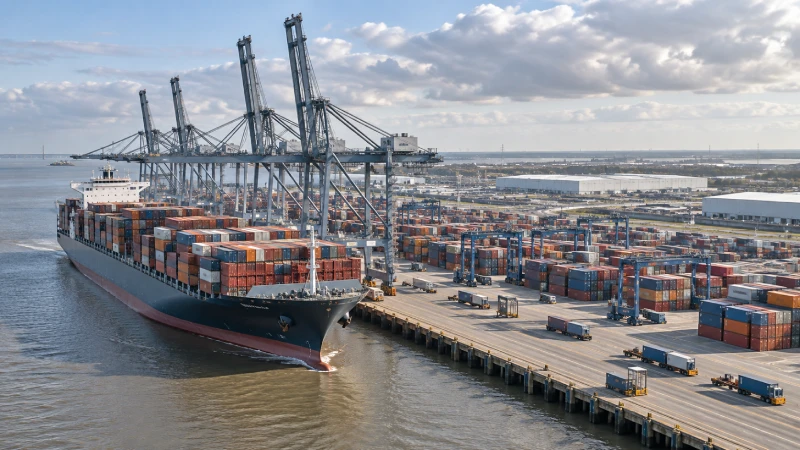
For importers moving commercial goods by sea from China to the UK, choosing the UK port should not start with the port name. It should start with the final delivery postcode.
DP World London Gateway can be a strong entry point for containers destined for Essex, East London, Greater London and parts of the South East. It can also work for Midlands distribution through rail and road connections. But it is not automatically the best option simply because the consignee is “in London”.
The correct comparison is:
China origin → ocean service → UK port → destination charges → customs release → inland transport → final warehouse
If you are still comparing sea freight with air, express, DDP or other UK gateways, start with our broader Shipping from China to the UK guide. This page focuses specifically on deciding when London Gateway makes sense as the UK container port.
Quick Answer: Should Your China Container Go to London Gateway?
London Gateway should usually be one of the first UK ports priced for containers delivering into South Essex, the Thames-side logistics corridor, East London and many Greater London locations. Its direct A13 access and proximity to the M25 make it particularly relevant where the final warehouse sits east of or close to London.
For Kent, the wider South East and especially the Midlands, the answer requires a wider comparison. A lower ocean freight rate into another UK port, stronger rail availability, a better carrier schedule or cheaper final drayage can outweigh the geographical advantage of London Gateway.
A practical decision looks like this:
| Final delivery area | London Gateway starting position | What to compare before booking |
|---|---|---|
| South Essex / Thames-side logistics area | Strong candidate | Sailing, UK haulage and warehouse slot |
| East / Outer East London | Strong candidate | Exact postcode, delivery time and container return |
| Greater London | Usually worth pricing | A13/M25 routing and competing ocean services |
| Kent | Postcode-dependent | Thames crossing, trucking cost and timing |
| Wider South East | Compare all-in | Exact postcode and carrier service |
| Midlands | Compare road and rail | Rail availability, local drayage and Felixstowe alternative |
The key principle is simple:
Do not ask only which port is closest. Ask which route gives the best total cost and reliable delivery from the Chinese supplier to your receiving dock.
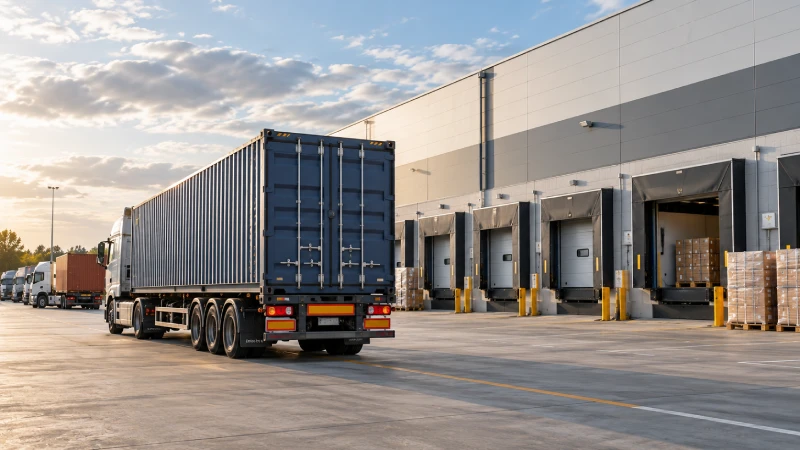
Why London Gateway Matters More for China–UK Container Shipping
London Gateway has developed from an alternative UK gateway into a major deep-sea container terminal.
DP World’s current infrastructure data lists four operating berths, 3.4 million TEU of full capacity, 16 quay cranes, more than 3,000 reefer points and 22 daily rail services. London Gateway handled more than three million TEU in 2025, up more than 52% from 1.9 million TEU in 2024. DP World attributes part of that growth to its fourth berth becoming fully operational and additional Asia-Europe vessel calls.
For a China importer, those numbers matter less as statistics than for what they indicate operationally: London Gateway now appears more frequently as a realistic port-of-discharge option on Asia–North Europe services.
Capacity Is Still Expanding
DP World is investing a further £1 billion in London Gateway, including fifth and sixth all-electric berths and additional rail capacity. Construction of Berth Five is underway, with completion currently planned for 2027. The site’s second rail terminal began operating in 2025 and is being brought into wider use. See DP World’s London Gateway expansion and volume update.
This future capacity should not be described as already available. For a shipment being booked now, the relevant information is still the current vessel schedule, available terminal capacity and confirmed carrier service.
Why the Location Matters for London and the South East
London Gateway is located at Stanford-le-Hope in Essex, rather than in central London. DP World states that the logistics site has direct dual-carriageway access to the A13, with the M25 approximately 10 miles away. See the London Gateway logistics and connectivity information.
That location is one reason the port can work well for:
- Essex distribution centres
- East London
- Thames-side warehousing
- Greater London deliveries
- selected Kent and South East destinations
But the final postcode still needs to be priced. A warehouse on the opposite side of London can produce a very different haulage result from a warehouse in Thurrock.
Pro Tip: Get the UK delivery price before confirming the port of discharge. Booking the ocean leg first and pricing inland transport later can remove the saving you thought you had achieved.
Which Chinese Ports Ship to London Gateway?
London Gateway is connected to the major Greater China origin regions used by UK importers.
For the broader carrier, equipment and route-selection picture, use the China-to-UK sea freight guide with this gateway-specific guide.
DP World’s Asia–Europe corridor information lists Chinese origins including Qingdao, Shanghai, Ningbo, Xingang, Yantian, Shekou, Xiamen and Nansha, with London Gateway among the European destinations served within its ocean network. DP World currently gives a broad Greater China-to-Europe planning reference of approximately 40–45 days, with weekly service frequency across this corridor.
The better question, however, is not simply “Which China port ships to London Gateway?” It is:
Which Chinese port is most efficient for my supplier location?
| Supplier region | Common origin port to consider | Practical routing logic |
|---|---|---|
| Shanghai / Jiangsu | Shanghai | Natural Yangtze River Delta gateway |
| Zhejiang / Ningbo area | Ningbo | Avoid unnecessary trucking to Shanghai |
| Shenzhen / Dongguan | Yantian / Shekou | Major Pearl River Delta options |
| Guangzhou / Foshan | Nansha / Shenzhen ports | Compare pickup and sailing schedule |
| Shandong | Qingdao | Main regional deep-sea gateway |
| Tianjin / Beijing / North China | Xingang / Tianjin | Usually more logical than moving cargo south |
| Fujian | Xiamen | Useful for Fujian-origin manufacturing |
Moving a container several hundred kilometres across China simply to use a slightly cheaper ocean rate is often false economy. Origin trucking, terminal cut-off times and the available vessel rotation all need to be considered.
Direct Service or Transshipment?
A quotation labelled “Shanghai to London Gateway” does not guarantee that the vessel sails directly from China to the UK without intermediate calls or transshipment.
Check:
- carrier and service name
- port rotation
- direct vs transshipment routing
- scheduled ETD and ETA
- cut-off date
- expected transit time
- whether the service is subject to a feeder connection
The route shown at the time of booking is more useful than a generic China–UK transit claim.
How Long Does Shipping from China to London Gateway Take?
There is no reliable single transit time for every China-to-London Gateway container.
Current booking-market data reviewed in September 2026 illustrates how wide the spread can be:
| China origin | Faster current market examples | Slower / standard examples |
|---|---|---|
| Yantian | about 28–32 days | about 35–59 days |
| Shanghai | about 30–36 days | about 41–64 days |
| Ningbo | about 30–35 days | about 36–59 days |
| Qingdao | about 34–38 days | about 39–64 days |
These are planning references, not guaranteed transit times. They are current market listings and can change with carrier networks, vessel rotations and the cargo-ready date. Current Flexport London Gateway route listings demonstrate the difference between faster routings and longer standard services.
Actual transit can be affected by:
- origin port
- direct or transshipment routing
- carrier schedule
- skipped calls or blank sailings
- congestion
- vessel rerouting
- peak-season demand
- weather
- current Red Sea/Suez routing strategy
Port-to-Port Transit Is Not Your Real Lead Time
A 32-day ocean schedule does not mean the cargo will arrive at your warehouse in 32 days.
A commercial shipment normally passes through:
- supplier pickup or factory container loading;
- China export handling;
- origin customs procedures;
- terminal cut-off;
- vessel departure;
- ocean transit;
- London Gateway discharge;
- customs and shipping-line release;
- road or rail collection;
- final warehouse delivery.
For LCL cargo, destination deconsolidation adds another step.
When production planning or stock availability matters, calculate supplier-to-warehouse lead time, not just vessel transit.
FCL Shipping from China to London Gateway
FCL is generally the clearest way to use London Gateway as a specific port of discharge.
Typical equipment includes:
- 20GP
- 40GP
- 40HC
- reefer or special equipment where available and accepted
Where the booked ocean service supports London Gateway, the container can be discharged at GBLGP, released after the required customs and carrier processes, and then moved by road or rail.
FCL is particularly useful when the importer:
- has enough cargo for a dedicated container;
- wants the container delivered intact to its warehouse;
- controls its UK receiving arrangement;
- has a scheduled distribution-centre delivery;
- wants to compare port-to-door cost accurately.
Container weight, warehouse access, unloading arrangements and empty-return requirements should all be discussed before the final inland quote is accepted.
Can LCL Cargo Be Shipped to London Gateway?
Yes, LCL freight can be coordinated on China–UK routes, but LCL requires an important extra check:
Ask where the cargo will actually be deconsolidated.
An LCL quotation commercially described as “China to London Gateway” does not automatically mean cartons or pallets will be stripped from the consolidation container inside London Gateway.
Depending on the consolidator, the shipment may involve:
- London Gateway as the ocean POD;
- another UK port on the consolidation service;
- transfer to an inland CFS;
- deconsolidation at a third-party warehouse;
- onward delivery from the CFS to your postcode.
For an LCL quotation, confirm:
- ocean port of discharge
- UK CFS location
- deconsolidation fee
- handling and release charges
- collection location
- delivery cost to the final postcode
This distinction can materially change the final cost of smaller shipments.
Pro Tip: For LCL, “Where is the CFS?” can be more useful than “Which UK port is shown on the quote?”
What Destination Charges Apply at London Gateway?
Importers often describe every UK-side charge as a “port fee”. In practice, several different parties may invoice different parts of the destination cost.
1. Shipping Line or NVOCC Charges
Depending on the quotation and contract, these can include:
- destination documentation
- delivery-order or release-related charges
- carrier local charges
- demurrage or detention where applicable
2. Terminal-Related Charges
Possible terminal-side costs include:
- container handling
- gate movements
- security or energy-related charges
- storage
- examination-related handling
- specialist or dangerous-goods handling
DP World’s London Gateway Public Tariff 2026, effective from 1 January 2026, for example lists basic terminal handling components including £196.13 for a full import/export discharge/load lift and £65.33 for a full import/export gate-out/in movement for 20- and 40-foot containers. These are public terminal tariff items, not necessarily the amounts an individual importer will be invoiced separately by its shipping line or forwarder. See the London Gateway Public Tariff 2026.
Do not simply add public port tariff lines to an ocean quote and assume that is your destination bill. Carrier contracts and forwarding arrangements differ.
3. Customs-Related Costs
These may include:
- customs declaration
- customs broker fee
- Customs Duty
- import VAT
- inspection or examination costs if incurred
4. Inland Transport
Depending on the final delivery:
- container haulage
- rail movement
- local drayage
- waiting time
- delivery rescheduling
- empty-container return
5. LCL Destination Costs
LCL may introduce:
- CFS handling
- deconsolidation
- warehouse handling
- release charges
- pallet/carton delivery
This is why two quotations with similar ocean freight can produce very different landed logistics costs.
Customs Clearance at London Gateway for Goods from China
London Gateway is a Great Britain port, so commercial imports from China follow the GB customs framework.
Check the Importer and GB EORI Before Departure
GOV.UK guidance for importing goods into the UK states that businesses importing into England, Scotland or Wales generally need an EORI number beginning with GB. Importers should have their importer and customs-representation structure confirmed before the shipment arrives.
Winsail can coordinate freight and, depending on the agreed scope, customs-clearance arrangements may be coordinated with the relevant parties. However, the freight forwarder should not automatically be assumed to be the UK importer of record.
Commodity Code Determines More Than Customs Duty
The correct commodity code can determine:
- Customs Duty
- VAT treatment
- trade-policy measures
- licence requirements
- quotas or restrictions
- product-specific border controls
Do not apply one generic UK duty percentage to all Chinese imports.
The importer or its appointed representative should check the applicable UK Trade Tariff for the actual product before shipment.
Import VAT and PVA
UK VAT-registered businesses may be able to use Postponed VAT Accounting (PVA), which allows import VAT to be accounted for on the VAT Return rather than necessarily being paid upfront at import.
HMRC states that the business must be VAT-registered in the UK to use PVA and that the import declaration needs to reflect the appropriate treatment. See GOV.UK guidance on Postponed VAT Accounting.
The importer should give clear instructions to its customs representative rather than assuming PVA will be selected automatically.
Customs Value May Not Equal the Supplier Invoice Alone
Under HMRC customs valuation guidance, transaction value normally starts with the price paid or payable, subject to required adjustments. Relevant costs may need to be added when determining the customs value.
For complex valuation, VAT or tax questions, obtain advice from an appropriately qualified UK adviser.
Port Choice Does Not Remove Product-Compliance Requirements
Using London Gateway instead of Felixstowe does not change whether a shipment needs:
- an import licence
- product conformity documentation
- food or plant controls
- veterinary or sanitary documentation
- dangerous-goods approval
- other commodity-specific certificates
These checks should be completed before the cargo leaves China.
From London Gateway to Your UK Warehouse: Road, Rail or Port-Centric Logistics?
The inland leg is where London Gateway can become particularly attractive, or where another UK port can outperform it.
Road Delivery to London, Essex and the South East
London Gateway connects directly to the A13, with the M25 about 10 miles away according to DP World. Container haulage movements use the terminal’s vehicle-booking process. See DP World’s London Gateway logistics park information.
For an accurate haulage quote, provide:
- exact delivery postcode
- container size
- gross container weight
- required delivery date
- warehouse opening hours
- booking-slot requirements
- live-unload or drop arrangement
- site-access limitations
- expected unloading time
Two warehouses both described as “London” can produce substantially different trucking costs.
For Kent, the exact side of the Thames and road routing matter. A Kent destination should therefore be priced by postcode rather than treated as automatically close to London Gateway.
Rail from London Gateway to the Midlands
London Gateway is not only a South East road gateway.
DP World’s current terminal specifications list 22 daily rail services operated by Freightliner, GB Railfreight and Maritime. Its logistics-park information reports more than 70 weekly services to destinations including Hams Hall, Daventry, Trafford Park, Liverpool, Cardiff and Glasgow. See the official London Gateway infrastructure facts.
For a Midlands distribution centre, the relevant comparison may therefore be:
London Gateway → rail terminal → local drayage
rather than:
London Gateway → direct truck all the way
That is particularly important for importers moving repeat FCL volumes into large distribution centres.
A rail option still depends on:
- service availability
- suitable train schedule
- container availability
- inland terminal
- final drayage distance
- total cost
- warehouse delivery window
It should be confirmed for the actual shipment rather than assumed.
Port-Centric Warehousing at London Gateway
Another reason to consider the port is the concentration of warehousing next to the terminal.
London Gateway’s logistics park is planned at roughly 9.25 million sq ft, with about half of the site reported as developed by late 2025. The model allows imported containers to be discharged close to warehousing and distribution operations rather than automatically being trucked long distances before devanning. See DP World’s London Gateway logistics park update.
This can be relevant when an importer intends to:
- devann containers near the port;
- store inbound inventory;
- cross-dock cargo;
- split consignments for onward distribution;
- support e-commerce or retail fulfilment;
- move goods onwards by truck or rail.
It does not mean that every China importer should use port-side warehousing, or that Winsail operates its own warehouse at London Gateway. Warehousing availability and service scope need to be arranged separately.
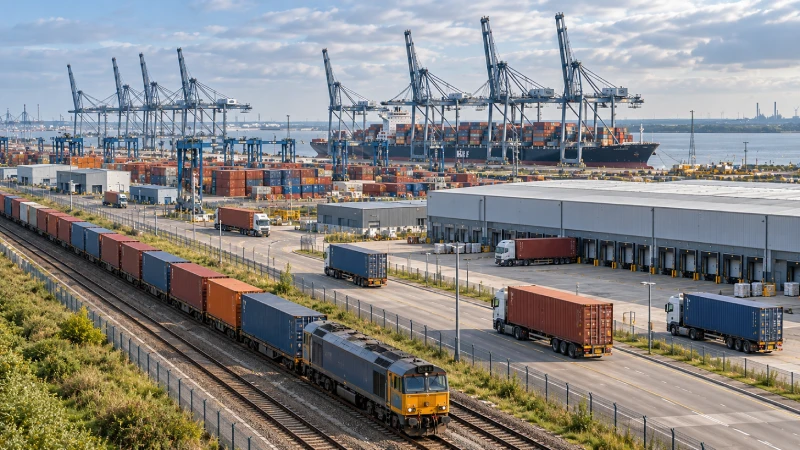
London Gateway vs Felixstowe for China Containers
The useful question is not “Which is the better UK port?”
The China-to-Felixstowe guide provides the corresponding port, customs and inland-delivery considerations for the main eastern alternative.
It is:
Which port works better for this shipment and this final postcode?
| Decision factor | London Gateway | Felixstowe |
|---|---|---|
| China–UK ocean service | Compare current service | Compare current service |
| London / Essex delivery | Often strong | May still be competitive |
| Kent | Postcode-dependent | Postcode-dependent |
| Midlands | Road and rail both relevant | Very strong rail network |
| Port-centric warehousing | Major adjacent logistics park | Depends on chosen distribution setup |
| Destination charges | Quote-specific | Quote-specific |
| Customs rules | GB customs framework | GB customs framework |
| Empty return | Confirm with carrier/haulier | Confirm with carrier/haulier |
| Best choice | All-in cost + schedule + inland plan | All-in cost + schedule + inland plan |
When London Gateway Has a Stronger Case
It deserves serious consideration when:
- the warehouse is in South Essex;
- delivery is in East London or the Thames corridor;
- the importer uses nearby warehousing;
- the current China sailing is competitive;
- a useful rail connection matches the destination;
- the overall inland plan is simpler.
When Felixstowe Deserves Comparison
Felixstowe remains particularly important for UK intermodal distribution.
Its official rail information currently lists 58 trains per day across three rail terminals, and states that rail accounts for around 50% of its traffic to the North and West Midlands.
That makes Felixstowe a serious alternative for Midlands-bound containers even where London Gateway appears attractive on the map.
For example, a container going to Birmingham should not automatically be routed through London Gateway or Felixstowe based solely on road mileage. Compare:
- China sailing rate
- ocean transit
- rail availability
- rail terminal
- final drayage
- destination charges
- delivery deadline
The winner can change from one booking period to another.
Pro Tip: For regular Midlands imports, ask for both a direct-road scenario and an intermodal rail scenario before standardising the UK port.
Information Needed for an Accurate China-to-London Gateway Shipping Quote
A useful quotation needs more than “one 40ft container from China to London”.
Winsail’s ocean freight forwarding service can compare live sailing and container options against the UK delivery postcode.
Provide:
- supplier city or pickup address
- cargo-ready date
- product description
- commodity code, if known
- dangerous, battery, chemical or regulated status
- number of cartons or pallets
- total gross weight
- total CBM for LCL
- required container type for FCL
- commercial value
- Incoterm
- preferred origin port, if any
- final UK delivery postcode
- warehouse receiving hours
- delivery appointment requirements
- importer EORI details where relevant
- VAT/PVA instructions where applicable
- required service scope
The quotation should also make clear what is included and excluded, especially:
- China pickup
- origin charges
- ocean freight
- UK destination charges
- customs-clearance scope
- duty and VAT treatment
- inland delivery
- potential storage/demurrage/detention exposure
London Gateway Import Checklist
Before the vessel reaches the UK, confirm:
- Commercial invoice is correct
- Packing list is complete
- Commodity code has been reviewed
- GB EORI is confirmed
- Importer structure is confirmed
- Customs representative has the documents
- Import licences or product certificates are ready where required
- VAT/PVA instructions are confirmed where applicable
- Bill of lading release is arranged
- Shipping-line release requirements are understood
- Final delivery postcode has been quoted
- Warehouse delivery slot is booked where necessary
- FCL empty-container return arrangement is understood
- LCL destination CFS has been confirmed
FAQ
How long does shipping from China to London Gateway take?
As a planning reference, current market examples from major Chinese ports can range from roughly 28–40 days on faster services, while standard, longer-rotation or transshipment services may extend into the 40–60+ day range. Actual transit depends on the origin, carrier, service and current vessel rotation.
Which Chinese ports ship to London Gateway?
Major origins that can form part of Greater China–London Gateway routing include Shanghai, Ningbo, Yantian, Shekou, Nansha, Qingdao, Xiamen and Xingang/Tianjin. The best origin should normally be selected according to supplier location and the current carrier schedule.
Is London Gateway better than Felixstowe for a London delivery?
For South Essex, East London and many London-area postcodes, London Gateway can be a strong first option to price. It is not automatically cheaper, so compare the current ocean service, UK destination charges, trucking cost and final delivery requirements.
Can LCL cargo from China be shipped through London Gateway?
LCL service can be coordinated on China–UK routes, but the actual UK CFS and deconsolidation location should be confirmed. The route description does not necessarily mean the loose cargo will be stripped inside London Gateway itself.
What destination charges apply at London Gateway?
Depending on the shipment, costs can include shipping-line or NVOCC local charges, terminal handling, customs declaration, duty and VAT, storage if incurred, container haulage or rail, and LCL CFS or deconsolidation charges.
Do I need a GB EORI to import through London Gateway?
Businesses importing commercial goods into England, Scotland or Wales generally need an EORI number beginning with GB. The importer and customs-representation arrangement should be confirmed before the goods arrive.
Is London Gateway suitable for containers going to the Midlands?
Yes, it can be. London Gateway has regular rail connectivity to inland freight locations including Hams Hall and Daventry. However, Felixstowe also has a particularly extensive Midlands rail network, so compare ocean service, rail, final drayage and total cost before choosing the port.
Final Takeaway
For China imports, London Gateway is not simply “the port for London.” Its value comes from combining deep-sea container services with access to London and the South East, a growing port-centric logistics park and road and rail distribution into the rest of Britain.
For cargo delivering to Essex or East London, it should often be near the top of the port shortlist. For Greater London, Kent and the wider South East, the exact postcode should decide the comparison. For the Midlands, rail connectivity and final drayage can matter more than the port’s position on a map.
The most reliable routing decision is therefore:
Choose the Chinese origin first, check the current ocean service, price the UK port and destination charges, then calculate inland transport to the final postcode.
That is how to determine whether London Gateway genuinely improves the China-to-UK supply chain rather than simply looking like the most obvious port name.
Continue with related UK shipping guides
Use these focused guides for the next part of your China-to-UK shipping plan.
