
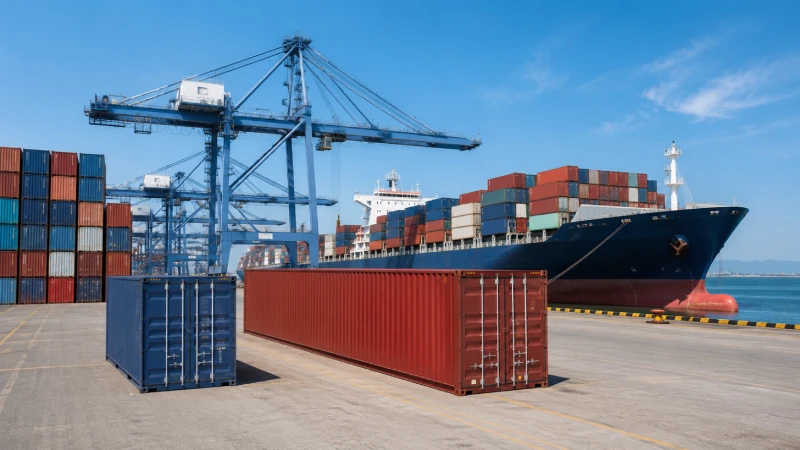
If you are importing enough commercial cargo to use a full container, the first question is usually simple: how much does a 20ft or 40ft container from China to the UK cost?
The difficult part is deciding what the quoted number actually includes.
A carrier or forwarder may quote only the ocean leg from Shanghai to Felixstowe. Another quotation may include China trucking, export handling, UK destination charges, customs clearance and delivery to a warehouse in Birmingham. Comparing those two figures directly can make the cheaper-looking quotation much more expensive after arrival.
For broader route planning, including sea freight, air freight, DDP, transit times and UK import procedures, see Shipping from China to the UK. This page focuses specifically on FCL container costs and how UK importers should compare 20GP, 40GP and 40HC quotations.
Quick Answer: How Much Does a Container from China to the UK Cost?
There is no reliable fixed China-to-UK container rate. Pricing changes with the origin port, carrier, container type, sailing, equipment availability, cargo-ready date, market capacity and quotation scope.
As a planning reference, public carrier-rate data checked around late August and early September 2026 showed lower-end Shanghai, Ningbo and Shenzhen to Felixstowe offers at approximately £2,300 for a 20ft container and around £3,300–£3,600 for a 40ft or 40HC. However, faster or premium services on the same corridors were considerably higher. A separate Flexport listing for Nansha to Felixstowe showed 40HC base freight at US$4,053–US$4,889, valid to September 15, 2026.
These figures are market references, not Winsail quotations and not door-to-door landed costs. Actual rates depend on the shipment date and service scope.
| Container | Typical Cargo Profile | Cost Planning Direction |
|---|---|---|
| 20GP | Dense or heavy cargo; machinery, metal parts and smaller FCL volumes | Lowest container rate in many cases, but not necessarily lowest cost per CBM |
| 40GP | Larger general merchandise loads | Much more capacity without necessarily costing twice as much as a 20GP |
| 40HC | Bulky, relatively light cargo such as furniture, homeware and consumer goods | Extra cubic capacity; ocean rate can sometimes be close to 40GP |
For a usable FCL quotation, provide at least:
- China supplier or pickup location
- cargo-ready date
- commodity
- container size
- cargo gross weight
- Incoterm
- UK destination postcode
The postcode matters because the cheapest UK ocean gateway does not automatically produce the lowest final delivered cost.
For a broader comparison across sea freight, air freight and other shipping methods, see shipping cost from China to the UK.
How Much Does a 20ft or 40ft Container from China to the UK Cost?
When someone says a container from China costs “£3,000” or “US$5,000,” the first question should be:
£3,000 for what scope?
A China-to-UK FCL quotation can refer to several very different things:
- ocean freight only
- FOB port-to-port freight
- factory-to-port transport plus ocean freight
- port-to-door transport
- full door-to-door logistics
- a DDP-style arrangement subject to importer, VAT and customs structure
This explains why online container prices often appear contradictory.
Current 20GP Market Reference
For late August 2026, publicly listed lower-end 20GP rates included approximately:
- Shanghai → Felixstowe: around £2,300+
- Ningbo → Felixstowe: around £2,300+
- Shenzhen → Felixstowe: around £2,300+
Those same public datasets also displayed significantly more expensive carrier products on the same routes.
Therefore, a sensible planning statement is:
Typical market estimates may start in the low-£2,000s for competitive 20GP ocean/container products on major China–UK lanes, but actual rates can be materially higher depending on carrier product, routing, capacity and booking conditions.
Do not use this figure as a landed-cost budget.
Current 40GP and 40HC Market Reference
The same late-August datasets showed competitive Shanghai, Ningbo and Shenzhen to Felixstowe 40GP/40HC products roughly around the mid-£3,000 range, while faster and higher-priced products extended far above that level.
For Nansha, Flexport showed a standard 40HC product at US$4,053–US$4,889 base freight, while its premium option was considerably higher.
That difference illustrates an important rule:
A China–UK container freight rate should always have an origin, destination, container type, service basis and validity date attached to it.
A rate without those details has limited value for procurement planning.
If timing is as important as price, compare the rate with current China to UK shipping transit times before selecting a service.
Why Published China–UK Rates Differ So Much
Two 40HC quotations can differ by thousands while both are technically correct.
Common reasons include:
- different carriers
- direct versus transshipment routing
- premium versus standard product
- different sailing dates
- equipment availability
- rate validity
- origin trucking inclusion
- China local charges
- destination charges
- carrier surcharges
- UK customs brokerage
- UK container haulage
- free-time terms
Compare scope before comparing price.
That is more important than selecting the lowest headline ocean number.
20GP vs 40GP vs 40HC: Which Container Gives Better Value?
A bigger container does not simply mean proportionally higher freight.
For equipment limits, loading and operational planning, continue with the China-to-UK FCL shipping guide.
Standard carrier equipment specifications show why. Dry container dimensions and payload vary by individual unit and carrier, but the approximate relationship is:
| Container | Nominal Capacity | Example Maximum Payload* | Practical Cargo Profile |
|---|---|---|---|
| 20GP | ~33.2 m³ | ~28.3 tonnes | Dense/heavy cargo |
| 40GP | ~67.7 m³ | ~28.9 tonnes | Larger general cargo |
| 40HC | ~76.4 m³ | ~28.7 tonnes | Bulky/light cargo |
*Equipment specifications vary by container manufacturer, carrier and individual container. Always check the actual container and road-weight limitations before loading.
Published carrier equipment guidance illustrates the point: a standard 20ft container has around 33 m³ of nominal capacity, compared with roughly 68 m³ for a standard 40ft and about 76 m³ for a 40HC, while their maximum payload figures can be much closer together.
20GP for Dense or Heavy Cargo
A 20GP can be more practical for goods such as:
- metal products
- machine components
- hardware
- stone products
- dense industrial goods
- some chemicals or raw materials, subject to cargo acceptance
These shipments may reach safe or legal weight limits before they fill the physical container volume.
Moving the same dense cargo into a 40HC may provide a lot more empty cubic space without giving the importer a useful increase in allowable cargo weight.
40GP for Larger General Cargo
A 40GP approximately doubles the nominal internal volume of a 20GP, but its ocean rate is rarely exactly twice the 20GP rate.
That can improve freight cost per usable CBM when the cargo volume is high enough.
Typical candidates include:
- packaged consumer products
- household goods
- textiles
- manufactured components
- larger wholesale orders
For shipments already large enough to justify a dedicated container, see FCL shipping from China for the broader service scope.
Why 40HC Is Often Preferred for Furniture and Bulky Consumer Goods
The major advantage of a 40HC is additional cube, not dramatically greater payload.
This makes high-cube equipment particularly attractive for:
- furniture
- sofas
- homeware
- lightweight plastic products
- packaging-heavy consumer goods
- tall cartons
- high-volume e-commerce inventory
A 40HC typically provides roughly 76 m³ of nominal internal capacity, compared with about 68 m³ for a standard 40ft container.
In practice, you will not normally load every theoretical cubic metre.
Carton dimensions, pallets, door clearance, irregular shapes, cargo protection and loading sequence create unused space.
As an operational planning reference rather than an equipment specification, businesses often work around approximately:
- 20GP: 25–28 CBM
- 40GP: 54–58 CBM
- 40HC: 63–68 CBM
Actual usable volume should be calculated from the packing list and loading plan rather than assumed from container capacity alone.
Pro Tip: If your cargo can use either 40GP or 40HC, ask for both options. Equipment availability and freight pricing can sometimes make 40HC the better commercial choice even when you do not need every additional cubic metre.
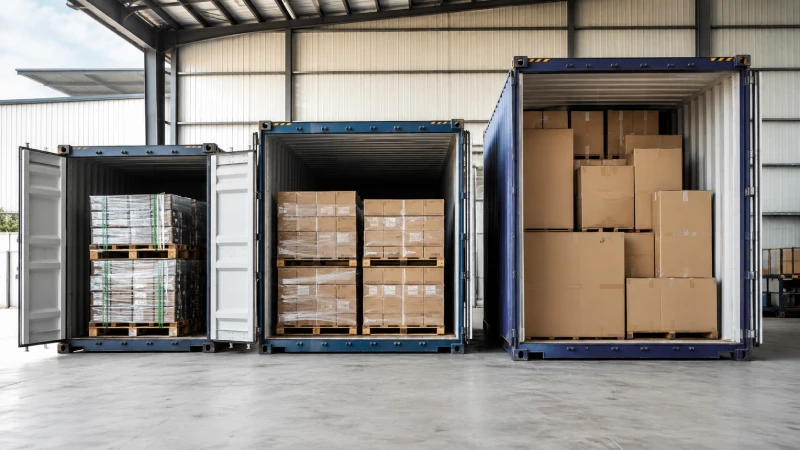
How the China Origin Changes Your FCL Cost
The cheapest ocean port is not necessarily the cheapest origin solution.
Your factory location affects:
- China container trucking
- empty-container positioning
- pickup timing
- export customs arrangements
- terminal handling
- carrier selection
- equipment availability
Shanghai and Ningbo
Shanghai and Ningbo are natural gateways for large parts of the Yangtze River Delta manufacturing region.
For suppliers in Shanghai, Zhejiang, Jiangsu and surrounding areas, both gateways may be commercially relevant depending on the actual factory location and sailing.
A Ningbo ocean rate that is £100 cheaper is not automatically better if repositioning and trucking the container creates several hundred pounds of additional origin cost.
Yantian / Shenzhen and Nansha
For South China manufacturing, the main comparison may involve terminals in Shenzhen, particularly Yantian, versus Nansha in Guangzhou.
A factory in Dongguan, Shenzhen, Foshan, Zhongshan or Guangzhou can have materially different trucking economics depending on the selected gateway.
The current public Nansha–Felixstowe rate example also demonstrates why carrier product matters: standard 40HC base freight was listed at US$4,053–US$4,889, while a premium product on the same corridor was significantly higher.
Qingdao
Qingdao is important for suppliers in Shandong and parts of North China.
Do not select Shanghai merely because an online Shanghai–UK rate appears lower. Moving an export container hundreds of kilometres south can eliminate the apparent ocean-freight saving.
Xiamen
For factories in Fujian, Xiamen may provide a practical origin depending on carrier service and final UK routing.
Again, the comparison should be:
factory → China port → UK gateway → final postcode
rather than port-to-port ocean freight alone.
For more context on the sea-freight process itself, see ocean freight from China.
Felixstowe, London Gateway or Southampton: Which UK Gateway Makes Sense?
For most importers, the answer should not simply be “Felixstowe because it has the cheapest ocean rate.”
The China-to-UK sea freight guide explains how sailing, gateway and inland delivery choices affect the complete route.
The Port of Felixstowe describes itself as the UK’s largest container port and handles around four million TEU annually. London Gateway and Southampton are also major deep-water container gateways.
The better gateway for a particular shipment depends on the total logistics chain.
| Decision Factor | Felixstowe | London Gateway | Southampton |
|---|---|---|---|
| Carrier/sailing availability | Strong | Strong | Strong |
| Final UK postcode | Must compare | Must compare | Must compare |
| Port/local charges | Booking-specific | Booking-specific | Booking-specific |
| Haulage cost | Postcode-dependent | Postcode-dependent | Postcode-dependent |
| VBS / terminal conditions | Check current terms | Check current terms | Check current terms |
| Free time | Carrier/booking-specific | Carrier/booking-specific | Carrier/booking-specific |
For example, London Gateway sits close to the M25 and has direct road and rail connections, which can be operationally useful for some London, South East and national distribution flows.
But that does not mean London Gateway is always cheaper.
A Midlands or northern destination may produce a different answer once haulage, carrier routing and empty-return arrangements are included.
Choose the UK port from the total delivered-cost calculation, not from the ocean freight column alone.
What Is Actually Included in a China–UK Container Quote?
A useful way to understand the real cost is to follow the container through the entire journey.
1. China Factory Pickup and Container Trucking
Depending on the supplier’s Incoterm and quotation scope, origin costs may include:
- empty-container pickup
- container positioning
- truck to supplier
- loading-related waiting
- factory-to-port trucking
- additional pickup arrangements
- multiple-supplier coordination where applicable
With EXW shipments, more of these costs normally sit with the buyer’s logistics arrangement.
With FOB purchases, the supplier typically handles more of the origin process up to the agreed FOB point, but the exact commercial responsibility still needs to match the sales contract.
2. China THC, Documentation, Export Clearance and VGM
Origin costs can also include:
- terminal handling charge
- export customs declaration
- documentation
- bill of lading-related charges
- seal
- VGM processing or weighing
- carrier local charges
VGM should not be treated as an optional paperwork detail. Under SOLAS requirements, the verified gross mass of a packed container must be provided before loading; without VGM the container cannot be loaded onto the vessel.
How the weighing or VGM service is charged depends on the shipment and origin arrangement.
3. Ocean Freight
The ocean section can include:
- base sea freight
- carrier surcharges
- route-specific additions
- equipment-related charges
- seasonal or capacity-related surcharges
The most important questions are:
What is included?
and:
How long is the rate valid?
4. UK Terminal and Destination Charges
Once the container reaches the UK, there can be:
- terminal/local charges
- security-related charges
- documentation or release charges
- port-related handling
- appointment/VBS-related charges
- storage if collection is delayed
These charges are not static.
Terminal operators publish tariff schedules, and peak, manual or non-conforming appointments can attract additional charges depending on the port and current rules.
This is one reason a realistic UK haulage price requires actual port and delivery information.
5. Customs Clearance
UK customs brokerage is a logistics service cost.
It should be separated from:
- Customs Duty
- Import VAT
Those are tax/customs liabilities determined by the goods and import structure, not simply by the freight forwarder’s service fee.
6. UK Haulage and Empty Container Return
The container then needs to move from the port to the consignee.
A proper quotation may need to account for:
- port collection
- road distance
- delivery postcode
- container weight
- delivery appointment
- waiting time
- live unloading
- drop-and-collect
- overnight requirements
- empty-container return depot
This final inland leg is one of the most commonly underestimated parts of FCL budgeting.
The Real Container Cost Waterfall
| Stage | Typical Cost Components | Usually Included in Ocean Freight? |
|---|---|---|
| China factory | Pickup, loading coordination, trucking | No |
| China port | THC, customs, documentation, VGM | Depends on quotation |
| Ocean | Base freight and applicable carrier charges | Yes / depends on scope |
| UK port | Terminal and local charges | Often separate |
| Customs | Brokerage | Often separate |
| Government charges | Customs Duty and Import VAT | No, unless a valid agreed arrangement says otherwise |
| UK inland | Container haulage, waiting, empty return | No unless port-to-door/door-to-door |
| Delay exposure | Storage, demurrage, detention | Normally only if incurred |
This is why ocean freight price is not the same as container landed logistics cost.
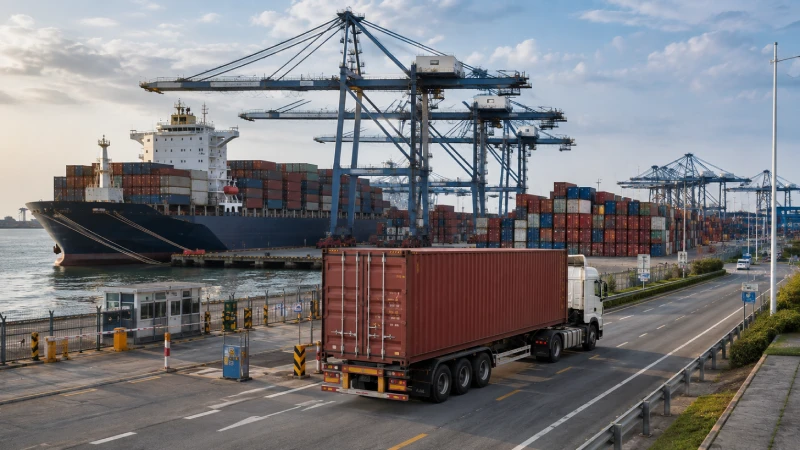
Port-to-Port vs Door-to-Door Container Cost
Two quotations can use the same carrier and still produce very different totals simply because the service scope is different.
Port-to-Port
A basic port-to-port quotation may exclude:
- supplier collection
- some China origin charges
- UK customs brokerage
- Customs Duty
- Import VAT
- UK port/local charges
- final delivery
- waiting time
- demurrage/detention
That does not make it a bad quotation. It simply means the importer must budget the remaining costs separately.
Port-to-Door or Door-to-Door
A wider logistics scope may combine:
- supplier pickup
- China export handling
- sea freight
- UK destination handling
- customs coordination
- UK delivery
Winsail, as a China-based freight forwarder, can coordinate these stages where applicable depending on the agreed service scope, shipment details and destination arrangement.
The quotation should still state clearly what is included and excluded.
For a broader explanation of this service structure, see door-to-door shipping from China.
What About DDP Container Shipping?
DDP should not be treated as shorthand for:
“The forwarder becomes the UK importer and everything is automatically tax-inclusive.”
A workable DDP arrangement depends on:
- seller/importer structure
- customs representation
- commodity
- EORI arrangement
- VAT treatment
- product restrictions
- final delivery arrangement
For a UK VAT-registered importer, the VAT treatment may be particularly important because using the importer’s own EORI and postponed VAT accounting can affect how import VAT is accounted for.
DDP feasibility therefore needs to be reviewed shipment by shipment.
Winsail does not automatically act as the UK importer of record, certify product compliance or assume tax liabilities simply because a shipment is described as door-to-door.
How Your UK Delivery Postcode Changes the Final Container Cost
A request such as:
“How much is container delivery from Felixstowe?”
is not enough information for an accurate haulage price.
A UK haulier normally needs to know:
- arrival port
- 20GP, 40GP or 40HC
- final postcode
- container/cargo weight
- unloading requirements
- delivery date
- delivery-site restrictions
- whether the truck waits while unloading
- whether the box can be dropped
- empty-return requirements
Live Unload vs Drop-and-Collect
With a live unload, the truck and container remain at the consignee while the cargo is unloaded.
If the warehouse takes longer than the included waiting period, waiting charges may apply.
A drop-and-collect arrangement may be more practical for some cargoes, but it changes equipment, timing and cost considerations.
Do not assume these two delivery methods have the same price.
Port Operations Can Also Affect Haulage
UK container trucking is not just “mileage × a fixed rate.”
Terminal booking conditions can influence the operational cost.
The final cost can also be affected by:
- port congestion
- appointment availability
- driver waiting
- fuel adjustments
- heavy-container requirements
- delivery access
- warehouse opening hours
- failed delivery
- empty-return depot changes
Pro Tip: Give your freight forwarder the final UK postcode when requesting the ocean quote. It is much easier to compare Felixstowe, London Gateway and Southampton properly when the inland leg is calculated at the same time.
Demurrage, Detention and Storage: Where Avoidable Costs Start
An inexpensive freight rate can become expensive quickly if the container cannot leave the port or be returned within the agreed free time.
Terminology varies between carriers, but three concepts matter.
Terminal Storage
Storage relates to the container occupying terminal or depot space beyond the applicable free period.
Detention
Detention generally concerns carrier equipment remaining in the customer’s control for too long before the empty container is returned.
Demurrage / Combined D&D
Some carriers use combined structures or terminology that brings parts of terminal and equipment time together.
Do not assume every carrier calculates these charges in the same way.
Current carrier tariffs illustrate why the actual booking must be checked. A carrier may provide a defined number of calendar days free for standard equipment and then apply escalating daily charges, while spot bookings or special products can follow different rules.
The important lesson is not that “UK free time is always X days.”
It is:
Check the free time on your actual carrier booking.
Common Reasons Free Time Is Lost
- customs documents arrive late
- commodity classification is unresolved
- importer EORI is incorrect
- Duty/VAT arrangements are unclear
- goods are selected for inspection
- UK haulier is booked too late
- warehouse has no receiving slot
- delivery site cannot unload the container
- public holidays or weekends consume calendar-day free time
- empty-return arrangements change
HMRC warns that not having the correct EORI can create customs delays and increased costs, including storage.
Before the Vessel Arrives
Confirm:
- GB EORI
- commodity code
- commercial invoice
- packing list
- bill of lading details
- customs agent
- Customs Duty / VAT arrangement
- PVA instruction if applicable
- port release requirements
- UK haulage booking
- warehouse appointment
- free-time allowance
- empty-return location
This work should happen before discharge, not after the container begins accumulating time at the terminal.
Customs Duty and Import VAT Are Separate from Freight Cost
One of the biggest mistakes in container-cost calculations is treating UK tax as a simple percentage added to the supplier invoice.
It is more complicated.
Commodity Code Determines the Duty Treatment
The UK Trade Tariff is the correct starting point for identifying:
- commodity code
- Customs Duty
- VAT treatment
- suspensions or reductions
- relevant import measures
HMRC requires the correct commodity code on the customs declaration, and that classification helps determine the applicable tax and duty treatment.
Therefore, avoid generic statements such as:
“UK import duty from China is 5%.”
There is no universal Customs Duty rate for all Chinese goods.
Customs Value Is Not Necessarily Just the Product Invoice
HMRC’s customs valuation guidance explains that transport, insurance, loading and handling connected with delivering goods to the UK border can form part of the customs value. Inland transport and associated costs in the exporting country can also need to be included depending on the valuation basis.
So an FOB supplier value and the final customs value may not be the same.
Import VAT Can Include Additional Costs
The import VAT calculation can extend further.
HMRC guidance explains that the VAT value can include relevant incidental expenses connected with the import, including certain customs clearance, quay rent, demurrage, handling, loading and storage costs where the rules apply. Transport to the first destination, and in some circumstances a known further destination, can also be relevant.
That means this shortcut can be wrong:
Chinese invoice × VAT rate = import VAT
The actual declaration should be calculated using the applicable HMRC valuation rules.
Postponed VAT Accounting
Eligible UK VAT-registered businesses may be able to use Postponed VAT Accounting (PVA) so import VAT is accounted for through the VAT Return rather than paid upfront at import.
PVA is not:
- a VAT exemption
- a freight discount
- automatically available regardless of importer structure
Where an intermediary makes declarations on behalf of an importer, the importer should give the required PVA instructions and ensure the correct EORI/VAT details are used.
GB vs Northern Ireland
For imports into England, Scotland or Wales, businesses generally need an EORI beginning GB.
Movements involving Northern Ireland can require an XI EORI and different customs processes.
Because Felixstowe, London Gateway and Southampton are Great Britain gateways, this article primarily focuses on GB imports.
Product Compliance Is a Separate Check
Freight booking does not certify that a product can legally be placed on the UK market.
Product-specific rules may involve:
- conformity assessment
- marking
- labelling
- licences
- safety documentation
- specialist agencies
Current UK government guidance distinguishes product rules for Great Britain and Northern Ireland and provides for UKCA and/or CE routes depending on the applicable product regime. There is no valid blanket rule that every commercial import requires UKCA marking.
For controlled or regulated cargo, compliance should therefore be checked before shipment.
How to Request a Useful China–UK FCL Quote
The quality of the quotation depends heavily on the information supplied.
Instead of asking:
“40ft China to UK price?”
send:
- supplier/factory address
- supplier Incoterm: EXW, FOB, FCA, etc.
- preferred China port if already agreed
- cargo-ready date
- commodity description
- commodity/HS code if known
- number and type of packages
- gross weight
- CBM
- palletised or loose cartons
- 20GP / 40GP / 40HC preference
- dangerous-goods or battery status
- destination postcode
- delivery-site restrictions
- required delivery window
If you have a packing list, provide it.
The forwarder can then assess whether a 20GP, 40GP or 40HC is operationally appropriate rather than quoting a container size based only on an estimated CBM.
How to Compare Two Container Quotes
Do not compare only:
Quote A: £3,500
Quote B: £3,850
Use a line-by-line comparison.
| Cost / Condition | Quote A | Quote B |
|---|---|---|
| China factory pickup | ||
| Container trucking | ||
| Origin THC | ||
| China export declaration | ||
| Documentation | ||
| VGM | ||
| Ocean freight | ||
| Carrier surcharges | ||
| UK terminal/local charges | ||
| Customs brokerage | ||
| Customs Duty | ||
| Import VAT | ||
| UK postcode delivery | ||
| Waiting allowance | ||
| Empty return | ||
| Free time | ||
| Rate validity | ||
| Sailing/routing |
A £350 difference can disappear immediately if the cheaper quote excludes destination handling or container haulage.
Check Current 20GP, 40GP or 40HC Shipping Cost
If you are preparing a full-container shipment from China, the most useful quotation is based on the actual supplier location and final UK delivery point, not a generic “China to UK” average.
Winsail Logistics can coordinate FCL shipments from China and review the appropriate transport scope depending on the cargo, supplier location, container type and destination arrangement.
For a shipment-specific cost assessment, prepare:
- supplier address
- packing list
- cargo-ready date
- commodity
- total weight and CBM
- preferred container size if known
- UK delivery postcode
This allows the shipment to be evaluated from China origin through the agreed UK delivery scope, rather than quoting only the ocean leg.
FAQ
How much does a 20ft container from China to the UK cost?
As a September 2026 planning reference, lower-end public market data for major Shanghai, Ningbo and Shenzhen to Felixstowe products has been around the low-£2,000s for 20GP. Higher carrier products can cost considerably more. Actual rates depend on the cargo-ready date, origin, destination, carrier, routing and quotation scope.
How much does a 40ft container from China to the UK cost?
Late-August 2026 public rate observations placed competitive 40GP and 40HC products from several major Chinese origins to Felixstowe around the mid-£3,000s, while other products on the same routes were substantially higher. Final landed logistics cost can also include China trucking, origin charges, UK terminal charges, clearance and container haulage.
Is a 40ft container twice the cost of a 20ft container?
Usually not. A 40ft container provides approximately twice the nominal cubic capacity of a 20ft, but ocean pricing is not calculated as a simple multiple of volume. This is why 40GP or 40HC can offer better cost per usable CBM for high-volume cargo.
Is a 40HC more expensive than a 40GP?
Sometimes, but not always by much. 40GP and 40HC rates can be very close on some carrier products. Equipment supply, origin, carrier and sailing can all influence the difference, so request both if your cargo can use either.
What charges are not included in a China-to-UK ocean freight rate?
Depending on the quotation, exclusions can include China trucking, origin THC, export declaration, documentation, VGM, UK destination charges, customs brokerage, Customs Duty, Import VAT, UK haulage, storage, demurrage and detention.
How much is container delivery from Felixstowe, London Gateway or Southampton?
There is no responsible single UK container-haulage rate. Pricing depends on the port, postcode, container type, weight, delivery timing, unloading method, waiting time, site restrictions and empty-container return arrangement.
Do I pay Customs Duty and VAT on a container from China?
Potentially, but the amount is determined by the imported goods and customs treatment rather than by container size. The UK Trade Tariff should be used to confirm the commodity code, applicable Customs Duty, VAT treatment and relevant import measures. Eligible VAT-registered businesses may also be able to account for import VAT through PVA, subject to HMRC requirements.
Final Planning Advice
The most important number in a China-to-UK FCL shipment is not necessarily the ocean freight rate.
It is the cost of moving the goods from the actual Chinese supplier to the actual UK destination under a clearly defined service scope.
A strong container-cost comparison should therefore answer five questions:
- Which container actually fits the cargo — 20GP, 40GP or 40HC?
- Which China port produces the best combination of trucking and ocean freight?
- Which UK gateway works best once the final postcode is included?
- Which charges and taxes are outside the headline freight rate?
- How much free time is available before storage, demurrage or detention becomes a risk?
For dense cargo, a 20GP may be the more practical option even when a larger container is available. For bulky furniture or consumer goods, a 40HC can deliver substantially more usable cube with a freight rate that may be relatively close to a 40GP.
Most importantly:
Compare scope before comparing price.
A low port-to-port rate is useful only when you understand what remains to be paid after the container leaves the China factory, reaches the UK terminal, clears customs and travels to the final delivery postcode.
Container freight rates change frequently, so any published 2026 figures should be treated as dated market references. For purchasing and shipping decisions, confirm a current quotation using the shipment’s cargo-ready date, equipment requirement, origin location and final UK postcode.
Continue with related UK shipping guides
Use these focused guides for the next part of your China-to-UK shipping plan.
