
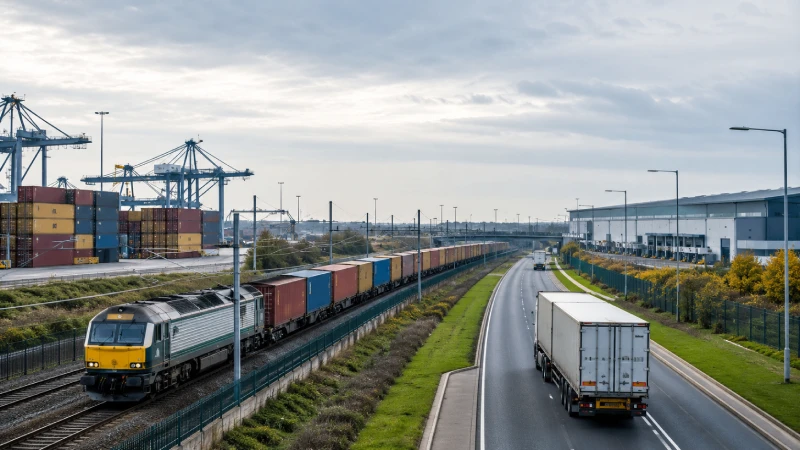
Shipping from China to Birmingham is not simply a matter of choosing sea freight or air freight. Birmingham is an inland destination, so commercial cargo normally enters Great Britain through a major container port or cargo airport before continuing to the West Midlands by road, rail, or a combination of both.
For sea freight, Felixstowe, London Gateway and Southampton are the main gateways worth comparing for many China-to-Midlands shipments. For air freight, East Midlands Airport (EMA) can be particularly relevant for cargo and express traffic, while London Heathrow (LHR) remains an important option because of its extensive airline network and cargo capacity.
The best route therefore depends on the complete journey: your supplier location in China, cargo size and urgency, carrier schedule, UK gateway, customs arrangements, inland transport and the exact Birmingham or Midlands delivery postcode.
For broader UK-wide costs, transit times and shipping-method comparisons, see Shipping from China to the UK.
Shipping from China to Birmingham: Quick Answer
Birmingham does not need to be the physical UK entry point for your shipment. A full container may arrive at Felixstowe, London Gateway or Southampton, clear customs, and then travel to Birmingham by direct container haulage or by rail to a Midlands terminal followed by a shorter road movement.
Air freight may arrive through East Midlands Airport or Heathrow before being customs-cleared and delivered by truck to a Midlands factory, distribution centre, 3PL or warehouse.
For commercial importers, the key comparison is therefore not simply the freight rate to a UK port or airport. It is the total delivered cost to the final postcode.
| Shipment Requirement | Usually Compare First | Why |
|---|---|---|
| Full container or regular inventory | Sea FCL | Usually better economics for larger volumes |
| Several pallets or smaller bulk shipments | Sea LCL | Avoids paying for unused container capacity |
| Urgent production components | Air freight | Reduces replenishment lead time |
| High-value, time-sensitive inventory | Air freight | Faster access to stock |
| Small samples or parcels | Express | Simpler integrated delivery |
| Multiple suppliers in China | Consolidation + sea or air | Can reduce fragmented shipments and handling |
As a broad planning reference, conventional China-UK air freight is often measured in days rather than weeks, while sea freight typically requires several weeks. Current market schedules vary significantly by origin, carrier and gateway, so transit time should always be checked against the actual cargo-ready date rather than treated as a fixed number. Winsail’s main UK route guide currently uses planning ranges of approximately 5-8 days for conventional air freight, 25-40+ days for FCL sea freight and 28-45+ days for LCL, before allowing for shipment-specific pickup, customs and final-delivery conditions.
Pro Tip: Do not compare China-to-UK quotations on the international freight line alone. A lower ocean rate can be offset by higher destination handling, rail or road haulage, waiting time and final-delivery costs.
How Does Freight from China Actually Reach Birmingham?
The most useful way to plan China to Birmingham freight is to break the journey into separate operational stages.
Typical FCL Sea Freight Route
A full-container movement may look like:
China factory → China export port → UK container port → customs release → road or rail → Birmingham/Midlands warehouse
The container does not need to be unloaded at the UK port. Depending on the route and receiving site, it may move inland intact.
For some shipments, direct container haulage from the port to the consignee is appropriate. For others, a container can move inland by rail before completing the final section by truck.
Typical LCL Route
For a smaller shipment:
China supplier → consolidation warehouse → China port → UK port/CFS → deconsolidation → customs release → pallet/groupage delivery → Birmingham
This distinction matters.
An importer comparing FCL and LCL should not look only at ocean freight. LCL normally involves additional consolidation and deconsolidation steps, destination handling and final pallet delivery.
Typical Air Freight Route
Air freight normally follows:
China supplier → China airport → UK cargo airport → terminal handling → customs release → truck → Midlands destination
East Midlands Airport and Heathrow should both be considered where appropriate rather than assuming the international flight must arrive at an airport in Birmingham itself.
Where Rail Fits into the Journey
Rail in this article primarily refers to the UK inland leg from a deep-sea port to an inland terminal, not necessarily an overland China-to-Europe rail service.
This distinction is important for Midlands importers because several major UK container ports have established rail connections into central England.
Why Birmingham and the Midlands Matter for UK Distribution
Birmingham sits within one of the UK’s most important manufacturing, distribution and logistics regions.
The wider Midlands supports automotive supply chains, engineering, industrial manufacturing, wholesalers, national distribution centres, e-commerce operations and major 3PL networks. Its road network includes the M1, M6, M42 and A14, supported by important rail freight corridors.
Midlands Connect describes the region’s logistics “Golden Triangle” as a major concentration of warehouses and multimodal hubs from which operators can reach around 90% of the UK population within four hours by HGV. Midlands Connect provides additional context on the region’s freight role.
For an importer, this creates an important planning advantage. Cargo does not necessarily need to enter through the geographically closest UK gateway. A port with a better vessel service, rail connection or inland transport arrangement may produce a better overall supply-chain result.
The practical destination could also be outside Birmingham itself, including locations around Coventry, Solihull, Wolverhampton, Walsall, Tamworth, Warwickshire, Staffordshire, Leicestershire or the wider East and West Midlands.
That is why the full delivery postcode is much more useful than simply stating “Birmingham” when planning freight.
Which UK Gateway Should I Use for Birmingham?
There is no single best UK gateway for every shipment from China to the Midlands.
The decision should normally compare:
- carrier schedule from China
- international freight rate
- cargo availability
- container or airfreight capacity
- UK terminal charges
- customs arrangements
- rail availability
- road-haulage cost
- final postcode
- required delivery date
Which Gateway Should I Use?
| UK Gateway | Best Reason to Shortlist It | Typical Midlands Inland Pattern | What to Compare |
|---|---|---|---|
| Felixstowe | Major container gateway with extensive Midlands rail connectivity | Direct road haulage or rail + final truck | Sailing schedule, rail/haulage availability, free time |
| London Gateway | Strong container services plus inland rail connections such as Hams Hall | Rail + final truck or direct road | Total delivered cost and carrier schedule |
| Southampton | Strong Asia connectivity and frequent Birmingham-area rail services | Rail into Midlands or direct container haulage | Sailing, inland rail, road and equipment availability |
| East Midlands Airport | Particularly relevant for dedicated cargo, express and Midlands distribution | Customs release + road delivery | Flight availability, cargo acceptance, terminal handling |
| Heathrow | Extensive airline network and long-haul connectivity | Heathrow handling + road to Midlands | Air rate, capacity and delivery urgency |
Felixstowe
Felixstowe deserves serious consideration for containerised imports into the Midlands because of its rail network.
The Port of Felixstowe currently reports 58 trains per day across three dedicated rail terminals. It also says rail accounts for approximately 50% of its traffic destined for the North and West Midlands. See the Port of Felixstowe rail service information.
For a Birmingham-area importer, this can make both of the following worth evaluating:
- port-to-warehouse direct container haulage
- port-to-Midlands rail followed by shorter road delivery
The better choice depends on available train capacity, delivery timing, container free time and the final warehouse location.
London Gateway
London Gateway should not be dismissed simply because Birmingham is farther inland.
DP World reports more than 70 weekly rail services from London Gateway, including services to Hams Hall and Daventry, both important inland freight locations for central England. See DP World London Gateway.
If a shipping line has a stronger China service into London Gateway, the combination of ocean freight and inland rail may compete effectively with another port that appears closer on a map.
Southampton
Southampton is another important China/Asia gateway with substantial inland rail connectivity.
DP World currently reports 22 trains per day from Southampton to inland destinations, including six trains per day to and from the Birmingham area. The port also lists direct connectivity with major ports across Asia. See DP World Southampton infrastructure information.
That makes Southampton particularly relevant when the carrier schedule, container availability and Birmingham rail connection fit the shipment.
The Key Rule: Do Not Choose a Gateway by Distance Alone
The correct comparison is not:
Which port is closest to Birmingham?
It is:
Which route gives the best balance of freight cost, schedule reliability, inland transport and final-delivery requirements for this shipment?
Pro Tip: For a regular FCL programme, ask for both direct road and rail-plus-road options where practical. The best inland solution can change with rail capacity, haulage availability and destination postcode.
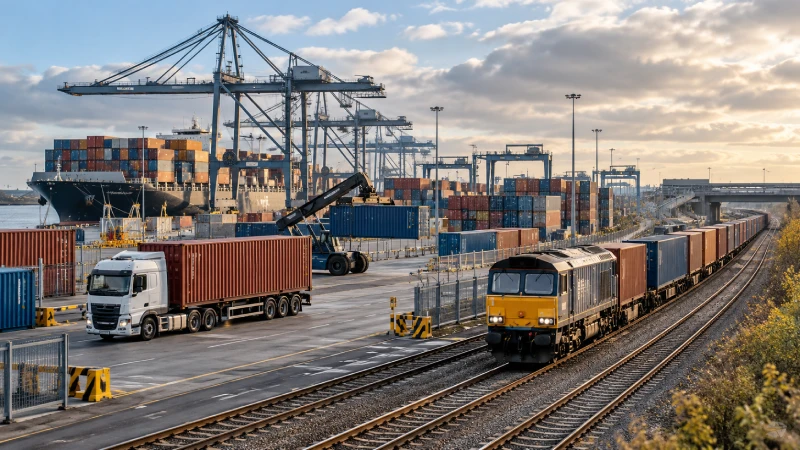
Sea Freight to Birmingham: FCL, LCL and the Inland Leg
For distributors, industrial importers and warehouse operators, sea freight is usually the first option to evaluate when the shipment is large enough and delivery is not urgently required.
The important Birmingham-specific issue begins after the vessel reaches Great Britain.
FCL: Direct Container Haulage
The simplest inland structure is:
UK port → container truck → Birmingham warehouse → empty-container return
This can work well when:
- the destination can accept an articulated container vehicle
- the site can unload the container within the agreed period
- direct road capacity is available
- rail does not provide a meaningful cost or operational advantage
Before confirming the delivery, the importer should tell the forwarder whether the container is:
- 20ft
- 40ft
- 40ft high cube
- overweight or unusually loaded
- subject to specific unloading requirements
The delivery site also matters. A facility designed for pallet trucks may not automatically be suitable for receiving a loaded shipping container.
FCL: Rail Plus Final Truck
For suitable Midlands movements, another structure is:
UK port → rail terminal → local container haulage → consignee
This can reduce the length of the road haul and may fit regular container programmes particularly well.
The decision still needs to be made shipment by shipment. Rail availability, train cut-offs, inland-terminal capacity, container free time and the destination’s distance from the railhead all affect the result.
LCL to Birmingham
LCL follows a different process because the container contains cargo for multiple consignees.
After arrival, the shipment is normally moved through a deconsolidation process before the individual consignment is released for delivery.
The inland leg may therefore look like:
UK CFS → one or several pallets → groupage/dedicated truck → Birmingham warehouse
For LCL, compare:
- ocean freight
- destination/CFS handling
- documentation charges
- customs-clearance costs
- pallet delivery
- appointment or tail-lift requirements
A very low LCL ocean-freight figure does not automatically mean a low landed logistics cost.
If you are buying from several Chinese suppliers, LCL Consolidation Services may also be relevant when the cargo needs to be combined before export.
When Devanning Before Delivery May Make Sense
Some businesses do not want a shipping container delivered to their site.
Where operationally available, goods can instead be devanned and delivered as pallets or another suitable unit load.
This may be useful when:
- HGV/container access is difficult
- warehouse unloading is designed for pallets
- cargo needs to be split between destinations
- a 3PL requires specific pallet presentation
Additional handling costs and cargo risk should be considered before selecting this option.
Air Freight to Birmingham: East Midlands Airport vs Heathrow
Air freight is most relevant for:
- production-critical components
- urgent replacement parts
- high-value products
- inventory shortages
- product launches
- time-sensitive e-commerce stock
- cargo where several weeks of sea transit would create a larger commercial loss than the additional freight cost
For a Midlands consignee, East Midlands Airport and Heathrow should both be considered.
When East Midlands Airport Should Be Shortlisted
EMA is a major UK freight airport rather than simply a regional passenger airport.
East Midlands Airport handled 413,664 tonnes of cargo during its 2025/26 financial year, according to the airport, and describes itself as the UK’s foremost express air freight hub. See the East Midlands Airport cargo update.
Its China connectivity has also strengthened. YunExpress developed its own cargo-handling facility at EMA after beginning Boeing 777F services from China with Central Airlines, while other China-linked operators have also expanded cargo activity at the airport. See the East Midlands Airport YunExpress cargo facility announcement.
For Midlands importers, that makes EMA especially worth checking for:
- dedicated freighter cargo
- express networks
- e-commerce flows
- time-sensitive commercial cargo
- shipments where central UK distribution is important
When Heathrow May Still Be Better
Being farther from Birmingham does not make Heathrow automatically inferior.
Heathrow currently reports a network covering more than 230 destinations, over 110 long-haul routes and 77 international airlines. It also says it handled more cargo than all other UK airports combined in 2025. See Heathrow Cargo.
That scale can create advantages in:
- flight frequency
- airline choice
- belly-hold capacity
- rate availability
- connection options
Therefore, a shipment from Shenzhen, Guangzhou, Shanghai or another Chinese origin may still work better through Heathrow if the flight schedule and freight rate compensate for the longer inland road leg.
Compare the Complete Airfreight Cost
The useful comparison is:
China air freight + UK terminal handling + customs + airport release + road delivery to the final Midlands postcode
—not simply the airport-to-airport rate.
Pro Tip: Compare EMA and Heathrow using the same cargo-ready date, dimensions and chargeable weight. The closest airport does not always produce the fastest or lowest-cost door delivery.
What Determines the Final Delivery Cost to a Midlands Postcode?
For commercial freight, “Birmingham” is not a sufficiently precise destination for a firm inland-delivery calculation.
The forwarder should normally receive the complete postcode.
Why Postcode Matters
A delivery in central Birmingham can have different transport requirements from a warehouse near Coventry, Tamworth, Wolverhampton or another Midlands logistics park.
The exact postcode affects:
- distance from the gateway or rail terminal
- haulage zone
- vehicle routing
- delivery restrictions
- whether an inland rail solution remains practical
FCL Inland-Haulage Cost Factors
For a full container, pricing may be affected by:
- port of arrival
- rail terminal if used
- 20ft vs 40ft/40HC
- container weight
- final postcode
- fuel and haulage availability
- delivery slot
- waiting time
- live unloading time
- empty-container return
- demurrage and detention exposure
- weekend or out-of-hours requirements
LCL and Pallet-Delivery Factors
LCL final delivery can depend on:
- pallet count
- dimensions
- gross weight
- delivery postcode
- residential vs commercial site
- tail-lift requirement
- timed delivery
- dedicated vs groupage vehicle
- unusual cargo dimensions
- redelivery risk
Airfreight Final-Delivery Factors
After airport release, the road leg can depend on:
- terminal used
- number of pallets
- chargeable shipment size
- vehicle type
- urgent/same-day requirement
- receiving hours
- special handling
- dangerous-goods status
Accessorial Charges That Are Easy to Overlook
Importers should pay particular attention to:
- waiting time
- failed-delivery charges
- redelivery
- tail lift
- timed delivery
- storage
- demurrage
- container detention
- customs examinations
- additional handling
These costs are one reason a port-to-port freight rate should never be treated as the complete cost of shipping to the UK Midlands from China.
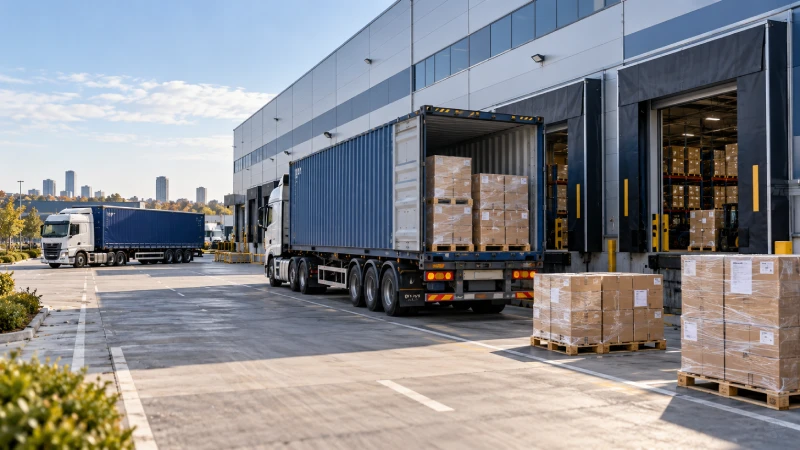
Delivering to Birmingham Warehouses, Factories and 3PLs
The final delivery should be planned before the cargo reaches the UK.
Where storage, staged receipt or fulfilment is required, Winsail’s warehousing and fulfilment support can be included in the route plan.
Use the UK warehouse and 3PL delivery guide to prepare booking references, unloading capability and final-mile delivery requirements.
This is particularly important for industrial importers, distributors and 3PL operators because receiving conditions can affect both vehicle selection and cost.
Warehouse Receiving Information to Confirm
Before dispatching the UK delivery, provide:
- complete address and postcode
- warehouse contact
- receiving hours
- delivery-booking requirement
- PO or ASN reference if required
- pallet/carton quantity
- forklift availability
- loading-dock availability
- container vehicle access
- maximum vehicle restrictions
- tail-lift requirement
- expected unloading time
Container Deliveries
If an FCL container will be delivered intact, confirm whether the site can accept and unload it.
Ask:
- Can an articulated container truck enter and turn safely?
- Is unloading from the container possible?
- Is there a dock or forklift?
- How long will unloading take?
- Is a timed booking required?
- Does the site accept live unloads?
These details should be known before the truck is dispatched.
Factory and Industrial Deliveries
Manufacturing sites may have additional requirements for:
- production-critical parts
- delivery windows
- gate security
- booking numbers
- receiving departments
- restricted HGV access
If a component is required to avoid production disruption, this should be communicated while the international routing is being planned—not only after customs release.
3PL and E-Commerce Inventory
Third-party warehouses frequently operate structured inbound procedures.
These can include:
- appointment booking
- ASN submission
- SKU/carton labels
- pallet specifications
- PO references
- inbound delivery ID
- restricted receiving hours
A warehouse may refuse or surcharge an inbound shipment that does not follow its receiving instructions.
Amazon fulfilment can be one example, but the same planning principle applies to independent 3PLs and distributor warehouses throughout the Midlands.
Warehouse Delivery Checklist
| Information | Why It Matters | Possible Problem if Missing |
|---|---|---|
| Full postcode | Determines actual inland route | Incorrect haulage estimate |
| Receiving hours | Controls delivery schedule | Waiting or failed delivery |
| Booking reference | May be mandatory for 3PL entry | Refused delivery |
| Container access | Determines FCL feasibility | Truck cannot access site |
| Forklift/dock | Determines unloading plan | Extra handling required |
| Tail-lift requirement | Determines vehicle type | Delivery cannot be completed |
Consolidating Cargo from Multiple Suppliers in China
Many Midlands distributors and manufacturers source products or components from more than one Chinese supplier.
Instead of asking every supplier to ship independently, cargo can sometimes be brought to a China consolidation warehouse before export.
A typical process is:
Supplier A + Supplier B + Supplier C → China warehouse → cargo check/consolidation → one international shipment → UK gateway → Midlands delivery
When Consolidation Can Help
It may be useful for:
- wholesalers purchasing several SKUs
- distributors using multiple factories
- industrial procurement
- project buyers
- regular 3PL replenishment
- LCL buyers trying to build a larger shipment
Depending on the shipment, consolidation may reduce duplicated pickup, documentation and international shipment handling.
Winsail’s LCL Consolidation Services and China-side warehouse coordination can be relevant when a shipment requires multiple supplier pickups and combined export planning.
When Cargo Should Not Automatically Be Consolidated
Combining everything is not always the right decision.
Separate movements may be better where suppliers have very different cargo-ready dates or when shipments include:
- urgent production parts
- dangerous goods
- batteries
- temperature-sensitive cargo
- oversized equipment
- products with different compliance requirements
- incompatible cargo
The consolidation plan should therefore be based on the shipment rather than treated as a default rule.
Pro Tip: When your combined LCL volume becomes substantial, request both LCL and FCL comparisons. There is no universal CBM point at which FCL is always cheaper because ocean rates and UK destination charges change.
UK Customs Clearance Before Delivery to Birmingham
Customs clearance takes place before unrestricted inland delivery, so customs readiness should be addressed before the cargo leaves China.
Because Birmingham is in England, the relevant framework is the Great Britain import regime.
GB EORI
Businesses importing commercial goods into England, Scotland or Wales generally need an EORI number beginning with GB.
An XI EORI can be relevant to certain Northern Ireland movements, but it should not be confused with the normal Birmingham import process. See the official GOV.UK import customs declaration guidance.
Commodity Code
The correct commodity code is fundamental to the customs declaration.
The official UK Trade Tariff can be used to determine the classification and check:
- Customs Duty
- import VAT measures
- suspensions or reductions
- restrictions
- other trade measures
There is no single Customs Duty rate for all goods imported from China. The rate depends on classification and the measures applicable to the product.
A vague description such as “machine parts” or “electronics” may not contain enough information for reliable classification.
Details such as material, function, composition and intended use can matter.
Import VAT
The current standard UK VAT rate is 20% for most goods and services, although reduced, zero-rated and exempt categories exist. See the official GOV.UK VAT rates guidance.
Import VAT is also not necessarily calculated only on the supplier invoice value.
HMRC guidance explains that the import VAT value can include the customs value plus applicable duty and incidental expenses such as transport and insurance to the relevant UK destination where required. See HMRC guidance on valuing goods for import VAT.
Importers should obtain tax advice where necessary rather than relying on a freight article for a final VAT calculation.
Postponed VAT Accounting
A UK VAT-registered business may be able to use Postponed VAT Accounting (PVA) to account for import VAT through its VAT Return instead of paying that VAT upfront at import.
HMRC states that the business must be UK VAT registered to use PVA. See the official Postponed VAT Accounting guidance.
The importer or its tax adviser should confirm the appropriate treatment before declaration.
Customs Representation and DDP
DDP requires more scrutiny than simply arranging transport to a Birmingham warehouse.
Before describing a shipment as DDP, establish:
- who will be the importer
- whether the importer is UK established
- which EORI will be used
- who will submit the declaration
- what type of customs representation applies
- who is responsible for Customs Duty
- how import VAT will be accounted for
- whether the product can legally be placed on the GB market
- what final-delivery scope is included
HMRC distinguishes between direct and indirect customs representation. It states that a business not established in the UK and importing into Great Britain can only ask an agent to act indirectly on its behalf, which also creates joint-liability implications for the representative. See the HMRC customs representative guidance.
For this reason, a China-based seller should not assume that a freight forwarder can automatically act as importer or provide DDP for every commodity.
Winsail can review whether a coordinated DDP or door-to-door structure may be workable subject to shipment, importer, customs, VAT and delivery arrangements.
Product Compliance and Regulated Cargo
Customs release and product compliance are separate issues.
Machinery, electrical products, medical devices, food, chemicals, batteries and other regulated products may require additional checks, licences, documentation or conformity procedures.
Current UK government guidance for Great Britain covers both UKCA and CE regimes, with the applicable requirements depending on the particular product legislation. Do not assume either that every product requires UKCA or that CE recognition follows the same rule for every sector. See GOV.UK guidance on placing UKCA or CE marked products on the GB market.
Dangerous goods also follow different requirements depending on transport mode. GOV.UK specifically distinguishes air rules, ADR road requirements and IMDG requirements for sea transport. See GOV.UK dangerous goods transport rules.
Compliance should therefore be reviewed before booking regulated or dangerous cargo.
China Supplier to Midlands Warehouse: End-to-End Workflow
A practical shipment can be planned in seven stages.
For coordinated execution through to the Midlands delivery point, review Winsail’s door-to-door shipping service.
The China-to-UK door-to-door guide explains how pickup, freight, customs and the final UK delivery can be scoped as one movement.
1. Review the Cargo
Confirm:
- product
- quantity
- cartons/pallets
- dimensions
- gross weight
- CBM
- cargo-ready date
- battery/DG status
- compliance considerations
2. Arrange Supplier Pickup or Consolidation
Goods can move from one factory or several Chinese suppliers to the export gateway or consolidation warehouse.
3. Select the UK Gateway
Compare:
- vessel or flight
- capacity
- freight cost
- terminal charges
- inland routing
- final postcode
Do not select Felixstowe, Southampton, London Gateway, EMA or Heathrow purely because one appears geographically convenient.
4. Complete the International Movement
The shipment moves by the selected sea or air service.
5. Complete UK Customs Formalities
The required declaration, EORI, commodity classification, duty/VAT arrangement and supporting documents should be ready for customs processing.
6. Move Cargo Inland
The final inland mode may be:
- direct container haulage
- rail + local container truck
- pallet/groupage delivery
- dedicated truck from an airport
- another agreed delivery solution
7. Complete Warehouse Delivery
Coordinate the appointment, unloading requirements and proof of delivery.
A shipment should not be considered operationally complete merely because it has arrived at the UK gateway.
Common Mistakes When Shipping from China to Birmingham
Choosing the Port with the Lowest Ocean Rate
A cheaper international freight rate can be offset by:
- higher terminal charges
- expensive inland haulage
- poor rail availability
- additional storage
- container detention
Compare the delivered route.
Providing “Birmingham” Instead of a Full Postcode
The postcode can materially change the inland calculation and vehicle requirements.
Always provide the final postcode at quotation stage.
Ignoring Warehouse Unloading Conditions
A container reaching Birmingham is not useful if the consignee cannot unload it.
Confirm site access and unloading before dispatch.
Assuming Door-to-Door and DDP Mean the Same Thing
They do not.
Door-to-door primarily describes the transport scope between pickup and final delivery.
DDP also affects who is responsible for import formalities, duty and taxes under the agreed commercial arrangement.
The importer and customs structure therefore needs to be reviewed separately.
Waiting Until Arrival to Prepare Customs Information
Do not wait for the container to reach Felixstowe, Southampton or London Gateway before asking who the importer is or which commodity code applies.
Customs readiness should be checked before departure.
Booking Regulated Cargo as Ordinary General Cargo
Batteries, chemicals, dangerous goods and certain regulated machinery or products can require special carrier acceptance and documentation.
Failure to disclose the cargo correctly can create delays, additional costs or rejection.
What Information Is Needed for an Accurate Birmingham Freight Plan?
A useful freight request should contain enough information to evaluate the entire China-to-postcode movement.
China Origin
Provide:
- supplier city
- pickup address if available
- number of suppliers
- nearest practical export gateway if known
- cargo-ready date
Cargo
Provide:
- product description
- material/function where relevant
- commodity code if already confirmed
- carton count
- pallet count
- dimensions
- gross weight
- CBM
- declared value
- battery/DG information
- oversized or special-handling requirements
UK Import
Provide:
- importer details
- GB EORI where relevant
- VAT/PVA instructions where confirmed
- customs representative arrangement
- compliance documents or licences where required
Midlands Destination
Provide:
- complete postcode
- warehouse/factory/3PL name
- receiving hours
- booking requirement
- container access
- forklift/loading dock availability
- tail-lift requirement
- unloading time
With these details, Winsail can coordinate China-side pickup or consolidation, international freight and the agreed UK delivery arrangement, subject to shipment review and the confirmed service scope.
Plan the Right Gateway for Your Midlands Shipment
The most important decision when shipping from China to Birmingham is not whether Birmingham has its own port.
It does not need one.
A commercially effective route may use Felixstowe, London Gateway or Southampton for sea freight, or East Midlands Airport or Heathrow for air freight. From there, the cargo continues inland through the road, rail and warehouse network serving the Midlands.
For large importers, the correct decision usually comes from comparing:
China origin + international freight + UK gateway + customs + inland transport + final postcode + warehouse requirements
rather than optimising any one part in isolation.
If you are planning a shipment, prepare the supplier location, cargo dimensions and weight, cargo-ready date and full Midlands postcode first. Those four pieces of information make it much easier to compare realistic routing options instead of relying on a generic “China to Birmingham” freight price.
FAQs
How are goods shipped from China to Birmingham if Birmingham is not a seaport?
Sea freight normally arrives through a major UK container gateway such as Felixstowe, London Gateway or Southampton. After customs release, the container or deconsolidated cargo moves inland to Birmingham by road or, for suitable container routes, by rail followed by final road delivery.
Which UK port is best for shipping from China to Birmingham?
There is no universal best port. Felixstowe has extensive Midlands rail connectivity, London Gateway connects with inland locations including Hams Hall, and Southampton has frequent Birmingham-area rail services. The best choice depends on the China sailing, freight rate, inland transport, container availability and final postcode.
Is Felixstowe or Southampton better for a Birmingham container?
Both can be practical. Felixstowe has a large intermodal rail operation and strong West Midlands traffic, while Southampton has frequent trains to and from the Birmingham area. Compare the actual carrier schedule and total port-to-postcode cost for the intended shipment date rather than choosing one permanently.
Should I use East Midlands Airport or Heathrow for air freight to Birmingham?
Compare both where appropriate. EMA is a major dedicated freight and express hub located close to Midlands distribution networks, while Heathrow offers a much larger long-haul airline network. Flight capacity, freight rate, cargo type, handling and the final road leg determine which option works better for a particular shipment.
How much does inland haulage from a UK port to Birmingham cost?
There is no reliable universal rate. The cost depends on the port or inland rail terminal, full postcode, container size, cargo weight, current haulage capacity, delivery timing, unloading conditions, waiting time and empty-container return. A current shipment-specific quotation is required.
Do I need a GB EORI number to import goods from China to Birmingham?
Businesses importing commercial goods into England generally need the appropriate GB EORI as part of the import setup. The specific importer and customs arrangement should be confirmed before shipment.
Can DDP shipping from China to a Birmingham warehouse be arranged?
It may be possible for suitable shipments, but DDP should only be confirmed after reviewing the importer structure, EORI, VAT treatment, customs representation, commodity, duty and product-compliance requirements. Winsail should not automatically be assumed to act as the UK importer of record or to pay UK taxes for every shipment.
Continue with related UK shipping guides
Use these focused guides for the next part of your China-to-UK shipping plan.
