

Shipping from China to Manchester is not simply a matter of choosing the UK port or airport closest to the city.
Manchester is an inland destination, so a commercial shipment normally has several transport stages: collection from the supplier in China, export handling, international freight, arrival at a UK gateway, customs release, inland transport, and final delivery to a warehouse, factory, distribution centre or 3PL location in Greater Manchester or elsewhere in North West England.
For sea freight, Liverpool may look like the obvious choice because of its location. In practice, however, Felixstowe, London Gateway or Southampton can sometimes produce a better total route because of carrier schedules, direct-service availability, ocean freight rates, container equipment, rail capacity and inland transport economics.
The same logic applies to air freight. Manchester Airport is the main local cargo gateway, but East Midlands Airport or Heathrow can sometimes provide a better flight schedule or total airport-to-door cost.
For a broader country-level comparison of UK freight modes, costs, customs requirements and destinations, see Shipping from China to the UK. This guide focuses specifically on how North West importers should plan freight with a final destination in Manchester.
Quick Answer: What Is the Best Way to Ship from China to Manchester?
For larger, non-urgent commercial shipments, sea freight is usually the first option to compare. Liverpool can reduce the UK inland leg when a commercially suitable service is available, but it should not automatically be selected just because it is closer to Manchester. Felixstowe, London Gateway and Southampton may offer better ocean schedules, carrier choices or intermodal connections.
For urgent commercial cargo, air freight to Manchester Airport provides the most geographically direct option. However, Heathrow and East Midlands Airport should remain part of the comparison where airline capacity, rates or schedules justify the additional UK road movement.
Express courier is generally better suited to samples, documents and smaller urgent shipments rather than regular palletised or high-volume B2B freight.
| Factor | Sea Freight | Air Freight | Express |
|---|---|---|---|
| Best for | Larger or routine commercial cargo | Urgent, high-value or supply-critical cargo | Samples and small urgent consignments |
| Main charging basis | FCL container or LCL CBM/W/M | Chargeable weight | Courier chargeable weight |
| UK routing | Sea gateway + road/rail to Manchester | MAN or alternative airport + road | Courier network |
| Relative speed | Slowest | Fast | Usually fastest |
| Relative cost | Usually lowest for larger volumes | Higher | Often highest per kg |
| Main decision | Port + sailing + inland economics | Flight schedule + capacity + inland delivery | Courier service level |
| Key risk | Sailing, transshipment and inland delay | Uplift, space and chargeable weight | Cost rises quickly with shipment size |
The most useful rule is simple:
Compare the total delivered-to-Manchester route, not only the international freight rate.
Why Manchester’s Nearest Port Is Not Always the Best Port
A common mistake is to compare UK ports on a map and assume that the nearest gateway must produce the cheapest freight solution.
International container routing does not work that way.
A Manchester importer should compare:
- the actual service available from the Chinese origin port;
- whether the service is direct or involves transshipment or feeder movement;
- ocean freight and surcharges;
- sailing frequency;
- container and vessel space availability;
- UK terminal charges;
- rail or road options;
- the final Manchester delivery postcode;
- realistic end-to-end transit time.
A longer UK inland journey can still make sense if the international leg is considerably better.
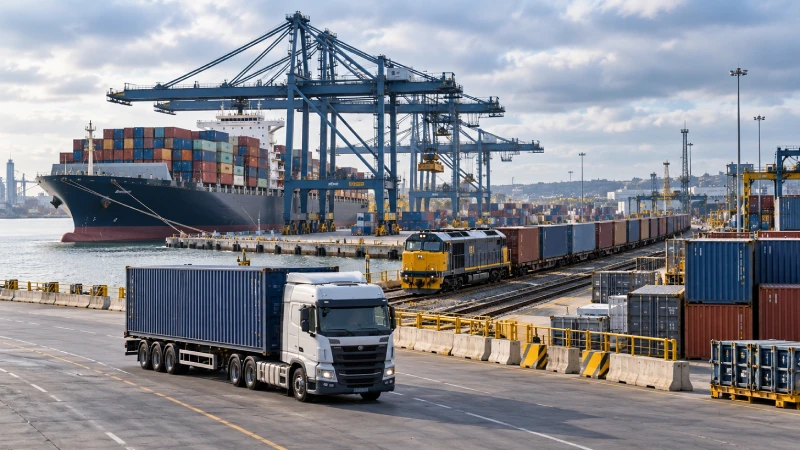
Liverpool: When the Shorter Inland Leg Works in Your Favour
Liverpool is an important option for Manchester and North West importers.
The Port of Liverpool includes the deep-water Liverpool2 container terminal and has access to road and rail networks. Peel Ports positions the port as a North West gateway with deep-water capability and multimodal onward transport. Peel Ports: Port of Liverpool
For cargo ultimately going to Manchester, Liverpool’s main attraction is clear: the final inland transport leg can be substantially shorter than moving a container from a southern or south-eastern UK port.
That can be particularly attractive for:
- FCL containers going to Manchester-area industrial sites;
- regular wholesale or manufacturing imports;
- cargo delivered around Trafford Park and Greater Manchester;
- heavy containers where road mileage has a meaningful cost impact.
But geographical proximity should still not be used as the only routing criterion.
Liverpool should be compared against alternative gateways based on the actual sailing available during the cargo-ready week. Peel Ports describes Liverpool2 as viable for Far East and deep-sea services, but the importer should still confirm the actual carrier routing, frequency and whether a shipment involves feeder or transshipment arrangements. Peel Ports: Container Solutions
A shorter Liverpool-to-Manchester truck journey may not compensate for an international service that is significantly slower, more expensive or less frequent.
Pro Tip: Ask for Liverpool and at least one alternative UK gateway to be compared using the same China origin, cargo-ready date and Manchester postcode.
Felixstowe: Why a Distant Port Can Still Be Competitive
Felixstowe is much farther from Manchester by road, but that does not make it an unsuitable gateway.
It has extensive deep-sea container services and one of the strongest intermodal rail networks among UK ports. The Port of Felixstowe describes its facilities as Britain’s largest intermodal rail operation, with frequent train services serving multiple inland destinations. Port of Felixstowe: Rail
Its Asia connectivity is also important. Official port information has documented Asia-Europe services calling at Felixstowe with Chinese ports such as Shanghai, Ningbo and Yantian in their rotations. Individual rotations can change, so the current carrier schedule should always be checked for the intended sailing. Port of Felixstowe: Premier Alliance FE4
For a Manchester shipment, Felixstowe may make sense where:
- a better direct sailing is available from the supplier’s China port;
- ocean freight is materially lower;
- the transit schedule is more reliable;
- container equipment is easier to secure;
- rail or competitive road haulage offsets part of the additional inland distance.
Felixstowe’s rail network has historically included Manchester and other northern inland destinations, while its current network remains heavily oriented toward moving containers inland by rail. Port of Felixstowe: Manchester Rail Service
The correct comparison is therefore not:
Liverpool is closer, so use Liverpool.
It is:
Which port produces the best combination of sailing, cost, inland movement and final ETA?
London Gateway: Consider Carrier Choice and Rail Before Rejecting It
London Gateway is another deep-sea alternative that can work for North West cargo.
Although it is far from Manchester by road, DP World publishes intermodal services linking its UK ports with inland terminals including Trafford Park. DP World UK Rail Access
A London Gateway routing may therefore be worth considering when:
- the preferred shipping line calls there;
- the sailing from China is more suitable;
- the ocean rate is more competitive;
- rail capacity toward the North West is available;
- the total delivered cost beats the alternatives.
The port should not be chosen simply because a carrier quotation looks cheaper at the ocean-freight level. The cost of the inland leg must be included.
Southampton: A Valid Alternative When the Ocean Service Wins
Southampton is geographically the least intuitive of these gateways for a Manchester consignee, but it should not automatically be excluded.
DP World’s rail information has included multiple daily inland services from Southampton, including connections serving Trafford Park and other northern or Midlands railheads. Current schedules should be checked at the time of booking. DP World UK Rail Access
Southampton may be commercially sensible when a carrier contract, vessel rotation, equipment position or freight rate produces a sufficiently strong ocean leg to compensate for the greater inland distance.
This is especially relevant for larger importers that compare shipping-line contracts or use regular intermodal flows rather than purchasing each shipment purely on port proximity.
For LCL, the Consolidator May Determine the UK Routing
LCL requires a different way of thinking.
If you are shipping only a few pallets or several cubic metres, the cargo will normally share a container with shipments belonging to other importers.
The consolidation operator may therefore select the UK port and destination CFS based on its own consolidation network.
This means that a Manchester importer cannot simply instruct:
“Send the LCL through Liverpool because it is closest.”
A Felixstowe or other gateway consolidation can sometimes be cheaper if it has:
- more frequent consolidations;
- lower destination handling;
- a better CFS arrangement;
- stronger final-mile distribution economics.
For LCL shipments, ask where the cargo will be deconsolidated and what the complete CFS-to-Manchester delivery charge is.
A low ocean rate per CBM can be misleading if destination CFS and final-delivery charges are high.
A Better Sea Gateway Decision Checklist
Before selecting the UK port, ask:
- Which services are actually available for the cargo-ready week?
- Is the service direct, transshipped or feeder-connected?
- What is the international freight cost?
- What UK destination charges apply?
- What will road or rail transport to the final Manchester postcode cost?
- What is the realistic port-to-door ETA?
- Is equipment available at origin?
- Are rail slots or haulage capacity available after arrival?
- What are the container return arrangements for FCL?
The cheapest line on the ocean freight quotation is not always the cheapest Manchester supply-chain solution.
Air Freight to Manchester: MAN vs East Midlands vs Heathrow
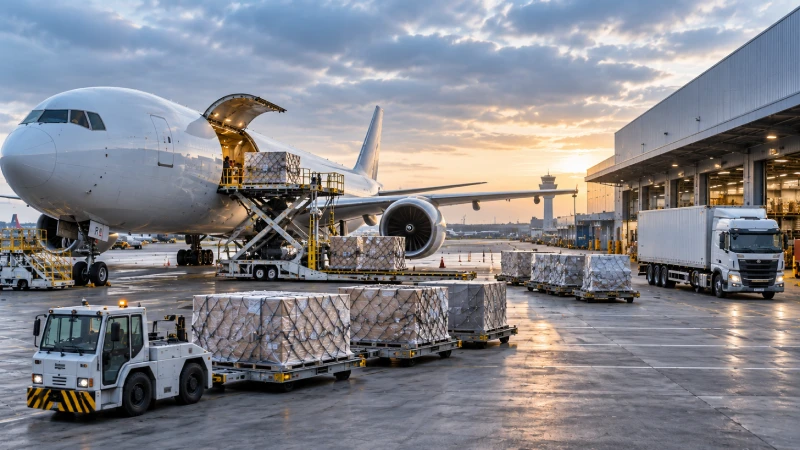
Manchester Airport is the logical starting point for air cargo destined for North West England, but airport selection should still be based on total route economics.
For chargeable weight, routing and airport-handling detail, continue with the China-to-UK air freight guide.
Air cargo rates change with origin airport, chargeable weight, airline capacity, flight schedule, season and commodity acceptance.
The best airport is therefore the one that provides the best balance between uplift availability, freight rate, handling time and UK inland delivery.
Manchester Airport: The Natural Local Gateway
Manchester Airport has a dedicated World Freight Terminal and identifies the Far East as one of its major cargo markets. Its cargo facilities support freight carried through its airport cargo operation and onward road distribution. Manchester Airport: Cargo
For manufacturers, wholesalers and distribution operations in the North West, MAN can provide an obvious advantage: the cargo lands much closer to its final destination.
This can reduce:
- airport-to-warehouse road mileage;
- domestic linehaul time;
- the risk of a long south-to-north delivery leg;
- time lost when urgent components are required by a Manchester-area production facility.
MAN is particularly worth considering for:
- manufacturing components;
- urgent stock replenishment;
- valuable commercial goods;
- palletised air freight;
- time-critical B2B orders.
However, not every China origin has the same capacity or schedule into Manchester.
The forwarder should check the actual routing available from airports such as Shanghai Pudong, Guangzhou Baiyun, Shenzhen Bao’an or Hong Kong rather than assume that a direct or equally competitive MAN service exists every day.
Current Air Freight Planning Reference
Public freight-market listings checked in early September 2026 illustrate the range.
Shanghai Pudong to Manchester Airport listings showed estimated transit options of approximately 7-9 days, while Guangzhou Baiyun to Manchester listings showed approximately 9-11 days for standard or deferred services. Flexport: PVG to MAN and Flexport: Guangzhou to Manchester
These are market snapshots rather than guaranteed transit times.
Actual timing depends on:
- booking date;
- airline and routing;
- direct versus connecting service;
- space allocation;
- cargo acceptance;
- export handling;
- customs clearance;
- final delivery.
For inventory planning, air transit should never be treated as equivalent to the final door-to-door lead time.
East Midlands Airport: Strong for Express and Freight Networks
East Midlands Airport is particularly relevant where integrator or freighter networks provide better economics than a Manchester arrival.
EMA is one of the UK’s most important dedicated freight hubs. The airport reported 413,664 tonnes of cargo during the 2025/26 financial year, with major express and freight operators using the facility. East Midlands Airport: Cargo Growth
The airport has also expanded intercontinental cargo activity, including additional Asian services. East Midlands Airport: Anniversary Year Cargo Update
For Manchester importers, EMA may be worth comparing when:
- an express network routes through it;
- freighter capacity is stronger;
- a specific airline provides a better schedule;
- the air rate is sufficiently lower to absorb the additional road transport;
- e-commerce or time-critical stock is moving through an integrator network.
The additional UK road leg should always be included in the comparison.
Heathrow: When Network Capacity Outweighs Distance
Heathrow is much farther from Manchester, but its network scale can make it commercially relevant.
Heathrow describes itself as the UK’s largest port by value and reports an extensive international airline and destination network. Heathrow: Cargo
That network can translate into:
- more routing combinations;
- greater belly-cargo capacity;
- stronger frequency from some Asian origins;
- alternative uplift when MAN space is limited.
If the flight into LHR is substantially cheaper or leaves several days earlier, the additional truck journey to Manchester may still be justified.
The correct calculation is:
Air freight + handling + clearance + UK linehaul + final delivery
—not simply the airport-to-airport per-kilogram rate.
Pro Tip: When asking for an air quote, provide the required Manchester delivery date rather than specifying MAN automatically. This allows MAN, EMA and LHR routings to be compared against the actual supply-chain deadline.
Sea vs Air vs Express: Which Method Fits Your Manchester Shipment?
The most suitable mode depends on the consequences of late delivery as much as the freight cost.
Choose Sea Freight for Planned, Larger Cargo
Ocean freight is usually the first method to evaluate when:
- replenishment is planned in advance;
- cargo is heavy or bulky;
- the shipment is large enough for FCL;
- several pallets can move as LCL;
- the inventory can tolerate a longer lead time.
Examples include machinery, components, furniture, wholesale stock and regular distribution inventory.
For full-container shipments, see FCL Shipping from China. For smaller consolidated cargo, see LCL Consolidation Services.
Choose Air Freight When Time Has Commercial Value
Air freight becomes more attractive when the cost of waiting is greater than the air-freight premium.
Examples include:
- a production line waiting for a replacement component;
- urgent seasonal stock;
- high-value goods;
- rapidly selling inventory;
- commercial orders with fixed delivery deadlines.
The calculation should therefore include inventory and operational impact, not just transportation cost.
Use Express Primarily for Small, Urgent Shipments
Express courier makes most sense for:
- samples;
- documents;
- prototypes;
- replacement parts;
- small urgent cartons.
For courier traffic, the integrator generally controls the network routing. The importer does not choose Manchester Airport, Heathrow or East Midlands in the same way as with conventional air freight.
As shipment weight and dimensions increase, compare conventional air freight rather than automatically continuing with courier service.
What Determines the Freight Rate from China to Manchester?
There is no reliable permanent rate for China-to-Manchester freight.
International rates change with carrier capacity, fuel, seasonality, equipment availability, congestion, origin and market conditions. The UK inland leg introduces another set of variables.
For this reason, the broader Shipping Cost from China to UK guide should be used for national cost planning, while the Manchester quotation should focus on the route-specific factors below.
International Freight Is Only One Part of the Cost
Depending on the agreed Incoterm and service scope, a commercial freight quotation may involve:
- supplier pickup;
- origin handling;
- export documentation;
- export customs formalities;
- ocean or air freight;
- carrier surcharges;
- UK terminal or CFS charges;
- customs brokerage;
- inland rail or road;
- final delivery;
- special delivery requirements.
Customs Duty and import VAT should be identified separately unless the agreed service structure clearly states how they are being handled.
Port Availability Can Change the Best Route
“Availability” means more than whether a port exists.
The forwarder should check:
- whether the shipping line serves that gateway;
- whether the relevant origin port is included;
- whether transshipment is required;
- available vessel space;
- container equipment;
- cargo cut-off;
- expected arrival schedule;
- rail or road capacity after arrival.
A Liverpool option with poor sailing availability may lose to Felixstowe.
A Felixstowe rate with expensive road haulage may lose to Liverpool.
A London Gateway rail solution may beat both.
The answer changes shipment by shipment.
The Manchester Postcode Matters
A request for a quotation that simply states “Manchester” is incomplete.
The final postcode helps determine:
- actual linehaul mileage;
- delivery zone;
- vehicle suitability;
- warehouse access;
- delivery appointment requirements;
- potential waiting time;
- tail-lift or unloading requirements.
For container shipments, it can also influence the practicality of the empty-container return.
A Manchester city-centre commercial delivery is operationally different from a large Trafford Park distribution centre or a factory elsewhere in Greater Manchester.
Pro Tip: Always provide the full delivery postcode before comparing UK gateway options.
Cargo Size Changes Both International and Inland Economics
For FCL, provide:
- 20GP, 40GP or 40HC requirement if known;
- estimated cargo weight;
- commodity;
- loading requirements.
For LCL, provide:
- total CBM;
- gross weight;
- pallet or carton count;
- dimensions.
For air freight, dimensions are especially important because billing normally uses chargeable weight, which considers both actual gross weight and volumetric weight.
A lightweight but bulky shipment may therefore cost substantially more than its scale weight suggests.
How Long Does Shipping from China to Manchester Take?
There is no single reliable “China to Manchester transit time.”
Two timelines should always be separated:
- port-to-port or airport-to-airport transit, and
- actual supplier-to-Manchester delivery time.
Sea Freight Transit Time
Current public-market results demonstrate how significantly ocean schedules can vary.
For example, September 2026 public listings for Shanghai to Liverpool show different FCL services with estimated port transit ranging from roughly the low 30s to well over 40 days, while current Guangzhou-area to Liverpool examples are around the high-30s to low-40s. Flexport: Shanghai to Liverpool
For Shanghai to Felixstowe, some current public schedules show transit around the mid-30-day range, while other marketplace estimates are longer. Cogoport: Shanghai to Felixstowe
That spread is exactly why a permanent statement such as “China to Manchester takes 30 days” is not reliable.
As a planning reference, allow for:
China origin handling + vessel schedule + UK discharge + customs release + inland transport + final delivery appointment.
LCL usually requires additional time because consolidation and deconsolidation occur before and after the ocean leg.
For a broader comparison of UK transit times by mode, see How Long Does It Take to Ship from China to the UK?
Air Freight Transit Time
Standard air freight is substantially faster, but the headline flight or airport transit is still not the complete lead time.
Allow for:
- supplier collection;
- export warehouse handling;
- airline booking and uplift;
- connecting flight where applicable;
- UK handling;
- customs release;
- delivery from the airport to Manchester.
As a planning reference, current public services may fall around one week to roughly ten days, but individual routings can be faster or slower.
Why Door-to-Door Time Is Longer
A vessel transit or air-service estimate starts and finishes at transport nodes.
Your supply chain starts at the supplier and ends when the Manchester receiving site accepts the cargo.
A realistic workflow looks like:
Supplier pickup → China export handling → port/airport cut-off → international freight → UK terminal → customs release → inland road/rail → warehouse booking → final delivery
A delay at any one stage can change the final ETA.
Final Delivery to Manchester and North West England
The final UK leg deserves more attention than it receives in many international freight quotations.
For a single scope through to the consignee, use the China-to-UK door-to-door guide to review pickup, clearance coordination and delivery.
For North West buyers, this stage can determine whether the chosen UK gateway was actually economical.
FCL Container Delivery
After an FCL container is discharged and released, there are typically several possible inland arrangements.
It may move:
- directly by truck from the port;
- by rail to an inland terminal followed by road delivery;
- through another agreed container transport arrangement.
Before booking final delivery, clarify whether the receiving facility requires a live unload or whether a drop-and-return arrangement is needed.
With live unloading, the driver normally waits while the consignee unloads the container within an agreed period.
A drop arrangement involves additional container movement and equipment planning and may not be available or economical for every shipment.
Also confirm:
- unloading equipment;
- forklift availability;
- site access;
- delivery opening hours;
- maximum vehicle size;
- booking slot;
- empty-container return arrangement.
LCL and Pallet Delivery
LCL cargo does not necessarily move directly from the vessel terminal to the Manchester consignee.
It may first be transferred to a CFS for deconsolidation.
Only after the shared container is stripped and the shipment released is the final pallet or truck delivery arranged.
This is why the destination CFS matters when comparing LCL routes.
An apparently convenient Liverpool ocean routing is not automatically better if another consolidation programme provides lower total CFS and final-mile costs.
Distribution Centre and 3PL Deliveries
Manufacturers, wholesalers and e-commerce operators often deliver into sites with strict receiving procedures.
Before dispatch, confirm:
- delivery reference or purchase order;
- booking requirement;
- receiving hours;
- pallet configuration;
- unloading equipment;
- labelling requirements;
- vehicle restrictions.
For Amazon or other fulfilment-centre inventory, provide the receiving instructions before the international shipment is booked rather than treating them as a final-mile issue after arrival. Where relevant, see Amazon FBA Shipping.
UK Customs, VAT and Product Requirements for Manchester Imports
Manchester is in England, so imports from China enter the Great Britain customs and regulatory framework.
Northern Ireland has distinct arrangements in several areas and those rules should not be automatically applied to a Manchester shipment.
GB EORI and Import Declarations
HMRC states that businesses importing goods into England, Wales or Scotland need an EORI number beginning with GB for the relevant customs process. Northern Ireland movements can involve different XI requirements. GOV.UK: Making an Import Declaration
An importer may appoint a freight forwarder, customs agent or other eligible intermediary to assist with declarations, but the commercial and legal responsibilities depend on the agreed type of representation. HMRC also makes clear that appointing an agent does not remove the importer’s due-diligence responsibilities. GOV.UK: Using a Customs Representative
Commodity Code, Customs Duty and Import VAT
Do not estimate UK Customs Duty from the product name alone.
The UK Trade Tariff is used to identify the correct commodity code and check applicable duty, VAT and related tariff measures.
Correct classification can depend on:
- what the product is;
- its material;
- its function;
- how it is manufactured;
- packaging and product characteristics.
Restricted measures or documentary controls can also be linked to classification. HMRC Commodity Code Guidance
For that reason, the final tax and customs treatment should be confirmed for the actual commodity before shipment.
Postponed VAT Accounting
For eligible UK VAT-registered businesses, Postponed VAT Accounting (PVA) can allow import VAT to be accounted for through the VAT Return rather than being paid upfront at the border and reclaimed later. GOV.UK: Using Postponed VAT Accounting
Whether PVA is appropriate depends on the importer’s circumstances and how the declaration is made.
The freight forwarder should follow the importer’s written instructions where PVA is required, while the importer should confirm its accounting treatment with its tax or accounting adviser.
This article does not provide tax advice.
UKCA, CE and Product Compliance
Do not assume every manufactured product imported from China requires UKCA marking.
The current Great Britain framework is sector-specific. Department for Business and Trade guidance covers both UKCA and continued recognition of CE requirements in relevant product sectors. GOV.UK: Placing UKCA or CE Marked Products on the Market in Great Britain
Before shipping regulated products, determine:
- which product regulations apply;
- whether conformity assessment is required;
- which marking is accepted;
- what technical documentation must be retained;
- what importer obligations apply;
- whether labelling or traceability information is required.
The freight forwarder can coordinate transportation and related shipment documents within the agreed scope, but product conformity remains a separate regulatory responsibility.
Import Licences and Restricted Goods
Some categories require additional licences, registrations or certificates before they can enter Great Britain.
Government guidance identifies controls affecting categories such as certain animal or plant products, food, medicines, chemicals and other controlled goods. GOV.UK: Prohibited and Restricted Great Britain Imports
Do not allow a supplier to ship controlled cargo simply because it has been exported successfully to another country.
The UK requirements should be checked before cargo pickup.
Batteries and Dangerous Goods
Battery-powered products require additional review, especially when moving by air.
The UK Civil Aviation Authority states that lithium batteries must comply with applicable ICAO dangerous-goods requirements for testing, packing, marking, labelling and documentation. UK CAA: Batteries
Carrier acceptance also depends on the battery type, configuration, state of charge and whether batteries are packed alone, with equipment or contained in equipment.
Battery cargo should therefore be declared to the forwarder before quotation and booking.
Is DDP Shipping from China to Manchester Practical?
DDP can be workable for some Manchester shipments, but it should not be treated as an automatic freight product.
A proper DDP structure needs to answer several questions before the shipment moves:
- Who is responsible for the import?
- What EORI is being used?
- Who makes the customs declaration?
- What type of customs representation applies?
- How are Customs Duty and import VAT treated?
- Does PVA apply?
- Is the product compliant for the GB market?
- What does the agreed door-to-door scope actually include?
- Who receives the cargo at the Manchester destination?
HMRC distinguishes between direct and indirect customs representation and notes that businesses not established in the UK face different representation constraints from UK-established importers. GOV.UK: Appoint Someone to Deal with Customs on Your Behalf
Winsail Logistics is a China-based freight forwarder. Door-to-door shipping from China or DDP shipping from China may be coordinated subject to shipment review, but the importer structure, VAT treatment, customs representation, commodity and final delivery arrangement need to be confirmed before the service is accepted.
When Importer-Led Clearance May Be Better
An established UK importer may already have:
- its own GB EORI;
- VAT registration;
- PVA procedures;
- a customs broker;
- internal classification records;
- established compliance processes.
In that situation, retaining control of the import entry can be cleaner than forcing the shipment into a generic DDP model.
DAP or another agreed door-to-door arrangement may therefore be more appropriate.
DDP should be selected because the structure genuinely works—not simply because “all-inclusive delivery” sounds easier.
How to Request an Accurate China-to-Manchester Freight Quote
A useful quotation starts with complete shipment information.
Sending only:
“How much is shipping from China to Manchester?”
is not enough to compare the available routes.
Cargo Details
Provide:
- product or commodity;
- number of cartons or pallets;
- package dimensions;
- gross weight;
- total CBM;
- cargo value where required;
- battery or dangerous-goods status;
- special handling requirements.
China Origin
Provide:
- supplier city;
- pickup address where applicable;
- Incoterm;
- cargo-ready date;
- preferred origin port or airport if already agreed.
If several Chinese suppliers are involved, state whether consolidation is required.
Manchester Delivery Information
Provide:
- full UK postcode;
- warehouse, factory or 3PL type;
- receiving hours;
- delivery booking requirement;
- forklift or loading dock availability;
- tail-lift requirement where relevant;
- access limitations;
- FCL live-unload or drop requirements.
Ask for an End-to-End Route Comparison
For sea freight, the comparison should ideally identify:
| Factor | Route A | Route B |
|---|---|---|
| China origin | ||
| UK gateway | ||
| Direct/transshipment | ||
| International freight | ||
| UK destination charges | ||
| Inland road/rail | ||
| Customs-clearance scope | ||
| Taxes | Included / Excluded | Included / Excluded |
| Estimated ETA | ||
| Final delivery scope |
This is much more useful than comparing two ocean freight figures without their UK inland costs.
If you already have cargo details, Winsail can review the China origin, shipment size, cargo-ready date and Manchester delivery postcode and coordinate a comparison of suitable sea, air or door-to-door routes, depending on the agreed service scope.
For sea freight in particular, ask for the available UK gateway to be evaluated rather than specifying Liverpool automatically.
FAQs
What is the best UK port for shipping from China to Manchester?
There is no single best port for every shipment. Liverpool has a strong geographical advantage for North West delivery, but Felixstowe, London Gateway or Southampton can be better when the ocean service, freight rate, carrier schedule or rail connection produces a stronger total route. Compare the complete delivered-to-Manchester cost and ETA.
Is Liverpool or Felixstowe better for Manchester imports?
Liverpool usually offers the shorter road journey into Manchester. Felixstowe, however, has extensive deep-sea services and a major intermodal rail network. If Felixstowe offers a better sailing, lower international freight cost or suitable rail connection, it can still be competitive. The correct answer changes according to the China origin, cargo-ready date, shipment size and Manchester postcode.
How long does sea freight from China to Manchester take?
The ocean leg can vary significantly by Chinese origin, carrier and UK gateway. Current public-market examples in September 2026 show some China-to-UK FCL services in roughly the mid-30-day range while others extend beyond 40 days. Additional time is required for China origin handling, UK terminal operations, customs release and inland delivery. LCL normally needs extra time for consolidation and deconsolidation.
Can air freight from China arrive at Manchester Airport?
Yes. Manchester Airport has a dedicated cargo operation and the Far East is an important cargo market for the airport. The actual airline capacity and routing should still be checked for the origin and cargo-ready date, and Heathrow or East Midlands can be compared when they offer better schedules or total costs.
How much does shipping from China to Manchester cost?
There is no reliable fixed rate. Costs depend on the China origin, transport mode, cargo weight and dimensions, FCL or LCL requirement, freight market, UK gateway, destination charges and final Manchester postcode. Air freight also depends heavily on chargeable weight.
Do I need a GB EORI number to import goods into Manchester?
Businesses importing goods into England generally need the appropriate GB EORI for customs procedures. The exact importer and declaration structure should be established before shipment.
Can I use DDP shipping from China to Manchester?
Possibly, but it needs to be reviewed shipment by shipment. The importer structure, customs representation, EORI, VAT treatment, commodity classification, product compliance and final delivery arrangement all need to support the proposed DDP structure. Winsail may coordinate suitable door-to-door arrangements subject to shipment review and the agreed service scope.
Plan the Route Around the Final Manchester Delivery
For North West importers, the biggest routing mistake is choosing the international gateway before considering the complete supply chain.
Liverpool may provide the shortest UK inland leg.
Felixstowe may provide a better deep-sea service or intermodal solution.
London Gateway or Southampton may make sense because of a specific carrier or rail option.
Manchester Airport may provide the most direct air route, while East Midlands or Heathrow may occasionally win on capacity, schedule or total cost.
The right decision is therefore based on:
freight rate + gateway availability + inland transport + delivery postcode + transit time + cargo size + customs and compliance requirements.
If you are planning commercial shipping from China to Manchester, start with the cargo-ready date, cargo dimensions and weight, supplier location and final Manchester postcode. Those details allow the international and UK inland legs to be planned as one route rather than two disconnected quotations.
For broader nationwide planning, customs information and other UK freight options, continue with Shipping from China to the UK.
Continue with related UK shipping guides
Use these focused guides for the next part of your China-to-UK shipping plan.
