
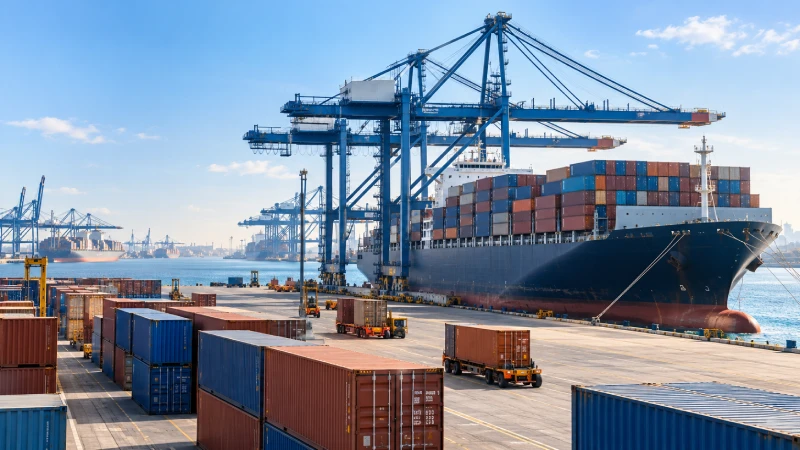
FCL shipping from China to Germany is often the most practical sea freight option when your cargo is large enough to justify a dedicated container, or when reducing handling is more important than filling every cubic metre.
With FCL, you book the entire container—usually a 20GP, 40GP or 40HC—for your shipment. The container can be positioned at your supplier’s factory, loaded and sealed there, transported to a Chinese port, shipped to Germany, cleared through customs and then moved by truck or rail to the final destination.
That does not mean FCL is automatically the right choice for every large shipment. Container size, cargo density, factory access, sailing schedule, destination port, German trucking conditions and available free time can all affect the final decision.
If you are still comparing sea freight with air, rail, express or LCL, start with our Shipping from China to Germany guide. This page focuses specifically on planning and operating a full-container shipment.
Quick Answer: When Should You Use FCL from China to Germany?
FCL is worth comparing once a shipment begins to approach roughly 12–15 CBM, but there is no fixed volume at which FCL automatically becomes cheaper than LCL.
For dense cargo, destination charges and container utilization can shift the break-even point considerably. FCL may also make sense at lower volumes when the goods are fragile, high-value, difficult to handle, unusually shaped or sensitive to contamination.
In practical terms, FCL is usually a stronger option when you want:
- one dedicated container for your cargo;
- fewer handling points between China and Germany;
- direct factory loading;
- better control over cargo securing;
- easier handling of large machinery or multiple pallets;
- more predictable destination operations;
- lower handling risk for fragile or high-value goods.
For small trial orders or low-volume replenishment shipments, LCL shipping from China to Germany will usually remain more practical.
What Is FCL Shipping from China to Germany?
FCL stands for Full Container Load. It means one shipper books the use of an entire shipping container rather than sharing container space with other importers.
A common misunderstanding is that an FCL container must be completely full.
It does not.
You can book a 20GP, 40GP or 40HC even when you do not use every cubic metre. “Full Container Load” describes the booking arrangement rather than the physical utilization of the container.
With a typical FCL shipment:
- an empty container is released from the carrier or container depot;
- the container is moved to the factory or loading warehouse;
- your cargo is stuffed into the container;
- the doors are closed and sealed;
- the container enters the Chinese export terminal;
- it is loaded onto the booked vessel;
- it arrives at Hamburg, Bremerhaven or another selected European gateway;
- import procedures and release formalities are completed;
- the sealed container is collected from the terminal;
- it is delivered to the German consignee;
- the empty container is returned to the nominated depot.
The major operational difference from LCL is that your goods do not normally need to pass through a consolidation warehouse in China and a deconsolidation warehouse in Germany.
FCL vs LCL from China to Germany
| Factor | FCL | LCL |
|---|---|---|
| Container space | Dedicated to one shipment | Shared with other shippers |
| Freight basis | Container-based | CBM/weight-based |
| China handling | Factory or warehouse stuffing | CFS consolidation required |
| Germany handling | Container release and pickup | CFS deconsolidation required |
| Cargo touchpoints | Fewer | More |
| Large shipments | Usually more suitable | Can become inefficient |
| Small shipments | Often underutilized | Usually more practical |
| Fragile cargo | Better control | More handling exposure |
| Large machinery | Often suitable | May be difficult |
| Delivery planning | Container trucking required | Loose cargo/pallet delivery |
Neither method is universally better. The correct choice depends on your shipment rather than only its volume.
20GP vs 40GP vs 40HC: Which Container Should You Use?
The three standard dry-container options used most frequently for FCL shipments from China to Germany are:
- 20GP
- 40GP
- 40HC, also commonly called 40HQ
The container should be selected according to both volume and weight.
A 40HC has substantially more internal volume than a 20GP, but it does not provide twice the usable payload. Heavy cargo can therefore reach road or equipment weight limits long before the container is physically full.
Carrier specifications also differ slightly between individual containers and manufacturers.
Standard Container Comparison
| Container | Approx. Internal Capacity | Approx. Internal Height | Typical Technical Payload* | Common Use |
|---|---|---|---|---|
| 20GP | 33.2 CBM | 2.39 m | Around 28 t | Dense or heavy cargo |
| 40GP | 67.7 CBM | 2.39 m | Around 28–29 t | General high-volume cargo |
| 40HC | 76.4 CBM | 2.70 m | Around 28–29 t | Bulky, lighter cargo |
*These are equipment references, not guaranteed legal cargo weights for every shipment. Actual limits depend on the individual container, container tare weight, chassis, tractor, route and local road restrictions. Published carrier specifications similarly show that a 40HC mainly adds cubic capacity and height rather than significantly higher payload.
When to Use a 20GP
A 20GP is often the better choice for cargo that reaches its weight limit before it runs out of space.
Typical examples include:
- machine parts;
- metal products;
- industrial components;
- hardware;
- auto parts;
- dense machinery;
- certain building materials;
- heavy palletized goods.
Suppose a shipment is only 20–25 CBM but already weighs more than 20 tonnes. Moving it into a 40HC just because the larger container has more volume may provide little practical benefit.
For dense cargo, always check both the container’s technical limits and the proposed inland trucking weight before confirming the booking.
When to Use a 40GP
A 40GP is suitable when the shipment needs substantially more floor area and cubic capacity than a 20GP but does not require the extra internal height of a high-cube container.
Typical cargo can include:
- cartons;
- palletized consumer products;
- industrial products;
- spare parts;
- packaged household goods;
- general merchandise.
The actual loading pattern matters. Two shipments with the same CBM can require different containers because their cartons, pallets or machinery have different dimensions.
When to Use a 40HC
A 40HC is approximately 30 cm higher internally than a standard 40GP and is particularly useful for bulky cargo.
Typical examples include:
- furniture;
- fitness equipment;
- packaging products;
- lightweight machinery;
- plastic products;
- large cartons;
- household products;
- low-density consumer goods.
A 40HC often provides better utilization when the shipment “cubes out” before it “weighs out.”
However, do not assume that a 40HC can carry significantly more weight than a 40GP.
Pro Tip: Do not choose a container from total CBM alone. Ask your supplier for the number of packages, carton or pallet dimensions, gross weight and any non-stackable cargo. A shipment can theoretically fit by CBM while being impossible to load efficiently in practice.
When Is FCL Better Than LCL from China to Germany?
Importers often ask for a simple threshold such as:
“How many CBM before I should use FCL?”
There is no universal answer.
A useful approach is to think in three zones.
Small Shipments
For small shipments of only a few cubic metres, LCL is usually more economical because you pay only for the space your cargo occupies.
This is especially useful for:
- samples;
- test orders;
- low-volume inventory replenishment;
- small wholesale orders;
- suppliers that cannot wait for more goods to accumulate.
The FCL vs LCL Comparison Zone
Once cargo approaches roughly 12–15 CBM, it is sensible to compare LCL and FCL rather than automatically requesting another LCL quotation.
Why?
LCL pricing includes more than the ocean freight itself. There may also be consolidation, documentation, CFS, deconsolidation and destination handling charges.
As shipment volume increases, these charges can make a dedicated container more competitive.
However, the crossover point changes according to:
- origin city;
- destination;
- cargo density;
- LCL tariff;
- container freight rate;
- port charges;
- German delivery postcode;
- current carrier capacity.
For this reason, compare the total landed logistics cost, not only the sea freight line.
Choose FCL Even If the Container Is Not Full
There are also cases where operational control matters more than container utilization.
FCL may be preferable when:
- cargo is fragile;
- goods are high-value;
- cartons should not be repeatedly moved;
- cargo is difficult to stack;
- machinery is large or heavy;
- contamination from other cargo should be avoided;
- the shipment includes many pallets;
- loading must follow a special securing plan;
- your supply chain requires regular containerized shipments.
With FCL, cargo can often be loaded once at origin and remain inside the same container until delivery in Germany.
That reduction in handling can be more valuable than maximizing every cubic metre.
How FCL Shipping from China to Germany Works
A successful FCL shipment depends on coordination before the container reaches the factory.
Here is the typical process.
1. Send the Cargo Details
Before requesting a booking, prepare:
- product name;
- HS code if available;
- number of cartons or pallets;
- dimensions;
- total CBM;
- gross weight;
- supplier address;
- cargo-ready date;
- Incoterm;
- German delivery postcode;
- loading requirements;
- dangerous goods or battery information, if applicable.
Accurate dimensions and weight are particularly important when selecting between 20GP, 40GP and 40HC.
2. Select the Container and Route
The forwarder evaluates:
- container type;
- supplier location;
- nearest suitable export port;
- carrier services;
- Hamburg or Bremerhaven;
- direct or transshipment routing;
- German final destination.
The cheapest port-to-port freight option is not necessarily the best factory-to-door route.
3. Book Vessel Space
Once the routing is selected, the freight forwarder books space with the carrier.
Important schedule information includes:
- ETD;
- ETA;
- vessel/voyage;
- CY cut-off;
- shipping instruction cut-off;
- VGM cut-off;
- empty-container pickup location.
During peak periods, vessel space and empty-container availability can both become constraints.
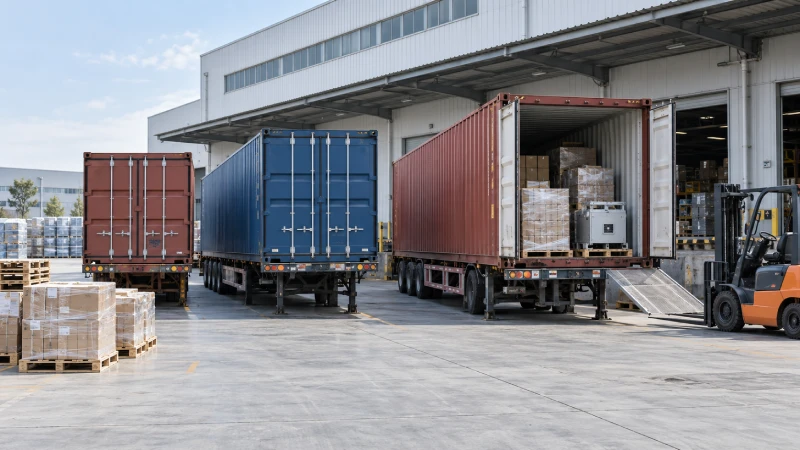
4. Pick Up the Empty Container
The trucking company collects the empty container from the carrier’s nominated depot and transports it to the supplier or loading warehouse.
The container should be inspected before loading for:
- major structural damage;
- holes;
- water ingress;
- floor condition;
- unusual contamination;
- strong odors;
- door condition.
If the container condition is unsuitable for the cargo, it should be reported before loading begins.
5. Load the Container
The factory or warehouse loads the cargo according to the planned loading sequence.
Heavy cargo should be distributed appropriately, and cargo should not simply be placed wherever space remains.
6. Seal the Container
After loading, the doors are closed and the container is sealed.
The loading team should record:
- container number;
- seal number;
- number of packages;
- loading condition.
7. Submit VGM and Export Information
A packed export container requires a Verified Gross Mass under SOLAS rules before vessel loading. The International Maritime Organization explains that a packed container without a verified gross mass cannot normally be loaded onto a ship covered by the SOLAS requirements.
The forwarder also coordinates export declaration and required shipping documentation.
8. Gate the Container into the Chinese Port
The loaded container is delivered to the export terminal before the required cut-off.
Missing the CY or VGM deadline can result in the container missing the booked vessel.
9. Ocean Transport to Germany
The container travels to the booked destination port, usually Hamburg or Bremerhaven for many China–Germany FCL shipments.
Actual transit depends on the origin port, carrier, vessel rotation and whether the service is direct or transships through another hub.
10. German Import Clearance and Release
After arrival, the container must move through the required customs, carrier and terminal release processes.
Customs clearance alone does not necessarily mean a truck can immediately collect the container.
11. German Truck Delivery
Once all release conditions are satisfied, the container is collected and transported to the consignee.
12. Unload and Return the Empty Container
After unloading, the empty container must be returned to the carrier’s nominated location within the applicable free-time conditions.
Supplier Pickup and Factory Loading in China
Factory loading is one of the main practical advantages of FCL.
Instead of collecting individual cartons and delivering them to an LCL consolidation warehouse, an empty container can often be positioned directly at the supplier.
The basic movement is:
Empty Depot → Supplier Factory → Export Port
What the Supplier Needs for Factory Loading
Before dispatching a container truck to the factory, confirm that the supplier has:
- enough access for a container truck;
- a suitable loading area;
- workers available;
- forklift or loading equipment if required;
- all cargo packed and ready;
- an agreed loading sequence;
- securing material where necessary.
The truck should not arrive while the factory is still finishing production or packing.
Waiting time can create additional trucking charges and may put the port cut-off at risk.
Live Loading
With live loading, the truck and container remain at the factory while the supplier loads the cargo.
Once loading is completed, the driver takes the container directly toward the terminal or the next nominated location.
This arrangement works best when:
- cargo is ready before arrival;
- loading equipment is available;
- loading can be completed within the agreed time.
Drop Loading
In some cases, the container or chassis may be left for loading and collected later.
This can provide more time for complex loading operations, but it depends on trucking arrangements, equipment availability, local rules and additional cost.
It should never be assumed automatically.
What If the Factory Cannot Receive a Container Truck?
Not every supplier can load a 40ft container at its premises.
Problems can include:
- narrow village roads;
- low entrances;
- small factory yards;
- restricted industrial parks;
- no forklift;
- several suppliers contributing cargo to one container.
In these cases, the goods can be collected as loose cargo and moved to a warehouse:
Supplier(s) → Forwarder’s Warehouse → Container Stuffing → Port
This is particularly useful when consolidating products from multiple Chinese factories into one FCL shipment.
Container Loading and Cargo Securing
A container is not simply a large empty box.
How the cargo is positioned inside it affects safety, damage risk and transport feasibility.
Distribute Weight Correctly
Heavy cargo should not be concentrated unnecessarily at one end or in a very small floor area.
The loading plan should consider:
- individual package weight;
- axle and road limitations;
- container floor limitations;
- centre of gravity;
- weight distribution.
Large machinery or concentrated point loads may require specific engineering or securing arrangements.
Prevent Cargo Movement
Sea transport exposes containers to continuous movement.
Depending on the cargo, securing may involve:
- blocking;
- bracing;
- straps;
- timber;
- airbags;
- anti-slip materials;
- pallet securing.
Empty spaces should be considered when planning the load because cargo can shift during transport.
Manage Moisture Risk
A dry container is not a climate-controlled environment.
Temperature changes can cause condensation, particularly on long ocean voyages.
For moisture-sensitive cargo, consider:
- dry packaging;
- desiccants;
- moisture barriers;
- suitable pallet materials;
- proper cargo ventilation strategy where applicable.
Record the Loading Condition
Loading photos are useful operational evidence.
We recommend photographing:
- the empty container;
- the container number;
- early loading stages;
- cargo distribution;
- securing;
- fully loaded container;
- closed doors;
- seal number.
These records can be valuable if damage, shortages or loading disputes occur later.
Main China Ports for FCL Shipping to Germany
The correct Chinese export port is usually determined by the supplier’s location and the available vessel service.
South China
Common options include:
- Yantian / Shenzhen;
- Nansha / Guangzhou.
These ports are frequently used for suppliers in:
- Shenzhen;
- Dongguan;
- Guangzhou;
- Foshan;
- the wider Pearl River Delta.
East China
Major options include:
- Shanghai;
- Ningbo-Zhoushan.
They are particularly relevant for manufacturing regions in:
- Shanghai;
- Zhejiang;
- Jiangsu;
- nearby East China industrial areas.
North China
Depending on supplier location, shipments may move through:
- Qingdao;
- Tianjin / Xingang.
Should You Truck the Cargo to a Cheaper Port?
Not automatically.
A lower ocean freight rate can be offset by:
- longer domestic trucking;
- container positioning;
- tolls;
- driver waiting;
- extra operational complexity;
- greater risk of missing cut-off.
Pro Tip: Compare the route from the factory, not just from the Chinese port. The lowest port-to-port rate is not always the lowest total logistics cost.
Hamburg or Bremerhaven for FCL Imports?
Hamburg and Bremerhaven are both major German container gateways.
There is no rule that one port is always better for shipments from China.
The better choice depends on the specific carrier service and final delivery requirement.
| Factor | Hamburg | Bremerhaven |
|---|---|---|
| China container services | Extensive | Extensive |
| Container handling | Major European gateway | Major European gateway |
| Road connection | Strong | Strong |
| Rail connection | Strong | Strong |
| Suitable for FCL | Yes | Yes |
| Best choice determined by | Route, carrier, schedule, postcode | Route, carrier, schedule, postcode |
How to Choose Between Hamburg and Bremerhaven
Compare the complete route based on:
- vessel departure date;
- direct or transshipment service;
- estimated arrival;
- carrier reliability;
- terminal;
- inland truck distance;
- rail availability;
- consignee postcode;
- available free time;
- final delivery schedule.
For example, an ocean rate into one port may look cheaper while the inland trucking distance to the consignee is substantially longer.
The better decision is therefore usually the port that produces the strongest factory-to-door combination, not the lowest ocean freight line.
FCL Shipping Schedule and Transit Planning
One of the biggest planning mistakes is treating port-to-port transit time as the total shipping time.
Your actual supply-chain timeline starts before vessel departure and continues after arrival.
A more realistic sequence is:
Cargo Ready → Booking → Empty Container → Factory Loading → Port Gate-In → Vessel Departure → Ocean Transit → Discharge → Customs/Release → Truck Pickup → Delivery
What Can Affect Each Stage?
| Stage | Main Timing Variables |
|---|---|
| Booking | Vessel space and equipment |
| Empty pickup | Depot/container availability |
| Factory loading | Cargo readiness and loading time |
| Port gate-in | CY and VGM cut-offs |
| Departure | Vessel schedule |
| Sea transit | Route and transshipment |
| Arrival | Berthing and terminal operations |
| Customs | Declaration and inspections |
| Release | Carrier/terminal authorization |
| Trucking | Terminal slot and delivery appointment |
China–Germany FCL transit varies by origin, carrier and service. Different routings between the same countries can produce substantially different schedules, especially when transshipment is involved.
For planning purposes, always request the actual booked sailing rather than relying on a generic statement such as “China to Germany takes 30 days.”
Ask for:
- ETD;
- ETA;
- direct or transshipment;
- transshipment port if applicable;
- CY cut-off;
- VGM cut-off;
- shipping instruction cut-off.
Then add reasonable buffer for origin operations, destination clearance and German inland delivery.
What Does FCL Shipping from China to Germany Cost?
FCL pricing should be evaluated as a complete transport chain.
The ocean freight rate is only one component.
| Shipment Stage | Typical Cost Components |
|---|---|
| China inland | Empty positioning and factory trucking |
| Loading | Factory or warehouse loading |
| Origin | Export declaration, terminal and documentation |
| Main carriage | Ocean freight |
| Destination | Carrier/terminal local charges |
| Customs | Customs brokerage |
| Import | Duty and import VAT where applicable |
| German inland | Truck or rail transport |
| Equipment | Empty-container return |
| Delay | Demurrage, detention and storage |
Container rates can change quickly according to:
- origin port;
- destination;
- carrier;
- equipment type;
- season;
- capacity;
- route disruption;
- sailing date.
For current price planning, use our dedicated container shipping cost from China to Germany guide rather than relying on a static rate inside this FCL operations guide.
When comparing quotations, make sure both suppliers are quoting the same scope.
A low ocean freight rate is not useful if important origin, destination or delivery charges have been excluded.
German Customs Clearance for an FCL Container
An FCL container arriving in Germany must complete the required import formalities before the goods can enter free circulation.
Typical documents can include:
- commercial invoice;
- packing list;
- bill of lading or sea waybill;
- EORI number;
- HS/CN classification;
- customs value information;
- product-specific licenses or certificates;
- origin documents where applicable.
EORI Number
Businesses dealing with EU customs procedures generally require an EORI number for identification in customs processes. German Customs uses EORI as the EU identification number for economic operators dealing with customs authorities.
Do not wait until the vessel reaches Germany to discover that the importer’s customs setup is incomplete.
Customs Duty
Customs duty depends on factors including:
- commodity classification;
- customs value;
- country of origin;
- applicable EU tariff treatment.
The supplier’s HS code can be useful as a starting point, but the German/EU importer should confirm the correct EU tariff classification.
Import VAT
Germany’s standard import VAT rate is generally 19%, although reduced rates apply to certain products.
Do not simply calculate import VAT as 19% of the supplier’s commercial invoice.
The taxable basis can include customs value, customs duty and qualifying transport-related amounts.
For a deeper explanation, see our Customs Clearance for Shipping from China to Germany guide.
ICS2 and Advance Cargo Information
Cargo entering the EU is also subject to advance safety and security requirements under the EU’s Import Control System 2 (ICS2).
ICS2 requires relevant economic operators bringing goods into or through the EU to submit safety and security information through an Entry Summary Declaration, or ENS. The data is used for pre-arrival risk analysis.
For importers and suppliers, the practical lesson is simple:
provide accurate shipment information early.
Avoid vague cargo descriptions such as:
- parts;
- accessories;
- samples;
- equipment;
- miscellaneous goods.
Instead, describe the actual commercial goods clearly enough for the shipment documentation and declarations.
Incomplete or inconsistent data can delay document processing long before customs physically examines a container.
What Happens After the Container Arrives in Hamburg or Bremerhaven?
Arrival at the German port is not the end of the shipment.
A typical import flow is:
Vessel Discharge → Customs Status → Carrier Release → Digital Pickup Authorization → Terminal/Truck Planning → Gate-Out
Several different approvals may therefore be involved.
Customs Release Is Not the Same as Container Pickup
A container can be customs-cleared but still not ready for a truck to collect.
Before physical pickup, the transport chain may also require:
- carrier release;
- settlement of applicable carrier charges;
- terminal availability;
- digital pickup authorization;
- truck identification;
- terminal appointment.
This distinction is important when planning free time.
Secure Release Order in German Ports
German North Sea ports have been moving import-container release into the Secure Release Order digital process.
In March 2026, transport companies and truck drivers became the final participant group required to integrate with the system. Terminals can verify whether a truck driver has valid digital pickup authorization before releasing the container.
This replaces the older approach of relying on easily transferable release information and is intended to make import-container collection more secure.
For the importer, the practical issue is that the nominated German trucker must be correctly connected to the release chain before pickup.
German Trucking and Final Container Delivery
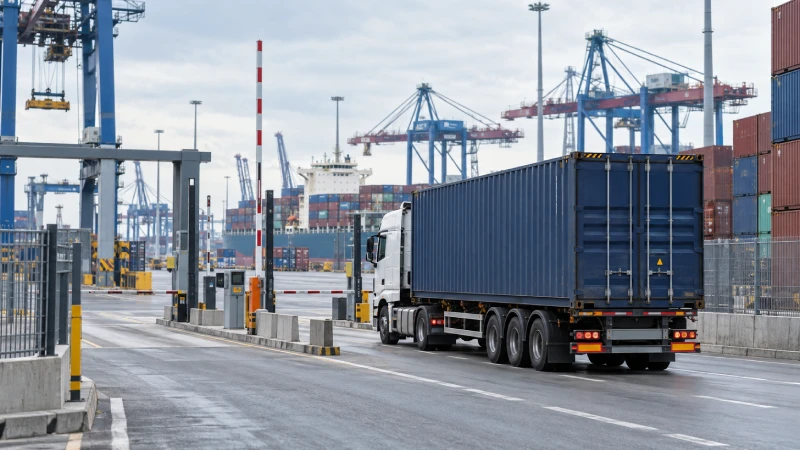
Once the container is released, the next step is port pickup and inland transport.
This should be planned before the container arrives.
Terminal Pickup May Require a Truck Slot
At HHLA’s Hamburg container terminals, container transports subject to mandatory pre-announcement require a valid slot booking. Containers without the required valid booking may not be processed.
That means the process is not simply:
“Customs cleared → send any truck to the port.”
The trucking company needs the correct release information and terminal planning.
Can an FCL Container Be Delivered to Any Address in Germany?
No.
A container truck is much larger and less flexible than a parcel or standard delivery vehicle.
Before booking final delivery, confirm:
- road width;
- truck access;
- gate width;
- turning space;
- low bridges;
- height restrictions;
- weight restrictions;
- loading-dock access;
- unloading area;
- local parking restrictions;
- forklift or crane availability;
- required appointment time.
A 40ft container delivered on a tractor and chassis requires substantial maneuvering space.
A city-centre office, residential road or small warehouse may not be suitable.
German Truck Driving Restrictions
Delivery dates can also be affected by German road-transport restrictions.
Germany generally restricts commercial goods transport by trucks over 7.5 tonnes and trucks with trailers on Sundays and specified public holidays from 00:00 to 22:00, subject to statutory exceptions. Additional seasonal Saturday restrictions apply on certain roads between July and August.
The exact application should be confirmed by the trucking provider for the planned route.
Pro Tip: Before booking final delivery, send the forwarder the full postcode and address, warehouse opening hours, entrance photos where useful, unloading equipment and preferred delivery window. This is much easier than discovering access restrictions after the container has already left the terminal.
Live Unloading, Container Drop and Empty Return
FCL delivery does not always mean the same unloading arrangement.
Live Unloading
With live unloading:
- the truck arrives with the container on its chassis;
- the consignee unloads the cargo;
- the driver waits;
- the truck leaves with the empty container.
This is often the simplest arrangement when a warehouse has:
- forklifts;
- sufficient labor;
- suitable dock or yard space;
- fast unloading capability.
Waiting time is usually limited, so the consignee must be prepared.
Container Drop
A drop arrangement means the container is left for unloading and collected later.
This can be useful when unloading requires more time, but availability depends on:
- chassis availability;
- trucking-company policy;
- site conditions;
- permitted drop period;
- additional charges.
Do not assume a drop service is included in standard trucking.
Empty Container Return
After unloading, the empty container must be returned to the location nominated by the carrier.
This may be:
- the original terminal;
- an empty depot;
- another approved facility.
The correct return location should be confirmed before dispatch.
Returning an empty box to the wrong depot can create additional trucking and detention costs.
Demurrage, Detention and Port Storage
FCL shipments give importers more control, but they also create equipment-related time limits.
Three terms are particularly important.
Demurrage
Demurrage generally relates to the container remaining under the carrier/terminal’s control beyond the permitted free period after discharge.
Detention
Detention generally applies after the container has left the port or depot but has not been returned within the allowed time.
Port or Terminal Storage
Terminal storage can be a separate charge associated with occupying space at the terminal.
The exact definitions, free-time calculation and tariffs vary by carrier and terminal.
Never assume one shipping line’s terms apply to another.
Common Reasons for Demurrage or Detention
Problems often begin before the truck reaches the port.
Typical causes include:
- customs documents not ready;
- incorrect customs declaration;
- customs inspection;
- unpaid carrier charges;
- incomplete release authorization;
- no truck slot;
- consignee not ready;
- warehouse appointment unavailable;
- weekend or public holiday;
- insufficient unloading labor;
- container held too long after delivery;
- incorrect empty-return location.
How to Reduce the Risk
Before arrival:
- prepare customs documentation;
- confirm importer details;
- verify the EORI;
- confirm estimated arrival;
- check carrier free time;
- arrange the customs broker;
- plan German trucking;
- check the delivery address;
- prepare unloading equipment.
After arrival:
- monitor discharge status;
- complete release formalities promptly;
- confirm terminal availability;
- arrange the truck slot;
- deliver without unnecessary delay;
- return the empty container immediately after unloading where practical.
Pro Tip: Ask for the applicable free time in writing before shipment. Never plan on the assumption that every carrier provides the same number of free days.
What Cargo Is Suitable for FCL Shipping?
FCL is suitable for a wide range of commercial products, but container type and handling requirements differ.
| Cargo | FCL Suitability | Main Consideration |
|---|---|---|
| Machinery | High | Weight and securing |
| Furniture | High | Cubic utilization |
| Building products | High | Payload |
| Electronics | High | Moisture and security |
| Auto parts | High | Pallet/loading pattern |
| Consumer goods | High | Cube utilization |
| Fragile cargo | Often high | Securing |
| Chemicals | Case-specific | DG classification |
| Lithium batteries | Case-specific | Dangerous goods compliance |
| Food products | Case-specific | EU product requirements |
| Oversized machinery | Standard FCL may not fit | Open top/flat rack/project cargo |
Dangerous Goods
Not every cargo can be booked as ordinary dry FCL.
Products involving:
- lithium batteries;
- flammable materials;
- aerosols;
- chemicals;
- liquids;
- magnetized products;
- other regulated dangerous goods
may require classification, documentation, approved packaging and carrier acceptance.
Do not book the container before confirming the cargo classification.
Oversized Cargo
If a machine cannot pass through standard container doors or exceeds standard internal dimensions, a 40HC may not solve the problem.
Depending on the dimensions, you may need:
- open-top container;
- flat rack;
- out-of-gauge handling;
- breakbulk;
- project cargo.
Container selection should be based on the exact packed dimensions, not the product’s nominal dimensions.
Main Risks in FCL Shipping from China to Germany
Most FCL problems are easier to prevent before departure than to solve after arrival.
| Risk | Typical Cause | Preventive Action |
|---|---|---|
| Wrong container size | Planning from CBM only | Check dimensions and weight |
| Container overweight | Dense cargo | Verify loading and road limits |
| Rolled booking | Carrier capacity | Book early |
| Missed vessel | Late factory/VGM | Control all cut-offs |
| Cargo movement | Poor securing | Proper blocking/bracing |
| Moisture damage | Condensation | Plan suitable protection |
| Customs delay | Wrong documents/data | Pre-check before arrival |
| Port delay | Release or slot issue | Arrange pickup early |
| Demurrage | Slow clearance | Monitor free time |
| Detention | Slow unloading | Prepare warehouse |
| Failed delivery | Site inaccessible | Check delivery address |
| Extra trucking | Wrong empty depot | Confirm return location |
A good FCL forwarder should therefore be planning more than the vessel booking.
The container must work operationally at both ends of the route.
FCL Shipping Checklist Before Booking
Preparing complete cargo information helps avoid repeated quotation changes.
Send the following before requesting an FCL plan:
- Product name
- HS code, if available
- Number of cartons or pallets
- Total CBM
- Gross weight
- Carton/pallet dimensions
- Largest package dimensions
- Supplier pickup address
- Cargo-ready date
- Incoterm
- Preferred container, if known
- German delivery postcode
- Warehouse access information
- Forklift or unloading capability
- Importer EORI status
- Battery, chemical or dangerous goods information
- Special loading or securing requirements
If several Chinese suppliers are involved, provide all pickup locations so that factory loading and warehouse consolidation can be compared.
Plan the Entire Container, Not Just the Ocean Freight
FCL shipping from China to Germany works best when the shipment is planned as one continuous operation.
The important decisions are connected:
Container Selection → Supplier Pickup → Factory Loading → China Port → Vessel Schedule → Hamburg/Bremerhaven → Customs → Port Release → German Trucking → Unloading → Empty Return
A cheap ocean freight rate cannot compensate for a badly selected container, missed sailing, inaccessible warehouse or several days of demurrage.
Likewise, the largest container is not always the best container.
For dense machinery, a 20GP may be more logical. For bulky furniture or consumer goods, a 40HC may provide much better utilization. For shipments sitting between LCL and FCL, the correct decision should come from an all-in comparison rather than a fixed CBM rule.
The goal is not simply to put your cargo into a container.
It is to select a container and route that can move efficiently from the Chinese factory all the way to the German delivery point.
Plan Your FCL Shipment from China to Germany
If you are preparing an FCL shipment, send us:
- cargo description;
- total CBM;
- gross weight;
- carton or pallet dimensions;
- supplier location;
- cargo-ready date;
- German delivery postcode.
We can compare 20GP, 40GP and 40HC, evaluate the loading arrangement and plan the route through Hamburg, Bremerhaven or another suitable gateway.
CTA: Plan My FCL Shipment
FAQ
What does FCL shipping from China to Germany mean?
FCL means Full Container Load. One shipper books the use of an entire container, typically a 20GP, 40GP or 40HC. The container does not have to be physically 100% full.
When should I choose FCL instead of LCL from China to Germany?
There is no fixed break-even point, but once cargo approaches roughly 12–15 CBM, comparing all-in FCL and LCL costs is sensible. FCL can also be preferable at lower volumes for fragile, high-value, heavy or difficult-to-handle cargo.
Should I use a 20GP, 40GP or 40HC?
A 20GP is often suitable for dense and heavy cargo, a 40GP for higher-volume general cargo, and a 40HC for bulky, lower-density goods. Final selection should consider package dimensions, total weight and loading layout.
How long does FCL shipping from China to Germany take?
Transit depends on the Chinese origin port, German destination port, carrier and routing. Port-to-port transit is only part of the total lead time, so allow additional time for container positioning, loading, export procedures, customs, port release and German delivery.
Is Hamburg or Bremerhaven better for FCL shipments from China?
Neither port is always better. Compare the carrier service, sailing schedule, direct or transshipment routing, inland transport cost, German delivery postcode and free-time conditions.
Can my Chinese supplier load the container directly at the factory?
Yes, if the factory has suitable truck access, loading space, labor and equipment. If factory access is unsuitable, the cargo can be collected and loaded into the container at a forwarder's warehouse.
What happens after an FCL container arrives in Germany?
The container is discharged, completes customs and carrier release procedures, receives the required pickup authorization, and is collected by the nominated trucking company before delivery and empty-container return.
How can I avoid demurrage and detention in Germany?
Prepare customs documentation before arrival, confirm the importer's EORI, check carrier free time, arrange trucking early, make sure the delivery site can unload promptly and confirm the correct empty-return depot.
