
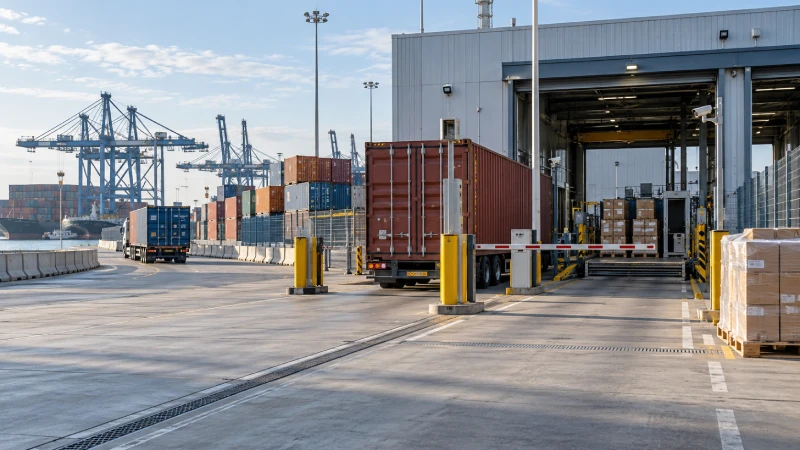
Customs clearance is one of the most important stages when importing commercial goods from China to Germany. A shipment does not simply arrive at a German port or airport, pay a standard tax, and continue to the consignee.
Before imported goods can enter the EU market, the parties involved need to establish who is acting as importer and declarant, confirm the appropriate EORI setup, classify the goods correctly, determine the customs value, prepare supporting documents, lodge the customs declaration, deal with any customs controls, and settle applicable duties and import VAT.
If you also need an overview of freight methods, routes, costs and delivery options, see our main Shipping from China to Germany guide.
Germany follows the EU customs framework. Goods arriving from outside the European Union remain under customs supervision until they are placed under an appropriate customs procedure or otherwise dealt with under customs rules. For goods intended to enter the EU market, the normal objective is release for free circulation. See the European Commission guidance on importation.
This guide explains the operational process for Germany customs clearance for imports from China, including EORI numbers, TARIC classification, customs declarations, customs value, documents, customs representation, inspections, duty, import VAT and release.
It is intended to help importers prepare their shipments and understand the logistics process. It does not constitute German customs, tax or legal advice. Product-specific requirements and the appropriate treatment of an individual transaction should be checked against current German Customs and EU rules and, where necessary, confirmed with the appointed customs representative or professional adviser.
Germany Customs Clearance: Quick Answer
For a typical commercial shipment from China to Germany, the clearance process can be summarised as:
Importer setup → EORI → TARIC classification → import requirement check → document preparation → customs declaration → customs controls if selected → duty and import VAT → customs release → final delivery
The process should ideally begin before the cargo leaves China, rather than when the container or air shipment has already arrived in Germany.
There is no single German customs duty rate or universal documentation package for every shipment. Classification, duty, trade measures, licences, certificates and other restrictions depend on the individual product, its origin and the relevant customs procedure.
The EU TARIC database integrates tariff measures, trade defence instruments, prohibitions, restrictions and other import measures. TARIC data is transmitted daily to EU Member State customs administrations. See the European Commission TARIC database guidance.
Needs confirmation before publishing.
Pro Tip: Treat customs clearance as part of shipment planning, not as an administrative task to solve after arrival. Confirm the importing entity, tariff classification, customs value basis and document package before departure from China.
Germany Customs Clearance Process at a Glance
For standard commercial imports intended for the German or wider EU market, the operational process normally looks like this:
| Stage | What Happens | What the Importer Should Prepare |
|---|---|---|
| 1. Importer setup | Determine who will act as importer, declarant and customs representative | Importing entity, EORI details, representation arrangement |
| 2. Tariff classification | Determine the appropriate CN/TARIC classification | Detailed product description, material, function, model and specifications |
| 3. Import requirement check | Review applicable tariff and non-tariff measures | TARIC and Access2Markets results, applicable licences/certificates |
| 4. Document preparation | Prepare commercial and transport documents | Commercial invoice, packing list, B/L or AWB and supporting documents |
| 5. Arrival in the EU | Goods enter customs supervision and are presented to customs | Accurate shipment and entry data |
| 6. Customs declaration | Declaration is lodged for the appropriate customs procedure | Classification, origin, value, weight, packages and party details |
| 7. Customs verification | Customs may release the declaration or perform documentary/physical controls | Supporting commercial, transport and product information |
| 8. Duty and VAT | Applicable customs duty and import VAT are assessed | Correct customs value, tariff treatment and tax information |
| 9. Customs release | Goods are released once applicable formalities are completed | Required documents, charges, guarantees or approvals |
| 10. Final delivery | Released cargo can proceed to the destination | Delivery arrangements and release information |
The European Commission explains that customs controls can include documentary checks of invoices, bills of lading, packing lists and other documentation, as well as physical inspections to verify the nature, quantity, condition and classification of the goods. See the European Commission customs controls guidance.
Who Is Responsible for Customs Clearance in Germany?
One of the first questions to resolve is who is actually performing each customs role.
The importer, consignee, declarant and customs representative may be connected to the same shipment, but these terms should not automatically be treated as interchangeable.
Importer
The importer is the commercial party connected with bringing the goods into the EU market.
For logistics planning, the importer should be clearly established before the shipment is booked because importer information may affect the EORI structure, customs declaration, import VAT treatment and customs representation.
Declarant
The declarant is the party in whose name the customs declaration is made or the person lodging the declaration in their own name, depending on the representation structure.
The declarant assumes important obligations in relation to the accuracy and completeness of information submitted to Customs.
Consignee
The consignee is the party to whom the goods are consigned under the shipment documents.
Being listed as consignee on a Bill of Lading or Air Waybill does not, by itself, resolve every question concerning importer, declarant or tax responsibility.
Customs Representative
A customs representative is appointed to carry out customs formalities for another party.
A freight forwarder may coordinate transportation and customs operations, but appointing a freight forwarder or broker should not be interpreted as automatically transferring every legal responsibility away from the importer or declarant.
Before shipping, the parties should therefore establish:
- who is importing the goods;
- who will appear as declarant;
- whether a customs representative will be appointed;
- which type of representation will be used;
- whose EORI information will appear in the declaration;
- who will provide classification and valuation information;
- who will settle duties and import VAT;
- who will respond if Customs requests additional documentation.
For a non-EU-established company intending to act as importer or declarant in Germany, the appropriate structure can depend on the transaction and customs representation arrangement.
Needs confirmation before publishing.
Does the German Importer Need an EORI Number?
An EORI number — Economic Operators Registration and Identification number — is used to identify economic operators when dealing with customs authorities within the European Union.
German Customs describes the EORI as the EU identification number assigned for customs purposes. Economic operators established within the EU generally register in the Member State where they are established. Certain non-EU economic operators may need to register in the Member State where they first carry out a customs activity that requires registration. See the German Customs EORI guidance.
EORI Is Not the Same as a VAT Number
An EORI number primarily identifies an economic operator for customs purposes.
A VAT identification or VAT registration number serves a different tax function.
Importers should not assume that having one automatically means that the other has been obtained or that all German VAT obligations have been resolved.
Which Party’s EORI Is Used?
The answer depends on the parties’ roles in the declaration.
German Customs identifies EORI usage for parties such as the declarant and representative and also addresses EORI information connected with import participants.
The importing entity and customs broker should therefore confirm the EORI arrangement before arrival.
Pro Tip: Do not wait until cargo reaches Hamburg, Bremerhaven, Frankfurt or another EU entry point to discover that the planned importer or declarant structure cannot be used.
For a non-EU company intending to act as importer into Germany:
Needs confirmation before publishing.
HS Code, CN Code and TARIC: How Germany Classifies Imported Goods
Correct tariff classification is one of the foundations of German customs clearance.
The international Harmonized System provides the starting point for product classification, while the European Union uses the Combined Nomenclature (CN) and TARIC for EU customs purposes.
The European Commission describes the CN as the EU’s 8-digit customs coding system and TARIC as the system integrating EU tariff and other trade measures. See the European Commission tariff classification guidance.
Why Classification Comes Before Calculating Duty
The classification of the product can determine or affect:
- customs duty;
- additional tariff measures;
- anti-dumping or countervailing duties;
- tariff quotas;
- import prohibitions or restrictions;
- licence requirements;
- certificates or supporting-document codes;
- supplementary units;
- other product-specific customs measures.
TARIC integrates these measures and is updated for use by national customs administrations. See the EU TARIC guidance.
That is why there is no responsible way to calculate the customs duty for a China-to-Germany shipment based only on statements such as:
“Electronics usually have low duty.”
or
“Machinery from China is normally charged X%.”
The exact product classification must come first.
Do Not Automatically Copy the Chinese Supplier’s HS Code
A Chinese supplier’s HS code can be useful supporting information, but it should not automatically be treated as the final EU classification.
China and the European Union share the international HS structure at the harmonised level, but the EU’s CN and TARIC provide additional classification detail and associated EU import measures.
To support classification, prepare information such as:
- exact commercial product name;
- material or composition;
- primary function;
- intended use;
- model number;
- technical specifications;
- photographs or drawings;
- operating principle where relevant;
- manufacturing information where classification depends on it.
Descriptions such as “machine,” “parts,” “accessories,” “electronics” or “metal product” may be insufficient to reliably establish the correct classification.
TARIC Should Be Checked Close to the Import Date
TARIC is not a static reference table. The European Commission states that TARIC data is transmitted daily to national customs administrations so that customs systems use current information.
For that reason, a tariff code or measure confirmed several months earlier should be checked again when preparing the actual shipment.
Exact TARIC classification, duty rate and applicable trade measures for an individual product: Needs confirmation before publishing.
Pro Tip: Never choose a tariff classification because it produces the lowest duty rate. Classification should be based on what the product actually is.
How the German Customs Declaration Works
A customs declaration is the formal process used to place imported goods under a customs procedure.
For commercial goods imported from China for sale or use within Germany or another EU Member State, the relevant objective is commonly release for free circulation.
The European Commission explains that goods imported into the EU need to be cleared before entering the single market. Once released for free circulation, non-EU goods acquire the customs status that allows them to circulate within the EU customs territory in the same way as Union goods. See the European Commission importation guidance.
Germany Uses ATLAS
Germany processes customs declarations electronically through ATLAS — Automatisiertes Tarif- und Lokales Zoll-Abwicklungs-System.
German Customs provides ATLAS-based import procedures, including an Internet customs declaration facility for import operations. Its import guidance specifically includes declarations for goods arriving from countries such as China. See the German Customs ATLAS import declaration guidance.
In normal commercial operations, the importing company will often provide the required information to its appointed customs representative, which then prepares and submits the declaration through the appropriate customs system.
What Information Goes Into the Declaration?
Depending on the transaction and customs procedure, the declaration may include information such as:
- importer;
- exporter;
- declarant;
- customs representative;
- EORI information;
- customs procedure;
- TARIC classification;
- country of origin;
- country of export;
- product description;
- package count;
- gross and net weight;
- quantity or supplementary units;
- invoice value;
- currency;
- customs value;
- Incoterm;
- transport information;
- supporting-document references;
- applicable licences or certificates.
Access2Markets customs clearance guidance identifies importer/exporter/representative information, tariff code, weights, packaging, transport data, origin, financial information and supporting documents among the information associated with EU import declarations.
Exact declaration data requirements depend on the shipment, procedure and product.
Needs confirmation before publishing.
How Customs Value Is Determined
Customs value is another area where importers frequently make mistakes.
The customs value is not necessarily identical to the supplier’s invoice total.
Under EU customs valuation rules, the primary valuation method is the transaction value method. The European Commission describes transaction value as the total amount paid or payable for imported goods, subject to the additions and deductions required under EU customs rules. If the transaction-value method cannot be used, other valuation methods apply in sequence. See the European Commission customs duty calculation and valuation guidance.
The Six EU Customs Valuation Methods
EU guidance identifies six valuation methods:
- transaction value;
- transaction value of identical goods;
- transaction value of similar goods;
- deductive method;
- computed method;
- fall-back method.
For normal commercial purchases between independent businesses, the transaction value method is often the starting point, but it should not automatically be assumed to apply in every situation.
Costs That May Affect Customs Value
Depending on the transaction, customs valuation may involve consideration of items such as:
- the product price;
- transport to the relevant EU entry point;
- insurance;
- packing costs;
- certain commissions;
- assists supplied by the buyer;
- royalties or licence fees under relevant conditions;
- other additions required by EU customs valuation rules.
Some costs may instead qualify for deduction if the requirements for deduction are met and they can be appropriately distinguished.
For example, post-entry transport should not simply be mixed into the customs value without considering the relevant valuation rules.
Why Freight Costs Need to Be Clear
Consider two shipments:
Shipment A
Supplier invoice: USD 30,000 FOB Shanghai
International freight: USD 2,000
Insurance: USD 150
Shipment B
Supplier invoice: USD 32,150 including shipping
The total commercial cost may look similar, but Shipment B does not show what transport or insurance costs are included or how those costs relate to the point of EU entry.
That information may need to be separated before the correct customs value can be established.
Pro Tip: Ask suppliers and logistics providers to keep the goods value, international freight, insurance and relevant destination charges identifiable. A single unexplained “all-inclusive” amount can make customs-value verification more difficult.
For related-party transactions, assists, royalties, licence fees, unusual commissions or complex valuation arrangements:
Needs confirmation before publishing.
How Incoterms Affect Customs Clearance
Incoterms are important for customs preparation because they help explain how commercial costs and responsibilities are divided between seller and buyer.
However, one principle is especially important:
The Incoterm does not itself determine the customs value.
Customs value must still be determined under EU customs valuation rules.
EXW
With an EXW transaction, the supplier’s invoice may exclude several transport-related costs incurred between the factory and the EU entry point.
The importer should therefore make sure relevant transport and insurance information is available when the customs value is prepared.
FOB
With FOB shipments, the commercial invoice usually separates the product price from the main international freight.
That can make the cost structure easier to identify, but the freight and any relevant insurance costs still need to be considered for customs valuation.
CIF or CIP
Where freight and/or insurance are already included in the supplier’s commercial price, customs preparation should identify what is already included so that the same cost is not added twice.
DAP
For a DAP shipment, the logistics price may contain substantial transport costs extending beyond the EU border.
The importer and customs representative should understand what portion relates to international transport and what portion relates to subsequent delivery.
DDP
DDP requires particular care.
A commercial agreement saying that the seller will pay duties and arrange delivery does not, by itself, resolve whether that seller can legally perform every importer or declarant role required for the German customs transaction.
If you are considering a door-to-door structure, see our DDP Shipping from China service guide for the logistics side of DDP. The customs and importer structure for the actual German shipment still needs to be confirmed separately.
For China-based sellers attempting to structure a DDP import into Germany:
Needs confirmation before publishing.
State the Incoterm on the Commercial Invoice
Access2Markets identifies delivery terms according to the relevant Incoterm among the information generally included in a commercial invoice used for customs clearance. See the Access2Markets customs clearance document guidance.
Pro Tip: Avoid invoice descriptions such as “USD 25,000 including all shipping charges” without a clear Incoterm and supporting freight breakdown. Customs valuation works better when everyone can identify exactly what is included in the commercial price.
Documents Needed for Germany Customs Clearance
There is no single universal document package for every product imported into Germany.
However, a standard commercial shipment will normally rely on a core set of commercial and transport documents, with additional certificates, licences or product-specific evidence added where required.
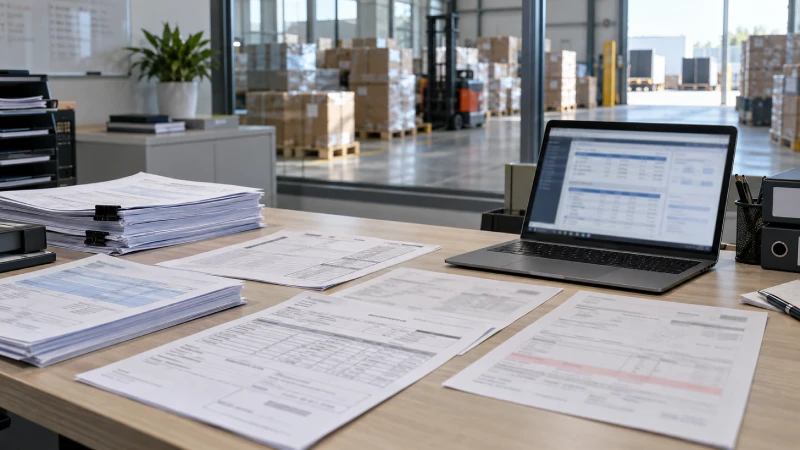
Germany Customs Clearance Document Checklist
| Document / Information | Main Purpose | What to Check |
|---|---|---|
| Commercial Invoice | Supports the commercial transaction and declared value | Parties, product description, quantity, price, currency and Incoterm |
| Packing List | Shows cargo and packaging details | Packages, contents, gross/net weight and dimensions |
| Bill of Lading | Ocean transport document | Shipper, consignee, routing and cargo details |
| Air Waybill | Air transport document | Parties, routing and shipment information |
| EORI Information | Customs identification | Correct importing/declarant entity |
| TARIC Classification | Tariff and customs treatment | Classification consistent with product |
| Freight/Insurance Evidence | Supports customs valuation | Clearly identify included and excluded costs |
| Origin Information | Supports origin declaration and measures | Manufacturing/origin information should be available |
| Import Licence/Certificate | Product-specific customs measure | Only where applicable |
| Product Compliance Documents | Supports regulated-product requirements | Depends on the actual product |
Access2Markets identifies the commercial invoice, transport documents and packing list among the normal documents used for EU customs clearance and lists additional documentation that may apply depending on the nature of the goods and the customs operation. See Access2Markets customs clearance documents and procedures.
Commercial Invoice
The commercial invoice is one of the most important documents in the clearance file.
Access2Markets identifies information such as:
- exporter and importer;
- invoice date;
- invoice number;
- product description;
- unit of measure;
- quantity;
- unit value;
- total value;
- invoice currency;
- payment terms;
- delivery terms/Incoterm;
- means of transport.
The description of the goods deserves particular attention.
A vague invoice line such as:
Machine Parts
may not provide enough information to understand the goods.
A more useful commercial description could be:
Stainless steel replacement impeller for centrifugal water pump, model XX-100
The objective is not to create a longer product name for SEO or paperwork purposes. It is to make the goods identifiable and consistent with their tariff classification.
Packing List
The packing list supports the physical cargo information.
Access2Markets describes it as the inventory accompanying the commercial invoice and transport documentation and identifies information such as package type, number of packages, contents, marks and numbers, net weight, gross weight and measurements.
Before departure, compare the packing list against:
- commercial invoice;
- booking data;
- Bill of Lading or Air Waybill;
- customs declaration information.
A shipment declared as 80 cartons on the invoice but 84 cartons on the transport documentation creates an avoidable discrepancy that may need to be explained.
Transport Document
The relevant transport document depends on the shipping method.
For example:
- Bill of Lading for ocean freight;
- Air Waybill for air freight;
- CMR for relevant road transport;
- CIM for relevant rail transport.
Access2Markets identifies these transport documents as part of EU customs-clearance documentation according to the transport mode.
For larger containerized cargo, our Ocean Freight from China guide explains the logistics side of FCL and LCL transportation.
Is a Certificate of Origin Always Required?
No.
A common mistake is to tell importers that every shipment from China automatically requires a non-preferential Certificate of Origin.
The European Commission states that non-preferential origin must be declared for release for free circulation, but customs authorities should not routinely require a third-country non-preferential Certificate of Origin except in specific situations where legislation requires one. See the European Commission non-preferential origin guidance.
For any individual commodity where origin evidence or a Certificate of Origin may be required:
Needs confirmation before publishing.
Using a Customs Broker or Customs Representative in Germany
Many importers do not lodge German customs declarations themselves.
Instead, they appoint a customs broker, freight forwarder or other customs representative to perform the customs formalities.
EU customs rules distinguish between direct representation and indirect representation.
Direct Representation
In direct representation, the customs representative acts in the name of and on behalf of another person.
Indirect Representation
In indirect representation, the representative acts in its own name but on behalf of another person.
EU customs guidance recognises both forms of customs representation. The legal consequences, including potential customs-debt implications, differ between them. See the European Commission customs representation guidance.
Importers should therefore not treat direct and indirect representation as interchangeable administrative options.
For a particular importer structure—especially one involving a non-EU-established company—the appropriate representation model should be confirmed before the shipment moves.
Needs confirmation before publishing.
What Should You Send the Customs Broker?
Before arrival, prepare a clearance pack containing the relevant information, which may include:
- importer details;
- EORI;
- commercial invoice;
- packing list;
- Bill of Lading or Air Waybill;
- detailed product description;
- tariff classification information;
- country of origin;
- Incoterm;
- freight and insurance breakdown;
- licences or certificates where applicable;
- product information that may support classification or regulatory checks.
Providing these documents before arrival gives the broker time to identify obvious inconsistencies while there is still an opportunity to correct them.
What Happens if German Customs Requests More Information?
Submitting a customs declaration does not mean that every shipment is automatically released without further review.
EU customs authorities perform risk-based controls.
Documentary Controls
Customs may review documents such as:
- commercial invoices;
- Bills of Lading;
- packing lists;
- declarations;
- product information;
- origin information;
- licences or certificates.
The European Commission specifically identifies documentary checks as one type of customs control. See the European Commission customs controls guidance.
If the declared value, classification or description cannot be supported by the documents provided, Customs may request clarification or further evidence.
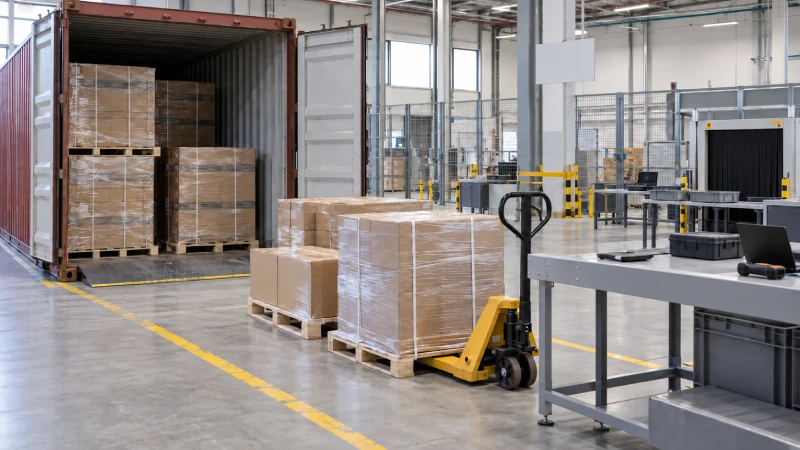
Physical Inspection
A shipment can also be selected for physical examination.
According to the European Commission, physical inspections can be used to assess the nature, quantity, condition and classification of goods and to verify whether the cargo matches the declaration.
An inspection does not automatically mean that the shipment has done something wrong. Customs controls are part of the import system.
Additional Document Requests Through ATLAS
Germany also uses ZELOS within the ATLAS environment for electronic exchange of documents, requests and statements in customs procedures.
German Customs states that clearance-related documents can be requested electronically and that participants using suitable systems can transmit supplementary information and, in certain circumstances, proactively submit documents to ATLAS. See the German Customs ATLAS ZELOS guidance.
Pro Tip: When Customs asks for clarification, make sure every document tells the same commercial story. The invoice, packing list, freight information, product specification and explanation of the goods should not contradict one another.
How Customs Duty Is Calculated
There is no single customs duty rate for goods imported from China into Germany.
The European Commission explains that the amount of customs duty depends primarily on three factors:
- the customs tariff;
- the customs value;
- the origin of the goods.
See the European Commission customs duty calculation guidance.
For goods subject to a simple ad valorem duty, a basic illustration is:
Customs Duty = Customs Value × Applicable Duty Rate
For example, if an illustrative customs value were EUR 20,000 and the applicable tariff rate were 5%, the mathematical result would be:
EUR 20,000 × 5% = EUR 1,000
This is only an illustration of the calculation method. It does not mean that the relevant product actually carries a 5% duty.
Some goods can also be affected by:
- anti-dumping duties;
- countervailing duties;
- safeguards;
- tariff quotas;
- additional duties;
- tariff suspensions;
- import prohibitions;
- import restrictions;
- product-specific controls.
TARIC integrates these types of EU customs and trade measures.
Exact duty rate and applicable TARIC measures for the shipment: Needs confirmation before publishing.
Germany Import VAT
Customs duty and import VAT are different charges.
German Customs currently identifies a standard import VAT rate of 19%, while a reduced 7% rate applies to selected goods. See the German Customs import VAT guidance.
Importers should not assume that their product automatically qualifies for either rate without confirming the applicable tax treatment.
Applicable VAT rate for the individual product: Needs confirmation before publishing.
Import VAT Is Not Simply Invoice Value × 19%
Another common mistake is calculating German import VAT directly from the supplier’s invoice total.
EU VAT guidance explains that the taxable amount for imported goods starts with the customs value and can also include customs duties, taxes and other charges, together with certain incidental costs such as commission, packing, transport and insurance that have not already been included in the customs value. See the European Commission VAT taxable amount guidance.
A simplified conceptual formula is:
Import VAT Base ≈ Customs Value + Customs Duty + Other Applicable Charges and Costs Included Under VAT Rules
Then:
Import VAT = VAT Base × Applicable VAT Rate
This is useful for understanding the structure, but it should not be used as a universal landed-cost calculator without checking the actual transaction.
Can Import VAT Be Recovered?
Import VAT should not automatically be described as a permanent import cost for every business, but it should also not be advertised as “automatically refundable.”
Recovery depends on factors such as:
- the importing entity;
- VAT registration/status;
- use of the imported goods;
- documentation;
- transaction structure;
- applicable German tax rules.
Import VAT deduction or recovery eligibility for a particular importer: Needs confirmation before publishing.
For transaction-specific VAT treatment, the importer should confirm the position with a qualified German tax adviser.
When Are Goods Released by Customs?
For ordinary goods intended to enter the EU market, the key customs stage is release for free circulation.
The European Commission explains that free circulation allows non-EU goods to circulate within the EU customs territory once the applicable import requirements have been satisfied. This can involve collection of import duty and other charges, application of trade-policy measures, and compliance with relevant prohibitions or restrictions. See the European Commission importation guidance.
A simplified operational flow is:
Customs declaration accepted → Customs risk assessment → Documentary or physical control if selected → Additional information or documents if requested → Applicable duty/tax and other customs requirements dealt with → Customs release → Final delivery
Release therefore does not necessarily happen immediately after the declaration is submitted.
Customs Release Does Not Replace Product Compliance
This distinction is important.
Customs release and product compliance are related, but they should not be presented as exactly the same thing.
Customs authorities can enforce prohibitions, restrictions, product-safety requirements and other border measures. However, release of a shipment should not be marketed as a blanket guarantee that every ongoing product-safety, labelling, market-surveillance or commercial obligation has been satisfied.
For regulated products such as electrical equipment, machinery, batteries, chemicals, food, medical products or other controlled goods:
Needs confirmation before publishing.
Common Causes of Germany Customs Clearance Delays
Many clearance delays are not caused by the physical transport itself. They begin with missing, inconsistent or poorly prepared information.
| Common Issue | How to Reduce the Risk |
|---|---|
| Vague product description | Provide material, function, model and intended use |
| Unverified tariff classification | Check the EU CN/TARIC classification before shipping |
| Invoice/packing list mismatch | Reconcile quantities, packages, weights and descriptions |
| Incorrect importer information | Confirm the importing entity and EORI arrangement early |
| Representation problem | Confirm customs broker authority and representation model |
| Unsupported customs value | Keep purchase, freight and insurance evidence |
| Unclear Incoterm | State the delivery term and identify included costs |
| Missing product document | Check TARIC and product-specific measures before departure |
| Origin questions | Keep manufacturing and origin information available |
| Documentary control | Respond quickly with consistent evidence |
| Physical inspection | Include possible inspection in logistics planning |
| Duty/VAT payment issue | Confirm payment or customs-account arrangements in advance |
Not every delay can be prevented. Customs can legitimately perform risk controls or request additional evidence.
The goal of preparation is therefore not to “guarantee no inspection.” It is to prevent avoidable problems from becoming the reason the cargo remains uncleared.
For transport planning beyond customs, see How Long Does Shipping from China to Germany Take? for sea, air and express transit considerations.
How to Reduce Customs Risk Before Shipping from China to Germany
A practical customs-preparation process can be built around seven steps.
1. Confirm the Importing Entity
Establish which company is actually importing the goods before the booking is confirmed.
Do not leave the importer decision until cargo arrival.
2. Confirm the EORI Setup
Check whether the relevant customs parties have the appropriate EORI identification.
If a non-EU business is involved in the import structure, confirm its role with the customs representative.
3. Verify the TARIC Classification
Do not rely solely on the Chinese factory’s code.
Check the product against EU classification information using accurate technical details.
4. Check Tariff and Non-Tariff Measures
Review the current TARIC measures applicable to the product and origin.
This should include more than the basic customs-duty percentage.
Look for:
- trade defence measures;
- restrictions;
- licences;
- certificate/document codes;
- quotas;
- other relevant import conditions.
5. Check Document Consistency
Compare the commercial invoice, packing list and transport booking.
Make sure they describe the same cargo.
6. Understand the Customs Value
Identify:
- product price;
- Incoterm;
- international freight;
- insurance;
- relevant destination costs;
- any other valuation elements that may need consideration.
7. Send the Clearance Pack Before Arrival
Where possible, provide the documents and cargo information to the appointed customs representative before the shipment reaches the EU.
This gives the parties time to identify questions rather than trying to reconstruct the shipment after Customs has already requested clarification.
Pro Tip — Classification: A cheaper tariff rate is not a reason to choose a classification.
Pro Tip — Documentation: Describe what the product actually is, not simply what your purchasing department calls it internally.
Pro Tip — Customs Value: Keep goods value, international freight, insurance and inland transport identifiable.
Pro Tip — TARIC: Check the tariff measures again near the actual import date. TARIC information is continuously updated and transmitted daily to national customs administrations.
What Winsail Can Help With
Winsail Logistics supports shipments moving from China to Germany and can help coordinate the logistics and documentation preparation around the shipment.
Depending on the shipping arrangement, support can include:
- China factory pickup;
- export-side freight coordination;
- sea freight;
- air freight;
- FCL and LCL planning;
- shipment data preparation;
- commercial and transport document coordination;
- communication of cargo details required for destination clearance;
- coordination with the importer or appointed customs-clearance party;
- final delivery planning where included in the agreed service scope.
Winsail does not replace German Customs, a customs authority, tax adviser or legal adviser.
Final tariff classification, customs treatment, taxes, licences, regulatory requirements and importer obligations should be verified against current German/EU requirements and, where appropriate, confirmed by the importer with its appointed customs representative or professional adviser.
Prepare Your Germany Shipment Before It Reaches Customs
Shipping commercial cargo from China to Germany?
Before arranging transportation, prepare the basic shipment information:
- pickup city in China;
- product name and description;
- quantity;
- commercial value;
- Incoterm;
- package count;
- gross weight;
- dimensions and total CBM;
- preferred transport mode;
- German delivery postcode;
- proposed HS/TARIC code, if available;
- importer/EORI information, if already established.
With these details available, Winsail can help plan the China-side logistics, select an appropriate transport method and coordinate the shipment documentation required for the destination-clearance process.
FAQ
Do I need an EORI number to import goods from China into Germany?
Economic operators carrying out activities covered by EU customs legislation generally use an EORI number for customs identification. The correct setup depends on the role of the importer, declarant and representative. For a non-EU-established importer or unusual representation structure, u003cstrongu003eNeeds confirmation before publishing.u003c/strongu003e
What documents are required for customs clearance in Germany?
A normal commercial import commonly uses a commercial invoice, packing list, transport document and importer/customs information. Additional licences, certificates, origin evidence or product-specific documents may apply depending on the goods. u003cstrongu003eNeeds confirmation before publishing.u003c/strongu003e
How do I find the customs duty rate for goods imported from China?
First determine the correct EU tariff classification, then check the current TARIC measures for that classification and origin. There is no universal China-to-Germany customs duty percentage.
What is the import VAT rate in Germany?
German Customs currently states that the standard import VAT rate is 19%, while a reduced 7% rate applies to selected goods. The applicable VAT treatment for the individual product u003cstrongu003eNeeds confirmation before publishing.u003c/strongu003e
Does the Incoterm determine the customs value?
No. The Incoterm helps explain how costs and commercial responsibilities are allocated between buyer and seller, while EU customs valuation rules determine the customs value.
Can a freight forwarder or customs broker clear the goods for me?
A customs representative can perform customs formalities on behalf of another party. EU customs rules distinguish between direct and indirect representation, so the appropriate structure for the individual importer and shipment u003cstrongu003eNeeds confirmation before publishing.u003c/strongu003e
Can German Customs inspect my shipment?
Yes. Customs controls can include documentary checks and physical inspections to verify matters such as the nature, quantity, condition, classification and supporting information for the goods.
How long does customs clearance take in Germany?
There is no fixed clearance time for every shipment. Timing depends on declaration completeness, supporting documents, product requirements, customs controls, inspections, additional information requests and duty or VAT arrangements. Publishing a fixed average clearance time u003cstrongu003eNeeds confirmation before publishing.u003c/strongu003e
What happens after German Customs releases the goods?
Once the goods are released under the relevant customs procedure, they can proceed to the warehouse, distribution centre, buyer or other delivery destination according to the transport arrangement, subject to any remaining non-customs obligations.
Official Sources
This guide was prepared using customs information from authoritative German and EU sources, including:
- German Customs (Zoll) — EORI, ATLAS, electronic document exchange and import VAT.
- European Commission — Taxation and Customs Union — TARIC, customs classification, customs valuation, customs controls, import procedures and VAT rules.
- EU TARIC — current customs tariff and trade measures.
- Access2Markets — EU customs clearance documents and procedures.
Because customs legislation, TARIC measures and administrative systems can change, shipment-specific requirements should be checked against current official information before import.
