
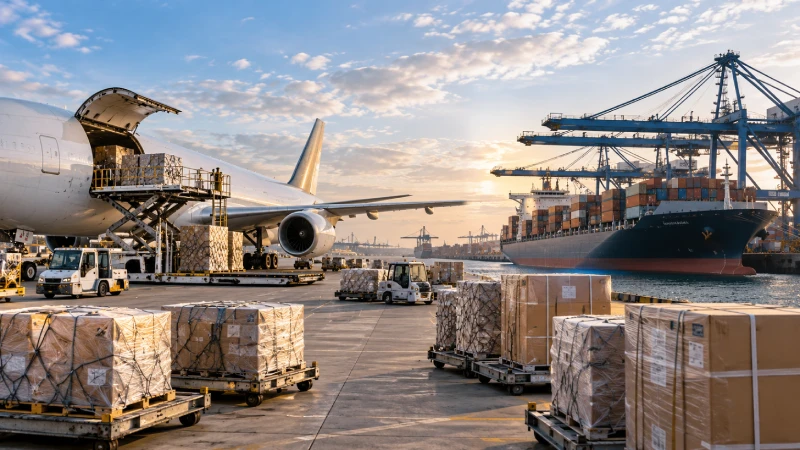
If your cargo is ultimately going to Nairobi, there are two fundamentally different ways to ship it from China.
The first is air freight into Nairobi through Jomo Kenyatta International Airport (JKIA). The second is sea freight to the Port of Mombasa, followed by inland movement to Nairobi by rail or road.
That distinction matters because Nairobi is an inland destination, not a seaport. A sea shipment described as “shipping to Nairobi” still needs a maritime gateway—normally Mombasa—before the cargo moves inland.
For urgent, lighter or higher-value cargo, air freight to Nairobi is usually the first option to compare. For heavier, bulkier or less time-sensitive shipments, LCL or FCL sea freight through Mombasa is normally more economical.
The right choice, however, depends on more than freight cost. You also need to compare the clearance point, inland transport, destination charges, shipment size, cargo compliance requirements and the actual delivery address in Nairobi.
For a broader overview of routes, costs, customs and shipping methods across the country, see our main guide to shipping from China to Kenya.
Data Note: Freight rates, airline capacity, vessel schedules and inland transport costs change frequently. Transit times in this guide are planning references rather than guaranteed delivery times. Kenya import requirements should also be checked against the latest KRA, KEBS and other relevant regulator guidance before cargo leaves China.
Quick Answer: Air to Nairobi or Sea via Mombasa?
| Decision Factor | Air Freight to Nairobi | Sea Freight via Mombasa |
|---|---|---|
| Kenya gateway | JKIA, Nairobi | Port of Mombasa |
| Final destination | Nairobi | Nairobi |
| Speed | Faster | Slower |
| Cost tendency | Higher | Usually lower for heavy or bulky cargo |
| Suitable cargo | Urgent, lighter, high-value cargo | Heavy, bulky and regular commercial shipments |
| LCL / FCL | Not applicable | Both available |
| Typical clearance area | JKIA | Mombasa or Nairobi ICD depending on arrangement |
| Inland leg after international arrival | Local Nairobi delivery | Mombasa–Nairobi inland movement required |
| Main decision | Is speed worth the air freight premium? | Which sea and inland arrangement gives the best total cost? |
As a general planning reference, currently published China–Kenya route data shows approximately 22–30 days for ocean freight from major Chinese ports such as Shanghai, Ningbo and Nansha to Mombasa, while air freight connections from China to Nairobi may be measured in a matter of days. These figures should not be treated as guaranteed factory-to-warehouse transit times because origin handling, consolidation, customs, inland transport and delivery can add additional time.
If transit time is your main concern, also review our guide to shipping time from China to Kenya.
Shipping from China to Nairobi: The Two Main Routes
When the buyer is located in Nairobi, it is easy to focus only on the final city. From a logistics perspective, however, the route needs to be planned from the international gateway backward.
There are two main cargo flows.
Route 1: Air Freight Directly to Nairobi / JKIA
A typical air freight shipment may move through the following chain:
China supplier → origin warehouse → Chinese airport → international flight → JKIA → customs clearance → Nairobi delivery
This is the more direct route to Nairobi because the international gateway itself is already in the Nairobi area.
It is generally suitable when:
- cargo is time-sensitive;
- shipment weight or volume is relatively low;
- inventory shortages are expensive;
- the product has a high value relative to its freight weight;
- spare parts or production components are urgently required;
- a buyer needs samples or an initial commercial batch quickly.
Air freight is not automatically the best choice for every small shipment, however. Chargeable weight, cargo dimensions, batteries, liquids, dangerous goods and airline acceptance rules can materially affect the cost and routing.
Route 2: Sea Freight to Mombasa + Inland Transport to Nairobi
Sea freight follows a different chain:
China supplier → China port → ocean freight → Mombasa Port → customs/inland procedure → rail or road → Nairobi → final delivery
The vessel does not sail to Nairobi.
Mombasa is the maritime gateway. Nairobi is the inland destination.
For containerized cargo, Nairobi ICD is an important part of this system. Kenya Ports Authority states that Nairobi Inland Container Depot is connected to Mombasa by both Standard Gauge Railway and Meter Gauge Rail and that cargo can move under Through Bill of Lading or merchant-haulage arrangements.
Kenya Railways also confirms that its freight service transports 20-foot and 40-foot containers between Mombasa and Nairobi ICD.
This makes sea freight particularly relevant for Nairobi importers moving:
- machinery;
- furniture;
- building materials;
- commercial inventory;
- auto parts;
- large electronics orders;
- raw materials;
- full container loads;
- consolidated shipments from several Chinese suppliers.
Compare My Nairobi Route: Before choosing air or sea, compare both options to the same final Nairobi address—not merely airport freight versus Mombasa port freight.
Air Freight from China to Nairobi via JKIA
Air freight is the most straightforward option when speed is the main priority.
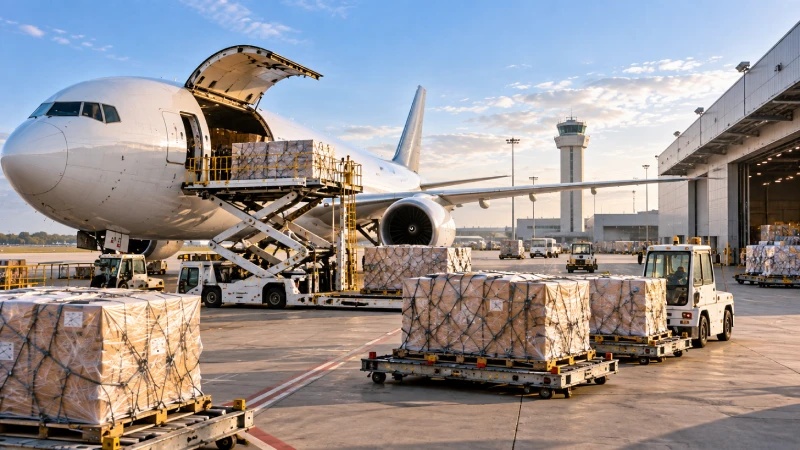
Depending on the supplier location, cargo can be collected from manufacturing areas such as Shenzhen, Guangzhou, Dongguan, Foshan, Yiwu, Shanghai, Ningbo, Suzhou or other Chinese cities and transferred to an appropriate export airport.
The closest airport is not always the best departure point. A forwarder may route cargo through another Chinese air hub if it offers better capacity, airline schedules or pricing.
For buyers who need more detail about airport-to-airport and door delivery options, see our air freight from China service page.
How the China-to-JKIA Air Route Works
A commercial air shipment typically involves:
- collecting cargo from the Chinese supplier;
- checking packing, dimensions and shipment documents;
- moving cargo to an export warehouse or airport terminal;
- completing China export procedures;
- booking airline capacity;
- transporting the shipment to Nairobi;
- handling cargo at JKIA;
- completing Kenyan customs and regulatory procedures;
- releasing the cargo;
- delivering it to the consignee’s Nairobi address.
The flight itself is only one part of the total lead time.
A quote saying “3 days air freight,” for example, may refer to airport-to-airport transportation rather than the time from a factory in China to a warehouse in Nairobi.
Before comparing air quotations, ask whether the quoted transit covers:
- China pickup;
- export handling;
- flight;
- JKIA handling;
- customs brokerage;
- Kenyan duties and taxes;
- Nairobi delivery.
Cargo That Usually Makes Sense by Air
Air freight should be evaluated when the commercial cost of waiting is higher than the freight premium.
Typical examples include:
- production spare parts;
- electronic components;
- samples;
- fashion replenishment;
- urgent retail stock;
- small batches of industrial equipment;
- high-value commercial products.
For low-density cargo, dimensional weight can make air freight much more expensive than the actual scale weight suggests.
For example, a shipment may weigh only a few hundred kilograms but occupy enough aircraft space that the airline charges on volumetric weight instead.
That is why a useful air freight request should include both:
- gross weight; and
- packed dimensions.
Lithium batteries, chemicals, liquids and other dangerous or restricted cargo require a separate acceptance review. The product name alone is not enough to confirm that air freight is available.
What Happens After Cargo Arrives at JKIA?
Arrival at Nairobi airport does not mean the cargo can immediately be collected.
The shipment still needs to complete the applicable customs, regulatory and ground-handling procedures before release.
Kenya Revenue Authority lists an Air Waybill among the standard documents used for air cargo clearance and requires imported commercial goods to be handled with the necessary import documentation and, where applicable, regulatory permits or conformity documents.
A Nairobi importer should therefore prepare compliance before departure rather than waiting until the flight lands.
This is especially important with air freight because the international transport time is short. Missing paperwork can remove much of the time advantage the importer paid for.
Sea Freight from China to Nairobi via Mombasa
For larger commercial shipments, sea freight is usually the first option to compare.
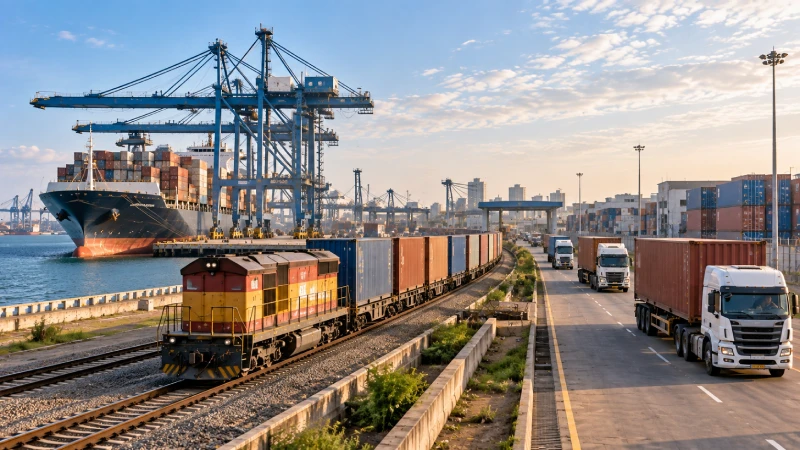
China has several major container gateways serving East Africa, including Shanghai, Ningbo, Shenzhen-area ports and Nansha.
The correct Chinese port will normally depend on:
- supplier location;
- number of suppliers;
- cargo volume;
- FCL or LCL;
- carrier schedule;
- freight rate;
- equipment availability;
- shipment ready date.
If several suppliers are involved, it may be more efficient to consolidate their goods at one warehouse in China before export rather than asking every factory to arrange its own international shipment.
For more information about FCL, LCL and China–East Africa ocean services, see our ocean freight from China service page.
Option A: Clear the Cargo Through Mombasa and Deliver to Nairobi
One arrangement is to complete the applicable release procedures around Mombasa and then move the cargo inland to Nairobi.
For FCL shipments, the container may continue inland by truck after release, subject to the shipping line, container free time and transport arrangement.
For LCL, cargo may first need to be deconsolidated according to the destination CFS arrangement before individual consignments continue inland.
This is why an LCL quotation to “Nairobi” should be examined carefully.
Ask:
- Where will the cargo be deconsolidated?
- Which destination charges apply?
- Is the Mombasa-to-Nairobi leg included?
- Is final Nairobi delivery included?
- Who handles customs clearance?
- Where does the forwarder’s responsibility actually end?
Two quotations that both say “China to Nairobi LCL” can have substantially different scopes.
Option B: Move the Container Toward Nairobi ICD
For appropriate container movements, Nairobi ICD provides another important inland routing option.
Kenya Ports Authority describes Nairobi ICD as directly connected with Mombasa by rail and states that imports can move inland under Through Bill of Lading arrangements.
That does not mean every FCL shipment automatically goes to Nairobi ICD.
The correct arrangement depends on factors including:
- shipping line;
- Bill of Lading destination;
- customs arrangement;
- carrier haulage or merchant haulage;
- consignee requirements;
- container availability;
- local delivery plan.
These points should be established before the container departs China.
Pro Tip: If your FCL destination is Nairobi, decide the Bill of Lading destination, expected clearance point and inland transport arrangement before loading in China. Do not wait until the container reaches Mombasa to decide how it will reach Nairobi.
LCL or FCL for Sea Freight to Nairobi?
Once sea freight has been selected, the next question is usually whether to use LCL or FCL.
There is no reliable universal rule that says a shipment above one fixed CBM level should always use FCL.
You need to compare the total delivered cost.
When LCL Makes More Sense
LCL is generally useful when the shipment does not require a complete container.
It can be particularly suitable for:
- smaller commercial orders;
- periodic inventory replenishment;
- buyers purchasing from several Chinese suppliers;
- shipments that can be consolidated before export.
For a multi-supplier purchase, goods can be sent to a consolidation warehouse in China, where cartons and shipment information can be checked before the combined cargo is exported.
However, Nairobi buyers should compare more than the ocean freight rate per CBM.
LCL may involve:
- origin consolidation;
- CFS handling;
- documentation;
- destination deconsolidation;
- destination charges;
- customs clearance;
- Mombasa-to-Nairobi inland transport;
- final delivery.
A low ocean rate can therefore produce a less attractive final cost once destination charges are included.
When FCL Makes More Sense
FCL should normally be compared when:
- shipment volume is high;
- cargo is heavy;
- one supplier is loading a large order;
- the importer wants a dedicated container;
- machinery or large commercial products are involved;
- the shipment can benefit from inland container movement.
FCL also reduces the amount of cargo handling associated with consolidation and deconsolidation, although container detention, demurrage, unloading and return arrangements still need careful planning.
| Shipment Situation | Option to Compare First |
|---|---|
| Small commercial shipment | LCL |
| Several Chinese suppliers | Consolidated LCL |
| Large-volume order | FCL |
| Heavy commercial cargo | FCL |
| Full production-line shipment | FCL / project cargo assessment |
| Very urgent cargo | Air before LCL |
| Full container for Nairobi | FCL + inland routing comparison |
Actual LCL-versus-FCL economics depend on the current freight market and destination charges, so the decision should be made using a live quotation rather than a fixed historical CBM threshold.
Where Is Customs Clearance Done for Nairobi-Bound Cargo?
The answer depends on the transport mode and routing arrangement.
“Nairobi is my destination” does not by itself determine the customs location.
Air Freight: JKIA
For air cargo, the shipment enters Kenya through the Nairobi aviation cargo system at JKIA and goes through the relevant customs and cargo-handling process before release.
After release, local delivery within Nairobi is usually relatively short compared with a sea shipment entering through Mombasa.
Sea Freight: Mombasa
For some sea-freight arrangements, import procedures and cargo release take place through Mombasa before the cargo continues inland.
The remaining journey to Nairobi then becomes a domestic inland transport leg.
Sea Freight: Nairobi ICD Arrangement
For appropriate containerized movements, cargo can also move inland from Mombasa toward Nairobi ICD under the applicable arrangement.
KPA identifies Nairobi ICD as an inland depot connected directly to Mombasa, while Kenya Railways operates container freight between the two locations.
| Route | Kenya Gateway | Possible Clearance / Handling Area | Final Destination |
|---|---|---|---|
| Air freight | JKIA | JKIA cargo/customs process | Nairobi |
| Sea + Mombasa release | Mombasa Port | Mombasa | Nairobi by inland transport |
| Sea + ICD arrangement | Mombasa Port | Nairobi ICD depending on arrangement | Nairobi |
The exact customs domicile and release procedure should be confirmed with the Kenyan clearing agent and forwarder before booking.
Pro Tip: A quotation ending at Mombasa Port is not the same product as a quotation ending at a Nairobi warehouse. Always compare the same endpoint.
How Much Does Shipping from China to Nairobi Cost?
There is no single reliable “China to Nairobi price.”
The total depends on:
- Chinese supplier location;
- shipment weight;
- volume;
- product type;
- FCL, LCL or air freight;
- origin port or airport;
- shipping line or airline;
- season and capacity;
- Nairobi delivery address;
- customs and regulatory requirements.
The most important rule is to compare total logistics cost to Nairobi, not only the international freight line.
For lane-level budgeting, see our current guide to shipping cost from China to Kenya.
Air Freight Cost Components
An air quotation may include or exclude:
- China supplier pickup;
- export warehouse handling;
- export customs;
- air freight;
- airline surcharges;
- security or terminal charges;
- JKIA ground handling;
- customs brokerage;
- regulatory inspection;
- duties and taxes;
- final Nairobi delivery.
The rate is also influenced by chargeable weight, which can be higher than actual gross weight for bulky cargo.
Sea Freight Cost Components
A sea-freight shipment may involve:
- factory pickup in China;
- consolidation if required;
- China port handling;
- export customs;
- ocean freight;
- Bill of Lading and documentation;
- Mombasa destination charges;
- CFS charges for LCL where applicable;
- customs clearance;
- regulatory processing;
- Mombasa-to-Nairobi inland movement;
- Nairobi ICD charges where applicable;
- final truck delivery;
- container unloading and return arrangements.
| Cost Item | Air Freight | Sea Freight |
|---|---|---|
| China pickup | Confirm | Confirm |
| Main international freight | Air | Ocean |
| Kenya gateway handling | JKIA | Mombasa |
| LCL CFS charges | — | If applicable |
| Mombasa–Nairobi inland transport | — | Required |
| Nairobi delivery | Confirm | Confirm |
| Customs brokerage | Confirm | Confirm |
| Duties and taxes | Usually separate unless clearly stated | Usually separate unless clearly stated |
| Compliance costs | Product-specific | Product-specific |
A sea quote that looks much cheaper at first can become less attractive if inland delivery and destination charges are missing.
The same applies to air freight. An airport-to-airport rate should not be compared directly with a sea door-to-door quotation.
What to Send for an Accurate Nairobi Shipping Cost
Prepare:
- supplier city or pickup address;
- product description;
- HS code if available;
- number of cartons or pallets;
- package dimensions;
- gross weight;
- total CBM;
- cargo value;
- final Nairobi delivery area;
- cargo ready date;
- battery, liquid, chemical or dangerous-goods status.
Check My Shipping Cost: Sending complete cargo information allows the air and sea options to be compared on the same service scope.
Documents and Kenya Import Requirements
Shipping documents should be checked before cargo leaves China.
Trying to correct compliance only after arrival can cause delays, storage costs or inspection problems.
KRA currently lists documents such as the Commercial Invoice, Packing List, Bill of Lading or Air Waybill, Certificate of Origin, relevant CoC, permits for restricted goods and other supporting commercial documents among those that may be required for import clearance.
Core Shipment Documents
Depending on the cargo, the document set can include:
- Commercial Invoice;
- Packing List;
- Bill of Lading for sea freight;
- Air Waybill for air freight;
- Certificate of Origin;
- export declaration documentation;
- importer PIN details;
- applicable PVoC / CoC documentation;
- product-specific permits or licenses;
- freight invoice where required;
- supporting purchase or contract documents.
The exact list depends on the product and shipment.
Certificate of Origin
Kenya introduced a mandatory Certificate of Origin requirement for imports in 2025.
KRA states that the requirement took effect on 1 July 2025, with full enforcement from 1 October 2025, subject to specified exceptions and provisional arrangements.
Importers should therefore make the COO part of the supplier-document checklist rather than treating it as an arrival-stage document.
2026 Export Declaration Requirement
There is another important requirement for shipments prepared in 2026.
From 1 September 2026, KRA states that importers must obtain and retain an export declaration, export entry, customs export certificate or equivalent document from the country of export.
The documentation should support details including the exporter and importer, goods description, quantity, value, tariff classification and country of export. KRA also states that these records should be retained for at least five years.
For China-origin cargo, exporters and freight teams should therefore coordinate the China export documentation before shipment instead of assuming the Commercial Invoice and Packing List alone will be sufficient.
Advance Cargo Declaration for Containerized Sea Cargo
For containerized cargo moving to Kenyan ports, the Advance Cargo Declaration is now a major pre-shipment requirement.
KRA launched the ACD platform on 3 August 2026 for containerized cargo destined for Kenyan ports.
To obtain the ACD reference code, the required upload set includes:
- Draft Bill of Lading;
- Commercial Invoice;
- Freight Invoice;
- Export Declaration.
The resulting reference code is to be endorsed on the Bill of Lading before the shipment proceeds to Kenya.
This means ACD should be built into the China-side sea-freight documentation process rather than left until the container reaches Mombasa.
Pro Tip: For applicable containerized sea shipments, resolve the ACD before loading. It is a pre-loading documentation step, not something to leave until arrival in Kenya.
The published KRA notice specifically addresses containerized cargo destined for Kenyan ports. Do not automatically apply the same requirement to ordinary JKIA air freight without checking the current official rule for the shipment concerned.
PVoC and Certificate of Conformity
KEBS operates the Pre-Export Verification of Conformity framework to assess applicable imported products against Kenyan standards or approved specifications.
PVoC / CoC procedures and service-provider arrangements can change, so importers should check the current KEBS procedure in force at the time of shipment rather than relying on an old freight guide or an earlier contractor list.
This should not be interpreted as “every shipment always needs the exact same CoC process.”
Applicability depends on the product, applicable standards, exemptions and other regulatory rules.
Before production is complete, the importer should check:
- HS classification;
- whether the goods fall under the applicable conformity-assessment process;
- applicable Kenya Standard;
- testing requirements;
- inspection requirements;
- CoC or destination-inspection requirements where applicable;
- any additional regulator involved.
Products such as food, medical goods, chemicals, telecom equipment, agricultural products or other controlled items may require approvals beyond normal customs documentation.
Pre-Shipment Compliance Checklist
Before allowing cargo to leave the Chinese supplier, confirm:
- Product description and HS code have been checked.
- Commercial Invoice and Packing List match the actual cargo.
- Certificate of Origin requirements have been addressed.
- China export documentation is available.
- Current KEBS conformity-assessment requirements have been checked.
- Product-specific permits have been identified.
- ACD has been arranged for applicable containerized sea cargo.
- Bill of Lading / Air Waybill information matches the importer and shipment.
- Kenyan clearing arrangements have been confirmed.
Kenya’s TradeNet system provides an electronic single-window framework through which multiple import/export documentation and government-agency processes are integrated.
From a Chinese Supplier to a Nairobi Warehouse: Step by Step
Understanding the physical shipment flow helps prevent a common mistake: focusing on the international freight rate while ignoring everything before departure and after arrival.
01. Confirm Cargo and Nairobi Delivery Address
Collect:
- product details;
- packages;
- dimensions;
- gross weight;
- CBM;
- cargo value;
- supplier address;
- Nairobi delivery address.
Do not request a door-delivery quotation with only “Nairobi, Kenya.” The precise delivery area can affect local transport planning.
02. Check HS Code and Kenya Compliance
Before deciding the shipping method, check the product classification and whether KEBS or another Kenyan authority regulates the goods.
This step should happen before loading—not after arrival.
03. Collect Cargo from the Supplier
The cargo can be picked up from the factory and transferred to:
- an air cargo warehouse;
- an LCL consolidation warehouse;
- a container loading point;
- another appropriate export facility.
04. Consolidate Multiple Suppliers if Needed
If you purchase from several Chinese factories, consolidation can reduce the number of international shipments.
Goods can be collected into one warehouse, checked and prepared for one export movement.
05. Prepare Export and Kenya Pre-Shipment Documents
This may include:
- China export declaration;
- Commercial Invoice;
- Packing List;
- COO;
- applicable conformity-assessment documents;
- permits;
- ACD for applicable sea containers.
Documentation should be aligned before the main carriage starts.
06. Choose Air to JKIA or Sea to Mombasa
At this point the logistics chain separates.
Air route
China → JKIA → Nairobi delivery
Sea route
China → Mombasa → inland transport / Nairobi ICD arrangement → Nairobi delivery
07. Complete Kenyan Customs and Regulatory Procedures
The importer and licensed clearing professionals coordinate the required customs and regulatory submissions.
KRA lists engagement of a licensed customs clearing agent as part of the commercial import clearance process.
Classification, customs value, origin and applicable taxes should be based on the actual shipment rather than estimated from another importer’s cargo.
08. Arrange Release and Inland Delivery
For air freight, this means release at the airport cargo facility followed by local delivery.
For sea freight, it may involve:
- Mombasa release followed by trucking;
- inland container movement;
- Nairobi ICD;
- another agreed transport arrangement.
09. Deliver to the Nairobi Warehouse or Business Address
The final stage should already be included in the transport plan.
Confirm whether delivery includes:
- truck transport only;
- unloading;
- tail-lift or forklift;
- container stripping;
- equipment for heavy machinery;
- restricted-access delivery.
Do not assume “door-to-door” automatically includes unloading equipment.
Door-to-Door Shipping from China to Nairobi
Door-to-door freight can simplify the shipment, particularly when the importer wants one logistics plan covering China pickup through Nairobi delivery.
But door-to-door describes the physical transport scope. It does not automatically mean DDP.
For a broader explanation of service scope and final delivery, see door-to-door shipping from China.
A door-delivery quotation should clearly answer:
- Is supplier pickup included?
- Is China export customs included?
- Is international freight included?
- Are Mombasa or JKIA destination charges included?
- Is customs brokerage included?
- Are import taxes included or excluded?
- Is conformity-assessment coordination included where required?
- Is the Mombasa-to-Nairobi leg included?
- Is final unloading included?
- What costs remain for the importer?
DAP to Nairobi
Under a DAP-type arrangement, transport can be organized to the agreed Nairobi destination while the buyer normally remains responsible for import clearance and import duties/taxes according to the agreed Incoterm structure.
The actual responsibility split should still be written clearly in the quotation and commercial agreement.
DDP to Nairobi
DDP requires much more than adding Nairobi delivery to the freight cost.
Feasibility depends on:
- cargo type;
- importer structure;
- customs requirements;
- taxes;
- compliance;
- licensing;
- who can legally undertake the required import responsibilities.
DDP should therefore be confirmed shipment by shipment.
Do not assume that because one product can move DDP into Kenya, another product can use the same structure.
Important: Before accepting a “door-to-door” price, ask who is legally and financially responsible for Kenyan customs compliance, duties, VAT and other import charges.
Check Door-to-Door Feasibility: The cargo description, importer arrangement and Nairobi delivery point should be reviewed before choosing DAP or DDP.
Which Route Should You Choose for Your Nairobi Shipment?
The best route is not simply the cheapest freight rate.
It is the route that balances inventory urgency, total landed logistics cost, compliance risk and delivery requirements.
| Cargo Scenario | Route to Compare First | Main Reason |
|---|---|---|
| Urgent spare parts | Air to JKIA | Speed |
| Samples | Air / express | Small, urgent shipment |
| Small high-value commercial order | Air | Faster inventory availability |
| Heavy retail or wholesale stock | Sea | Better economics for weight/volume |
| Furniture | Sea | Bulky cargo |
| Machinery | Sea / cargo-specific routing | Weight and dimensions |
| Multiple Chinese suppliers | Consolidated LCL | Consolidation efficiency |
| Full container | FCL via Mombasa | Container economics |
| Dangerous goods | Case-by-case | Carrier and regulatory restrictions |
| Oversized equipment | Project cargo planning | Special handling and inland routing |
For many Nairobi importers, the most useful comparison is therefore not simply:
Air freight vs sea freight
but:
Total China supplier-to-Nairobi warehouse cost and lead time by each route.
A more expensive international freight option can occasionally reduce inventory delay or inland complexity.
Likewise, a cheaper ocean rate can become expensive when CFS, destination, storage and inland charges are not included.
Special Cargo Going to Nairobi
Certain shipments need a separate routing and compliance review.
Dangerous Goods and Lithium Batteries
Before booking, provide:
- detailed product description;
- battery type;
- UN number where applicable;
- MSDS;
- battery test documents where required;
- packaging information;
- net and gross weight.
Acceptance depends on the airline, shipping line, classification and packaging.
Oversized and Project Cargo
Large machinery, industrial equipment or abnormal loads require more than an ocean booking.
Planning may involve:
- lifting method;
- flat rack or open-top equipment;
- port handling;
- dimensions and centre of gravity;
- road transport restrictions;
- permits;
- route survey;
- unloading equipment in Nairobi.
The Mombasa-to-Nairobi inland leg should be assessed before the cargo is shipped from China.
Information to Send Before Planning a Nairobi Shipment
To compare your routes accurately, prepare the following:
Origin
- supplier city;
- pickup address;
- number of suppliers.
Cargo
- product name;
- HS code if known;
- quantity;
- package count;
- dimensions;
- gross weight;
- total CBM;
- cargo value.
Special characteristics
- battery;
- liquid;
- chemical;
- dangerous goods;
- oversized dimensions;
- temperature requirements.
Destination
- final Nairobi delivery address or area;
- whether unloading is required.
Timing
- cargo ready date;
- required delivery date.
With this information, the shipment can be evaluated as an actual logistics chain rather than a generic “China to Nairobi” rate request.
Send Cargo Details to compare whether air freight to JKIA or sea freight via Mombasa is more practical for your shipment.
FAQ
Is Nairobi a seaport for shipments from China?
No. Nairobi is an inland destination. Ocean cargo from China enters Kenya through a maritime gateway such as Mombasa before moving inland to Nairobi. Nairobi ICD is an inland container facility connected to Mombasa and should not be described as a seaport.
What is the fastest way to ship from China to Nairobi?
Air freight through JKIA is generally the fastest commercial freight option for ordinary cargo. Total delivery time still depends on supplier pickup, airline schedule, export handling, documentation, customs clearance and final Nairobi delivery.
Can a container from China be sent to Nairobi ICD?
Appropriate containers can move from Mombasa toward Nairobi ICD under applicable inland transport arrangements. Exact availability should be confirmed for the shipping line and shipment before booking.
Should I clear my sea freight in Mombasa or Nairobi?
It depends on the Bill of Lading, customs entry, shipping line and inland arrangement. Some shipments may be released through Mombasa and then transported to Nairobi, while suitable container arrangements can use Nairobi ICD.
Do I need an Advance Cargo Declaration for shipping to Nairobi?
For applicable containerized cargo destined for Kenyan ports, KRA's ACD requirement applies before loading. The published requirement covers containerized sea cargo, so the same rule should not automatically be assumed for ordinary JKIA air freight.
Is LCL or FCL better for shipping from China to Nairobi?
It depends on cargo volume, weight, destination charges and the inland delivery plan. LCL can work well for smaller shipments and multi-supplier consolidation, while FCL becomes more attractive as volume increases or dedicated container capacity is needed.
Can freight from China be delivered directly to my Nairobi warehouse?
Yes, a logistics plan can include final delivery to a Nairobi warehouse or commercial address. Confirm whether the quotation includes customs brokerage, taxes, Mombasa-to-Nairobi transport where applicable, final unloading and any DAP or DDP responsibilities.
Plan the Route Around Nairobi, Not Just the Kenya Gateway
For an importer in Nairobi, the most important shipping decision is not simply whether to choose air or sea.
It is how the complete cargo chain will work.
Air freight can bring time-sensitive cargo directly into the Nairobi aviation gateway at JKIA.
Sea freight normally enters through Mombasa and then requires a second logistics stage to reach Nairobi, whether through road transport, Nairobi ICD or another appropriate inland arrangement.
The right route therefore depends on the whole shipment:
China supplier → international gateway → Kenyan clearance → inland movement → Nairobi destination
Plan those stages together before booking and you can compare air, LCL and FCL based on the real cost and lead time to your warehouse—not just an attractive freight rate that ends hundreds of kilometres away from the final destination.
