

Air freight from China to UAE is a practical option for importers who need urgent spare parts, high-value inventory, product samples, or time-sensitive commercial goods. However, choosing an air cargo service involves more than finding the next available flight.
The right arrangement depends on where your supplier is located, what you are shipping, which airline can accept the cargo, and how the shipment will be cleared and delivered after arriving in the UAE.
A shipment destined for a Dubai warehouse may require a different route from machinery components needed at a factory in Abu Dhabi. Similarly, a few cartons of samples may be better suited to express courier, while palletized commercial cargo may benefit from a forwarder-arranged air freight service.
This guide explains how to compare these options, choose a suitable airport, prepare cargo for airline acceptance, and arrange delivery to Dubai, Abu Dhabi, Sharjah, or other UAE destinations.
Quick Answer: How Should You Arrange Air Freight from China to UAE?
Air freight from China to UAE is suitable for urgent spare parts, high-value goods, samples, and time-sensitive inventory. Shipments may arrive through DXB, DWC, AUH, or SHJ, depending on available services and cargo requirements. Before booking, confirm the cargo’s weight, dimensions, airline acceptance, customs documents, delivery scope, and required arrival date.
When Is Air Freight the Right Choice for UAE Importers?
Air freight makes the most sense when the business value of faster delivery outweighs the additional transportation cost.
For UAE importers, this often means avoiding production interruptions, replenishing valuable inventory, meeting project commitments, or receiving samples before an important purchasing decision.
However, not every urgent shipment requires conventional air cargo. The best choice depends on the shipment’s size, handling requirements, delivery deadline, and available services.
Urgent Spare Parts and Production-Critical Equipment
One of the clearest reasons to choose air freight is an urgent industrial requirement.
A manufacturing company in Dubai may need replacement electronic control boards, motor components, or machine parts from a Chinese supplier. Delaying the repair could interrupt production or affect customer orders.
In this situation, the transportation decision should consider:
- When the replacement parts will actually be ready for collection.
- Whether the products contain batteries, magnets, liquids, or other restricted components.
- The weight and dimensions of each package.
- Available airline services and cargo acceptance conditions.
- The earliest realistic delivery date at the factory.
For a production-critical shipment, arriving at the airport is not enough. Customs release and final transportation must also fit the operational deadline.
Illustrative scenario: A factory in Abu Dhabi needs replacement components from Guangzhou to restart a production line. The buyer should compare available air cargo routes, confirm that the components can be accepted by the airline, and arrange customs and local delivery before the shipment departs China.
The best option is the one with a workable end-to-end delivery plan, not necessarily the shortest flight.
High-Value Inventory and Commercial Replenishment
Air freight may also be suitable for compact, valuable products where inventory availability is commercially important.
Examples include industrial electronic components, specialized equipment parts, precision instruments, and selected consumer electronics.
The main considerations are inventory value, packaging efficiency, sales demand, and the consequences of running out of stock.
A UAE distributor expecting immediate customer orders may justify air freight for a limited replenishment shipment while the remaining inventory moves by sea.
This approach can be more economical than transporting the entire purchase order by air.
Samples, Product Launches and Deadline-Sensitive Goods
Importers frequently use air transport for samples, small production batches, exhibition materials, and merchandise needed for a scheduled launch.
However, the distinction between air cargo and express courier matters.
A small sample box may be easier to move through an express network, while multiple cartons of commercial samples or promotional products may justify an air freight comparison.
Samples still require accurate descriptions and declared values. Product-specific restrictions and customs requirements may apply even when goods are supplied free of charge.
When Air Freight May Not Be the Best Option
Air freight is not automatically the best choice for every shipment requiring faster transportation.
Very bulky, low-value, or non-urgent cargo may be more economical by sea. Small packages may be simpler through express courier. Products requiring extensive regulatory approvals may not benefit from faster flight movement until those requirements are resolved.
| Shipment Type | Air Cargo Suitability | Alternative to Consider | Key Decision Factor |
|---|---|---|---|
| Urgent industrial spare parts | High, subject to acceptance | Express for smaller shipments | Cost of operational downtime |
| High-value commercial inventory | Often suitable | Sea freight for planned stock | Inventory urgency and cargo value |
| Product samples | Depends on size and handling | Express courier | Shipment size and service convenience |
| Multiple cartons of commercial goods | Often suitable | Express or sea freight | Total delivered cost and deadline |
| Palletized electronic components | Often suitable | Sea freight if not urgent | Packaging, handling and airline acceptance |
| Bulky, low-value products | Often less economical | Sea freight | Chargeable weight and available budget |
| Batteries, chemicals or special cargo | Conditional | Approved alternative transport | Classification and carrier acceptance |
For a broader comparison of transportation methods, see our guide to shipping from China to UAE.
Air Freight vs Express Courier: Which Service Should You Choose?
Air freight and express courier both transport goods by air, but their booking arrangements, cargo handling, customs services, and delivery responsibilities can be different.
Understanding these differences helps importers avoid selecting a service based only on a quoted price or estimated delivery date.
How Traditional Air Cargo Works
Traditional air cargo is commonly arranged through a freight forwarder working with airlines, cargo agents, ground handlers, and other service providers.
The forwarder coordinates the shipment according to the agreed scope, which may include origin collection, export handling, airline booking, documentation, destination clearance coordination, and local delivery.
This arrangement can be useful for commercial cargo with multiple cartons, pallets, specialized handling requirements, or a need for clear separation of transportation and customs responsibilities.
Air cargo is not necessarily delivered directly to the consignee. Final delivery must be included in the service agreement or arranged separately.
How Express Courier Works
Express courier companies generally operate integrated networks combining collection, sorting, air transportation, customs brokerage arrangements, tracking, and delivery.
For small commercial parcels and samples, this can provide a convenient service with fewer separately arranged logistics stages.
However, express shipments remain subject to customs rules, declared-value requirements, product restrictions, and the courier’s service conditions.
A courier shipment is not automatically duty-free, approved for import, or guaranteed to arrive by a particular date.
Air Freight vs Express Courier from China to UAE
| Comparison | Air Freight | Express Courier |
|---|---|---|
| Typical shipment | Commercial cartons, pallets and general cargo | Parcels, samples and smaller commercial shipments |
| Booking arrangement | Forwarder or airline cargo booking | Courier network booking |
| Pickup | Included only when agreed | Usually available within service coverage |
| Cargo acceptance | Airline and terminal requirements | Courier acceptance and network restrictions |
| Documentation | AWB and applicable commercial documents | Courier waybill and commercial documents |
| Customs clearance | Importer, broker or appointed service provider | Courier brokerage arrangements, subject to service |
| Final delivery | Must be included or separately arranged | Commonly integrated into the service |
| Tracking | Airline, forwarder and handling milestones | Integrated courier tracking |
| Larger palletized cargo | Often more suitable | Depends on courier product and limits |
| Cost comparison | Requires full transport and handling scope | Requires checking surcharges and import charges |
There is no universal weight threshold at which air freight becomes better than express.
A compact commercial shipment may receive a competitive express offer, while a similarly weighted shipment containing oversized cartons or special equipment may require conventional air cargo.
Before choosing, request quotations based on the same cargo details, delivery address, customs responsibilities, and required delivery date.
A lower airport-to-airport rate is not necessarily a lower delivered cost.
Choosing the Right China Airport and UAE Cargo Gateway
Airport selection affects flight availability, cargo handling, customs arrangements, and inland delivery.
For China-to-UAE air freight, importers should consider both the departure airport in China and the destination airport in the UAE.
The most familiar airport is not always the most practical routing choice.
Major Air Cargo Departure Airports in China
Several Chinese airports are important starting points for international commercial air cargo.
Shanghai Pudong International Airport (PVG)
PVG is an important gateway for exporters in Shanghai and surrounding East China manufacturing areas.
It may be relevant for shipments originating in Shanghai, Suzhou, Kunshan, Hangzhou, and other nearby industrial locations, depending on available road collection and air cargo services.
Guangzhou Baiyun International Airport (CAN)
CAN is a major option for goods originating in Guangzhou, Foshan, Dongguan, and other parts of Guangdong.
It can be considered for machinery components, electronics, commercial goods, and general manufactured products, subject to airline routing and acceptance.
Shenzhen Bao’an International Airport (SZX)
SZX is relevant for manufacturers and suppliers in Shenzhen and surrounding South China industrial areas.
Importers shipping electronics, technical components, or commercial products from this region may compare SZX with other available gateways.
Beijing Capital International Airport (PEK)
PEK may be considered for selected shipments originating in Beijing and other North China locations.
The actual departure airport should be chosen according to available cargo services, supplier location, handling requirements, and the proposed route.
Other airports may also be suitable. A supplier’s nearest airport does not necessarily offer the best cargo connection to the UAE.
No specific direct flight or daily departure should be assumed without checking the available airline service for the shipment date.
DXB vs DWC vs AUH vs SHJ: Comparing UAE Air Cargo Airports
Four UAE airports are particularly relevant when planning commercial air cargo from China.
| UAE Airport | Main Routing Consideration | Potential Delivery Fit | What to Verify |
|---|---|---|---|
| Dubai International (DXB) | Established Dubai cargo operations | Dubai warehouses, commercial districts and suitable surrounding destinations | Available airline service, cargo terminal, clearance and local delivery |
| Al Maktoum International (DWC) | Dubai South cargo facilities and logistics connectivity | Dubai South, Jebel Ali area and related logistics facilities | Actual flight availability, terminal handling and destination arrangements |
| Zayed International (AUH) | Abu Dhabi air cargo operations | Abu Dhabi, Mussafah and relevant industrial destinations | Airline routing, customs requirements and inland delivery |
| Sharjah International (SHJ) | Sharjah cargo infrastructure | Sharjah, Ajman and suitable Northern Emirates destinations | Carrier service, cargo acceptance, clearance and trucking |
These are planning considerations, not guaranteed service recommendations.
DXB — Dubai International Airport
DXB is an established international aviation gateway with cargo-handling infrastructure.
It may be appropriate for certain Dubai-bound commercial shipments, particularly when an available airline service and destination handling arrangement make the overall route practical.
Importers should confirm the handling terminal, cargo availability procedures, customs arrangements, and local delivery requirements.
DWC — Al Maktoum International Airport
DWC is located in Dubai South and forms an important part of Dubai’s cargo and logistics infrastructure.
It may be relevant for shipments associated with Dubai South, Jebel Ali-area facilities, logistics operations, or suitable multimodal movements.
According to Dubai Airports’ official cargo information, DWC has cargo facilities and a dedicated bonded road connection with Jebel Ali Port.
However, that infrastructure does not mean every Chinese origin offers a suitable flight to DWC or that a particular shipment qualifies for bonded transfer.
These arrangements must be confirmed for the actual cargo and service.
AUH — Zayed International Airport
AUH serves Abu Dhabi and provides cargo-handling facilities for international shipments.
It may be worth considering when the final destination is an Abu Dhabi warehouse, industrial facility, or project site.
However, the potential advantage of a closer destination airport must be weighed against available airline capacity, routing, handling, and delivery arrangements.
A Dubai arrival followed by road delivery may sometimes be more practical than an AUH routing with a less suitable flight connection.
SHJ — Sharjah International Airport
SHJ has dedicated cargo infrastructure and may be an alternative for shipments destined for Sharjah, Ajman, or certain Northern Emirates locations.
The suitability of SHJ depends on the available carrier service, cargo type, customs requirements, and onward transportation.
Special cargo handling capabilities at an airport do not automatically mean that every airline operating there will accept the same commodity.
Direct vs Connecting Air Cargo Routes
Importers often prefer direct flights because they eliminate an additional cargo transfer between aircraft or airports.
However, a connecting route may still provide a workable solution when suitable direct capacity is unavailable.
Before selecting a route, compare:
- Confirmed space and flight arrangements.
- The cargo-ready date and airline cut-off.
- Whether the aircraft can accommodate the shipment.
- Connection points and transfer requirements.
- Special cargo restrictions.
- Expected cargo availability after arrival.
- Destination clearance and delivery arrangements.
A confirmed routing is more useful than a generic claim that a destination is served by daily direct flights.
Illustrative Scenario: Spare Parts Needed in Abu Dhabi
An Abu Dhabi manufacturing company orders replacement components from a supplier in Guangzhou.
Two potential arrangements are under consideration:
Option A: Air cargo arriving at a Dubai airport, followed by customs handling and road delivery to Abu Dhabi.
Option B: Air cargo arriving at AUH, followed by local clearance and delivery.
The buyer should not assume that Option B is automatically faster because the airport is closer to the factory.
The decision depends on the actual available flights, cargo cut-offs, ground handling, importer readiness, customs procedures, and delivery appointments.
This is an illustrative planning scenario, not a record of an actual Winsail shipment.
Airport-to-Airport, Airport-to-Door or Door-to-Door Air Freight?
When requesting air freight from China to UAE, the service scope is as important as the flight route.
Two quotations may cover the same airline movement but include very different origin and destination services.
Airport-to-Airport Air Freight
Airport-to-airport service generally covers transportation between the agreed origin cargo acceptance point and destination airport cargo facility.
The exact included charges and handling services depend on the quotation.
The importer or its appointed provider may need to arrange destination handling, customs clearance, terminal collection, and final delivery.
This option may be suitable for companies with established customs brokers and transportation arrangements in the UAE.
Airport-to-Door Air Freight
Airport-to-door service extends the transportation arrangement from the agreed origin airport or cargo handover point to the specified UAE delivery address.
It can be useful for importers who want coordinated destination handling and local delivery.
However, pickup from the supplier in China is not automatically included.
Customs brokerage, duty and VAT payments, storage charges, permits, and unloading must also be checked against the quotation.
Door-to-Door Air Freight
Door-to-door service usually includes collection from the supplier’s agreed address in China and transportation to the named destination in the UAE.
Depending on the agreement, the arrangement may cover:
- Supplier pickup.
- China export coordination.
- Airport handling.
- International air transportation.
- UAE arrival coordination.
- Customs brokerage support.
- Local transportation.
- Delivery to the agreed address.
The exact service boundaries must be written into the quotation.
Comparing Air Freight Delivery Scopes
| Service Element | Airport-to-Airport | Airport-to-Door | Door-to-Door |
|---|---|---|---|
| China supplier pickup | Usually separate | Usually separate | Included when agreed |
| China export handling | According to quotation | According to quotation | According to quotation |
| International air transportation | Included | Included | Included |
| UAE terminal handling | Check quotation | Check quotation | Check quotation |
| UAE customs brokerage | Usually separate | May be included | May be included |
| Import duties and VAT | Separately allocated | Separately allocated | Separately allocated |
| UAE final delivery | Not included | Included when agreed | Included when agreed |
| Destination unloading | Check separately | Check separately | Check separately |
Does Door-to-Door Air Freight Mean DDP?
No. Door-to-door transportation and Delivered Duty Paid (DDP) are not interchangeable terms.
Door-to-door describes the physical transportation arrangement. DDP is an Incoterms rule defining obligations between the seller and buyer.
Under a DDP sales arrangement, the seller takes on extensive responsibilities, including import clearance and applicable import duties and taxes, subject to the contractual terms and the legal ability to fulfill those obligations.
A freight forwarder coordinating door delivery does not automatically become the importer of record or assume the seller’s DDP responsibilities.
For UAE shipments, importer eligibility, product approvals, customs representation, duties, VAT, and clearance responsibilities must be confirmed before accepting such an arrangement.
How Air Freight Booking and Cargo Handling Actually Work
A successful air freight shipment requires several operational steps before the cargo is loaded onto an aircraft.
For urgent shipments, these steps can be just as important as the flight itself.
Step 1 — Submit Cargo Details for Review
The process begins with the shipment information.
The freight forwarder needs to understand:
- What the goods are.
- Where they are located.
- How they are packed.
- Their actual and dimensional weight.
- Whether they require special handling.
- When they will be ready.
- Where they must be delivered.
Product descriptions such as “machine parts” or “electronic accessories” may be insufficient.
A more specific description, supported by product photos and technical information where needed, helps identify cargo restrictions and suitable airline services.
Step 2 — Check Flight Options and Request Space
After reviewing the cargo, the forwarder can assess available routing and request airline capacity.
The proposed service may involve direct transportation or a connecting route.
For large, heavy, oversized, or special cargo, aircraft type and loading restrictions are particularly important.
A space request is not the same as confirmed capacity.
Even after a booking is confirmed, cargo must meet the airline’s applicable acceptance requirements before carriage.
Importers should therefore distinguish between:
- A preliminary routing proposal.
- A confirmed booking.
- Cargo accepted for carriage.
- Cargo actually loaded and departed.
These are separate operational milestones.
Step 3 — Confirm Cargo Cut-Off and Prepare Export Handling
Every air cargo service has relevant tender and documentation deadlines.
Depending on the airline, terminal, and cargo type, requirements may cover the latest cargo acceptance time, export documentation, security status, and special-cargo submission.
The supplier must make the goods available early enough for collection, warehouse handling, document checks, and airport delivery.
Cargo arriving too late may miss the intended flight even when space was previously booked.
Cut-off times should always be confirmed against the actual booking instructions.
Step 4 — Complete Security Screening and Cargo Acceptance
Before departure, the cargo must satisfy applicable security and carrier acceptance requirements.
Checks may include:
- Package count and identification.
- Gross weight and dimensions.
- Packaging integrity.
- Cargo markings and labels.
- Booking and document consistency.
- Security screening or verified security status.
- Special handling or dangerous goods documentation.
Security screening and dangerous goods acceptance are different processes. Cargo may pass one review while still requiring additional checks under another.
A shipment cannot be treated as ready for carriage merely because it has been delivered to an airport warehouse.
Step 5 — Prepare and Check the Air Waybill
The Air Waybill (AWB) is an important air transport document.
It records shipment information and supports the air carriage arrangement. It is not normally a negotiable document of title and does not itself prove UAE customs release.
The booking and shipment structure may involve:
Master Air Waybill (MAWB): The airline-issued air waybill covering carriage under the airline’s transport arrangement.
House Air Waybill (HAWB): A forwarder-issued document used in relevant consolidated or forwarder-managed shipment arrangements.
Not every shipment requires both documents.
Before departure, check the shipper and consignee names, origin and destination airports, number of pieces, cargo description, and applicable weight information.
Incorrect consignee details or mismatched package counts can complicate arrival processing and customs documentation.
Step 6 — Monitor Flight Movement and Arrival
Once cargo is accepted and loaded, shipment monitoring should distinguish between scheduled and actual milestones.
Useful milestones include:
- Cargo accepted by the terminal or airline.
- Shipment assigned to the flight.
- Flight departure.
- Transit or transfer status, where applicable.
- Flight arrival.
- Cargo available for destination processing.
- Customs release.
- Cargo collected for local delivery.
A flight’s arrival does not mean that the goods are immediately ready for collection.
Step 7 — Arrange UAE Cargo Release and Final Delivery
After arrival, the applicable ground handler, forwarder, importer, customs broker, and delivery provider may each have responsibilities.
The shipment must pass the relevant cargo handling and customs procedures before it can be released for onward transportation.
Only after the necessary release conditions are satisfied can the arranged trucker collect the cargo and complete delivery.
For deadline-sensitive shipments, these destination arrangements should be confirmed before departure from China.
Air Cargo Acceptance Checklist: What Must Be Ready Before Departure?
Airline acceptance is one of the most important parts of China-to-UAE air cargo planning.
Incomplete cargo information, unsuitable packaging, incorrect declarations, or restricted commodities may prevent a shipment from being accepted as booked.
The following checklist helps importers and suppliers identify the information that should be reviewed before cargo is tendered.
Air Cargo Acceptance Checklist
| Acceptance Item | Required Information or Evidence | Main Responsibility |
|---|---|---|
| Product identification | Accurate commodity description, quantity and supporting photos if needed | Shipper |
| Package count and weight | Final carton or pallet count, gross weight and dimensions | Supplier/shipper |
| Packaging condition | Suitable, secure packaging and correct markings | Shipper |
| Booking details | Airline, proposed routing, destination and confirmed booking information | Forwarder/booking agent |
| Cargo security | Applicable screening or security status | Authorized cargo-handling parties |
| Commercial documents | Invoice, packing list and relevant export documentation | Shipper |
| AWB details | Correct shipper, consignee, pieces and cargo information | Forwarder/shipper |
| Batteries and dangerous goods | Product classification and applicable supporting documents | Shipper/qualified specialist |
| Oversized or heavy cargo | Individual-piece dimensions, weight and handling requirements | Shipper/forwarder/carrier |
| Special handling | Temperature, valuable cargo, handling or other relevant requirements | Shipper/forwarder |
Not every item requires the same documentation for every shipment. Requirements depend on the cargo classification, carrier, packaging, route, and applicable regulations.
Lithium Batteries and Battery-Powered Equipment
Lithium batteries require particular attention because their transport conditions depend on the battery type, configuration, and applicable classification.
The requirements can differ for:
- Batteries shipped separately.
- Batteries packed with equipment.
- Batteries contained in equipment.
- Battery-powered machinery or other devices.
Relevant information may include battery chemistry, watt-hour rating or lithium content where applicable, battery configuration, UN classification, UN 38.3 test summary where required, packaging details, and applicable declarations.
For example, a shipment of ordinary electronic components may have different acceptance requirements from a shipment of replacement lithium batteries.
The supplier should disclose battery information before booking.
An SDS, sometimes called an MSDS, or a UN 38.3 document alone does not establish that a battery shipment is acceptable on a particular airline.
Chemicals, Liquids and Powders
Chemicals, liquids, powders, adhesives, coatings, and similar products may require additional review.
The fact that a product is commonly sold or described as non-hazardous does not automatically establish its eligibility for air transportation.
The actual composition, hazard classification, packaging, quantity, and intended transport method matter.
Depending on the product, the shipper may need an SDS, technical specifications, classification evidence, or a dangerous goods declaration.
Some goods may be restricted or prohibited under the proposed transport arrangement.
The applicable rules and airline acceptance conditions must be checked before confirming the shipment.
Magnetized Goods and Industrial Equipment
Products containing magnets or magnetic components can include motors, speakers, industrial assemblies, and certain machinery parts.
Not every item containing a magnet is classified as dangerous goods.
However, products that meet applicable magnetized-material criteria may require additional assessment, documentation, or transport controls.
The shipper should disclose relevant technical characteristics so the cargo can be assessed correctly.
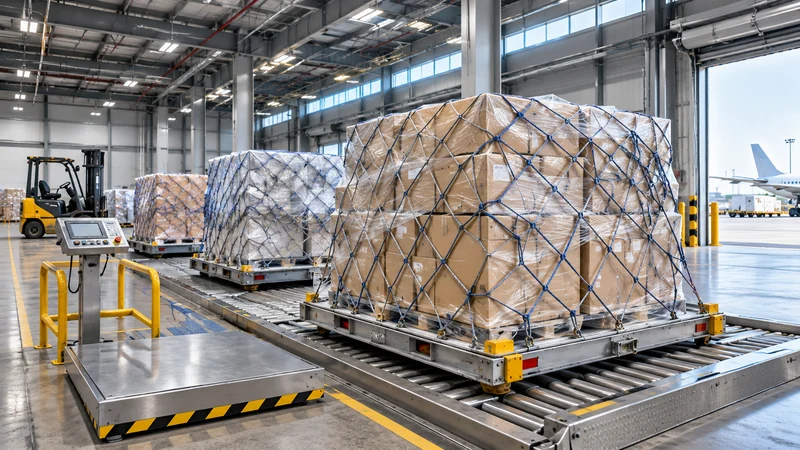
Oversized, Heavy and Special-Handling Cargo
Large machinery components, industrial assemblies, and unusual packages can present aircraft-loading and terminal-handling challenges.
Important information includes:
- Maximum length, width and height of each package.
- Actual weight of each individual piece.
- Lifting points and handling requirements.
- Packaging structure and stability.
- Any restrictions on stacking.
- Special equipment needed for loading or unloading.
A cargo aircraft’s advertised capacity does not confirm that an individual piece can be loaded.
Door dimensions, floor-loading limits, handling equipment, and carrier restrictions may all affect acceptance.
Temperature-sensitive, fragile, high-value, and other specialized cargo may also require specific handling arrangements.
The IATA Dangerous Goods Regulations provide an authoritative framework for the classification, packaging, marking, labeling, documentation, and handling of regulated dangerous goods transported by air.
Importers should not assume that one airline’s approval applies to every route or carrier.
What Determines Air Freight Chargeable Weight and Quotation Scope?
Air freight quotations commonly use chargeable weight, which considers both the actual gross weight and the space occupied by the shipment.
The applicable volumetric-weight calculation and rating rules should be confirmed for the service being quoted.
A shipment containing lightweight, oversized cartons may therefore have a higher chargeable weight than its actual weight.
For the detailed calculation method, examples, and rate-related considerations, see our shipping cost per kg from China to UAE guide.
When comparing quotations, ask whether the price includes:
- Collection from the supplier.
- China export handling.
- Air transportation and applicable surcharges.
- Destination terminal handling.
- Customs brokerage or declaration services.
- Import duties and VAT, where applicable.
- Airport storage or other conditional charges.
- Final delivery and unloading.
These items may be included, excluded, or quoted separately depending on the agreed service.
For commercial importers, comparing the total delivered cost under an identical scope is more useful than comparing an isolated per-kilogram rate.
UAE Airport Customs Clearance and Final Delivery
Air cargo does not become available for immediate delivery simply because the aircraft has landed in the UAE.
After arrival, cargo handling, document processing, customs procedures, and final release must be completed as applicable.
Arrival Notice and Cargo Availability
Following flight arrival, the ground handler processes the shipment according to the airport’s cargo procedures.
The importer or appointed representative may receive arrival information or a notification that the cargo is available for further processing.
However, an arrival notice is not the same as customs release.
The consignee or authorized provider may still need to complete required documentation, payments, terminal procedures, or other release conditions.
Customs Declaration and Importer Responsibilities
Commercial imports generally require accurate documentation and a properly authorized importer or customs representative, subject to the applicable customs regime.
Information commonly relevant to clearance includes:
- Commercial invoice.
- Packing list.
- Air Waybill information.
- Importer and consignee details.
- Product classification and declared value.
- Country of origin information.
- Product-specific permits or approvals, where required.
For Dubai shipments, Dubai Customs’ official customs declaration service explains the procedures for import, export, transit, transfer, and other declaration categories.
Procedures for Abu Dhabi, Sharjah, or other UAE customs jurisdictions should be checked with the relevant authority and appointed customs representative.
For a more detailed preparation list, refer to our guide on documents required for shipping from China to UAE.
Import duties and VAT depend on the applicable laws, product classification, customs regime, and transaction circumstances.
The importer and contracting parties must confirm who is responsible for declarations, taxes, permits, and regulatory compliance.
Delivering Cargo to UAE Warehouses and Project Sites
After the applicable release procedures have been completed, cargo can be collected and delivered under the agreed service arrangement.
The importer should provide a complete address and confirm:
- The authorized delivery contact.
- Warehouse operating and receiving arrangements.
- Delivery appointment requirements.
- Truck access or site restrictions.
- Whether unloading equipment is needed.
- Any special handling or site-entry procedures.
These details are particularly important for industrial facilities, construction projects, and receiving locations with restricted access.
Mainland vs Free Zone Cargo Handling
Some shipments are destined for UAE mainland businesses, while others move into designated free zones or logistics facilities.
The customs treatment and documentary procedures can differ according to the movement and applicable regime.
For example, cargo entering a free zone for storage or re-export may follow different procedures from goods released for consumption in the mainland market.
However, a free-zone destination does not automatically remove every customs, tax, permit, or product compliance obligation.
Importers should confirm the appropriate declaration and transfer arrangements before cargo departure.

Why Air Freight Shipments Get Delayed — and How to Reduce the Risk
Air freight can reduce international transportation time, but several factors can still affect the complete delivery process.
For urgent shipments, the most effective approach is to identify likely problems before the cargo leaves the supplier.
Delays Before Departure
Common issues include cargo not being ready, incorrect packing details, missed cut-offs, incomplete documents, or special goods requiring further review.
Capacity changes may also affect a confirmed booking.
A shipment should not be considered ready simply because the supplier says production is finished. Packing, documentation, and collection readiness must also be confirmed.
Delays During Transportation
Connecting services may involve additional cargo transfers.
Disruptions can arise from schedule changes, missed connections, capacity restrictions, handling issues, or operational decisions by the carrier.
These factors are not always within a freight forwarder’s control.
Delays After Arrival
Destination delays may arise from customs document discrepancies, import permits, inspection requirements, importer registration problems, outstanding charges, terminal release procedures, or delivery appointments.
Even when air transportation is completed successfully, the shipment may not be immediately available for onward delivery.
Common Air Freight Delays and Preventive Actions
| Shipment Stage | Possible Delay | Recommended Preventive Action |
|---|---|---|
| Supplier preparation | Cargo not packed or ready | Confirm physical readiness and final packing details |
| Booking | Space unavailable or unsuitable | Request confirmed routing and cargo acceptance review |
| Airport tender | Missed cut-off | Obtain booking-specific tender instructions |
| Security and acceptance | Packaging or classification issue | Review special cargo before airport delivery |
| Air transportation | Flight or connection disruption | Monitor milestones and evaluate available alternatives |
| UAE customs | Incomplete declaration or approvals | Verify importer and documents before departure |
| Cargo release | Outstanding terminal or handling requirements | Confirm destination handover responsibilities |
| Local delivery | Wrong address or missing appointment | Confirm receiving arrangements in advance |
Plan Backward from the Required Delivery Date
For time-sensitive cargo, begin with the actual delivery requirement rather than the planned departure date.
If machinery parts are needed at a UAE industrial site, establish the latest acceptable time for receiving and using the components.
Then confirm what must occur before that point:
- Local delivery and receiving arrangements.
- Cargo release and applicable customs procedures.
- Airport cargo availability.
- Actual flight and connection arrangements.
- Export processing and airline acceptance.
- Supplier collection and packing readiness.
Build an appropriate contingency based on the shipment’s urgency, rather than treating an estimated flight schedule as a guaranteed delivery plan.
If the proposed route cannot reasonably support the required deadline, consider other available arrangements before committing to the shipment.
Air Freight Booking Checklist for China-to-UAE Shipments
Preparing complete information makes it easier to assess the shipment, identify restrictions, and compare suitable services.
Before requesting an air freight arrangement, use the following checklist.
1. Cargo and Supplier Information
- Accurate product name and intended use.
- Supplier name and pickup location in China.
- Number of cartons, pallets, or individual packages.
- Gross weight and dimensions of each package type.
- Total quantity and commercial value.
- Product photos where useful.
- Expected cargo-ready date.
2. Special Cargo Information
Disclose whether the shipment contains batteries, chemicals, liquids, powders, magnetic components, oversized equipment, or other goods requiring special handling.
Provide technical specifications, SDS information, battery documentation, or other supporting records where applicable.
Do not omit potential restrictions in an attempt to obtain a faster booking.
3. UAE Import and Delivery Information
Prepare the destination emirate, full address, consignee and importer details, and any known customs broker arrangements.
Also specify whether you need airport-to-airport, airport-to-door, or door-to-door service.
If the shipment is destined for a free zone, industrial site, warehouse, or project location, identify that requirement early.
4. Required Delivery Date and Operational Priorities
Explain the actual business deadline.
Is the cargo needed for production, a scheduled launch, a customer order, or an installation project?
If some flexibility exists, provide both the preferred and latest acceptable delivery dates.
This helps the logistics team compare available services without assuming that the fastest-looking flight is automatically the best arrangement.
5. Confirm Before Approving the Booking
Before shipment tender, obtain confirmation of the applicable booking details:
- Agreed origin and destination.
- Proposed airline route and available space.
- Cargo acceptance requirements.
- Cut-off and cargo tender instructions.
- Final package measurements.
- Air Waybill information.
- Service inclusions and exclusions.
- Import clearance and payment responsibilities.
- Final delivery arrangements.
- Procedures if the proposed movement is disrupted.
A complete checklist will not eliminate every delay, but it can prevent many avoidable errors before the cargo reaches the airport.
How Winsail Logistics Helps Plan Air Freight from China to UAE
Winsail Logistics coordinates international freight transportation for commercial cargo exported from China.
For air freight inquiries to the UAE, the planning process begins with a review of the actual shipment rather than a generic rate or transit-time promise.
Depending on cargo characteristics and service feasibility, the coordination process may involve reviewing packaging information, evaluating suitable departure and arrival airports, checking available transportation arrangements, and defining the requested delivery scope.
Special cargo and regulated products require additional review before any proposed service can be confirmed.
Where destination services are required, arrangements involving customs representatives, cargo handlers, and local delivery providers must be confirmed according to the applicable shipment and responsibilities.
For urgent importers, the objective is to identify a feasible transportation arrangement with clear operational milestones, documentation requirements, and service boundaries.
FAQ
Can I Book Air Freight Before My Supplier Finishes Packing?
Preliminary route planning and a booking inquiry may be possible using estimated shipment information. However, final package counts, dimensions, gross weight, cargo classification, and the actual cargo-ready date must be verified. A provisional arrangement does not guarantee airline acceptance or departure. If final shipment details change, the carrier may need to reassess capacity, charges, or handling requirements.
What Happens If My Cargo Misses the Airline Cut-Off?
Missing a cargo or documentation cut-off may prevent the shipment from moving on its intended flight. The forwarder may need to request another departure, reconfirm capacity, or arrange further handling. Additional storage or handling costs may arise depending on the circumstances. The next available flight is not automatically guaranteed, so urgent shipments should follow the actual booking-specific tender instructions.
Can I Ship Electronics with Lithium Batteries from China to UAE?
Some electronic products containing lithium batteries can be transported by air when the applicable classification, packaging, documentation, and carrier requirements are satisfied. Conditions differ for batteries shipped separately, packed with equipment, or contained in equipment. The supplier should disclose battery specifications and relevant documents before booking. Airline acceptance and the applicable dangerous goods rules must be verified for the proposed shipment.
Does Door-to-Door Air Freight Include UAE Customs Clearance and Import Taxes?
Not automatically. A door-to-door quotation may include customs brokerage coordination and local transportation, but the exact service scope must be confirmed. Import duties, VAT, permits, importer responsibilities, and additional clearance charges are separate matters unless expressly covered under a legally workable arrangement. Door-to-door transportation should not be assumed to mean DDP.
Can the UAE Destination Airport Be Changed After Booking?
A change from DXB to DWC, AUH, or SHJ may require airline approval, rebooking, revised documentation, different destination handling, and new customs or delivery arrangements. The change may affect charges and the shipment schedule. Once cargo has been tendered or transported, options may become more limited. Any airport change should be evaluated and confirmed with the carrier and relevant service providers.
Request an Air Freight Solution for Your UAE Cargo
Whether you are importing urgent spare parts, commercial inventory, technical equipment, or time-sensitive goods, the right air freight arrangement starts with accurate cargo information and a realistic delivery plan.
Winsail Logistics can review your China export shipment requirements and help assess suitable air cargo arrangements for UAE destinations.
To request a shipment-specific solution, provide:
- Cargo: Product description, quantity, photos, gross weight, and dimensions.
- Origin: Supplier city or pickup address in China.
- Schedule: Cargo-ready date and required delivery date.
- Destination: UAE emirate, delivery address, and consignee information.
- Handling: Battery details, special-cargo documents, or other restrictions where applicable.
- Service scope: Airport-to-airport, airport-to-door, or door-to-door.
Request an Air Freight Solution
Share your shipment details through our contact or inquiry form so the appropriate routing, cargo acceptance requirements, and delivery arrangements can be assessed.
Service note: This guide provides general operational information for commercial shipments exported from China to the UAE. Actual airline capacity, routes, cut-offs, cargo acceptance, customs requirements, charges, and delivery arrangements depend on the shipment and applicable conditions. All services remain subject to operational and regulatory confirmation.
