

Shipping cost per KG from China to UAE is one of the most important factors for importers, distributors, and SMEs buying products from China. Whether you are importing electronics, garments, auto parts, accessories, batteries, or commercial supplies, understanding how freight pricing works can help you avoid unnecessary logistics expenses and choose the right shipping solution.
For most medium-weight cargo shipments between 50 KG and 500 KG, air freight is usually the preferred option because it balances speed, reliability, and inventory efficiency. However, many importers misunderstand how shipping costs are calculated, especially when airlines use chargeable weight instead of actual weight.
In this guide, we will explain how shipping cost per KG works from China to UAE, what affects pricing, how DDP and non-DDP shipping compare, and when air freight becomes too expensive. You will also see practical shipment examples and recommendations based on cargo size and urgency.
How Shipping Cost Per KG Is Calculated
Understanding freight pricing starts with understanding how airlines calculate chargeable weight.
Actual Weight vs Chargeable Weight
In air freight, airlines compare two different weights:
- Actual weight
- Volumetric weight
The higher number becomes the chargeable weight.
Actual weight refers to the physical gross weight of the cargo. Volumetric weight reflects how much space the shipment occupies inside the aircraft.
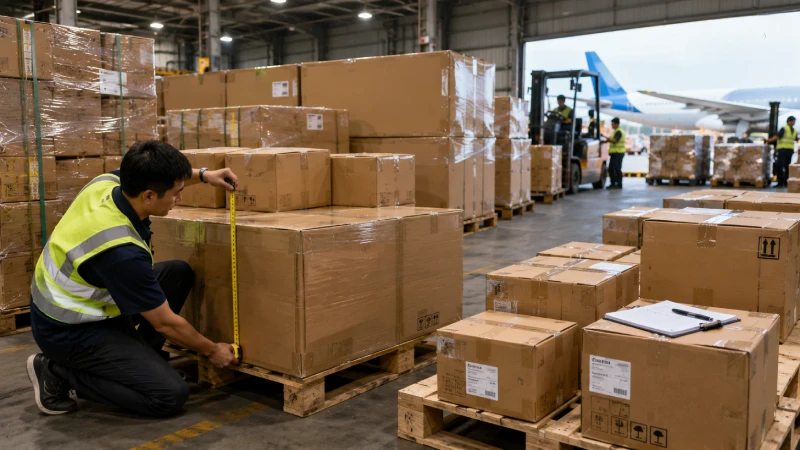
For example, a shipment may physically weigh only 80 KG, but if the cartons are very large, the airline may charge based on 120 KG instead.
This is why many first-time importers are surprised when the final freight invoice is much higher than expected.
Volumetric Weight Explained
The standard international air freight formula is:
For example:
- Carton dimensions: 80 × 60 × 50 cm
If the actual carton weight is only 28 KG, the airline will still charge 40 KG because the shipment occupies more aircraft space.
This issue commonly affects:
- garments
- cushions
- promotional products
- packaging materials
- lightweight electronics
For UAE importers shipping by air, reducing carton size can sometimes reduce freight cost more effectively than reducing actual product weight.
What Is Usually Included in Per-KG Pricing
Most China-to-UAE air freight quotations typically include:
- Airline freight charges
- Fuel surcharge
- Security surcharge
- Export customs clearance
- Documentation fees
- China airport handling charges
However, many quotations do not include:
- UAE import duty
- VAT
- customs clearance fees
- final delivery
- DDP tax charges
- inspection fees
This is why importers should always ask whether the quote is:
- airport-to-airport
- door-to-door
- DDP
- DAP
- FOB
- CIF
The pricing structure can change significantly depending on the shipping term.
Typical Shipping Cost Per KG from China to UAE
Air freight pricing between China and UAE changes weekly based on airline capacity, fuel prices, seasonal demand, and cargo type.
Air Freight Pricing Ranges
For SME cargo shipments, air freight pricing generally follows this pattern:
| Shipment Size | Pricing Trend |
|---|---|
| Under 50 KG | Highest per-KG cost |
| 50–100 KG | Moderate pricing |
| 100–300 KG | Better airline rates |
| 300–500 KG | More competitive pricing |
| 500+ KG | Bulk cargo pricing |
Smaller shipments cost more per KG because airlines and freight forwarders still need to cover:
- documentation
- airport handling
- customs processing
- pickup coordination
As shipment weight increases, the per-KG cost usually decreases.
Peak seasons can significantly affect pricing, especially:
- Chinese New Year
- Ramadan inventory season
- Q4 holiday season
- electronics launch periods
During these periods, urgent shipments to Dubai may become extremely expensive because airlines prioritize higher-paying cargo.
Express Courier vs Standard Air Freight
Many UAE importers compare express couriers with regular air freight.
Express services such as DHL, FedEx, or UPS are:
- faster
- simpler
- easier for small cargo
They are ideal for:
- samples
- urgent documents
- small parcels
- emergency replacement parts
However, for cargo above 50–100 KG, standard air freight is usually much more economical.
Standard air freight requires:
- freight forwarder coordination
- customs documentation
- airport handling
But the cost savings can be substantial for medium-weight commercial cargo.
Air Freight vs Sea Freight Cost Comparison
Sea freight is generally cheaper for heavy shipments, but it is usually charged by CBM instead of KG.
Sea freight becomes more cost-effective when:
- cargo is heavy
- delivery urgency is low
- shipment size exceeds several hundred kilograms
However, many UAE SMEs still choose air freight because:
- inventory turnover is faster
- storage costs are reduced
- urgent market demand requires faster replenishment
Internal Link Opportunity:
- Shipping Time from China to UAE
- Air Freight vs Sea Freight Guide
What Affects Shipping Cost Per KG
Several factors influence the final shipping rate from China to UAE.
Shipment Weight and Cargo Size
Small shipments usually have higher per-KG costs because operational costs are spread across fewer kilograms.
Larger shipments benefit from:
- airline consolidation
- pallet optimization
- better freight negotiation
Cargo dimensions also matter heavily. Large cartons with low-density products can dramatically increase volumetric weight charges.
Cargo Type and Airline Restrictions
Some cargo categories cost more to transport because airlines classify them as sensitive cargo.
Examples include:
- lithium batteries
- liquids
- cosmetics
- magnetic products
- branded products
- dangerous goods
These products may require:
- additional documentation
- special packaging
- airline approval
- DG certification
For example, battery shipments to UAE often cost significantly more than standard electronics cargo because airlines apply stricter safety regulations.
Transit Time and Urgency
Faster shipping almost always costs more.
Direct flights from China to Dubai typically have higher pricing than transfer flights because:
- transit time is shorter
- cargo handling risk is lower
- space demand is higher
Economy air freight can reduce cost, but transit times may increase by several days.
For urgent SME shipments, many importers prioritize reliability over the lowest freight rate because delayed inventory can create larger business losses.
China and UAE Airport Selection
Freight pricing also depends on departure and destination airports.
Common China export airports include:
- Shenzhen
- Guangzhou
- Shanghai
- Hong Kong
Dubai usually offers:
- the best flight frequency
- stronger customs efficiency
- more cargo capacity
Sharjah and Abu Dhabi may sometimes provide lower costs, but flight availability can vary.
DDP vs Non-DDP Shipping Cost Comparison
One of the most important decisions for UAE importers is choosing between DDP and non-DDP shipping.
What DDP Shipping Includes
DDP shipping usually includes:
- international freight
- customs clearance
- import duty
- VAT
- final delivery
This means the importer receives a more predictable total logistics cost.
Internal Link Opportunity:
- DDP Shipping from China to UAE
Why DDP Pricing Appears Higher
DDP rates usually look more expensive because they already include:
- taxes
- customs handling
- delivery charges
- clearance risks
However, many SMEs still prefer DDP because it simplifies the importing process and reduces unexpected expenses.
For inexperienced importers, DDP shipping can prevent:
- customs delays
- documentation mistakes
- hidden destination charges
When Non-DDP Shipping Makes More Sense
FOB or CIF shipping may be more suitable for:
- experienced UAE importers
- companies with customs licenses
- large-volume importers
These businesses often have:
- local customs brokers
- warehouse infrastructure
- better control over destination costs
For large cargo volumes, managing customs independently can sometimes reduce total shipping expenses.
Hidden Costs Many Importers Ignore
Many shipping quotes look attractive initially but later become much more expensive.
UAE Customs and VAT Charges
Importers must consider:
- import duty
- VAT
- customs processing fees
- inspection charges
Some cargo categories may also require additional approvals depending on UAE regulations.
Storage, Inspection, and Repacking Fees
If documentation is incomplete or customs clearance is delayed, cargo may accumulate:
- airport storage charges
- inspection fees
- repacking costs
Weak packaging can also create airline compliance problems, especially for air freight cargo.
Last-Mile Delivery Charges
Final delivery costs are often underestimated.
Factors affecting delivery pricing include:
- remote delivery locations
- heavy unloading requirements
- tail-lift truck usage
- building access limitations
For medium-weight cargo, final delivery fees can significantly affect the true landed cost.
Practical Shipping Cost Examples
80 KG Electronics Shipment to Dubai
A UAE importer purchases electronics from Shenzhen.
Shipment profile:
- 80 KG actual weight
- medium urgency
- commercial cargo
The importer compares:
- standard air freight
- express courier
- DDP air freight
In this scenario, standard DDP air freight is often the best balance between:
- speed
- customs simplicity
- overall cost predictability
300 KG Garment Shipment
Garments are lightweight but bulky.
Although actual weight may be 300 KG, volumetric weight may become much higher due to large carton sizes.
The importer reduces costs by:
- compressing packaging
- reducing carton height
- improving pallet density
This type of optimization can reduce air freight expenses significantly.
Urgent Auto Parts Shipment
An automotive importer in Dubai faces production downtime because replacement parts are urgently needed.
Although air freight is expensive, the business impact of delayed production is even higher.
In these cases, paying more for direct-flight air freight becomes commercially justified.
When Air Freight Becomes Too Expensive
Air freight is not always the best option.
Warning Signs Air Freight Is No Longer Cost-Effective
Air freight becomes inefficient when:
- cargo is very heavy
- products are low-density
- urgency is low
- inventory planning is flexible
For large replenishment orders, sea freight often provides much lower landed cost.
Alternative Shipping Solutions
Importers can reduce shipping expenses through:
- LCL sea freight
- sea-air combined shipping
- shipment consolidation
- packaging optimization
Sea-air shipping is especially popular for UAE cargo because it balances:
- lower cost than direct air freight
- faster transit than sea freight
Best Shipping Recommendations by Cargo Weight
Different cargo sizes require different logistics strategies.
Under 50 KG
Express courier is usually the easiest option for:
- samples
- urgent shipments
- lightweight commercial cargo
50–300 KG
This is the ideal range for standard air freight.
Most UAE SMEs importing:
- electronics
- accessories
- garments
- commercial goods
fall into this category.
300–1000 KG
Importers should compare:
- standard air freight
- sea-air shipping
- LCL sea freight
Transit-time flexibility becomes very important here.
Over 1000 KG
Sea freight is usually the preferred solution unless the shipment is extremely urgent.
How to Reduce Shipping Cost Per KG
Reducing freight cost is not only about negotiating rates.
Reduce Volumetric Weight
Optimizing packaging can dramatically lower air freight charges.
Strategies include:
- reducing empty carton space
- improving pallet stacking
- using compact packaging
Consolidate Shipments
Combining multiple smaller shipments into one larger shipment often improves:
- airline pricing
- customs efficiency
- handling cost allocation
Work with an Experienced Freight Forwarder
A professional freight forwarder can help optimize:
- airline routing
- chargeable weight
- customs documentation
- DDP solutions
Internal Link Opportunity:
- China to UAE Shipping Agent
Avoid Peak Shipping Seasons
Planning shipments earlier can avoid:
- airline congestion
- capacity shortages
- emergency booking surcharges
This is especially important before Chinese New Year and Q4 peak season.
Conclusion
Shipping cost per KG from China to UAE depends on much more than just airline pricing. Chargeable weight, cargo dimensions, customs structure, urgency, and delivery requirements all affect the final landed cost.
For SMEs and medium-weight cargo, air freight often provides the best balance between speed and inventory efficiency. However, once cargo becomes heavier or less urgent, sea freight or sea-air solutions may offer better overall value.
DDP shipping is often the safest and simplest option for UAE importers who want predictable pricing and fewer customs complications, while experienced importers may reduce costs through FOB or CIF shipping arrangements.
Before booking any shipment, it is always best to request a customized quote based on:
- actual cargo dimensions
- product category
- urgency
- delivery address
- customs requirements
A professional freight forwarder can help verify chargeable weight, compare shipping methods, and recommend the most cost-effective China-to-UAE logistics solution for your business.
