
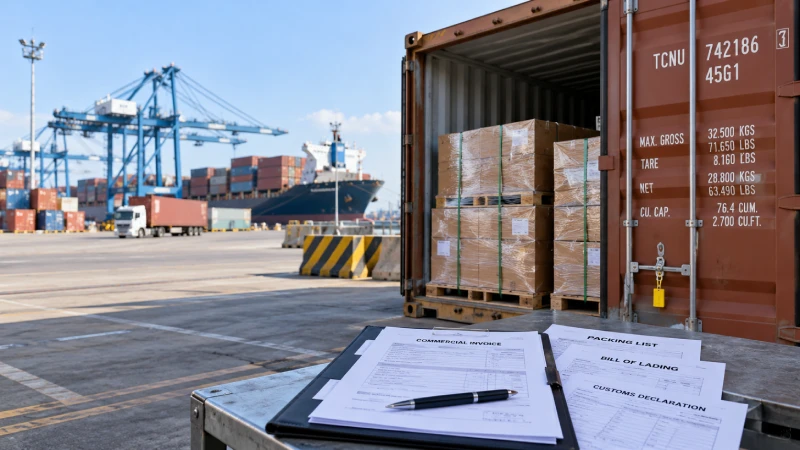
Customs clearance in Kenya should not start when your container reaches Mombasa or your air cargo lands in Nairobi. For imports from China, many of the issues that determine whether clearance runs smoothly—product classification, commercial documents, Certificate of Origin, product compliance and shipment data—should be resolved while the cargo is still in China.
For a normal commercial shipment, the Kenyan importer works with a licensed customs clearing agent to prepare and process the customs entry. The Chinese supplier and freight forwarder provide the shipment information and supporting documents, but the Kenya Revenue Authority (KRA) remains responsible for customs assessment, verification and final customs release.
This guide focuses specifically on the customs clearance process for goods shipped from China to Kenya. Freight rates, shipping methods, KEBS standards compliance and DDP are covered only where they directly affect customs clearance.
Data Note — Updated September 2026
Kenya’s customs, tax and import-control requirements can change. Rates and regulatory procedures in this guide should be checked against current KRA, Kenya Law, KEBS, East African Community and Kenya Trade Information Portal information before shipment. Product-specific requirements, HS classifications, exemptions and regulator procedures should always be reconfirmed before cargo leaves China.
Quick Answer: How Does Customs Clearance in Kenya Work for Imports from China?
For most commercial imports from China, the importer should have the cargo information and clearance documents checked before shipment, then work with a licensed Kenyan customs clearing agent to lodge the import declaration and coordinate the clearance process.
The basic flow is:
China-side document preparation → pre-shipment compliance → customs declaration → tax assessment and payment → customs verification if required → KRA release → port, terminal or carrier release → inland delivery.
Important pre-shipment requirements now include the Certificate of Origin and, for containerized cargo destined for Kenyan ports, the Advance Cargo Declaration (ACD).
KRA states that imported consignments are generally required to have a Certificate of Origin. Full enforcement took effect on 1 October 2025, although KRA has specified certain exceptions and provisional alternatives.
For containerized cargo destined for Kenyan ports, KRA launched the ACD system on 3 August 2026. The exporter or shipper obtains an ACD reference before loading by submitting the draft Bill of Lading, commercial invoice, freight invoice and export declaration. The ACD reference must then be endorsed on the Bill of Lading before the shipment proceeds to Kenya.
The important point is simple:
Do not wait for the cargo to arrive in Kenya before checking whether the shipment is customs-ready.
Who Is Responsible for Customs Clearance in Kenya?
Several companies may participate in one China-to-Kenya shipment, but they do not have the same responsibilities.
Understanding that distinction prevents one of the most common problems in international freight: assuming the supplier, freight forwarder or clearing agent is responsible for everything.
| Party | Main responsibility |
|---|---|
| Kenya importer | Provides accurate import information, appoints clearance support, ensures product eligibility and funds applicable duties and taxes |
| Licensed customs clearing agent | Prepares and processes customs declarations and coordinates with KRA on behalf of the importer |
| Chinese supplier | Supplies accurate commercial, product, packing and origin information |
| Freight forwarder | Coordinates transport, shipping documents and freight-related information |
| KRA | Reviews the customs declaration, classification, value, taxes, verification and customs release |
| KEBS / other regulators | Handle standards or product-specific regulatory requirements where applicable |
The Kenya Importer’s Role
The importer should know what is being imported—not simply accept whatever product description or HS code appears on the Chinese supplier’s invoice.
Before shipping, the importer should be able to confirm:
- the actual commercial description of the goods;
- model and specification;
- materials and intended use where relevant;
- quantity and value;
- proposed HS classification;
- whether the goods require KEBS or another regulatory approval;
- who will act as the Kenyan clearing agent;
- who will pay duties, taxes and local charges.
The importer may delegate clearance work, but delegation does not make inaccurate commercial information safe to use.
What the Customs Clearing Agent Does
KRA defines a customs agent as a company licensed by the Commissioner for Customs and Border Control to carry out clearance procedures on behalf of a company or individual. Customs-agent functions include preparing documentation, submitting it to Customs, helping calculate applicable taxes and acting as a link between the importer, Customs and other agencies.
For normal commercial imports, it is therefore practical to bring the Kenyan clearing agent into the shipment before departure from China, rather than sending documents to the agent only after the vessel arrives.
What Your China Supplier and Freight Forwarder Control
The supplier and forwarder can help prepare the shipment correctly.
They may coordinate:
- commercial invoice;
- packing list;
- export declaration;
- Certificate of Origin documentation;
- Bill of Lading or Air Waybill information;
- freight invoice;
- ACD information for applicable containerized shipments;
- China-side pickup and consolidation;
- product or inspection documents supplied by the manufacturer.
However, neither the Chinese factory nor the freight forwarder controls KRA’s final decision on tariff classification, customs valuation, inspection or release.
That distinction matters when someone promises that a shipment will “definitely clear” before the declaration has even been reviewed.
Before Cargo Leaves China: Make the Shipment Customs-Ready
A large share of customs problems begin before the goods ever reach Kenya.
A vague invoice description, incorrect consignee name, unsupported customs value or missing origin document may look like a small paperwork issue in China. Once the cargo has been loaded and the shipping documents have been finalized, however, correcting the problem can become slower and more expensive.
The safest approach is to conduct a customs-readiness review before loading.
Check the Product Classification First
Do not use descriptions such as:
- “parts”;
- “accessories”;
- “machine”;
- “electronics”;
- “samples”;
- “goods.”
The commercial description should allow the clearing agent and authorities to understand what the item actually is.
For example, useful information may include the product’s:
name + material + function + model + specification + intended use.
This information also supports HS classification.
If a shipment includes several different products, do not force everything under one description simply to simplify the packing list.
Check the Commercial Data
The invoice, packing list and shipping documents should tell the same commercial story.
Check:
| Item | What to verify |
|---|---|
| Seller | Correct Chinese exporting company |
| Buyer / consignee | Correct Kenyan importing party |
| Product | Specific and consistent description |
| Quantity | Matches packing and shipment |
| Unit / total value | Consistent with transaction documents |
| Currency | Clearly stated |
| Incoterm | Matches the actual commercial arrangement |
| Packages | Matches packing list |
| Gross / net weight | Consistent with freight documents |
| Freight | Available where needed for customs/ACD purposes |
A document mismatch does not automatically mean the shipment cannot clear, but it can create questions that were avoidable before departure.
Certificate of Origin for Kenya Imports
The Certificate of Origin has become particularly important.
KRA states that, under the Kenyan requirement introduced in 2025, imported consignments generally need a COO issued by a competent authority in the country of export. Full compliance took effect from 1 October 2025.
KRA also lists specific exceptional situations where, if a COO is unavailable, certain official export documents may be accepted subject to Customs verification and approval. These may include an origin declaration, export permit or licence, customs export declaration, or qualifying PVoC documentation. The notice also identifies exemptions for specified categories such as certain used goods, personal effects, postal items, samples without commercial value and temporary imports.
For an ordinary commercial shipment purchased from a Chinese supplier, the practical rule is:
Confirm the COO route before the supplier ships. Do not assume an invoice stating “Made in China” is automatically a substitute for the required origin documentation.
Advance Cargo Declaration for Containerized Sea Cargo
This is one of the most important changes for China-to-Kenya sea freight in 2026.
KRA launched its Advance Cargo Declaration platform for containerized cargo destined for Kenyan ports on 3 August 2026.
The official process requires the exporter or shipper to obtain an ACD reference at the point of loading. The required submission documents identified by KRA are:
- draft Bill of Lading;
- commercial invoice;
- freight invoice;
- export declaration.
Once approved, the ACD reference must be endorsed on the Bill of Lading before the shipment proceeds to Kenya.
This makes customs preparation a genuine pre-loading issue, not just something handled after arrival in Mombasa.
For an FCL shipment, ACD responsibilities should be confirmed when the booking and draft B/L are being prepared.
For LCL or consolidated cargo, the importer should ask the freight forwarder or consolidator how the required ACD process will be handled for that shipment before cargo enters the consolidation cycle.
Where KEBS and PVoC Fit
KEBS compliance and customs declaration are related, but they are not the same process.
KEBS’s PVoC programme is designed to verify that goods subject to applicable Kenyan standards or technical requirements conform before or during the relevant import-control process.
There is also an important 2026 regulatory transition to be aware of.
KEBS announced that its general-goods PVoC contracts expired on 8 February 2026. Its February 2026 notice stated that general goods shipped from 9 February without a valid CoC would be handled through destination inspection during the interim arrangement, with an inspection fee stated at 0.6% of the approved customs value. KEBS also said it was procuring inspection companies for the next contract cycle.
Because this arrangement can change as KEBS appoints or updates providers, importers should check the live KEBS procedure immediately before shipping, rather than relying on an old supplier instruction or freight-forwarder blog.
Pro Tip: Send the commercial invoice, packing list, product specifications and proposed HS code to your Kenyan clearing agent before the final Bill of Lading is issued. Correcting a description or consignee problem in China is usually easier than resolving it after arrival.
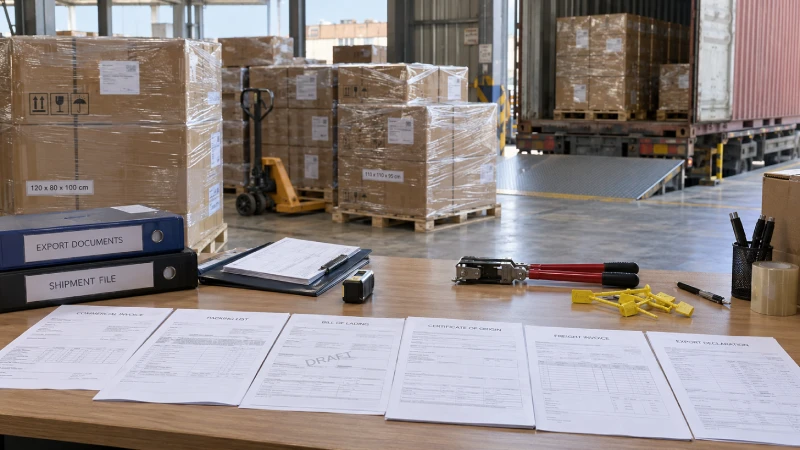
Check My Kenya Import Requirements
If you are not sure whether your goods need a COO, KEBS inspection, product permit or another pre-shipment document, review these requirements before arranging final loading.
Kenya Customs Clearance Process: From Declaration to KRA Release
The exact workflow varies by cargo type and entry point, but a normal commercial shipment generally moves through the following stages.
Step 1: Prepare and Verify the Import Documents
Before customs entry, the importer and clearing agent should collect and review the commercial and transport documents.
Do not look at each document separately.
Compare them for:
- product description;
- supplier;
- consignee;
- quantities;
- weights;
- values;
- shipment references;
- B/L or AWB details;
- country of origin.
This is also the stage to confirm product-specific permits or standards documents.
Step 2: Lodge the Customs Declaration
KRA’s import guidance states that the clearing agent processes the import documentation in the customs system and creates the customs entry. KRA identifies the IDF/declaration stage, customs entry, payment, verification and release as key parts of the import-clearance process.
The information declared should reflect the real transaction and actual goods.
Changing product descriptions purely to obtain a lower duty rate is not a legitimate clearance strategy.
Step 3: Classification, Valuation and Tax Assessment
The declaration provides KRA with information used to assess:
- HS classification;
- customs value;
- import duty;
- VAT;
- IDF;
- RDL;
- excise duty where applicable;
- other product-specific taxes or levies where applicable.
If the declared information is accepted and the shipment does not trigger additional requirements, the process can move forward.
If KRA has questions about the classification, value or documents, the agent and importer may need to provide supporting evidence.
Step 4: Pay Applicable Duties and Taxes
KRA’s import process includes tax assessment and payment before compliant cargo proceeds through clearance.
Importers should therefore arrange the expected tax funding before arrival rather than waiting until the declaration is ready.
A correctly prepared declaration that sits unpaid can still delay cargo.
Step 5: Customs Verification or Physical Inspection if Required
Not every shipment should be described as if it will automatically undergo the same physical examination.
However, KRA may require verification, scanning, document review or physical examination depending on the shipment, risk controls and other regulatory requirements.
If the cargo is selected for examination, the importer and agent should make the goods and required documents available for the relevant process.
Step 6: Resolve Customs or Regulatory Queries
A query may concern:
- product description;
- tariff classification;
- customs value;
- origin;
- missing supporting documents;
- permit status;
- regulator approval;
- quantity or weight discrepancy.
The correct response depends on the actual reason for the query.
It is better to provide documented commercial evidence than to rely on explanations made only by email or WhatsApp after arrival.
Step 7: Obtain KRA Customs Release
Once the declaration is compliant, applicable duties and taxes have been settled, and required customs controls have been completed, the cargo may obtain KRA customs release.
But this is an important distinction:
Customs release does not necessarily mean the container is already outside the port.
Step 8: Complete Port, Terminal or Carrier Release
Kenya Trade Information Portal procedures show separate stages after customs approval that can include KPA or CFS processes, delivery-order handling, charges, positioning and gate-pass formalities.
This is why two phrases should not be used interchangeably:
“KRA has released the cargo”
and
“The cargo has physically left Mombasa Port.”
Step 9: Physical Cargo Release
After the necessary customs, carrier and terminal processes are completed, the cargo can be physically released.
Step 10: Inland Delivery
The shipment may then continue to:
- Nairobi;
- a Nairobi warehouse;
- another city in Kenya;
- a project site;
- the importer’s own premises.
Customs clearance and inland transport should therefore be planned as connected stages—but priced and managed separately.
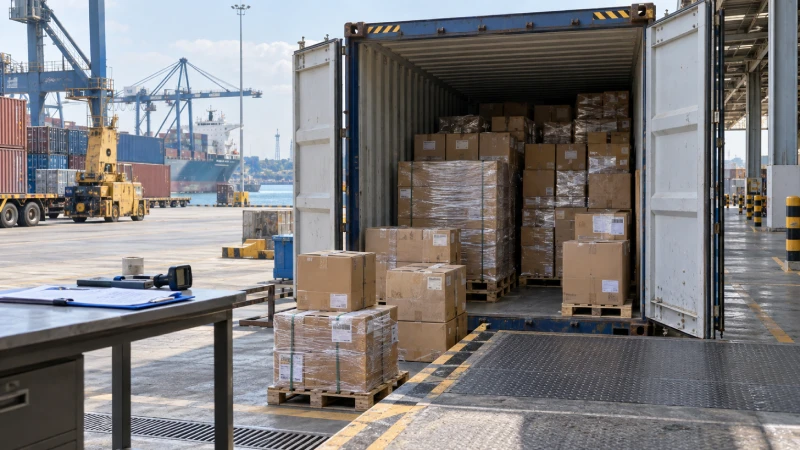
Documents Required for Customs Clearance in Kenya
There is no useful one-document checklist that applies identically to every import.
The document package depends on the cargo, transport mode and regulatory status.
For normal commercial imports from China, the following are common clearance documents.
| Document | Main source | Main purpose | Applicability |
|---|---|---|---|
| Commercial Invoice | Chinese exporter | Product, transaction and value evidence | Core |
| Packing List | Chinese exporter | Packages, quantities and weights | Core |
| Bill of Lading | Carrier / forwarder | Sea transport document | Sea freight |
| Air Waybill | Airline / forwarder | Air transport document | Air freight |
| Certificate of Origin | Competent origin documentation | Evidence of origin | Generally required, subject to KRA exceptions |
| Freight Invoice | Freight provider | Freight evidence and applicable ACD support | Especially relevant to sea freight |
| ACD Reference | ACD process | Pre-loading cargo declaration | Applicable containerized sea cargo |
| CoC / KEBS documentation | KEBS-approved process | Standards conformity | Product-dependent |
| Import permit / licence | Relevant authority | Controlled-goods approval | Product-dependent |
| KRA PIN / importer information | Importer | Importer identification | Applicable |
| Purchase Order / Contract | Buyer / seller | Transaction support | Supporting evidence |
| Insurance documentation | Insurer / broker | Valuation evidence where applicable | Conditional |
| Exemption documentation | Relevant authority | Support for claimed exemption | Conditional |
Document Consistency Matters
A shipment can have all the “correct document names” and still face problems if the information inside those documents conflicts.
For example:
Invoice: 500 electric water pumps
Packing list: 480 pump sets
B/L description: machinery parts
COO: industrial pumps
Supplier quotation: water pumps with motors
Even if each document exists, the inconsistency may create unnecessary questions.
Before shipment, compare the key information line by line.
HS Classification and Customs Valuation: Two Areas That Can Change Your Customs Assessment
Two shipments with the same freight cost can produce very different customs outcomes because the tax calculation is not based on freight alone.
Two of the most important factors are:
what the goods are and what customs value applies.
HS Classification
Kenya participates in the East African Community customs framework and applies the EAC Common External Tariff.
The EAC describes the current CET structure as four general tariff bands:
- 0%;
- 10%;
- 25%;
- 35%;
with certain sensitive products attracting rates above the standard bands.
This does not mean an importer can choose one of those percentages.
The correct rate depends on the product’s tariff classification and any applicable product-specific treatment.
For classification, useful information may include:
- composition;
- function;
- power rating;
- dimensions;
- whether the item is complete or a component;
- intended use;
- model;
- technical drawings or datasheet.
A factory may provide an HS code for Chinese export purposes, but that should not automatically be treated as the final Kenyan import classification.
Pro Tip: Ask your Kenyan clearing agent to review the proposed HS code against the actual product specifications before shipment, especially for machinery, electronics, chemical products, vehicle parts and multi-component equipment.
Customs Valuation
For imported goods subject to ad valorem customs duty, the EACCMA valuation framework uses the transaction-value method as the primary method where its conditions are satisfied—the price actually paid or payable for the goods, adjusted as required by the customs rules.
This is why importers should retain genuine transaction evidence.
Useful support can include:
- commercial invoice;
- purchase contract;
- purchase order;
- payment evidence;
- supplier correspondence;
- freight invoice;
- insurance records;
- product specifications.
A supplier’s invoice is not simply an opportunity to write a lower figure for customs purposes.
If Customs cannot accept the declared value under the applicable valuation rules, other valuation methods may become relevant.
For practical shipment planning, the best approach is to use a defensible commercial value supported by the real transaction.
Import Duty, VAT, IDF and RDL: What Do You Actually Pay?
Importers often use the phrase “customs fee” to describe every cost paid after the vessel reaches Kenya.
That creates confusion.
Government import taxes and levies should be separated from commercial logistics and handling charges.
Import Duty
The duty rate depends primarily on the HS classification and applicable EAC tariff treatment.
The current EAC general structure includes 0%, 10%, 25% and 35% bands, while specified sensitive products can be subject to higher rates.
Do not calculate duty based only on a product name such as “electronics” or “machine.”
The exact HS code needs to be established first.
VAT
Kenya’s standard VAT rate for taxable supplies and imports is 16%, unless the goods qualify for another statutory treatment such as exemption or zero-rating.
Under the VAT Act, the taxable value of imported goods is based on the customs value, with freight and insurance included where not already part of that value, plus customs duty where applicable.
Import Declaration Fee — IDF
The current consolidated Miscellaneous Fees and Levies Act states a general Import Declaration Fee of 2.5% of customs value for goods imported for home use, subject to the exemptions provided in the Act.
Railway Development Levy — RDL
The same Act states a general Railway Development Levy of 1.5% of customs value, again subject to statutory exemptions.
Rate Data Note: Some older KRA informational pages still display legacy IDF and RDL percentages. For current planning, the applicable legislation should be checked rather than relying on an old FAQ or freight blog. The consolidated legislation reviewed for this guide states 2.5% IDF and 1.5% RDL.
Excise Duty and Other Product-Specific Levies
Some goods may also attract excise duty or other statutory levies depending on classification and product type.
These should never be added automatically to every shipment.
The exact treatment must be checked against the product’s HS classification and current legislation.
Customs Taxes vs Logistics Charges
This distinction helps importers understand quotations.
| Government / regulatory charges | Logistics / operational charges |
|---|---|
| Import duty | Customs-agent service |
| VAT | Shipping-line charges |
| IDF | Port / terminal handling |
| RDL | CFS charges |
| Excise where applicable | Storage |
| Product-specific statutory levies | Demurrage / detention |
| Applicable regulatory inspection fees | Truck delivery |
| Warehouse handling |
A freight quotation showing ocean freight + customs clearance service does not automatically mean import duty, VAT, storage or all local charges are included.
Ask what each line covers.
Can You Calculate Kenya Import Taxes Before Shipping?
You can usually make a planning estimate once you have reliable information about:
product + HS classification + commercial value + freight/insurance + applicable tax treatment.
But the estimate should not be presented as a guaranteed final customs assessment.
Send Cargo Details
For a shipment review, prepare the product description, specifications, quantity, value, package details, weight, dimensions, China pickup location, Kenya destination and HS code if already known.
Inspections, KEBS and Controlled Goods: Customs Clearance Is Not the Only Approval
Paying customs duty does not automatically mean every shipment can be released.
Depending on the cargo, another regulator may have an approval or inspection role.
KRA Verification
KRA may review the declaration and supporting evidence and may require verification or physical examination.
The importer should be prepared to provide supporting information if Customs asks questions about:
- product identity;
- quantity;
- classification;
- value;
- origin;
- permit status.
A forwarder cannot legitimately guarantee that a shipment will never be inspected.
KEBS Standards Compliance
KEBS is responsible for standards-related import controls, while KRA handles customs administration.
Those functions can intersect during the release process, but they should not be described as one single “customs document.”
KEBS states that its conformity programme is intended to ensure relevant imported products comply with Kenyan technical regulations and mandatory standards.
For goods subject to standards controls, the importer should determine the current route before shipment.
This is especially important in 2026 because KEBS announced transitional destination-inspection arrangements following the expiry of the previous general-goods PVoC contracts.
Do not assume that a process your supplier used for a Kenya shipment last year is still the correct one today.
Controlled and Restricted Goods
Some products require approvals from authorities in addition to KRA or KEBS.
Examples may include certain:
- food and agricultural products;
- plant products;
- animal products;
- medicines and medical products;
- pesticides;
- telecommunications equipment;
- chemicals;
- specialized machinery or controlled materials.
The responsible regulator depends on the exact cargo.
Dangerous Goods and Oversized Cargo
Dangerous or oversized shipments need additional planning.
For dangerous goods, the issue may involve:
- carrier acceptance;
- dangerous-goods classification;
- MSDS/SDS;
- packaging;
- labels;
- transport documents;
- port or airline controls;
- inland transport requirements.
Oversized or project cargo can require separate handling, equipment and inland-movement planning.
These requirements should be addressed as cargo-specific logistics issues rather than treated as ordinary customs paperwork.
Common Customs Clearance Delays — and Which Ones You Can Prevent
Not every customs delay is preventable.
But many of the problems importers describe as “Kenya customs delays” actually began days or weeks earlier in the documentation or supplier-management process.
| Delay risk | When it usually starts | What you can do |
|---|---|---|
| Vague product description | Supplier invoice preparation | Use specific product descriptions and specifications |
| Wrong or uncertain HS code | Before booking | Review classification before departure |
| Unsupported invoice value | Purchasing stage | Keep contracts and payment evidence |
| Missing COO | Before export | Confirm origin documentation before loading |
| Missing ACD reference | Before container loading | Complete applicable ACD process before final B/L |
| KEBS issue | Before shipment | Check current KEBS route for the product |
| Missing product permit | Purchasing / pre-shipment stage | Identify regulator before booking |
| Invoice/packing/B/L mismatch | Document preparation | Cross-check all documents before finalization |
| Customs verification | Kenya clearance | Keep documents and product information ready |
| Tax payment delay | Clearance stage | Prepare tax funding before arrival |
| Carrier / terminal release delay | Arrival stage | Track logistics release separately from KRA release |
| Storage / demurrage exposure | After free-time begins | Resolve documentation and clearance early |
Do Not Treat Customs Inspection as a Forwarder Failure
If KRA selects a shipment for verification or raises a legitimate classification or valuation query, a forwarder’s job is to coordinate the response—not to “make the inspection disappear.”
A professional shipment plan should distinguish between:
risks that can be reduced through preparation
and
regulatory decisions that remain under Customs control.
Warning: No freight forwarder should guarantee that KRA will accept a particular customs value, accept an HS code without review, waive inspection or release every shipment within a fixed number of days.
Use Pre-Arrival Clearance Where Possible
KRA’s Pre-Arrival Clearance programme allows import data and documents to be submitted for processing before cargo arrives.
KRA recommends that the importer and/or clearing agent lodge the declaration and make applicable payments at least 48 hours before the expected arrival of the vessel to benefit from pre-arrival processing.
That does not guarantee immediate release, but it can move document review and risk processing upstream instead of waiting for the vessel to discharge.
Pro Tip: Treat vessel arrival as a deadline to finish clearance preparation—not the date to start it.
Mombasa, Nairobi ICD and JKIA: Does the Customs Process Change?
The legal principles of customs declaration, valuation, taxation and regulatory control remain relevant regardless of the entry route, but the operational workflow changes according to where and how the cargo is handled.
Mombasa Sea Freight
For most containerized sea shipments from China, Mombasa is the principal entry point.
The shipment may involve:
- carrier and manifest procedures;
- customs declaration;
- KRA processing;
- applicable verification;
- KRA release;
- KPA, CFS or terminal processes;
- shipping-line delivery order;
- gate release;
- trucking or onward inland movement.
This is why asking only:
“Has customs cleared?”
may not tell you whether the container is ready for pickup.
Nairobi ICD
The Nairobi Inland Container Depot is connected with Mombasa and serves inland container flows.
For an importer whose final destination is Nairobi or nearby, the correct clearance and inland-routing strategy should therefore be decided at booking stage—not after the container has already been routed.
The freight forwarder and Kenyan agent should confirm:
- B/L destination;
- port/ICD routing;
- customs handling point;
- terminal procedures;
- final trucking requirement.
JKIA Air Freight
Air cargo follows an airport/airline handling process rather than a container-port workflow.
The customs principles remain similar:
documents → declaration → tax assessment → any required verification → customs release → airline/cargo-terminal release → delivery.
However, the 2026 ACD notice discussed earlier specifically addresses containerized cargo destined for Kenyan ports. It should not be copied into an air-freight checklist as though it were a general air-cargo requirement.
Express Courier Shipments
Express services may coordinate much of the operational clearance process through the courier network.
However, using an express carrier does not mean that:
- customs valuation disappears;
- prohibited goods become importable;
- product permits are unnecessary;
- every commercial shipment qualifies for simplified treatment.
For larger or regulated shipments, confirm the customs and compliance route before choosing express based only on speed.
DAP, DDP and Door-to-Door: Who Handles Import Clearance?
Incoterms determine contractual responsibilities between buyer and seller, but they do not override Kenyan customs law.
That distinction is particularly important with DDP.
| Arrangement | Typical customs responsibility | Import taxes | Practical point |
|---|---|---|---|
| DAP | Buyer side | Normally buyer | Importer needs workable Kenyan clearance arrangement |
| DDP | Seller responsible under Incoterm | Seller responsible under Incoterm | Local legal and operational clearance structure must still work |
| Port / airport freight | Usually importer | Usually importer | Local clearing agent normally coordinates entry |
| Door-to-door service | Depends on agreed service scope | Depends on terms | Confirm exactly what is included |
DAP
Under a DAP arrangement, the seller arranges transport to the agreed destination, but import clearance generally remains on the buyer’s side.
A Kenyan importer should therefore have the importer details, clearing agent, tax funding and regulatory requirements prepared even if the freight itself is organized in China.
DDP
DDP moves more responsibility to the seller contractually.
But DDP does not mean:
- no customs declaration;
- no KRA review;
- no taxes;
- no product compliance;
- guaranteed customs release.
Before agreeing to DDP, confirm how the Kenyan import entry will actually be structured and who is legally able to perform each part of the process.
A quotation saying only “DDP Kenya” is not enough.
Ask:
- Who is the importer?
- Who is the licensed clearing agent?
- Are import duties and VAT included?
- Are KEBS or product-specific charges included?
- Are port or CFS charges included?
- Is final Nairobi or upcountry delivery included?
- What happens if Customs requires additional documentation or inspection?
For a deeper comparison, see our guide to DDP shipping from China to Kenya.
Check Door-to-Door Feasibility
If you want a door-to-door solution, provide the exact cargo, shipment value, China pickup point and Kenya delivery address so the workable clearance arrangement can be checked before booking.
China-to-Kenya Customs Readiness Checklist
Before allowing your Chinese supplier to ship, confirm the following.
Importer and Clearing Setup
- Kenyan importer details are confirmed.
- A suitable customs clearing agent has been identified.
- Product eligibility has been checked.
- Proposed HS classification has been reviewed.
- Estimated import taxes have been considered.
- Product-specific permits have been checked.
Supplier Documents
- Commercial invoice is complete.
- Packing list is complete.
- Product description is specific.
- Invoice value reflects the actual transaction.
- Buyer and consignee details are correct.
- Certificate of Origin requirement has been addressed.
- Supplier can provide technical data if Customs asks for it.
Containerized Sea Cargo
- ACD applicability has been checked.
- Draft B/L is available.
- Commercial invoice is ready.
- Freight invoice is available.
- Export declaration is available.
- ACD reference will be obtained and endorsed as required before shipment proceeds.
Standards and Product Compliance
- Current KEBS requirements have been checked.
- PVoC / destination-inspection route has been confirmed where relevant.
- Product-specific regulator requirements have been reviewed.
- Required licences or permits are ready before arrival.
Pre-Arrival Clearance
- Final shipping documents have been sent to the Kenyan clearing agent.
- Customs declaration timing is planned.
- Tax payment funds are available.
- Any expected verification documents are ready.
- Port, terminal and carrier release responsibilities are understood.
Final Delivery
- Mombasa vs Nairobi ICD routing is confirmed.
- Delivery address is confirmed.
- Trucking requirement is known.
- Special cargo equipment has been arranged if necessary.
Review My Cargo Before Shipping
The most useful time to review a Kenya-bound shipment is before the factory loads it—not after the vessel reaches Mombasa.
FAQ
Do I need a customs clearing agent to import goods into Kenya?
For normal commercial imports, importers generally work with a licensed customs clearing agent to process import documentation and customs entries on their behalf. The exact procedure can differ for unusual or simplified import situations, so the applicable KRA process should be checked.
What documents are required for customs clearance in Kenya when importing from China?
Common documents include the commercial invoice, packing list, Bill of Lading or Air Waybill, Certificate of Origin, freight invoice for applicable sea shipments, importer information and supporting purchase documents. Depending on the shipment, you may also need an ACD reference, KEBS documentation, import permit, exemption documentation or another product-specific approval.
Is a Certificate of Origin required for imports from China to Kenya?
For normal commercial shipments, plan on obtaining one. KRA introduced the mandatory COO requirement in 2025 and moved to full compliance from 1 October 2025, while also listing specified exemptions and provisional alternatives for exceptional situations.
Does a container shipped from China to Mombasa need an ACD?
KRA launched the ACD requirement for containerized cargo destined for Kenyan ports from 3 August 2026. The exporter or shipper obtains the ACD reference at the loading stage using the draft Bill of Lading, commercial invoice, freight invoice and export declaration, and the reference is then endorsed on the Bill of Lading before the shipment proceeds to Kenya.
How are import duties and taxes calculated in Kenya?
The calculation depends on the HS classification, customs value, applicable duty rate, VAT treatment, IDF, RDL and any product-specific excise or statutory levy. An exact calculation requires the correct HS code and actual shipment data.
How long does customs clearance take in Kenya?
There is no reliable universal number for every shipment. Timing depends on document readiness, declaration timing, tax payment, customs risk processing, HS-code or valuation queries, verification, KEBS or other regulator approval, and carrier or terminal release.
What happens if KRA disagrees with my HS code or customs value?
KRA may request supporting information or reassess the declaration under the applicable customs rules. For classification, product specifications, materials, function and technical information may be needed. For valuation, supporting evidence can include the supplier invoice, purchase agreement, payment records and freight documents.
Plan Customs Clearance Before Your Shipment Leaves China
The most expensive customs problems are often not caused by customs itself.
They begin when a shipment leaves China with:
- the wrong product description;
- an unverified HS code;
- missing origin documents;
- incomplete standards preparation;
- inconsistent commercial documents;
- no Kenyan clearing agent involved;
- no plan for taxes or local release.
For a China-to-Kenya shipment, a stronger workflow is:
confirm the product → check classification and compliance → prepare the supplier documents → complete applicable COO and ACD requirements → involve the Kenyan clearing agent → ship → process customs before arrival where possible → complete KRA and terminal release → deliver inland.
Winsail Logistics can assist with China-side cargo coordination, supplier pickup, consolidation, sea or air freight planning and the coordination of applicable destination-clearance arrangements.
Customs classification, customs valuation, regulatory inspection and final cargo release remain subject to KRA and other relevant Kenyan authorities.
For the broader logistics process—including FCL, LCL, air freight, shipping costs, transit planning, Mombasa, Nairobi and inland delivery—see our complete guide to shipping from China to Kenya.
Review My Cargo Before Shipping
Send the product description, photos or specifications, quantity, value, package dimensions, weight, China pickup location and Kenya destination. The shipment can then be reviewed for freight planning and the customs or compliance information that should be confirmed before departure.
