
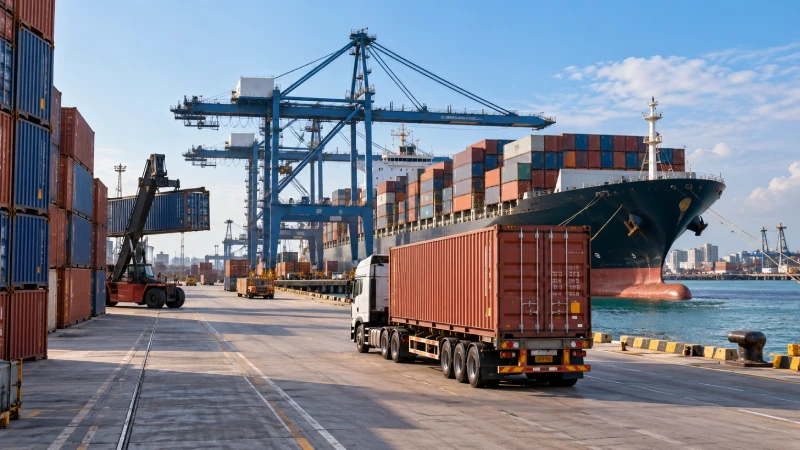
DDP shipping from China to Kenya can simplify an import by combining international transport, import clearance, duties and final delivery under one commercial arrangement.
But “DDP” is often used loosely in freight quotations.
A shipment described as door-to-door is not automatically DDP, and using a freight forwarder does not remove Kenya’s importer, customs or product-compliance requirements.
Before accepting a DDP quote, you need to know who will legally handle the import clearance, whose importer details will be used, which taxes and charges are included, and whether your product needs PVoC, a Certificate of Conformity, permits or other approvals before it leaves China.
For containerised sea cargo, Kenya’s Advance Cargo Declaration requirements also need to be addressed before loading.
If you are still comparing the wider route, shipping modes and destination options, see our Shipping from China to Kenya guide first.
Data Note — Updated September 2026
Kenya import requirements can change. Regulatory information in this guide should be checked against the latest Kenya Revenue Authority (KRA), Kenya Bureau of Standards (KEBS), Insurance Regulatory Authority and other relevant authorities before shipment.
Quick Answer: How Does DDP Shipping from China to Kenya Work?
Under DDP — Delivered Duty Paid — Incoterms® 2020, the seller takes responsibility for transporting the goods to the agreed destination and for handling the export, transit and import formalities, including applicable duties and taxes.
The goods are delivered at the named destination ready for unloading. Unless otherwise agreed, unloading itself normally remains the buyer’s responsibility.
That sounds simple commercially, but there is an important distinction:
DDP determines responsibility between seller and buyer. It does not override Kenyan customs law.
A Kenya-bound shipment still needs a compliant import structure, correct cargo documents, customs declaration and any applicable product approvals. Kenya also requires a KRA PIN for importation and customs-related transactions, while commercial imports are normally processed through the customs-clearance structure using an authorised clearing agent.
So before choosing DDP, confirm:
- who will be the legally recognised importer;
- which KRA PIN will support the declaration;
- who will handle Kenya customs clearance;
- whether PVoC/CoC applies;
- whether a Certificate of Origin is ready;
- whether product-specific permits are required;
- whether ACD applies to the sea shipment;
- how duties and taxes will be handled;
- what charges are included in the quoted DDP price;
- and exactly where in Kenya the seller’s delivery responsibility ends.
If those points cannot be established clearly, DAP or another door-to-door arrangement may be more appropriate than true DDP.
For the broader transport options available on this route, see Best Shipping Methods from China to Kenya.
What True DDP Shipping to Kenya Actually Means
DDP is one of the eleven Incoterms® 2020 rules published by the International Chamber of Commerce.
It is not a shipping method.
You can potentially use a DDP commercial arrangement with sea freight, air freight or multimodal transportation. FCL, LCL and air freight describe how the cargo moves. DDP describes how responsibilities, costs and risks are divided between seller and buyer.
Under DDP, the seller is responsible for arranging transport to the agreed named place and for completing the required export and import formalities. The seller also bears the applicable import duties and taxes under the Incoterm arrangement.
Risk generally transfers when the shipment is placed at the buyer’s disposal at the named destination, on the arriving vehicle and ready for unloading.
For example, a contract might specify:
DDP Buyer’s Warehouse, Nairobi, Kenya — Incoterms® 2020
In that situation, Nairobi is not simply a delivery city. The exact named place defines where the seller’s DDP delivery obligation is completed.
That is why a DDP agreement should be more precise than:
“DDP Kenya.”
A warehouse address, industrial park, construction site or other agreed delivery point should normally be identified before the commercial arrangement is finalised.
For a broader explanation of Winsail’s international DDP service model, see DDP Shipping from China.
DDP Does Not Mean the Buyer Can Ignore Import Compliance
Incoterms allocate contractual responsibility. They do not give a foreign seller automatic legal authority to act as an importer in every destination country.
The International Chamber of Commerce specifically warns that DDP should be used carefully where local regulations make it difficult or impossible for a foreign seller to perform import clearance. Where the seller cannot properly perform those obligations, DAP may be a more workable Incoterm.
This issue is particularly important when evaluating DDP shipping to Kenya.
The operational question is therefore not only:
“Does the forwarder offer DDP?”
It should also be:
“How will this particular shipment be imported and cleared in Kenya?”
DDP vs DAP vs Door-to-Door Shipping to Kenya
These terms are often treated as interchangeable, but they describe different arrangements.
| Arrangement | Main Transport | Kenya Import Clearance | Import Duties & Taxes | Final Delivery |
|---|---|---|---|---|
| True DDP | Seller | Seller’s responsibility | Seller’s responsibility | Seller |
| DAP | Seller | Buyer | Buyer | Seller |
| Door-to-Door Freight | Usually included | Depends on agreement | Depends on agreement | Included |
| Customs Coordination | Depends on service | Local importer/agent structure | Depends on agreement | Optional |
Under DAP — Delivered at Place, the seller can still arrange transportation all the way to the buyer’s warehouse, factory or other agreed destination. However, the buyer remains responsible for import clearance and import duties and taxes.
Under DDP, those import responsibilities remain with the seller.
This makes the distinction very important for Kenya importers.
A forwarder may advertise China-to-Kenya door-to-door shipping while the Kenyan buyer is still named as importer, uses its KRA PIN, instructs its clearing agent and pays the customs taxes.
That can be a perfectly workable door-to-door logistics arrangement.
It simply should not be confused with true DDP.
For more on the physical pickup-to-delivery service scope, see Door-to-Door Shipping from China.
Common DDP Misunderstandings
“Door-to-door means DDP.”
Not necessarily. Door-to-door describes where transportation starts and finishes. It does not by itself define who handles import clearance or duties.
“With DDP, I don’t need an importer structure in Kenya.”
DDP does not remove the legal import process. The parties still need to establish how the Kenyan customs declaration will be made and whose importer credentials support it.
“A DDP price always includes every possible destination charge.”
A commercial quote should specify inclusions and exclusions. Storage, demurrage, customs examinations, abnormal delivery conditions, permit costs or other exceptional charges should not be assumed to be included unless stated.
“The freight forwarder automatically becomes the importer of record.”
Do not assume this. It must be legally and operationally confirmed for the shipment.
“DDP guarantees customs clearance.”
No Incoterm guarantees that Customs or another regulator will release cargo. Authorities can inspect, query valuation, review classification or require additional documents where applicable.
Check Door-to-Door Feasibility
If you are unsure whether your shipment should move under DDP, DAP or another door-to-door structure, start with the product, importer setup and destination rather than choosing an Incoterm based only on convenience.
When Can DDP Work for a China-to-Kenya Shipment?
DDP tends to be easier to evaluate when the shipment is well defined before collection from the Chinese supplier.
A workable DDP review usually starts with six questions.
1. Is the Product Clearly Identified?
The product description should be specific enough to determine customs classification and regulatory requirements.
“Machine parts” is usually not enough.
A better description might include:
- type of component;
- material;
- function;
- model;
- application;
- and available HS code.
2. Is the HS Classification Reliable?
The HS code affects duties, taxes, regulatory requirements and sometimes the documents or permits needed for import.
If classification is uncertain, the landed cost is uncertain too.
3. Has the Kenya Importer Structure Been Established?
KRA identifies importation, customs clearance and forwarding among the transactions requiring a KRA PIN, and its import guidance describes the use of clearing agents for import declarations.
Before the cargo departs China, the parties should therefore know who is being declared as importer and how the Kenya-side customs process will be handled.
4. Have Compliance Requirements Been Checked?
Depending on the product, this can include:
- PVoC / Certificate of Conformity;
- Certificate of Origin;
- product permits or licences;
- Import Standards Mark requirements where applicable;
- marine cargo insurance requirements;
- or another regulator-specific approval.
5. Can Duties and Taxes Be Estimated Reasonably?
A reliable DDP price needs more than weight and CBM.
If the product classification, customs value or regulatory status is unclear, quoting an “all-inclusive” landed amount too early can create problems later.
6. Is the Final Delivery Location Clear?
Delivery into central Nairobi is operationally different from delivery to a remote construction project, a restricted industrial facility or a site requiring cranes or special vehicles.
The delivery address and unloading conditions should therefore be reviewed before the final DDP price is agreed.
Kenya Import Requirements That DDP Cannot Bypass
DDP can simplify commercial responsibility.
It cannot make Kenyan customs and product regulations disappear.
This is the section importers should review before cargo is collected from the Chinese supplier.
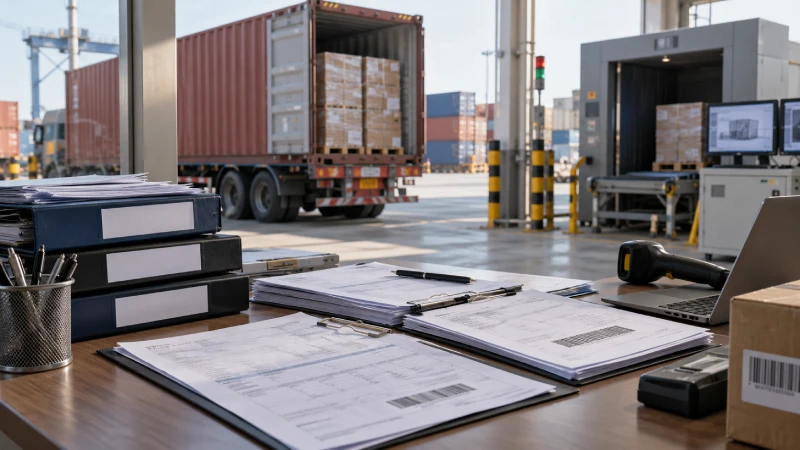
Importer Details, KRA PIN and Customs Clearance
A Kenyan import declaration requires an identifiable import party and the required customs information.
The Kenya Revenue Authority states that a PIN is required for transactions including importation, customs clearance and forwarding. KRA’s commercial import guidance also describes the use of authorised customs clearing agents to process declarations.
This creates an important DDP planning question:
Whose importer details and KRA PIN will support the Kenya import declaration?
That question should be resolved before booking.
Do not accept vague explanations such as:
“Don’t worry, everything is DDP.”
Instead, ask how the import will actually be structured.
PVoC and Certificate of Conformity
The Kenya Bureau of Standards operates the Pre-Export Verification of Conformity — PVoC programme for applicable imported products.
Its purpose is to verify conformity with applicable Kenyan standards or approved specifications before eligible goods enter the country.
KEBS’s current PVoC framework distinguishes between products, routes, exemptions and destination-inspection circumstances, so it is inaccurate to state that every shipment automatically requires exactly the same PVoC procedure.
For DDP planning, the correct question is:
Does PVoC apply to this specific product and shipment?
Where it does, the parties should establish:
- who submits the application;
- which inspection company handles the certification;
- what testing or inspection is required;
- what supplier documents are needed;
- who pays certification-related charges;
- and whether the Certificate of Conformity has been issued before shipment.
A low DDP freight price is not useful if the cargo leaves China without a conformity requirement being addressed.
Pro Tip
Complete the Kenya compliance review before the cargo leaves the supplier. Problems with pre-export documentation are usually harder and more expensive to correct after the shipment is already moving.
Certificate of Origin
Kenya significantly tightened Certificate of Origin requirements in 2025.
KRA states that imported consignments generally must be accompanied by a Certificate of Origin issued by a competent authority in the country of export. The requirement took effect on July 1, 2025, with full enforcement from October 1, 2025, subject to specified exceptions and provisional arrangements.
For goods exported from China, the Certificate of Origin process should therefore be considered before departure.
Do not assume the forwarder can simply create a valid COO after arrival.
Where a Certificate of Origin is required, confirm:
- who will arrange it in China;
- which issuing authority is appropriate;
- whether product and invoice information match;
- and whether the document will be ready before customs clearance is required.
Advance Cargo Declaration for Containerised Sea Cargo
Kenya introduced another important requirement in 2026.
KRA launched its Advance Cargo Declaration — ACD platform on August 3, 2026 for containerised cargo destined for Kenyan ports.
The exporter or shipper must obtain the ACD reference code at the port of loading. KRA lists four documents for the application:
- draft Bill of Lading;
- commercial invoice;
- freight invoice;
- export declaration.
The resulting ACD reference code must be endorsed on the Bill of Lading before the shipment proceeds to the Kenyan port.
For China-to-Kenya sea freight, this requirement should now be part of the pre-loading checklist.
ACD should not be confused with customs clearance after arrival. It is a pre-loading cargo declaration requirement.
For an LCL consolidation, the exact operational handling should be confirmed with the consolidator and carrier before booking.
Product-Specific Permits
Some cargo requires regulatory approval beyond standard customs documentation.
KRA’s import guidance includes permits or licences for restricted goods among the supporting documents that may be required.
Examples of product categories that may require additional checking include:
- food and agricultural products;
- plants and seeds;
- pharmaceuticals and medical products;
- telecommunications equipment;
- chemicals;
- controlled goods;
- certain used products;
- and other regulated commodities.
The responsible authority depends on the product and HS classification.
Do not assume that a DDP agreement transfers or removes a licence that legally must belong to a particular importer.
Marine Cargo Insurance
Kenya also has local requirements affecting marine cargo insurance.
The Insurance Regulatory Authority states that marine cargo insurance for imports must be placed with locally licensed insurers. Digital enforcement requirements have also been introduced for import cargo insurance documentation.
For a DDP quotation, therefore, one practical question is:
Who will arrange the compliant Kenyan marine cargo insurance documentation?
That should be confirmed rather than assumed.
Kenya DDP Compliance Checklist
| Requirement | How to Treat It |
|---|---|
| Importer / KRA PIN structure | Establish before shipment |
| Kenya customs declaration | Required |
| Clearing-agent coordination | Required for normal commercial clearance structure |
| Commercial invoice / packing list | Required core documentation |
| Bill of Lading / Air Waybill | Required transport document |
| Certificate of Origin | Generally required, subject to official exceptions |
| PVoC / CoC | Product and status dependent |
| ACD | Applies to relevant containerised cargo to Kenyan ports |
| Product permit / licence | Conditional |
| Marine cargo insurance | Check applicable local requirement |
| HS classification | Essential for tax and compliance planning |
How a China-to-Kenya DDP Shipment Works
Although every shipment is different, a properly planned DDP movement usually follows a process like this.
01 — Confirm the Cargo Details
Before pricing, collect:
- product description;
- HS code if available;
- quantity;
- value;
- package count;
- dimensions;
- gross weight;
- supplier location;
- and final Kenya delivery address.
02 — Review Kenya Import Requirements
Check the HS classification and whether the shipment requires:
- PVoC / CoC;
- Certificate of Origin;
- permits;
- special product approvals;
- marine cargo insurance;
- or other documentation.
At this point, the importer and customs structure should also be clear.
03 — Collect from the Chinese Supplier
Cargo can then be collected from the supplier’s factory or warehouse and moved to the appropriate origin warehouse, consolidation facility, airport or port.
If goods come from several Chinese suppliers, consolidation can take place before international shipment.
04 — Consolidate Cargo if Required
For LCL or multi-supplier orders, goods may be combined at the China warehouse before export.
This stage is useful for checking:
- cartons received;
- shipping marks;
- package dimensions;
- obvious packaging damage;
- and whether all suppliers have delivered.
05 — Complete China-Side Export and Pre-Loading Documents
China export documents must be prepared.
For applicable containerised sea freight to Kenyan ports, the ACD process must also be addressed before loading, including the required draft B/L and supporting documents.
06 — International Transport
The shipment then moves by the agreed method.
For sea cargo, Mombasa is Kenya’s principal maritime gateway.
For air cargo, Nairobi is the primary destination for many commercial shipments.
The choice between FCL, LCL and air freight should be made based on shipment size, urgency, product characteristics and total landed logistics requirements—not simply because one service has been labelled “DDP.”
If transport mode is still undecided, compare the broader options in Best Shipping Methods from China to Kenya.
07 — Kenya Customs Clearance
Once the cargo reaches the relevant stage of import processing, the customs declaration is handled under the agreed Kenya import structure.
Customs may review:
- classification;
- customs value;
- origin;
- conformity documents;
- permits;
- and other declaration information.
Where required, cargo may be subject to inspection or verification.
08 — Duties and Taxes Are Handled Under the Agreed Arrangement
With true DDP, applicable import duties and taxes fall under the seller’s responsibility according to the Incoterm.
Operationally, however, the mechanism through which those amounts are declared and paid in Kenya must have been established in advance.
09 — Inland Transport to the Final Destination
After release, cargo can move onward to the agreed destination.
For some container movements destined inland, Kenya’s port and inland transport network may involve Mombasa and inland facilities before final road delivery.
The exact route depends on the container, shipping line, customs arrangement, destination and delivery plan.
10 — Delivery at the Named Place
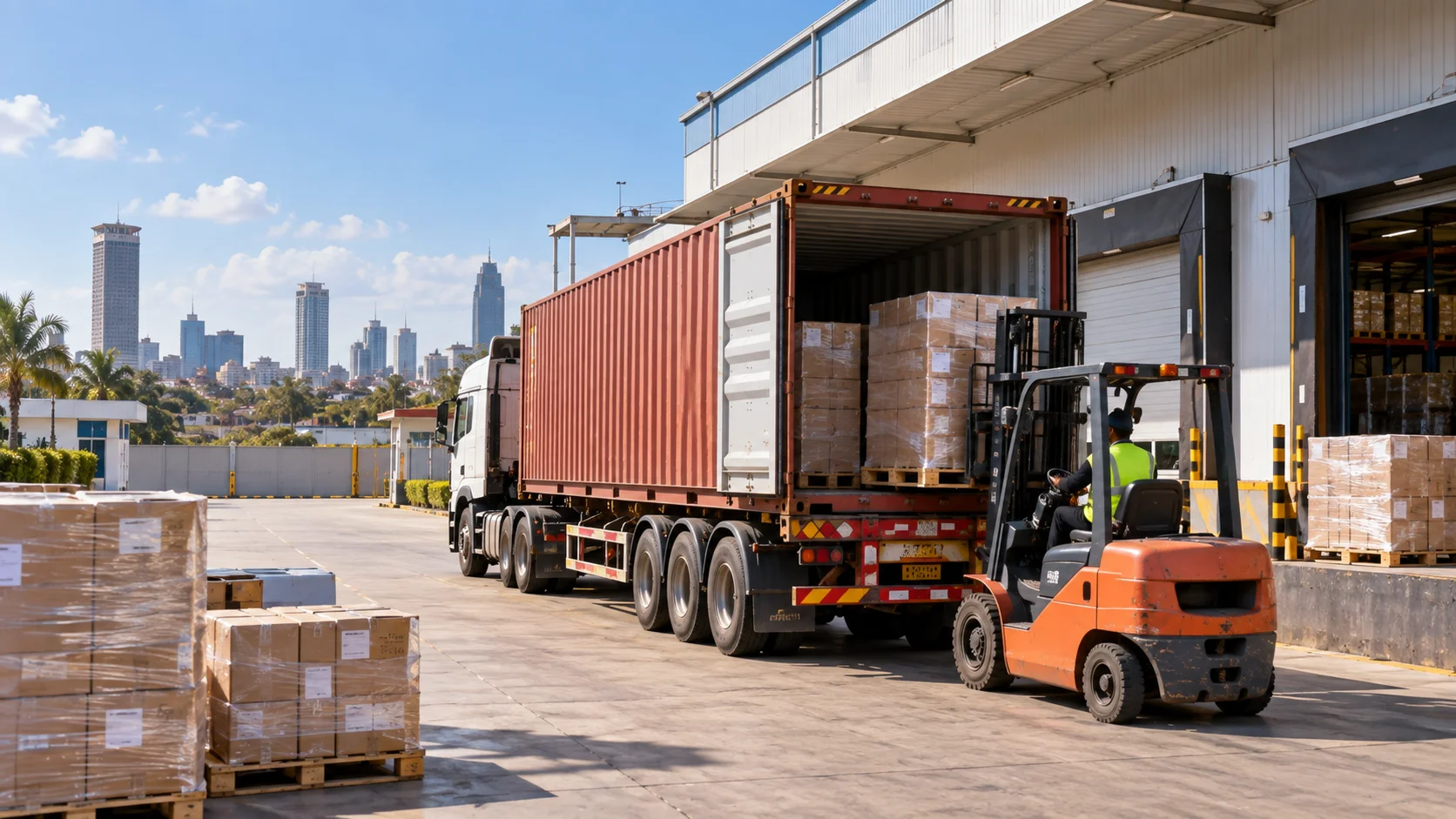
The shipment reaches the named DDP destination.
Under standard DDP rules, delivery normally occurs with the goods on the arriving vehicle and ready for unloading. The buyer generally takes responsibility for unloading unless the contract or carriage arrangement specifies otherwise.
For heavy machinery, oversized equipment or project cargo, never assume cranes, forklifts or site unloading are automatically included.
For a broader transit-time overview rather than a DDP-specific process, see How Long Does It Take to Ship from China to Kenya?.
What Should a DDP Shipping Quote to Kenya Include?
A proper DDP quote should show how the landed service is built.
It should not simply say:
DDP Kenya: USD X
without explaining the assumptions.
Possible cost components include:
| Cost Component | What to Confirm |
|---|---|
| China supplier pickup | Factory location and pickup conditions |
| China consolidation | One or multiple suppliers |
| Export handling | Included or separate |
| Export customs | Included or separate |
| PVoC / testing | Applicable? Included? |
| Certificate of Origin | Who arranges and pays? |
| ACD | Applicable? Included? |
| Main freight | Sea, air or multimodal |
| Destination handling | Which charges are included? |
| Customs brokerage | Included? |
| Import duty | Based on HS code and customs assessment |
| VAT | Applicable rate and treatment |
| IDF | Included? |
| RDL | Included? |
| Excise duty | Product dependent |
| Marine cargo insurance | Who arranges? |
| Customs examination | Standard or exceptional charge? |
| Inland transport | Mombasa, Nairobi or another city |
| Last-mile delivery | Address and vehicle requirements |
| Unloading | Included or buyer responsibility? |
| Storage / demurrage | How are delays treated? |
Kenya Import Taxes Cannot Be Quoted Reliably Without the Product
There is no responsible universal percentage for “Kenya import tax.”
Import duty depends on the HS classification and applicable East African Community tariff treatment. Excise duty applies only where relevant to the product.
For taxable imports, Kenya’s standard VAT rate is 16%, subject to applicable exemptions or zero-rating provisions.
Under the current Miscellaneous Fees and Levies Act, the standard Import Declaration Fee is 2.5% of customs value and the Railway Development Levy is 1.5% of customs value, subject to statutory exemptions.
Importers should be cautious when using older online guides because some older informational pages may display previous IDF and RDL rates.
The current law should be checked when preparing a shipment.
For broader freight-price planning outside the DDP cost structure, see Shipping Cost from China to Kenya.
Pro Tip
When comparing two DDP quotations, do not compare only the final number. Compare the HS-code assumption, importer setup, customs charges, certification costs, delivery point and exclusions. Two offers both labelled “DDP” may cover very different responsibilities.
Check My Shipping Cost
For a meaningful DDP cost review, send the product, cargo value, packaging, weight, dimensions, China pickup location and final Kenya delivery address.
Without that information, an “all-inclusive” DDP figure is only a rough reference.
When DDP Shipping to Kenya Can Be Risky
DDP is useful when responsibilities can be clearly established.
It becomes risky when the shipment contains unresolved compliance, tax or delivery questions.
Unclear HS Classification
If two plausible HS classifications attract different duties or regulatory treatment, landed-cost calculations can change after customs review.
Resolve classification uncertainty before committing to a fixed DDP price where possible.
Products Requiring Importer-Specific Permits
Some approvals may need to be held by the actual Kenyan importer.
A foreign supplier or freight coordinator cannot simply replace that legal requirement because the commercial contract says DDP.
Dangerous Goods
Dangerous goods require transport classification, packaging, labels, declarations and carrier acceptance.
Some products may also face Kenya-side regulatory requirements.
DDP should therefore be assessed only after the cargo’s dangerous-goods status is known.
Lithium Batteries
Lithium batteries require particular transport checks depending on:
- battery type;
- watt-hour rating;
- whether batteries are packed alone, with equipment or contained in equipment;
- mode of transport;
- and applicable testing or documentation.
Do not assume that a normal general-cargo DDP service automatically accepts lithium batteries.
Chemicals, Food, Medical or Other Regulated Cargo
These categories may involve additional regulators and permits.
The import-compliance path should be reviewed before freight booking.
Oversized and Project Cargo
A project shipment can involve:
- special vehicles;
- road permits;
- route surveys;
- site-access restrictions;
- crane operations;
- offloading equipment;
- or appointment-based delivery.
A generic “DDP Nairobi” quote may not cover those operational conditions.
Unclear Customs Value
If the seller, buyer and shipping documents do not present a consistent and supportable commercial value, customs valuation questions can disrupt the landed-cost calculation.
Do not build a DDP arrangement around under-declaration.
Operational Warning
Be cautious if a provider offers an “all-inclusive DDP Kenya” price without asking what the product is, its value, HS code, consignee situation or final delivery location. A reliable landed quote depends on those details.
What Information Is Needed Before Quoting DDP to Kenya?
You do not need to prepare a complicated logistics file.
But the following information makes the initial assessment much more reliable.
Cargo Information
- Product name
- Detailed product description
- Intended use
- HS code, if known
- Product specification or photos where relevant
- Quantity
- Number and type of packages
- Gross weight
- Carton or pallet dimensions
- Total CBM
- Commercial value
China Supplier Information
- Supplier city and province
- Factory or warehouse pickup address
- Number of suppliers
- Whether cargo is ready
- Whether suppliers can provide export or compliance documents
Kenya Information
- Final destination city
- Full delivery address
- Consignee or importer information
- KRA PIN and importer setup status
- Delivery-site restrictions
- Required delivery date
Special Cargo Information
Tell the forwarder in advance if the shipment contains:
- batteries;
- liquids;
- powders;
- chemicals;
- magnets;
- dangerous goods;
- food;
- medical products;
- used goods;
- oversized equipment;
- or other regulated items.
Compliance Status
If already available, also provide:
- commercial invoice;
- packing list;
- HS code;
- PVoC or CoC information;
- permits;
- Certificate of Origin status;
- and other relevant product certificates.
Send Cargo Details
If you are considering DDP shipping from China to Kenya, send Winsail Logistics the cargo details first.
The shipment can then be reviewed around the product, China pickup point, Kenya import requirements and final delivery location before deciding whether DDP or another door-to-door structure is appropriate.
What If True DDP Is Not Practical?
DDP is not the only way to simplify China-to-Kenya shipping.
In some situations, another structure is clearer and easier to execute.
DAP Shipping
Under DAP, the seller arranges transportation to the agreed named destination, but the Kenyan buyer handles import clearance and import duties and taxes.
This can work well when the buyer:
- already imports commercially in Kenya;
- has its own KRA setup;
- works with a trusted clearing agent;
- wants its customs records under its own import structure;
- but still wants the seller or forwarder to coordinate transportation to the final destination.
DAP is particularly worth evaluating when the seller cannot or does not wish to perform destination-country import clearance.
Door-to-Door Freight With Buyer-Side Clearance
Another option is a coordinated door-to-door service in which:
- cargo is collected from the Chinese supplier;
- the forwarder arranges export and international transport;
- the Kenyan importer and its clearing agent handle customs;
- the forwarder or local delivery partner resumes transport after customs release;
- cargo is delivered to the agreed address.
Operationally, this can still give the importer a relatively simple logistics experience without incorrectly describing the customs arrangement as DDP.
See Door-to-Door Shipping from China for the broader service structure.
Customs Coordination
For more complicated shipments, responsibilities can be divided among:
- the China supplier;
- China freight forwarder;
- Kenyan importer;
- licensed clearing agent;
- local transport provider;
- and specialist regulatory providers.
The important point is not that one company must perform every task.
The important point is that every responsibility has a clearly identified owner before shipment.
| Situation | Arrangement to Evaluate |
|---|---|
| Seller can compliantly take responsibility for Kenya import formalities | DDP |
| Kenyan buyer has its own importer and clearance setup | DAP |
| Buyer wants coordinated delivery but keeps customs responsibility | Door-to-door + buyer clearance |
| Regulated or unusual cargo | Custom compliance and transport plan first |
| Import structure is uncertain | Resolve importer setup before choosing Incoterm |
DDP Shipping from China to Kenya: Final Checklist
Before you accept a DDP quotation, ask these questions:
- Is this genuinely DDP under Incoterms® 2020?
- What is the exact named place of delivery?
- Who is responsible for Kenya import clearance?
- What importer details and KRA PIN will support the customs declaration?
- Has the HS code been checked?
- Does the product require PVoC or CoC?
- Is the Certificate of Origin arranged?
- Does the shipment require a product-specific permit?
- For containerised sea freight, who handles the ACD?
- Who arranges compliant marine cargo insurance?
- Are import duty, VAT, IDF, RDL and applicable excise included?
- What destination charges are included?
- Are customs inspection charges treated separately?
- Is final delivery included to the exact address?
- Who handles unloading?
- What happens if storage, demurrage or other exceptional costs occur?
If a supplier or logistics provider cannot answer these questions clearly, the label “DDP” by itself is not enough.
For a Kenya importer, the best DDP arrangement is not necessarily the quote with the lowest advertised price.
It is the arrangement in which the import structure, compliance requirements, customs responsibilities, landed-cost assumptions and final delivery scope are clear before cargo leaves China.
Related Kenya Shipping Guides
- Shipping Cost from China to Kenya — broader freight and landed-cost planning.
- Best Shipping Methods from China to Kenya — compare sea freight, air freight and door-to-door options.
- How Long Does It Take to Ship from China to Kenya? — transit-time planning by shipping method.
- Shipping Cost per CBM from China to Kenya — LCL cost planning for smaller sea-freight shipments.
Regulatory Note
Kenya customs duties, taxes, conformity requirements and permits depend on the cargo’s HS classification, value, intended use, importer status and current regulations. Requirements should be reconfirmed before shipment.
FAQ
Does DDP shipping to Kenya mean I do not need a KRA PIN?
DDP does not remove Kenya's legal customs structure. KRA identifies importation and customs clearance among transactions requiring a KRA PIN. Before a DDP shipment is accepted, the parties should establish who is being declared as importer and which legally valid importer details will be used.
Is door-to-door shipping from China to Kenya the same as DDP?
No. Door-to-door describes transportation from an origin address to a destination address. DDP is an Incoterm under which the seller also assumes responsibility for import clearance and applicable import duties and taxes. A shipment can therefore be door-to-door under DAP or another logistics arrangement without being DDP.
Does DDP shipping to Kenya include import duty and VAT?
Under true DDP Incoterms® 2020, the seller is responsible for import formalities and applicable import duties and taxes. The commercial quotation should still state clearly how import duty, VAT, IDF, RDL and any applicable excise or regulatory charges are treated.
Who handles PVoC and the Certificate of Conformity on a DDP shipment?
That should be confirmed before shipment. KEBS operates the PVoC programme for applicable regulated products, but the exact certification route depends on the product and shipment circumstances. Responsibilities and certification costs should be agreed before cargo leaves China.
Is an Advance Cargo Declaration required for DDP shipping to Kenya?
For applicable containerised cargo destined for Kenyan ports, the ACD requirement still applies. KRA launched the ACD system on August 3, 2026. The shipper or exporter obtains the ACD reference at the port of loading, and the reference must be endorsed on the Bill of Lading before the shipment proceeds to Kenya.
What happens if DDP is not practical for my shipment?
DAP or another door-to-door arrangement may be considered. Under DAP, transportation can still be arranged to the buyer's destination while the Kenyan buyer manages import clearance and taxes through its own importer and customs setup. Regulated, dangerous, oversized or unusual cargo may require a customised transport and compliance structure.
