

Introduction
If you’re shipping from China for the first few times, this choice almost always feels confusing.
Courier services look simple. You get a price fast, click a few buttons, and your shipment is on the way. A freight forwarder, on the other hand, asks a lot of questions you didn’t expect: cartons, weight, dimensions, incoterms, destination rules. It feels complicated before anything even moves.
Many first-time importers choose the “easy” option — and only realize later that it wasn’t the right fit for their shipment. Others avoid freight forwarders because they sound intimidating, even when their shipment has already outgrown courier services.
This guide isn’t about logistics theory. It’s about real shipping situations — the kind you’re likely to face when you start importing from China — and how to choose the option that actually works for your shipment.
The Real Difference: What You’re Actually Paying For
The biggest difference isn’t speed, size limits, or paperwork.
It’s how much of the shipping decision is already made for you.
With courier services, most decisions are bundled into one checkout price. The route, carrier, customs handling, and delivery method are pre-set. You’re paying for convenience and minimal involvement. That’s why it feels simple.
With a freight forwarder, the price is broken into parts because the shipment itself is flexible. You’re paying for coordination — choosing the transport method, managing customs steps, handling delivery, and adjusting based on your cargo and destination rules.
One isn’t “better.” They just solve different problems.
If your shipment fits neatly into a predefined box, couriers feel effortless.
If your shipment doesn’t, freight forwarding exists because those boxes stop working.
When Courier Services Work Well (And Why Many Importers Start Here)
Courier services make sense in very specific, very common situations — especially at the beginning.
They work well when you’re sending small, light shipments. Think samples, early test orders, spare parts, or a first batch you’re not fully confident about yet.
They’re also practical when speed matters more than cost control. If you need something delivered fast and don’t want to think about routing, customs steps, or last-mile delivery, courier services remove most decisions from your plate.
Another reason many importers start here: predictability upfront. You see a price, you pay it, and the shipment moves. There’s comfort in that when you’re new and don’t want surprises.
Courier services are especially helpful when you’re shipping occasionally, not every month. If you only send a few boxes a year, the simplicity can outweigh the higher cost.
For first-time importers, couriers often feel like the safest starting point — and in many cases, they are.
When Courier Services Start Causing Problems
The problems usually don’t appear on the first shipment.
They show up when something changes.
Maybe your order grows from two cartons to ten. Maybe the cartons get heavier. Maybe customs starts asking for documents you’ve never seen before. Or maybe duties and taxes come back higher than expected — after delivery is already in progress.
Courier pricing looks simple, but it’s sensitive to weight, size, and destination rules. A small increase in volume can trigger a big jump in cost. And because everything is bundled, it’s hard to see why the price changed.
Another common issue is limited flexibility. If your shipment doesn’t fit standard courier handling — oversized cartons, mixed goods, commercial quantities — the courier still tries to push it through the same system. That’s when delays, extra charges, or rejected customs clearance can happen.
Courier services are not designed to adapt. They’re designed to repeat the same process efficiently — until your shipment no longer matches that process.
Where a Freight Forwarder Becomes the Better Option
A freight forwarder starts making sense when your shipment stops being “simple.”
If you’re shipping multiple cartons, pallets, or larger volumes, a forwarder can choose transport methods that scale better than courier pricing.
If you’re shipping commercial quantities, not samples, a forwarder can structure customs clearance properly instead of forcing it through a courier workflow.
If delivery matters — not just arrival at the airport, but getting goods to your warehouse or customer — a forwarder can plan that from the beginning.
Freight forwarding is also useful when cost control becomes more important than speed. Instead of paying one bundled price, you see where the money goes and can make trade-offs: transit time vs cost, air vs sea, direct vs consolidated shipments.
You don’t need to understand logistics to use a freight forwarder. You just need a shipment that benefits from choices instead of presets.
Cost Isn’t Just the Price You See at Checkout
Courier pricing feels clear because it hides complexity.
You pay one amount, but that amount includes assumptions: size limits, standard customs handling, fixed delivery methods. When those assumptions break, extra charges appear — often after the shipment has already left China.
Freight forwarder quotes feel complex because they separate those assumptions. You see transport cost, handling, customs, and delivery as parts. That’s uncomfortable at first, but it gives you visibility.
Over time, this actually makes budgeting easier. You learn what changes your cost and what doesn’t. You know why a shipment costs more instead of guessing.
So the question isn’t “which is cheaper.”
It’s which one gives you fewer surprises for your type of shipment.
A Simple Way to Decide for Your Shipment
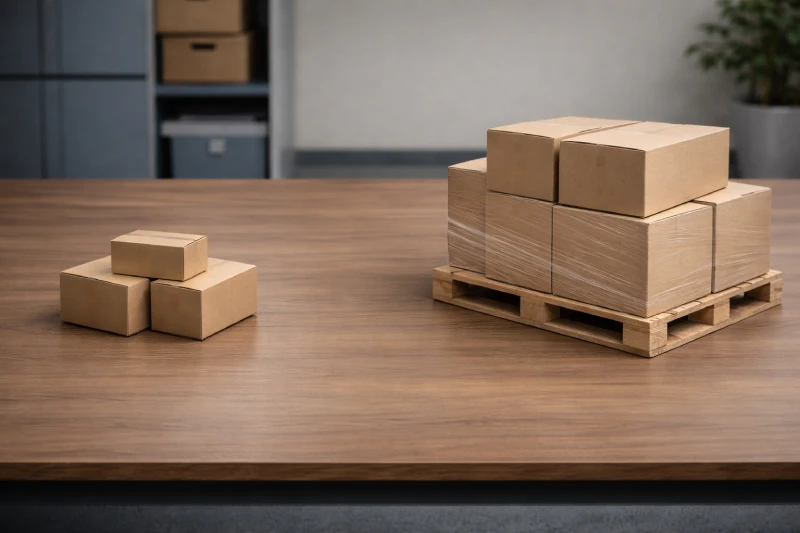
Use this quick logic instead of overthinking it:
- If you’re shipping samples, small orders, or emergency items → courier services usually make sense.
- If your shipment fits in a few cartons and speed matters more than cost → courier services are fine.
- If your shipment is growing, getting heavier, or becoming regular → start looking at a freight forwarder.
- If customs, duties, or delivery details are starting to confuse you → a freight forwarder helps clarify them.
- If you want control over cost and delivery instead of a fixed system → a freight forwarder fits better.
You don’t need to switch forever. Many importers use both, depending on the shipment.
The Right Choice Depends on the Shipment
There’s no “right” choice in general — only the right choice for this shipment.
Courier services are great when things are small, fast, and simple. Freight forwarders exist for the moment your shipments stop being that.
The mistake isn’t choosing one or the other.
The mistake is using the same option long after your shipping reality has changed.
