
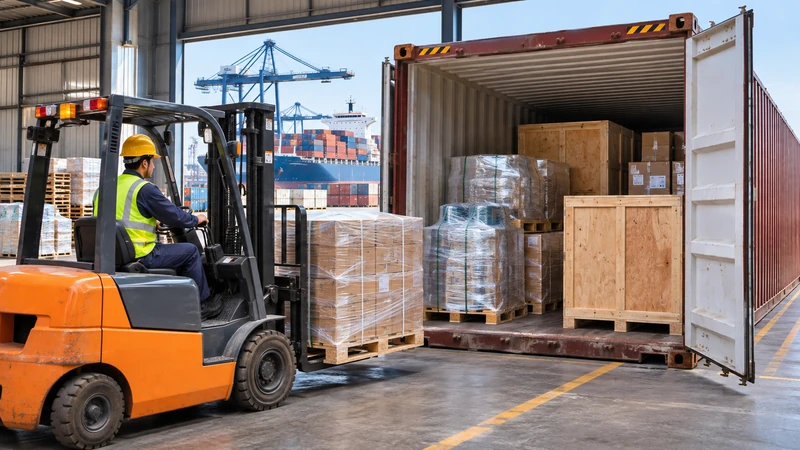
Shipping a few cubic meters of goods from China to Ethiopia does not require booking an entire container. With LCL shipping (Less than Container Load), importers can transport small commercial shipments by sharing container space with other cargo.
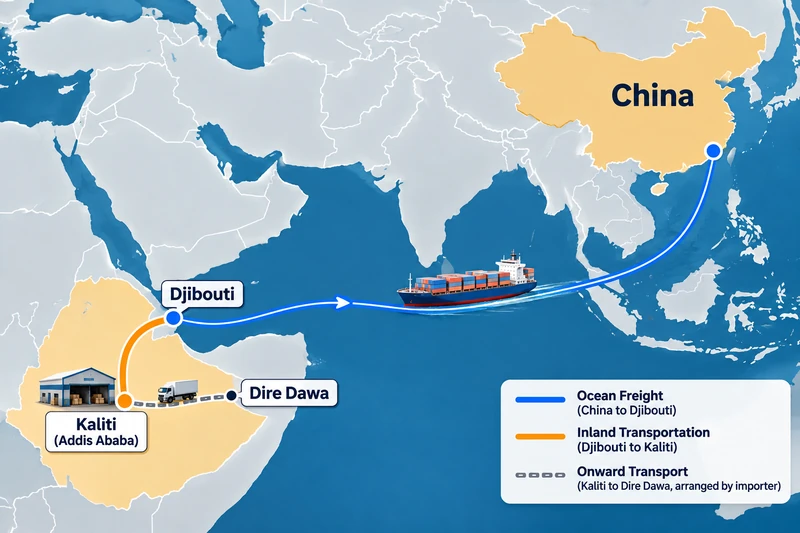
However, shipping to Ethiopia involves more than ocean freight. Because Ethiopia is landlocked, goods normally enter through a neighboring country’s seaport, particularly Djibouti, before continuing to an inland destination.
For Ethiopian importers, the most important questions are often practical: How much will the complete journey cost? Can the cargo reach Addis Ababa or Dire Dawa? Which destination charges are included? Who handles customs clearance and final collection?
This guide explains how LCL shipping from China to Ethiopia works, using a real Winsail customer arrangement involving 5.68 CBM of poultry incubators collected from Dongguan, China, with delivery arranged to the Kaliti inland terminal in Addis Ababa.
How Does LCL Shipping from China to Ethiopia Work?
LCL shipping allows multiple importers to share one shipping container instead of paying for an entire 20-foot or 40-foot container.
Each shipment is measured, documented, and consolidated with compatible cargo before departure. At the destination, the goods are handled and released according to the carrier’s procedures and the applicable customs arrangements.
For Ethiopia-bound cargo, the usual logistics chain involves both sea and inland transport:
- Factory pickup in China: Goods are collected from the supplier or delivered to a designated consolidation warehouse.
- LCL consolidation: Cargo is checked, measured, and loaded together with other shipments.
- Ocean transportation: The consolidated container is shipped from a Chinese port toward Djibouti, subject to the confirmed service route.
- Transit arrangements: Cargo moves through the applicable port and customs-transit procedures.
- Inland transportation: The shipment continues toward the agreed Ethiopian terminal, such as Kaliti or Modjo.
- Import clearance and collection: The consignee or appointed customs broker completes the necessary formalities before cargo release.
The Djibouti–Addis Ababa corridor is Ethiopia’s principal international trade gateway, according to the World Bank.
For LCL shipments, the exact route, inland transport arrangement, and place of cargo release must be confirmed before booking.
Important: A quotation stating “shipping to Ethiopia” does not automatically include delivery to the importer’s warehouse or business address. The named terminal and included services determine where the forwarder’s responsibility ends.
When Is LCL the Right Shipping Option for Ethiopia?
LCL is often suitable for importers purchasing commercial goods that do not require a full container.
Common examples include:
- Small machinery and industrial equipment
- Poultry farming and agricultural equipment
- Spare parts and replacement components
- Electrical and mechanical products
- Furniture and household merchandise
- Wholesale orders from Chinese manufacturers
Importers receiving goods from suppliers in Guangzhou, Shenzhen, Dongguan, Foshan, Yiwu, or other Chinese manufacturing centers can consider LCL when the shipment is not particularly time-sensitive.
LCL vs. FCL: Which Should You Choose?
| Factor | LCL Shipping | FCL Shipping |
|---|---|---|
| Container space | Shared with other shipments | Dedicated container |
| Suitable cargo size | Small and medium shipments | Larger shipments |
| Freight calculation | Commonly charged by W/M | Generally charged per container |
| Consolidation | Required | Not required with other importers’ cargo |
| Cargo handling | More handling points | Usually fewer handling points |
| Cost advantage | Avoids paying for unused container space | Can offer better value for larger volumes |
| Best for | Small business orders and machinery | Large wholesale orders and regular shipments |
For shipments of approximately 2–10 CBM, LCL is frequently worth considering.
When cargo approaches 12–15 CBM, importers should request both LCL and 20-foot FCL quotations. This is a comparison point rather than a fixed pricing rule.
For Ethiopia, the choice should be based on the total delivered or terminal-handover cost, not merely the ocean freight rate.
A low LCL ocean rate may become less attractive after consolidation charges, port handling, transit expenses, and inland transportation are included.
Real Shipment Example: 5.68 CBM of Egg Incubators from Dongguan to Ethiopia
A recent Winsail customer arrangement illustrates why selecting the correct inland delivery point matters.
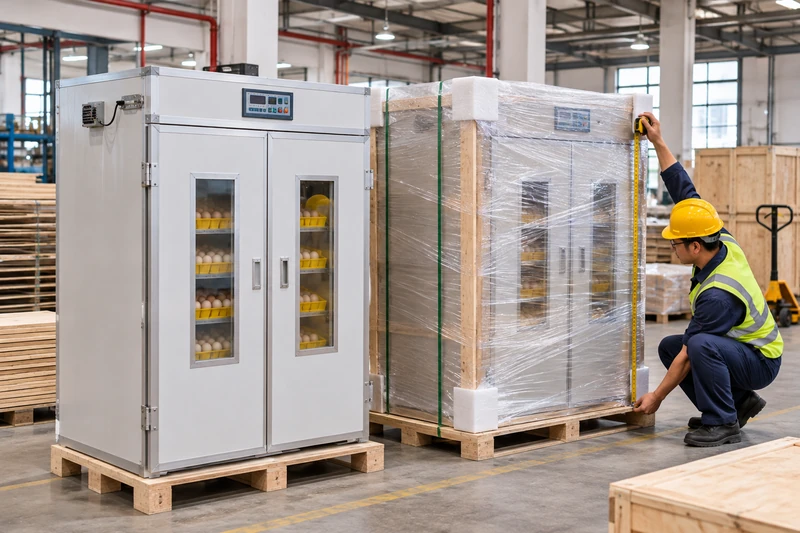
An Ethiopian trading company needed to transport two poultry egg incubators from a manufacturer in Dongguan, Guangdong Province.
The machines were ready for collection. The customer initially wanted delivery to Dire Dawa and requested an economical LCL transportation solution covering pickup in China, ocean freight, transit through Djibouti, and inland movement.
Shipment Details
| Cargo Information | Details |
|---|---|
| Commodity | Poultry egg incubators |
| Quantity | 2 packed units |
| Pickup location | Dalang Town, Dongguan, Guangdong, China |
| Package dimensions | 130 × 115 × 190 cm each |
| Total cargo volume | Approximately 5.68 CBM |
| Total gross weight | 580 kg |
| HS classification supplied | 8436210000 |
| Cargo characteristics | No batteries, liquids, or powders declared |
| Originally requested destination | Dire Dawa, Ethiopia |
| Agreed inland handover point | Kaliti, Addis Ababa |
| Shipping method | LCL sea freight |
The international six-digit HS subheading 8436.21 covers poultry incubators and brooders. The applicable complete Ethiopian tariff classification and import requirements should be verified locally before customs declaration.
The Customer’s Main Shipping Concerns
The customer wanted more than a simple sea freight price.
Several questions needed to be clarified before the transport arrangement could be accepted:
1. Would the quotation include factory collection?
The machines were located at a factory in Dalang Town, Dongguan. The customer needed confirmation that the pickup arrangement covered this specific address.
2. Would inland transportation in Ethiopia be included?
The customer wanted to understand whether the quoted amount covered transportation beyond Djibouti to the named Ethiopian handover point.
3. Could the shipment reach Dire Dawa?
Dire Dawa was the intended final destination. The customer therefore needed to know whether a suitable LCL delivery service was available or whether another collection point would be necessary.
4. Which destination charges would be excluded?
The customer requested clarification of import duties, taxes, local handling fees, and charges that could arise after arrival.
These are common questions for Ethiopian importers comparing international freight quotations.
Why the Customer Accepted Kaliti Delivery
After reviewing the transportation arrangement, the parties confirmed Kaliti in Addis Ababa as the agreed inland handover point.
The forwarder confirmed that the proposed service included inland transportation to Kaliti, while destination expenses not included in the arrangement would be charged as applicable.
The customer subsequently accepted delivery to Kaliti and confirmed that they would independently arrange onward transportation to Dire Dawa.
This reduced the need to include a separate final-delivery service to Dire Dawa within the proposed forwarding arrangement.
The example demonstrates an important principle:
When a direct LCL delivery arrangement to the final city is unavailable or unsuitable, an agreed inland terminal can provide an alternative handover point—provided customs clearance, collection, and onward transport responsibilities are clearly assigned.
Case status: This example documents a real customer quotation and confirmed delivery arrangement. It is not presented as proof of completed ocean transportation, customs clearance, or final delivery.
How Does LCL Cargo Move from China to Ethiopia via Djibouti?
Most China-to-Ethiopia sea freight arrangements require several coordinated transport and documentation stages.
Understanding these stages helps importers prepare their cargo and avoid confusion about when and where delivery takes place.
Step 1: Factory Collection in China
The process begins with the supplier’s factory or warehouse.
The forwarder confirms the pickup address, cargo-ready date, packaging, dimensions, gross weight, and any special handling requirements.
For equipment shipments, it is important to establish whether the cargo can be safely loaded by standard equipment and whether the supplier has suitable loading arrangements.
Step 2: Cargo Measurement and Consolidation
Collected goods are delivered to a consolidation warehouse.
The warehouse verifies package dimensions and weight, inspects visible packaging conditions, and prepares cargo for shared-container loading.
Any difference between the supplier’s declared measurements and the warehouse’s actual measurements may affect the final chargeable volume.
Step 3: Export Documentation and Customs Procedures
Before departure, the shipment must meet China’s applicable export requirements.
The shipper and forwarder coordinate the commercial documents, export declaration, and other required procedures according to the agreed responsibilities.
Importers should confirm in advance whether export customs handling is included in their quotation.
Step 4: Ocean Freight to Djibouti
The consolidated container departs from the confirmed Chinese loading port.
Depending on the service, the journey may involve a transshipment port before reaching Djibouti.
The loading port, discharge port, sailing schedule, and any planned transshipment should be checked against the booking confirmation.
Step 5: Djibouti Port Handling and Transit
At Djibouti, cargo entering Ethiopia requires the appropriate transit and logistics arrangements.
Port handling, customs transit, documentation, and cargo movement are coordinated according to the specific service.
The cargo may remain under customs control as it moves inland. The exact point of container unloading or cargo deconsolidation depends on the operator and route.
Step 6: Inland Transportation to Ethiopia
Goods continue toward an agreed inland facility by the transport arrangement offered for the shipment.
Both road and railway infrastructure serve the Djibouti–Ethiopia corridor, but an individual LCL shipment should not be assumed to use rail simply because the corridor has a railway connection.
The quotation should identify the actual inland destination and the service included up to that point.
Step 7: Customs Clearance and Cargo Collection
The consignee or its appointed customs broker completes the applicable import clearance procedures and arranges cargo collection.
If the final destination is outside the handover city, additional road transport may be required.
For a broader explanation of routes and container options, see Sea Freight from China to Ethiopia.
Kaliti, Modjo or Dire Dawa: Where Can Your LCL Shipment Be Delivered?
One of the most important decisions when shipping to Ethiopia is the inland destination.
Ethiopia has several established dry ports and logistics terminals, but not all LCL services offer cargo release at every facility.
According to Ethiopian Shipping and Logistics (ESL), Kaliti, Modjo, and Dire Dawa are distinct inland port or terminal locations.
Kaliti Terminal in Addis Ababa
Kaliti, also spelled Kality, is located in Addis Ababa.
It serves as an inland logistics location for cargo handling and related terminal activities.
For an importer with an appointed customs broker and transport provider, Kaliti may be a practical collection point when an appropriate freight service is available.
However, terminal delivery does not automatically include customs clearance or delivery to the customer’s premises.
The customer must confirm the cargo-release requirements and the services included in the freight arrangement.
Modjo Dry Port
Modjo is another important Ethiopian inland logistics hub, located outside Addis Ababa and connected to the Ethio–Djibouti railway network.
It plays a substantial role in Ethiopia’s containerized international trade.
Modjo and Kaliti are separate locations. A freight quotation naming one should not be interpreted as including transportation to the other.
Before booking, confirm the correct destination code, terminal name, and any subsequent transfer needed.
What If Your Final Destination Is Dire Dawa?
Dire Dawa is an important commercial city in eastern Ethiopia and has its own officially recognized dry-port facility.
However, the existence of a dry port does not mean that every LCL consolidation service offers direct cargo delivery there.
Importers should compare the options available for their specific shipment.
| Delivery Arrangement | What It Means | Important Consideration |
|---|---|---|
| Delivery to Kaliti | Cargo is transported to the agreed terminal in Addis Ababa | Importer may need onward transport |
| Delivery to Modjo | Cargo is transported to Modjo under an available service | Customs and collection arrangements must be confirmed |
| Delivery to Dire Dawa | Cargo reaches an agreed point in Dire Dawa under a suitable arrangement | Requires confirmation of service availability and charges |
| Door-to-door delivery | Freight service extends to the consignee’s specified address | Customs, taxes, unloading, and other exclusions must be defined |
For the Winsail customer example, the importer initially wanted Dire Dawa delivery but accepted Kaliti as the handover point.
The final leg from Kaliti to Dire Dawa was left to the customer’s own transport arrangements.
Practical advice: Always ask for the exact named delivery point in writing. “Addis Ababa delivery,” “Kaliti terminal,” and “delivery to Dire Dawa” describe different transport obligations.
How Are LCL Shipping Charges Calculated?
LCL sea freight is commonly calculated using a weight-or-measurement method, often abbreviated as W/M.
Under a standard 1 CBM to 1 metric ton comparison, the chargeable freight unit is based on whichever is greater:
- Cargo volume in cubic meters
- Cargo gross weight in metric tons
The exact calculation, minimum charge, and local handling tariff depend on the forwarder’s terms.
Calculating CBM from Package Dimensions
In the real Winsail example, each packaged incubator measured:
130 × 115 × 190 cm
Converting these dimensions into meters:
1.30 × 1.15 × 1.90 = 2.8405 CBM per package
For two packages:
2.8405 × 2 = 5.681 CBM
Rounded to two decimal places, the shipment volume was approximately 5.68 CBM.
The total gross weight was 580 kg, equivalent to 0.58 metric tons.
| Measurement | Freight Calculation |
|---|---|
| Total volume | 5.681 CBM |
| Total weight | 0.58 metric tons |
| Higher W/M basis | 5.681 |
| Indicative ocean freight chargeable quantity | Approximately 5.68 W/M |
Under the standard comparison, this shipment is volume-rated rather than weight-rated.
This calculation is not necessarily the same as the final invoiced quantity. Warehouse measurements, rounding rules, minimum charges, non-stackable cargo restrictions, and separate destination tariffs may change the amount payable.
Why Packaging Matters for Machinery
Machinery often needs protective packaging.
For poultry incubators, packaging should protect vulnerable panels, controls, fittings, and components from handling impacts and vibration.
If the machines are fragile or cannot be stacked, the forwarder needs to know before quoting.
A non-stackable shipment may occupy more usable container space than its physical dimensions suggest, potentially affecting the handling or freight charge.
Reducing unnecessary packaging volume may lower costs, but the packaging must remain suitable for international transport.
For additional examples, read Shipping Cost per CBM from China to Ethiopia.
How Much Does LCL Shipping from China to Ethiopia Cost?
The cost of LCL shipping to Ethiopia depends on more than the number of cubic meters.
Since cargo must travel through an overseas seaport and onward to an inland destination, the complete freight arrangement may involve several separate charges.
The most useful quotation is one that identifies both the total estimated cost and the exact services included.
1. Factory Pickup and Origin Charges in China
Origin-side expenses may include:
- Collection from the supplier’s factory
- Transport to the consolidation warehouse
- Cargo receiving and warehouse handling
- Export documentation
- Export customs procedures
- Consolidation and loading charges
If the supplier sells under EXW (Ex Works) terms, the buyer needs to arrange the appropriate pickup and export-related responsibilities.
A forwarder may coordinate these services, but the scope should be agreed in writing, including which party will act as exporter of record or handle the relevant formalities.
2. Ocean Freight and Djibouti Transit Costs
The quoted ocean freight may cover only part of the journey.
Additional logistics elements can include:
- Ocean freight to the confirmed discharge port
- Applicable port handling
- Transit documentation and customs procedures
- Inland transportation from Djibouti to the named Ethiopian terminal
- Carrier or freight-document charges
Some providers combine multiple items in a through-rate. Others list them individually.
A lower ocean freight price does not necessarily result in a lower total transport cost.
3. Ethiopian Destination and Clearance Charges
After cargo reaches the agreed destination, other costs may still apply.
Examples include import customs brokerage, duties and taxes, inspection, storage, terminal services, or final transport.
Whether these charges are included depends on the individual quotation.
What Should an LCL Quotation Include?
| Cost Component | What the Importer Should Confirm |
|---|---|
| Factory pickup | Is collection from the exact Chinese supplier address included? |
| Export customs clearance | Who handles and pays for the export formalities? |
| LCL handling | Are origin warehouse and consolidation fees included? |
| Ocean freight | What are the named loading and discharge ports? |
| Djibouti port and transit | Which transit and handling fees are covered? |
| Inland transportation | Is movement to Kaliti, Modjo, or another point included? |
| Destination handling | Are terminal and cargo-release charges included or payable locally? |
| Import clearance | Who appoints the Ethiopian customs broker? |
| Import duties and taxes | Who calculates and pays them? |
| Final delivery | Is trucking beyond the inland terminal included? |
| Storage and inspections | How will unexpected or conditional charges be handled? |
What Our 5.68 CBM Customer Example Teaches About Pricing
In the Dongguan-to-Ethiopia example, the customer requested clarification of the quotation before accepting the delivery arrangement.
The important questions were whether the freight cost included inland transportation to Kaliti, whether collection from the Dongguan factory was covered, and how additional destination charges would be handled.
These questions helped define the transport responsibilities.
The quotation was shipment-specific; its preliminary price should not be treated as a general market rate for all 5.68 CBM shipments or all routes via Djibouti.
For another importer, a shipment of the same volume may have a different total cost because of:
- The supplier’s location in China
- Cargo characteristics and packaging
- The sailing schedule and available consolidation service
- The agreed Ethiopian delivery terminal
- The required customs and final-delivery services
- Actual destination charges and market conditions
When comparing quotations, request a written total cost to the same handover point, with a separate list of excluded charges.
For a wider comparison of sea, air, and container pricing, visit Shipping Cost from China to Ethiopia.
How Long Does LCL Shipping to Ethiopia Take?
LCL transit time depends on the ocean route, consolidation schedule, Djibouti handling, inland movement, and customs procedures.
For preliminary planning, shipments to central Ethiopia often require several weeks. A broad working allowance of approximately 40–50 days for a suitable sea-and-inland service may be useful, but it is not a confirmed sailing schedule or guaranteed delivery period.
The quotation should identify exactly when the estimated period starts and ends.
For example, the following are different milestones:
| Shipping Milestone | What It Means |
|---|---|
| Cargo ready date | Goods are available for collection at the supplier |
| Warehouse receiving date | Cargo has entered the consolidation process |
| ETD | Estimated departure of the booked vessel |
| Port ETA | Estimated arrival at the discharge port |
| Inland terminal arrival | Goods reach the agreed Ethiopian terminal |
| Cargo release date | Customs and applicable release procedures allow collection |
| Final delivery date | Goods reach the customer’s own address, if arranged |
What Can Cause Delays?
Common causes include missed LCL consolidation cutoffs, vessel transshipment changes, port congestion, incomplete documentation, customs inspections, and inland transport constraints.
Importers should also allow time to arrange local clearance and collection after terminal arrival.
For equipment needed by a particular project date, communicate the required arrival date before booking.
The forwarder can then explain whether the available LCL schedule is suitable or whether an alternative transport mode should be considered.
What Documents and Import Requirements Should You Prepare?
Import documentation should be reviewed before goods leave the Chinese factory.
While the exact requirements depend on the commodity and transaction, several commercial and transport documents are commonly needed.
Documents Prepared for the China Export Shipment
Typical documents include:
- Commercial Invoice
- Packing List
- Bill of Lading or other applicable transport document
- Export declaration and supporting documents
- Certificate of Origin, where required
- Product-specific documentation, when applicable
The commercial invoice and packing list should be consistent.
Cargo descriptions, quantities, package counts, dimensions, gross weights, and values should be checked before shipping.
Ethiopian Importer Responsibilities
The Ethiopian importer should confirm the applicable import procedures with a licensed local customs broker and relevant authorities.
Depending on the goods and transaction, these may involve:
- Import registration and licensing
- Tax Identification Number (TIN)
- Banking and foreign-exchange documentation
- Customs declaration
- Certificate of Origin
- Insurance and transit documents
- Product-specific permits or conformity requirements
- Import duties and taxes
The U.S. International Trade Administration’s Ethiopia Import Requirements and Documentation guide provides a useful overview of the country’s documentation framework.
Because these rules and administrative requirements can change, importers should confirm the current applicable procedure with their Ethiopian customs broker before shipment.
Special Considerations for Machinery and Equipment
For machinery such as poultry incubators, the importer should verify the correct tariff classification, equipment description, valuation, and any applicable technical or regulatory requirements.
The supplier’s declared HS code can support the initial assessment, but it should not replace confirmation of the Ethiopian import classification.
Product documentation may also be relevant, particularly where electrical or other technical characteristics affect regulatory treatment.
Who Handles Customs Clearance at Kaliti?
This depends on the agreed service.
In the Winsail customer arrangement, the importer accepted responsibility for the Ethiopian customs clearance and cargo collection at the agreed Kaliti handover point.
The customer also intended to arrange subsequent transportation to Dire Dawa.
A different shipment may use another division of responsibilities.
Never assume that payment for ocean freight and inland transportation automatically includes Ethiopian import duties, taxes, or customs brokerage.
Five Mistakes to Avoid When Booking LCL Shipping to Ethiopia
Even a small shipment can generate unnecessary costs if its transport arrangements are not properly defined.
1. Confusing the Seaport with the Inland Destination
Djibouti is an ocean gateway; Kaliti and Modjo are inland facilities in Ethiopia.
Check the actual discharge port and named inland destination in the booking and quotation.
2. Comparing Rates Without Checking the Included Charges
An ocean freight quote may exclude port handling, transit, terminal fees, customs clearance, or inland delivery.
Compare quotations based on the same final handover point and service scope.
3. Assuming Every Ethiopian City Has Direct LCL Delivery
An inland city may have logistics infrastructure without being served by a particular shared-container product.
Ask the forwarder to verify available delivery points instead of assuming direct LCL delivery is possible.
4. Ignoring Actual Cargo Dimensions and Packaging
LCL rates depend on chargeable measurements and handling conditions.
Incorrect dimensions or failure to disclose non-stackable cargo may lead to revised charges or handling difficulties.
5. Waiting Until Cargo Arrival to Arrange Customs Clearance
Incomplete documentation, unclear importer responsibilities, or an unavailable customs broker can delay release and create storage costs.
Coordinate the required import documents and collection arrangements before dispatch.
What Information Should You Send for an LCL Shipping Plan?
Preparing accurate cargo information helps the freight forwarder evaluate the available route and provide a more useful cost estimate.
Before contacting Winsail, gather the following:
| Required Information | Example |
|---|---|
| Pickup location | Dongguan, Guangdong, China |
| Cargo description | Poultry egg incubators |
| Package quantity | 2 boxes |
| Package dimensions | 130 × 115 × 190 cm per box |
| Gross weight | 580 kg |
| Cargo volume | 5.68 CBM |
| Cargo-ready date | Confirmed date or expected availability |
| Final destination | Dire Dawa, Ethiopia |
| Acceptable handover point | Kaliti, if suitable |
| Required services | Factory pickup, LCL sea freight, inland terminal delivery |
| Customs arrangement | Importer-appointed broker or assistance required |
Also identify any batteries, liquids, chemicals, fragile components, unusually heavy packages, or non-stackable items.
For buyers importing from multiple Chinese suppliers, provide each supplier’s pickup address and the cargo details for each shipment.
Planning an LCL shipment from China to Ethiopia?
Winsail coordinates China-origin freight arrangements based on your cargo details, available shipping routes, and requested delivery scope.
Share Your Shipment Details With Winsail
Provide your supplier’s location, cargo dimensions, gross weight, ready date, and Ethiopian destination so our team can review the available transportation arrangement and clarify the services included.
FAQ
Can I ship 2–10 CBM of cargo from China to Ethiopia?
Yes. LCL shipping is designed for commercial shipments that do not need an entire container. Cargo of 2–10 CBM can be suitable for LCL, subject to packaging, commodity acceptance, consolidation availability, and destination service. The forwarder should confirm the complete cost, including the inland leg to the agreed Ethiopian handover point.
Does LCL shipping to Ethiopia go through Djibouti?
Djibouti is the principal maritime gateway for Ethiopia-bound cargo and is commonly used for sea freight from China. The shipment then continues inland under the applicable transport and customs arrangements. The exact loading port, discharge port, transit process, and delivery location must be confirmed for each booking.
Can LCL cargo be delivered directly to Dire Dawa?
A shipment may be arranged for Dire Dawa if a suitable service and delivery arrangement are available. However, not every LCL consolidation network offers direct cargo release there. Some importers may instead collect at an agreed inland terminal, such as Kaliti, and arrange onward trucking to Dire Dawa. Compare the costs and responsibilities before making a decision.
Is Kaliti the same as Modjo Dry Port?
No. Kaliti, also known as Kality, is located in Addis Ababa. Modjo Dry Port is a separate inland logistics facility outside the capital. They have different locations and handling arrangements. The correct terminal must be stated in the quotation, shipping instructions, and relevant documents.
Does an LCL shipping rate include inland transportation in Ethiopia?
Not necessarily. Some quotations include transport from the discharge port to a specified Ethiopian inland terminal, while others quote the ocean freight portion separately. Ask the forwarder whether the price covers Djibouti transit and inland movement to the exact agreed destination, and identify any excluded local charges.
Who pays Ethiopian customs duties and destination charges?
The responsible party depends on the agreed sale and forwarding arrangements. In standard terminal-handover shipments, the importer commonly arranges import customs clearance and pays applicable duties, taxes, and excluded destination expenses. Any alternative arrangement must be explicitly confirmed before shipping.
Can a freight forwarder collect goods from my supplier in Dongguan?
Yes, factory collection can be arranged as part of a China-origin forwarding service when available. The forwarder needs the full supplier address, package details, cargo-ready date, and loading conditions. Confirm that pickup is included in the written quotation, rather than assuming it is part of the ocean freight charge.
What is the difference between terminal delivery and door-to-door delivery?
Terminal delivery means the freight arrangement ends at a specified logistics terminal, subject to the agreed handover and release conditions. Door-to-door delivery extends transportation to the consignee's specified address. Neither term alone guarantees that customs brokerage, duties, taxes, unloading, or every local charge is included. These responsibilities must be defined separately.
Final Thoughts: Plan the Entire LCL Journey, Not Just the Ocean Freight
LCL shipping offers Ethiopian importers a practical way to transport small commercial shipments from China without paying for a complete container.
However, the most important planning decisions often concern the inland journey rather than the ocean leg alone.
The 5.68 CBM poultry incubator example demonstrates how a clear handover arrangement can help an importer move forward with a shipment plan. The customer originally requested delivery to Dire Dawa but accepted Kaliti as the agreed collection point and took responsibility for the subsequent local transportation.
For similar shipments, importers should focus on three essential questions:
- Where exactly will the cargo be handed over?
- Which transport and handling charges are included in the quotation?
- Who is responsible for customs clearance and onward delivery?
Answering these questions before booking can make small-volume imports from China easier to organize, compare, and manage.
For more information about available transportation options, explore Winsail’s Shipping from China to Ethiopia guide.
