

Why Understanding Transport Modes Matters
Transportation is the backbone of global trade, supply-chain efficiency, and everyday mobility.
Whether goods are moving across borders, across a country, or across a city, choosing the right mode of transport can significantly influence cost, transit time, reliability, and environmental impact.
Yet many shippers, businesses, and students still struggle to clearly understand how transportation modes differ, how many types exist, and which mode is best suited for various scenarios.
As logistics networks grow more complex, the ability to evaluate transport modes—road, sea, air, rail, and extended options such as intermodal or pipeline transport—has become essential.
Each mode offers distinct advantages and limitations depending on cargo type, shipment urgency, distance, and budget. By understanding these differences, decision-makers can optimize freight strategies, lower operational costs, and improve overall supply-chain performance.
This guide provides a clear, comprehensive overview of the main transportation modes, their variations, strengths and weaknesses, and practical use cases—helping you make informed decisions and confidently navigate today’s global logistics landscape.
What Are “Modes of Transport”?
A mode of transport refers to the specific method or vehicle used to move people or goods from one location to another.
In logistics and supply-chain management, transport modes form the core structure that determines how efficiently cargo flows through domestic and international networks.
While the concept may seem straightforward, the differences between transport modes—such as capacity, cost, accessibility, transit time, and environmental impact—create significant strategic implications for shippers.
Transport modes can be grouped into two broad categories: passenger transport and freight transport.
Passenger transport focuses on the movement of people, whereas freight transport deals with the movement of goods in commercial trade.
Within freight transport, businesses often evaluate not only the mode itself but also sub-types such as FCL vs. LCL shipping, LTL vs. FTL trucking, or express air freight vs. standard air cargo.
As globalization accelerates, choosing the right transportation mode has become a key factor in supply-chain competitiveness.
Understanding the characteristics of each mode—road, sea, air, rail, and extended alternatives—allows shippers and logistics managers to align their choices with cost targets, delivery requirements, and operational constraints.
The 4 Main Modes of Transportation
When people search for “modes of transport” or “4 modes of transportation,” they are usually referring to the four primary methods used worldwide to move goods and passengers: road, sea, air, and rail.
These modes form the foundation of modern logistics, and each plays a distinct role in global and domestic supply chains.
Understanding how they differ is essential for selecting the most suitable option for cost, speed, and cargo requirements.
Sea (Ocean) Transport
Sea transport is the backbone of international trade, handling more than 80% of global cargo volume.
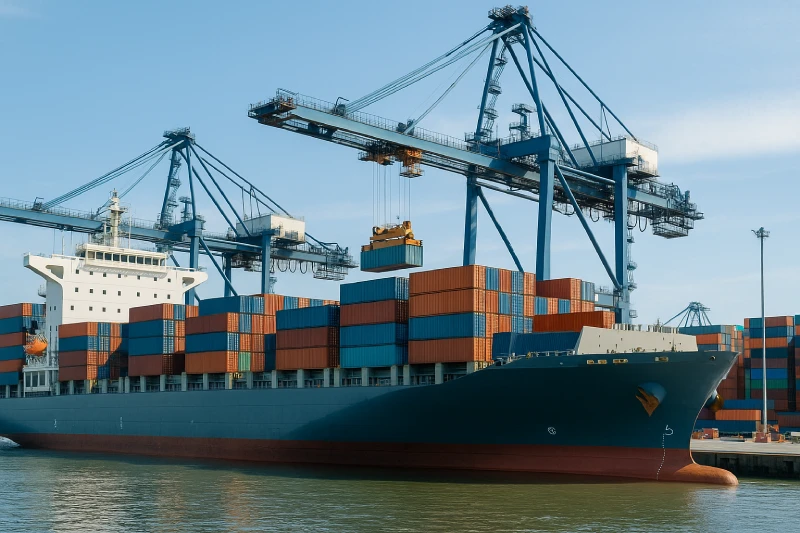
It is the most cost-effective mode for long-distance and high-volume freight, particularly for FCL, LCL, Ro-Ro, breakbulk, and bulk commodities.
Although sea freight offers unmatched capacity, it is slower than other modes and may be affected by port congestion, weather, and global shipping disruptions.
It remains the preferred choice for heavy, oversized, or non-urgent shipments.
Air Transport
Air transport is the fastest mode of transportation, ideal for urgent, high-value, or time-sensitive goods such as electronics, pharmaceuticals, and perishable items.
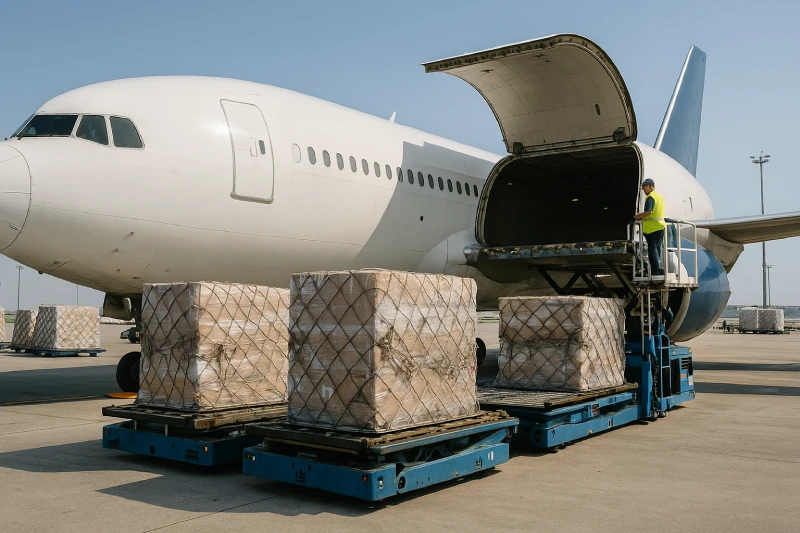
Air cargo includes general freight, express services, and charter flights. While transit times are significantly shorter, air freight is also the most expensive mode and has stricter weight and size limitations. It is best used when speed outweighs cost considerations.
Rail Transport
Rail transport offers a cost-efficient and environmentally friendly alternative for long-distance inland freight.
It is especially effective for bulk goods, heavy cargo, and intercontinental routes such as the China–Europe rail corridor. Rail provides better stability and capacity than road transport and lower emissions than air transport.
However, it requires fixed infrastructure and may lack the route flexibility needed for door-to-door delivery unless combined with road transport.
Road Transport
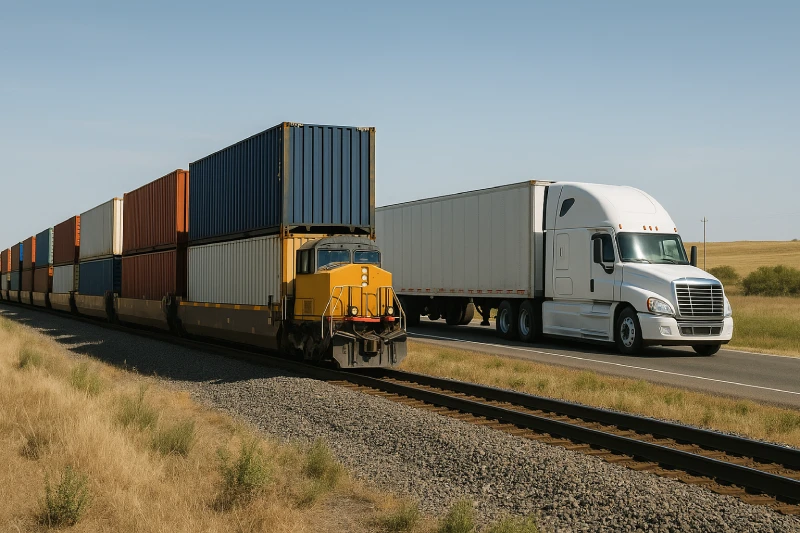
Road transport involves trucks, vans, and other vehicles traveling on highways and local roads.
It is the most flexible mode, offering door-to-door service and high accessibility, especially for short- and medium-distance movements.
Road freight supports LTL (Less-than-Truckload) and FTL (Full-Truckload) shipments and is widely used for domestic distribution, final-mile delivery, and cross-border trucking.
Its limitations include smaller capacity, susceptibility to congestion, and variable transit reliability.
Extended Types of Transportation Modes
Beyond the four primary modes, modern logistics also relies on several extended or specialized transport modes.
These categories are increasingly important as supply chains become more integrated, multimodal, and technology-driven.
They address specific cargo needs, infrastructure constraints, and the growing demand for flexible global distribution.
Pipeline Transport
Pipeline transport is used to move liquids, gases, and certain slurry materials through long-distance underground or above-ground pipelines.
It is one of the safest and most energy-efficient transport modes, offering continuous, reliable flow with minimal labor. Common examples include crude oil, refined petroleum products, natural gas, and chemical materials.
While efficient, pipelines require high initial investment and are limited to specific cargo types.
Intermodal Transport
Intermodal transport involves using multiple modes of transportation—such as sea + rail or rail + truck—without handling the cargo itself when switching modes.
Containers, swap bodies, and palletized units make seamless transfer possible. Intermodal solutions enhance efficiency, reduce handling risk, lower costs, and are widely used in international logistics.
They are ideal for long-distance freight where modal combinations optimize speed, price, and sustainability.
Multimodal Transport
Multimodal transport is similar to intermodal but operates under a single contract and one carrier liability, even when multiple modes are involved.
This arrangement simplifies documentation and provides shippers with a unified logistics solution. Multimodal shipping is commonly used in global supply chains where freight must transition across borders, ports, and inland networks.
Sub-Types of Each Transport Mode
Each major mode of transportation contains multiple sub-types tailored to different cargo characteristics, shipment sizes, and operational requirements.
Understanding these categories helps businesses choose the most efficient and cost-effective solution for freight movement.
Road Transport Sub-Types
LTL (Less-than-Truckload)
Used for smaller shipments that do not require a full truck. Costs are shared among multiple consignments, making it economical but sometimes slower.
FTL (Full-Truckload)
Suitable for larger, time-sensitive, or dedicated shipments. It provides faster transit, reduced handling, and higher security.
Reefer Trucks
Refrigerated vehicles used for temperature-controlled goods such as food, pharmaceuticals, and chemicals.
Specialized Trucks
Flatbeds, tankers, low-beds, and hazardous-goods vehicles designed for oversized, liquid, or dangerous cargo.
Sea Transport Sub-Types
FCL (Full Container Load)
A dedicated container for one shipper—secure, predictable, and best for large volumes.
LCL (Less-than-Container Load)
Shared container space, ideal for small shipments with flexible timelines.
Ro-Ro (Roll-on/Roll-off)
Used for vehicles and wheeled machinery.
Breakbulk & Project Cargo
For oversized or non-containerized goods such as steel beams, generators, or construction equipment.
Bulk & Tanker Shipping
For grains, ores, liquids, and chemicals transported in large volumes.
Air Transport Sub-Types
- General Air Cargo – Standard freight moved on commercial or cargo aircraft.
- Express Air Freight – Fastest option, used by couriers like DHL, UPS, FedEx.
- Charter Flights – Dedicated aircraft for urgent or oversized shipments.
Rail Transport Sub-Types
- Container Rail Services – Common for intercontinental routes such as China–Europe freight.
- Block Trains – Dedicated trains running point-to-point without intermediate stops, offering high efficiency and reliability.
Freight Transport Modes Explained
Freight transport modes refer specifically to the methods used to move commercial goods within domestic markets or across global trade routes.
Unlike passenger transport, freight transportation must consider cargo characteristics, cost constraints, delivery speed, regulatory compliance, and supply-chain continuity.
Choosing the right freight mode directly affects a company’s operational efficiency and competitiveness.
Different freight transport modes—road, sea, air, rail, pipeline, and intermodal systems—offer unique advantages depending on the shipment profile.
Sea freight handles the majority of global cargo volume and is unmatched in cost efficiency for large or heavy shipments.
Air freight provides the fastest transit time, making it ideal for urgent or high-value goods.
Road transport remains essential for door-to-door distribution and regional delivery, while rail freight offers a stable, scalable option for long-distance inland movements.
Intermodal and multimodal transport combine these strengths by integrating multiple modes into a seamless logistics solution.
For businesses managing international supply chains, understanding how freight transport modes differ—and how they can be strategically combined—is crucial for reducing logistics costs, improving transit reliability, and building resilient, efficient distribution networks.
Comparison of the Main Modes of Transportation
Selecting the right mode of transport requires evaluating several key factors that influence total logistics performance.
Although road, sea, air, and rail are all essential to global trade, each mode operates with its own strengths, limitations, and ideal use cases.
Understanding these differences enables companies to balance cost, speed, reliability, and sustainability in their supply-chain strategy.
1. Key Comparison Factors
When comparing transport modes, shippers typically assess:
- Cost efficiency – Fuel consumption, handling, and scale of economy
- Transit time – Speed from origin to destination
- Reliability – Schedule stability, weather sensitivity, and route predictability
- Cargo capacity – Volume, weight limits, and handling capabilities
- Flexibility & accessibility – Network coverage and door-to-door options
- Environmental impact – Carbon emissions and energy efficiency
- Regulatory requirements – Customs, inspections, and compliance needs
2. Pros & Cons Overview
Road Transport
Pros: High flexibility, door-to-door service, ideal for short distances.
Cons: Limited capacity, congestion and weather delays.
Sea Transport
Pros: Lowest cost for high-volume cargo, huge capacity.
Cons: Slow transit, port congestion risks.
Air Transport
Pros: Fastest delivery, best for urgent or high-value goods.
Cons: Highest cost, strict weight and size restrictions.
Rail Transport
Pros: Cost-effective for long-distance inland freight, lower emissions.
Cons: Less flexible routes, requires fixed infrastructure.
3. Summary Comparison Table
| Transport Mode | Speed | Cost Level | Reliability | Best For | Limitations |
|---|---|---|---|---|---|
| Road Transport | Medium | Medium | Medium | Short–medium distance delivery, door-to-door distribution, regional freight | Limited capacity, congestion, weather delays |
| Sea (Ocean) Transport | Slow | Lowest | Medium | Large-volume cargo, heavy or oversized goods, international shipping | Slow transit, port delays, less suitable for urgent freight |
| Air Transport | Fastest | Highest | High | Urgent, high-value, time-sensitive cargo | Strict weight/size limits, high cost |
| Rail Transport | Slow–Medium | Low | High | Long-distance inland freight, bulk goods, stable scheduling | Fixed routes, requires road linkage for final delivery |
How Many Modes of Transportation Are There?
The number of transportation modes depends on how they are classified, but most logistics and geography frameworks recognize four primary modes: road, sea, air, and rail. These are the core systems that support global passenger movement and international freight operations.
However, when extended categories are included, the total can increase to six or even seven modes, incorporating pipeline transport, intermodal transport, and multimodal solutions.
Some academic sources also distinguish urban transport modes such as metro, tram, or non-motorized transport, though these are typically excluded from freight-focused discussions.
For logistics and supply-chain management, the most practical answer is that there are four main modes, with pipeline, intermodal, and multimodal serving as specialized but widely used supplementary modes.
When & How to Choose Each Transport Mode
Choosing the most suitable transportation mode requires a balanced evaluation of shipment requirements, operational constraints, and business priorities.
Because no single mode is optimal in every situation, shippers must consider multiple factors to ensure the right match between cargo needs and logistics performance.
The urgency of the shipment is often the first decision point. If delivery speed is critical, air transport is the best option despite higher costs.
For large-volume or non-urgent freight, sea transport offers the lowest cost per unit and is ideal for international trade. When flexibility and point-to-point access matter—especially within a region—road transport provides the most practical door-to-door solution.
For predictable long-distance inland movements involving bulk goods or large shipments, rail transport delivers excellent cost efficiency and schedule reliability.
Other important considerations include:
- Cargo characteristics (fragile, hazardous, temperature-controlled, oversized)
- Budget constraints and total landed cost
- Distance and route accessibility
- Environmental targets such as reducing carbon emissions
- Customs or regulatory requirements on specific trade lanes
In many cases, the optimal solution is not a single mode but a combination—such as sea + rail or air + road—leveraging the strengths of each while minimizing limitations. This integrated approach is increasingly essential in modern global supply chains.
Service Cases
Below are two simplified case examples drawn from recent Winsail Logistics operations.
1. Sea Freight Case — 10-Ton Industrial Reactor from China to Djibouti
A heavy industrial reactor weighing 10 tons required secure long-distance transportation from Nansha Port to Djibouti.
Due to its large size and non-urgent delivery timeline, sea freight was the most cost-effective and operationally suitable mode.
The shipment moved as oversized cargo and arrived safely within the expected transit window.
This case highlights how ocean transport remains the best choice for bulky, heavy, or project-based industrial equipment, where capacity and cost efficiency are the top priorities.
2. Air Freight Case — Watch Shipment from Hong Kong to Dubai
A time-sensitive shipment of luxury watches needed rapid delivery from Hong Kong to Dubai World Central. Given the high value and urgency, air freight offered the fastest and most secure solution.
Using a major international carrier, the goods were delivered within hours, demonstrating how air transport is ideal for high-value, lightweight, and urgent cargo, especially in sectors such as electronics, jewelry, and premium retail.
FAQ
1. How many modes of transportation are there?
Most logistics frameworks identify four primary transport modes: road, sea, air, and rail. These modes support the majority of passenger and freight movements worldwide and form the foundation of modern supply-chain networks.
However, when extended categories such as pipeline, intermodal, and multimodal transport are included, the total number can expand to six or seven modes. The exact count depends on whether the classification focuses on freight logistics, geography, or public transportation systems.
2. Which transport mode is the fastest?
Air transport is the fastest mode of transportation, offering rapid point-to-point delivery for urgent shipments. It is especially beneficial for high-value goods, perishable items, and time-critical deliveries that require same-day or next-day transit.
Despite its speed, air freight is also the most expensive mode. Its limitations—such as weight restrictions, limited cargo space, and airport dependence—mean it is typically reserved for shipments where urgency outweighs cost.
3. What is the most cost-effective mode of transport for large shipments?
Sea freight is the most cost-effective mode for heavy, bulky, or high-volume cargo. Its large vessel capacity and economies of scale allow businesses to ship oversized equipment, raw materials, and full container loads at significantly lower costs compared to other modes.
While ocean freight is slower and may experience port congestion, it remains the preferred choice for non-urgent international shipments where minimizing logistics cost is the primary goal.
4. What is intermodal transportation, and when should it be used?
Intermodal transportation involves moving cargo using multiple modes of transport—such as sea + rail or rail + truck—without handling the cargo itself during mode transfers. Containers and standardized units make these transitions seamless and efficient.
This mode is ideal for long-distance shipments that benefit from combining the strengths of different transport systems. Intermodal transportation can reduce handling risks, lower costs, and improve sustainability while maintaining transit consistency across borders.
5. How do I choose the best transport mode for my shipment?
Selecting the right mode depends on several factors, including shipment urgency, cargo type, budget, distance, and regulatory requirements. For example, urgent or high-value goods typically move by air, while large-volume or heavy cargo is more suitable for sea freight.
Businesses should also consider environmental targets, customs processes, and last-mile delivery needs. In many cases, a hybrid solution such as sea + rail or air + truck offers the ideal balance between cost, speed, and operational efficiency.
Conclusion
Understanding the different modes of transport—and how they apply to various shipment scenarios—is essential for making informed logistics decisions.
Each mode offers unique advantages in cost, speed, capacity, and reliability, and the best choice depends on the specific requirements of the cargo and the business.
Sea freight remains the most economical solution for heavy or high-volume shipments, while air freight delivers unmatched speed for urgent or high-value goods.
Road and rail transport continue to play vital roles in regional distribution and long-distance inland freight. As global supply chains evolve, intermodal and multimodal solutions are becoming increasingly valuable, offering flexibility and efficiency through integrated transport networks.
By understanding the strengths and limitations of each mode, shippers can optimize their logistics strategies, reduce costs, improve delivery performance, and build a resilient supply chain suited for today’s fast-changing global market.
