
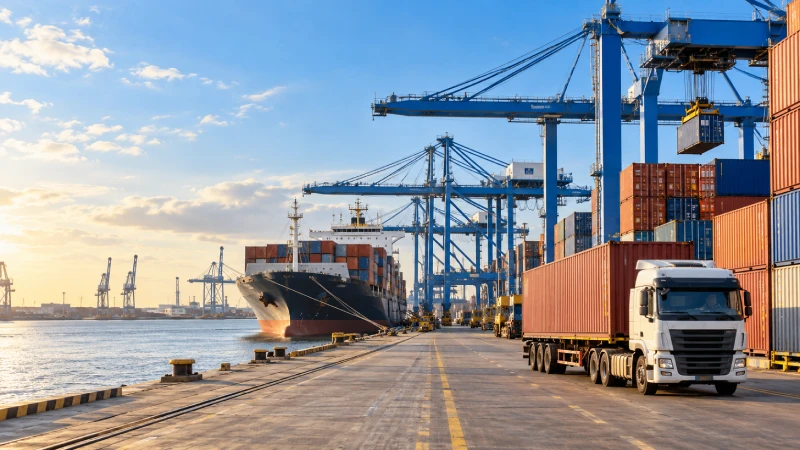
When your sea freight from China arrives at the Port of Mombasa, the international ocean journey may be nearly complete, but your cargo may still be hundreds of kilometres from its final warehouse in Nairobi.
For importers, the next question is practical: should the cargo move from Mombasa to Nairobi by direct truck, by Standard Gauge Railway (SGR) through Nairobi Inland Container Depot, or—if it is LCL—after deconsolidation at a Container Freight Station?
There is no single route that is best for every shipment. The right arrangement depends on whether the cargo is FCL or LCL, how the Bill of Lading is routed, where Customs clearance and cargo release take place, the final delivery address, container-return requirements, and whether the shipment needs special handling.
For the complete international route before cargo reaches Kenya, see our guide to shipping from China to Kenya. This guide focuses only on the inland stage from Mombasa to Nairobi.
Data Note: Inland freight prices, train availability, terminal conditions and cargo-release times can change. Transit times below are planning references rather than guaranteed delivery times. Always confirm shipment-specific arrangements before dispatching the inland vehicle.
Quick Answer: How Can Cargo Move from Mombasa to Nairobi?
For most China-origin sea shipments destined for Nairobi, there are three practical inland delivery patterns.
| Cargo situation | Typical inland route | Key point to confirm |
|---|---|---|
| FCL container released in Mombasa | Mombasa → direct truck → Nairobi warehouse | Is the container physically released and where must the empty be returned? |
| FCL routed inland | Mombasa → SGR → Nairobi ICD → local truck → warehouse | Is Nairobi ICD part of the B/L and haulage arrangement? |
| LCL cargo | Mombasa CFS → deconsolidation → release → truck → Nairobi | Which CFS handles the shipment and when is the individual cargo ready? |
The Kenya Ports Authority states that Nairobi ICD is directly connected to the Port of Mombasa by rail and handles cargo moving under both Through Bill of Lading and merchant-haulage arrangements. Kenya Railways also operates containerized freight services between Mombasa and Nairobi for 20-foot and 40-foot containers.
The important point is that the fastest linehaul does not automatically produce the fastest warehouse delivery.
Before comparing truck and rail, first establish:
- where the container or LCL shipment will be released;
- whether Customs processing is taking place in Mombasa or Nairobi;
- whether the cargo is actually available for collection;
- the final delivery location in Nairobi;
- and who is responsible for the last-mile delivery and empty-container return.
Direct Truck, SGR or LCL Delivery: Which Route Fits Your Cargo?
The inland route should normally be planned as part of the overall China-to-Kenya shipment rather than decided only after the vessel arrives.
Option 1: Direct Container Trucking from Mombasa
For an FCL shipment released in Mombasa, a truck can collect the full container and carry it directly to the importer’s warehouse or other delivery site in Nairobi.
The typical flow is:
Vessel discharge → cargo and container release → truck collection → Mombasa–Nairobi road transport → warehouse unloading → empty-container return
This arrangement can be operationally straightforward when the importer wants one continuous road movement from the release location to a specific Nairobi warehouse.
However, direct trucking should not be confused with simply sending a vehicle to the port as soon as the vessel arrives. A truck should normally be dispatched only after the relevant release conditions and pickup instructions are confirmed.
Option 2: SGR to Nairobi ICD
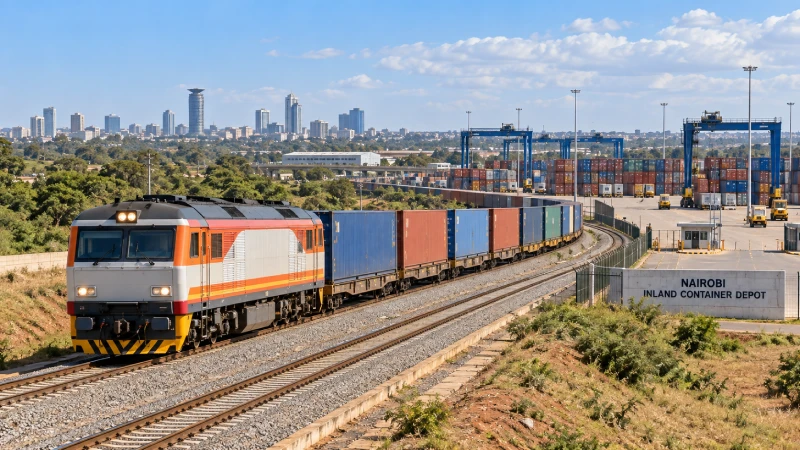
Some containers move inland from Mombasa by the Standard Gauge Railway and are handled at Nairobi Inland Container Depot before their final road delivery.
The basic flow is:
Mombasa Port → rail transfer → SGR → Nairobi ICD → release/clearance as applicable → local truck → Nairobi warehouse
KPA describes Nairobi ICD as an inland extension of Port of Mombasa services and confirms that it is connected to Mombasa by SGR and rail-tainer services.
This route is especially relevant when the container’s shipping and haulage arrangements are structured around Nairobi ICD.
Option 3: LCL Cargo Delivery
LCL cargo works differently because the importer does not control the entire container.
A typical LCL movement may look like:
Mombasa arrival → nominated CFS → container stripping/deconsolidation → individual shipment release → road delivery → Nairobi warehouse
The nominated CFS and exact release process depend on the shipping line, consolidator and local handling arrangement.
For this reason, an LCL importer should not assume that the cargo can be collected directly from the same facility used for an FCL shipment.
Check My Mombasa-to-Nairobi Route
Before selecting truck, SGR or an LCL delivery arrangement, confirm your B/L routing, current cargo location, shipment type and final Nairobi address.
How Direct Truck Delivery from Mombasa to Nairobi Works
Direct road transport is one of the most straightforward ways to move released cargo from Mombasa to a Nairobi warehouse, but several steps must happen before the truck begins the long-haul journey.
1. The Container Is Discharged
After the vessel berths in Mombasa, the container is discharged and enters the applicable port, terminal or CFS process.
Vessel arrival does not mean the container is immediately ready for inland collection.
2. Customs and Cargo Release Are Completed
Depending on the shipment arrangement, the importer and licensed Kenyan clearing agent may need to complete Customs-related procedures, applicable regulatory checks, tax payments and other release formalities.
The Kenya Revenue Authority states that importers generally require a licensed customs clearing agent for imported goods. Required supporting documents can include the commercial invoice, Bill of Lading, freight invoice, packing list, Certificate of Origin and, for regulated products, a Certificate of Conformity where applicable.
The shipping line, terminal or CFS may also have its own release requirements.
3. The Correct Truck and Trailer Are Assigned
The transporter needs accurate information about:
- 20ft, 40ft or 40HC container;
- gross cargo and container weight;
- delivery location;
- cargo type;
- dangerous-goods status;
- reefer requirements;
- and any unusual loading or unloading conditions.
Heavy, oversized or temperature-controlled cargo may require different equipment from a standard dry container.
4. The Container Is Collected
The truck collects the container from the location stated in the release instructions.
That may be a port terminal, CFS or another nominated facility.
The pickup location should therefore be confirmed before truck scheduling.
5. Road Transport to Nairobi
Recent Kenyan road-freight market references commonly place the Mombasa–Nairobi heavy-truck driving stage at roughly 8–12 hours under normal conditions, although traffic, checkpoints, road conditions, driver-rest requirements and operational delays can extend the journey. A more realistic cargo planning window from physical collection through delivery is often longer.
These are market planning references, not a guaranteed Winsail transit time.
6. Warehouse Delivery and Unloading
Once the vehicle reaches Nairobi, the importer must be ready to receive the cargo.
For a container delivery, confirm in advance:
- gate and road access;
- warehouse operating hours;
- unloading appointment;
- forklift availability;
- crane requirements;
- loading dock suitability;
- labour availability;
- and maximum permitted unloading time.
7. Empty Container Return
For carrier-owned FCL equipment, delivery is not necessarily complete once the cargo has been unloaded.
The empty container usually needs to be returned according to the shipping line’s instructions.
The nominated depot and available free time should be checked before delivery because empty-return distance and delays can affect the transport cost.
Operational Warning: Do not book long-distance trucking based only on vessel arrival. First confirm that the cargo is physically available for collection and that all relevant Customs, carrier, terminal or CFS release steps have been completed.
How SGR Freight to Nairobi ICD Works
The Standard Gauge Railway provides another important connection between the Port of Mombasa and Nairobi.
Kenya Railways states that its Madaraka Express Freight Service handles 20ft and 40ft containerized cargo between Mombasa and Nairobi. The service is centered on inland container depots, including Nairobi ICD.
Step 1: Container Discharge in Mombasa
The import container is discharged from the vessel and processed for the inland rail movement according to its routing and documentation.
Step 2: Transfer to the Rail Operation
Containers scheduled for SGR movement are transferred into the rail operation and loaded for inland transport.
The exact timing between vessel discharge and train departure varies. Importers should not use the train running time as the total Mombasa-to-Nairobi cargo-delivery time.
Step 3: Mombasa to Nairobi by Rail
KPA operational material describes approximately 8–10 hours for the rail movement itself from Mombasa to Nairobi ICD, followed by terminal unloading operations. This figure should be treated as a linehaul reference rather than a current guaranteed service level.
Step 4: Container Arrives at Nairobi ICD
Nairobi ICD is not simply a railway stop.
KPA describes the facility as a major inland container depot connected directly to Mombasa and equipped to handle both containerized and loose cargo. KRA also lists an Inland Container Depot office in Nairobi, while KenTrade maintains a Trade Facilitation Office at ICD Nairobi.
This makes ICD Nairobi an important operational node for Customs, cargo handling and inland distribution.
Step 5: Clearance and Release
Where the shipment arrangement requires processing in Nairobi, the clearing agent coordinates the relevant declaration, regulatory, inspection and release steps.
Kenya Railways also identifies pre-arrival clearance, iCMS-related processes, scanning and one-stop clearance support as part of its freight-service environment.
Step 6: ICD-to-Warehouse Trucking
Once the cargo is released, a local vehicle collects the container and delivers it to the consignee’s Nairobi warehouse, industrial area or other final address.
The shipment therefore still requires a road leg even when SGR is used.
Step 7: Unloading and Container Return
After delivery, carrier-owned equipment normally needs to be returned according to the applicable container-return instruction.
Through Bill of Lading vs Merchant Haulage
The inland route should ideally be considered before the final shipping instructions are completed.
KPA states that Nairobi ICD handles cargo moving under both Through Bill of Lading and merchant haulage status.
In practical terms, this means the importer should confirm:
- the destination shown on the Bill of Lading;
- whether inland transport is part of the carrier arrangement;
- who is responsible for the inland leg;
- where the container is intended to be released;
- and which local party is coordinating clearance and final delivery.
Do not assume that a container originally arranged for one release structure can always be changed to another without additional coordination.
Pro Tip: Decide whether the shipment is intended for Mombasa release or Nairobi ICD routing before the final shipping documentation is completed wherever possible. Changing the inland handover arrangement after arrival can create additional carrier, documentation and handling work.
How LCL Cargo Moves from Mombasa to Nairobi
LCL cargo requires a different inland plan because several importers’ shipments normally share one container.
When the master container arrives in Mombasa, the individual importer usually cannot simply send a truck to collect the container.
Instead, the shipment normally follows a process such as:
- The master container arrives in Mombasa.
- It is routed to the nominated CFS or handling facility.
- The container is stripped or deconsolidated.
- Individual house-B/L shipments are identified.
- Customs and applicable release requirements are completed.
- The importer’s cargo becomes available for collection.
- A vehicle is arranged for Nairobi.
- Loose, palletized or crated cargo is delivered to the final warehouse.
Why LCL Inland Delivery Is Different from FCL
With FCL, inland transport frequently revolves around moving the shipping container itself.
With LCL, the inland road movement normally starts after the shipment has been separated from the master container.
This affects:
- pickup timing;
- cargo-ready status;
- handling charges;
- vehicle selection;
- warehouse loading;
- and total transit time.
For example, a 4 CBM shipment may need only a suitable closed truck after release rather than a container trailer.
The transporter therefore needs the actual package count, total weight, dimensions and CBM, not simply the container number of the master consolidation.
Important: The CFS used for your LCL shipment depends on the consolidator, shipping line and local arrangement. Do not send a vehicle until the local handling agent confirms the exact collection point and cargo-ready status.
For more detail on consolidation, origin handling and ocean-freight pricing, see our guide to LCL shipping from China to Kenya.
Where Will Customs Clearance Happen: Mombasa or Nairobi ICD?
This question should be answered before arranging the inland delivery.
The importer cannot safely assume that the container will first be fully cleared in Mombasa and then choose any inland route afterwards.
The actual cargo flow can depend on:
- Bill of Lading destination;
- Through B/L arrangements;
- merchant-haulage status;
- Customs declaration;
- shipping-line instructions;
- nominated terminal;
- cargo status;
- and clearing-agent instructions.
KPA confirms that imports can move directly from Mombasa to its inland container depots on a Through Bill of Lading, while Nairobi ICD also handles merchant-haulage cargo.
A practical planning framework is:
| Shipment situation | Likely operational approach | Confirm before movement |
|---|---|---|
| FCL being released in Mombasa | Customs/release followed by road delivery | Exact pickup point and release status |
| Container routed to Nairobi ICD | SGR movement followed by ICD processing | B/L destination and haulage arrangement |
| LCL cargo | CFS deconsolidation and individual release | CFS and house-shipment availability |
| Cargo still under Customs control | Controlled movement may apply | Clearing-agent and Customs instructions |
These are planning patterns rather than rules for every shipment.
Current Kenya Import Documentation Matters Before the Inland Leg
Although this article is about Mombasa-to-Nairobi delivery, several current import-document requirements can determine whether the cargo is ready to move at all.
KRA launched its Advance Cargo Declaration (ACD) platform for containerized cargo on 3 August 2026. For applicable containerized cargo destined for Kenyan ports, the shipper/exporter obtains an ACD reference at the loading stage using documents including the draft B/L, commercial invoice, freight invoice and export declaration. The ACD reference is then endorsed on the Bill of Lading. See the KRA ACD public notice.
Kenya also maintains its Certificate of Origin requirement for imports, subject to specified exemptions and provisional measures. See the KRA Certificate of Origin notice.
In addition, from 1 September 2026, KRA states that importers must obtain and retain an export declaration, export entry, customs export certificate or equivalent document from the exporting country. See KRA’s Finance Act 2026 guidance.
For regulated products, KEBS conformity requirements may also apply. The current KEBS PVoC framework requires applicable goods to undergo conformity assessment in the country of origin or supply, subject to the relevant product and exemption rules. See the KEBS PVoC Manual.
For a shipment from China, these requirements should be handled before the inland-delivery stage becomes urgent.
How Long Does Mombasa-to-Nairobi Cargo Delivery Take?
There is an important difference between:
Mombasa-to-Nairobi linehaul time
and
the time from vessel discharge to Nairobi warehouse delivery.
A cargo owner should plan the second figure.
Direct Truck Transit
Recent local market references commonly place heavy-truck driving time on the Mombasa–Nairobi corridor at around 8–12 hours, while actual collection-to-delivery planning may extend to approximately 1–3 days when pickup, road conditions, traffic and delivery operations are included.
These are general market estimates rather than guaranteed transit times.
SGR Transit
KPA operational material describes approximately 8–10 hours of rail movement between Mombasa and Nairobi ICD.
But that does not include every stage before and after the train.
A realistic SGR shipment needs to account for:
- vessel discharge;
- rail-transfer preparation;
- train availability;
- rail journey;
- ICD unloading;
- Customs or regulatory processing where applicable;
- cargo release;
- truck collection;
- Nairobi traffic;
- warehouse unloading.
LCL Transit
LCL timing can be less predictable because the individual cargo normally cannot move inland until the master container has been transferred, stripped and the house shipment released.
The actual timeline depends on the consolidator and destination handling process.
Transit-Time Planning Table
| Stage | General planning reference |
|---|---|
| Direct road driving | Around 8–12 hours in recent market references |
| Direct road collection to Nairobi delivery | Often planned around 1–3 days after cargo is ready, depending on conditions |
| SGR rail movement | KPA operational material references around 8–10 hours |
| ICD processing | Variable |
| Nairobi ICD to warehouse | Depends on release, address and truck scheduling |
| LCL deconsolidation and release | Variable by CFS/consolidator |
Do not confuse an 8–10 hour train journey with an 8–10 hour port-to-warehouse service. Cargo preparation, terminal handling, Customs status and final delivery can add considerably more time than the linehaul itself.
If your shipment has a fixed factory-production, retail-launch or project-installation deadline, build the schedule around the cargo-ready-to-warehouse timeline, not only the road or rail journey.
What Determines the Cost of Mombasa-to-Nairobi Delivery?
There is no reliable single price for every shipment between Mombasa and Nairobi.
The inland quote depends on both the linehaul and the operational work around it.
Main Cost Factors
| Factor | Why it affects the price |
|---|---|
| FCL or LCL | Full-container haulage and loose-cargo delivery use different equipment and handling |
| Container size | 20GP, 40GP and 40HC movements may be priced differently |
| Cargo weight | Heavy cargo can affect vehicle and operating requirements |
| Pickup point | Port, CFS and ICD collections involve different movements |
| Truck or SGR | Each route has a different cost structure |
| Nairobi address | Last-mile distance and traffic vary |
| Unloading | Forklift, crane or special handling may be required |
| Container return | Empty-equipment repositioning adds distance and time |
| Truck waiting | Slow unloading or delayed release may create additional charges |
| Storage | Delayed collection can lead to terminal, CFS or ICD storage |
| Reefer cargo | Temperature control and genset requirements affect planning |
| Dangerous goods | Specialist equipment and acceptance requirements may apply |
| Oversized cargo | Lowbed trailers, permits and route planning may be required |
A Useful SGR Cost Reference
The Kenya Railways 2026 tariff lists the published Kilindini–Nairobi rail rate at USD 550 for a loaded 20ft import container and USD 630 for a loaded 40ft import container. The tariff also states that published rates are subject to revision.
This should not be interpreted as the total price to deliver a container from a vessel in Mombasa to a warehouse in Nairobi.
Depending on the shipment, additional cost elements can include:
- port or terminal handling;
- Customs-agent charges;
- applicable inspection or regulatory handling;
- ICD handling;
- local trucking;
- warehouse delivery;
- waiting;
- storage;
- and container return.
The useful comparison is therefore not simply:
rail rate vs truck rate
but:
total Mombasa release-to-Nairobi warehouse cost under each practical route.
Why the Lowest Linehaul Rate May Not Be the Lowest Total Cost
An SGR route may involve additional terminal and last-mile movements.
A direct truck may avoid some intermediate handovers but can involve long-distance vehicle allocation and empty-container repositioning.
For another shipment, the opposite may be true.
This is why route selection should be based on the entire delivery chain rather than one published transport rate.
Check My Inland Delivery Cost
To compare the practical options, send the shipment type, container size or LCL volume, cargo weight, current release point and exact Nairobi delivery address.
From Nairobi ICD to Your Warehouse
A common planning mistake is treating arrival at Nairobi ICD as the final delivery milestone.
For most importers, it is not.
After the container becomes available for collection, there is still a local road-delivery stage:
ICD release → truck collection → Nairobi warehouse → unloading → empty-container return
The final distance may be relatively short compared with Mombasa–Nairobi linehaul, but this stage can still create delays if the receiving site has not been checked.
Confirm Your Delivery Site Before Dispatch
Provide:
- full warehouse address;
- Google Maps pin where useful;
- consignee and receiving contact;
- receiving hours;
- truck-access restrictions;
- gate dimensions;
- delivery appointment rules;
- loading dock information;
- forklift availability;
- crane requirements;
- labour availability;
- expected unloading time.
A standard container truck needs significantly more access space than a small local delivery vehicle.
For industrial machinery or heavy cargo, the receiving site should also know the unit weight and lifting arrangement before the truck arrives.
Pro Tip: Confirm the unloading method before the container leaves the terminal or ICD. Discovering at the delivery site that there is no suitable forklift, crane or access space can lead to waiting time, failed delivery or rescheduling.
Reefer, Dangerous Goods and Oversized Cargo Need a Different Inland Plan
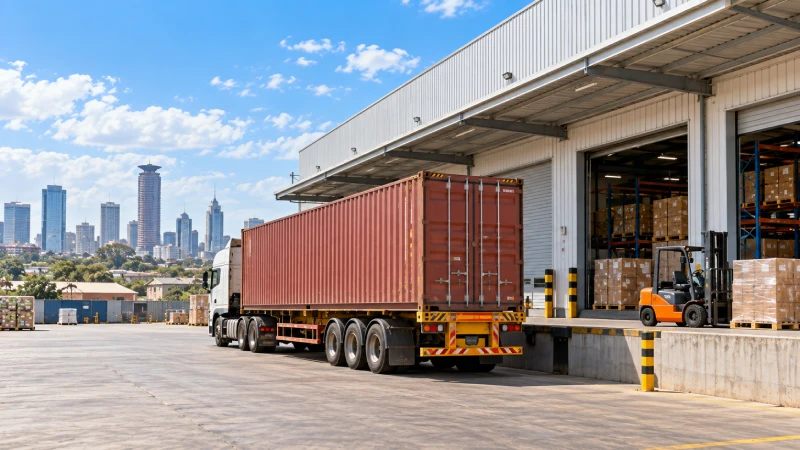
Standard dry containers and general LCL cargo are not the only shipments moving from Mombasa to Nairobi.
Special cargo should be identified during the quotation stage rather than after arrival.
Reefer Cargo
For refrigerated cargo, confirm:
- required temperature;
- reefer container status;
- genset or power arrangements during road movement where required;
- terminal or ICD handling arrangements;
- warehouse power and unloading capability;
- permitted delivery window.
Temperature-sensitive cargo should not be planned using the same assumptions as a general dry container.
Dangerous Goods
For dangerous goods, provide at minimum:
- proper shipping name;
- UN number;
- hazard class;
- packing group where applicable;
- MSDS/SDS;
- package type and quantity;
- container type.
The transporter must confirm whether the cargo can be accepted for the intended inland mode and what local operating requirements apply.
Do not assume that a DG container accepted for the ocean voyage is automatically accepted under exactly the same conditions for every inland rail or road movement.
Oversized and Project Cargo
For oversized machinery or project cargo, provide:
- overall length;
- width;
- height;
- unit weight;
- centre of gravity where relevant;
- lifting points;
- transport configuration;
- photographs or drawings.
Cargo shipped on flat racks, open tops or as breakbulk may require:
- lowbed or specialist trailers;
- lifting equipment;
- route assessment;
- permits;
- escorts;
- or other operational controls.
Kenya Railways’ current tariff also applies separate charging treatment to out-of-gauge cargo, reinforcing that OOG freight should not be planned as a standard container movement.
Shipment-specific road limits, railway acceptance and permit requirements should always be confirmed before pricing.
What Information Is Needed to Quote Mombasa-to-Nairobi Delivery?
The fastest way to receive an accurate inland-delivery plan is to provide operational details rather than simply asking:
“How much from Mombasa to Nairobi?”
A usable quote should start with the following information.
Shipment Details
- FCL or LCL
- 20GP, 40GP, 40HC, reefer, open top or flat rack
- number of containers
- commodity
- total gross weight
- number of packages
- LCL CBM
- dimensions for large or unusual cargo
Current Shipping Status
If the cargo is already moving or has arrived:
- Bill of Lading
- shipping line
- vessel name
- ETA
- container number
- current cargo location
- nominated port, CFS or ICD
- Customs status
- shipping-line release status
- cargo-ready status
Nairobi Delivery Information
Provide the actual destination rather than only writing “Nairobi.”
Useful details include:
- warehouse name;
- physical address;
- Google Maps pin;
- receiving contact;
- delivery hours;
- appointment requirement;
- truck-access restrictions.
Unloading Requirements
Confirm:
- forklift available or not;
- crane required or not;
- loading dock available or not;
- manual labour available or not;
- container to remain on chassis or be grounded;
- expected unloading duration.
Container Return Information
Where known, provide:
- shipping line;
- empty-return depot;
- return deadline or free-time information.
Special Cargo Information
For DG, reefer, oversized or project cargo, also provide the relevant technical documents and handling requirements.
Kenya-Side Coordination
If already arranged, provide:
- importer contact;
- clearing-agent contact;
- current clearance status;
- any regulator inspection still pending.
Quote Checklist
A useful first message can be as simple as:
Cargo: 1 × 40HC
Commodity: Furniture
Gross weight: 18,500 kg
Current location: Mombasa
Status: Customs clearance in progress
Destination: Industrial Area, Nairobi
Unloading: Forklift available
Special requirement: None
B/L / container number: Available on request
For LCL:
Cargo: 12 crates
Volume: 7.5 CBM
Weight: 1,850 kg
Current location: Mombasa CFS
Destination: Nairobi
Cargo ready: Confirmed
Unloading: Warehouse forklift available
Send Cargo Details
With these details, the inland route can be checked based on the actual shipment rather than a generic Mombasa-to-Nairobi estimate.
Common Mombasa-to-Nairobi Delivery Delays Importers Can Prevent
Many inland delays do not happen on the highway or railway. They happen because the shipment was not operationally ready when transport was booked.
Booking a Truck Before Cargo Release
A Customs-cleared shipment may still require additional carrier, terminal or facility release steps.
Always establish whether the cargo is physically available for collection.
Assuming the Wrong Pickup Location
The container may be at a port terminal, CFS or ICD rather than the facility the importer expects.
The truck needs the exact collection instruction.
Ignoring the Bill of Lading Routing
The B/L and haulage structure can affect where the cargo is intended to move and where the inland handover takes place.
Check this before arranging an alternative inland route.
Sending a Vehicle Before LCL Deconsolidation
An LCL shipment cannot normally be collected simply because the vessel has arrived.
Wait until the consolidator or destination agent confirms that the individual shipment has been stripped and released.
Missing Warehouse Access Information
A truck arriving at a Nairobi warehouse with limited access, no unloading equipment or no delivery appointment may need to wait or return later.
Forgetting the Empty-Container Return
The container-return depot is part of FCL delivery planning.
An inconvenient depot or a short remaining free-time window can materially affect the trucking arrangement.
Providing DG or OOG Details Too Late
Special cargo requires equipment and compliance planning.
Dimensions, weight, UN information and supporting documents should be provided before the inland vehicle or rail option is confirmed.
Pro Tip: Ask your clearing agent or local logistics coordinator whether the cargo is “physically ready for collection”, not only whether it is “customs cleared.” The distinction can prevent a truck from arriving before the final facility or carrier release is available.
Planning Your Mombasa-to-Nairobi Delivery
For a sea shipment from China, the inland Kenya leg should be planned before the vessel reaches Mombasa whenever possible.
The practical decision is usually between three operating structures:
FCL released in Mombasa → direct road delivery
FCL routed inland → SGR → Nairobi ICD → local delivery
LCL → Mombasa deconsolidation → loose-cargo road delivery
The right choice depends on the shipment’s documentation and release point, not simply on which mode appears fastest or cheapest.
Before finalizing the route, confirm:
- Is the shipment FCL or LCL?
- Where is it intended to be released?
- What does the Bill of Lading show?
- Is Customs processing complete or planned inland?
- Is the cargo physically ready for collection?
- What is the exact Nairobi delivery address?
- Can the receiving site unload the cargo?
- Where must an empty container be returned?
- Does the cargo require DG, reefer or OOG handling?
- Who is coordinating the Kenyan clearing and inland-delivery parties?
For the inland stage, provide the actual cargo and delivery details before comparing road, SGR and last-mile arrangements.
FAQ
How does cargo move from Mombasa to Nairobi after arriving by sea?
An FCL container may move directly by road after release or travel by SGR to Nairobi Inland Container Depot before final truck delivery. LCL cargo is usually deconsolidated at the nominated Mombasa facility before the individual shipment is released and transported to Nairobi.
Is SGR or truck better for a Mombasa-to-Nairobi container?
Neither option is automatically better for every container. Compare the complete route, including clearance, terminal handling, linehaul, last-mile delivery, unloading and empty return, rather than comparing only the road or railway rate.
Can my container be cleared at Nairobi ICD instead of Mombasa?
Nairobi ICD is an established inland cargo and Customs location, but whether an individual container should clear or be released in Mombasa or Nairobi depends on its documentation, Customs entry, shipping-line arrangement and clearing-agent instructions.
How long does cargo take from Mombasa to Nairobi?
The physical road or rail journey is only one part of the timeline. Recent road-market references commonly indicate around 8–12 hours of driving, while KPA operational material has referenced around 8–10 hours for the rail movement to Nairobi ICD. Actual warehouse delivery takes longer once collection readiness, terminal operations, Customs processes, ICD handling and last-mile delivery are included.
How is LCL cargo delivered from Mombasa to Nairobi?
The master LCL container is normally sent to the nominated handling facility and deconsolidated. Once the importer's shipment is identified, cleared and released, a suitable truck can collect the loose or palletized cargo for delivery to Nairobi.
What information do I need for a Mombasa-to-Nairobi delivery quote?
Provide whether the shipment is FCL or LCL, container size or cargo CBM, weight, commodity, current cargo location, release status, B/L or container number if available, exact Nairobi destination, unloading requirements, empty-return details and any DG, reefer or oversized-cargo requirements.
Does the SGR rate include delivery from Nairobi ICD to my warehouse?
Do not assume a published rail tariff is an all-in Nairobi warehouse-delivery price. ICD handling, Customs or agency work, last-mile trucking, unloading, storage, waiting and container-return costs may be separate depending on the shipment.
Regulatory Note: Kenya import, Customs, port and conformity requirements can change. Confirm shipment-specific requirements with the relevant Kenyan authority, shipping line and licensed Customs agent before cargo movement.
Rate Note: Freight and inland-transport prices are market-sensitive. Published railway tariffs and market transit references are provided for planning purposes and should be reconfirmed before booking.
