

If your cargo from China does not fill a full container, LCL shipping can be a practical way to move commercial goods to Kenya without paying for an entire 20ft or 40ft container.
This is especially useful for Kenyan SMEs, wholesalers and importers buying from one or several suppliers in China. Cargo can be collected or delivered to a consolidation warehouse in China, combined into an LCL container, shipped to Mombasa, deconsolidated after arrival and then cleared for delivery in Mombasa, Nairobi or another Kenyan destination.
But LCL should not be evaluated by a simple “price per CBM” alone.
The real cost depends on cargo volume and weight, pickup and consolidation charges in China, ocean freight, Mombasa destination handling, customs clearance, duties and taxes, and inland delivery. Documentation is equally important: for Kenya-bound containerized cargo, several requirements now need attention before the container is loaded in China.
Data Note: LCL rates, sailing schedules, consolidation cut-offs and destination charges change regularly. Any freight figure should therefore be treated as a planning reference rather than a fixed tariff. For a usable comparison, confirm the cargo-ready date, China origin, Mombasa destination scope and final delivery point.
Quick Answer: How Does LCL Shipping from China to Kenya Work?
| Question | Practical Answer |
|---|---|
| What is LCL best for? | Commercial cargo that does not justify booking a full container |
| How is LCL charged? | Usually by weight or measurement (W/M), plus origin, destination and other shipment charges |
| Can several Chinese suppliers be combined? | Yes, if their cargo is coordinated through a consolidation warehouse |
| Main sea gateway in Kenya | Port of Mombasa |
| Can cargo continue to Nairobi? | Yes, but the exact post-arrival routing and delivery arrangement should be agreed before booking |
| Is customs clearance included automatically? | No. Confirm the quote scope and the Kenyan clearing arrangement |
| What needs attention before loading? | Shipping documents, HS classification, ACD, Certificate of Origin and product-specific compliance where applicable |
The Port of Mombasa is Kenya’s principal maritime gateway and one of the largest ports in East and Central Africa. Kenya Ports Authority also operates inland container facilities, including Nairobi ICD, which is connected to Mombasa by rail and can handle both containerized and loose cargo. This does not mean every LCL shipment automatically moves through Nairobi ICD; the actual route depends on the bill of lading, consolidator and inland delivery arrangement. See the Kenya Ports Authority Port of Mombasa overview.
When Does LCL Make Sense for a China-to-Kenya Shipment?
LCL — less than container load — allows cargo belonging to different shippers to share one container.
For a Kenyan importer, the main advantage is simple: you do not need enough cargo to fill a complete container before using sea freight.
Maersk describes LCL as suitable for smaller or irregular shipments and gives less than about 15 CBM as a general reference for its LCL product. That should not be treated as a universal China-to-Kenya break-even point, because the most economical option changes with current LCL and FCL rates, cargo density and destination charges. See Maersk’s LCL guidance.
A more useful way to decide is to look at the whole shipment.
| Cargo Situation | What to Check |
|---|---|
| Less than about 1 CBM | Compare LCL minimum/local charges with air freight or courier |
| Around 1–5 CBM | Often a strong LCL candidate if the cargo is not urgent |
| Around 5–10 CBM | Common range where LCL deserves serious consideration |
| Around 10–15 CBM | Ask for both LCL and 20ft FCL calculations |
| Larger partial-container load | Do not assume LCL is still cheaper; compare all-in FCL cost |
| Dense or unusually heavy cargo | Check W/M calculation instead of using CBM alone |
| Fragile, dangerous or oversized cargo | Confirm whether standard LCL is operationally suitable |
These are planning scenarios rather than fixed carrier rules.
Do Not Choose LCL by CBM Alone
A 9 CBM shipment of ordinary boxed consumer goods and a 9 CBM shipment containing very heavy industrial parts may have the same volume but very different pricing and handling requirements.
Likewise, 12 CBM may still work well as LCL on one sailing but be economically close to a 20ft FCL shipment on another.
The better question is:
What is the all-in cost and operational risk of LCL compared with the available alternatives for this shipment?
If you are still deciding between sea, air, express and full-container options, compare this article with our broader guide to shipping from China to Kenya.
How LCL Shipping from China to Kenya Works
For importers, the most useful way to understand LCL is to follow the cargo from the supplier’s factory to the final destination.
1. Confirm Cargo Details with Each Supplier
Before pickup, collect accurate information for every shipment:
- product name
- number and type of packages
- packed dimensions
- gross weight
- cargo-ready date
- commercial value
- supplier pickup address
- HS code if available
- battery, chemical or dangerous-goods status
- special handling requirements
Do not calculate an LCL shipment from product dimensions alone. Use the dimensions of the final export packaging.
2. Move Cargo to the China Consolidation Warehouse
The supplier may deliver the cargo to the warehouse, or pickup may be arranged from the factory.
If several suppliers are involved, each shipment should be linked to the same consolidation plan while still being identifiable by supplier, purchase order, carton number or warehouse reference.
This is particularly important when cargo is arriving from different cities or on different dates.
3. Receive and Measure the Cargo
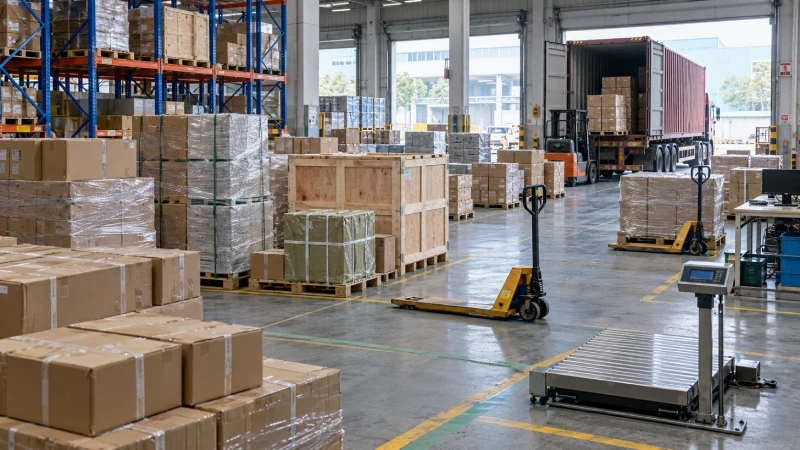
After arrival at the consolidation warehouse, the shipment should be matched against the expected cargo information.
Depending on the service arranged, receiving may involve checking:
- package count
- visible exterior condition
- gross weight
- final dimensions
- shipping marks
- pallet or crate condition
The warehouse measurement matters because it can become the basis for the final LCL charge.
Any inspection, repacking, labeling, photography, palletizing or quality-control service should be confirmed separately rather than assumed to be included.
4. Consolidate the Shipment
The cargo is assigned to a suitable LCL consolidation with other shipments moving toward the same destination or routing.
For multi-supplier cargo, this is also the point where importers need to decide whether all suppliers should wait for one another.
If four factories are ready this week but the fifth will be three weeks late, holding every shipment may not be the best decision.
5. Complete Export and Kenya Pre-Loading Documentation
This stage has become particularly important for Kenya-bound cargo.
Kenya Revenue Authority launched its Advance Cargo Declaration platform for containerized cargo on 3 August 2026. For applicable containerized shipments destined for Kenyan ports, the ACD reference must be obtained before loading and endorsed on the Bill of Lading. KRA lists the draft Bill of Lading, Commercial Invoice, Freight Invoice and Export Declaration among the documents required for the ACD application. See the KRA Advance Cargo Declaration notice.
Maersk subsequently advised customers that, from 1 September 2026, carriers are required to validate the ACD reference before loading Kenya-bound containers. See Maersk’s Kenya ACD update.
That makes document preparation part of the China-side shipping schedule, not something to leave until the cargo reaches Mombasa.
6. Load and Ship the Consolidated Container
After consolidation and export formalities, the cargo is loaded together with other LCL shipments.
The container then moves by ocean freight to Mombasa, either on a direct service where available or through a transshipment route.
7. Deconsolidate in Mombasa
Arrival at the Port of Mombasa does not mean an individual LCL shipment is immediately available for pickup.
The shared container has to go through the applicable destination process and be deconsolidated so individual consignments can be identified and released.
8. Complete Customs Clearance and Inland Delivery
The Kenyan importer needs an appropriate customs-clearing arrangement.
KRA states that commercial importers use licensed customs clearing agents to process import documentation and assist with clearance. Customs documentation may include the Commercial Invoice, Packing List, Bill of Lading, Certificate of Origin, freight documentation, permits and a Certificate of Conformity where relevant. For a detailed Kenya-side overview, see Customs Clearance in Kenya.
After release, cargo can be collected or delivered according to the agreed shipment scope.
For Nairobi importers, this may involve an inland movement from the coast or another agreed routing. Confirm the exact handoff point before booking rather than assuming that “Mombasa to Nairobi” is automatically included.
Plan My Consolidated Shipment
How CBM and W/M Pricing Works
One of the biggest mistakes in LCL shipping is assuming that:
LCL cost = CBM × one freight rate
CBM is important, but it is only one part of the calculation.
How to Calculate CBM
For a rectangular carton or crate:
Length × Width × Height = Volume
If measurements are in meters:
1.2 m × 0.8 m × 0.7 m = 0.672 CBM
If you have 10 identical packages:
0.672 × 10 = 6.72 CBM
Always calculate from the packed cargo dimensions.
If the shipment is later placed on pallets, inside wooden crates or into another outer package, the final chargeable volume can increase.
What Does W/M Mean?
LCL ocean freight commonly uses W/M — weight or measurement.
DHL explains that LCL pricing is driven by both cargo weight and volume: weight is considered in metric tons while volume is measured in cubic meters. The chargeable basis is determined according to the applicable W/M tariff. See DHL’s guide to LCL cost drivers.
A simplified example:
Shipment A
- Volume: 4.2 CBM
- Gross weight: 900 kg, or 0.9 metric tons
The measurement side is 4.2 while the weight side is 0.9.
Under a common W/M basis, volume would therefore be the larger charging quantity.
Now consider:
Shipment B
- Volume: 1.2 CBM
- Gross weight: 1,600 kg, or 1.6 metric tons
This time, the shipment is very dense, so weight may become the controlling factor.
Actual minimums, conversion rules and rounding depend on the quoted LCL service.
Why Warehouse Remeasurement Matters
Suppose a supplier estimates:
20 cartons = 4.5 CBM
After delivery to the warehouse, the actual packed cargo measures:
5.1 CBM
The final freight calculation may use the warehouse measurement rather than the supplier’s early estimate.
This is why importers should request accurate packed dimensions, not approximate product dimensions.
Non-stackable cargo is another issue. A crate that cannot safely support other cargo may consume more usable container space than its physical CBM suggests, so it should be declared before booking.
For a deeper cost-by-volume discussion, see Shipping Cost per CBM from China to Kenya.
What Do You Actually Pay for an LCL Shipment?
A low headline “per CBM” rate is not the same as the complete cost of moving goods from a Chinese supplier to a warehouse in Nairobi.
LCL normally involves charges at several stages.
| Stage | Possible Cost Category | Common Cost Basis |
|---|---|---|
| China origin | Supplier pickup | Distance / vehicle |
| China origin | Warehouse receiving or CFS handling | Shipment or W/M |
| China origin | Consolidation | Shipment / W/M |
| China origin | Export documentation and clearance | Shipment |
| Ocean | Base LCL freight | W/M |
| Ocean | Applicable carrier surcharges | Booking-specific |
| Mombasa | Destination handling / CFS | Shipment / W/M / minimum |
| Mombasa | Deconsolidation-related charges | Shipment / W/M |
| Kenya | Documentation / delivery-order related fees | Shipment |
| Kenya | Customs clearing-agent service | Service scope |
| Kenya | Duties and taxes | HS code and customs value dependent |
| Kenya | Compliance-related costs | Product dependent |
| Kenya | Storage if release is delayed | Time dependent |
| Kenya | Nairobi or other inland delivery | Cargo and destination dependent |
DHL similarly notes that LCL costs can include origin and destination local charges in addition to the ocean freight itself.
Origin Charges in China
Origin-side costs can include:
- pickup from suppliers
- warehouse handling
- export declaration
- CFS or consolidation charges
- documentation
- special handling
- palletizing or repacking if requested
When consolidating multiple suppliers, the pickup structure can matter almost as much as the ocean freight.
Collecting three factories located close to Guangzhou is operationally different from collecting three suppliers located in Guangdong, Zhejiang and Jiangsu.
Ocean Freight
This is the component most often advertised as:
USD X per CBM
But it should never be evaluated by itself.
When comparing quotations, check whether the quoted figure refers only to ocean freight or whether it also includes origin handling or destination charges.
Mombasa Destination Charges
Because LCL cargo has to be separated from a shared container after arrival, destination handling is an important part of the cost structure.
Ask for an itemized explanation of applicable destination charges before booking.
This is particularly important when comparing two forwarders: one may show a lower ocean rate while more of the cost is collected at destination.
Customs, Duties and Taxes
Kenyan customs obligations depend on factors such as:
- HS classification
- customs value
- product type
- applicable tariff treatment
- excise treatment where relevant
- exemptions, if any
This article intentionally does not use one generic duty percentage for all imports because different products can have different customs treatment.
Use your correct HS classification and ask the Kenyan clearing agent to assess the expected import charges before the cargo sails.
For broader budgeting, see Shipping Cost from China to Kenya.
Inland Delivery to Nairobi
If your business is in Nairobi, compare quotations to the same endpoint.
For example:
China warehouse → Mombasa CFS
is not equivalent to:
China warehouse → customs cleared → Nairobi warehouse
Pro Tip: Never compare LCL quotes only by the ocean freight rate per CBM. Compare the same origin, destination, Incoterm and included-charge scope.
Check My Shipping Cost
How Long Does LCL Shipping from China to Kenya Take?
There is no single reliable “China to Kenya LCL transit time” that applies to every booking.
Public market references vary significantly, partly because different pages use different origin ports, routings and definitions of transit time. Some quote only the ocean leg, while others include part of the consolidation and destination process.
For an importer, the better way to plan is by stage.
| Stage | What Can Affect the Schedule? |
|---|---|
| Supplier readiness | Production completion and packaging |
| China pickup | Supplier location and pickup coordination |
| Warehouse consolidation | LCL cut-off and other cargo availability |
| Export documentation | Document completeness and ACD preparation |
| Ocean leg | Origin port, carrier, sailing and transshipment |
| Mombasa arrival | Vessel discharge and destination handling |
| Deconsolidation | Shared-container unpacking process |
| Customs clearance | Documentation, valuation, compliance and inspection |
| Nairobi delivery | Release point and inland routing |
Ocean Transit Is Only Part of the Lead Time
A forwarder saying “30 days transit” may mean vessel departure to port arrival.
An importer may instead be asking:
“How many days from my supplier being ready until the goods reach my Nairobi warehouse?”
Those are different measurements.
For LCL, build extra time around:
- receiving multiple suppliers
- waiting for consolidation cut-off
- transshipment where applicable
- Mombasa deconsolidation
- customs clearance
- inland delivery
For a shipment that has a fixed sales launch, installation date or customer deadline, request a current sailing schedule and total planning timeline rather than relying on a generic website estimate.
For a wider route comparison, see How Long Does It Take to Ship from China to Kenya?.
Consolidating Cargo from Multiple Suppliers in China
One of the strongest reasons to use LCL is the ability to combine several smaller supplier shipments before export.
For example, a Kenyan importer may buy:
- kitchen equipment from Guangzhou
- packaging from Foshan
- spare parts from Dongguan
- accessories from Shenzhen
Instead of treating every supplier as a separate international shipment, their cargo can be coordinated into a common consolidation plan.
Coordinate Cargo-Ready Dates First
Before arranging pickup, create a supplier list containing:
| Supplier | Location | Cartons | CBM | Weight | Ready Date |
|---|---|---|---|---|---|
| Supplier A | Guangzhou | — | — | — | — |
| Supplier B | Foshan | — | — | — | — |
| Supplier C | Shenzhen | — | — | — | — |
The most important column is often Ready Date.
If every supplier is expected to ship together, one delayed factory can hold the rest of the consolidation.
Pro Tip: Set a target consolidation cut-off date before arranging pickups. Do not allow one supplier’s uncertain production schedule to create an open-ended warehouse wait.
Give Every Supplier a Clear Warehouse Reference
Each factory should receive correct warehouse delivery instructions and shipment identification.
Useful references can include:
- consignee or buyer reference
- purchase-order number
- supplier name
- carton numbering
- shipping marks
- warehouse entry reference
This reduces the risk of mixed or unidentified cartons after several suppliers deliver similar-looking packages.
Check the Cargo Before the Consolidation Cut-Off
Before booking the international leg, confirm at least:
- all expected suppliers have delivered
- carton quantities match
- measurements are available
- weight is confirmed
- labels and shipping marks are usable
- compliance documents match the products being shipped
If your service includes repacking, palletizing, photos, labeling or other warehouse work, confirm these separately before assuming they are part of standard consolidation.
Decide Whether a Late Supplier Is Worth Waiting For
Imagine four suppliers are ready now and represent 8 CBM.
A fifth supplier represents only 0.8 CBM but is delayed for two weeks.
There is no universal correct decision.
Compare:
Option A: Hold the 8 CBM and wait.
Option B: Ship the first consolidation and move the late supplier in the next batch.
The decision should consider:
- storage
- upcoming LCL cut-off
- sales urgency
- additional pickup/export costs
- whether the late product is essential to the main order
This is supply-chain management, not just freight booking.
Keep Commercial Documents Consistent
Multiple suppliers also create more document risk.
Product descriptions, quantities, values, HS classifications and origin information should be reviewed before the shipment documentation is finalized.
That is especially important now that Kenya’s ACD process requires shipment data before loading and KRA’s Finance Act 2026 guidance states that, from 1 September 2026, importers must obtain and retain an export declaration, export entry, customs export certificate or equivalent documentation from the country of export. See KRA’s Finance Act 2026 guidance.
Plan My Consolidated Shipment
Documents and Kenya Import Requirements for LCL
LCL does not remove the importer’s regulatory responsibilities.
In fact, because several shipments may be sharing a container, accurate documentation for the individual consignment becomes especially important.
A practical pre-shipment checklist is:
| Document / Requirement | Purpose | Status |
|---|---|---|
| Commercial Invoice | Product, seller, buyer and value information | Normally required |
| Packing List | Package, weight and cargo details | Normally required |
| Bill of Lading / House B/L | Transport document | Required |
| China export documentation | Evidence of export | Applicable to export process |
| Advance Cargo Declaration | Kenya pre-loading cargo declaration | Mandatory for applicable containerized cargo |
| Certificate of Origin | Confirms origin | Required subject to KRA rules/exceptions |
| IDF / customs entry | Kenya import process | Importer / clearing-agent process |
| PVoC / Certificate of Conformity | Product conformity | Product-specific |
| Import Standardization Mark | Imported goods sold locally where applicable | Conditional |
| Product permit / license | Sector-specific control | Conditional |
Advance Cargo Declaration — Important 2026 Update
For containerized cargo destined for Kenya ports, ACD now belongs on the pre-loading checklist.
KRA states that the ACD system launched on 3 August 2026 and requires exporters shipping applicable containerized goods to Kenya to obtain the ACD reference at the point of loading. Supporting documents include the draft Bill of Lading, Commercial Invoice, Freight Invoice and Export Declaration. See the KRA ACD notice.
The ACD reference is then endorsed on the Bill of Lading before shipment proceeds to Kenya.
For an LCL shipment, confirm the ACD handling procedure with the forwarder before the documentation cut-off, particularly how the shipment’s bill-of-lading information will be submitted and validated.
Do not wait for Mombasa arrival to ask about ACD.
Certificate of Origin
KRA announced that imported consignments generally require a Certificate of Origin issued by a competent authority in the country of export. After a transition period, full enforcement began on 1 October 2025, with specific exceptions and provisional alternatives described by KRA. See the KRA Certificate of Origin notice.
For China-origin cargo, treat COO planning as part of the supplier-document process.
If several Chinese suppliers are being combined, confirm how the origin documentation should be organized for the actual shipment structure before loading.
PVoC and Certificate of Conformity
Do not assume that “LCL” changes whether a product is regulated.
KEBS’ PVoC program is designed to verify conformity of applicable imported products before export. KEBS’ current PVoC information places China, Hong Kong, Taiwan and Mongolia in Zone 1 and lists the authorized contractors for that zone. See the KEBS PVoC guidance.
The key question is therefore not:
“Does LCL need a CoC?”
It is:
“Does this product fall under the applicable KEBS conformity requirements, and what must be completed before export?”
KRA also lists a Certificate of Conformity from a PVoC agent among import-clearance documents for regulated products.
Import Standardization Mark
KEBS states that imported products intended for sale in the local market fall within its Import Standardization Mark framework, with importers applying using supporting documentation such as the CoC, IDF and customs entry as applicable. See the KEBS Marks of Quality guidance.
HS Classification
The HS code affects much more than the description on a freight quote.
It can affect:
- applicable duty
- taxes
- permits
- conformity requirements
- customs declarations
- ACD information
Do not choose an HS code simply because a supplier used it on a previous export.
The Kenyan importer and appointed clearing agent should confirm the appropriate classification for Kenya.
Use a Kenyan Clearing Agent Early
KRA’s commercial import guidance places the customs clearing agent at the center of the import declaration and clearance process.
For LCL, involving the clearing agent before sailing helps identify problems while the goods are still in China.
KenTrade’s National Electronic Single Window System also provides the electronic framework through which trade-related documentation and approvals can be processed across relevant agencies. See the KenTrade InfoTrade portal.
Pro Tip: Ask the Kenyan clearing agent to review key commercial and compliance documents before the cargo sails. Solving a documentation problem while the goods are still in China is normally easier than solving it after deconsolidation in Mombasa.
Check My Kenya Import Requirements
What Happens After the LCL Container Arrives in Mombasa?
One of the most common misunderstandings in LCL shipping is:
“The vessel has arrived, so my cargo is ready.”
Not necessarily.
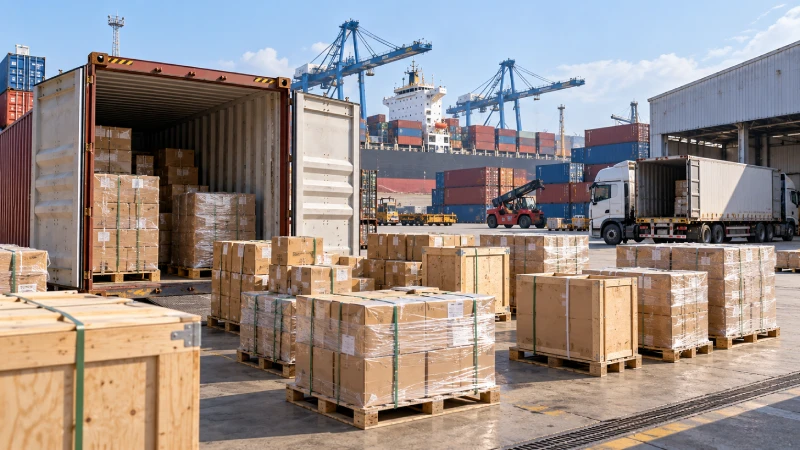
An LCL shipment shares a container with cargo belonging to other parties.
After arrival, the container must move through the relevant destination-handling process and be deconsolidated before each consignment can proceed through its individual release arrangements.
A typical destination sequence looks like:
Vessel Arrival → Container Discharge → Destination Handling → Deconsolidation → Customs Process → Cargo Release → Inland Delivery
Mombasa Deconsolidation
The Port of Mombasa is Kenya’s main maritime gateway and operates dedicated container-terminal infrastructure.
For LCL cargo, however, the importer also needs to understand the CFS/deconsolidation arrangement stated in the shipment.
Ask before booking:
- where is the cargo made available?
- which destination charges apply?
- who issues the release documents?
- when can customs clearance proceed?
- when does storage exposure begin?
- who coordinates final pickup?
Customs and Clearing-Agent Handoff
The Kenyan clearing agent should have the necessary documents before or around arrival rather than starting document collection only after the cargo becomes available.
Depending on the product and shipment, this may include:
- Bill of Lading
- Commercial Invoice
- Packing List
- Certificate of Origin
- ACD details
- IDF/customs documentation
- CoC where required
- permits or licenses
- supporting valuation documents
For the detailed clearance sequence and documentation, see Customs Clearance in Kenya.
Mombasa Delivery vs Nairobi Delivery
If your customer or warehouse is in Mombasa, the inland leg may be relatively straightforward after release.
If the final destination is Nairobi, define exactly what your quote includes.
KPA confirms that Nairobi ICD is connected to Mombasa by both Standard Gauge Railway and Meter Gauge Rail and handles containerized and loose cargo. Imports can move to inland depots under specified through-bill-of-lading or merchant-haulage arrangements. See the Kenya Ports Authority inland container depot information.
However:
Do not assume every China-to-Kenya LCL shipment automatically goes from Mombasa to Nairobi ICD by SGR.
The actual routing may depend on:
- consolidator
- bill-of-lading structure
- clearance location
- cargo availability
- trucking arrangement
- final consignee address
Confirm this before booking.
Destination Risks That Matter More with LCL
LCL can be highly cost-effective, but shared-container shipping introduces several risks that should be managed before departure.
| Risk | What Can Happen | What to Check |
|---|---|---|
| Low headline ocean rate | Final landed cost is much higher | Request itemized origin and destination charges |
| Remeasurement | Chargeable W/M increases | Use final packed dimensions |
| Late supplier | Whole consolidation is held | Agree a warehouse cut-off |
| Incorrect documents | Clearance is delayed | Pre-check documents before sailing |
| ACD mismatch | Loading/documentation issue | Align shipment and B/L information |
| KEBS compliance issue | Certification or clearance problem | Check before export |
| Destination storage | Charges accumulate during delay | Have clearing arrangement ready |
| Multiple handling points | Fragile cargo faces more handling | Upgrade packaging or reconsider LCL |
| Unclear Nairobi scope | Unexpected inland cost | Define exact delivery endpoint |
Do Not Let a Cheap Ocean Rate Hide Destination Costs
A quotation may look attractive because the ocean component is low.
That does not tell you what will be paid:
- in the China warehouse
- at destination
- for deconsolidation
- for clearance
- for inland delivery
Ask for the complete scope.
Have Documents Ready Before Arrival
The most expensive delays are often avoidable.
A missing compliance document or mismatch in commercial information can turn a routine LCL shipment into:
- storage
- document amendments
- additional inspection
- missed delivery plans
- extra communication between China and Kenya
The shipment should therefore be “clearance-ready” before the vessel reaches Mombasa wherever practical.
LCL vs FCL for Kenya: When Should You Switch?
There is no universal CBM number at which FCL suddenly becomes cheaper.
The comparison changes with freight-market conditions and the individual cargo.
| Factor | LCL | FCL |
|---|---|---|
| Freight basis | W/M | Container rate |
| Best suited to | Smaller partial loads | Larger shipments |
| Shared container | Yes | No |
| Consolidation required | Yes | No shared consolidation |
| Cargo handling | More handling stages | Usually fewer handling stages |
| Destination-charge structure | Important to review | Different port/container cost structure |
| Schedule | Depends partly on consolidation | Usually simpler |
| Multiple suppliers | Easy to combine smaller orders | Also useful once combined volume justifies a container |
| Fragile cargo | Needs careful assessment | Greater control over container space |
| Higher volume | Cost can rise quickly | Often becomes more competitive |
Do Not Use a Fixed 15 CBM Rule
You may see statements online such as:
“Use FCL above 15 CBM.”
Treat them as rough planning shortcuts, not a buying rule.
At 10, 12 or 14 CBM, request both:
All-in LCL quotation
and
20ft FCL quotation
Then compare:
- China pickup
- origin handling
- ocean freight
- destination charges
- customs-clearance scope
- inland delivery
- transit planning
- handling risk
A dense 12 CBM machinery shipment may produce a very different result from a lightweight 12 CBM furniture shipment.
For container-specific cost planning, see 20ft & 40ft Container Shipping Cost from China to Kenya.
Compare LCL and FCL
Cargo That May Not Suit Standard LCL
Not every shipment belongs in a standard mixed LCL container.
Declare unusual cargo before it arrives at the warehouse.
Dangerous Goods
Dangerous goods are not automatically impossible to ship by LCL, but acceptance is conditional.
Carrier rules can require advance written approval, correct classification, marking, documentation and a Dangerous Goods Declaration. Maersk’s LCL terms, for example, require prior agreement before dangerous goods are delivered into its LCL service. See Maersk’s LCL terms.
Examples that require early checking include:
- lithium batteries
- chemicals
- flammable products
- aerosols
- paint
- certain liquids
- regulated DG products
Do not describe batteries simply as “normal cargo” because they are packed inside a product.
Send the battery specification, SDS/MSDS and applicable transport information for review before booking.
Oversized or Heavy Pieces
Large machinery, long cargo or extremely heavy individual packages may not work efficiently inside a standard LCL consolidation.
Depending on the dimensions and weight, alternatives may include:
- FCL
- open-top container
- flat rack
- breakbulk
- project cargo solution
The correct method depends on the actual packed cargo.
Non-Stackable Cargo
A crate may physically occupy only 2 CBM but block usable space above it.
Declare non-stackability before quotation.
Fragile or High-Value Cargo
LCL typically involves more handling than a dedicated FCL shipment because the goods pass through consolidation and deconsolidation stages.
For:
- sensitive instruments
- fragile glass
- high-value equipment
- easily scratched products
evaluate packaging, insurance and whether the cost saving justifies the additional handling.
Temperature-Controlled or Contaminating Cargo
Standard dry LCL should not be assumed suitable for goods requiring a controlled temperature or goods that could leak, smell, contaminate or damage neighboring cargo.
Check acceptance before booking.
Review My Cargo Before Shipping
What Should You Send for an Accurate LCL Quote?
The fastest way to get a useful LCL quotation is to provide complete cargo information from the beginning.
Start with these eight items:
- Product name
- China pickup city
- Number of suppliers
- Number and type of packages
- Packed dimensions
- Gross weight
- Cargo-ready date
- Final destination in Kenya
Then add, where available:
- total CBM
- supplier addresses
- commercial value
- HS code
- Commercial Invoice
- Packing List
- battery or DG status
- SDS/MSDS where relevant
- CoC/PVoC status
- Certificate of Origin status
- supplier Incoterm
- special packaging
- non-stackable information
- insurance requirement
- importer / consignee information
- whether the destination is Mombasa, Nairobi or another city
For multi-supplier shipments, send each supplier’s cargo details separately rather than combining everything into one estimated total.
That makes it easier to plan:
Supplier Pickup → China Consolidation → LCL Booking → Mombasa → Clearance → Final Delivery
Send Cargo Details
FAQ
How much does LCL shipping from China to Kenya cost per CBM?
There is no reliable fixed China-to-Kenya LCL rate for every shipment. The base ocean freight may be quoted by W/M, but total cost can also include supplier pickup, China warehouse or CFS handling, export documentation, destination CFS charges, deconsolidation, customs-clearance service, duties and taxes, and inland delivery. Compare itemized quotes with the same origin and Kenya endpoint.
How long does LCL shipping from China to Mombasa take?
The ocean leg is only one part of the total LCL lead time. Allow for China consolidation, sailing cut-off, possible transshipment, Mombasa deconsolidation and customs clearance. Ask for a current sailing schedule and a warehouse-to-availability estimate for your specific origin.
Can I combine cargo from several suppliers in China?
Yes. Several suppliers can send cargo into an agreed consolidation warehouse before the goods are combined for international movement. The key issues are coordinating cargo-ready dates, identifying each supplier's packages and checking commercial and compliance documents before the LCL cut-off.
What is the minimum CBM for LCL shipping to Kenya?
Minimum charging rules depend on the LCL service. For very small shipments, compare LCL with air freight or courier because origin and destination minimum charges can make a low-volume LCL shipment less economical than expected.
Does Kenya’s Advance Cargo Declaration apply to LCL shipments?
KRA's ACD requirement applies to applicable containerized cargo destined for Kenyan ports and became operational on 3 August 2026. Because LCL uses a consolidator and often involves house and master bill structures, confirm the exact ACD documentation workflow with the forwarder before cargo cut-off.
Do I need PVoC, a CoC and a Certificate of Origin for an LCL shipment?
These are separate requirements. Certificate of Origin requirements are governed by KRA, while PVoC and CoC relate to KEBS product-conformity rules. Whether a CoC is required depends on the product and applicable conformity requirements, not simply on whether the shipment is LCL.
When should I choose FCL instead of LCL?
Compare FCL once cargo volume moves toward the upper LCL range, or earlier if the cargo is dense, fragile, difficult to handle or subject to high LCL destination charges. Request both all-in LCL and FCL quotations rather than relying on a universal CBM cut-off.
Plan Your LCL Shipment Around the Full Route, Not Just the Ocean Rate
LCL shipping from China to Kenya can work very well for importers who do not have enough cargo for a full container, especially when products are being sourced from multiple Chinese suppliers.
The key is to plan the shipment as one complete process:
Supplier Coordination → China Pickup → Warehouse Consolidation → Measurement → Documentation → ACD → Export → Ocean Freight → Mombasa Deconsolidation → Customs Clearance → Nairobi or Final Delivery
Do not judge the shipment by a cheap per-CBM ocean rate alone.
Ask:
- What is included at origin?
- How is W/M calculated?
- Where will the cargo be deconsolidated?
- Which destination charges apply?
- Are the Kenya documents ready before loading?
- Who will handle customs clearance?
- What happens after release in Mombasa?
- Is Nairobi delivery included?
- Would FCL now be more economical?
The cheapest LCL ocean rate is not necessarily the lowest-cost way to get your goods from Chinese suppliers into your warehouse in Kenya.
Regulatory Note
Kenya import and conformity requirements can change and may differ according to HS classification, product type, importer status and current regulations. Confirm product-specific requirements with KRA, KEBS and your appointed Kenyan customs clearing agent before shipment.
