
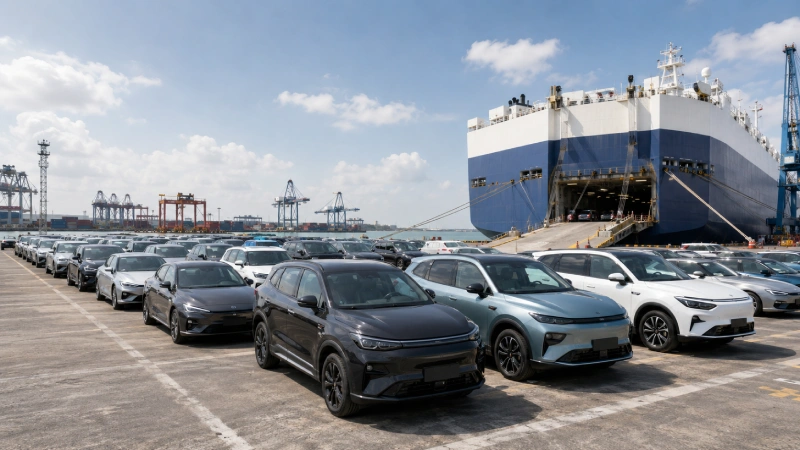
Cars can be shipped from China to Kenya by RoRo or container, with Mombasa serving as the main ocean gateway for vehicle imports. However, booking freight should not be the first step.
Before paying a Chinese supplier, confirm that the vehicle is factory-built right-hand drive, meets Kenya’s annual age limit, has a workable KEBS inspection route, qualifies for export from China and can be accepted by the selected carrier. Customs clearance and registration are separate again.
For the broader China-side transport process, see Vehicle Shipping from China.
Quick Answer: Cars can be shipped from China to Kenya by RoRo or container, normally through Mombasa Port. In 2026, a used passenger car should generally have a Year of First Registration of January 1, 2019 or later. Before purchase, also confirm factory-built right-hand drive, the applicable KEBS inspection route, China export eligibility and carrier acceptance.
Can the Vehicle Be Imported and Registered in Kenya?
A vehicle being exportable from China does not automatically make it importable or registrable in Kenya.
For an ordinary passenger car, six separate approval layers should be checked:
- Kenya vehicle-age and steering eligibility
- KEBS conformity or roadworthiness requirements
- China export eligibility
- Carrier and terminal acceptance
- KRA customs valuation and clearance
- NTSA inspection and registration
Approval at one stage does not replace approval at the remaining stages.
This guide mainly covers sedans, hatchbacks, station wagons, SUVs and crossovers powered by petrol, diesel, hybrid, plug-in hybrid or batteries. Buses, pickups, trucks, tractor heads, ambulances and other special-purpose vehicles may fall under different technical, age, duty or inspection rules and should be assessed separately.
Kenya’s Right-Hand-Drive Requirement
Kenya requires ordinary imported vehicles to be right-hand drive. KRA also states that imported used vehicles must meet the age requirement, undergo the applicable roadworthiness inspection and be RHD. The basic import requirements are summarized in the KRA Motor Vehicle Importation Procedure.
This is particularly important when importing cars from China to Kenya because vehicles produced for China’s domestic market are normally left-hand drive.
Do not assume that a Chinese brand is suitable simply because the same brand sells cars in Kenya. The China-market and export-market versions may differ in steering position, lighting, software and safety equipment.
Request the VIN, factory specification sheet and photographs of the actual vehicle. A factory-built RHD model is preferable to post-production steering conversion, which can create concerns around steering components, dashboards, airbags, lighting and technical conformity.
A carrier agreeing to transport a left-hand-drive vehicle does not mean KEBS or NTSA will approve it.
Kenya’s Eight-Year Rule for Used Cars
Kenya’s vehicle-age restriction is based primarily on the Year of First Registration, rather than a seller’s advertised model year.
For 2026, an ordinary used passenger vehicle should generally have been first registered on or after January 1, 2019.
| Arrival year | Earliest expected Year of First Registration |
|---|---|
| 2026 | January 1, 2019 |
| 2027 | Expected to move to January 1, 2020, subject to the applicable annual KEBS rule or notice |
Do not calculate the rule by simply subtracting eight years from today’s exact date. A vehicle first registered in December 2018 does not become acceptable for part of 2026 merely because fewer than eight full calendar years have elapsed.
Also compare the manufacturing date with the first-registration date and make sure the VIN, registration certificate, manufacturer’s plate and export documents are consistent. The gap between manufacture and first registration also needs to fit the applicable Kenyan requirements.
Arrival timing matters. A 2019 vehicle planned to arrive in December 2026 could become problematic if a delay pushes arrival into 2027. Near year-end, allow sufficient sailing and transshipment buffer rather than relying on an already-issued inspection certificate to protect the vehicle from the next annual age threshold.
KEBS Inspection and Certification for Vehicles from China
The KEBS inspection route is one of the most important issues for China-sourced used cars.
For used vehicles, the compliance file may involve KS 1515 requirements, roadworthiness inspection, the original registration record, deregistration or export evidence, VIN verification and a Certificate of Roadworthiness, or CoR.
However, KEBS’s current dedicated overseas used-vehicle inspection program lists QISJ inspection coverage for Japan, Singapore, South Africa, Thailand, the UAE and the UK. China is not expressly included in that six-country used-vehicle list.
At the same time, China appears within KEBS’s broader PVoC system for general goods. Therefore, importers should not automatically copy the Japanese used-car inspection process or assume that an ordinary general-goods CoC procedure applies unchanged to a used vehicle from China.
Before shipment, send the VIN, vehicle category, first-registration date, registration records and China export documents to KEBS or the currently authorized inspection body and obtain written confirmation of:
- Whether a pre-export CoR can be issued in China
- Which inspection body should handle the vehicle
- Whether document validation is required
- Whether destination inspection is legally available for that shipment
Destination inspection should be treated as a controlled compliance route, not an automatic waiver for shipping without the proper pre-export checks.
Also distinguish the documents correctly. A Certificate of Conformity, or CoC, is generally a conformity document, while a Certificate of Roadworthiness, or CoR, relates specifically to used-vehicle roadworthiness. Neither document replaces KRA customs clearance or NTSA registration.
KEBS has also proposed updated inspection provisions through DKS 1515:2025, including items that may affect used EV battery health and emissions. Until a final adoption notice makes those clauses binding, importers should treat draft provisions as proposed requirements and verify the current standard before shipment.
Check the Vehicle’s Documents and Physical Condition
For a used Chinese car, verify the original registration certificate, first-registration date, VIN, manufacturer, model, engine or motor number, ownership history and China export-licence information.
Where necessary, prepare an English translation of the Chinese registration and export records. The VIN and vehicle description should remain consistent across the registration certificate, sales contract, inspection file, export declaration, shipping documents and Kenyan import records.
The physical inspection should also cover:
- Collision, flood and fire history
- Structural repairs and chassis corrosion
- Airbag deployment
- Steering and braking condition
- Suspension and tire condition
- Lighting
- Odometer consistency
- Recall status
A vehicle that starts and drives is not automatically roadworthy, KEBS-compliant or eligible for Kenyan registration.
Why Mombasa Is the Main Port for Car Imports
Mombasa is normally the first Kenyan ocean gateway to evaluate for passenger-car imports from China.
Both RoRo and container shipments can be planned through Mombasa, subject to actual carrier schedules and vehicle acceptance. Nairobi, Nakuru, Kisumu and Eldoret are inland destinations, not alternative ocean discharge ports.
| Location | Typical shipment role |
|---|---|
| Mombasa | Main ocean discharge and vehicle-clearance location |
| Nairobi | Major inland market and delivery destination |
| Nakuru | Inland delivery destination |
| Kisumu | Western Kenya delivery destination |
| Eldoret | Inland and regional distribution destination |
| Lamu | Evaluate only when an actual carrier service and vehicle-handling arrangement are confirmed |
Confirm the actual terminal or CFS before departure. The Kenyan importer should also appoint a licensed customs agent and prepare the IDF, KEBS documents, preliminary valuation information and customs file before arrival wherever possible.
RoRo or Container Shipping from China to Kenya?
RoRo Shipping to Mombasa
RoRo Car Shipping from China can suit running passenger cars, SUVs, new vehicles and fleet shipments when an appropriate service and carrier acceptance are available.
Before booking, confirm:
- The actual Chinese loading port
- Direct or transshipment routing
- Single-vehicle and used-vehicle acceptance
- Vehicle dimensions
- RHD configuration and age eligibility
- Whether the car starts, steers and brakes
- Leakage condition
- Fuel or battery state-of-charge requirement
- Keys and alarm-system requirements
- Items permitted inside the vehicle
- Mombasa terminal
- Destination free time
Used cars and EVs require particular attention because acceptance can vary by carrier, terminal and sailing.
Container Shipping to Mombasa
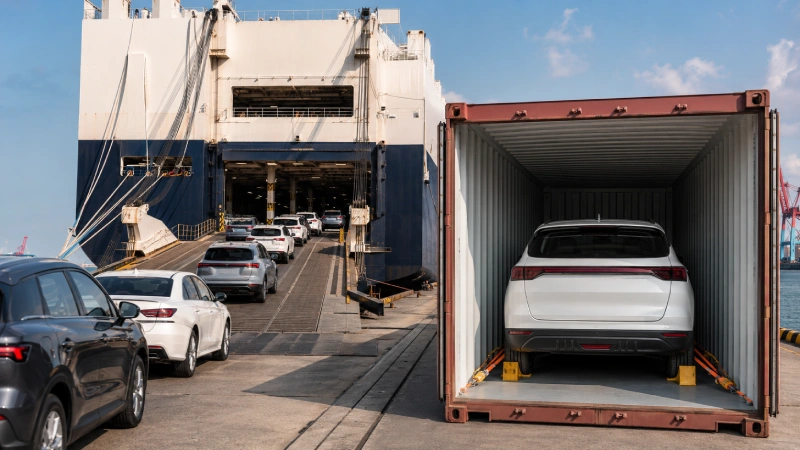
Container Car Shipping from China provides enclosed transport and may be useful for high-value cars, smaller shipments, routes with limited RoRo availability or projects using alternative Chinese loading ports.
Professional loading should account for exact vehicle dimensions and weight, container-door clearance, wheel chocks, approved lashing points, weight distribution, loading photographs, VGM and destination unloading arrangements. EV shipments may also require carrier-specific dangerous-goods documentation and approval.
Do not assume that every 40HQ can carry three or four cars. Capacity depends on the exact dimensions, loading system, safe securing method and carrier-approved plan.
Shipping Electric and Hybrid Cars to Kenya
An EV shipment requires five different checks:
- Kenyan vehicle-import eligibility
- KEBS inspection and conformity requirements
- China export licensing
- Maritime dangerous-goods classification
- Carrier acceptance
Under IMDG Code Amendment 42-24, mandatory from January 1, 2026, applicable complete vehicles may use classifications including UN3556 for lithium-ion battery-powered vehicles, UN3557 for lithium-metal battery-powered vehicles and UN3558 for sodium-ion battery-powered vehicles. HEVs and PHEVs containing a fuel-powered engine generally require assessment under the applicable UN3166 entry.
Do not continue using UN3171 as a blanket classification for every EV.
For used EVs, review battery warnings, water ingress, overheating or fire history, pack repairs, insulation faults, charging problems, recalls and state of health. A seriously damaged or defective traction battery requires specialist review and may be rejected by the carrier.
See Electric Vehicle Shipping from China for the shipping-side requirements.
China also introduced export-licence management for specified pure-electric passenger vehicles with VINs under the referenced customs classification 8703801090 from January 1, 2026. The scope and effective date are set out in the China Ministry of Commerce announcement.
For certain used vehicles registered for 180 days or less, China’s current export rules also require an applicable manufacturer-issued after-sales service confirmation when applying for the export licence.
Kenyan compliance does not replace Chinese export licensing, and Chinese export approval does not guarantee KEBS, KRA or NTSA acceptance.
Documents Required to Ship a Car to Kenya
The exact file depends on whether the vehicle is new or used and on its powertrain.
China Vehicle and Export Documents
Common documents may include:
- Commercial invoice
- Sales contract
- Vehicle specification sheet
- VIN list
- Certificate of origin where applicable
- Chinese registration certificate
- Transfer-pending-export documents
- Export customs declaration
- Vehicle export licence
- Used-vehicle inspection report where applicable
- After-sales service confirmation where applicable
- Modification evidence where applicable
KEBS Documents
Depending on the vehicle and inspection pathway, the file may include:
- Request for Certification
- Import Declaration Form
- Certificate of Conformity
- Certificate of Roadworthiness
- Inspection report
- Original logbook or registration certificate
- Deregistration or export certificate
- Document-validation evidence
- KEBS consignment or release documentation
Carrier Documents
The carrier may request:
- Booking application
- VIN list
- Vehicle dimensions and weight
- Running-condition declaration
- Fuel or SOC declaration
- Battery specification
- Dangerous Goods Declaration where applicable
- Container Packing Certificate where applicable
- VGM
- Loading or lashing information
- Marine insurance details
Kenya Clearance and Registration Documents
Commonly required items can include:
- Original Bill of Lading
- Commercial invoice
- Packing or VIN list
- Import Declaration Form
- KRA PIN
- Certificate of Incorporation where applicable
- Customs entry
- Duty-payment evidence
- KEBS release
- Delivery order
- Marine insurance
- KRA release
- NTSA registration application documents
Step-by-Step Car Shipping Process
Step 1: Identify the Kenyan Importer
Confirm the importer name, KRA PIN, individual or company status, licensed customs agent, final destination and intended vehicle use.
Step 2: Confirm Factory-Built RHD
Obtain the VIN, factory specification sheet and photographs of the actual vehicle before payment.
Step 3: Verify Age and Registration History
Compare the manufacturing date and Year of First Registration against the expected Mombasa arrival year.
Step 4: Confirm the KEBS Inspection Route
Determine whether the vehicle is new or used and confirm the applicable CoC, CoR, pre-export inspection, document-validation or destination-inspection procedure.
Step 5: Obtain a Preliminary KRA Valuation
Give the Kenyan clearing agent the VIN, make, model, year, engine capacity and powertrain so the likely customs value and tax exposure can be estimated before purchase.
Step 6: Confirm China Export Eligibility
Check the exporter, applicable export licence, used-car registration history, after-sales confirmation requirements and consistency of the VIN and model information.
Step 7: Apply for Carrier Acceptance
Disclose the vehicle type, condition, dimensions, powertrain, battery information and photographs required by the carrier.
Step 8: Select RoRo or Container
Compare the actual route, sailing availability, carrier conditions, China loading cost and Mombasa destination charges.
Step 9: Complete Inspection and China Export Operations
Arrange the required inspection, export customs process, terminal delivery and container loading or RoRo handover.
Step 10: Prepare Clearance Before Arrival
Prepare the IDF, customs entry information, KEBS documents, tax funding and shipping-line documentation.
Step 11: Clear and Collect at Mombasa
Complete valuation, tax payment, examination where required, KEBS and KRA release and vehicle collection.
Step 12: Complete NTSA Registration
Complete the applicable Kenyan inspection, insurance, registration, number-plate and logbook procedures.
Car Shipping Cost from China to Kenya
The real China to Kenya car shipping cost is much more than ocean freight.
A practical landed-cost formula is:
China pickup + vehicle inspection + China export documents and licence + KEBS PVoC, CoC or CoR requirements + carrier or DG approval + RoRo or container freight + marine insurance + Mombasa shipping-line charges + KPA or CFS handling + KRA customs taxes and levies + customs examination + storage + clearing agent + inland delivery + NTSA inspection and registration.
From July 1, 2026, Kenya is authorized to apply a 35% import duty to relevant vehicles under HS headings 8702, 8703 and 8704 for the applicable period. The measure is published in the East African Community Gazette dated June 30, 2026.
Typical planning references for an ordinary vehicle shipment include:
| Charge | 2026 planning reference |
|---|---|
| Import Duty | Generally 35% for applicable ordinary vehicles; confirm HS code |
| Excise Duty | Depends on powertrain, engine capacity and tariff classification |
| VAT | Generally 16% |
| Import Declaration Fee | Generally 2.5% of customs value |
| Railway Development Levy | Generally 2% of customs value |
| BEV Excise Duty | Commonly 10% for qualifying pure-electric vehicles |
These percentages cannot simply be added together, because different taxes have different calculation bases.
KRA may also value a used vehicle using its Current Retail Selling Price methodology, vehicle age and applicable depreciation rather than accepting the Chinese purchase invoice as the customs value.
A low purchase price in China therefore does not automatically produce a proportionally low Kenyan tax bill. Before payment, ask a licensed Kenyan clearing agent for a VIN-specific preliminary valuation and tax estimate.
RoRo freight may be quoted by vehicle size, CBM or other carrier charging rules. Container freight depends on the loading port, box type, route, DG status and loading plan. Avoid relying on long-term fixed USD shipping prices without confirming current carrier rates and destination charges.
Transit Time and Delay Risks
For planning purposes, ocean transit between suitable Chinese ports and Mombasa may be around 27–45 days, while the complete China-to-Kenya process can take roughly 40–65 days or longer after allowing for preparation, inspections, licensing, carrier schedules and Mombasa clearance.
Typical planning stages may include:
- China pickup and preparation: 3–10 days or longer
- KEBS inspection or certification: shipment-specific
- China export licence and customs: shipment-specific
- Ocean freight: approximately 27–45 days on suitable services
- Mombasa clearance: approximately 5–14 days or longer
- Full process: often 40–65 days or longer
Major delay risks include:
- Left-hand-drive vehicle
- Age-limit failure
- First-registration mismatch
- Unresolved KEBS inspection route
- CoR or CoC delay
- China export-licence delay
- Carrier rejection
- RoRo space shortage
- DG approval delay
- Transshipment change
- CRSP valuation dispute
- Missing original registration document
- Customs examination
- Late duty payment
- CFS storage
- NTSA document mismatch
Near year-end, schedule risk becomes a compliance risk because the Kenyan age threshold is tied to the applicable arrival year.

What to Check Before Buying a Chinese Car for Kenya
Before releasing payment, confirm:
- Factory-built right-hand drive
- VIN and WMI
- Year of manufacture
- Year of first registration
- Manufacturing-to-registration gap
- New or used classification
- Original registration records
- China export eligibility
- KEBS inspection route
- CoC or CoR availability
- Clean ownership history
- Accident, flood and fire history
- Spare-parts availability
- English-language interface
- Kenya-compatible navigation and software
- Warranty validity in Kenya
- Local diagnostic support
- Ground clearance
- Cooling and air-conditioning
- Fuel compatibility
- EV charging connector
- Battery state of health
- Remote-app regional access
- Recall status
Do not pay for the vehicle until its factory-built RHD configuration, age eligibility, KEBS inspection route, China export eligibility and estimated KRA customs value have all been checked.
How Winsail Coordinates Car Shipping to Kenya
Winsail can collect the vehicle and importer details, coordinate pickup in China, review VIN, RHD configuration, dimensions and vehicle condition, compare RoRo and container options, confirm current Mombasa routing, help prepare information for the applicable KEBS inspection process, coordinate with eligible Chinese export entities, support EV carrier review, arrange export customs, container loading and lashing, provide shipment updates and coordinate document handover to the Kenyan importer and clearing agent.
Winsail does not issue Chinese vehicle export licences or KEBS certificates, determine KRA customs value, guarantee destination inspection approval or guarantee NTSA registration. Final approvals remain with the relevant exporters, authorities, inspection bodies, carriers and Kenyan agencies.
FAQ
How much does it cost to ship a car from China to Kenya?
There is no reliable fixed rate. Cost depends on vehicle size, pickup location, RoRo or container service, carrier acceptance, inspection and export requirements, Mombasa charges, KRA customs value, taxes and inland delivery. Request a shipment-specific landed-cost estimate before purchase.
How long does car shipping from China to Mombasa take?
Ocean transit may be around 27–45 days on suitable services, but total lead time can be 40–65 days or longer after inspections, export procedures, sailing schedules, transshipment and Mombasa clearance are included.
Can a left-hand-drive car be imported from China to Kenya?
Ordinary passenger-car imports should be right-hand drive. Do not rely on post-production LHD-to-RHD conversion as the normal solution. Confirm a factory-built right-hand-drive configuration before purchasing the vehicle.
What is the maximum age for an imported used car in Kenya in 2026?
A used passenger vehicle should generally have a Year of First Registration of January 1, 2019 or later for arrival in 2026. The relevant arrival year matters, particularly for shipments scheduled close to the end of December.
Does a used car from China need a KEBS Certificate of Roadworthiness?
Used vehicles are subject to KEBS roadworthiness requirements, but China's inspection route requires specific confirmation because China is not expressly included in KEBS's current dedicated six-country used-vehicle inspection program. Obtain written guidance before shipment.
Is RoRo or container shipping better for Kenya?
RoRo can be efficient for accepted running vehicles on available services. Containers provide enclosed transport and broader routing flexibility. Compare actual schedules, vehicle acceptance, loading cost and Mombasa destination charges rather than choosing only by ocean freight.
How does KRA calculate import duty on a used car?
KRA can use the CRSP methodology, vehicle age, applicable depreciation and customs classification when determining customs value. The Chinese invoice alone does not necessarily determine the final taxable value. Ask a licensed Kenyan clearing agent for a VIN-specific estimate.
Are electric cars imported into Kenya duty-free?
No. A qualifying BEV may attract a lower excise rate than many combustion vehicles, but ordinary private electric cars can still be subject to import duty, excise duty, VAT, IDF, RDL and port, clearance and registration charges.
