
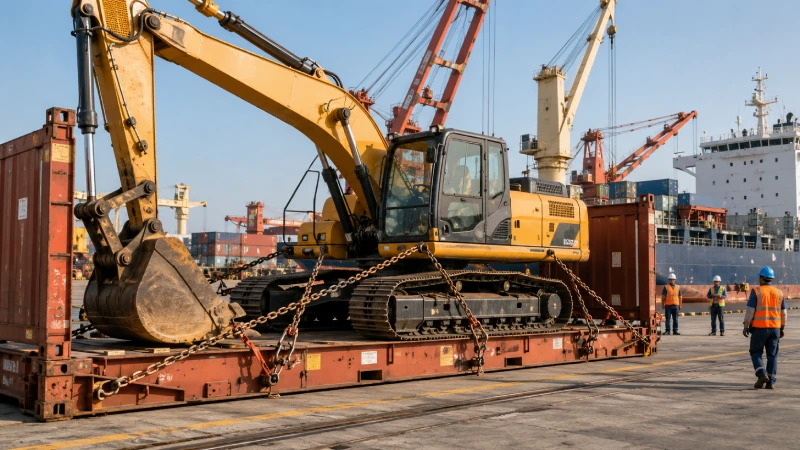
Shipping construction equipment from China to Qatar is not a simple freight booking task. For importers, contractors, and project buyers, the real challenge is making sure the equipment arrives at the right project stage, can be handled safely at origin and destination, and can be delivered directly to the construction site without delaying work on the ground. If you are planning a broader import program, our main Shipping from China to Qatar guide can help you understand the overall route, while this article focuses specifically on construction equipment that requires oversized cargo planning, heavy lift coordination, and site delivery control.
Construction equipment often includes excavators, loaders, bulldozers, cranes, road rollers, concrete pumps, forklifts, generators, drilling rigs, scaffolding systems, and other site machinery. Unlike cartons, pallets, or general container cargo, these machines may be oversized, overweight, irregular in shape, or difficult to lift. Some equipment can be shipped in standard containers after disassembly, while others require flat rack, RoRo, breakbulk, or heavy lift solutions.
For a construction project in Qatar, port arrival is not the final objective. The equipment must arrive when the site is ready, when the unloading team is available, and when the project schedule requires it. That is why construction equipment shipping should be managed as project logistics, not just international freight.
Why Construction Equipment Shipping Requires Project Logistics Planning
Normal commercial cargo usually follows a predictable flow: factory pickup, export customs, sea freight, destination release, and warehouse delivery. Construction equipment is different because each shipment must be planned around physical cargo conditions and project requirements.
The logistics team must answer several practical questions before booking space. Can the machine fit inside a container? Does it need to be shipped on a flat rack? Can it drive onto a RoRo vessel? Does the port have the right lifting capacity? Can the delivery truck enter the site in Qatar? Is there enough space to unload the equipment safely?
These questions affect the entire shipping plan. A small difference in height, width, or weight can change the shipping method, trailer type, lifting equipment, port handling cost, and final delivery arrangement. For this reason, construction equipment shipping should begin with technical cargo review instead of asking only for the cheapest freight rate.
Start With Equipment Dimensions, Weight, and Handling Data
The first step is collecting accurate equipment information. Many delays happen because importers request a quote using only the machine name or model number. For project cargo, that is not enough.
A proper construction equipment shipping plan should include:
- Equipment name and model
- Actual length, width, and height
- Gross weight
- Photos and videos of the machine
- Lifting points
- Tie-down points
- Wheelbase or track width
- Whether attachments can be removed
- Whether the machine is self-propelled
- Pickup address in China
- Final site address in Qatar
- Required delivery date
Dimensions are especially important. If the equipment is too tall, too wide, or too long for a standard container, the logistics plan may need to shift to flat rack, RoRo, or breakbulk shipping. If the machine is very heavy, the project may require crane coordination, low-bed trailers, reinforced loading areas, and more detailed port handling arrangements.
Importers shipping expensive industrial machinery can also review Shipping Machinery from China to Qatar for more information about packaging, inspection, cargo protection, and insurance planning.
Choose the Right Shipping Method for Construction Equipment
There is no single best shipping method for all construction equipment. The right option depends on cargo size, weight, structure, project timeline, and whether the machine can be driven or disassembled.
Flat Rack Shipping
Flat rack shipping is commonly used for oversized equipment that cannot fit inside a standard container but can still be transported on container vessels. It is suitable for small excavators, loaders, rollers, machinery attachments, and equipment with removable parts.
Flat racks are useful when the cargo is over-height or over-width. However, they require proper lashing, blocking, and securing because the cargo is exposed during transport. Accurate dimensions are critical because out-of-gauge cargo may occupy extra space on the vessel and increase freight cost.
RoRo Shipping
RoRo shipping is suitable for self-propelled construction machinery such as wheel loaders, bulldozers, trucks, mobile cranes, road machinery, and other vehicles that can roll on and roll off the vessel.
The advantage of RoRo is that it reduces the need for crane lifting during loading and unloading. However, RoRo routes and schedules may be more limited than container shipping. The equipment must also meet vessel requirements, including battery condition, fuel level, tire condition, and operating status.
Breakbulk Shipping
Breakbulk shipping is used for large, heavy, or irregular equipment that cannot be shipped by container or RoRo. This may include large cranes, drilling rigs, heavy industrial units, and oversized project machinery.
Breakbulk requires a longer planning cycle because the logistics team must coordinate lifting plans, vessel space, port crane capacity, cargo securing, and destination handling. It is often the best option for very large construction equipment, but it requires more operational control.
Standard Container Shipping
Some smaller equipment, spare parts, tools, generators, and disassembled attachments can still move by standard container. This is usually more cost-efficient when the cargo fits safely and can be packed properly.
For larger project buyers shipping both machines and construction materials, Shipping Building Materials from China to Qatar can support broader procurement and delivery coordination across multiple suppliers.
Match the Shipping Schedule With the Construction Project Timeline
For construction projects, timing is often more important than speed. Equipment should not simply arrive as early as possible. It should arrive when the project needs it and when the site is ready to receive it.
For example, excavators may be needed before earthwork begins. Cranes may be needed before structural installation. Generators may be required before site commissioning. Forklifts may be needed before warehouse or material staging operations. Concrete pumps and road rollers may need to match specific construction phases.
A practical project logistics schedule should work backward from the required site delivery date:
| Project Stage | Logistics Action |
|---|---|
| 6–8 weeks before site requirement | Confirm equipment dimensions, weight, and shipping method |
| 4–6 weeks before shipment | Arrange booking, supplier coordination, and export documents |
| 2–3 weeks before departure | Confirm loading method, lashing plan, and port delivery |
| Before vessel arrival in Qatar | Prepare customs documents, trailer booking, and site access plan |
| Before final delivery | Confirm unloading equipment, delivery time window, and site contact |
Late equipment delivery can cause serious project disruption. Labor may sit idle, subcontractors may wait, rental equipment may need to be extended, and installation work may be delayed. In some cases, a single delayed machine can affect the entire construction schedule.
Plan Heavy Lift and Loading Operations in China
Many construction equipment problems begin before the cargo leaves China. A factory may have enough space to manufacture the machine, but not enough space or lifting capacity to load it safely onto a truck. Some suppliers may not have cranes, heavy forklifts, proper ramps, or experienced loading teams.
Before pickup, the logistics team should confirm whether the equipment will be loaded at the factory, moved to an export yard, or delivered directly to the port. Factory loading may be convenient, but it can be risky if the site lacks proper lifting equipment. Export yards may provide better loading control, especially when multiple suppliers are involved. Direct port delivery may be suitable for heavy cargo, but port appointment and documentation requirements must be strictly managed.
Cargo securing is another key part of origin planning. Flat rack and breakbulk equipment should be secured with suitable chains, steel wires, wooden supports, anti-slip blocks, and tie-down systems. The center of gravity must be considered to prevent movement during sea transport. Exposed parts may also need weather protection, anti-rust treatment, or protective wrapping.
For high-value equipment, loading photos and videos should be collected before departure. These records help confirm cargo condition, support insurance documentation, and reduce disputes if damage is discovered later.
Coordinate Qatar Port Handling Before Arrival
Construction equipment should never arrive in Qatar without a destination handling plan. Oversized and heavy cargo may require port cranes, special trailers, customs inspection space, and delivery appointments. If these items are not arranged before arrival, the cargo may face storage charges, waiting time, or delivery delays.
Before the vessel arrives, the importer and logistics provider should confirm:
- Estimated arrival date
- Bill of lading and commercial documents
- Port handling method
- Customs release requirements
- Trailer type for final delivery
- Site delivery address
- Road access conditions
- Unloading equipment at destination
- Site contact person
- Delivery time restrictions
The goal is to reduce uncertainty before the cargo reaches Qatar. A good project logistics plan should already know how the machine will be discharged, released, transported, and unloaded before the vessel reaches port.
Plan Site Delivery, Not Just Port Arrival
Many freight plans stop at port arrival, but construction equipment logistics must continue to the project site. This is often where the most expensive problems happen.
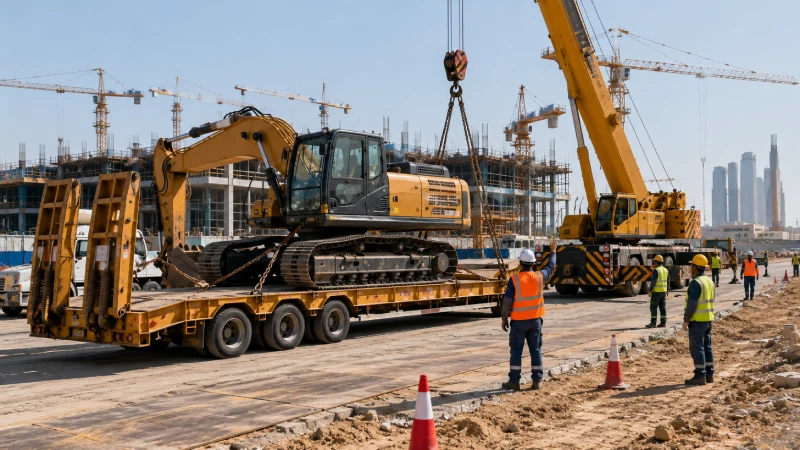
Site delivery requires checking road access, site entrance width, turning radius, ground conditions, unloading space, and crane positioning. A low-bed trailer may be required for heavy machines. Oversized cargo may need special routing. Some project sites may only accept deliveries during certain time windows because of safety rules, traffic control, or worksite scheduling.
Before delivery, the importer should ask practical site questions:
- Can the trailer enter the project site?
- Is the road wide enough for oversized equipment?
- Is there enough space for turning and unloading?
- Is the ground strong enough for heavy machinery?
- Is a crane or forklift required?
- Who will receive and sign for the cargo?
- Are there delivery time restrictions?
- Is the equipment needed immediately or staged temporarily?
If the delivery truck cannot enter the site or unloading equipment is not ready, the shipment may incur truck waiting charges, crane cancellation fees, re-delivery costs, and additional storage fees. More importantly, the construction schedule may be affected.
Manage Multi-Equipment Shipments for Large Projects
Many Qatar construction projects require more than one machine. A contractor may import excavators, generators, loaders, spare parts, steel structures, and site tools from different suppliers in China. In this case, the logistics strategy should not force everything into one shipment.
A better approach is to divide the cargo according to project priority. Critical-path machinery should be shipped first. Spare parts, tools, and accessories can be consolidated separately. Oversized equipment may use flat rack, RoRo, or breakbulk, while smaller items can move by standard container.
Supplier coordination is also important. Each supplier should provide consistent documents, cargo photos, serial numbers, packing details, and ready dates. If one supplier is late, it should not delay the entire project shipment unnecessarily.
For importers comparing container-based options for smaller machines, attachments, or accessories, FCL Shipping from China to Qatar may be useful when cargo volume is large enough to justify a dedicated container.
Construction Equipment Shipping Cost Factors From China to Qatar
Construction equipment shipping cost is not based only on weight and destination. It depends on the full operational plan.
Main cost factors include:
| Cost Factor | Why It Matters |
|---|---|
| Equipment dimensions | Determines container, flat rack, RoRo, or breakbulk options |
| Gross weight | Affects crane, trailer, and port handling requirements |
| Shipping method | Different methods have different space and handling costs |
| Origin location in China | Impacts inland trucking and loading coordination |
| Destination site in Qatar | Affects final delivery distance and trailer planning |
| Heavy lift requirements | May require cranes, rigging teams, and special supervision |
| Project deadline | Urgent timelines reduce routing flexibility |
| Cargo value | Influences insurance planning |
| Site unloading condition | May add cost if extra equipment is needed |
A reliable quotation requires technical cargo information. If an importer only provides “one excavator to Qatar,” the freight estimate may be inaccurate. A detailed quote should be based on actual dimensions, weight, pickup address, destination site, required delivery date, and handling needs.
Common Mistakes to Avoid
The biggest mistake is treating construction equipment like normal cargo. Project machinery requires early planning and technical review.
Common mistakes include requesting a quote without dimensions, assuming all machines can fit into containers, ignoring site access restrictions, failing to confirm unloading equipment in Qatar, shipping all machines together without phasing, and treating port arrival as final delivery.
Another common issue is leaving documentation too late. Commercial invoice, packing list, bill of lading details, equipment model, serial number, and cargo description should be consistent. For high-value equipment, inspection records and loading photos should also be organized before shipment.
Project logistics is about preventing surprises. The earlier these risks are identified, the easier they are to control.
How Winsail Supports Construction Equipment Shipping From China to Qatar
Winsail can support construction equipment shipments from China to Qatar by helping importers review cargo data, select the right shipping method, coordinate suppliers, arrange factory pickup, plan loading operations, and manage destination delivery requirements.
For oversized or heavy equipment, Winsail can help evaluate whether flat rack, RoRo, breakbulk, or container shipping is more suitable. The team can also coordinate loading supervision, cargo securing, export documentation, Qatar arrival planning, and door-to-site delivery arrangements.
If your project involves both equipment and construction materials, Winsail can help connect the equipment shipment with the wider procurement schedule, reducing the risk of missing key construction milestones.
FAQs
What is the best way to ship construction equipment from China to Qatar?
The best method depends on the equipment size, weight, structure, and whether it can be driven or disassembled. Smaller equipment may fit into containers, oversized equipment may require flat rack, self-propelled machines may use RoRo, and very large machinery may need breakbulk shipping.
Can excavators and loaders be shipped in containers?
Some compact models or disassembled units can be shipped in standard containers. Larger excavators and loaders usually require flat rack, RoRo, or breakbulk shipping because of height, width, or weight limitations.
When should I start planning construction equipment shipping?
Planning should start at least several weeks before the required site delivery date. Oversized cargo, heavy lift operations, port handling, customs documents, and site delivery all require coordination.
What information is needed for a shipping quote?
You should provide the equipment model, actual dimensions, gross weight, photos, pickup location, destination site address, required delivery date, cargo value, and any special handling requirements.
Can construction equipment be delivered directly to a project site in Qatar?
Yes, but site access, road conditions, trailer type, unloading equipment, delivery time window, and site contact must be confirmed before final delivery.
Is insurance recommended for construction equipment shipping?
Yes. Construction equipment is often high-value and project-critical. Insurance helps protect against transportation damage, handling accidents, and other shipping risks.
Final Thoughts
Shipping construction equipment from China to Qatar requires more than choosing a freight rate. The importer must manage cargo dimensions, shipping method, heavy lift requirements, supplier timing, port handling, and final site delivery as one connected project logistics plan.
If you are preparing to ship construction equipment to Qatar, send Winsail the equipment model, dimensions, weight, pickup location, destination site, and required delivery date. Our team can help evaluate the most suitable logistics solution and build a practical delivery plan for your project schedule.
