
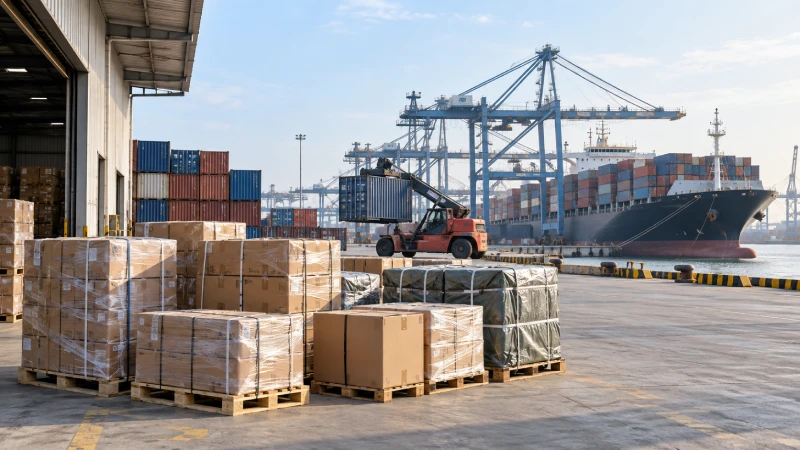
If you are importing about 1–20 CBM from China to Kenya, LCL sea freight is usually the first shipping option to price. But the number quoted as “USD per CBM” is only one part of the cost.
Recent public market references for China-to-Mombasa LCL vary widely. Several 2026 references fall around USD 140–250 per CBM or W/M, while some published figures sit below or above that range. Differences in origin city, cargo density, sailing date, surcharges and quotation scope make direct comparison difficult.
That means a quotation showing USD 180/CBM does not necessarily mean a 5 CBM shipment will cost only USD 900 from supplier to Kenya.
For a realistic budget, an importer may need to consider:
China pickup + warehouse/consolidation + export handling + LCL freight + Mombasa destination charges + customs clearance + duties/taxes + inland delivery.
This guide explains how the calculation works, shows practical examples for 1, 3, 5, 10, 15 and 20 CBM, and explains when it makes sense to compare LCL with a 20ft container.
For a broader overview of shipping modes, routes, customs and inland delivery, see shipping from China to Kenya.
Data Note: Freight figures in this guide are market-planning references reviewed in September 2026, not guaranteed Winsail booking rates. Actual rates depend on the Chinese origin, cargo type, gross weight, volume, sailing date, carrier capacity, surcharges and service scope. A shipment-specific quotation should always be checked before booking.
Quick Answer: How Much Does Shipping per CBM from China to Kenya Cost?
As a general planning reference, recent public 2026 market information places many China-to-Mombasa LCL quotations around USD 140–250 per chargeable CBM/W/M, although published rates across the market can be wider.
The important word is chargeable.
Sea LCL is commonly calculated using W/M — Weight or Measurement. The shipment may therefore be charged according to its volume in cubic metres or gross weight in metric tonnes, whichever produces the higher chargeable quantity.
| What You Need to Know | Planning Answer |
|---|---|
| Typical cargo size | About 1–20 CBM |
| Main arrival gateway | Mombasa |
| Common pricing basis | W/M — weight or measurement |
| Planning LCL reference | Often around USD 140–250/W/M in recent public 2026 references |
| Does rate × CBM equal final cost? | No |
| Customs duties included? | Normally not unless explicitly stated |
| Mombasa local charges included? | Depends on quotation |
| Nairobi delivery included? | Depends on quotation |
| When should you check FCL? | Increasingly important from roughly the mid-teens in CBM |
For smaller shipments, LCL lets your cargo share container space with other importers. For larger LCL shipments—especially around 15–20 CBM—it becomes increasingly important to request a 20GP FCL comparison rather than assuming LCL is automatically cheaper.
Check My LCL Shipping Cost
How Much Does LCL Shipping per CBM from China to Kenya Cost?
There is no single fixed “China to Kenya rate per CBM.”
A shipment collected from a factory in Foshan and consolidated in Guangzhou may have a different cost structure from cargo originating in Yiwu, Ningbo, Shanghai or another Chinese manufacturing area.
The shipping date also matters. Ocean freight rates and surcharges can change between booking periods, while available consolidation services may vary by origin.
Recent public 2026 references illustrate this difference. Published China–Kenya LCL figures range from roughly USD 90 to USD 270 per CBM across different providers and periods, with several sources clustering closer to USD 140–250.
The correct conclusion is not that one particular number is “the Kenya rate.”
The more useful question is:
What does the quoted rate include?
Two forwarders can quote:
- Forwarder A: USD 150/CBM
- Forwarder B: USD 205/CBM
Forwarder B can still result in the lower payable total if its quotation includes origin handling or destination costs that Forwarder A excludes.
This is particularly important with LCL because the shipment passes through consolidation and deconsolidation facilities at both ends of the route.
Why Two Per-CBM Quotes Can Be Very Different
The rate may change because of:
- Supplier location in China
- China warehouse location
- Port of loading
- Actual cargo-ready date
- Gross weight
- Cargo volume
- Cargo density
- Commodity
- Packing method
- Dangerous-goods classification
- Oversized pieces
- Peak-season or carrier surcharges
- Mombasa destination-charge arrangement
- Final delivery city
- Whether the quote is freight-only, port/CFS based, DAP, door-to-door or another service scope
A useful LCL quotation should therefore show more than one number.
It should make clear where the forwarder’s responsibility starts, where it ends, and which charges remain payable separately.
For a wider cost comparison across different shipping methods, see shipping costs from China to Kenya.
How W/M Charging Works for China–Kenya LCL
One of the biggest mistakes importers make is assuming that sea LCL is always charged purely according to CBM.
In international LCL freight, W/M means Weight or Measurement.
A standard commercial calculation compares:
Cargo volume in CBM
with
Gross cargo weight in metric tonnes
and uses the higher chargeable quantity.
Maersk’s published LCL terms provide a clear industry example: when cargo is calculated in Weight and Measure Units, gross volume or gross weight is compared on the basis that 1 CBM equals 1,000 kg. See Maersk LCL Terms.
A simple working formula is therefore:
Chargeable W/M = greater of total CBM or gross weight in tonnes
Example 1: Normal Volumetric Cargo
Your shipment measures:
- 3 CBM
- 1,200 kg
Weight basis:
1,200 kg ÷ 1,000 = 1.2 W/M
Volume basis:
3 W/M
The freight calculation uses:
3 W/M
Example 2: Dense Cargo
Your shipment measures:
- 3 CBM
- 4,200 kg
Weight basis:
4,200 kg ÷ 1,000 = 4.2 W/M
Volume basis:
3 W/M
The chargeable quantity becomes:
4.2 W/M
This is why asking only:
“How much for 3 CBM to Kenya?”
may not be enough.
A forwarder also needs the gross weight.
Example 3: Shipment Below the Minimum Charge
Suppose your shipment is:
- 0.6 CBM
- 300 kg
Some LCL consolidations apply a minimum billable quantity. If the service being quoted applies a 1 W/M minimum, the shipment could still be charged as 1 W/M.
However, minimum charging rules vary by carrier and consolidator. A 1 W/M minimum should therefore be treated as a common commercial example rather than a universal Kenya rule.
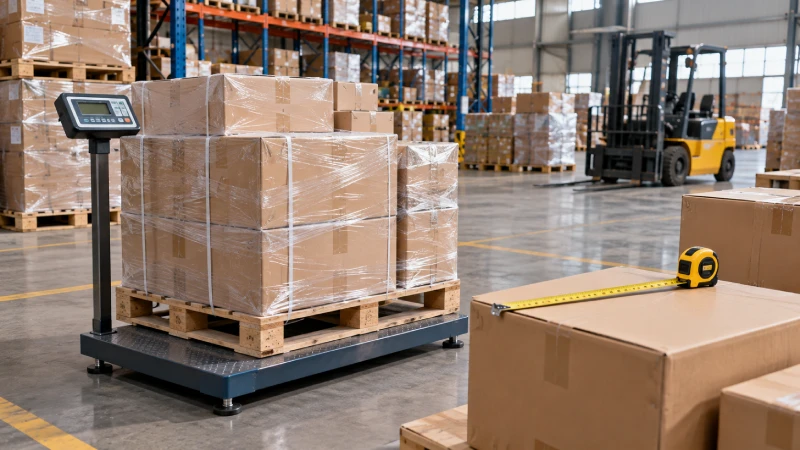
How to Calculate Your CBM
For cartons measured in centimetres:
Length × Width × Height ÷ 1,000,000 × number of cartons = total CBM
For example:
60 cm × 50 cm × 40 cm
= 0.12 CBM per carton
For 20 identical cartons:
0.12 × 20
= 2.4 CBM
Use the dimensions of the packed shipping cartons or pallets, not just the dimensions of the product itself.
Pro Tip: Send both your total packed dimensions and gross weight when requesting a China–Kenya LCL quote. Heavy products such as metal parts, machinery components, tiles or industrial materials can be charged on weight even when their physical CBM is relatively small.
Shipping Cost Examples for 1, 3, 5, 10, 15 and 20 CBM
The following examples use USD 140–250/W/M only as an illustrative public-market planning range.
They assume the cargo is not dense enough for its gross weight to exceed its CBM under the W/M calculation.
These figures represent an illustration of the main LCL freight component only.
They are not landed-cost quotations.
| Shipment Volume | Chargeable Quantity* | Base Freight Illustration at USD 140–250/W/M | Planning Comment |
|---|---|---|---|
| 1 CBM | 1 W/M | USD 140–250 | Fixed charges have a large effect |
| 3 CBM | 3 W/M | USD 420–750 | Typical small LCL shipment |
| 5 CBM | 5 W/M | USD 700–1,250 | Good size for normal LCL planning |
| 10 CBM | 10 W/M | USD 1,400–2,500 | Compare total destination charges carefully |
| 15 CBM | 15 W/M | USD 2,100–3,750 | Request a 20GP comparison |
| 20 CBM | 20 W/M | USD 2,800–5,000 | FCL comparison becomes important |
*Assuming gross tonnes do not exceed CBM and no higher minimum or special charging rule applies.
Do not use this table by simply adding your import duty and assuming you have calculated your final landed cost.
A real 5 CBM shipment may also involve supplier pickup, warehouse receiving, export documentation, CFS handling, destination deconsolidation, a customs agent, taxes and delivery from Mombasa to Nairobi or another inland destination.
Why Small Shipments Can Feel Expensive per CBM
A 1 CBM shipment does not mean every logistics cost becomes one-tenth of the cost of a 10 CBM shipment.
Some expenses are charged per shipment rather than per CBM.
For example, documentation, warehouse receiving, customs brokerage or administrative charges may remain similar whether the shipment contains 1 CBM or several CBM.
As shipment volume grows, those fixed charges are spread across more cargo.
That can reduce the effective total logistics cost per CBM.
It does not necessarily mean the underlying ocean freight rate automatically falls every time your volume increases.
What Is Actually Included in a Per-CBM LCL Quote?
Before comparing China-to-Kenya rates, separate the quotation into stages.
| Cost Component | Common Charging Method | Automatically Included in Headline CBM Rate? |
|---|---|---|
| Supplier pickup in China | Shipment / truck / distance | Usually no |
| China warehouse receiving | Shipment / CBM | Depends |
| Consolidation handling | CBM / W/M / shipment | Depends |
| Export documentation | Shipment | Often separate |
| China CFS handling | W/M / shipment | Depends |
| Ocean LCL freight | W/M | Main quoted component |
| Carrier surcharges | W/M / shipment | Depends |
| Mombasa CFS handling | W/M / shipment | Often separate |
| Deconsolidation | W/M / shipment | Often separate |
| Delivery order / administration | Shipment | Often separate |
| Kenyan customs agent | Shipment / entry | Separate unless included |
| Import duty and taxes | Cargo-specific | Normally separate |
| Mombasa–Nairobi delivery | Shipment / weight / volume | Separate unless included |
| Final door delivery | Route-specific | Separate unless included |
This is why “USD 150 per CBM” is not enough information to make a purchasing decision.
Freight-Only vs Door-to-Door Quotes
Ask the forwarder to identify the exact quotation scope.
A freight-only or warehouse/CFS-to-CFS quotation may cover mainly the international freight movement.
A broader door-to-door or DAP arrangement may include supplier pickup and inland delivery.
A quotation described as DDP requires even more careful checking. Confirm in writing who handles the Kenyan import entry, what customs duties and taxes are included, who the importer/consignee will be, and which destination charges remain outside the quotation.
Do not assume that every company using the words “door-to-door” or “DDP” is quoting exactly the same responsibilities.
Warning: Never compare two LCL quotations until they use the same origin, destination, cargo dimensions, W/M quantity, Incoterm/service scope and destination-charge basis.
China Pickup, Warehouse and Consolidation Costs
For many Kenyan importers, the shipment does not start at a Chinese seaport.
It starts at a factory.
That means the China-side cost can include several operational steps before international freight begins.
A typical workflow may look like:
Supplier → domestic pickup → China consolidation warehouse → receiving and measurement → export handling → CFS/consolidation → vessel departure
Depending on the shipment, China-side charges may include factory pickup, warehouse receiving, weighing and measurement, short-term storage, palletization, repacking, labelling, export declaration, documentation and consolidation handling.
There is no reliable universal “China warehouse fee per CBM.”
The cost depends on what the warehouse actually has to do.
For example, receiving 50 clearly labelled cartons from one factory is different from coordinating eight factories, checking quantities, holding early-arriving orders for several days and repacking damaged cartons.
Fixed Charges vs Volume-Based Charges
This distinction matters when estimating cost per CBM.
Suppose two importers ship:
- Importer A: 1 CBM
- Importer B: 8 CBM
If both shipments require one set of export documentation, the documentation cost represents a much larger percentage of Importer A’s freight budget.
The same principle can apply to warehouse receiving, administration and other shipment-level charges.
That is one reason the effective total cost per CBM often improves as a shipment becomes larger, even when the ocean freight rate itself remains similar.
Multi-Supplier Consolidation: Can It Reduce Your China–Kenya Shipping Cost?
Consolidation becomes particularly useful for Kenyan businesses buying from several Chinese factories or wholesale suppliers.
Consider this example:
| Supplier | Cargo |
|---|---|
| Supplier A | 1.5 CBM |
| Supplier B | 2.0 CBM |
| Supplier C | 2.5 CBM |
| Combined | 6.0 CBM |
Instead of arranging three completely separate international LCL shipments, the cargo can potentially be collected or delivered into one China warehouse and prepared as one consolidated export shipment.
This can simplify:
- Shipment coordination
- Final CBM verification
- Export documentation
- International freight booking
- Kenya arrival documentation
- Customs coordination
- Final delivery planning
Consolidation can also reduce the effect of paying repeated shipment-level charges.
But it is not automatically cheaper.
Additional costs may include Chinese domestic pickup, warehouse receiving, storage, order checking, repacking or waiting for the final supplier to complete production.
The correct comparison is therefore:
Cost of several separate shipments
versus
China consolidation cost + one combined international shipment
rather than simply assuming consolidation saves money.
Pro Tip: Ask every supplier for the dimensions and gross weight of the final export cartons, then have the consolidation warehouse remeasure the complete shipment. Supplier estimates made before final packing should not be treated as the final billable CBM.
Plan My Consolidated Shipment
Mombasa LCL Destination Charges
For ocean imports into Kenya, Mombasa is the main gateway.
When an LCL container arrives, your shipment cannot simply be lifted out and collected in the same way as a dedicated FCL container.
The consolidated container first has to be handled and deconsolidated so that the individual house shipments inside it can be released.
Depending on the service arrangement, the destination process can involve:
Vessel arrival → container handling → CFS/deconsolidation → individual shipment release → customs/other regulatory clearance → cargo collection or inland delivery
Destination cost categories may include:
- CFS handling
- Deconsolidation
- Documentation
- Delivery-order or release administration
- Customs brokerage
- Inspection-related costs where applicable
- Storage if cargo is not released in time
- Transport to Nairobi or another inland city
Kenya Ports Authority publishes its official tariff documents for relevant port and ICD services. See the Kenya Ports Authority tariff resources.
However, an importer should not assume that every item on a Mombasa LCL invoice is a KPA tariff.
Private CFS, consolidator, shipping-line, local-agent and customs-service charges can follow different commercial structures.
This is why one universal “Mombasa destination fee per CBM” would be misleading.
Some commercial market references publish deconsolidation estimates, but these should only be treated as rough planning references because the exact destination arrangement and included services can differ significantly.
For an actual shipment, request a breakdown from the forwarder or Kenyan destination agent.
What About Nairobi?
If your final destination is Nairobi, do not stop the calculation at Mombasa.
Ask whether the quotation ends:
- At a Mombasa CFS
- After customs release
- At Nairobi
- At a Nairobi warehouse
- At Nairobi ICD where applicable
- At your final business address
Not every LCL shipment follows the same inland arrangement.
A quotation mentioning “Kenya” is therefore not specific enough.
You need the actual delivery point.
Kenya Customs and Compliance Costs Are Separate from the CBM Rate
Customs duties and taxes should not be built into a generic “shipping cost per CBM” estimate.
They depend on the actual product, customs value, tariff classification and applicable Kenyan rules.
The Kenya Revenue Authority states that importers need to use a licensed customs clearing agent to process import documentation, and its import guidance lists documents such as the commercial invoice, packing list, Bill of Lading, Certificate of Origin, freight invoice and, where applicable, permits and a Certificate of Conformity.
For goods within the KEBS PVoC program, the Kenya Bureau of Standards states that exporters should ensure products comply with applicable Kenyan standards and obtain the relevant Certificate of Conformity through an appointed PVoC agent. China is included within the KEBS PVoC contractor framework.
This work should be checked before cargo is shipped, not after the container reaches Mombasa.
2026 Advance Cargo Declaration Requirement
There is also a newer documentation step that China-to-Kenya shippers should not ignore.
KRA launched its Advance Cargo Declaration (ACD) platform for containerized cargo destined for Kenyan ports on August 3, 2026.
For applicable containerized shipments, exporters obtain an ACD reference before loading. KRA lists the draft Bill of Lading, commercial invoice, freight invoice and export declaration among the required documents, and the ACD reference is endorsed on the Bill of Lading. See the KRA ACD public notice.
In addition, KRA’s Finance Act 2026 guidance states that from September 1, 2026, importers must obtain and retain an export declaration, export entry, customs export certificate or equivalent document from the country of export. See KRA Finance Act 2026 guidance.
These requirements are another reason to involve the freight forwarder and Kenyan importer/clearing agent before cargo is loaded in China.
They are not simply “extra port fees” that can be added later to a generic CBM calculation.
When Should You Switch from LCL to a 20ft Container?
There is no universal CBM number where LCL suddenly becomes more expensive than FCL.
The break-even point moves with freight rates.
Recent 2026 public references illustrate the issue. While LCL rates commonly appear in the approximate USD 140–250/W/M planning range discussed above, published 20GP China-to-Mombasa market references also vary substantially depending on date and quotation scope.
So a rule such as:
“Always switch to FCL at 15 CBM”
is too simplistic.
A more practical decision process is:
| Cargo Volume | Recommended Pricing Action |
|---|---|
| 1–5 CBM | Price LCL first |
| 5–10 CBM | LCL normally remains the main option |
| 10–15 CBM | Continue LCL pricing, but watch destination/W/M costs |
| Around 15 CBM | Request both LCL and 20GP quotes |
| 15–20 CBM | Compare total LCL and FCL cost carefully |
| Around 20 CBM | FCL should be seriously evaluated |
These are quotation triggers, not guaranteed break-even points.
Compare the Total Cost, Not Just Ocean Freight
A useful comparison is:
LCL
Chargeable W/M × LCL rate
+ origin LCL handling
+ destination LCL handling
+ other applicable charges
versus:
20GP FCL
20GP ocean freight
+ origin FCL charges
+ destination FCL charges
+ other applicable charges
Both quotations should use the same:
- Chinese pickup point
- Cargo-ready date
- Mombasa destination
- Customs scope
- Inland destination
- Currency
- Rate-validity period
Otherwise you are not comparing like with like.
Cost Is Not the Only Reason to Consider FCL
As cargo volume grows, handling requirements also matter.
A dedicated container may deserve consideration for fragile goods, higher-value goods, dense machinery, products that are difficult to stack, or cargo that you prefer not to mix with other shippers’ consignments.
Dangerous goods may require a separate carrier-acceptance review and should never be treated as standard general-cargo LCL without confirming the classification, packaging and documentation.
Likewise, long, oversized, heavy or project cargo may not fit a standard LCL workflow even when its nominal CBM appears suitable.
Pro Tip: Once your shipment reaches roughly the mid-teens in CBM, ask for an LCL and 20GP quotation using the same week’s rates and exactly the same service scope. Comparing a destination-inclusive LCL price with a freight-only FCL number will produce the wrong decision.
Compare LCL and FCL
How to Compare Two China–Kenya LCL Quotes Correctly
Suppose one forwarder quotes:
USD 155/CBM
and another quotes:
USD 205/CBM
Do not automatically choose the USD 155 rate.
Before deciding, check whether both quotations answer the following questions:
| Question | Why It Matters |
|---|---|
| Is supplier pickup included? | China trucking can change the total |
| Which China warehouse is used? | Domestic transport and handling differ |
| What is the confirmed W/M? | Heavy cargo can cost more than CBM suggests |
| Is there a minimum charge? | Important for small shipments |
| Are origin CFS charges included? | Otherwise payable separately |
| Is export documentation included? | Shipment-level cost |
| Are carrier surcharges included? | Headline rate may not be all-in |
| Which Mombasa charges are included? | Major source of quote differences |
| Is deconsolidation included? | Often separate |
| Is customs brokerage included? | Freight and clearance are different services |
| Are duties/taxes included? | Usually cargo-specific |
| Is Nairobi delivery included? | Port price is not inland price |
| How long is the rate valid? | Freight markets change |
| Does the rate apply to this commodity? | DG/special cargo may need separate pricing |
A lower ocean rate can therefore create a higher final logistics invoice.
A good purchasing decision should be based on the total scope of the quotation, not just the largest number printed at the top.
What Information Do We Need to Calculate Your China–Kenya LCL Cost?
The fastest way to get a useful shipping comparison is to provide complete cargo information from the start.
| Information | Why It Is Needed |
|---|---|
| Product description | Cargo acceptance and compliance review |
| HS code, if available | Customs/compliance planning |
| Number of cartons/pallets | Handling and warehouse planning |
| Dimensions of each package | CBM calculation |
| Gross weight | W/M calculation |
| Total estimated CBM | Initial LCL/FCL comparison |
| Supplier address in China | Pickup calculation |
| Number of suppliers | Consolidation planning |
| Cargo-ready date | Sailing and rate validity |
| Destination in Kenya | Mombasa vs Nairobi/inland costing |
| Supplier Incoterm | Defines China-side responsibility |
| Cargo value | Insurance/customs planning where relevant |
| Battery/DG information | Carrier acceptance |
| Oversized/heavy-piece dimensions | LCL suitability check |
If multiple Chinese suppliers are involved, send the information for each supplier separately.
For example:
Supplier A — Foshan — 2.3 CBM — 580 kg
Supplier B — Dongguan — 1.6 CBM — 410 kg
Supplier C — Shenzhen — 2.1 CBM — 670 kg
That makes it possible to evaluate both the China consolidation cost and the final combined LCL shipment.
Before shipping, the documentation should also be reviewed against the current Kenyan import requirements, including the commercial invoice, packing list, Bill of Lading information, export documentation, Certificate of Origin where required, KEBS/PVoC requirements where applicable, and current ACD requirements.
Send Cargo Details
FAQ
How much does it cost to ship 1 CBM from China to Kenya?
Recent public 2026 market references suggest that the main China-to-Mombasa LCL freight component can often fall within roughly USD 140–250 per chargeable W/M, although rates outside this range also appear. This is not the final landed cost because minimum billing, origin handling, Mombasa destination charges, customs clearance, taxes and inland delivery may be separate.
Is LCL shipping from China to Kenya charged by CBM or weight?
It is commonly calculated using W/M, or Weight or Measurement. The forwarder compares cargo volume in CBM with gross weight in metric tonnes and uses the higher chargeable quantity. For this calculation, 1 CBM is commonly compared with 1,000 kg.
Is there a minimum CBM charge for China-to-Kenya LCL?
Many LCL consolidations apply a minimum billable quantity, often around 1 W/M, but the exact minimum varies between services. Confirm the minimum charge before booking, especially for shipments below 1 CBM.
Does the shipping cost per CBM include Mombasa customs clearance and taxes?
Not automatically. Ocean freight, destination handling, customs brokerage, import duties, taxes and inland delivery are different cost categories. Only treat them as included when the quotation states this clearly.
At what CBM should I switch from LCL to a 20ft container?
There is no universal break-even volume. LCL is normally the first option to price for smaller shipments, but once cargo reaches roughly 10–15 CBM it becomes increasingly useful to compare current LCL and 20GP quotations. Around the mid-teens and above, request both options using the same service scope and pricing date.
Can I combine goods from several Chinese suppliers into one LCL shipment to Kenya?
Potentially, yes. Multiple supplier orders can be collected or delivered to a China consolidation warehouse, checked, measured and prepared as one international shipment. The comparison should still include China pickup, warehouse receiving, storage and repacking costs where applicable.
Final Cost Checklist Before You Book
For a China-to-Kenya LCL shipment, do not approve a booking based only on the advertised cost per CBM.
Confirm:
What is my final chargeable W/M?
Then determine:
What China-origin charges apply?
What does the international freight rate include?
Which Mombasa charges are included or collect?
Who handles Kenyan customs clearance?
Which duties, taxes or product-compliance costs remain separate?
Is delivery to Nairobi or the final address included?
And if your cargo is moving toward 15–20 CBM, ask one additional question:
What would the same shipment cost as a 20ft FCL container?
That comparison gives you a much more useful shipping decision than simply searching for the lowest “USD per CBM” rate.
Sources & Data Notes
Regulatory and operational information in this guide was checked against current material from the Kenya Revenue Authority (KRA), Kenya Bureau of Standards (KEBS) and Kenya Ports Authority (KPA).
KRA’s ACD notice confirms the 2026 pre-loading declaration process for applicable containerized cargo destined for Kenyan ports. KRA’s Finance Act 2026 guidance also confirms the export-document retention requirement effective September 1, 2026. KEBS’ PVoC guidance sets out conformity responsibilities for goods subject to the program.
Freight-rate figures are market-reference data only and are not represented as official tariffs or guaranteed Winsail rates. Actual rates should be reconfirmed using the shipment’s origin, cargo-ready date, cargo dimensions, gross weight, commodity and exact Kenya destination before publication or booking.
