
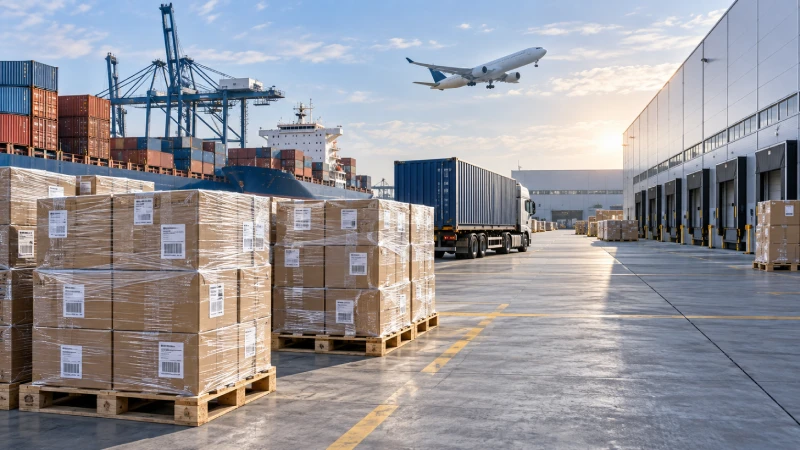
Shipping from China to Amazon FBA Germany is different from sending a normal commercial shipment to a warehouse in Germany.
The freight still has to move through the familiar logistics stages—supplier pickup, consolidation, China export handling, international transportation, EU customs clearance and final-mile delivery—but Amazon adds another operational layer. Before Amazon receives the cargo, the seller must create the inbound shipment correctly, prepare products according to the applicable FBA requirements, provide the right unit and carton labels, use the destination assigned by Amazon and follow the shipment’s delivery instructions.
At the same time, sending inventory to FBA does not transfer the seller’s customs, VAT, EPR or product-compliance responsibilities to Amazon or to the freight forwarder.
Amazon’s Germany FBA guidance tells sellers to prepare inventory according to its packing and preparation requirements and send it to the assigned Amazon warehouse. See Amazon FBA Germany.
For importers sourcing products from China, the safest way to manage an FBA shipment is therefore to treat it as two connected but separate projects:
The freight project covers collection, consolidation, export, sea/air/rail freight, customs coordination and delivery.
The Amazon and compliance project covers Seller Central, product eligibility, barcode selection, shipment creation, importer arrangements, VAT, EORI, EPR and product compliance.
A good freight forwarder can coordinate many physical steps, but cannot replace the seller’s legal and Amazon-account responsibilities.
How Shipping from China to Amazon FBA Germany Works
A typical shipment follows this sequence:
Chinese supplier → pickup → consolidation or FBA preparation → China export → sea, air or rail freight → EU entry → customs clearance or transit → German final-mile hub → Amazon delivery process → assigned fulfilment centre → Amazon receiving
The sequence looks simple, but problems often arise because sellers start arranging transport before the Amazon, customs or compliance side is ready.
For example, a factory may have finished production and the forwarder may already have booked freight, while the seller has not yet confirmed who will act as importer, which barcode must be placed on each unit, or which Amazon fulfilment centre has actually been assigned.
That can create expensive rework after the goods have left China.
A better approach is to confirm the inbound structure first and then align the logistics plan with it.
For broader transport planning beyond Amazon FBA, see Shipping from China to Germany.
Freight Forwarder vs Amazon Seller: Who Is Responsible for What?
This distinction is critical.
A freight forwarder is responsible for transporting and coordinating the cargo according to the agreed service scope. The seller or importer remains responsible for the commercial, customs, tax, Amazon-account and product-compliance decisions behind the shipment.
| Area | Freight Forwarder | Amazon Seller / Importer |
|---|---|---|
| Supplier pickup | Arrange collection where contracted | Provide correct factory details and cargo-ready date |
| Consolidation | Receive and combine cargo | Provide SKU and shipment mapping |
| Cargo measurement | Verify carton quantity, weight and dimensions where included | Provide accurate initial cargo data |
| FBA labeling | Apply seller-provided labels where contracted | Determine and generate the correct Amazon labels |
| China export | Coordinate booking and export handling | Supply accurate commercial information |
| Sea / air / rail freight | Arrange international transport | Choose service according to cost and inventory needs |
| EU customs | Coordinate customs broker where contracted | Establish importer, EORI, VAT and representation structure |
| Amazon shipment creation | Usually not responsible | Create and maintain shipment in Seller Central |
| Amazon warehouse routing | Deliver to assigned destination | Supply destination generated by Amazon |
| Product compliance | Transport documents/cargo | Responsible for applicable CE, GPSR, EPR and other requirements |
| Amazon account compliance | Not responsible | Seller responsibility |
| Final FBA delivery | Coordinate carrier and receiving process | Maintain correct shipment information and instructions |
A prep warehouse or freight forwarder may physically apply FNSKU, FBA Box ID or pallet labels, but the seller must provide the correct files and instructions.
Applying a label does not make the freight forwarder responsible for choosing the barcode configuration in Seller Central.
The same principle applies to customs. A forwarder may introduce or coordinate a customs broker, but the seller still needs to know who is importing the goods and what customs and VAT structure is being used.
Step 1: Create the Amazon FBA Shipment Before Final Delivery Planning
Before arranging the final Amazon delivery, the seller should create the inbound shipment through Amazon’s current shipment workflow.
Amazon’s Germany FBA guidance tells sellers to create a shipping plan, label and package their units, and send inventory to the Amazon warehouse assigned to the shipment. See Amazon FBA Germany.
The shipment normally needs information such as:
- the inventory being sent;
- quantities;
- packing configuration;
- ship-from location;
- carton information;
- transportation mode;
- Amazon-generated shipment labels;
- tracking or carrier information;
- the assigned fulfilment-centre destination.
For sellers shipping directly from a Chinese factory, Amazon guidance available through its seller forums confirms that the supplier’s warehouse can be used as the ship-from address when creating the shipment.
The Ship-From Address Is Not the Amazon Destination
These two addresses serve completely different purposes.
The ship-from address identifies where the inventory physically starts its inbound journey. This may be:
- the Chinese factory;
- a sourcing warehouse;
- a China consolidation warehouse;
- an FBA prep warehouse.
The Amazon destination is the fulfilment centre assigned to the inbound shipment.
Do not use a fictitious German ship-from address simply because the inventory will ultimately be delivered in Germany.
Do Not Let the Forwarder Choose an Amazon Warehouse Independently
A freight forwarder may know many Amazon fulfilment-centre addresses, but that does not mean the forwarder can choose one for the shipment.
The current shipment must be delivered according to the destination Amazon assigns through the inbound workflow. Amazon’s public Germany FBA page specifically describes sending inventory to the assigned Amazon warehouse.
This means a shipping request such as:
“Please send these goods to the nearest Amazon warehouse in Germany.”
is not sufficient.
Instead, provide the forwarder with the actual destination shown for the current inbound shipment.
Static online lists of German FBA warehouse addresses should therefore not be used as routing instructions.
Step 2: Arrange Supplier Pickup in China
Once the goods are ready, the freight forwarder can arrange collection from the supplier.
Before pickup, provide enough information for the forwarder to identify the shipment accurately.
Typical information includes the supplier address and contact person, cargo-ready date, carton quantity, carton dimensions, gross weight, product description, cargo value, number of SKUs and whether the cargo includes batteries, liquids, powders, magnets or other restricted materials.
For an FBA shipment, the seller should additionally provide the Amazon shipment reference and relevant label files when these are already available.
EXW and FOB Shipments
Many China-to-Amazon FBA shipments are purchased under EXW or FOB commercial terms.
Under an EXW-style purchasing arrangement, the buyer normally needs more origin-side logistics support because the goods are collected from the supplier.
Under an FOB arrangement, the Chinese supplier normally handles delivery to the agreed export point according to the sales contract, while the international freight arrangement continues from there.
These supplier terms should not be confused with the delivery arrangement used when the inventory eventually reaches Amazon.
The Incoterm between seller and Chinese supplier and the final delivery terms used for the FBA shipment are separate commercial relationships.
Step 3: Consolidate and Prepare FBA Inventory in China
Consolidation is especially useful when an Amazon seller buys several products from different Chinese suppliers.
Instead of shipping each factory’s goods independently, the cargo can be sent to one warehouse, checked and then combined into a larger international shipment.
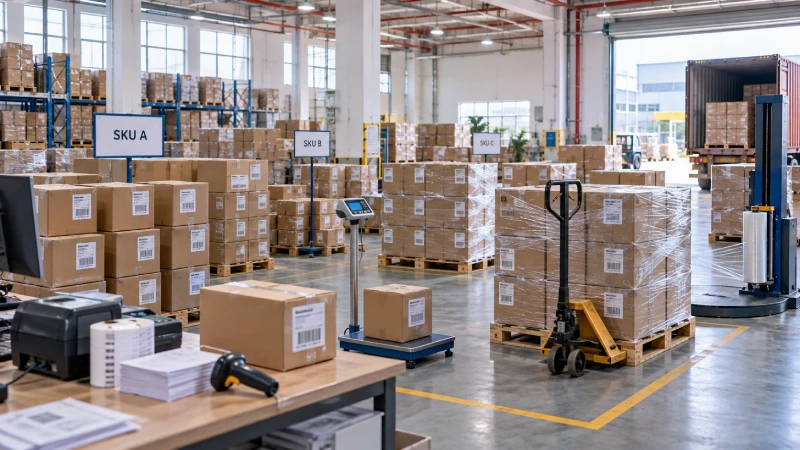
A consolidation warehouse can also provide practical FBA preparation services such as carton checking, labeling, repacking and palletisation when required.
What Should Be Checked During Consolidation?
A well-controlled FBA consolidation process should verify:
- physical carton quantity;
- SKU and carton mapping;
- carton condition;
- carton dimensions;
- gross weight;
- shipment ID;
- destination;
- Amazon label matching;
- dangerous-goods status where relevant.
The warehouse should also keep different Amazon shipments physically and digitally separated.
If two cartons belong to different FBA shipments, their labels must not be swapped simply because they contain the same product.
This sounds obvious, but label mismatch is one of the easiest ways to create receiving problems after inventory has travelled thousands of kilometres.
Consolidating Multiple Suppliers
Suppose one seller has:
- Supplier A producing coffee accessories;
- Supplier B producing replacement filters;
- Supplier C producing packaging components.
All three suppliers can potentially deliver to one China consolidation warehouse.
The warehouse can count the cargo, verify the packing plan and prepare the final international shipment.
However, consolidation does not mean different Amazon shipment plans can be mixed without control.
If Amazon creates separate inbound shipments or destinations, the forwarder must preserve the correct carton-to-shipment relationship throughout the logistics process.
Step 4: Choose Sea, Air or Rail Freight from China to Germany
There is no single best transport mode for Amazon FBA inventory.
The right choice depends on inventory value, shipment size, stock availability, launch date, replenishment urgency and budget.
For a broader comparison of freight pricing and transport options, see Shipping Cost from China to Germany.
Sea Freight to Amazon FBA Germany
Sea freight is generally the preferred option for larger replenishment shipments where freight cost matters more than speed.
Both FCL and LCL can be used.
FCL Shipping
Full container load is usually more suitable when the seller has enough inventory to justify using a dedicated container.
Benefits can include fewer cargo-handling stages compared with LCL and more control over container loading.
For detailed container planning, see 20ft & 40ft Container Shipping Cost from China to Germany.
However, booking an FCL container does not automatically mean the container can be driven unchanged into every Amazon fulfilment centre.
Amazon receiving configuration can vary by shipment type and facility.
Specific rules concerning floor-loaded containers, unloading configuration or warehouse-specific FCL receiving should be verified against the current Amazon shipment instructions.
Needs confirmation before publishing.
LCL Shipping
LCL is useful when the cargo does not justify a full container.
Several shippers’ goods share the same container, so additional origin consolidation and destination deconsolidation are involved.
For FBA sellers, that means the ocean vessel’s arrival in Europe is not the same as the Amazon delivery date.
The cargo may still need:
- container discharge;
- CFS handling;
- customs clearance;
- deconsolidation;
- pallet preparation;
- final delivery planning.
Sellers should therefore avoid creating an Amazon delivery plan around the vessel ETA alone.
Air Freight to Amazon FBA Germany
Air freight is useful for high-value inventory, urgent replenishment, new-product launches and situations where running out of stock would cost more than the higher freight rate.
Airfreight pricing is influenced by chargeable weight, so lightweight but bulky cartons can cost substantially more than the actual gross weight might suggest.
For detailed rate logic, see Air Freight Cost from China to Germany per KG.
Air freight is faster than sea freight, but it does not eliminate:
- customs clearance;
- FBA labeling;
- final-mile delivery;
- compliance checks;
- Amazon receiving requirements.
A flight arriving in Frankfurt does not mean the goods are ready for sale on Amazon the same day.
Rail Freight to Amazon FBA Germany
Rail freight can be considered for suitable China–Europe cargo when the seller wants a transport option positioned between air and ocean freight.
The cargo still needs terminal handling, customs or transit procedures and final truck delivery after reaching Europe.
Duisburg and other European rail terminals may form part of the route depending on the service.
Rail schedules, border conditions and capacity can change, so current routing should be quoted shipment by shipment rather than treated as a permanent fixed timetable.
Step 5: Handle EU Customs Clearance Correctly
Amazon receiving and EU customs clearance are two separate processes.
Amazon accepting inventory into FBA does not replace the legal requirement to place imported goods under the appropriate EU customs procedure.
The European Commission describes a customs declaration as the legal act by which an operator places goods under an EU customs procedure. See EU Customs Declaration guidance.
For a normal commercial FBA import, customs planning should be completed before the goods leave China.
Documents Commonly Needed
The exact documentation depends on the product and customs procedure, but commercial shipments commonly require:
- commercial invoice;
- packing list;
- accurate product description;
- quantity;
- customs value;
- country of origin;
- HS or TARIC classification;
- importer/declarant details;
- relevant licences or certificates for controlled products.
A vague invoice description such as “accessories” or “parts” may be insufficient for customs or security filing.
Descriptions should accurately identify what is being shipped.
ICS2 and Advance Cargo Information
The EU’s Import Control System 2, or ICS2, handles advance safety and security information for goods entering or transiting through the EU.
The European Commission states that economic operators bringing goods into or through the EU must supply safety and security information through an Entry Summary Declaration where required by the applicable rules.
As of June 1, 2026, consignments entering EU territory by any transport mode should have a valid ENS submitted either directly through ICS2 or through the linked NCTS Phase 6 mechanism where applicable. See EU Import Control System 2.
The carrier or another supply-chain filing party normally handles the operational filing, but sellers must provide accurate cargo information.
Incorrect product descriptions, consignee information or commodity data can therefore affect more than the commercial invoice—they can also affect advance customs filings.
Does the Cargo Have to Clear Customs in Germany?
Not necessarily.
A shipment destined for Amazon Germany may enter the EU through another Member State.
For example, ocean cargo could physically enter through a port outside Germany and then continue under an appropriate customs procedure.
The place where goods physically enter the EU and the place where import clearance or VAT becomes due can depend on the customs procedure used.
Do not assume that every Germany FBA shipment must be customs-cleared at the German border.
Similarly, do not assume that goods arriving through another EU country automatically have to be permanently imported there.
The forwarder and customs broker should define the actual route and customs procedure before shipment.
Step 6: Confirm the Importer, EORI and VAT Structure
This is one of the most important steps in the entire FBA shipping process.
A freight rate means very little if the shipment reaches Europe and no valid importer structure is available.
Amazon Is Not Your Importer of Record
Amazon’s accessible guidance for international FBA imports says the seller needs an importer of record and Amazon does not take on that role. Amazon also says imported FBA shipments must arrive without duties, taxes or freight charges being collected from the fulfilment centre.
Therefore:
Amazon warehouse address ≠ importer address
and
Amazon receiving the goods ≠ Amazon importing the goods
These are fundamentally different roles.
EORI
The Economic Operators Registration and Identification number is used to identify economic operators for EU customs activities.
The European Commission states that an EORI number is mandatory for customs operations such as import, export and transit. Non-EU operators may also require an EORI when carrying out specified customs activities in the EU. See European Commission EORI guidance.
A seller should therefore establish before shipment:
- who is acting as importer;
- who is making the customs declaration;
- what type of customs representation is being used;
- which EORI appears in the transaction;
- whether that structure is legally appropriate.
Do not assume the freight forwarder’s EORI automatically replaces the seller’s importer obligations.
The European Commission notes that customs declarations are usually made by the owner of the goods or a representative and that, as a general rule, the relevant declarant should be established in the EU, subject to exceptions.
A Chinese or other non-EU seller should therefore confirm its structure with the customs broker rather than copying another seller’s arrangement.
German VAT
VAT planning is separate from the EORI question.
Amazon’s current Pan-European FBA guidance states that a VAT number is required in each country where goods are stored. See Amazon Pan-European FBA.
This matters because inventory stored in Germany can create German VAT obligations even when the goods originally entered Europe through another country.
Pan-European FBA Can Expand VAT Exposure
Do not assume that shipping goods into one German FBA location means inventory will always remain only in Germany.
Amazon’s Pan-European FBA programme allows inventory to be stored in EU countries the seller has enabled for placement. Amazon states that sellers need VAT registration in countries where inventory is stored.
Amazon also operates a Central Europe programme under which eligible German FBA inventory can be stored in Poland and the Czech Republic when the seller enables that arrangement. Amazon warns that this creates additional VAT and reporting obligations. See Amazon Central Europe Programme.
Sellers should therefore review their FBA storage settings as part of tax planning, not only their shipping destination.
Step 7: Prepare Products for Amazon FBA
A product being physically safe enough for international transport does not automatically mean it is correctly prepared for FBA.
It helps to think of Amazon preparation in three layers:
Unit preparation protects and identifies each sellable item.
Carton preparation ensures the shipping box matches the inbound shipment.
Pallet preparation applies when the cargo is delivered in palletised form.
Amazon’s public Germany FBA guidance directs sellers to follow the product-specific packing and preparation requirements available through Seller Central.
Product Barcodes and FNSKU Requirements Changed in 2026
This is particularly important for sellers relying on old tutorials or prep-centre SOPs.
Amazon announced that commingling ended for inventory shipped on or after March 31, 2026, and changed eligibility for manufacturer barcodes.
Under the updated rule:
- Brand owners with the Brand Representative role in Amazon Brand Registry may use manufacturer barcodes for eligible products that already have them.
- Resellers without that Brand Representative role must use Amazon barcode stickers even when a manufacturer barcode exists.
- Products without a manufacturer barcode require Amazon barcode stickers.
The practical lesson for Chinese suppliers and FBA prep warehouses is simple:
Do not decide independently whether an item needs an FNSKU or Amazon barcode.
The seller should confirm the current barcode configuration and provide the exact labels to apply.
Freight Forwarder vs Seller Responsibility for Unit Labels
The prep provider can:
- print labels;
- apply labels;
- cover conflicting barcodes when instructed;
- photograph finished preparation;
- count labeled units.
The seller must determine:
- which ASIN belongs to each SKU;
- which barcode method applies;
- which label file is correct;
- whether Amazon allows manufacturer barcodes for that inventory.
The same logic applies when a supplier prints labels directly on product packaging.
The supplier can execute the instruction, but the seller remains responsible for ensuring that the instruction is correct.
Step 8: Prepare FBA Carton and Pallet Labels
Amazon unit labels should not be confused with shipping labels.
FBA Box ID Labels
Amazon guidance states that each shipping box must have its own unique FBA Box ID label generated for the shipment.
Labels should not be photocopied, reused or duplicated between cartons. Amazon also instructs sellers to keep the label readable and place it where the barcode will not fold around an edge or be damaged when the box is opened.
This means three different label types may appear in the same logistics process:
Product barcode / FNSKU
Identifies the sellable inventory unit.
FBA Box ID label
Identifies the shipping carton within the inbound shipment.
Carrier label
Identifies the parcel or freight movement for the carrier.
One cannot simply substitute for another.
Pallet Labels
Amazon’s accessible FBA guidance states that every pallet requires four FBA pallet labels, one on each side, while the cartons loaded on that pallet still need their own FBA Box ID labels.
For a China prep warehouse, the safest workflow is to keep a record showing:
- pallet number;
- cartons on that pallet;
- carton labels;
- shipment ID;
- fulfilment-centre destination.
This makes discrepancies much easier to trace.
Avoid Publishing Universal Amazon Pallet Dimensions
Amazon pallet configuration can depend on marketplace, receiving method and active warehouse instructions.
Do not publish one universal maximum pallet height, pallet weight, carton weight or warehouse-specific pallet footprint unless the current Amazon Germany/EU Seller Central documentation has been rechecked immediately before publication.
Needs confirmation before publishing.
The seller and forwarder should use the instructions generated for the actual shipment.
Step 9: Follow Amazon FBA Warehouse Routing
An Amazon fulfilment centre is not the same as an ordinary consignee warehouse.
The seller should create the shipment first and then provide the assigned destination to the logistics provider.
One Purchase Order Can Become Multiple Amazon Shipments
Suppose a seller orders 8 CBM of inventory from China.
Commercially, that may be one purchase order and one international shipment.
Operationally, Amazon may require inventory to be handled according to more than one inbound shipment or destination.
If that happens, the forwarder or prep warehouse should not combine labels simply to make the logistics easier.
Each Amazon shipment must remain identifiable and follow its assigned routing.
Do Not Use Old Warehouse Codes as Shipping Instructions
Amazon’s network changes.
A warehouse code that appeared on a shipment last year does not prove the same warehouse will be assigned to the next shipment.
Even if a forwarder regularly delivers to a particular Amazon facility, the correct receiving destination is still the one created for the current shipment.
This is why the final Amazon routing information should be checked before the final-mile movement is arranged.
Step 10: Manage the Delivery Window and Appointment
FBA sellers should distinguish two concepts:
Delivery window = the expected period during which Amazon expects the shipment to arrive.
FC appointment = the receiving appointment process used for relevant deliveries.
They are not the same thing.
Amazon’s Current Seven-Day Delivery Window
Older Amazon guidance used a seven-day window for domestic shipments and a 14-day window for international shipments. That information is now outdated.
Amazon subsequently announced that all domestic and international shipments using non-partnered carriers would be scheduled with a seven-day delivery window in Send to Amazon.
Amazon also stated that shipments arriving within their scheduled window receive priority processing, while shipments arriving outside the window may face appointment and receiving delays.
This is especially relevant for shipments from China because ocean, rail and even air transport can experience schedule variation.
Sellers should avoid selecting a delivery window based only on estimated vessel arrival.
The forwarder should also allow time for:
- port or terminal release;
- customs clearance;
- deconsolidation;
- pallet preparation;
- final-mile planning.
Warehouse Appointment
Amazon guidance available through Seller Central’s official seller forum states that, for standard fulfilment centres other than Heavy & Bulky sites, appointment booking has moved to the Book FC appointment function in Seller Central rather than the older Carrier Central appointment-request process.
Because appointment workflows can change according to shipment type, carrier and fulfilment centre, always follow the instructions shown for the active shipment.
Do not publish claims such as:
“Every Amazon Germany parcel needs a dock appointment.”
Needs confirmation before publishing.
Likewise, do not state that every German FBA delivery must currently use Carrier Central.
Current accessible Amazon guidance points to Seller Central’s Book FC appointment workflow for relevant fulfilment-centre deliveries.
Step 11: Understand DDP Shipping to Amazon FBA Germany
“DDP Amazon FBA” is one of the most commonly advertised freight services from China.
It is also one of the most misunderstood.
Why DDP Is Discussed for Amazon FBA
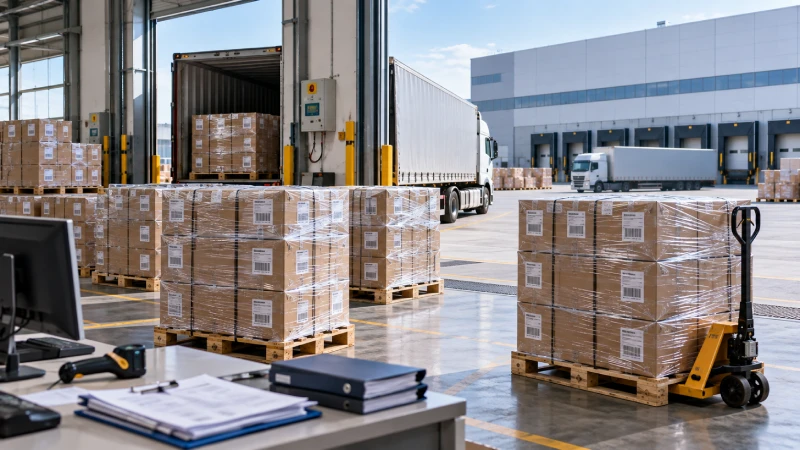
Amazon’s accessible international FBA guidance states that Amazon will not be responsible for or collect duties, taxes or shipping costs associated with imported FBA inventory.
Amazon says such shipments must use Delivered Duty Paid terms and that shipments arriving with collect charges can be refused.
In practical terms, the Amazon fulfilment centre should not be asked to pay:
- import duty;
- import VAT;
- customs brokerage fees;
- unpaid freight;
- destination delivery charges.
However, this does not mean Amazon becomes the importer.
DDP Does Not Solve Seller Compliance
A forwarder may advertise a service as:
“China to Amazon Germany, all-inclusive DDP.”
That can be a useful transport product, but the three letters “DDP” do not answer important legal and tax questions.
Before using the service, the seller should understand:
- Who is the importer?
- Whose EORI is used?
- Who is the customs declarant?
- What type of customs representation is used?
- Which VAT registration is used?
- Who pays import duty?
- Who funds import VAT?
- Who may recover import VAT, if recoverable?
- Where is the import declaration made?
- What evidence will the seller receive?
- What happens if customs asks for compliance documents?
If the provider cannot explain the structure and gives only an “all tax included” price, the seller does not yet have enough information to evaluate the service properly.
DDP Does Not Make Amazon Your Importer
This distinction should be explicit:
DDP describes responsibility for delivering the goods without charges being collected at Amazon. It does not transfer the seller’s importer, EORI, VAT or product-compliance obligations to the fulfilment centre.
For non-EU sellers, whether a particular forwarder’s DDP structure is appropriate depends on the legal entity, customs representation and route.
Needs confirmation before publishing for any specific seller structure.
A customs or tax adviser should confirm the arrangement where necessary.
Step 12: Keep Product Compliance Separate from Freight Forwarding
One of the biggest mistakes in international FBA shipping is assuming that if a freight forwarder can transport a product, the product is legally compliant for sale.
Those are different questions.
A freight forwarder may transport the shipment, arrange customs brokerage and provide freight documents.
The seller remains responsible for determining whether the product can legally be placed on the German/EU market and sold through Amazon.
Depending on the product, requirements may involve:
- CE marking;
- declaration of conformity;
- GPSR requirements;
- EU Responsible Person;
- electrical safety;
- EMC;
- RoHS;
- REACH;
- WEEE;
- batteries;
- food-contact regulations;
- cosmetics rules;
- medical-device requirements;
- other sector-specific legislation.
Not every product requires CE marking.
The correct statement is:
CE marking is required where the applicable EU product legislation requires it.
Amazon can also impose marketplace compliance requirements in addition to the underlying law.
The freight forwarder should not be represented as certifying whether a product is legally compliant unless it separately provides a qualified compliance service.
Dangerous Goods Are Also a Separate Question
Products containing lithium batteries, chemicals, aerosols or flammable materials can create both transportation and Amazon requirements.
The forwarder needs accurate dangerous-goods information to determine transport acceptance.
The seller may separately need to submit information to Amazon.
Passing an airfreight or ocean DG check does not automatically mean the product has been approved by Amazon, and Amazon acceptance does not automatically mean every carrier will accept it.
Step 13: Check German Packaging and EPR Responsibilities
EPR is another area where sellers should not assume the freight forwarder becomes responsible simply because it delivers the goods.
Amazon’s current Germany EPR guidance identifies packaging and electrical and electronic equipment as important German EPR categories.
For packaging, Amazon says sellers can demonstrate compliance by submitting their 13-digit LUCID registration number through Amazon’s EPR compliance system. See Amazon Germany EPR guidance.
For relevant EEE products, Amazon directs sellers to German ElektroG obligations and registration with Stiftung ear.
Packaging Registration and LUCID
Germany’s packaging framework can require producers placing system-participation packaging on the German market to complete registration and other EPR obligations.
This is a seller/producer compliance question—not a normal freight-forwarding responsibility.
A forwarder may ask whether the seller has completed the required registrations, but transporting the carton into Germany does not itself make the forwarder responsible for the seller’s packaging EPR.
Important Change from August 12, 2026
Germany’s Central Agency Packaging Register, ZSVR, states that since August 12, 2026, a company based outside Germany that has no German branch and sells packaged products directly to end users in Germany must appoint an authorised representative in Germany.
The authorised representative takes over specified EPR responsibilities, but LUCID registration remains a personal obligation of the producer. See ZSVR guidance on authorised representatives.
This change is important for overseas Amazon sellers, but it should not be simplified into:
“Every foreign Amazon FBA seller must appoint a German authorised representative.”
Whether the requirement applies depends on the seller’s legal and distribution structure.
For a specific Amazon FBA business model:
Needs confirmation before publishing.
The seller should confirm its position with current ZSVR guidance or an EPR adviser.
China to Amazon FBA Germany: End-to-End Process
| Step | Process | Freight Forwarder Role | Seller / Importer Role |
|---|---|---|---|
| 1 | Create FBA shipment | Usually none | Create shipment and confirm quantities |
| 2 | Confirm destination | Use provided address | Supply current Amazon-assigned FC |
| 3 | Supplier pickup | Arrange collection | Provide supplier and cargo details |
| 4 | Consolidation | Combine and verify cargo | Provide shipment/SKU mapping |
| 5 | FBA prep | Apply labels/pack where contracted | Determine correct Amazon prep and barcode settings |
| 6 | China export | Coordinate origin handling | Provide accurate invoice/product details |
| 7 | Sea, air or rail | Arrange international freight | Choose service based on inventory strategy |
| 8 | EU advance filings | Coordinate through carrier where applicable | Provide complete cargo data |
| 9 | Customs clearance | Coordinate broker where contracted | Establish importer, EORI and VAT structure |
| 10 | Final FBA preparation | Palletise/label where contracted | Supply current Amazon-generated labels |
| 11 | Delivery planning | Arrange truck/carrier | Maintain shipment and delivery-window information |
| 12 | FC appointment | Coordinate where applicable | Follow current Seller Central workflow |
| 13 | Amazon delivery | Deliver to assigned FC | Monitor inbound status |
| 14 | Compliance | Transport support only | Maintain tax, EPR and product compliance |
What Information Is Needed for an Amazon FBA Germany Shipping Quote?
A useful freight quote requires more than a product name and total weight.
The forwarder should understand both the physical cargo and the Amazon delivery requirement.
Cargo Information
Provide:
- product name;
- clear commodity description;
- number of SKUs;
- unit quantity;
- carton quantity;
- carton dimensions;
- gross weight;
- total CBM;
- commercial value;
- HS code if known;
- country of origin;
- product photos if needed;
- battery, liquid, powder, magnetic or dangerous-goods information.
China Pickup Information
Provide:
- supplier address;
- supplier contact;
- cargo-ready date;
- supplier Incoterm;
- whether cargo comes from one or several suppliers.
Amazon Information
When available, provide:
- Amazon marketplace;
- shipment ID;
- assigned fulfilment-centre address;
- carton-to-SKU mapping;
- FBA Box ID labels;
- product barcode/FNSKU files where applicable;
- pallet labels where applicable;
- delivery window;
- appointment or delivery instructions shown in Seller Central.
Customs Information
Confirm:
- importer;
- EORI;
- VAT arrangement;
- customs broker or representation structure;
- commercial invoice;
- packing list;
- product certificates where applicable.
Requested Freight Scope
Clarify whether the quotation needs to include:
- factory pickup;
- consolidation;
- inspection;
- unit labeling;
- carton relabeling;
- palletisation;
- export customs handling;
- sea freight;
- air freight;
- rail freight;
- EU customs brokerage;
- duty/import-VAT handling;
- final-mile FBA delivery;
- appointment coordination.
Without this scope, two “DDP FBA” quotations may actually include very different services.
Common Problems That Delay Amazon FBA Germany Shipments
Shipping to the Wrong Amazon Fulfilment Centre
The forwarder uses an old warehouse address instead of the destination assigned to the current shipment.
Always send the current Seller Central destination.
Incorrect Box Labels
Amazon states that each box requires its own unique FBA Box ID label. Duplicating one label across multiple cartons can cause receiving problems.
Wrong Product Barcode
Barcode instructions based on pre-2026 Amazon rules may now be wrong because Amazon changed barcode eligibility when commingling ended on March 31, 2026.
Importer or EORI Not Ready
Cargo arrives in Europe before the seller has established a workable customs structure.
This can create storage, customs and delivery delays.
VAT Position Not Reviewed
The seller assumes that selling on Amazon.de requires only an Amazon account and does not review inventory-storage VAT obligations.
Amazon’s own Pan-European guidance states that VAT registration is required in countries where inventory is stored.
Product Compliance Documents Missing
Customs or Amazon requests documentation after the shipment has already departed China.
The freight forwarder cannot retroactively create a valid declaration of conformity, EPR registration or product-safety file.
Missing the Amazon Delivery Window
International transit schedules can change.
Amazon currently uses a seven-day delivery window for domestic and international non-partnered-carrier shipments, and shipments arriving outside their window may face receiving delays.
DDP Service With No Transparent Import Structure
The freight provider promises a low all-inclusive price but cannot explain who imports the goods or what customs documentation the seller will receive.
For stock intended for resale, this should be clarified before booking.
Pro Tips for Shipping from China to Amazon FBA Germany
Pro Tip 1: Do Not Book the Final Amazon Delivery From an Old Warehouse List
Use the destination assigned to the actual shipment.
Amazon’s fulfilment network is dynamic, so a warehouse used last month may not be the destination for the next inbound shipment.
Pro Tip 2: Give Original Amazon Label Files to the Prep Warehouse
Avoid screenshots, manually recreated barcodes or copied labels.
The prep warehouse should use the files generated for the actual shipment.
Pro Tip 3: Keep Product Labels and Box Labels Separate
An FNSKU or Amazon unit barcode identifies sellable inventory.
An FBA Box ID identifies an inbound shipping carton.
They perform different functions.
Pro Tip 4: Resolve the Importer Before the Goods Leave China
Do not wait until arrival in Europe to decide whose EORI or VAT structure will be used.
Pro Tip 5: Ask What “DDP” Really Means
An all-inclusive price is not enough.
Ask how importer, EORI, customs declaration, duty and VAT are handled.
Pro Tip 6: Build Buffer Between Port/Airport Arrival and the Amazon Delivery Window
Customs, terminal handling and final preparation happen before FBA delivery.
The vessel ETA or flight arrival time is not the Amazon receiving time.
Pro Tip 7: Finish Compliance Before Shipping
Product-compliance issues are much cheaper to fix while the goods are still at the supplier than when a container is waiting in Europe.
Pro Tip 8: Recheck Amazon Requirements for Every Shipment
Amazon changes inbound workflows.
The barcode rule changed in 2026. Delivery-window rules have changed. Appointment processes have also changed.
Treat the current Seller Central shipment instructions as the operational reference rather than relying on old SOPs.
Shipping Inventory from China to Amazon FBA Germany?
A China-to-Amazon Germany shipment works best when the freight plan and Amazon inbound plan are prepared together.
Winsail Logistics can coordinate the physical logistics from China, including supplier pickup, cargo consolidation, sea, air or rail freight, customs-broker coordination and final-mile FBA delivery.
Before booking, send us your:
- supplier pickup address;
- product and cargo details;
- carton quantity and dimensions;
- total weight and CBM;
- cargo-ready date;
- Amazon shipment destination when available;
- preferred shipping method.
We can then build the freight plan around the current Amazon shipment while keeping the logistics role clearly separated from your importer, VAT, EPR and product-compliance responsibilities.
CTA: Get an FBA Germany Shipping Plan
FAQ
Can my Chinese supplier ship directly to Amazon FBA Germany?
Yes. Direct supplier-to-FBA logistics can be arranged, but the shipment still needs to satisfy Amazonu0026#x27;s preparation, labeling, customs and delivery requirements. For many sellers, using a China consolidation or prep warehouse can provide additional control before export.
Does Amazon act as importer of record for inventory shipped from China?
No. Amazonu0026#x27;s international FBA guidance states that the seller needs an importer of record and Amazon does not assume this role. The importer and customs structure should be confirmed before shipping.
Do I need an EORI number to ship to Amazon Germany?
EORI is mandatory for EU customs operations such as import, export and transit, but the relevant EORI depends on the parties and customs representation used. Do not assume that using a freight forwarder automatically removes the need to review your importer structure.
Do I need German VAT registration for Amazon FBA?
If your inventory is stored in Germany, German VAT obligations need to be assessed. Amazonu0026#x27;s Pan-European FBA guidance states that a VAT number is required for each country where inventory is stored.
Does Amazon require DDP for imported FBA shipments?
Amazonu0026#x27;s accessible international FBA guidance states that imported FBA shipments must arrive without Amazon being asked to pay duties, taxes or shipping charges. Amazon describes this as Delivered Duty Paid treatment, but that does not make Amazon the importer.
Can a freight forwarder offer DDP if I do not have my own VAT or EORI?
A forwarder may offer a DDP logistics service, but the term DDP alone does not prove that the importer, EORI, customs representation and VAT structure are suitable for your business. The exact structure depends on the seller entity, route and customs procedure. Needs confirmation before publishing.
Can I choose the Amazon warehouse in Germany?
You should use the fulfilment-centre destination assigned through the Amazon shipment workflow. Do not select a warehouse simply because it is closer to the port or your forwarderu0026#x27;s warehouse.
Does every shipping carton need an Amazon box label?
Amazon guidance states that each shipping box needs its own unique FBA Box ID label generated through the shipment workflow. Do not duplicate one label across several cartons.
How many Amazon labels are needed on a pallet?
Current accessible Amazon guidance states that each pallet requires four FBA pallet labels, one on each side. Boxes loaded on the pallet still require their own FBA Box ID labels. Shipment-specific pallet rules should still be checked in Seller Central.
Does every product need an FNSKU label in 2026?
No. For inventory shipped on or after March 31, 2026, Amazon changed manufacturer-barcode eligibility and ended commingling. Sellers should check the barcode setting for the specific product before instructing the Chinese supplier or prep warehouse.
Is the international FBA delivery window still 14 days?
No. The older 14-day international guidance has been superseded. Amazon subsequently announced seven-day delivery windows for domestic and international shipments using non-partnered carriers.
Does every FBA delivery need a warehouse appointment?
The exact process depends on shipment type and the instructions displayed for the active shipment. A universal statement that every parcel, pallet or container uses exactly the same appointment process needs confirmation before publishing.
Is sea, air or rail freight best for Amazon FBA Germany?
Sea freight is normally strongest for larger, cost-sensitive replenishment. Air freight suits urgent, lighter or higher-value inventory. Rail can offer a middle option for suitable China-Europe cargo. The best choice depends on cargo size, product margin, stock-out risk and available time.
Can the goods enter through another EU country before going to Amazon Germany?
Yes, depending on the route and customs procedure. A shipment physically entering through another Member State may continue under an appropriate customs or transit arrangement before reaching Germany. The customs and VAT treatment should be confirmed with the broker.
Do Amazon Germany sellers need LUCID packaging registration?
Germany has packaging EPR obligations and Amazon asks relevant sellers to demonstrate packaging compliance using a LUCID registration number. The selleru0026#x27;s exact legal obligations depend on its role under German packaging law, and the framework changed on August 12, 2026. For a specific FBA business model, needs confirmation before publishing.
Is the freight forwarder responsible for CE, GPSR, EPR and other product compliance?
Normally no. The freight forwarder is responsible for the contracted logistics service. The seller, importer, producer or other legally defined economic operator remains responsible for the product and regulatory obligations that apply to the goods.
Final Check Before Shipping
Before releasing an FBA Germany shipment from China, confirm four things.
First, the Amazon shipment is correctly created and the current destination and labels are available.
Second, the cargo is correctly packed, labeled and mapped to the inbound shipment.
Third, the import structure—including importer, EORI, customs representation and VAT treatment—has been confirmed.
Fourth, the product itself meets the German/EU and Amazon requirements that apply to its category.
When those four areas are aligned, the freight forwarder can focus on what it is supposed to do: move the inventory from China to the Amazon fulfilment network as efficiently and predictably as possible.
Before publication, recheck any Amazon-specific claim concerning fixed fulfilment-centre codes, warehouse receiving hours, maximum pallet dimensions or weight, floor-loaded container acceptance, appointment lead time or warehouse-specific unloading procedures.
If the current Amazon guidance cannot verify the rule:
Needs confirmation before publishing.
