

Shipping from China to Khalifa Port involves more than selecting a container vessel and arranging delivery to Abu Dhabi. Importers must also consider cargo acceptance, terminal facilities, customs procedures, and the requirements of the final receiving location.
These decisions are particularly important for manufacturers importing machinery, industrial materials, production equipment, and project cargo. A container arriving at Khalifa Port may be destined for a KEZAD free zone facility, a mainland factory, or a construction project with restricted vehicle access. Each destination can require a different delivery arrangement.
Khalifa Port is an established maritime gateway for Abu Dhabi, but it is not automatically the best discharge port for every shipment. Jebel Ali may offer a more workable routing for certain cargo, depending on the available carrier services, destination requirements, and total transport cost.
This guide explains how to evaluate shipping routes from China, compare Khalifa Port with Jebel Ali, select appropriate cargo-handling arrangements, and prepare for customs clearance and final industrial delivery.
Quick Answer: When Should You Ship from China to Khalifa Port?
Khalifa Port is a potential arrival gateway for shipments from China destined for Abu Dhabi, KEZAD, and industrial facilities. It handles containers and several types of non-containerized cargo, but shipping availability must be confirmed for each shipment. Before booking, compare carrier schedules with Jebel Ali and verify customs arrangements, consignee status, inland transport, cargo handling, and final-site unloading requirements.
Why Khalifa Port Matters for Abu Dhabi and KEZAD Imports
Khalifa Port as an Industrial and Container Gateway
Located between Abu Dhabi and Dubai, Khalifa Port supports container shipping, general cargo, RoRo operations, breakbulk, and other maritime activities.
According to the official AD Ports Group Khalifa Port information, the port is designed to handle multiple cargo categories rather than conventional container traffic alone.
Its terminal network includes Abu Dhabi Terminals, CSP Abu Dhabi Terminal, CMA Terminals Khalifa Port, and specialized facilities such as Autoterminal Khalifa Port.
These facilities make the port relevant to several types of China-origin cargo:
- Manufacturing equipment: Production machinery, machine components, and packaged industrial systems.
- Industrial materials: Steel products, fabricated components, and raw materials used by manufacturing facilities.
- Construction supplies: Structural materials and equipment intended for industrial or infrastructure projects.
- Commercial inventory: Containerized products imported by distributors and warehouse operators.
- Specialized equipment: Oversized or wheeled machinery that may require non-standard shipping and handling arrangements.
Khalifa Port also benefits from its connection with Khalifa Economic Zones Abu Dhabi (KEZAD), which provides industrial and logistics facilities for different categories of businesses.
For companies receiving materials at a nearby industrial facility, this relationship can simplify parts of the logistics planning process. However, proximity alone does not establish which vessel service, terminal, customs procedure, or transport arrangement will be suitable.
Why the Final Delivery Address Matters More Than the Port Name
Consider three importers purchasing equipment from Chinese manufacturers.
The first is receiving a standard container of production materials at a KEZAD warehouse. The second is importing a large machine for installation at an Abu Dhabi mainland factory. The third is receiving construction equipment at a project site with limited access for heavy trucks.
All three shipments could potentially use Khalifa Port, yet their delivery requirements are different.
The warehouse may need a confirmed receiving appointment and valid gate access. The factory may require a crane, forklift, or unloading platform. The construction project may need a route assessment, special trailer, and additional site approvals.
The correct transport plan therefore starts with the exact delivery address, receiving entity, cargo characteristics, and unloading arrangements.
This is also why a general shipping from China to UAE guide cannot replace shipment-specific planning for Khalifa Port.
Port Capability Does Not Guarantee Shipment Acceptance
An important distinction is often overlooked when arranging industrial shipments: a port may have suitable infrastructure without an available carrier service for the cargo.
Three separate conditions must be satisfied:
- Terminal capability: The receiving terminal can physically accommodate and handle the cargo under its operating rules.
- Carrier acceptance: An appropriate vessel operator accepts the cargo, dimensions, weight, packaging, and requested route.
- Destination feasibility: The shipment can be released, transported, and safely received at the final destination.
For example, a port with RoRo facilities does not necessarily have an available RoRo sailing from the selected Chinese origin. Similarly, a terminal handling breakbulk cargo may still require a separate lifting assessment for a particular machine.
Importers should obtain shipment-specific confirmation before committing to a shipping method or delivery schedule.
Which China Export Ports and Shipping Routes Should You Consider?
Choose the Export Port Based on Your Supplier Location
The most practical China export port is not always the largest or most familiar one.
The supplier’s location, cargo type, available carrier services, and inland transport arrangements should determine the initial selection.
| China Export Region | Ports to Evaluate | Main Planning Considerations |
|---|---|---|
| East China | Shanghai, Ningbo-Zhoushan | Supplier pickup distance, available services, equipment and terminal cutoffs |
| South China | Shenzhen-area terminals, Guangzhou/Nansha | Factory location, loading arrangements and vessel routing |
| North China | Qingdao, Tianjin/Xingang | Inland pickup cost, service connections and cargo acceptance |
| Other manufacturing regions | Nearest practical export gateway or connecting port | Domestic transport, feeder connections and total logistics cost |
These are potential export gateways, not a list of confirmed direct sailings to Khalifa Port.
A supplier located inland may find that using a more distant container terminal with suitable vessel connections is preferable to using the nearest port.
For heavy machinery, the choice becomes more complex. An export port may handle standard containers but have limited availability for the specific lifting equipment, special container, or vessel service required by the cargo.
Before selecting the origin port, establish the cargo’s packed dimensions, gross weight, loading method, and required equipment.
Direct Vessel, Transshipment, or Alternative UAE Gateway?
A China-origin shipment may follow different routing arrangements.
Direct service to Khalifa Port
A direct vessel routing avoids an intermediate container transshipment, where such a service is available and bookable for the shipment.
However, direct routing should be verified against the current carrier schedule. A shipping line’s network coverage does not guarantee that every Chinese origin terminal has a direct call.
Transshipment routing
A carrier may move the cargo through an intermediate hub before the shipment reaches Khalifa Port.
This arrangement can provide additional routing options, but it introduces dependencies on connecting-vessel schedules, transshipment handling, and equipment availability.
For special cargo, acceptance at the origin terminal does not automatically establish acceptance for every connecting vessel or intermediate terminal.
Alternative UAE discharge port
A shipment may also be evaluated for discharge at Jebel Ali or another suitable UAE gateway, followed by inland movement under the applicable customs and transport arrangements.
This is not simply a change of the port name on the shipping documents. It may alter the handling charges, release procedure, transport distance, equipment requirements, and contractual responsibilities.
The alternative route must be confirmed as an available and legally workable arrangement before booking.
How to Verify a Khalifa Port Sailing Before Booking
Importers should request more than a general estimated transit time.
A practical shipping proposal should identify:
- Origin terminal: The actual terminal where cargo will be loaded.
- Port of discharge: Khalifa Port, or the confirmed alternative discharge arrangement.
- Carrier and service: The proposed operator, vessel service, and connecting ports, if applicable.
- Sailing schedule: Estimated departure, expected arrival, and relevant booking cutoffs.
- Cargo acceptance: Confirmation that the operator can accept the commodity, weight, dimensions, and equipment type.
- Destination release: The parties and procedures required for cargo availability and delivery.
For non-containerized machinery, the proposal should also identify the intended vessel and discharge-handling arrangements when these are available.
Current routing consideration — November 2026: Regional operational restrictions remain relevant to Gulf shipping. In an October 30, 2026 advisory, Maersk reported temporary booking adjustments affecting Khor Fakkan, Fujairah, and selected Upper Gulf destinations. This does not establish an identical restriction for every Khalifa Port service; acceptance must be checked with the specific carrier and routing.
Published schedules should therefore be treated as planning information until the carrier confirms the booking.
Build a Realistic Door-to-Site Timeline
The vessel’s estimated arrival date is not the same as the date industrial cargo will be available at a factory.
A complete timeline contains several stages:
- Supplier readiness: Cargo production, packing, inspection, and pickup.
- China export handling: Inland transport, export procedures, terminal delivery, and loading.
- Ocean transportation: Vessel sailing and any connecting services.
- Arrival and discharge: Terminal handling and confirmation of cargo availability.
- Release procedures: Carrier documents, customs formalities, inspection, and applicable approvals.
- Inland transport: Truck dispatch, gate-out, and movement to the receiving facility.
- Final receiving: Site entry, unloading, delivery confirmation, and equipment return when necessary.
For project cargo, lifting and installation preparation may extend beyond the transportation process.
Instead of relying on a fixed number of days, request an estimated delivery timeline that identifies the assumptions, dependencies, and potential causes of delay.
Khalifa Port vs Jebel Ali: Which Port Is Better for Your Shipment?
Both Khalifa Port and Jebel Ali are major UAE maritime gateways, but they serve different logistics networks and may offer different options for individual shipments.
Khalifa Port is closely connected with Abu Dhabi’s industrial activities and KEZAD. Jebel Ali supports Dubai’s large trading, distribution, and industrial networks, including Jebel Ali Free Zone (JAFZA).
Importers should avoid choosing between them solely on the basis of geography.
Compare Vessel Service Availability First
The first question is whether an appropriate shipping service can accept the cargo.
A Jebel Ali routing may be easier to arrange for a particular shipment if an available carrier offers a suitable sailing and equipment option. Khalifa Port may be preferable when a workable service is available and the final delivery is in Abu Dhabi.
The answer depends on current bookings, rather than the ports’ general reputation.
This is especially important for cargo requiring flat racks, open-top containers, breakbulk transportation, or RoRo handling.
Khalifa Port vs Jebel Ali — Shipment Decision Matrix
| Evaluation Factor | Khalifa Port | Jebel Ali | What the Importer Should Verify |
|---|---|---|---|
| Main logistics context | Abu Dhabi, KEZAD, and associated industrial supply chains | Dubai, JAFZA, distribution, and regional trading networks | Final delivery location and consignee |
| Container shipping | Multiple container terminal facilities | Established container terminal network | Bookable service, vessel ETA, and equipment |
| RoRo cargo | Specialized facilities are available | RoRo facilities are also available | Suitable vessel, operator acceptance, and discharge handling |
| Breakbulk cargo | General cargo and breakbulk facilities | General cargo and breakbulk facilities | Handling plan, lifting capability, and vessel availability |
| Customs arrangements | Relevant Abu Dhabi Customs procedures | Relevant Dubai Customs procedures | Import declaration, consignee registration, and cargo status |
| KEZAD delivery | Potentially convenient for nearby facilities | May require a longer inland movement | Trucking, customs movement, and receiving procedures |
| Dubai/JAFZA delivery | May involve additional inland transport | Potentially more convenient for nearby destinations | Customs status, destination access, and transport |
| Industrial trucking | Depends on cargo and final route | Depends on cargo and final route | Trailer, route permits, unloading, and empty return |
| Total delivered cost | Shipment-specific | Shipment-specific | Comparable all-in quotations |
Both ports have infrastructure supporting specialized industrial cargo. DP World’s published information confirms that Jebel Ali also handles breakbulk, general cargo, and RoRo operations, so these capabilities should not be presented as exclusive advantages of Khalifa Port.
Compare Customs and Cargo Release Requirements
The customs process is another important difference.
Cargo imported through Khalifa Port falls under the applicable Abu Dhabi customs procedures. Cargo discharged at Jebel Ali requires coordination with the relevant Dubai customs and port authorities.
The shipment’s treatment also depends on its declared customs regime and final destination.
For example, cargo moving into an eligible free zone arrangement may require different documentation and movement controls from goods imported directly into the UAE mainland market.
An importer should confirm the correct procedure with the licensed customs representative rather than assume that clearance at any UAE port produces the same result.
Compare Inland Trucking and Final Delivery
Port selection can have a substantial effect on inland transportation, particularly for heavy or oversized shipments.
The relevant considerations include the actual road route, the availability of suitable trailers, access to the destination, and any special loading or unloading requirements.
For containerized cargo, the empty container return location can also influence cost and scheduling.
A lower ocean freight quotation may be offset by higher destination handling, trucking, waiting, or equipment expenses.
Illustrative Scenario: Industrial Machinery for an Abu Dhabi Factory
The following is a hypothetical planning scenario, not a completed Winsail Logistics shipment.
An Abu Dhabi manufacturer purchases a packaged production machine from a factory in China. The machinery requires a standard container, and the buyer is responsible for arranging import clearance and inland delivery.
Two routing options are available for evaluation.
Option A: Khalifa Port
The carrier confirms an acceptable routing to Khalifa Port. After the required release procedures, a truck delivers the container to the Abu Dhabi factory.
The buyer must verify the terminal charges, customs arrangements, truck availability, unloading equipment, and empty container return instructions.
Option B: Jebel Ali
A carrier offers another suitable sailing to Jebel Ali. The cargo would be released under the applicable procedures and transported to the same Abu Dhabi factory.
The buyer must account for the additional inland journey, destination charges, and any customs or transport arrangements associated with the selected route.
Neither option can be declared cheaper or faster without comparing actual quotations and schedules.
The correct choice is the one that offers the best combination of confirmed cargo acceptance, workable delivery timing, total cost, and receiving-site readiness.
For a deeper look at the alternative gateway, see our shipping from China to Jebel Ali guide.
Compare Khalifa Port and Jebel Ali for Your Shipment
If your cargo is destined for Abu Dhabi or KEZAD, send Winsail Logistics your China supplier location, cargo specifications, and final delivery address.
We can review the information required to compare available shipping routes, destination handling, and inland delivery arrangements before booking.
Review My Shipping Options
What Cargo Types Can Khalifa Port Handle?
Khalifa Port is a multipurpose port, but the appropriate shipping method depends on the physical characteristics of the cargo and the services actually available.
Standard containerized goods are generally simpler to arrange than oversized, wheeled, or non-containerized industrial equipment. However, even conventional cargo may require additional checks if it is unusually heavy, regulated, or difficult to unload.
Container Cargo: FCL, Flat Rack, and Open-Top Equipment
Full Container Load (FCL) shipping is a common starting point for industrial and commercial shipments from China.
Standard containers may be suitable for machine components, packaged construction supplies, spare parts, industrial accessories, and other goods that can be safely loaded within the container’s dimensional and weight limits.
Common equipment categories include:
- 20-foot dry containers: Frequently considered for compact or dense cargo, subject to actual container payload and road weight limits.
- 40-foot dry containers: Suitable for longer or higher-volume cargo that fits the available payload and internal dimensions.
- 40-foot high-cube containers: Provide additional internal height for suitable cargo.
- Open-top containers: May be considered for cargo requiring top loading or exceeding standard container height, subject to approval.
- Flat-rack containers: May be considered for cargo unsuitable for an enclosed container because of dimensions or loading requirements.
An open-top container does not automatically solve every height restriction. Likewise, flat racks have specific payload, securing, and out-of-gauge approval requirements.
For heavy machinery, the shipper should provide a complete packing specification before equipment is selected. Gross weight alone is insufficient when weight distribution, floor loading, or lifting arrangements are critical.
General Cargo and Breakbulk Shipments
General cargo is a broad category that includes different types of packaged and individually handled goods.
Breakbulk refers to cargo carried and handled as separate pieces rather than inside conventional shipping containers.
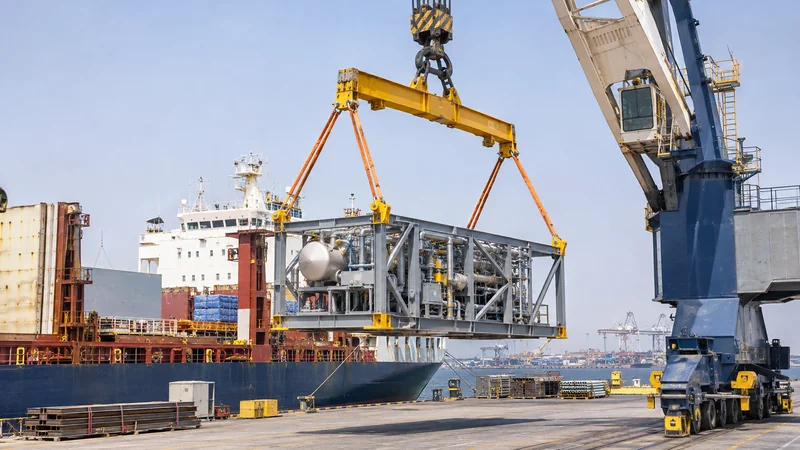
Possible breakbulk shipments include large industrial machines, fabricated steel structures, equipment modules, and other cargo that cannot be transported economically or safely in standard containers.
Project cargo describes the broader logistics operation required to transport complex or critical equipment. A project shipment may combine containerized items, breakbulk pieces, and specialized inland transport.
The decision to use breakbulk shipping should consider:
- Packed dimensions and individual piece weights.
- Vessel lifting and stowage arrangements.
- Port crane or other lifting equipment suitability.
- Required lifting accessories and approved lifting points.
- Cargo protection and sea-fastening arrangements.
- Destination handling and inland transport limitations.
A suitable port facility is only one part of the assessment. The actual vessel, terminal, and receiving site must also be capable of handling the shipment.
RoRo Shipping for Wheeled Industrial Equipment
Roll-on/Roll-off (RoRo) shipping may be suitable for certain wheeled or mobile machinery, provided the operator accepts the equipment and the required handling method.
Examples for assessment include suitable construction equipment, industrial vehicles, and other wheeled machinery.
Before evaluating a RoRo service, the shipper should confirm:
- Whether the unit can move under its own power or requires approved towing or handling.
- Its overall dimensions and operating weight.
- Tire, axle, ground-clearance, and ramp-related requirements.
- Fuel, battery, and other safety conditions.
- The loading and discharge methods accepted by the operator.
- The availability of a suitable service from the proposed Chinese origin.
Some machinery cannot be accepted in its existing condition or may require alternative packaging and transport.
RoRo terminal infrastructure does not guarantee that a particular China-to-Khalifa Port RoRo sailing is available. Operator acceptance must be confirmed before transportation is arranged.
Cargo Types & Port Handling Requirements
| Cargo Category | Potential Shipping Method | Main Handling Requirements | What Must Be Confirmed |
|---|---|---|---|
| Standard commercial goods | 20ft or 40ft FCL | Safe packing, container loading, and weight compliance | Container availability, carrier routing, and delivery |
| Heavy packaged machinery | Standard container where suitable | Weight distribution, securing, lifting, and loading safety | Payload, floor loading, road weight, and unloading |
| Out-of-gauge equipment | Flat rack or open-top | Accurate dimensions, lashing, and special handling | Equipment and vessel acceptance |
| Wheeled machinery | RoRo, where available | Mobility, dimensions, safety condition, and ramp compatibility | Operator acceptance and discharge arrangements |
| Large steel structures | Breakbulk or suitable special equipment | Lifting points, securing, and cargo protection | Vessel, terminal, and onward transport |
| Complex industrial systems | Project-specific multimodal arrangement | Cargo engineering, sequencing, and coordinated handling | Feasibility at every transport and delivery stage |
The table identifies possible shipping methods, not confirmed services for an individual cargo shipment.
What Information Is Required Before Special Cargo Booking?
For oversized or non-standard equipment, the initial cargo submission should include:
- Detailed equipment description.
- Number of units and packing configuration.
- Length, width, and height of each packed piece.
- Gross weight of each piece.
- Photographs and technical drawings.
- Center of gravity and lifting points where applicable.
- Packing, securing, and loading arrangements.
- Final delivery address and site restrictions.
Incomplete specifications can lead to incorrect equipment selection, rejected bookings, unexpected terminal charges, or difficulties arranging final delivery.
A complete cargo data package is therefore one of the most effective ways to reduce uncertainty before shipment.
KEZAD Free Zone, Industrial Zone, or Abu Dhabi Mainland: Which Delivery Process Applies?
KEZAD is closely connected with Khalifa Port, but its facilities do not all operate under the same customs and business jurisdiction.
This distinction matters when planning imports from China.
According to KEZAD’s official jurisdiction information, the group offers both Free Zone and Mainland, also described as Domestic Economic Zone, facilities.
The receiving company’s actual licence, customs status, and intended use of the goods determine which arrangements must be considered.
Delivery to a KEZAD Free Zone Company
A shipment consigned to an eligible KEZAD free zone company may follow a customs-controlled movement procedure rather than the same process used for direct mainland imports.
The importer should confirm:
- The receiving company’s licensed name and free zone status.
- Its eligibility to receive the goods under the proposed customs procedure.
- The responsible customs representative and required declaration.
- Any applicable transit, bond, seal, or cargo-tracking arrangements.
- The receiving warehouse, gate access, and unloading arrangements.
Abu Dhabi Customs announced a Virtual Corridors Cargo Movement System in May 2024 to support duty-suspended movements between eligible customs locations, free zones, and bonded warehouses.
Its first phase included movements from Khalifa Port to eligible KEZAD free zone companies and private customs warehouses. That announcement does not mean every shipment automatically qualifies for the arrangement; eligibility and current procedures must be confirmed.
For goods intended for storage, manufacturing, or eventual re-export, the applicable customs status should be agreed before the cargo departs China.
Delivery to a KEZAD Domestic Economic Zone Facility
KEZAD’s Domestic Economic Zone operates within the mainland jurisdiction framework.
A manufacturer located in this type of facility should not automatically be treated as a free zone importer simply because its address is in KEZAD.
Depending on the goods and transaction, the company may need to complete the applicable mainland import declaration, satisfy regulatory requirements, and account for relevant customs duties and taxes.
The shipment may then proceed to the industrial facility after the necessary release procedures.
The receiving company must also arrange any site-specific access, delivery appointment, and unloading equipment.
The important distinction is the receiving entity’s legal and customs status, not merely its geographical proximity to Khalifa Port.
Delivery to an Abu Dhabi Mainland Warehouse or Project Site
For mainland destinations outside KEZAD, cargo release and local delivery must be arranged according to the importing entity and the type of goods.
The importer should verify that an eligible entity is responsible for the declaration and that all relevant permits or product approvals are in place.
For ordinary containerized shipments, the main destination requirements may involve a receiving appointment, truck access, and safe unloading.
For industrial project cargo, additional requirements can include approved transport routes, lifting equipment, site induction, safety documentation, and restrictions on delivery timing.
A truck arriving at a project site does not mean the shipment can necessarily be unloaded immediately.
What Happens When Goods Move from a Free Zone into Mainland UAE?
Importers should distinguish between cargo entering an eligible free zone and goods being released into the UAE domestic market.
A free zone customs arrangement may permit qualifying goods to remain under an appropriate customs regime. Movement into the mainland can create further declaration, duty, and tax obligations.
VAT treatment also requires separate consideration.
The UAE Federal Tax Authority distinguishes ordinary free zones from qualifying Designated Zones for VAT purposes. Even in a qualifying Designated Zone, special treatment applies only under the relevant conditions and does not automatically extend to every transaction or service.
A company should therefore not assume that all goods entering KEZAD are exempt from customs duties or VAT.
The correct treatment must be reviewed against the actual facility, customs procedure, transaction, goods, and applicable tax rules.
KEZAD / Industrial Delivery Checklist
| Receiving Scenario | Customs and Zone Considerations | Required Confirmation | Delivery Readiness |
|---|---|---|---|
| KEZAD Free Zone | Eligibility for the proposed free zone or bonded movement procedure | Consignee licence, customs procedure, required movement documentation | Warehouse gate access, receiving appointment, unloading |
| KEZAD Domestic Economic Zone | Applicable mainland import and regulatory procedures | Importing entity, customs declaration, approvals, duties and taxes where applicable | Facility address, truck access, receiving team |
| Abu Dhabi mainland warehouse | Ordinary mainland release or another applicable customs arrangement | Importer details, shipping documents, cargo approvals | Delivery schedule, unloading facilities, container return |
| Industrial project site | Applicable import release plus possible special transport requirements | Cargo specifications, site permits, transport plan | Route clearance, lifting equipment, site safety approval |
Before shipping, the buyer should send the freight coordinator the full legal name of the consignee and the exact destination address, not simply the instruction “deliver to KEZAD.”
How Does Cargo Move from Khalifa Port to Final Delivery?
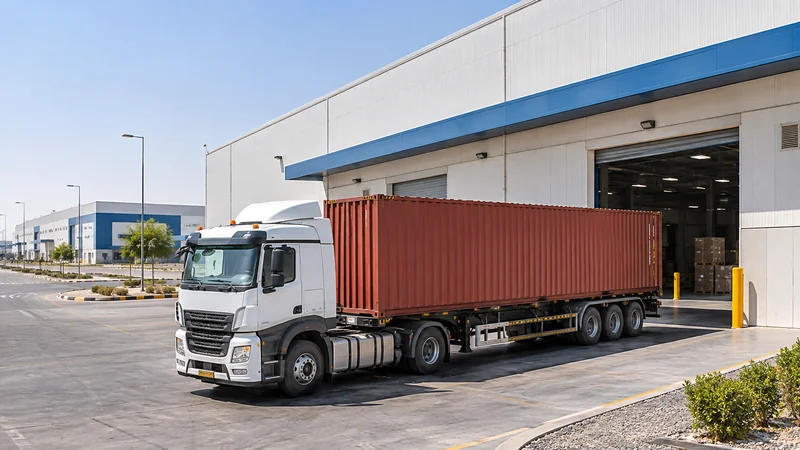
Once a vessel arrives at Khalifa Port, the cargo must complete the applicable carrier, terminal, and customs release procedures before it can be transported to the consignee.
For industrial shipments, a successful delivery depends on coordinating these activities before the vessel arrives.
Before Vessel Arrival: Prepare Documents and Release Arrangements
The importer and its appointed service providers should review the shipment documents before arrival.
Common documentation includes:
- Bill of Lading: Identifies the shipment, parties, and ocean carriage details.
- Commercial Invoice: Describes the transaction, goods, values, and trading parties.
- Packing List: Identifies the packages, quantities, dimensions, and weights.
- Certificate of Origin: Where required under the applicable import procedure.
- Importer or Consignee Information: Details necessary for the relevant customs declaration.
- HS Classification: Used to determine the applicable tariff treatment and regulatory requirements.
- Product-Specific Approvals: Where required for regulated goods.
Additional documents may be needed depending on the commodity, intended use, and receiving jurisdiction.
For example, certain electrical equipment, regulated industrial products, chemicals, and other controlled goods may be subject to approvals or conformity requirements. The applicable requirements should be verified for the specific product rather than inferred from a broad description such as “machinery.”
The importer should also confirm who is responsible for customs representation, carrier release, payment of destination charges, and transportation from the terminal.
These responsibilities should be agreed before cargo arrival.
From Vessel Discharge to Customs and Terminal Release
A typical arrival-to-delivery process involves the following activities:
- Vessel arrival and cargo discharge: The terminal discharges the container or other cargo according to its operating procedures.
- Carrier documentation and release: The responsible party satisfies the carrier’s documentary and commercial release requirements, which may include obtaining a delivery order.
- Customs declaration: The importer or authorized representative submits the relevant import or customs-movement declaration and supporting documentation.
- Inspection and approvals: Customs inspection, regulatory approval, and applicable duty or tax procedures are completed where required.
- Terminal release and gate arrangements: Once all applicable holds and terminal requirements are satisfied, cargo collection or the appropriate onward movement can be arranged.
- Inland transportation: The approved transport operator collects the cargo and proceeds according to the agreed route and delivery schedule.
- Receiving and unloading: The destination facility accepts the cargo using the agreed personnel and equipment.
- Delivery confirmation and equipment return: Proof of delivery is completed, and reusable shipping equipment is returned according to the applicable terms.
The exact sequence can vary with the shipment, terminal, customs regime, and operating parties.
Customs clearance is not the same as terminal release. A shipment may have completed its customs formalities while still requiring carrier release, terminal payments, removal of other holds, or a collection appointment.
Importers should refer to the applicable Abu Dhabi Customs services and confirm their individual requirements with an authorized customs representative.
Gate-Out, Inland Delivery, and Proof of Delivery
Before the cargo leaves Khalifa Port, the receiving facility should confirm:
- The exact delivery address and authorized receiving contact.
- The truck type and cargo collection arrangements.
- Any required facility or industrial-zone gate pass.
- The permitted receiving hours and delivery appointment.
- The unloading equipment and responsible party.
- Whether a container must be unloaded immediately or can remain at the site temporarily.
- Empty container return instructions, where applicable.
Delays can create costs even when the ocean transportation itself has been completed.
Terminal storage charges may apply if cargo remains within the terminal beyond the relevant allowance. Container demurrage and detention may also arise under the shipping line’s terms, depending on when the container remains at the terminal or outside the terminal beyond the applicable free time.
These charges are not necessarily interchangeable, and their calculation depends on the operator’s tariff and contractual conditions.
For a factory importing machinery, scheduling a truck before the crane or unloading crew is available can create avoidable waiting time. Coordinating the receiving appointment with cargo release and equipment availability is therefore essential.
Heavy Machinery and Oversized Cargo: What Must Be Checked Before Shipping?
Heavy industrial cargo requires a more detailed feasibility assessment than conventional palletized goods.
A machine that can be loaded onto a vessel may still be unsuitable for a particular inland transport route or receiving site.
The objective is to verify the complete movement from the China factory to final unloading before committing to the shipment.
Verify Dimensions, Weight, and Lifting Data
The manufacturer’s cargo specifications should identify the dimensions and gross weight of every transport unit after packing.
For machinery, the following information may also be necessary:
- Accurate packed length, width, and height.
- Total packed weight and weight distribution.
- Center of gravity.
- Approved lifting points and lifting diagrams.
- Base-frame or skid construction.
- Required lifting accessories.
- Stability and securing instructions.
- Technical drawings and photographs.
If machinery is dismantled into separate transport units, the specifications should identify each packed piece individually.
This information helps determine whether a standard container, special container, or alternative shipping method is appropriate.
It also allows the responsible engineering and handling specialists to assess lifting and transport feasibility.
Confirm Vessel and Terminal Handling Arrangements
A successful special-cargo movement requires compatibility between the cargo and the proposed vessel and terminal.
The review may need to address vessel lifting arrangements, terminal equipment, safe working limits, cargo stowage, securing methods, and the available working area.
For out-of-gauge cargo, the operator may require detailed drawings, lashing information, and formal approval.
For breakbulk machinery, a shipment-specific lifting and handling plan may be necessary.
The port’s published lifting or cargo-handling infrastructure should not be interpreted as approval for an individual cargo unit.
The responsible carrier, terminal operator, and qualified handling specialists must assess the proposed operation.
Check Abu Dhabi Road Transport and Permit Requirements
Transporting an oversized machine from Khalifa Port to an industrial facility may require more than booking a low-bed trailer.
Depending on the cargo, vehicle, and route, the transport operator may need to assess:
- Loaded vehicle width, height, length, and gross weight.
- Axle loads and weight distribution.
- Road geometry, bridge restrictions, and overhead clearance.
- Roundabouts, turning areas, and industrial access roads.
- Applicable movement restrictions and permitted travel periods.
- Additional permissions, route approvals, or escorts where required.
Abu Dhabi Mobility administers the Asateel system for commercial transport operating, vehicle, and driver permits. These general commercial transport authorizations should not be confused with any additional permissions required for exceptional loads or particular routes.
A suitably licensed transport operator should confirm the specific requirements with the responsible authorities.
Do not assume that obtaining a heavy-duty trailer automatically authorizes an oversized movement on every road in Abu Dhabi.
Complete the Site Unloading and Access Review
The final receiving site can be the most difficult part of an industrial shipment.
Before cargo departure, the buyer should confirm that the destination has:
- An entrance suitable for the loaded vehicle.
- Adequate turning and maneuvering space.
- A safe unloading position.
- Sufficient ground bearing capacity for the proposed equipment.
- An appropriate crane, forklift, or other lifting arrangement.
- Approved lifting procedures where required.
- Trained receiving personnel.
- A confirmed delivery appointment and safety requirements.
Where appropriate, qualified specialists should review the lifting method, equipment setup, and site conditions.
Illustrative Scenario: A Machine Arrives but Cannot Be Unloaded
The following is an illustrative scenario, not a real Winsail Logistics case.
A Chinese supplier exports a crated industrial machine to Khalifa Port. The ocean carrier accepts the cargo, and the machine is discharged successfully.
A heavy-duty truck is arranged for delivery to an Abu Dhabi factory.
However, when the truck reaches the destination, the factory discovers that its available forklift cannot safely handle the packed unit. The site has not arranged a suitable crane, and the unloading location has not been assessed.
The truck cannot complete delivery as planned.
This situation could have been prevented by reviewing the cargo’s lifting data, confirming unloading equipment, and assessing the receiving site before shipment.
For complex machinery involving multiple heavy or oversized units, see our project cargo shipping from China services for additional planning considerations.
How Should You Compare Shipping Costs and Delivery Timing?
A quotation for shipping from China to Khalifa Port should be evaluated according to its complete service scope.
Ocean freight alone does not represent the total cost of transporting machinery or commercial goods to an Abu Dhabi facility.
Compare the Complete China-to-Abu Dhabi Cost
Depending on the Incoterms rule and agreed service scope, a complete shipment may include:
- China supplier pickup and inland transport.
- Export documentation, terminal charges, and container loading.
- Special packing, lashing, or lifting.
- Ocean freight and applicable carrier surcharges.
- Transshipment charges where relevant.
- Destination carrier and terminal charges.
- Customs brokerage and applicable import charges.
- Inland trucking from the discharge port.
- Special trailers, crane hire, or unloading equipment.
- Storage, waiting, demurrage, and detention where applicable.
The buyer should confirm which party is responsible for each cost under the sales contract.
For example, FOB and CIF arrangements normally allocate different transportation obligations, but neither term alone guarantees customs clearance, inland trucking, or unloading at an Abu Dhabi factory.
The named place, Incoterms rule and year, sales agreement, and actual freight quotation must be considered together.
Example: Comparing Total Costs Through Two Ports
A practical comparison can use the following calculation:
Total Delivered Cost = Ocean Freight + Destination Charges + Customs-Related Costs + Inland Transport + Special Handling + Additional Routing Costs
For the same cargo and final destination:
Khalifa Port Option
Ocean freight to Khalifa Port + Khalifa Port destination charges + applicable customs-related costs + transport to the receiving facility + required handling.
Jebel Ali Option
Ocean freight to Jebel Ali + Jebel Ali destination charges + applicable customs-related costs + transport to the same receiving facility + required handling.
If a transshipment, additional transfer, or special transport arrangement applies to either option, include its cost.
Do not assume that customs duties or taxes differ merely because the discharge port changes. They must be assessed according to the actual goods, customs procedure, and applicable law.
A fair comparison also requires the same currency, cargo specifications, final delivery address, and agreed service scope.
Separate Vessel Arrival from Final Cargo Availability
Shipping quotations should distinguish between:
- ETD: Estimated departure from the origin port.
- ETA: Estimated vessel arrival at the destination port.
- Cargo availability: When the cargo is available for the applicable release or collection process.
- Delivery date: When the cargo is expected to reach the receiving facility.
- Unloading completion: When the shipment has been safely received under the agreed delivery scope.
These dates may be affected by different factors.
Carrier schedules and transshipment connections influence the arrival estimate. Customs procedures, terminal handling, documentation, trucking, and site readiness influence final delivery.
For time-sensitive industrial equipment, the buyer should request a realistic door-to-site schedule rather than rely exclusively on the ocean transit estimate.
Khalifa Port Shipping Readiness Checklist
Before booking a shipment from China to Khalifa Port, use the following checklist to confirm whether the essential arrangements are ready.
Shipment and China Origin
- Confirm the supplier’s pickup address and proposed export port.
- Review cargo description, commodity classification, and shipping documents.
- Verify packed dimensions, gross weight, packaging, and loading arrangements.
Carrier and Port Handling
- Confirm the current carrier routing and shipment acceptance.
- Verify the applicable terminal and cargo-handling arrangements.
- Complete any required special-equipment, securing, or lifting assessments.
Customs and Receiving Entity
- Confirm the consignee’s legal identity and customs status.
- Establish responsibility for declarations, approvals, and applicable charges.
- Verify the appropriate free zone, bonded, or mainland movement procedure.
Inland Delivery and Site Readiness
- Confirm the suitable truck, road route, and any required transport authorizations.
- Verify delivery access, receiving appointments, and unloading equipment.
- Agree on cost responsibility, delivery milestones, and arrangements for delays.
If carrier acceptance, the required customs procedure, special transport arrangements, or safe unloading remain unresolved, the shipment should not be considered fully ready for the proposed movement.
The best time to identify these problems is before the cargo leaves the supplier’s facility.
Plan Your Shipment via Khalifa Port to Abu Dhabi
Whether you are importing manufacturing equipment, industrial materials, containerized goods, or oversized machinery, the most useful starting point is a complete description of the shipment and its final destination.
Winsail Logistics supports China-origin international freight planning and can review available transport options and coordination requirements based on your cargo information.
For a Khalifa Port shipment, please prepare:
| Shipment Information | Details to Provide |
|---|---|
| China origin | Supplier city, pickup address, and proposed loading port |
| Cargo description | Product name, quantity, and HS code if known |
| Weight and dimensions | Gross weight and packed dimensions of each unit |
| Packing method | Cartons, pallets, wooden cases, containers, or other packaging |
| Shipping requirement | Standard container, special equipment, RoRo, or breakbulk for evaluation |
| Trade terms | Agreed Incoterms rule and named place |
| Final destination | Complete Abu Dhabi or KEZAD delivery address |
| Consignee | Legal name and free zone or mainland status |
| Required timing | Cargo-ready date and preferred delivery schedule |
| Special requirements | Lifting drawings, access restrictions, permits, and unloading arrangements |
For specialized machinery, photographs and technical drawings can make the initial feasibility review more useful.
With this information, the appropriate shipping arrangements can be evaluated against actual carrier availability, destination procedures, and the receiving facility’s requirements.
Plan My Khalifa Port Shipment
All transport options remain subject to carrier acceptance, local service availability, regulatory requirements, and shipment-specific confirmation.
Can I ship from any Chinese port to Khalifa Port?
Not every Chinese export port offers the same shipping services or equipment availability for Khalifa Port. A shipment may use a suitable main loading port, feeder connection, or transshipment routing, depending on the supplier location, cargo type, and carrier schedule. For heavy or specialized cargo, the vessel operator must also accept the dimensions, weight, and handling requirements. Confirm the available routing before selecting the origin terminal or arranging cargo delivery.
Does Khalifa Port accept RoRo machinery shipped from China?
Khalifa Port has RoRo-handling infrastructure, but this does not guarantee an available RoRo service from every Chinese origin. Acceptance depends on the vessel operator, machinery condition, dimensions, weight, mobility, and handling requirements. Some machines may require towing arrangements, special preparations, or an alternative transport method. The shipper should provide equipment specifications and obtain confirmation for the proposed sailing before booking.
Can goods move from Khalifa Port into a KEZAD free zone without mainland customs clearance?
Eligible goods may move under an applicable free zone or customs-controlled procedure rather than a conventional mainland import arrangement. However, the process depends on the receiving company's customs status, the goods, and the movement procedure approved by the relevant authorities. A subsequent transfer into mainland UAE may require additional declarations and applicable duties or taxes. The consignee and authorized customs representative should confirm the correct procedure before shipment.
What should I do if my industrial machinery cannot fit into a standard container?
Begin by providing the machine's packed dimensions, gross weight, photographs, and technical drawings. Depending on its characteristics, possible options may include an open-top container, flat rack, RoRo, or breakbulk transportation. Each option requires confirmation of carrier acceptance, port handling, inland transport, and final unloading arrangements. Do not assume that the physically smallest shipping option is automatically the safest or most economical.
Who is responsible for unloading cargo at an Abu Dhabi factory or project site?
The responsible party depends on the sales contract, agreed delivery terms, transport contract, and service scope. Ocean freight, port-to-site trucking, crane hire, and final unloading are separate activities unless explicitly included in the relevant agreement. Before arranging delivery, the importer should confirm who provides the unloading equipment, who supervises the operation, and whether the receiving site is ready. Unclear responsibilities can cause delays, waiting costs, and safety risks.
Shipping and Regulatory Disclaimer
This guide provides general information for businesses planning shipments from China to Khalifa Port and destinations in Abu Dhabi. Carrier schedules, service acceptance, cargo-handling facilities, customs procedures, tax treatment, and transport requirements may change.
The applicable arrangements must be verified for each shipment with the relevant carriers, terminal operators, customs authorities, licensed service providers, and receiving facilities. This article is not legal, customs, tax, or engineering advice.
