
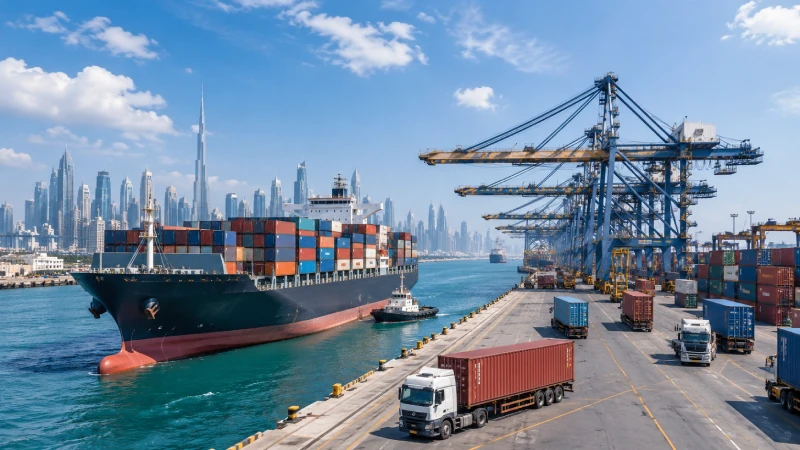
For importers moving sea freight into Dubai and the wider UAE, Jebel Ali is often the most practical destination gateway. If your company is comparing shipping from China to UAE, Jebel Ali should be one of the first routes to evaluate, especially when your cargo is headed to Dubai, JAFZA, Dubai South, Sharjah, Ajman, or a re-export warehouse. The port is closely connected with regional trading, warehousing, and distribution networks, making it suitable for both domestic UAE imports and cargo that will later move to GCC, Middle East, Africa, or South Asia markets.
Jebel Ali is especially relevant for FCL and LCL cargo from China. Whether you are importing electronics, furniture, building materials, machinery, auto parts, packaging, lighting, textiles, or wholesale consumer goods, the right plan depends on more than the ocean freight rate. You need to consider origin pickup, China export handling, container loading, port arrival, destination charges, customs status, free zone handling, and final delivery arrangements.
This guide explains how shipping from China to Jebel Ali works, when to use FCL or LCL, how JAFZA delivery differs from Dubai mainland delivery, what to consider for re-export cargo, and where service boundaries should be clearly understood before booking.
Quick Answer: Why Jebel Ali Is a Key UAE Gateway
Jebel Ali Port is one of the most important sea freight gateways for Dubai and the UAE. It supports container handling, cargo operations, and trade solutions for importers, exporters, freight forwarders, distributors, and re-export companies moving goods through Dubai. For China-to-UAE shipments, Jebel Ali is usually the preferred destination when cargo is not urgent enough for air freight and when the importer needs a cost-effective route for commercial volume.
Jebel Ali works well for full containers, consolidated cargo, palletized shipments, and mixed supplier cargo. Importers shipping to Dubai mainland, JAFZA, Dubai South, Sharjah, or Ajman can usually build a practical sea freight plan around this gateway. For Dubai-focused importers, it is also useful to compare Jebel Ali sea freight with air freight and local delivery options under shipping from China to Dubai.
Jebel Ali is also important for trading companies that do not only sell inside the UAE. Many companies use Dubai as a re-export platform, receiving cargo from China, storing or repacking it in free zone or third-party warehouses, and then shipping it onward to other regional markets. This makes Jebel Ali a logistics gateway, not just a port of arrival.
Shipping Cost from China to Jebel Ali
The cost of shipping from China to Jebel Ali depends on cargo volume, weight, origin city, shipping mode, container type, Incoterms, destination handling, and delivery location in the UAE. A quote for port-to-port sea freight will look very different from a port-to-door quote that includes delivery to JAFZA, Dubai mainland, Sharjah, or Ajman.
For FCL shipments, the main cost components usually include China pickup if required, origin port charges, export declaration, ocean freight, destination charges, and local delivery if included. For LCL shipments, the cost is usually calculated by CBM or revenue ton, but importers should pay close attention to CFS charges, documentation fees, delivery order fees, and local handling after arrival.
The most common mistake is comparing only the ocean freight rate. A cheaper ocean freight rate may not produce the lowest landed cost if destination charges are high, documentation is unclear, or the cargo requires extra warehouse handling after arrival. Importers comparing budget ranges should review shipping cost from China to UAE before requesting a final Jebel Ali quote.
| Cost Factor | Impact on Jebel Ali Shipping Cost | Planning Notes |
|---|---|---|
| Origin city in China | Affects pickup and export cost | Inland trucking from factory to port can change total cost |
| Shipment volume | Determines FCL or LCL suitability | FCL is usually better for larger commercial shipments |
| Container size | Impacts freight and local handling | 20ft suits dense cargo; 40HQ suits bulky cargo |
| Cargo type | Affects packaging, handling, compliance, and inspection risk | Regulated, fragile, heavy, or oversized cargo needs review |
| Destination location | JAFZA, Dubai mainland, Sharjah, and Ajman differ | Trucking distance and receiver status matter |
| Destination charges | Can significantly affect landed cost | Confirm what is included before shipment |
| Customs status | Free zone and mainland imports may follow different handling paths | Consignee setup and documents must match the shipment |
Pro Tip: For Jebel Ali shipments, always ask whether destination charges, delivery order, port handling, CFS charges, customs-related expenses, and UAE delivery are included. A low freight rate without a clear destination cost breakdown can create surprises after arrival.
Transit Time from China to Jebel Ali
Sea freight transit time from China to Jebel Ali varies by origin port, carrier schedule, routing, transshipment, and seasonal capacity. Shipments from South China ports such as Shenzhen, Nansha, or Shekou may follow different schedules from shipments departing Ningbo, Shanghai, Qingdao, or Tianjin. Importers should also remember that the total timeline includes more than vessel transit.
A practical timeline includes supplier pickup, export customs declaration in China, port loading, ocean transit, vessel discharge at Jebel Ali, destination handling, document release, customs or free zone processing, and final delivery. If cargo is moving to a CFS warehouse as LCL, additional time may be needed for deconsolidation and release.
| China Origin Area | Common Port of Loading | Destination | Typical Mode | Suitable Cargo |
|---|---|---|---|---|
| Shenzhen / Dongguan / Guangzhou | Yantian / Shekou / Nansha | Jebel Ali | FCL / LCL | Electronics, furniture, e-commerce stock |
| Ningbo / Yiwu | Ningbo / Shanghai | Jebel Ali | FCL / LCL | General merchandise, wholesale goods |
| Shanghai / Suzhou | Shanghai | Jebel Ali | FCL / LCL | Machinery, retail goods, industrial parts |
| Qingdao / Tianjin | Qingdao / Tianjin | Jebel Ali | FCL | Building materials, hardware, heavy cargo |
For broader route comparison, importers can also review how long to ship from China to UAE. However, the Jebel Ali-specific timeline should always be checked against the actual sailing schedule and the consignee’s delivery requirements.
Transit estimates are not guarantees. Delays may be caused by space shortages, vessel schedule changes, port congestion, customs inspection, document mismatch, storage buildup, or delivery appointment issues at the warehouse.
FCL and LCL Shipping to Jebel Ali
FCL and LCL are the two most common sea freight options for shipping from China to Jebel Ali. The right choice depends on cargo volume, shipment urgency, cargo value, supplier locations, and final delivery plan.
FCL shipping is usually the better option when the importer has enough cargo to fill or economically justify a container. It gives more control over loading, reduces cargo touchpoints, and can be more efficient for large commercial shipments. A 20ft container is often suitable for dense or heavy cargo, while a 40ft or 40HQ container is better for bulky but lighter goods such as furniture, packaging, textiles, and general merchandise.
LCL shipping is useful when the shipment does not fill a container. It allows importers to ship smaller cargo volumes from China to Jebel Ali without paying for a full container. However, LCL requires consolidation at origin and deconsolidation at destination. This can mean more handling, longer release time, and proportionally higher destination charges.
For importers still comparing sea freight methods, sea freight from China to UAE is a useful broader reference. For more specific planning, compare LCL shipping from China to UAE and FCL shipping from China to UAE based on your CBM, weight, cargo type, and delivery location.
| Option | Best For | Advantages | Watch Outs |
|---|---|---|---|
| FCL 20ft | Heavy or dense cargo | Better control, container-level shipment | Not ideal for low-volume cargo |
| FCL 40ft / 40HQ | Bulky commercial shipments | Lower unit cost for larger volume | Requires enough cargo to justify container |
| LCL | Small shipments and trial orders | No need to fill a container | More handling and CFS charges |
| Multi-supplier consolidation | Cargo from several Chinese suppliers | Reduces fragmented shipments | Needs strong coordination before loading |
If your shipment is close to the break-even point between LCL and FCL, it is worth comparing both options. Sometimes a partially loaded 20ft container may be more predictable than a large LCL shipment, especially when the cargo is fragile, time-sensitive, or expensive to handle.
Jebel Ali Port, JAFZA and Dubai Mainland Delivery
Jebel Ali Port and JAFZA are closely connected, but they are not the same destination from a logistics planning perspective. Jebel Ali Port is the seaport where containers arrive. JAFZA, or Jebel Ali Free Zone, is a free zone business and logistics area linked to the port.
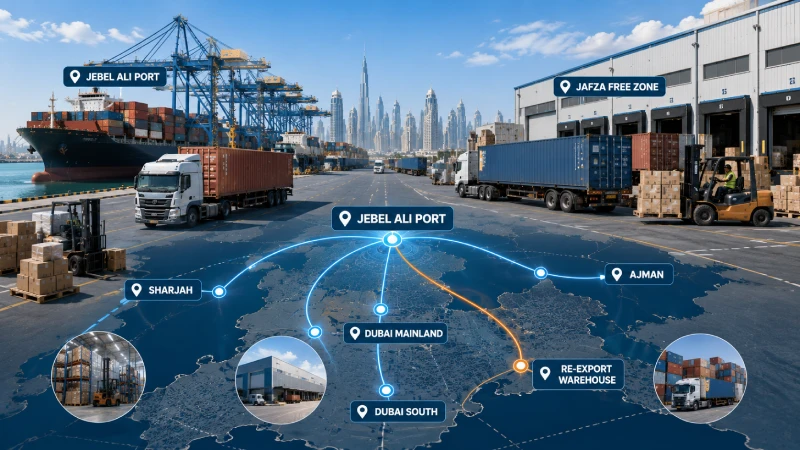
Delivery to Jebel Ali Port is often suitable when the importer has its own UAE customs broker, port release process, and local transport provider. In this case, Winsail can arrange the China-side export and sea freight to Jebel Ali, while the consignee or local agent manages release and onward delivery.
Delivery to JAFZA may be more suitable for free zone companies, trading firms, logistics warehouses, and re-export businesses. Cargo may be stored, processed, repacked, or re-exported depending on the company’s setup and local compliance. For importers comparing warehouse destinations, free zone vs mainland delivery in UAE is an important planning topic before booking.
Dubai mainland delivery is different. Cargo intended for UAE domestic sale may require mainland import clearance, duty and VAT handling, and delivery to a registered warehouse, retailer, distributor, or project site. Sharjah and Ajman are also common delivery points for wholesalers and distributors because warehouse costs and storage options may differ from central Dubai.
| Delivery Type | Common Receiver | Main Use Case | Planning Notes |
|---|---|---|---|
| Jebel Ali Port | Importer or broker | Port release and onward trucking | Local clearance and release must be arranged |
| JAFZA | Free zone company | Storage, trading, re-export | Free zone procedure should be confirmed |
| Dubai mainland | Distributor, retailer, project owner | UAE domestic sale | Mainland import process may apply |
| Sharjah / Ajman | Wholesaler or warehouse | Storage and distribution | Trucking distance and unloading access matter |
| Dubai South | Logistics or e-commerce operator | Regional distribution | Delivery appointment and facility rules should be checked |
Pro Tip: Confirm the consignee type before booking: JAFZA company, UAE mainland importer, third-party warehouse, or re-export operator. This affects documents, release process, local charges, and delivery planning.
Re-export Cargo through Jebel Ali
Jebel Ali is not only a UAE import gateway. It is also a major platform for re-export cargo. Trading companies often ship goods from China to Jebel Ali, store them in JAFZA or nearby warehouses, and later distribute them to GCC countries, Africa, the wider Middle East, or South Asia.
Re-export cargo needs more careful planning than standard import cargo. The importer should confirm whether the goods will stay in a free zone, enter UAE mainland, or move directly onward to another country. This decision can affect documents, consignee details, HS code use, labeling, palletization, and onward shipping arrangements.
If the final destination is outside the UAE, the shipment should be planned with that destination in mind from the beginning. Product certificates, invoice descriptions, packing methods, and carton labels may need to match the final market’s requirements. Repacking or relabeling after arrival is possible in some warehouse setups, but it adds time and cost.
For re-export businesses, Winsail can help coordinate supplier pickup in China, multi-supplier consolidation, sea freight booking to Jebel Ali, document review, and delivery coordination to a nominated warehouse or local partner, subject to service availability and cargo details.
Destination Charges, Customs and Documents
Destination charges at Jebel Ali should be reviewed before shipment. Common cost items may include terminal handling, delivery order, documentation, CFS handling for LCL, port storage, demurrage or detention risk, customs-related expenses, inspection charges if applicable, and local trucking.
Customs clearance is a key boundary area. Freight booking does not guarantee customs approval. UAE customs procedures depend on importer eligibility, cargo description, HS code, commercial invoice, packing list, product compliance, and whether the shipment is moving into a free zone or UAE mainland. For detailed compliance planning, importers should review customs clearance in UAE before loading cargo in China.
| Document | Usually Needed For | Notes |
|---|---|---|
| Commercial Invoice | Customs valuation | Must match buyer, seller, product, quantity, and value |
| Packing List | Cargo details | Should include cartons, weight, CBM, and packaging |
| Bill of Lading | Sea freight release | Consignee and notify party must be checked carefully |
| Certificate of Origin | Origin verification | May be requested depending on cargo and buyer |
| HS Code | Customs classification | Should be reviewed before quotation |
| Product certificates | Regulated goods | Depends on product type |
| Importer details | Free zone or mainland clearance | Must match UAE consignee setup |
Importers should prepare documents before cargo leaves China. A shipment can move smoothly at sea but still face delays if the consignee name, invoice value, packing details, HS code, or product description does not match the clearance plan. A separate checklist for documents required for shipping from China to UAE can help reduce avoidable clearance problems.
Pro Tip: Document mistakes often cause more delay than ocean transit. Before booking, confirm whether the cargo is for JAFZA, Dubai mainland, Sharjah, Ajman, or re-export, and make sure the commercial documents match that plan.
When to Use DDP or Port-to-Door Delivery
Importers shipping to Jebel Ali often ask whether they should choose port-to-port, port-to-door, or DDP service. Each option has a different responsibility structure.
Port-to-port is suitable when the importer has a UAE broker and local logistics team. Winsail handles China-side coordination and sea freight to Jebel Ali, while the consignee arranges local release, customs, tax handling, and final delivery.
Port-to-door is suitable when the importer wants sea freight plus delivery coordination from Jebel Ali to a UAE address. This may include delivery to JAFZA, Dubai mainland, Sharjah, Ajman, Dubai South, or a nominated warehouse. However, customs clearance responsibility must be clearly confirmed. In many cases, the importer or local broker remains responsible for clearance, duty, VAT, and regulatory compliance.
DDP may be possible for selected shipments, but it should not be assumed for every cargo type. DDP shipping from China to UAE must be reviewed based on product type, cargo value, HS code, consignee status, documentation, tax requirements, and local partner capability. DDP should never be treated as a shortcut around customs or import rules.
For commercial shipments, the safest approach is to compare options before booking. Send the product name, HS code, cargo value, CBM, weight, supplier address, and UAE delivery point so the route can be checked properly.
Cargo Types Commonly Shipped to Jebel Ali
Jebel Ali handles a wide range of commercial cargo from China. Common categories include electronics and accessories, furniture, building materials, auto parts, machinery, spare parts, LED lighting, packaging materials, textiles, garments, e-commerce stock, and general wholesale goods.
Each cargo type requires different planning. Fragile goods need stronger export packaging and careful loading. Heavy goods may be better suited for a 20ft container because payload matters more than volume. Bulky lightweight cargo often fits better in a 40HQ container. Mixed supplier cargo should be consolidated before export so the importer avoids multiple small shipments and repeated destination charges.
For project cargo, machinery, building materials, or warehouse replenishment, delivery readiness is especially important. The consignee should confirm forklift availability, loading dock access, delivery appointment rules, unloading labor, and whether the warehouse can receive containers or only loose cargo.
How Winsail Helps Plan Jebel Ali Shipments
Winsail Logistics helps importers plan practical shipping solutions from China to Jebel Ali based on cargo details, supplier location, delivery point, and business model. Support can include China supplier pickup, export customs coordination, FCL and LCL comparison, multi-supplier consolidation, container booking, sea freight to Jebel Ali, document checking, and arrival coordination with the consignee or local partner.
For JAFZA companies and re-export businesses, Winsail can help plan shipment flow from China to Jebel Ali and coordinate delivery to nominated warehouses where available. For Dubai mainland, Sharjah, Ajman, or Dubai South delivery, the route should be checked based on consignee status, customs responsibility, cargo size, and delivery access.
The goal is not to promise one universal solution. The goal is to reduce uncertainty before shipment. A good Jebel Ali shipping plan should clarify shipment mode, estimated cost structure, expected timeline, document requirements, destination responsibilities, and delivery limitations before cargo leaves China.
FAQ
How long does shipping from China to Jebel Ali take?
Shipping time depends on the China port of loading, carrier schedule, routing, transshipment, and arrival handling at Jebel Ali. Importers should consider the full timeline, including factory pickup, export declaration, ocean transit, destination release, customs or free zone handling, and final delivery.
Is Jebel Ali the best port for UAE cargo?
Jebel Ali is often the most practical port for cargo headed to Dubai, JAFZA, Dubai South, Sharjah, Ajman, and many re-export warehouses. However, the best port depends on the consignee location, cargo type, delivery plan, and local arrangements.
Can I ship LCL cargo to Jebel Ali?
Yes. LCL shipping to Jebel Ali is common for smaller commercial shipments, sample orders, trial orders, and mixed supplier cargo. Importers should check CFS charges, destination handling, release time, and delivery cost before choosing LCL.
What is the difference between Jebel Ali and JAFZA delivery?
Jebel Ali refers to the seaport where containers arrive. JAFZA is the free zone connected to the Jebel Ali logistics ecosystem. Delivery to JAFZA may involve free zone handling, while Dubai mainland delivery may involve mainland import clearance and domestic distribution planning.
Can Winsail arrange door delivery from Jebel Ali?
In many cases, Winsail can help coordinate delivery from Jebel Ali to JAFZA, Dubai mainland, Sharjah, Ajman, Dubai South, or a nominated warehouse. Availability depends on cargo size, delivery address, unloading conditions, consignee status, customs responsibility, and local partner confirmation.
What documents are needed for Jebel Ali customs clearance?
Common documents include commercial invoice, packing list, bill of lading, certificate of origin when required, HS code, importer details, and product-specific certificates for regulated goods. Importers should confirm requirements before shipment because documentation depends on cargo type and clearance status.
Final CTA
Planning a shipment from China to Jebel Ali? Winsail Logistics can help compare FCL, LCL, port-to-port, port-to-door, JAFZA delivery, Dubai mainland delivery, Sharjah / Ajman trucking, and re-export warehouse routing. Send us your supplier address, cargo name, HS code, CBM, weight, carton details, cargo value, Incoterms, and UAE delivery point. We will help you build a practical shipping plan before cargo leaves China.
