
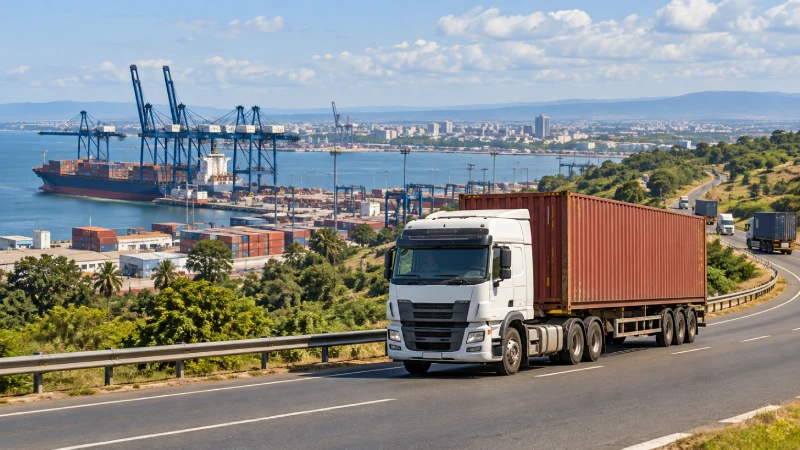
Shipping cargo from China to Nakuru or Naivasha requires more planning than simply booking freight to Kenya.
Both destinations are inland, so the important question is not only whether to use sea freight, air freight, FCL, or LCL. You also need to decide where the cargo should enter and clear in Kenya, how it should move inland, and where the final trucking leg should begin.
For sea freight, most shipments first enter Kenya through the Port of Mombasa. Depending on the shipment, the cargo may then be cleared in Mombasa and trucked inland, moved through Nairobi Inland Container Depot, or routed through Naivasha Inland Container Depot before final delivery.
For air freight, Nairobi is normally the main gateway before the cargo continues by road to Nakuru or Naivasha.
The right arrangement depends on cargo type, shipment size, Bill of Lading routing, customs arrangements, shipping-line service, final delivery address, and the importer’s local clearing setup. For a broader overview of sea, air, DDP, costs, transit times, and customs, see our Shipping from China to Kenya guide.
Quick Answer
For most sea shipments from China to Nakuru or Naivasha, the Port of Mombasa remains the main maritime gateway. From Mombasa, cargo can potentially continue by direct road transport or through an inland container depot before final trucking.
Naivasha ICD can be relevant for some Rift Valley cargo, but it should not automatically be selected simply because the final consignee is located in Naivasha or Nakuru. The routing should be confirmed before booking with the shipping line, forwarder, importer, and Kenyan clearing agent.
Data Note: Freight rates, trucking charges, rail arrangements, container free time, customs requirements, and available inland services change. The routing described below is a planning framework, not a guaranteed route for every shipment.
Where Nakuru and Naivasha Fit Into the China–Kenya Shipping Route
Nakuru and Naivasha are important commercial and industrial locations in Kenya’s Rift Valley, but they are not international seaports.
That creates an extra inland logistics stage for cargo arriving from China.
A typical sea-freight supply chain may look like this:
China supplier → China port → Mombasa → inland clearance/routing → final truck → Nakuru or Naivasha
An air shipment may instead follow:
China supplier → China airport → Nairobi / JKIA → customs clearance → road delivery → Nakuru or Naivasha
The difference matters because two shipments with the same factory origin and the same ocean freight rate can have very different total landed logistics costs depending on what happens after arrival in Kenya.
Nakuru as an Inland Commercial Destination
For an importer in Nakuru, simply asking for a “China to Kenya rate” does not provide enough information.
The quotation should also define:
- where customs clearance will take place;
- whether the shipment will remain in the container for inland delivery;
- whether cargo will be deconsolidated first;
- where the final truck starts;
- whether the container must be returned after unloading;
- and who coordinates the Kenyan inland leg.
This is especially important for machinery, commercial equipment, construction materials, industrial supplies, furniture, electronics, and other cargo where truck size, cargo weight, unloading arrangements, or site access can affect the delivery plan.
Naivasha as an Industrial and Logistics Location
Naivasha has an additional logistics dimension because of the Naivasha Inland Container Depot and the Naivasha Special Economic Zone.
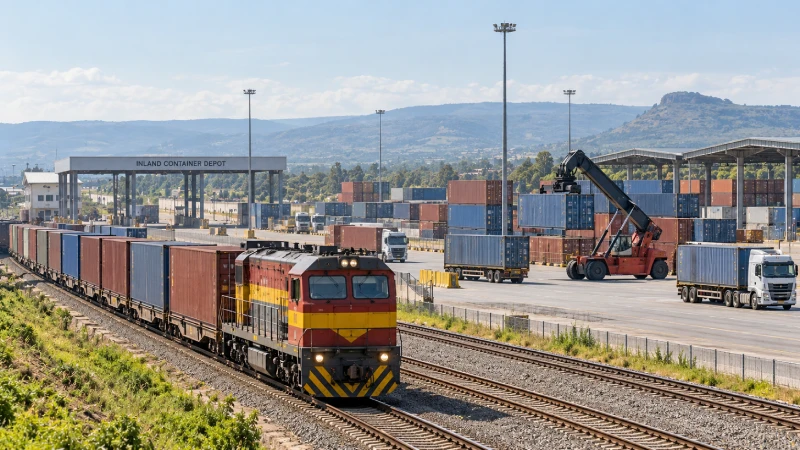
Kenya Ports Authority states that its inland container depots at Nairobi and Naivasha are connected to the Port of Mombasa by rail services. KPA specifically describes Naivasha ICD as serving regional transit markets as well as customers near the Rift Valley hinterland.
Naivasha is therefore more than simply another trucking destination.
However, the existence of an ICD in Naivasha does not mean every shipment destined for Naivasha—or nearby Nakuru—should automatically be routed through it.
That decision must be made shipment by shipment.
Three Ways Sea Freight Can Reach Nakuru or Naivasha
For importers in the Rift Valley, there are three broad inland-routing structures worth evaluating.
| Inland Route | May Be Suitable When | Main Point to Evaluate |
|---|---|---|
| Mombasa → direct road delivery | Cargo can be cleared at Mombasa and direct inland trucking is practical | Total trucking cost, container return and clearance coordination |
| Mombasa → Nairobi ICD → road delivery | Clearance, CFS handling or the importer’s logistics network is Nairobi-based | Additional handling versus convenience of Nairobi operations |
| Mombasa → Naivasha ICD → final trucking | The actual shipment and carrier arrangement support Naivasha routing | ICD eligibility, Bill of Lading setup, clearance and final delivery |
There is no single route that is automatically cheapest for every shipment.
For the international ocean leg, Winsail’s ocean freight services from China cover both FCL and LCL arrangements, but the inland Kenya routing still needs to be planned around the actual shipment.
Option 1: Clear in Mombasa and Truck Inland
The simplest route conceptually is:
China → Mombasa → customs release → road transport → Nakuru / Naivasha
This can make sense where the importer’s clearing agent works through Mombasa and the cargo can move efficiently by truck after customs release.
For FCL cargo, the container may be hauled inland for unloading at the consignee’s warehouse or project site.
But the importer should not compare only the price of the loaded truck.
The quotation also needs to clarify:
- where the empty container must be returned;
- how much free time is available;
- whether waiting time is included;
- how unloading will be handled;
- and what happens if the consignee cannot unload the container within the planned time.
These details can materially affect the final logistics cost.
Option 2: Mombasa to Nairobi ICD, Then Road to the Rift Valley
Another possibility is moving cargo inland through Nairobi ICD.
KPA states that Nairobi ICD is directly connected to Mombasa by rail services and handles containerized as well as loose cargo.
This route may be relevant when the importer already has:
- a Nairobi-based customs clearing agent;
- a warehouse or distribution operation in Nairobi;
- an LCL handling arrangement in Nairobi;
- another consolidation or cargo-handling requirement in Nairobi;
- or a trucking contract starting from the Nairobi area.
However, Nairobi should not automatically be inserted into the route simply because it is Kenya’s main commercial center.
For cargo whose final destination is farther west in the Rift Valley, unnecessary handling or an indirect road movement can add time or cost.
The full route should therefore be compared rather than only the international freight component.
Option 3: Mombasa to Naivasha ICD, Then Final Trucking
Naivasha ICD creates another possible inland option.
Kenya Railways states that Naivasha ICD is linked to the Port of Mombasa by rail and can receive cargo under relevant inland transport arrangements.
For the right shipment, positioning the container farther inland before the final road leg may be operationally useful.
But there is an important limitation.
Do not request Naivasha ICD merely because your warehouse address says Naivasha or Nakuru.
Current government policy has also emphasized Naivasha ICD’s role in handling long-haul regional transit cargo. For domestic Kenyan cargo, the actual routing therefore needs to be confirmed against:
- shipping-line service;
- current ICD operating arrangements;
- Bill of Lading destination;
- customs-clearing plan;
- FCL or LCL status;
- local trucking;
- and the consignee’s final location.
Check My Mombasa-to-Rift-Valley Route: Before booking the vessel, send the China pickup location, cargo details, container type, final delivery address, and preferred clearance arrangement so the inland options can be compared as one complete route.
When Should You Consider Naivasha ICD?
Naivasha ICD is most useful when it solves a logistics problem—not simply when it provides a convenient location name on a freight quotation.
Before selecting it, ask five practical questions.
1. Does the Shipping Line Support the Intended Inland Routing?
The inland destination should be discussed before the final Bill of Lading is issued.
A forwarder should not assume a container can simply be diverted to a different ICD after it reaches Mombasa.
Through Bill of Lading arrangements, carrier routing, merchant haulage, terminal handling, and customs procedures all need to match.
2. Is the Shipment FCL or LCL?
Naivasha ICD routing is much easier to evaluate for an intact container than for a small LCL shipment whose cargo may first need to be deconsolidated at a CFS.
For LCL, always identify where the consolidation container will be stripped before deciding how the final inland stage should work.
3. Where Will Customs Clearance Be Coordinated?
The importer’s licensed Kenyan clearing agent should be involved in the decision.
Kenya Revenue Authority states that commercial imports require the engagement of a licensed customs clearing agent to process import documentation and assist with clearance.
A theoretically attractive inland route can become inefficient if the customs and document flow is not aligned with it.
4. Where Is the Final Delivery Site?
“Naivasha delivery” is not sufficiently precise.
The forwarder should know the actual warehouse, factory, construction site, industrial park, or other receiving point.
For Nakuru cargo, the same applies.
The location affects:
- final trucking distance;
- vehicle requirements;
- site accessibility;
- unloading;
- empty-container return;
- and whether the proposed ICD route is genuinely useful.
5. Is the Total Route Better, Not Just One Segment?
Do not compare:
Mombasa trucking price vs. Naivasha trucking price
in isolation.
Compare the entire chain:
port/ICD handling + customs coordination + rail or road movement + final trucking + unloading + empty return + possible waiting/detention.
That gives a much more realistic logistics comparison.
Pro Tip: Confirm the inland point before the vessel sails.
The Kenyan destination, customs arrangement, and intended inland routing should be checked before final shipping documents are issued. Changing the route after arrival can create unnecessary handling, documentation changes, or delays.
Naivasha ICD and Naivasha SEZ Are Not the Same Thing
Importers should also avoid confusing Naivasha ICD with Naivasha Special Economic Zone.
The ICD is a cargo-handling and inland logistics facility.
The SEZ is a regulated economic zone with its own framework for approved enterprises and activities.
The Special Economic Zones Authority identifies Naivasha SEZ at Mai Mahiu in Nakuru County and describes the project as including inland logistics and industrial infrastructure.
However:
Delivering cargo to an address in Naivasha does not automatically make the shipment an SEZ import or give it SEZ customs treatment.
If cargo is genuinely being imported by or for an approved SEZ enterprise, the importer should verify the correct customs and regulatory procedure for that transaction before shipment.
Do not build a landed-cost calculation around assumed SEZ exemptions without confirmation.
FCL vs LCL Shipping to Nakuru and Naivasha
The best inland route can change significantly depending on whether the shipment is FCL or LCL.
FCL Shipping
With FCL, the cargo normally remains inside the same container for the main ocean movement.
For an inland consignee, this creates several additional operational questions.
Before booking, confirm:
- 20ft or 40ft container;
- total cargo weight;
- whether the container can be delivered to the consignee;
- whether the receiving site has enough space for the truck;
- how the cargo will be unloaded;
- how long unloading is expected to take;
- where the empty container will be returned;
- and what carrier free-time conditions apply.
A heavy container may also require more careful truck and route planning than a lightweight general-cargo container.
For more detail on container selection and full-container planning, see FCL shipping from China.
Do Not Ignore Empty-Container Return
For an importer looking only at an ocean freight quotation, the return of an empty container can be easy to overlook.
But the container belongs to the shipping line.
After inland delivery and unloading, it normally needs to be returned to the designated depot according to the carrier’s instructions.
For a Nakuru or Naivasha consignee, that return movement should be considered when calculating the trucking arrangement.
Pro Tip: Ask whether the FCL delivery price includes the empty-container return.
Also confirm waiting time, unloading responsibility, and potential detention exposure. A low headline trucking rate is not necessarily the lowest total inland cost.
LCL Shipping
LCL works differently.
Your cartons, pallets, or crates share a container with cargo belonging to other importers.
The important question for inland delivery is therefore:
Where will the consolidation container be deconsolidated?
If the service is stripped at a CFS in Mombasa or Nairobi, your shipment may continue to Nakuru or Naivasha as loose cargo rather than inside the original ocean container.
This affects:
- handling charges;
- pickup location;
- final truck type;
- cargo protection;
- warehouse coordination;
- and inland delivery cost.
Do not assume that a China–Kenya LCL shipment will automatically travel through Naivasha ICD.
If you are shipping several pallets or a smaller commercial consignment, our LCL consolidation services from China provide useful background on how consolidation and deconsolidation affect the route.
Compare LCL and FCL: For cargo that is too large for courier but does not obviously require a full container, compare the complete LCL and FCL landed-logistics structure rather than only the ocean freight price.
Air Freight and Express Delivery to Nakuru or Naivasha
Sea freight is not always the right option.
For urgent commercial cargo, replacement parts, samples, electronics, or relatively small high-value shipments, air freight may provide a more practical route.
The typical structure is:
China pickup → Chinese airport → Nairobi air cargo gateway → customs clearance → road delivery → Nakuru / Naivasha
This removes the Mombasa port and ocean-container stages, but it does not eliminate Kenyan customs clearance or final inland transportation.
The forwarder still needs:
- commodity description;
- chargeable weight;
- dimensions;
- number of packages;
- cargo value;
- battery or dangerous-goods information;
- final address;
- and importer details.
Express courier can also be considered for small parcels and samples, but commercial cargo with special compliance requirements should not be treated like an ordinary personal parcel.
For larger shipments, compare air freight and sea freight based on the buyer’s deadline and total landed logistics requirement rather than the international rate alone.
Plan Final Trucking Before the Cargo Leaves China
For inland destinations such as Nakuru and Naivasha, the last road leg should be planned before departure—not after customs release.
This is especially important for containers, machinery, oversized cargo, and deliveries to industrial sites.
Confirm the Exact Delivery Address
The quotation should not stop at:
Nakuru, Kenya
or:
Naivasha, Kenya
Provide the actual receiving location whenever possible.
The forwarder needs to understand whether the delivery point is:
- a city warehouse;
- an industrial facility;
- an SEZ facility;
- a construction project;
- a rural site;
- a retail distribution center;
- or another location with restricted truck access.
Confirm How the Cargo Will Be Unloaded
For loose cargo, a warehouse may have forklifts or dock facilities.
For FCL cargo, the consignee needs to understand whether the container stays on the chassis during unloading and how quickly it can be emptied.
For heavy machinery or project cargo, unloading may require cranes, forklifts, rigging equipment, or site preparation.
These services should not be assumed to be part of a standard freight quotation.
Heavy and Oversized Cargo Needs Separate Planning
Oversized modular units, industrial machinery, abnormal-width cargo, or unusually heavy equipment may require a different inland solution from ordinary containerized freight.
Depending on the cargo and route, planning may involve:
- low-bed or specialized trailers;
- route surveys;
- lifting equipment;
- road permits;
- escort arrangements;
- axle-load considerations;
- and delivery-site preparation.
Exact requirements depend on the cargo dimensions, weight, Kenyan regulations, and selected road route.
Needs confirmation before publishing or quoting for a specific project cargo shipment.
For shipments requiring final delivery coordination, door-to-door shipping from China explains how international freight, customs coordination, and last-mile delivery can fit into one transport plan.
Check Door-to-Door Feasibility: Send the packed dimensions, total weight, cargo photos if relevant, and the exact delivery location before confirming whether standard trucking is sufficient.
Customs Clearance and Documents for Nakuru and Naivasha Shipments
Shipping inland does not remove Kenya’s national import requirements.
A cargo owner in Nakuru or Naivasha still needs to prepare for Kenyan customs clearance and any product-specific compliance requirements.
Kenya Revenue Authority lists documents that can include a commercial invoice, Bill of Lading or Air Waybill, packing list, Certificate of Origin, Certificate of Conformity for regulated products, freight invoice for sea cargo, permits or licenses where applicable, and importer identification information. KRA also states that a licensed customs clearing agent is required for commercial import clearance.
The exact document set depends on the commodity.
Certificate of Origin
Kenya strengthened its Certificate of Origin requirements in 2025.
KRA states that imported consignments generally need a Certificate of Origin issued by a competent authority in the country of export, subject to specified exceptions and provisional arrangements.
For China-origin cargo, this document should therefore be considered early rather than being requested after the vessel arrives.
Advance Cargo Declaration for Containerized Sea Freight
Another major planning point is Kenya’s Advance Cargo Declaration.
KRA launched the ACD platform on 3 August 2026 for containerized cargo destined for Kenyan ports.
According to the official KRA notice, the shipper or exporter obtains an ACD reference code at the loading stage after submitting documents including:
- draft Bill of Lading;
- commercial invoice;
- freight invoice;
- and export declaration.
The reference code must then be endorsed on the Bill of Lading before the shipment proceeds to a Kenyan port.
For a China-to-Mombasa container, this means the issue needs to be handled before loading, not after the cargo arrives in Kenya.
Keep the Chinese Export Declaration
There is another recent documentation change worth including in the shipment file.
KRA states that from 1 September 2026, importers must obtain and retain an export declaration, export entry, customs export certificate, or equivalent document from the country of export.
For shipments from China, importers should therefore coordinate with the supplier or export party so the relevant export documentation can be retained.
PVoC and Certificate of Conformity
Certain goods imported into Kenya fall under KEBS conformity requirements.
The Kenya Bureau of Standards PVoC programme verifies applicable products in the exporting country against Kenyan standards or approved specifications.
Do not wait until cargo reaches Mombasa to ask whether the product requires conformity assessment.
Before shipment, confirm:
- whether the product is regulated;
- which standards apply;
- whether PVoC is required;
- which approved contractor should be used;
- and whether a CoC is required for the shipment.
HS Classification and Product-Specific Permits
Customs duty, taxes, restrictions, and agency requirements depend on what is actually being imported.
A vague description such as:
machine parts
or:
electronic products
may not be enough for compliance planning.
The importer and clearing agent should establish the correct HS classification and determine whether other Kenyan authorities regulate the product.
Products such as food, medical goods, chemicals, plants, telecommunications equipment, batteries, or other controlled commodities may require additional approvals.
Do not assume that PVoC is the only regulatory requirement.
Before Cargo Leaves China: Compliance Checklist
Before arranging final shipment, verify:
- Commercial invoice completed
- Packing list completed
- HS classification reviewed
- Kenyan importer details confirmed
- Certificate of Origin arranged
- PVoC / CoC checked where applicable
- Product-specific permit requirements checked
- Chinese export declaration retained
- ACD completed for applicable containerized sea cargo
- Bill of Lading routing confirmed
- Kenyan clearing agent informed
- Final inland delivery plan confirmed
Check My Kenya Import Requirements: Send the product name, intended use, HS code if available, and shipment details so the compliance questions can be identified before cargo is loaded.
DAP, DDP and Door-to-Door Shipping to Nakuru or Naivasha
Importers often ask for “door-to-door” freight when they actually mean several different things.
These terms should be clarified before quotation.
DAP
Under a DAP arrangement, transportation can be arranged to the agreed destination, such as the importer’s warehouse in Nakuru or Naivasha.
However, the buyer normally retains responsibility for import clearance, import duties, taxes, and related import formalities.
A DAP quotation should clearly identify what is included in the delivery price and what the Kenyan importer or clearing agent must handle.
DDP
DDP places substantially more import-side responsibility on the seller.
In practice, the feasibility of DDP depends on the legal and customs structure available for the shipment.
A freight forwarder should not casually promise “all taxes included, no importer needed” without verifying:
- importer-of-record arrangements;
- local tax obligations;
- product compliance;
- customs-entry structure;
- and the responsibilities of the parties involved.
Winsail’s available DDP or importer arrangements for this route should therefore be confirmed for the specific cargo.
Needs confirmation before publishing any blanket DDP service promise.
For the broader commercial and operational considerations, see DDP shipping from China to Kenya.
Door-to-Door Does Not Automatically Mean DDP
“Door-to-door” describes the physical logistics scope.
It can mean that freight is collected from a supplier in China and transported to an agreed address in Kenya.
It does not, by itself, explain who acts as importer, who clears customs, or who pays duty and tax.
That should always be stated separately.
| Responsibility | Typical DAP Structure | DDP / Duty-Paid Structure |
|---|---|---|
| China pickup | Can be included | Can be included |
| Export handling | Can be included | Can be included |
| International freight | Included | Included |
| Kenya import clearance | Usually buyer/importer responsibility | Depends on valid DDP arrangement |
| Import duties and taxes | Buyer/importer | Seller-side arrangement |
| Final delivery | To agreed destination | To agreed destination |
When comparing quotations, look at the responsibilities behind the Incoterm rather than only the final price.
What Determines the Shipping Cost to Nakuru or Naivasha?
There is no reliable fixed “China to Nakuru” or “China to Naivasha” freight rate that applies to every shipment.
The final cost can contain several separate components.
1. China Supplier Pickup
Cost depends on factory location, cargo volume, truck requirements, and whether goods from multiple suppliers need to be consolidated.
2. Export Handling in China
This may include warehouse handling, customs export procedures, documentation, container loading, and port or airport origin charges.
3. International Freight
The main freight component depends on:
- FCL or LCL;
- 20ft or 40ft equipment;
- origin port;
- carrier;
- sailing schedule;
- air freight chargeable weight;
- and market conditions at the time of booking.
4. Kenyan Port, Terminal, CFS or ICD Charges
The exact charges depend on the service and where cargo is handled.
LCL and FCL should not be compared using the same cost structure.
5. Customs Clearance and Compliance
Customs-agent fees, inspection-related costs, permits, standards compliance, and other formalities can vary by shipment.
6. Import Duty and Taxes
These depend on HS classification, customs value, applicable tariff treatment, and current Kenyan regulations.
Do not estimate duties purely from the product name.
7. Inland Movement
This may include:
- Mombasa-to-inland trucking;
- rail movement to an ICD;
- Nairobi-to-Rift Valley trucking;
- Naivasha ICD final trucking;
- or another combination.
8. Final Delivery and Container Return
For FCL, the return of the empty container should form part of the inland-cost evaluation.
For project cargo, crane or special trailer requirements may also be material.
Compare Total Landed Logistics Cost
A route that has a lower ocean freight rate may still have a higher total cost after:
origin + ocean freight + destination handling + customs + inland haulage + unloading + container return
are added together.
That is why a realistic quote should start with the final delivery address, not end with it.
What to Send for an Accurate Nakuru or Naivasha Freight Plan
The more precise the cargo information, the easier it is to compare Mombasa, Nairobi, Naivasha, FCL, LCL, air freight, and final-trucking options.
Before requesting a shipping plan, prepare:
China Origin
- Supplier city and province
- Factory pickup address
- Supplier Incoterm
- Number of suppliers if consolidating cargo
Cargo Information
- Product name
- HS code if known
- Number of cartons, pallets, crates, or machines
- Packed dimensions
- Gross weight
- Total CBM
- Cargo value
- Cargo-ready date
Special Cargo Information
Tell the forwarder if the shipment contains:
- batteries;
- liquids;
- chemicals;
- magnets;
- dangerous goods;
- temperature-sensitive products;
- oversized equipment;
- unusually heavy cargo.
Do not hide this information to obtain a cheaper initial rate. It can change carrier acceptance and handling requirements.
Kenya Destination
Provide:
- Nakuru or Naivasha;
- exact warehouse/site location;
- contact person;
- unloading capability;
- preferred delivery arrangement;
- customs-agent information if already appointed.
Service Requirement
Clarify whether you want:
- port-to-port;
- port-to-door;
- DAP;
- LCL;
- FCL;
- air freight;
- express;
- or another door-to-door arrangement.
Send Cargo Details: Supplier location + product + packages + dimensions + weight + cargo value + cargo-ready date + exact Nakuru/Naivasha delivery address is usually enough to begin evaluating the route.
FAQ
What is the best route for shipping from China to Nakuru?
There is no single best route for every shipment. For sea freight, cargo normally enters through Mombasa. Depending on the shipment, customs and inland arrangements may involve direct trucking from Mombasa, Nairobi ICD, or another approved inland route. Compare the entire logistics cost and operating chain rather than assuming Nairobi or Naivasha is automatically the best inland point.
Can a container from China be sent through Naivasha ICD?
Naivasha ICD is connected to Mombasa by rail, but actual use for a domestic shipment should be confirmed with the shipping line, forwarder, importer, customs agent, and current ICD operating arrangements before booking.
Is Naivasha ICD better than Nairobi ICD for cargo going to Nakuru?
Not necessarily. Naivasha may reduce part of the final road distance in some logistics structures, while Nairobi can be more practical when clearance, deconsolidation, warehousing, or the importer's logistics team is based there. Compare handling, inland movement, customs coordination, final trucking, and container return.
Can LCL cargo from China be delivered to Nakuru or Naivasha?
Yes, inland delivery can be arranged for suitable LCL shipments. However, the cargo may first be deconsolidated at a CFS before being loaded onto a local truck. Confirm where the LCL container will be stripped and where the final-delivery charge begins.
How does air freight from China reach Nakuru or Naivasha?
Air cargo generally enters through Nairobi before customs clearance and road delivery to the Rift Valley. The correct arrangement depends on airport routing, cargo type, chargeable weight, import documentation, and the exact receiving location.
Do imports delivered to Nakuru or Naivasha still need PVoC and a Certificate of Origin?
The final inland destination does not remove Kenya's national import requirements. A Certificate of Origin is generally required under the current KRA framework, subject to specified exceptions, while regulated goods may also require KEBS conformity procedures and a Certificate of Conformity.
Does shipping goods to Naivasha mean they qualify for Naivasha SEZ benefits?
No. A delivery address in Naivasha does not automatically mean the shipment qualifies for Special Economic Zone treatment. SEZ benefits and customs arrangements relate to eligible enterprises and transactions operating within the applicable SEZ framework.
Plan the Inland Route Before You Book From China
For a shipment to Nakuru or Naivasha, getting the cargo to Kenya is only part of the job.
The more important operational question is:
What happens after the cargo reaches Kenya?
A complete plan should connect:
China supplier → export handling → international freight → Kenyan gateway → customs → inland transport → unloading → final delivery
For some shipments, clearing in Mombasa and trucking directly inland may be practical.
For others, Nairobi-based handling may fit the importer’s existing logistics setup.
Naivasha ICD creates another option for certain Rift Valley or regional cargo, but it should be chosen because the actual shipment arrangement supports it—not simply because the final destination is geographically nearby.
Before booking, confirm the cargo specifications, import documents, Bill of Lading destination, clearing-agent arrangement, final delivery address, unloading plan, and container return requirements.
That is the safest way to compare the real cost and operational feasibility of shipping from China to Nakuru or Naivasha.
