
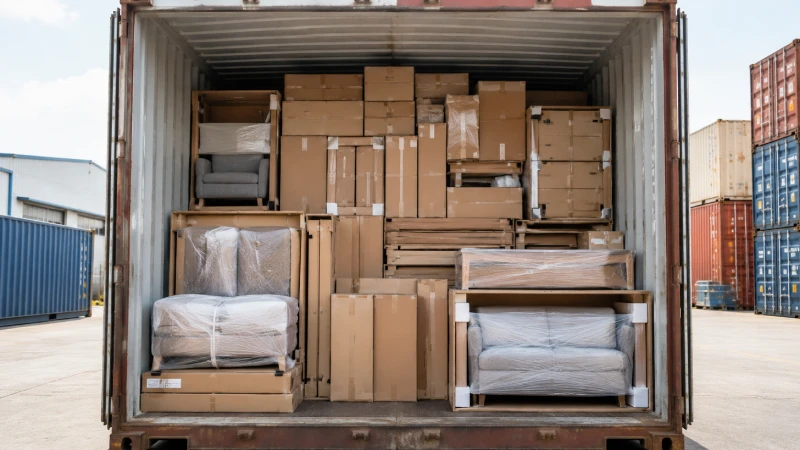
Shipping furniture from China to Qatar is very different from shipping electronics, machinery, or consumer goods. Furniture is often lightweight relative to its size, which means container space—not cargo weight—usually becomes the primary cost driver.
For Qatar importers, every unused cubic meter inside a container directly increases freight cost per item. This is why successful furniture importers focus heavily on container utilization, packaging efficiency, and loading strategy before placing purchase orders.
Whether sourcing office furniture, hotel furniture, residential furnishings, or commercial fit-out products, understanding space optimization can significantly improve profitability. Companies already importing through Shipping from China to Qatar often discover that improving container utilization delivers greater savings than negotiating small reductions in freight rates.
Why Furniture Importers Pay for Space More Than Weight
Unlike stone, tiles, or metal products, furniture shipments typically fill a container long before reaching maximum weight limits.
A standard 40GP container can carry approximately:
- 67 CBM of cargo volume
- 26–28 tons of payload weight
Most furniture shipments reach the volume limit first.
For example:
- A sofa may weigh only 60 kg
- Yet occupy 1.8–2.5 CBM
As a result, Qatar importers often pay for empty air if container planning is not optimized.
The key question is no longer:
“How much does freight cost?”
Instead, it becomes:
“How many products can fit into the container?”
The answer determines the actual landed cost of every furniture item.
Understanding Container Utilization for Furniture Shipments
Container utilization refers to the percentage of available container space occupied by cargo.
High-performing furniture importers often achieve:
- 90–95% utilization
- Lower freight cost per item
- Better inventory efficiency
- Fewer shipments annually
Poorly planned shipments may use only 70–80% of available volume.
That unused space still generates freight charges.
20ft Container vs 40ft Container
For furniture imports into Qatar, choosing the right container size is critical.
20ft Container
Suitable for:
- Small furniture retailers
- Trial orders
- Boutique projects
- Limited warehouse capacity
Advantages:
- Lower total freight bill
- Easier inventory management
Disadvantages:
- Higher freight cost per CBM
- Less flexibility for mixed products
40ft Container
Suitable for:
- Furniture wholesalers
- Hotel projects
- Residential developments
- Large retail chains
Advantages:
- Lower freight cost per unit
- Better space efficiency
- More SKU consolidation opportunities
Many Qatar importers discover that a partially filled 40ft container can actually generate lower unit costs than multiple smaller shipments.
For larger-volume buyers, FCL Shipping from China to Qatar often becomes the preferred solution because it provides greater control over loading efficiency and inventory planning.
Flat-Pack Furniture vs Assembled Furniture
One of the biggest factors affecting container utilization is whether furniture is shipped assembled or flat-packed.
Flat-Pack Furniture Advantages
Flat-pack furniture was developed specifically to improve transportation efficiency.
Benefits include:
- Smaller shipping volume
- Higher container utilization
- Lower freight cost per item
- Easier warehousing
- Simplified distribution
Examples include:
- Wardrobes
- Cabinets
- Office desks
- Bookshelves
- Dining tables
A flat-packed wardrobe may occupy 70% less volume than a fully assembled version.
This difference can dramatically affect shipping economics.
Assembled Furniture Challenges
Fully assembled furniture often creates significant empty space during loading.
Common examples:
- Sofas
- Lounge chairs
- Reception seating
- Luxury hotel furniture
Challenges include:
- Irregular dimensions
- Difficult stacking
- More protective packaging
- Increased risk of unused container space
For premium furniture products, assembled shipping may still be necessary.
However, importers should understand the associated freight implications before making purchasing decisions.
How Packaging Design Influences Freight Costs
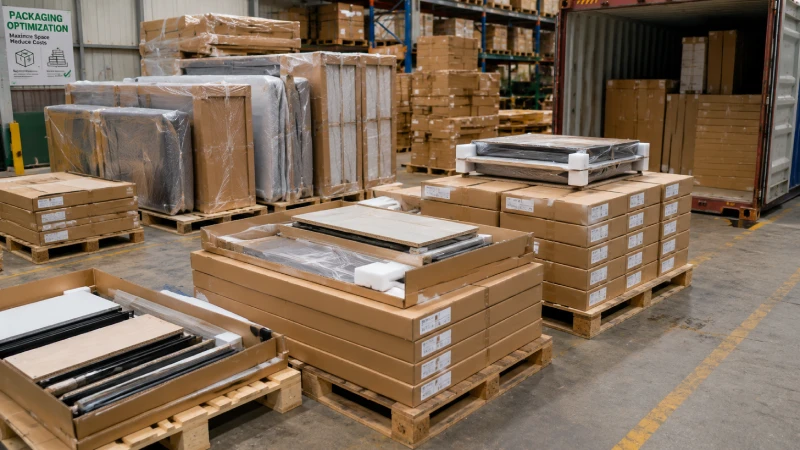
Many importers focus on product price but overlook packaging design.
In reality, packaging often determines how efficiently furniture can be loaded.
Packaging Optimization Principles
The most space-efficient furniture packaging typically includes:
- Uniform carton sizes
- Stackable dimensions
- Reduced empty internal space
- Corner protection instead of bulky padding
- Standard pallet footprints
When suppliers optimize packaging, importers can often fit 10–20% more products inside the same container.
That improvement immediately lowers freight cost per item.
The Hidden Cost of Oversized Packaging
Some factories use excessively large cartons to simplify production.
While convenient for manufacturers, oversized packaging creates:
- Wasted container space
- Higher shipping costs
- Increased warehouse requirements
- More destination handling costs
Before confirming production, importers should always request packaging dimensions.
This simple step can reveal significant cost-saving opportunities.
Freight Cost Per Item: The Metric That Matters Most
Most Qatar buyers initially focus on freight cost per container.
Experienced importers focus on freight cost per item.
This provides a much clearer picture of profitability.
For example:
Assume:
- Ocean freight: $3,500
- Furniture units loaded: 700
If improved loading increases capacity to 850 units:
The freight rate did not change.
The container size did not change.
Only space utilization improved.
Yet shipping cost per item fell by nearly 18%.
This demonstrates why container planning has such a powerful impact on profitability.
Combining Multiple Furniture Products Efficiently
Most Qatar furniture importers purchase multiple product categories simultaneously.
Examples include:
- Beds
- Sofas
- Dining sets
- Chairs
- Cabinets
- Office furniture
The challenge is balancing different product dimensions.
Smart Loading Strategy
Experienced freight planners often load containers using a layered approach:
- Large furniture first
- Medium-sized products second
- Small items last
This method helps fill gaps that would otherwise remain unused.
Typical filler products include:
- Dining chairs
- Side tables
- Bedside cabinets
- Accessories
These products improve container density without significantly increasing freight costs.
Common Mistakes That Waste Container Space
Ordering Based Only on Product Quantity
Many buyers place orders according to unit counts without checking total volume.
This often leads to:
- Unexpected container shortages
- Additional shipments
- Higher freight costs
Volume calculations should always be completed before production begins.
Ignoring Packaging Dimensions
Two suppliers may offer identical products.
However:
- Supplier A packaging = 1.2 CBM
- Supplier B packaging = 0.9 CBM
Over a container load, the difference can be substantial.
Mixing Too Many Irregular Products
Complex product combinations often create unusable gaps.
Importers should carefully evaluate whether each SKU contributes positively to loading efficiency.
Poor Palletization
Oversized pallets can waste valuable container space.
In some furniture shipments, floor loading may achieve significantly higher utilization rates than palletized loading.
How Warehouse Planning Affects Shipping Efficiency
Container optimization should not be viewed in isolation.
Warehouse capacity in Qatar also influences shipment strategy.
Questions importers should ask include:
- How many containers can be unloaded simultaneously?
- Is assembly performed in-house?
- Are products distributed directly to stores?
- Is long-term storage required?
A highly optimized container may create warehouse congestion if storage planning is inadequate.
The most successful importers balance:
- Container utilization
- Warehouse capacity
- Inventory turnover
- Sales forecasts
This integrated approach creates the lowest overall logistics cost.
Practical Space Optimization Tips for Qatar Furniture Importers
Request Container Loading Simulations
Many factories can provide:
- Loading diagrams
- Container plans
- 3D loading simulations
These tools reveal wasted space before cargo is manufactured.
Standardize Product Dimensions
Products designed around modular dimensions stack more efficiently.
This is especially useful for:
- Hospitality projects
- Office furniture
- Residential developments
Consolidate Purchase Orders
Combining multiple suppliers into one shipment often improves utilization.
This can be particularly effective when using LCL Shipping from China to Qatar during smaller procurement phases before transitioning to full-container loads.
Review Packaging Before Production
Packaging changes are much easier and cheaper before manufacturing starts.
Small packaging improvements often produce significant freight savings.
Track Cost Per CBM
Importers should monitor not only freight cost but also space efficiency metrics.
Understanding Shipping Cost per CBM from China to Qatar allows buyers to evaluate which products generate the highest logistics costs relative to their selling price.
Conclusion
When shipping furniture from China to Qatar, freight costs are driven far more by volume than by weight. The importers who achieve the lowest landed costs are rarely those who negotiate the cheapest freight rates. Instead, they are the companies that maximize container utilization through smarter purchasing decisions, flat-pack furniture strategies, optimized packaging, and efficient loading plans.
Whether importing residential furniture, office furnishings, hotel projects, or retail inventory, improving space utilization can reduce freight cost per item, lower overall logistics expenses, and improve profit margins. For businesses already managing regular Shipping from China to Qatar, container planning should be treated as a strategic cost-control tool rather than a simple logistics task. By focusing on how every cubic meter is used, Qatar importers can achieve significant long-term savings while building a more efficient supply chain.
